
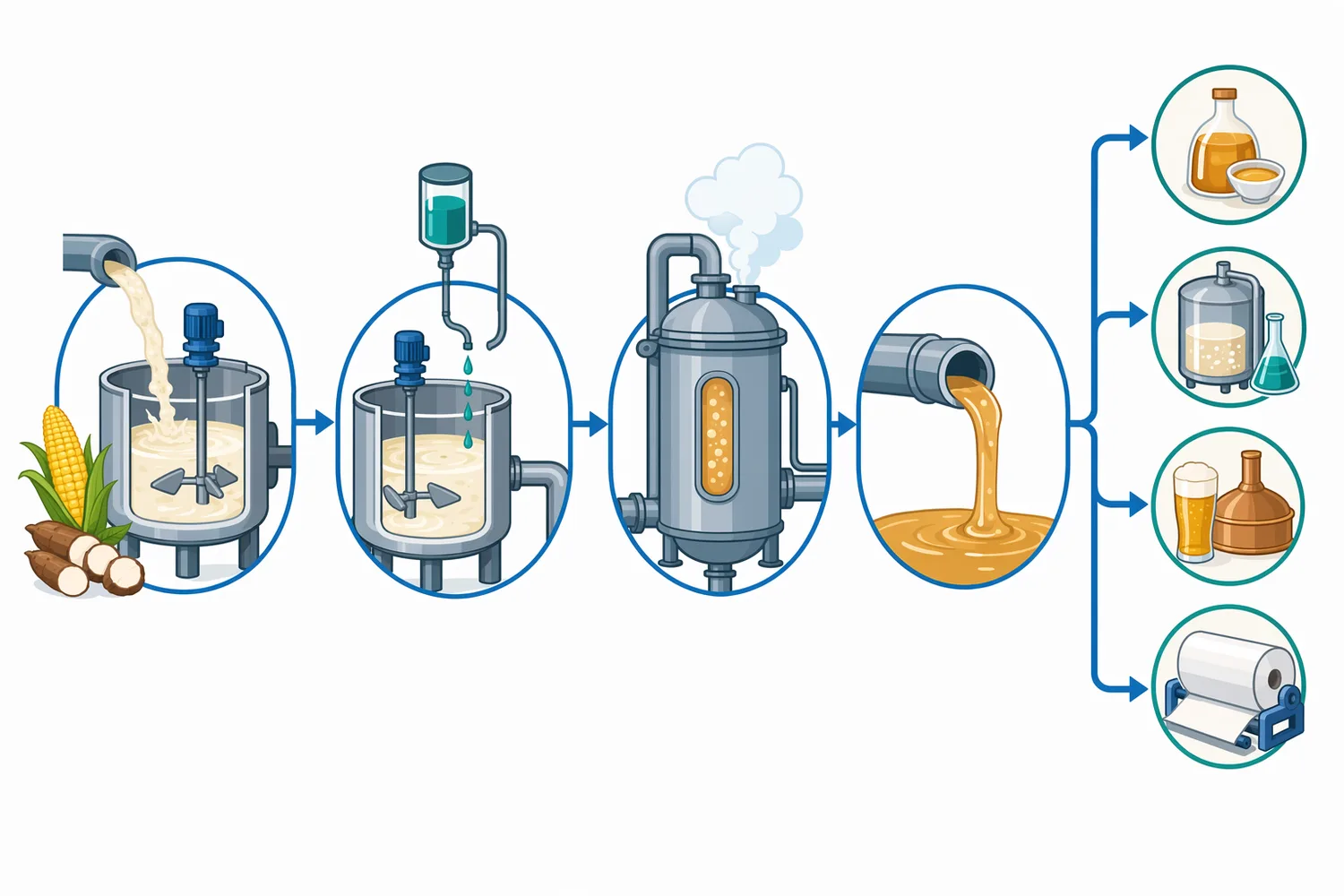
Thermostable Alpha Amylase Enzyme Liquid is used to hydrolyze starch during heated processing, turning thick gelatinized starch into lower-viscosity dextrins and soluble carbohydrates. It works by cutting internal α-1,4 glycosidic bonds in amylose and amylopectin, which rapidly shortens starch chains, improves flow, and prepares the material for downstream saccharification, fermentation, food processing, feed processing, or starch modification. Enzymes.bio supplies this product directly online in 1 kg units; the buyer pays online, the order is processed and shipped, and a Certificate of Analysis and Safety Data Sheet are provided with the order .
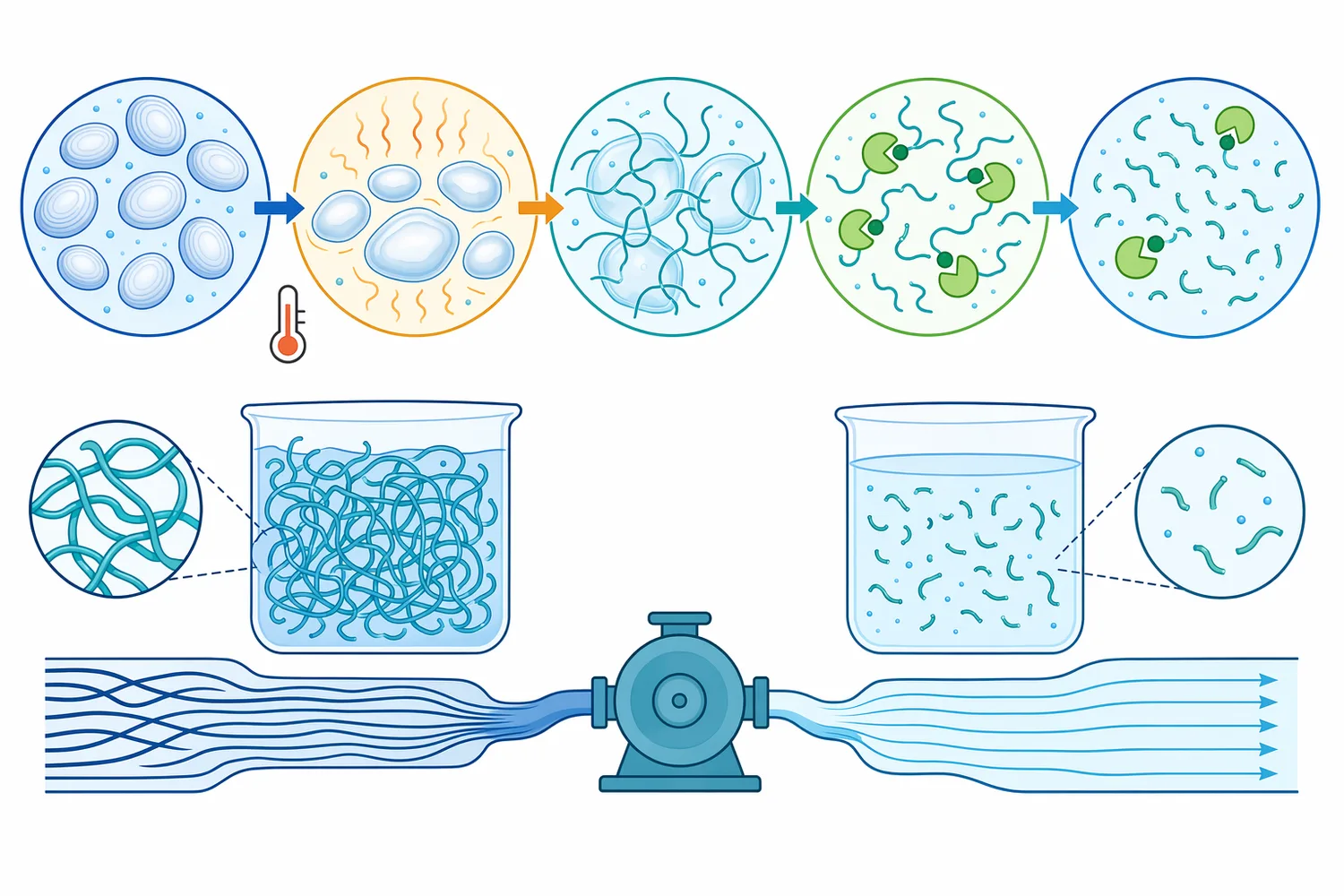
Thermostable alpha amylase is a starch-liquefying enzyme designed for processes where heat and starch are present together. In practical processing terms, starch granules are heated in water until they swell, lose ordered crystalline structure, and form a viscous gelatinized paste; alpha amylase then cleaves starch polymers into shorter dextrins, reducing the chain length responsible for high viscosity. Research on hydrolysis with Bacillus licheniformis alpha-amylase shows that gelatinization and hydrolysis conditions affect both the rate and selectivity of starch breakdown, which is why the enzyme is strongly associated with hot starch liquefaction rather than only cold-sugar conversion [1].
The word thermostable matters because starch handling is often most difficult at elevated temperatures. As starch cooks, viscosity can rise sharply before hydrolysis has progressed far enough to thin the slurry. A thermostable enzyme can continue acting during this heated phase, helping the process move from a swollen, resistant paste toward a pumpable, dextrin-rich liquid. Reviews of thermostable amylases from thermophilic microbes describe their industrial value precisely in these high-temperature starch-processing environments, where ordinary enzymes may lose structure and catalytic function too quickly [2].
Alpha amylase is an endo-acting enzyme. Instead of nibbling glucose units from the ends of starch chains, it cuts internal α-1,4 linkages within amylose and amylopectin. That internal cutting pattern is why a relatively small number of catalytic events can create a large drop in viscosity: one long polymer chain may become several shorter chains, each contributing much less to thickening and gel strength. Structural and evolutionary reviews of alpha-amylases describe this enzyme family as central to starch transformation because of its ability to attack internal glucan linkages across many biological and industrial contexts [3].
This product class should be understood as a liquefaction and dextrinization tool, not as a complete glucose-production system by itself. Alpha amylase typically produces a mixture of soluble dextrins, maltodextrins, maltose, maltotriose, and other maltooligosaccharides depending on starch source and process conditions. When the target is a glucose-rich syrup, ethanol feedstock, or highly fermentable sugar profile, alpha-amylase liquefaction is commonly followed by saccharifying enzymes that continue hydrolysis further toward smaller sugars; studies optimizing cassava starch hydrolysis to glucose illustrate that amylase-based starch conversion is sensitive to hydrolysis conditions and the enzyme system used [4].
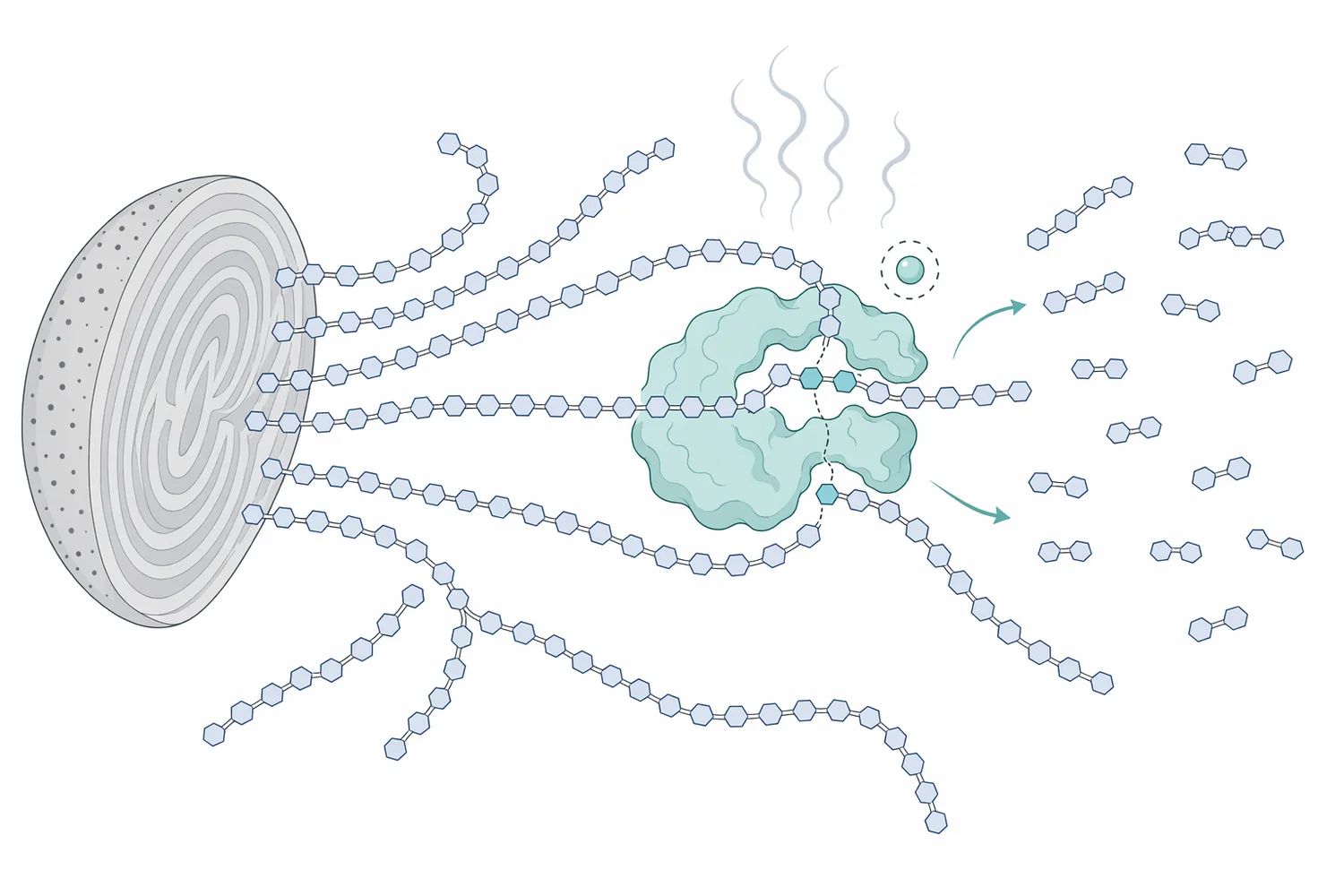
Native starch is packed into granules made mainly of amylose and amylopectin. Amylose is mostly linear, while amylopectin is highly branched, but both contain many α-1,4-linked glucose sequences. In raw granules, these chains are partly ordered and physically protected, which limits enzyme access. Heating with water disrupts that structure: granules swell, crystalline regions loosen, and polymer chains become more exposed. Work on gelatinization and alpha-amylase hydrolysis shows that the physical state of starch before and during enzyme action can change the pattern of hydrolysis products formed [1].
Once the enzyme reaches accessible starch chains, its catalytic site binds a segment of the glucan chain and hydrolyzes an internal α-1,4 bond by adding water across that linkage. The chemical result is simple but powerful: one longer molecule becomes two shorter molecules with new chain ends. Repeated across millions of polymer chains, this creates more soluble carbohydrate fragments, reduces average molecular weight, and lowers paste viscosity. Molecular studies of GH-13 alpha-amylases emphasize the importance of substrate binding and glucan-chain positioning in enabling this internal bond cleavage [5].
The first visible processing change is usually viscosity reduction. Long hydrated starch polymers form entangled networks that resist flow; shorter dextrins entangle less and move more freely in water. That is why alpha amylase is often added before or during the phase when starch viscosity would otherwise peak. It is not simply “breaking starch down” in a vague sense—it is shortening the polymer chains that create resistance to pumping, mixing, heat transfer, and downstream conversion. Thermostable alpha-amylase studies repeatedly connect heat-stable starch hydrolysis with industrial handling benefits such as liquefaction and improved processability [6].
A second important change is increased substrate accessibility. After alpha amylase opens the starch structure and generates shorter dextrins, other enzymes or microorganisms can reach more chain ends and soluble carbohydrates. This matters in sweetener production, brewing-style adjunct conversion, fermentation feed preparation, animal feed processing, and modified starch production. In research on alpha-amylase from Bacillus licheniformis So-B3, the enzyme was characterized for thermostability and evaluated for its potential in raw starch hydrolysis, reinforcing the connection between enzyme access and practical starch conversion [7].
Alpha amylase is often discussed alongside other amylolytic enzymes, but their functions are not interchangeable. The table below summarizes the practical distinction at a process level; it is included to clarify where thermostable alpha amylase fits in a starch-conversion sequence rather than to imply that every process requires every enzyme type. Alpha-amylase structure and application reviews describe this division of roles as central to carbohydrate processing [3].
| Enzyme type | Main bond or action | Primary processing role | Typical outcome in starch processing |
|---|---|---|---|
| Thermostable alpha amylase | Internal α-1,4 bonds | Liquefaction and viscosity reduction during heated starch processing | Dextrins, maltodextrins, maltooligosaccharides, lower viscosity |
| Glucoamylase | Glucose release from chain ends, mainly α-1,4 and some α-1,6 activity depending on enzyme | Saccharification after liquefaction | Higher glucose formation and more fermentable syrup |
| Pullulanase / debranching enzymes | α-1,6 branch points | Improves access to amylopectin branches | More complete conversion when paired with saccharifying enzymes |
| Beta amylase | Maltose release from non-reducing ends | Maltose-oriented conversion | Maltose-rich carbohydrate profile rather than rapid liquefaction |
This distinction is commercially important because the immediate value of thermostable alpha amylase is often process control: lower viscosity, better flow, better mixing, and creation of a soluble dextrin stream. It is not primarily chosen to produce a single purified sugar. Studies on starch-to-glucose hydrolysis, including cassava starch work, show that moving from starch to glucose depends on optimized hydrolysis conditions and the enzyme pathway used, which is different from the shorter-chain dextrinization that alpha amylase provides first [4].
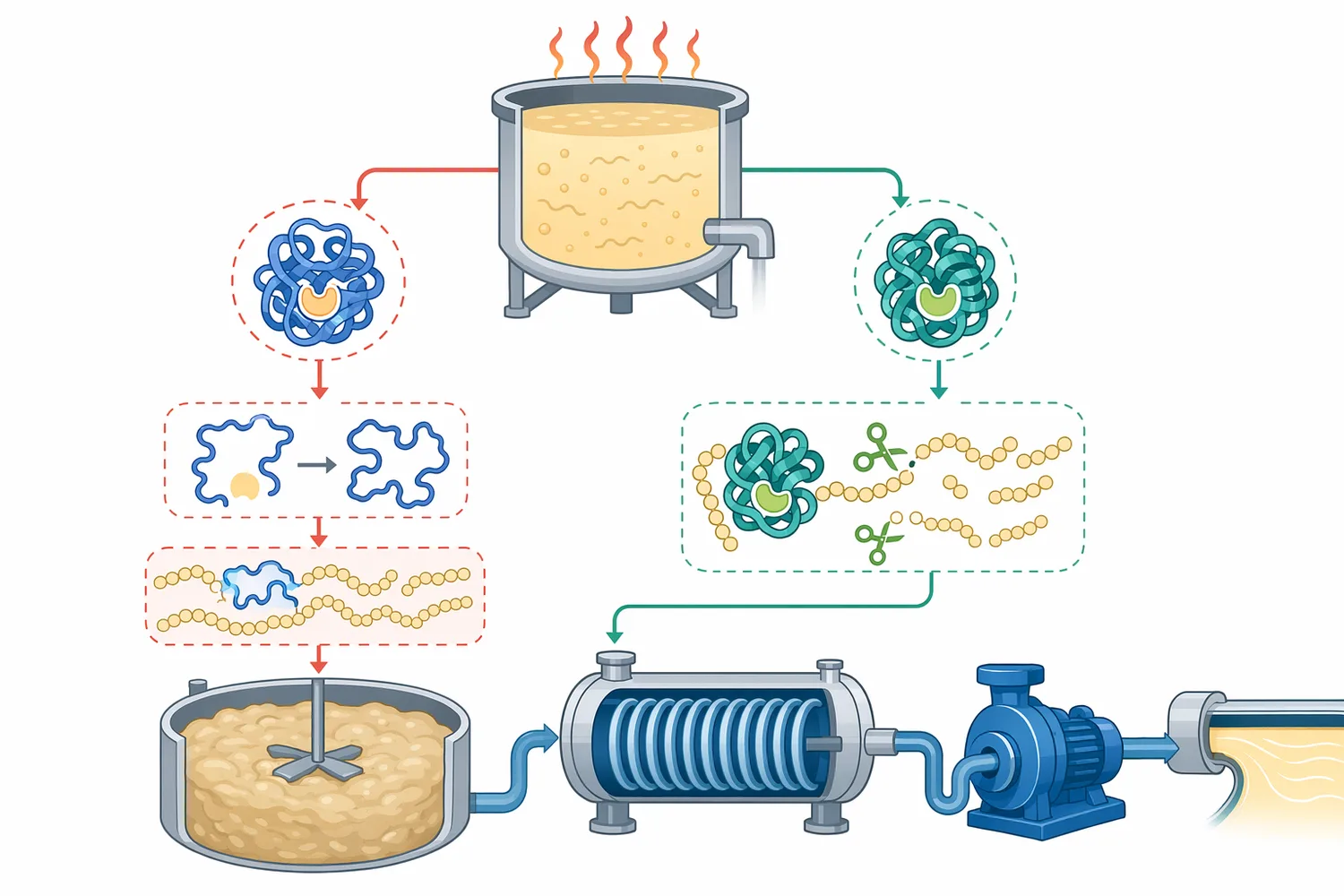
Heat improves starch accessibility but can damage enzymes. That is the central engineering trade-off in starch hydrolysis: the process often benefits from cooking, but the catalyst must survive long enough to act. Thermostable alpha amylase helps resolve that trade-off by retaining useful activity during hot treatment, making it better suited to liquefaction conditions than enzymes that denature rapidly as temperature rises. Reviews of thermophilic microbial amylases highlight their importance for industrial applications because thermostability allows hydrolysis to occur closer to the thermal conditions where starch is already gelatinizing and easier to attack [2].
Thermostability is not only about peak temperature. It also affects how long the enzyme remains folded, how well the active site retains its shape, and how consistently it can bind starch during the process. If heat unfolds the protein, the catalytic residues are no longer positioned correctly and hydrolysis slows or stops. Characterization studies of thermostable alpha-amylases from Bacillus licheniformis strains focus on activity and stability because these properties determine whether the enzyme can keep acting during industrially relevant heat exposure [8].
A thermally robust enzyme can also reduce the need to cool a starch slurry before liquefaction begins. In many systems, that means viscosity can be controlled earlier, when the slurry is at its most difficult point mechanically. This can support better heat transfer, reduce localized thickening, and improve the uniformity of hydrolysis. A thermostable alpha-amylase isolated from Aeribacillus pallidus BTPS-2 from a geothermal spring was described as a starch-liquefying enzyme, illustrating why thermophilic or heat-adapted enzyme sources attract interest for hot starch applications [9].
The scientific literature strongly supports the general role of thermostable alpha amylase in starch liquefaction and starch hydrolysis. Bacillus licheniformis is one of the most widely studied microbial sources for thermostable alpha-amylase, and work on strain So-B3 specifically reports purification, characterization, and evaluation for raw starch hydrolysis potential. This matters because raw or partially disrupted starch presents a harder substrate than fully soluble dextrins, so evidence of raw-starch action supports the enzyme class’s relevance beyond only idealized soluble starch tests [7].
Other thermophilic bacteria have also been studied for high-temperature starch liquefaction. The Aeribacillus pallidus BTPS-2 enzyme reported from a geothermal spring in Nepal was described as a thermostable algal-starch-liquefying alpha-amylase, showing that thermostable amylases can act on starch-rich biomass from nontraditional botanical sources as well as conventional cereal or tuber starches [9]. For buyers working with varied starch-containing materials, this broader research base is useful because it shows the mechanism is not restricted to one purified laboratory starch.
Research continues to expand into engineered and recombinant enzymes. A recombinant thermostable alpha-amylase from Geobacillus sp. DS3 was characterized and applied to porous starch production, demonstrating that thermostable alpha amylase can be used not only to thin starch slurries but also to deliberately modify starch granule architecture [10]. In such applications, hydrolysis is controlled to open pores or alter surface structure rather than to fully dissolve the granule, which shows how the same catalytic chemistry can be used for different material outcomes.
Moderately thermostable raw-starch-digesting alpha-amylase from Streptomyces mobaraensis DB13 has also been reported, reinforcing that raw-starch activity is a recognized research objective across different microbial groups [11]. This is relevant because raw starch is more resistant than gelatinized starch: the enzyme must deal with limited access, compact granule surfaces, and ordered polymer regions. Studies of raw-starch-digesting enzymes therefore help explain why gelatinization state, moisture, particle structure, and temperature history influence real process performance.
The evidence also shows that process conditions can change the result. In the Bacillus licheniformis alpha-amylase study by Baks and co-workers, gelatinization and hydrolysis conditions affected selectivity, meaning that the same broad enzyme class can generate different product distributions depending on how starch is cooked and hydrolyzed [1]. For practical processing, that means thermostable alpha amylase should be viewed as a controllable catalyst whose output depends on the starch matrix and thermal history, not as a reagent that always produces one fixed carbohydrate profile.
The core application for Thermostable Alpha Amylase Enzyme Liquid is liquefaction: converting a thick, gelatinized starch slurry into a lower-viscosity dextrin stream. This is useful wherever starch is cooked or hydrated at meaningful solids content, including grain, tuber, cereal, and starch-refining processes. Thermostable alpha-amylase studies consistently place liquefaction among the most important industrial uses because endo-hydrolysis quickly reduces the polymer size responsible for thickening [6].
The viscosity benefit is especially important at the point where starch granules swell and release polymers into the continuous phase. Without hydrolysis, the slurry can become difficult to stir and heat uniformly. With alpha-amylase action, those long chains are cut as they become accessible, so the paste transitions more quickly into a manageable liquid. Research examining gelatinization and enzymatic hydrolysis confirms that the physical treatment of starch before hydrolysis has a direct effect on the hydrolysis pathway and products [1].
Alpha-amylase liquefaction produces a broad family of shorter carbohydrates rather than a single molecule. These dextrins can be useful as intermediate carbohydrate streams for food ingredients, fermentation substrates, sweetener production, and modified starch systems. The exact distribution depends on starch source, heat treatment, enzyme contact time, and the presence of other enzymes or matrix components. Studies investigating starch hydrolysis to glucose make clear that additional conversion steps are needed when the desired endpoint is high glucose rather than dextrinized starch [4].
For processors, the important point is that alpha amylase changes both molecular size and functional behavior. A starch paste with long chains may be thick, cohesive, and prone to retrogradation or gel formation; after dextrinization, it is typically more soluble, less viscous, and easier to combine with downstream ingredients or conversion steps. Reviews of alpha-amylase applications describe these changes as part of the enzyme’s broad value in biotechnology, food, and industrial carbohydrate processing [3].
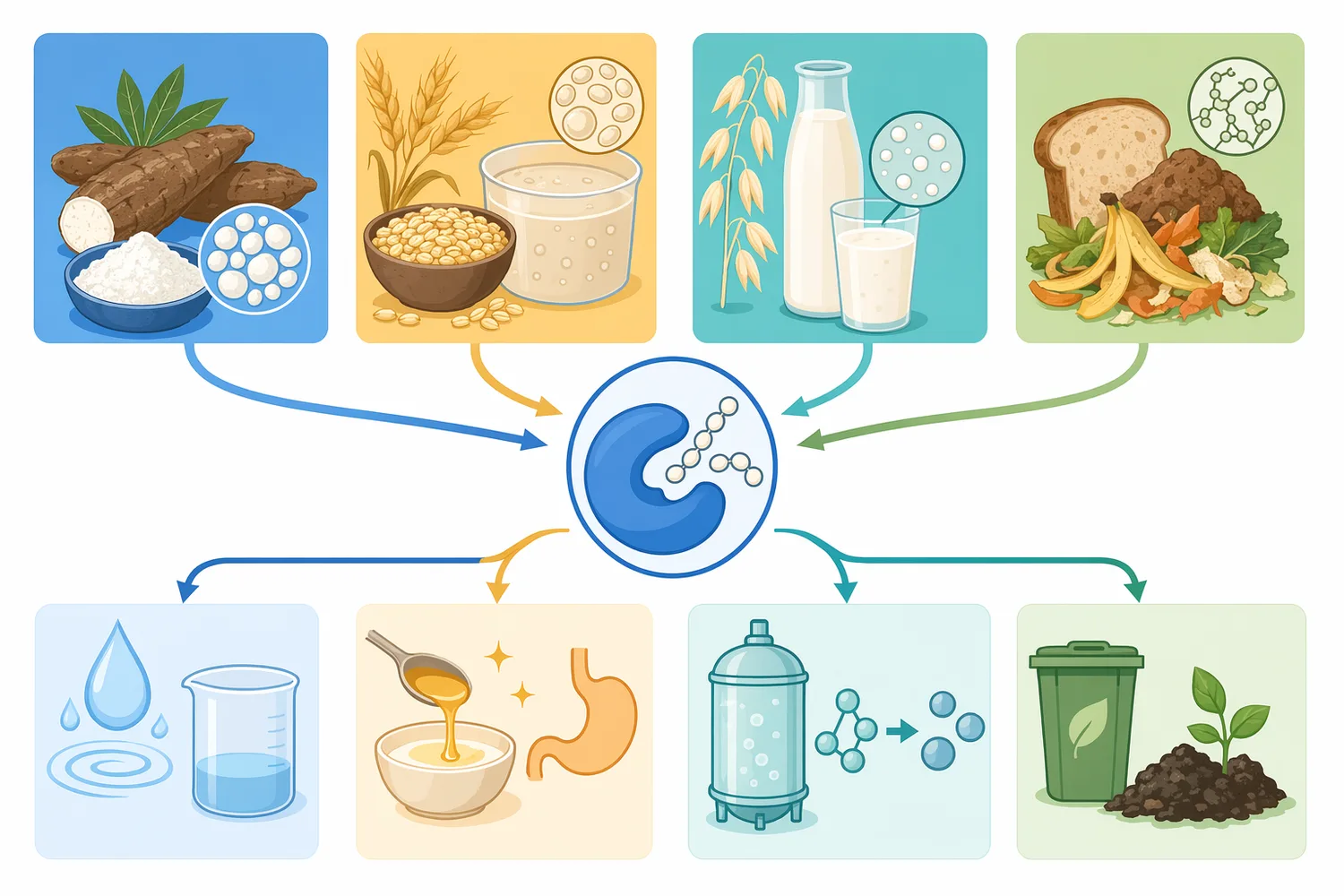
Cassava starch, cereal starches, rice starch, corn starch, wheat starch, and other botanical starches differ in granule size, amylose content, branching structure, lipid interactions, and gelatinization behavior. Those differences affect how quickly alpha-amylase can reach and hydrolyze the substrate. Work on enzymatic hydrolysis of cassava starch to glucose illustrates how a specific starch source can require optimization of hydrolysis conditions to reach a desired sugar outcome [4].
Cereal-based applications can include cooked slurries, grain adjunct conversion, plant-based beverage processing, and viscosity adjustment in starch-rich foods. In oat milk research, alpha-amylase type and activation time affected sensory and physicochemical properties, showing that starch hydrolysis can influence texture, sweetness perception, body, and stability in plant-based food systems [12]. Even when the commercial goal is not full starch conversion, controlled alpha-amylase treatment can materially change the eating or drinking quality of a starch-containing product.
Controlled alpha-amylase hydrolysis can be used to alter starch structure rather than simply liquefy it. In porous starch production, enzyme action opens channels or pits in the granule surface, increasing surface area and changing adsorption behavior. Recombinant thermostable alpha-amylase from Geobacillus sp. DS3 has been applied in porous starch production, demonstrating that high-temperature amylase systems can support material modification as well as bulk hydrolysis [10].
This application depends heavily on control. If hydrolysis is too limited, pore development may be insufficient; if it progresses too far, the granule may lose the desired physical structure. The same internal bond cleavage that lowers viscosity in a slurry can, under different moisture and temperature conditions, create porous or partially degraded granules. That is why starch modification research often focuses on the interaction between enzyme action, granule structure, and processing environment rather than only on whether hydrolysis occurs [10].
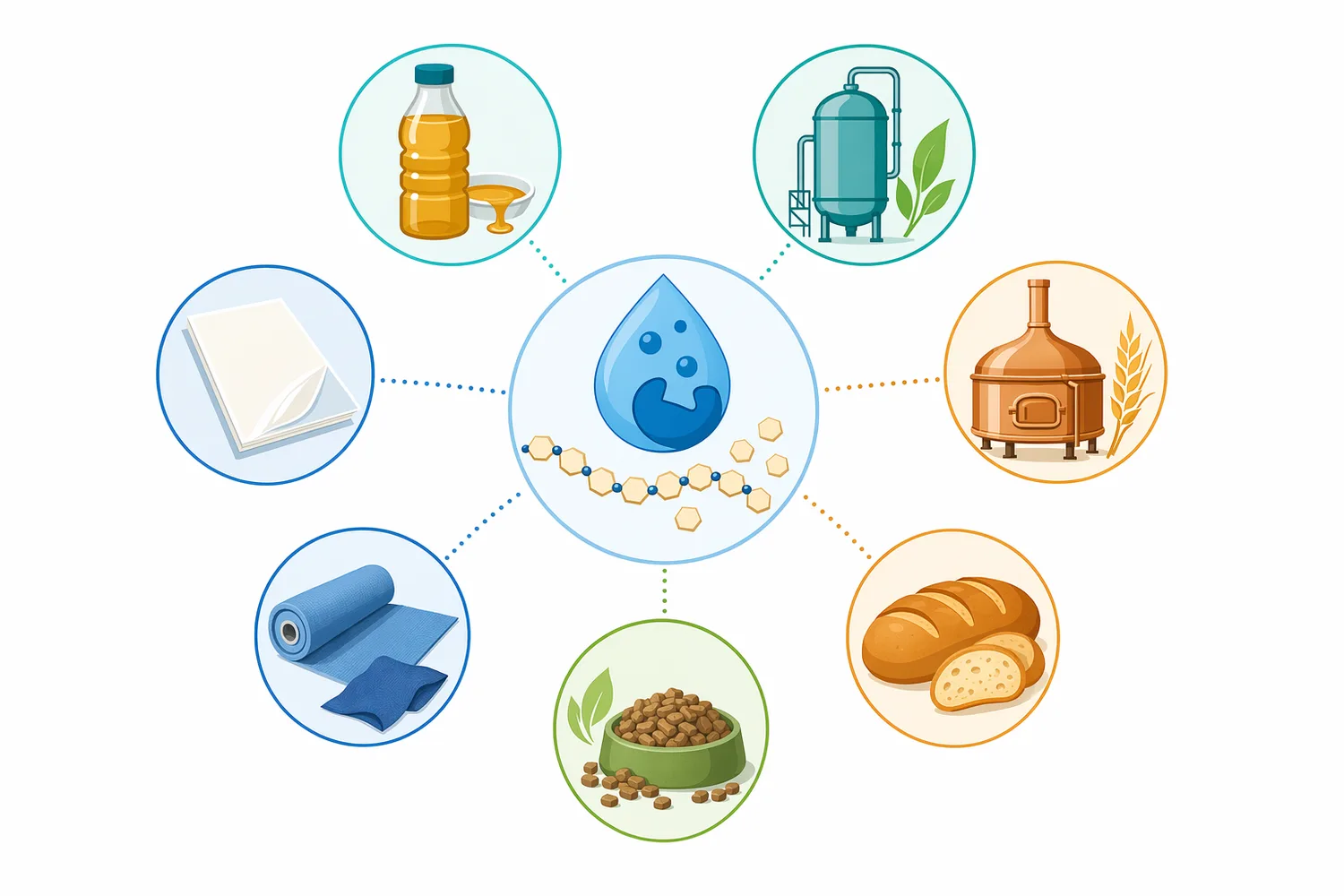
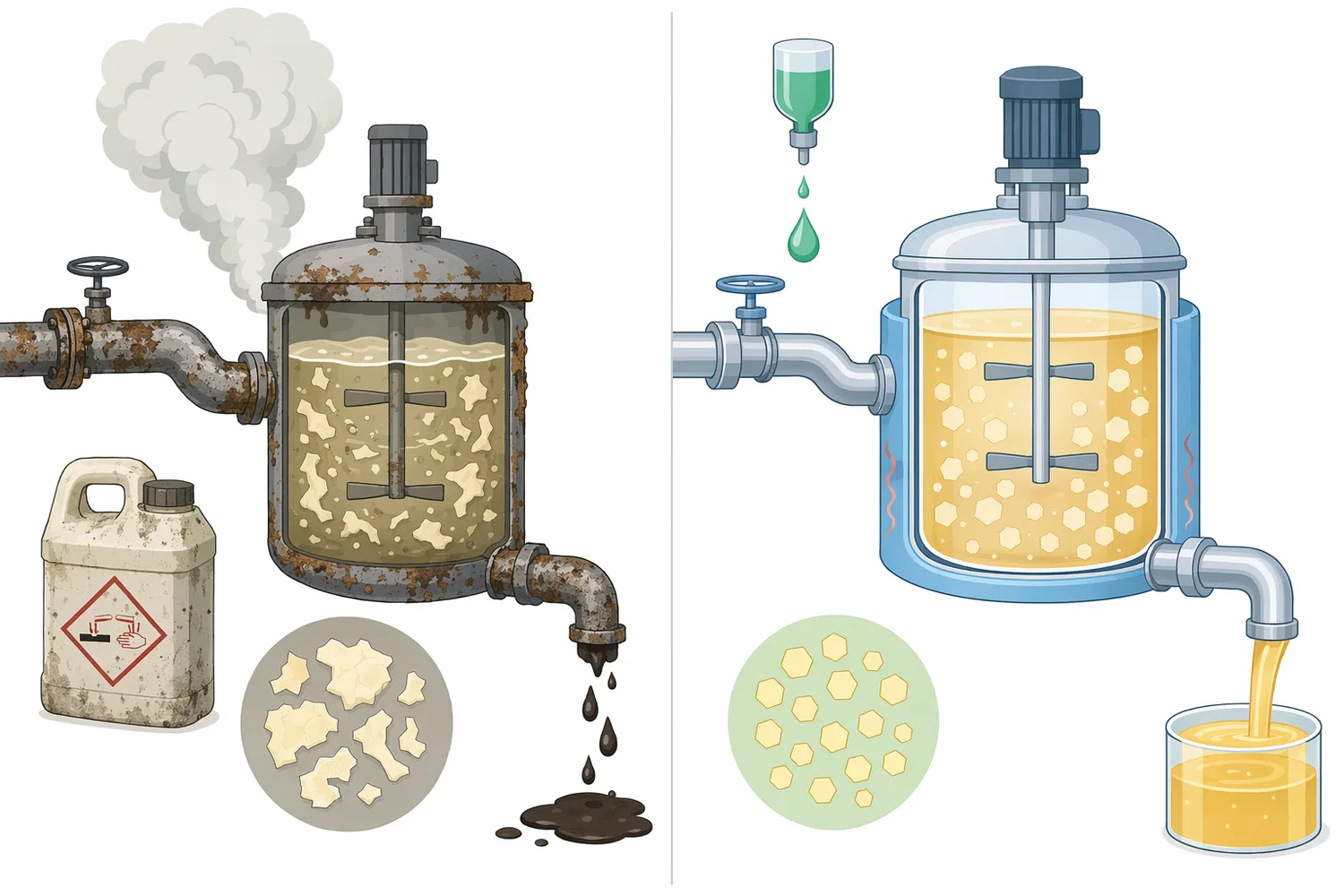
Alpha amylase is also relevant where starch must be removed rather than converted into a food or fermentation intermediate. In textile desizing, starch-based sizing agents are applied to yarns to improve weaving performance and then removed before finishing. Alpha-amylase treatment hydrolyzes the starch size into soluble fragments that can be washed away more easily. Research on alpha-amylase from Bacillus amyloliquefaciens evaluated both industrial wastewater treatment and textile desizing, confirming the enzyme class’s role outside conventional food starch liquefaction [13].
The mechanism is the same: internal α-1,4 bond cleavage reduces polymer size and disrupts the film-forming behavior of starch. A starch film that once adhered to fibers becomes a mixture of shorter soluble fragments with lower cohesive strength. This makes enzymatic desizing more targeted than harsh chemical removal because the catalyst attacks the starch component directly, though actual processing results still depend on fabric construction, size formulation, wetting, heat, and residence time [13].
Starch-containing residues can be difficult to process because they combine high viscosity, suspended solids, and biodegradable carbohydrate load. Alpha-amylase treatment can help convert part of that starch load into soluble dextrins and sugars, making the material easier to handle or biologically process. Studies using bread waste as a substrate for alpha-amylase production and application connect the enzyme to wastewater treatment and desizing, showing how starch hydrolysis can be integrated into waste valorization or treatment contexts [13].
Other work has explored amylase production and applications using agricultural by-products such as banana peels, reflecting broader interest in linking amylase technology with low-cost starch- or carbohydrate-rich substrates [14]. For process users, the practical relevance is that alpha-amylase chemistry is not confined to refined starch; it can also be useful where starch is embedded in complex plant or food matrices, although non-starch components may affect access and reaction behavior.
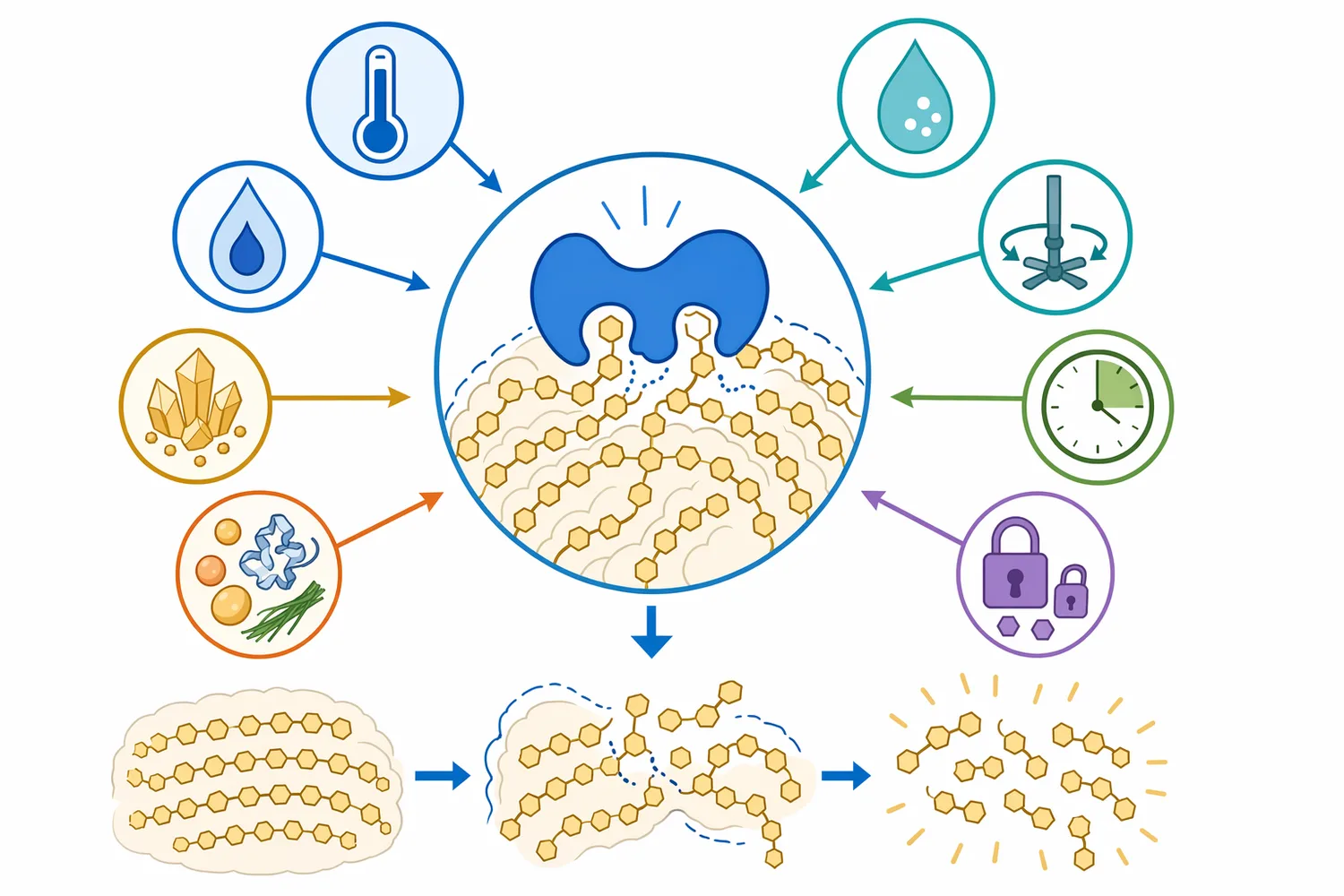
The biggest determinant of alpha-amylase action is substrate accessibility. Fully gelatinized starch exposes chains more readily than intact raw granules, while partially gelatinized or retrograded starch may present mixed accessibility. This is why heating history, moisture content, and mixing are not merely background conditions; they physically determine how much starch surface and polymer chain is available to the enzyme. Baks and co-workers showed that gelatinization and hydrolysis conditions affect hydrolysis selectivity with Bacillus licheniformis alpha-amylase, supporting this substrate-structure view [1].
Temperature has two opposing effects. As temperature rises, starch generally becomes more accessible and molecular motion increases, which can improve hydrolysis. At the same time, excessive heat can destabilize the enzyme protein. Thermostable alpha amylase is valuable because it shifts that balance, allowing catalytic action to continue under hotter conditions than less stable enzymes can tolerate. Research on activation and inactivation of thermostable alpha-amylase, including ultrasound-assisted approaches, highlights that enzyme performance is shaped by both activation conditions and loss of activity over time [15].
pH also affects catalytic behavior because the active-site residues that hydrolyze glycosidic bonds must be in the right ionization state. If the environment is too far from the enzyme’s functional range, substrate binding and bond cleavage become less efficient, even if the enzyme remains physically present. Characterization studies of thermostable alpha-amylases routinely report activity and stability across pH and temperature because those conditions influence how well the protein maintains its catalytic geometry [8].
The surrounding matrix can help or hinder hydrolysis. Salts, minerals, proteins, lipids, polyphenols, fiber, and other plant compounds may alter starch swelling, enzyme binding, or active-site access. Some plant-derived compounds can inhibit alpha-amylase, and alpha-amylase inhibitors from common bean have been purified and characterized as thermostable proteinaceous inhibitors, showing that biological matrices can contain molecules specifically capable of reducing amylase action [16].
Mechanical energy can also affect the reaction environment. Ultrasound, for example, has been studied for its ability to influence alpha-amylase activity and tailor enzymatic starch hydrolysis. Such treatments can change mass transfer, particle dispersion, local heating, or enzyme conformation depending on intensity and exposure. Comparative ultrasound research on alpha-amylase shows that physical processing can modify hydrolysis behavior, although the effect depends on the enzyme and system rather than being universally beneficial [17].
The evidence strongly supports thermostable alpha amylase as a practical catalyst for liquefying starch, reducing viscosity, generating dextrins, and preparing starch-rich materials for further conversion. That conclusion is supported by studies on thermostable enzymes from Bacillus licheniformis, Aeribacillus pallidus, Geobacillus, and other microbial sources, as well as broader reviews of industrial amylase relevance [7]. The mechanism is well understood: accessible starch chains are internally cleaved, molecular size falls, and the physical behavior of the slurry changes.
At the same time, starch hydrolysis is process-dependent. The same enzyme class may behave differently in corn starch, cassava starch, oat slurry, textile size, bread waste, porous starch production, or a mixed plant matrix. Differences in gelatinization, solids content, heating profile, pH, contact time, and non-starch components can all change the rate and product distribution. Studies on cassava hydrolysis, oat milk properties, desizing, and porous starch production collectively show how varied the application space can be [4].
Thermostable Alpha Amylase Enzyme Liquid for Starch Hydrolysis Processing is therefore best understood as a robust starch-liquefaction ingredient for heated systems where the desired functional change is shorter starch chains and lower viscosity. It can support easier handling, more uniform processing, and downstream conversion, but it does not replace the need for a well-designed process or any later saccharification step required for a specific sugar profile. Enzymes.bio makes the product available for direct online purchase in 1 kg units, with online payment, order processing and shipping, and documentation provided with the order .
Sold by the 1 kg unit, in stock and ready to ship. Order directly on our store — pay online and we process your order. A Certificate of Analysis and Safety Data Sheet are included with every order.
Buy Thermostable Alpha Amylase Enzyme Liquid For Starch Hydrolysis Processing →Numbered in order of first citation. Open-access sources, each verified reachable at publication; citation numbers in the text link here.