
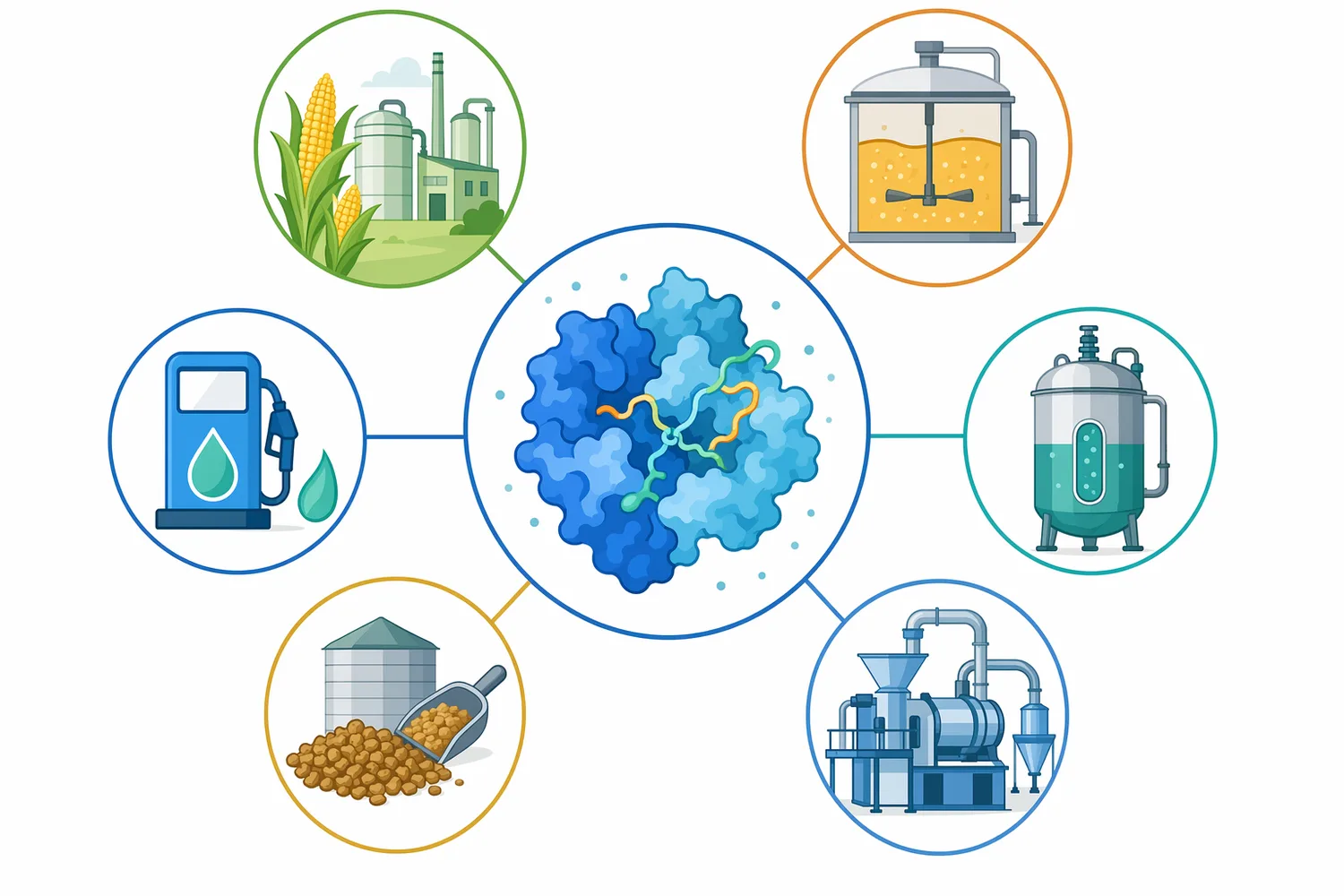
Thermostable alpha-amylase is a heat-tolerant starch-liquefying enzyme used to convert gelatinized starch into shorter dextrins and maltooligosaccharides during ethanol processing. It reduces the viscosity of cooked starch slurries, improves handling, and prepares the material for saccharification by glucoamylase and fermentation by yeast. In starch-based ethanol production, alpha-amylase is best understood as the liquefaction enzyme—not the final glucose-producing enzyme by itself [1].
Enzymes.bio supplies Thermostable Alpha-Amylase for Starch Hydrolysis in the Ethanol Industry as a B2B enzyme product available for direct online purchase by the 1 kg unit. Buyers place and pay for the order online; the order is then processed and shipped, with a Certificate of Analysis and Safety Data Sheet included with the order.
Starch-based ethanol production begins with a feedstock rich in polymeric carbohydrate: corn, cassava, wheat, sorghum, rice, tubers, or other starchy materials. Yeast cannot efficiently ferment intact starch because starch is not a simple fermentable sugar; it is a high-molecular-weight glucose polymer packed into granules and organized as amylose and amylopectin. Alpha-amylase starts the conversion by attacking internal α-1,4 glycosidic bonds inside these starch chains, producing shorter soluble fragments that can be further hydrolyzed into fermentable sugars [2].
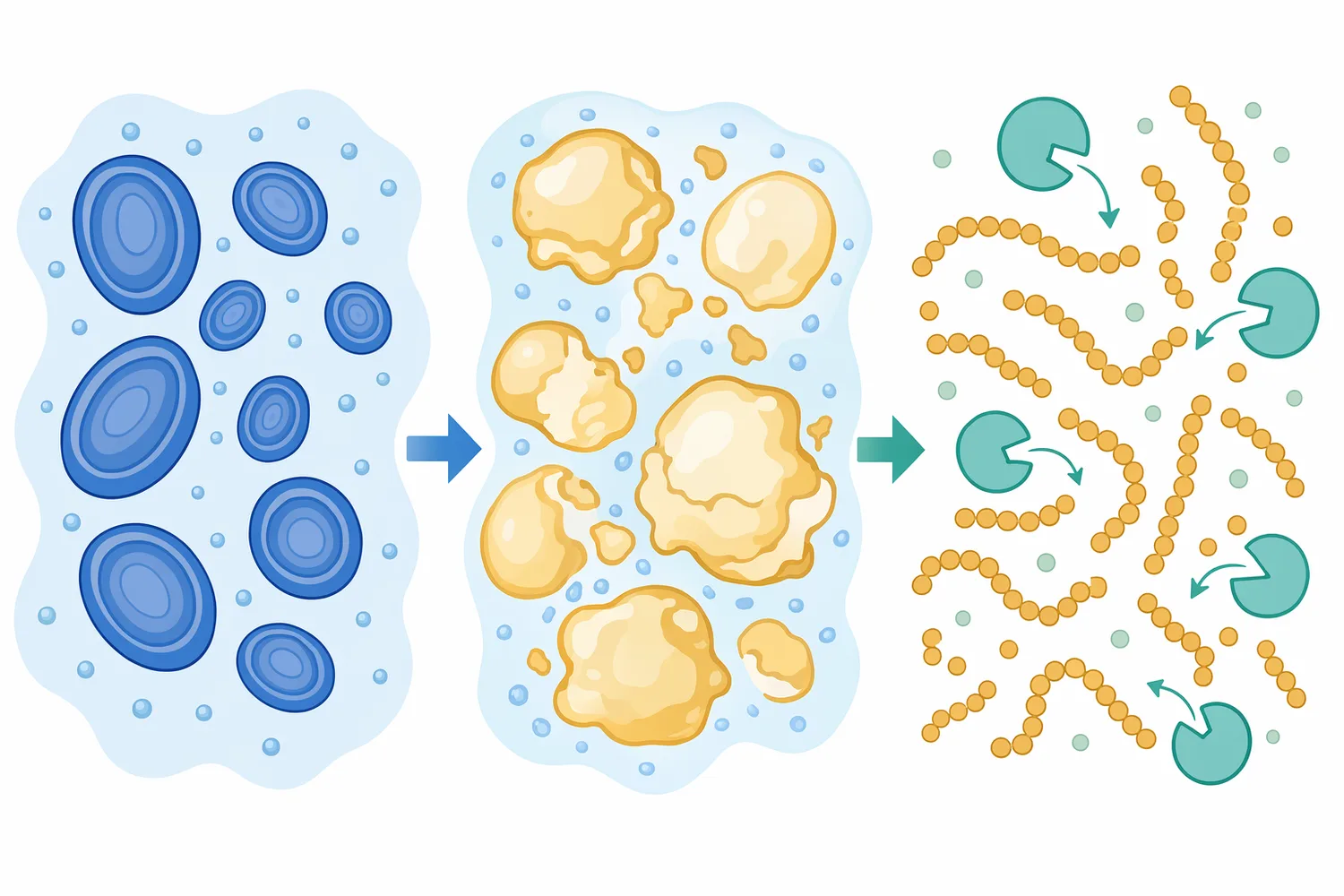
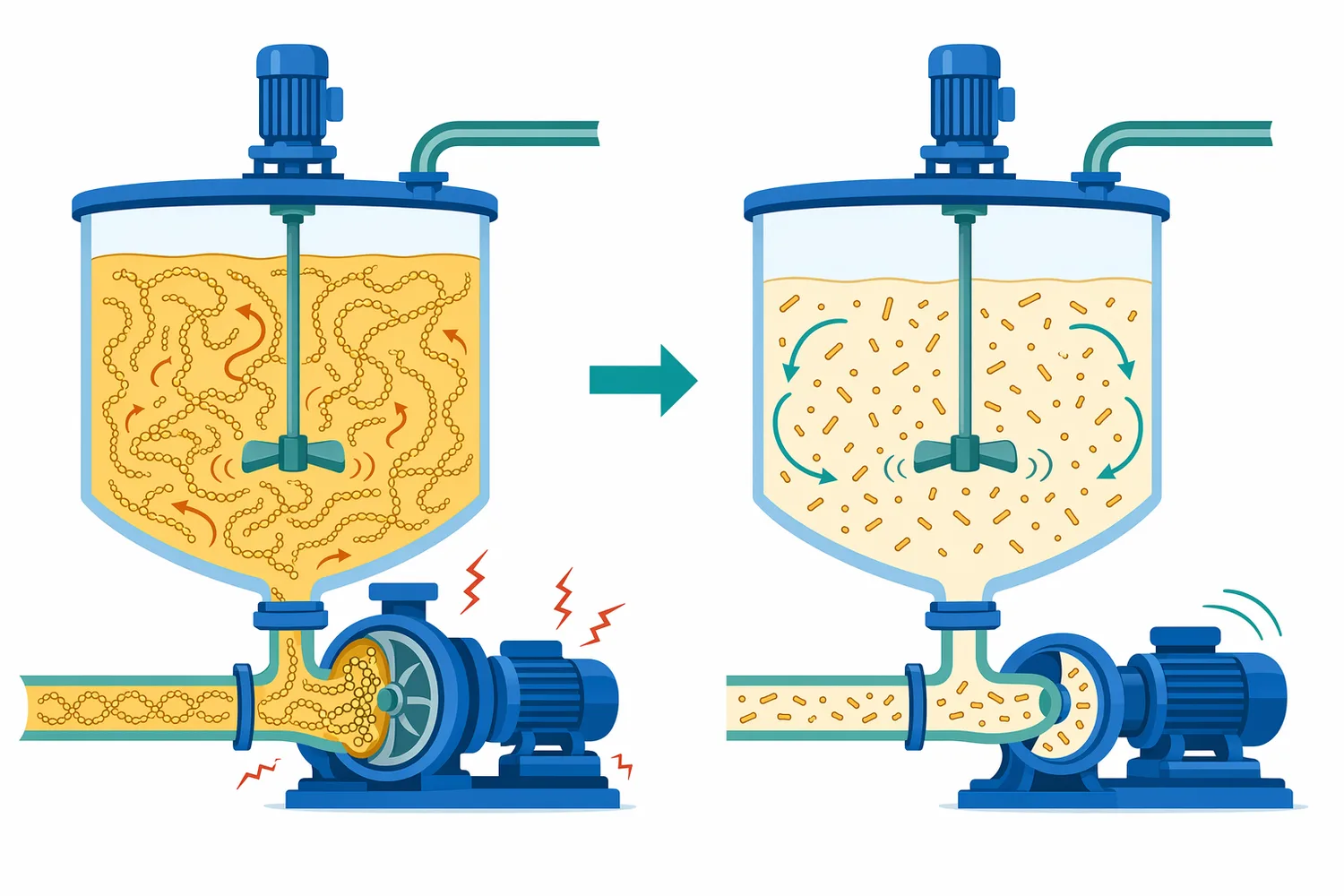
The practical value of a thermostable alpha-amylase is most visible after starch gelatinization. When starch is cooked in water, the granules swell, crystalline regions are disrupted, and the slurry becomes thick and paste-like. Long hydrated starch chains increase resistance to flow, making mixing, pumping, heat transfer, and downstream processing more difficult. Alpha-amylase reduces this viscosity by cutting long chains into shorter dextrins; the same mass of carbohydrate remains in the tank, but the molecules are shorter, more mobile, and less able to form a highly viscous network [3].
In a typical enzymatic conversion sequence, thermostable alpha-amylase performs liquefaction, while glucoamylase or related saccharifying enzymes perform the later glucose-releasing step. Alpha-amylase cuts within starch chains and rapidly reduces molecular size; glucoamylase works progressively from chain ends to release glucose units that yeast can ferment. This division of labor is central to starch ethanol processing: liquefaction makes the substrate manageable and accessible, while saccharification generates fermentable sugar [1].
Thermostability means the enzyme retains useful structure and catalytic function under elevated-temperature starch processing conditions. This matters because starch liquefaction normally follows or overlaps with a heating step used to gelatinize starch and expose it to enzymatic attack. If the amylase loses its folded active structure too quickly at these temperatures, liquefaction slows or becomes inconsistent; a thermostable enzyme is better suited to the hot, hydrated starch environment where viscosity reduction is needed [4].
Thermostable alpha-amylases are commonly associated with bacteria such as Bacillus species, although thermostable amylases are also reported from other microbial sources. Reviews of microbial amylases describe bacterial alpha-amylases as major industrial enzymes because many combine extracellular production, heat tolerance, and activity under processing-relevant conditions. This is why thermostable alpha-amylase is widely discussed in relation to starch liquefaction, brewing, food processing, textile desizing, detergents, and biofuel applications [1].
Several published studies focus specifically on thermostable alpha-amylase production and characterization. Work on Bacillus subtilis ATCC 6633, for example, examined solid-state fermentation conditions and characterized a thermostable alpha-amylase, while other research has explored thermostable alpha-amylase from Nocardiopsis and from hot-spring-derived microorganisms. These studies reinforce the same industrial theme: heat stability is not an academic label, but a property linked to whether the enzyme can remain useful during hot starch conversion [5].
Starch consists primarily of two glucose polymers. Amylose is mostly linear, with glucose units connected by α-1,4 bonds. Amylopectin is larger and branched: it contains α-1,4-linked chains with α-1,6 branch points. Alpha-amylase is an endo-acting enzyme, meaning it cuts internal α-1,4 bonds within starch chains rather than removing glucose one unit at a time from the ends [6].
This internal cutting pattern explains the rapid viscosity drop seen during liquefaction. Very long starch chains entangle and bind water, producing a thick paste after gelatinization. When alpha-amylase cleaves those chains at many internal points, the average chain length falls sharply. Shorter dextrins do not entangle as strongly, so the slurry becomes easier to mix and transfer even before the carbohydrate is fully converted into glucose [7].
The main products of alpha-amylase action are dextrins, maltodextrins, maltose, maltotriose, and other maltooligosaccharides, depending on the enzyme source and reaction conditions. Because alpha-amylase does not primarily remove single glucose units from every chain end, it is not normally used alone when the process goal is high fermentable glucose yield. Instead, its products become the substrate for glucoamylase and other saccharifying enzymes, which complete the conversion toward glucose before or during fermentation [2].
Branch points also matter. Alpha-amylase readily attacks α-1,4 linkages but does not fully debranch amylopectin by itself. As liquefaction proceeds, branched limit dextrins can remain unless the process includes enzymes capable of acting on branch structures. In ethanol production, the practical result is that alpha-amylase opens and shortens starch efficiently, but final fermentable sugar formation depends on the broader enzyme system used after liquefaction [1].
Native starch granules are not simply loose chains floating in water. They are compact, semi-crystalline particles with regions that resist enzyme penetration. Heating starch in water disrupts this structure: granules swell, crystalline order decreases, and chains become more available to water and enzymes. This is why alpha-amylase performs especially well in processes where starch has been cooked or otherwise made accessible [4].
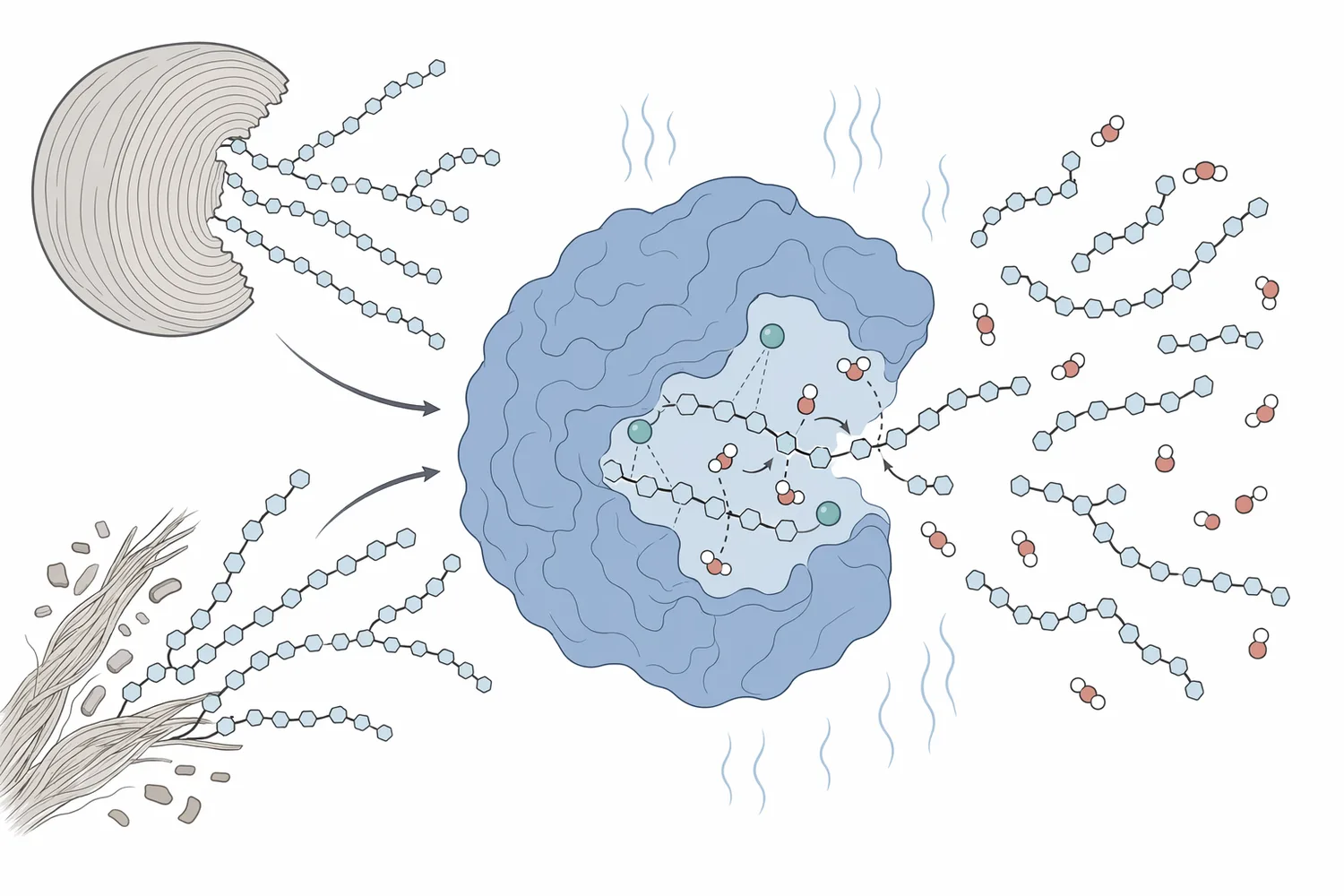
Thermostable alpha-amylase is matched to this physical reality. During the hot liquefaction step, starch is more open and reactive, but the process environment is also more demanding for proteins. A non-thermostable enzyme may denature as the substrate becomes accessible; a thermostable enzyme is better able to remain folded long enough to cut the exposed α-1,4 linkages. The benefit is not only chemical conversion but also mechanical: the hot paste becomes a pumpable hydrolysate as molecular size falls [3].
Some research also investigates raw-starch-hydrolyzing alpha-amylases, including thermostable acidic alpha-amylases from hot springs. These enzymes are scientifically important because they may attack less-cooked or raw starch under certain conditions. However, raw-starch activity is enzyme-specific and should not be assumed for every thermostable alpha-amylase; in many industrial starch liquefaction systems, gelatinization or heat pretreatment remains the practical way to make starch highly accessible [8].
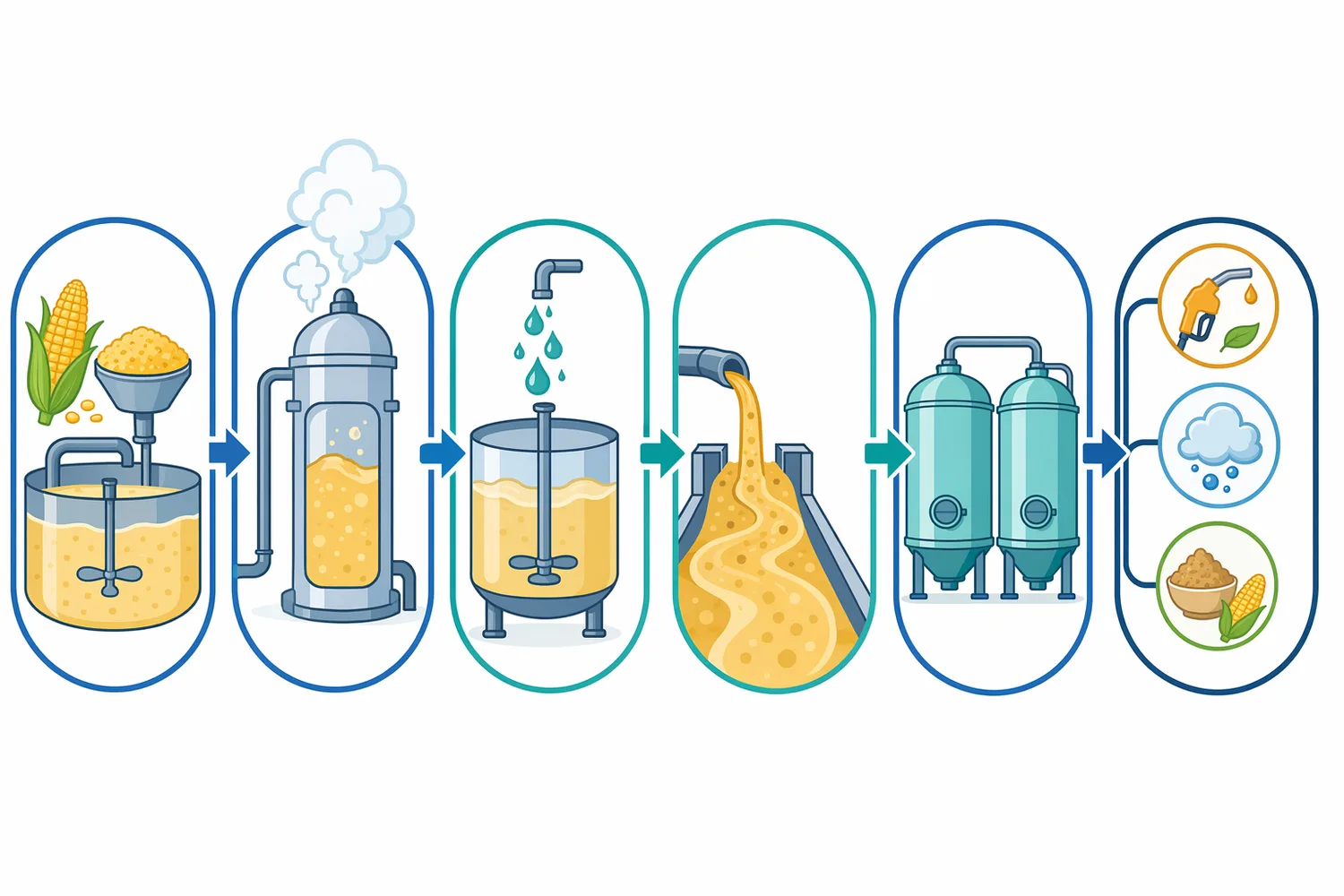
In starch ethanol workflows, alpha-amylase usually appears early, after slurry preparation and during liquefaction. The feedstock is milled or otherwise prepared, mixed with water, heated to disrupt starch granules, and treated with thermostable alpha-amylase to reduce viscosity and generate dextrins. The liquefied material then moves into saccharification, where dextrins are converted into fermentable sugars, followed by yeast fermentation to ethanol [2].
The sequence matters because each biological catalyst solves a different problem. Alpha-amylase solves the high-viscosity, high-molecular-weight starch problem. Saccharifying enzymes solve the fermentable-sugar problem. Yeast solves the ethanol-production problem. Treating alpha-amylase as a complete starch-to-ethanol solution would overstate its role; its strength is making the starch stream suitable for the next enzymatic and microbial steps [1].
Research on enzyme use in traditional alcohol and wine fermentation also highlights the importance of amylolytic conversion in alcoholic processes based on starchy raw materials. Immobilization studies have examined alpha-amylase in fermentation contexts, reflecting continuing interest in improving enzyme retention, reuse, and process integration. The core biochemical requirement remains the same: starch must be broken down into smaller carbohydrates before alcoholic fermentation can proceed efficiently [9].
Alpha-amylases are not a single identical enzyme family in practical performance. Their temperature tolerance, pH behavior, calcium dependence, and product profile vary with microbial source and protein structure. The table below gives a conceptual comparison of acidic, neutral, and alkaline alpha-amylase behavior to place thermostable starch-liquefying alpha-amylase in context without treating pH class alone as the full definition of performance [6].
| Alpha-amylase type | General operating character | Common application context | Relevance to ethanol starch hydrolysis |
|---|---|---|---|
| Acidic alpha-amylase | Active in lower-pH environments; some reported examples are thermostable or raw-starch hydrolyzing | Specialty starch hydrolysis, food and fermentation research, processes where acidic conditions are useful | Can be relevant where downstream saccharification or fermentation favors lower pH, but performance is enzyme-specific |
| Neutral alpha-amylase | Active around near-neutral conditions; many industrial bacterial amylases fall in this broad category | Starch liquefaction, food processing, brewing-related operations, general starch conversion | Strong conceptual fit for liquefaction of cooked starch before saccharification |
| Alkaline alpha-amylase | Active at higher pH; often discussed in detergents and textile processing | Detergent formulation, textile desizing, industrial cleaning of starch soils | Less central to conventional ethanol liquefaction, but important in other starch-removal applications |
This comparison is useful because “thermostable” and “pH class” describe different dimensions of enzyme behavior. An enzyme may be thermostable and acidic, thermostable and near-neutral, or engineered for other conditions. For ethanol users, the key functional point is that the enzyme must liquefy accessible starch effectively under the process environment in which it is used [4].
Microbial alpha-amylases are among the most studied industrial enzymes because they are secreted by many bacteria and fungi and act on a widely available substrate: starch. Reviews describe broad application across food, fermentation, textile, detergent, paper, pharmaceutical, and biofuel sectors. This wide adoption is rooted in a simple biochemical fact: starch is abundant, but its industrial value often depends on controlled hydrolysis into smaller, more soluble carbohydrates [2].
A 2020 review on microbial alpha-amylase production described progress, challenges, and perspectives for amylase use, including the continuing importance of strain selection, production optimization, enzyme stability, and application fit. For ethanol-related starch hydrolysis, the relevance is direct: efficient liquefaction depends on enzymes that can act quickly on gelatinized starch and remain useful under processing conditions [1].
Recent reviews on thermostable amylases from thermophilic microbes emphasize advances in production, engineering, and industrial application. Thermophilic and thermostable enzymes are valuable because heat stability allows reactions to run in hotter process windows, where starch is more accessible and viscosity reduction is especially important. This literature supports the ongoing industrial preference for thermostable amylases in liquefaction-heavy processes [4].
Thermostable alpha-amylase research spans many starch sources, including grains, tubers, and agro-industrial residues. Studies on bacterial isolates from local environments, Amazonian aquatic ecosystems, wastewater, and other sources show that researchers continue to screen diverse microbes for amylases with useful stability and activity characteristics. This breadth reflects the industrial demand for enzymes that can act on different starch-rich materials and remain functional in varied process environments [10].
Cassava, corn, sorghum, rice, wheat, and other starches differ in granule size, amylose-to-amylopectin ratio, lipid and protein interactions, and gelatinization behavior. These differences can influence how quickly starch becomes accessible and how liquefaction proceeds. Alpha-amylase’s mechanism—internal α-1,4 cleavage—remains the same, but the physical substrate presented to the enzyme can vary substantially between feedstocks [6].
Research on alpha-amylase from Bacillus amyloliquefaciens has also examined starch-related industrial applications outside ethanol, including textile desizing and wastewater-related uses. Textile desizing is mechanistically related because amylase removes starch-based size from fabric by hydrolyzing starch into soluble fragments. Although the application is different, the substrate transformation is the same core chemistry: α-1,4 bond cleavage reduces starch polymer size and solubilizes the material [11].
Studies on alpha-amylase production under submerged fermentation and solid-state fermentation further illustrate the scale of industrial interest in amylolytic enzymes. Researchers have investigated cultural conditions, microbial strains, and agro-residue substrates to improve alpha-amylase production. For a process user, the key takeaway is not the production method itself, but the maturity of alpha-amylase as an industrial enzyme class [12].
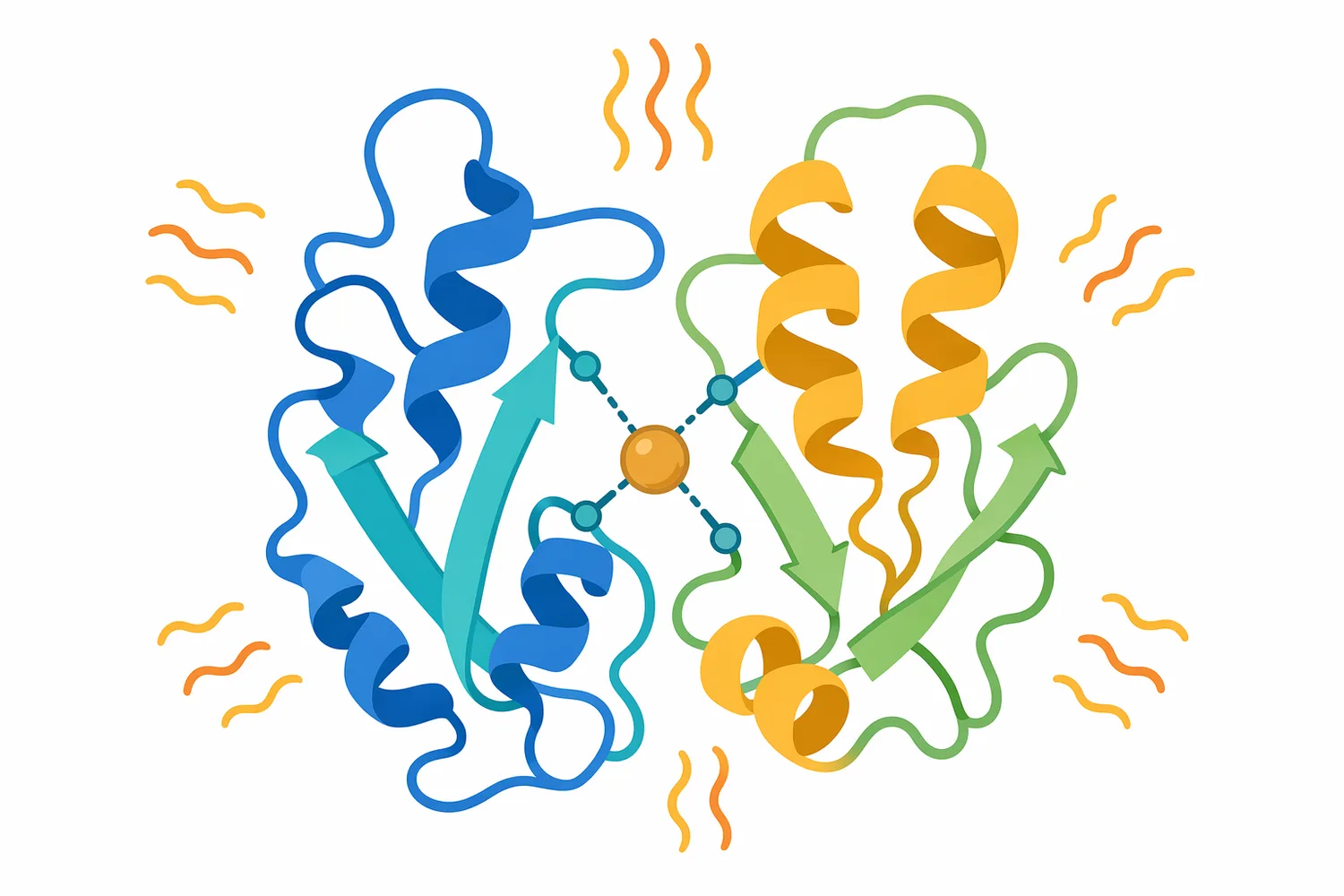
Alpha-amylase is a protein catalyst, and its activity depends on maintaining a folded three-dimensional structure that correctly positions catalytic residues around the starch chain. Heat can disrupt this structure, causing loss of activity. Thermostable alpha-amylases resist this unfolding more effectively, allowing them to operate in hot starch slurries where gelatinized starch is available for rapid hydrolysis [7].
Many alpha-amylases also contain bound metal ions, often calcium, that help stabilize the enzyme structure. In structural terms, calcium can reinforce regions of the protein that would otherwise become flexible or unfold under heat stress. Not every alpha-amylase behaves identically, and calcium dependence varies, but the general relationship between metal binding, structural stability, and high-temperature function is widely discussed in microbial amylase literature [6].
Thermostability can also be improved or altered through natural screening, mutation, and protein engineering. Studies have explored physical and chemical mutation to enhance alpha-amylase production, while more recent reviews discuss computational approaches for predicting structural features and trends in alpha-amylase production. The industrial direction is clear: better starch hydrolysis often depends on matching enzyme structure to demanding processing environments [13].
The first practical outcome of thermostable alpha-amylase use is lower slurry viscosity. In a cooked starch stream, viscosity is not only a laboratory property; it affects agitator load, pumpability, temperature uniformity, and the ability to move material through process equipment. By shortening starch chains, alpha-amylase reduces the physical network responsible for paste thickness, making the hydrolysate easier to handle [3].
The second outcome is formation of dextrins and maltooligosaccharides that are suitable for saccharification. These fragments present many chain ends and smaller molecules for downstream enzymes to attack. A highly liquefied substrate gives saccharifying enzymes better access than intact gelatinized starch, which is why alpha-amylase is placed before glucoamylase in the starch-to-ethanol sequence [1].
The third outcome is more uniform substrate conversion. When viscosity falls, mixing improves, heat distribution becomes more even, and enzyme contact with starch is less limited by mass transfer. Alpha-amylase therefore affects both chemistry and process mechanics: it cleaves bonds, and that bond cleavage changes the physical behavior of the entire slurry [4].
Glucoamylase complements alpha-amylase because it releases glucose from the non-reducing ends of dextrins and related starch fragments. Where alpha-amylase rapidly opens the starch polymer, glucoamylase progressively converts those fragments into glucose. In ethanol production, this glucose is the main sugar that yeast converts into ethanol and carbon dioxide [2].
This relationship explains why liquefaction quality can influence fermentation performance indirectly. If starch is poorly liquefied, saccharification may be slower because downstream enzymes face larger, less accessible molecules and a more viscous medium. If liquefaction produces suitable dextrins, saccharification has a more accessible substrate pool, supporting glucose formation for yeast metabolism [1].
Fermentation itself is not performed by alpha-amylase. Yeast carries out ethanol production through metabolic pathways that convert fermentable sugars into ethanol. Alpha-amylase’s contribution is upstream: it makes starch compatible with the sugar-generation steps that feed fermentation. This distinction is important for realistic expectations and for understanding the enzyme’s role in process performance [9].
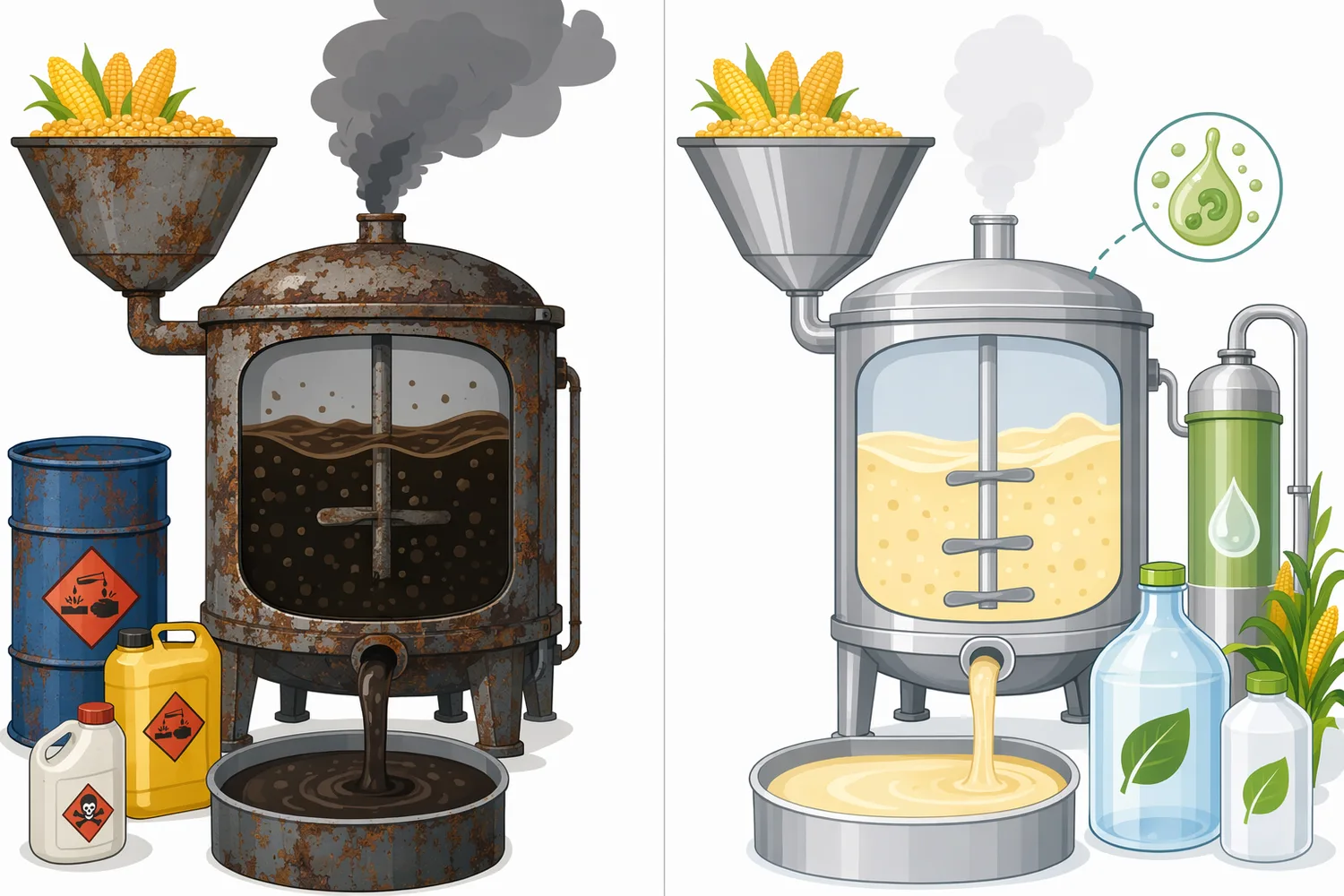
Thermostable enzymes are frequently discussed in bioethanol research because biofuel processes often involve heat, complex substrates, and the need for robust catalysts. Reviews of thermostable enzymes for bioethanol production emphasize that high-temperature tolerance can improve compatibility with pretreatment and hydrolysis conditions, reduce cooling requirements in some process designs, and help maintain reaction performance under industrially demanding conditions [14].
For starch-based ethanol, the relevance is especially direct because starch liquefaction is a heat-associated operation. Gelatinization exposes starch but also creates hot, viscous material; thermostable alpha-amylase is valuable precisely because it acts under those conditions. The enzyme’s function is therefore linked to both substrate physics and process temperature [3].
Second-generation bioethanol literature often focuses on lignocellulosic feedstocks rather than pure starch, but it reinforces the broader importance of thermophilic and thermostable biocatalysts in biomass conversion. Starch hydrolysis and lignocellulose hydrolysis use different enzyme systems, yet both fields value catalysts that remain active under elevated-temperature process conditions [15].
Thermostable alpha-amylase is most directly suited to starch liquefaction before saccharification. In ethanol production, that means processing cooked or otherwise accessible starch into dextrins that can be converted into glucose. In related industries, the same enzyme class is used for starch syrup production, maltodextrin generation, brewing adjunct processing, textile desizing, and other operations where controlled starch breakdown is useful [2].
The enzyme is also relevant where feedstock flexibility is important. Published alpha-amylase research covers bacterial, fungal, thermophilic, and environmental isolates, reflecting the need to hydrolyze starches that differ in origin and physical behavior. Whether the substrate is grain starch, tuber starch, or starch-containing residue, the central reaction remains cleavage of α-1,4 bonds in accessible starch chains [16].
However, results are not identical across all feedstocks or process conditions. Starch granule architecture, pretreatment intensity, solids concentration, temperature, pH, and the presence of other enzymes all influence practical hydrolysis outcomes. The literature supports thermostable alpha-amylase as a core liquefaction tool, but it also shows why alpha-amylase should be viewed as one component of a complete starch-conversion system [4].
Thermostable alpha-amylase is strongly supported for liquefaction, viscosity reduction, and dextrin formation. It should not be described as a standalone ethanol enzyme because it does not, by itself, perform yeast fermentation or normally complete high-yield glucose production from starch. Its main role is to reduce molecular size and prepare starch for saccharification [1].
Raw starch hydrolysis should also be described carefully. Some thermostable alpha-amylases, including acidic or raw-starch-hydrolyzing examples from specialized microbial sources, have been studied for activity on raw starch. That does not mean every thermostable alpha-amylase will perform equally on ungelatinized starch; many starch processes still rely on heat to disrupt granule structure before efficient liquefaction [8].
Thermostability itself is enzyme-specific. Different alpha-amylases vary in heat tolerance, pH behavior, metal ion dependence, and product distribution. A thermostable alpha-amylase intended for ethanol starch hydrolysis should therefore be understood functionally: it is used where accessible starch must be rapidly liquefied under elevated-temperature conditions before saccharification and fermentation [7].
Enzymes.bio supplies Thermostable Alpha-Amylase for Starch Hydrolysis in the Ethanol Industry for direct online purchase by the 1 kg unit. The ordering process is straightforward: the buyer purchases online, payment is completed online, and the order is processed and shipped. A Certificate of Analysis and Safety Data Sheet are included with the order.
For users working with starch-based ethanol or related starch hydrolysis operations, the enzyme’s role is educationally clear: it is a heat-tolerant liquefaction enzyme that cleaves internal α-1,4 bonds in gelatinized or otherwise accessible starch. This action reduces viscosity, creates dextrins and maltooligosaccharides, and prepares the carbohydrate stream for downstream saccharification into fermentable glucose [2].
Thermostable alpha-amylase is an evidence-supported enzyme for the liquefaction stage of starch hydrolysis in ethanol production. It works by cutting internal α-1,4 bonds in starch polymers, which shortens the chains, lowers slurry viscosity, and produces dextrins that downstream enzymes can convert into fermentable sugars [3].
Its value is strongest when understood as part of the established starch-to-ethanol sequence: starch preparation and gelatinization, alpha-amylase liquefaction, glucoamylase saccharification, and yeast fermentation. Used in that role, thermostable alpha-amylase helps turn thick cooked starch into a manageable, enzyme-ready hydrolysate for ethanol processing [1].
Sold by the 1 kg unit, in stock and ready to ship. Order directly on our store — pay online and we process your order. A Certificate of Analysis and Safety Data Sheet are included with every order.
Buy Thermostable Alpha-Amylase For Starch Hydrolysis In Ethanol Industry →Numbered in order of first citation. Open-access sources, each verified reachable at publication; citation numbers in the text link here.