
Transglutaminase is a protein-cross-linking enzyme used to bind protein surfaces and strengthen protein networks in foods such as restructured meat, formed poultry or seafood, sausages, dairy gels, and selected plant-protein systems. It works by catalyzing covalent links between protein-bound glutamine residues and amine donors such as lysine residues, so the food matrix becomes more cohesive rather than simply thicker or stickier [1].
For buyers using Enzymes.bio, Transglutaminase is available for direct online purchase by the 1 kg unit. The order is paid for online, processed, and shipped, with a Certificate of Analysis and Safety Data Sheet included with the order.
Transglutaminase is best known in food processing as “meat glue,” but that nickname is only partly accurate. The enzyme is not an adhesive in the way epoxy, starch paste, or hydrocolloid glue is an adhesive. Instead, meat glue transglutaminase modifies the proteins already present at the surface or inside the food matrix. When enough accessible protein is present, the enzyme helps create new links between protein chains, improving cohesion, bite, sliceability, and shape retention in suitable formulations [2].
The key reaction is an acyl-transfer reaction involving glutamine residues in proteins. In practical food language, one protein chain supplies a glutamine side chain, another protein chain supplies an amine group—often from lysine—and transglutaminase catalyzes formation of an ε-(γ-glutamyl)lysine-type cross-link. This new covalent bridge ties the proteins together more permanently than simple hydration, mixing, or cold compression alone [1].
That mechanism explains both the strengths and the limits of transglutaminase. It can join protein-rich surfaces, strengthen gels, and reduce crumbliness in formed products, but it cannot create a strong structure from fat, oil, starch, or water alone. The enzyme needs suitable protein, sufficient moisture for contact and mobility, and physical proximity between the protein surfaces or particles being joined [3].
In food applications, the enzyme most often discussed is microbial transglutaminase. This is distinct from human tissue transglutaminase, also called transglutaminase 2 or transglutaminase tTG in biomedical contexts. Search terms such as tissue transglutaminase antibody IgA, tissue transglutaminase IgG, transglutaminase IgA, IgA transglutaminase, tissue transglutaminase antibody, tissue transglutaminase ab, tissue transglutaminase abs, and tissue transglutaminase IgA antibody relate to medical testing and autoimmunity, not to the food-processing enzyme sold for protein structuring [4].
Proteins are folded chains with reactive groups exposed to different degrees depending on pH, heat history, salt conditions, hydration, and mechanical treatment. Transglutaminase acts only where it can reach suitable sites. When it finds an accessible glutamine residue, the enzyme forms a temporary acyl-enzyme intermediate; that intermediate can then react with an amine-containing group on another protein chain, producing a cross-link between the two proteins [5].
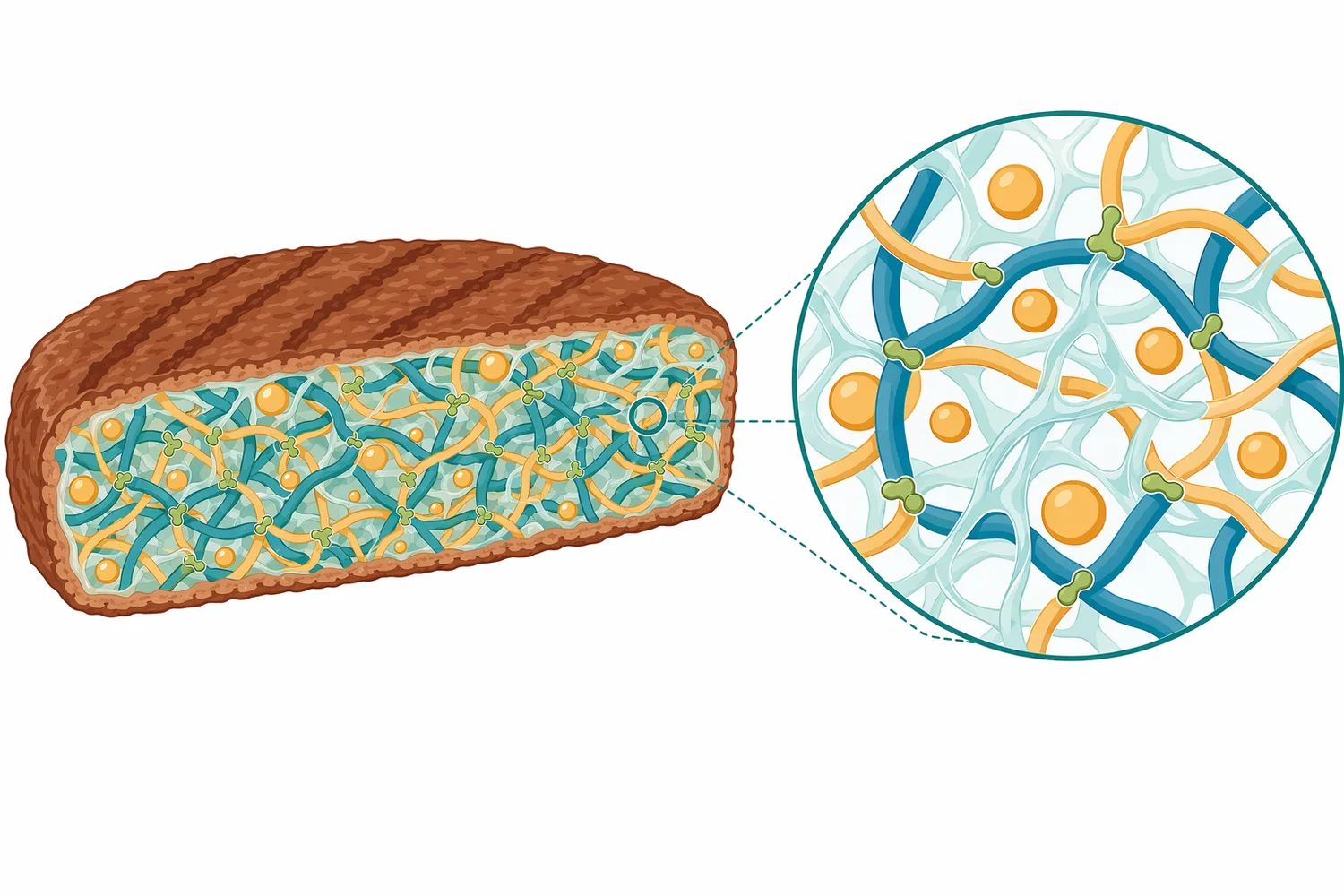
In a piece of meat, that means surface myofibrillar proteins can become linked across the seam when two lean surfaces are held in close contact. In minced or emulsified systems, it means many smaller protein particles can become part of a more continuous network. In dairy or plant-protein gels, it means the network can become more elastic, cohesive, or water-retentive depending on the protein type and process design [6].
The change is molecular, but the result is physical. A loose matrix may become sliceable; small pieces may hold as a single formed portion; a gel may resist fracture better; an emulsion gel may show improved structural integrity. Research on whey protein emulsion gels, for example, examined double cross-linking with transglutaminase and calcium ions and reported changes in structure, rheology, and functionality—exactly the type of macroscopic performance shift expected when protein networks are chemically reinforced [7].
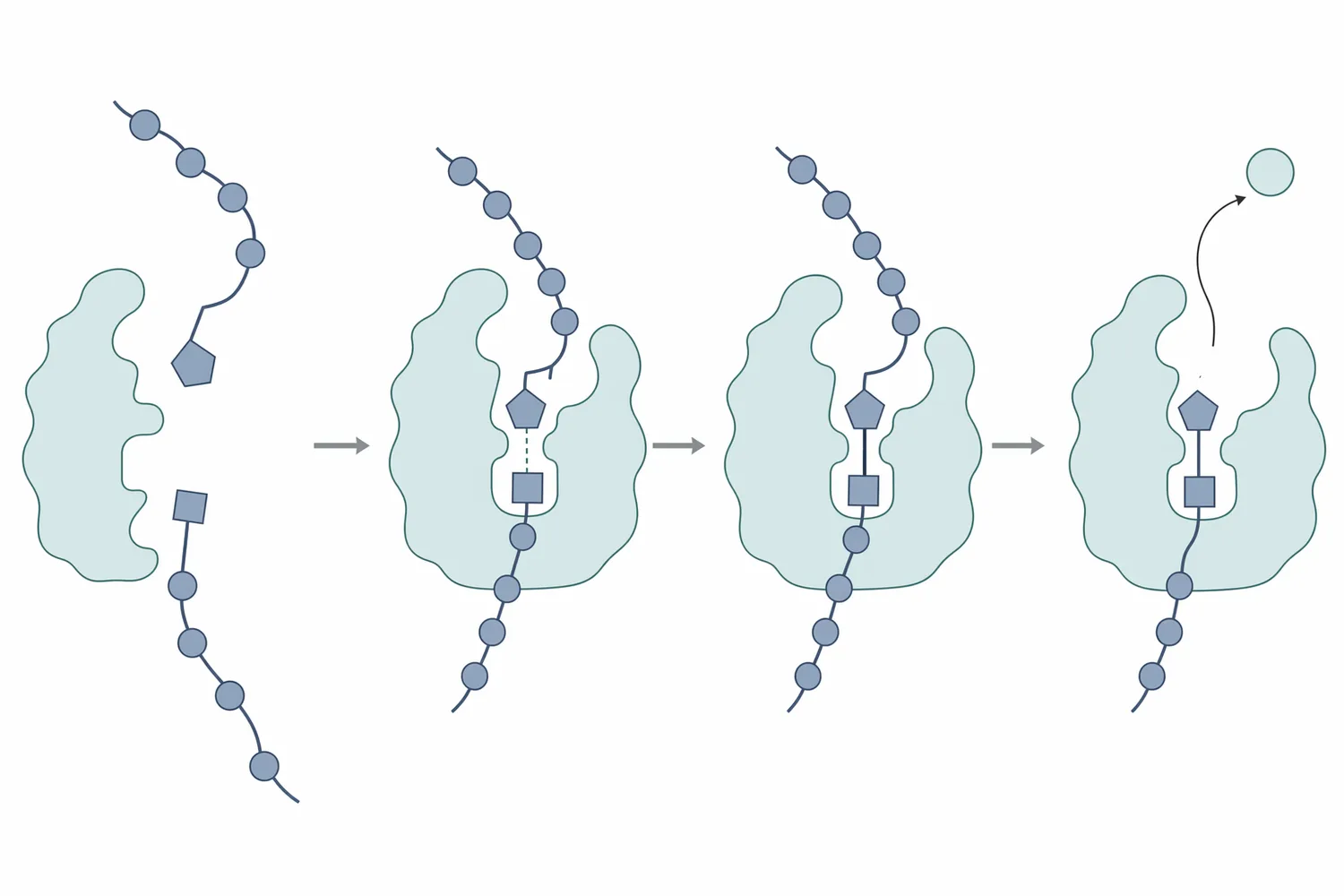
This is why transglutaminase protein modification is valuable in food development: it works with the existing protein phase rather than adding bulk. The enzyme does not need to become a major ingredient in the finished structure; it catalyzes changes in the substrate proteins. Once cross-links are formed, the food’s mechanical behavior can change because the protein molecules are now connected in more places [8].
The most familiar application is transglutaminase meat binding. A transglutaminase steak or formed meat portion is created by bringing suitable meat surfaces together so the enzyme can link proteins across the interface. This can help convert smaller pieces into uniform portions, support consistent shapes, and improve handling before cooking, provided the interface contains enough exposed protein [9].
In lean meat, the relevant substrates are primarily muscle proteins. When chopping, tumbling, slicing, or surface preparation exposes those proteins, transglutaminase can act at the contact zone between pieces. The bond develops because the enzyme links protein chains from one side of the seam to protein chains on the other side, turning a mechanical contact into a biochemical connection [2].
The same principle applies in sausages, farces, and formed poultry systems. Instead of forming one seam between two pieces, the enzyme can work throughout a comminuted matrix where meat particles, extracted proteins, water, salt, and fat are dispersed. In this setting, cross-linking can strengthen the protein network that traps water and fat, helping the product maintain structure during forming, slicing, or heating [6].
Pork myofibrillar protein-lipid emulsion composite gels provide a useful example of the mechanism in a fat-containing system. Research on rheological enhancement using a glucose oxidase oxidation/transglutaminase cross-linking pathway focused on how protein-lipid emulsion gels respond when protein cross-linking is combined with oxidative structuring. The important point for practical use is that the enzyme acts through the protein phase of the emulsion, not by bonding the lipid itself [6].
Seafood and fish-based products follow the same biochemical logic. Fish muscle proteins can be cross-linked when they are accessible, hydrated, and held in a suitable matrix. The result may be improved gel strength or product cohesion, but outcomes vary because fish species, protein freshness, salt extraction, pH, and heat treatment strongly affect how much reactive protein is available [3].
In dairy, transglutaminase is generally used for network modification rather than visible “gluing.” Milk proteins, whey proteins, and mixed dairy-protein systems can form gels or emulsions whose texture depends on the number and distribution of protein-protein contacts. Cross-linking can increase connectivity within that network, changing firmness, viscosity, elasticity, and water-holding behavior [7].
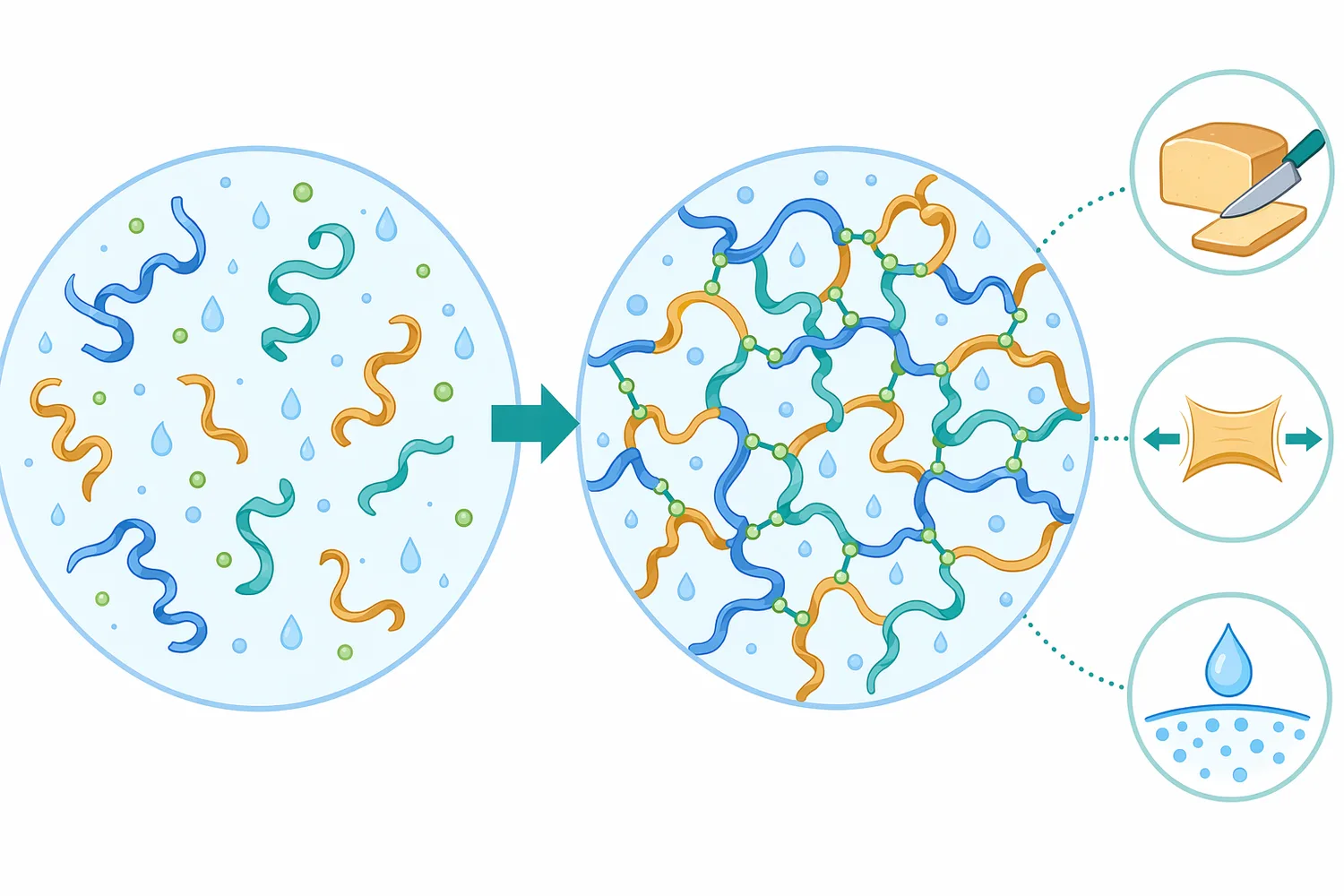
Whey protein emulsion gels illustrate this well. In a study of whey protein emulsion gels, double cross-linking with transglutaminase and calcium ions affected structure, rheology, and functionality. Transglutaminase contributes covalent protein-protein links, while calcium can influence ionic interactions and network assembly; together, these routes can produce a gel structure different from either treatment alone [7].
Cross-linking can also change sensory-related properties after protein hydrolysis. Whey protein hydrolysates often contain shorter peptides that can contribute bitterness and different emulsifying behavior. Research on whey protein hydrolysates after transglutaminase cross-linking examined physicochemical changes and bitterness, supporting the practical idea that rebuilding peptide or protein associations can alter both function and taste perception in hydrolyzed protein systems [10].
For dairy-style formulations, the enzyme’s effect depends heavily on the condition of the proteins before treatment. Heat can unfold proteins and expose reactive residues; excessive aggregation can hide sites or create an uneven network. The useful outcome is not simply “more cross-linking,” but the right distribution of cross-links in a hydrated protein system so the finished texture remains pleasant rather than rubbery or brittle [8].
Transglutaminase is increasingly relevant in plant-protein foods because plant proteins can be abundant in glutamine and lysine residues, but their accessibility differs widely by source and processing history. Soy, pea, peanut, quinoa, black bean, wheat gluten, and mixed plant systems each present different folded structures, solubility behavior, and aggregation patterns, so the same enzyme can produce different textural outcomes [3].
Soy protein isolate is one of the most studied plant substrates. Work on Bacillus subtilis transglutaminase-catalyzed cross-linking reported enhanced functional characteristics of soy protein isolate, consistent with the idea that enzymatic linking can modify solubility, emulsification, gelation, and structural behavior by changing the size and connectivity of protein assemblies [11].
Mixed protein systems can be especially responsive because one protein may supply reactive sites or network behavior that complements another. Research on soybean-whey mixed protein gels found that ultrasonic pretreatment improved gel properties after microbial transglutaminase cross-linking. Mechanistically, ultrasound can alter protein conformation and dispersion, making more sites accessible before the enzyme forms cross-links [12].
Peanut proteins provide another example. A study of arachin and conarachin examined how microfluidization and transglutaminase cross-linking changed conformations and functional properties. Microfluidization can reduce particle size and alter protein exposure; transglutaminase then has a different substrate landscape, which can translate into changes in emulsifying and gel-forming performance [13].
Black bean protein isolate has also been evaluated. Research on heated black bean protein isolate found that transglutaminase cross-linking affected structure and emulsification performance. Heating can unfold plant proteins, exposing buried residues, while enzymatic cross-linking can then stabilize new protein assemblies that behave differently at oil-water interfaces [14].
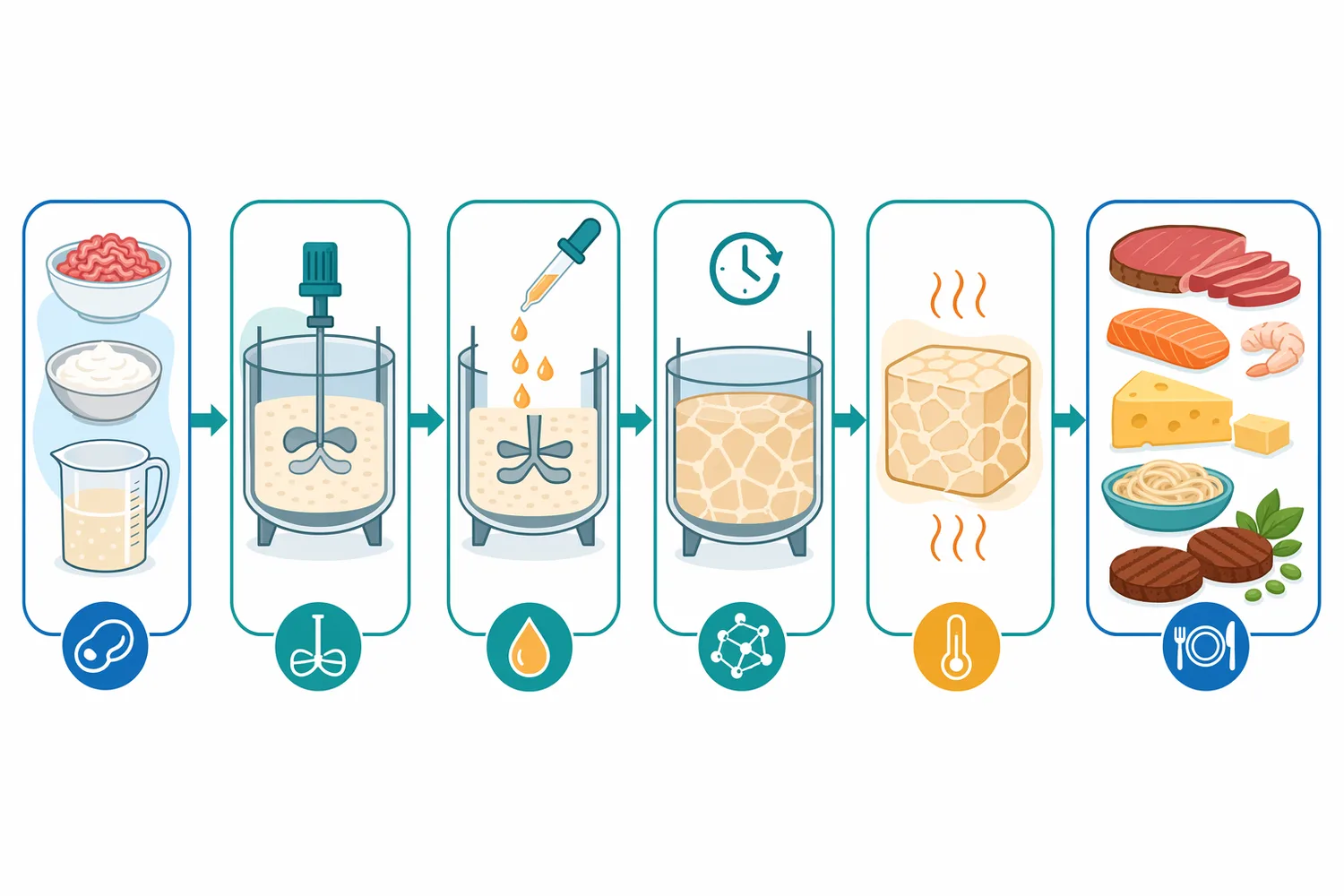
In meat analogues, transglutaminase can help reinforce a plant-protein network so the product has more bite and shape retention. Recent work on double-network meat analogs based on camellia oleosomes, soy protein, wheat gluten, transglutaminase, and calcium alginate shows how enzymatic protein cross-linking can be combined with polysaccharide gelation to build layered texture rather than relying on one structuring mechanism alone [15].
Hydrolyzed proteins can be nutritionally or allergenically useful, but hydrolysis breaks proteins into smaller peptides and often weakens gelation, emulsification, and mouthfeel. It can also expose hydrophobic peptide regions associated with bitterness. Transglutaminase offers one route to rebuild some structure by linking peptides or protein fragments into larger assemblies [16].
Soybean protein hydrolysates provide a good example. Research combining Alcalase hydrolysis and transglutaminase cross-linking reported improved bitterness and techno-functional properties of hypoallergenic soybean protein hydrolysates through structural modifications. In practical terms, hydrolysis first reduces protein size and changes allergenic or digestibility-related properties; cross-linking then reconnects fragments in ways that can improve food functionality [16].
Whey protein hydrolysate work points in the same direction. After transglutaminase cross-linking, researchers observed physicochemical changes and effects on bitterness, suggesting that enzymatic reconnection can alter how peptides interact with water, oil, and sensory receptors. This does not mean transglutaminase masks all bitterness, but it shows why the enzyme is considered in protein beverage, nutrition, and hydrolysate-based food systems [10].
The key distinction is that transglutaminase is not a protease. It does not cut proteins into smaller pieces; it links suitable protein or peptide segments. That makes it complementary to hydrolysis in some processes: hydrolysis can create smaller, more soluble, or less allergenic fragments, while transglutaminase can partially restore body, emulsification, or gel behavior by forming new connections [16].
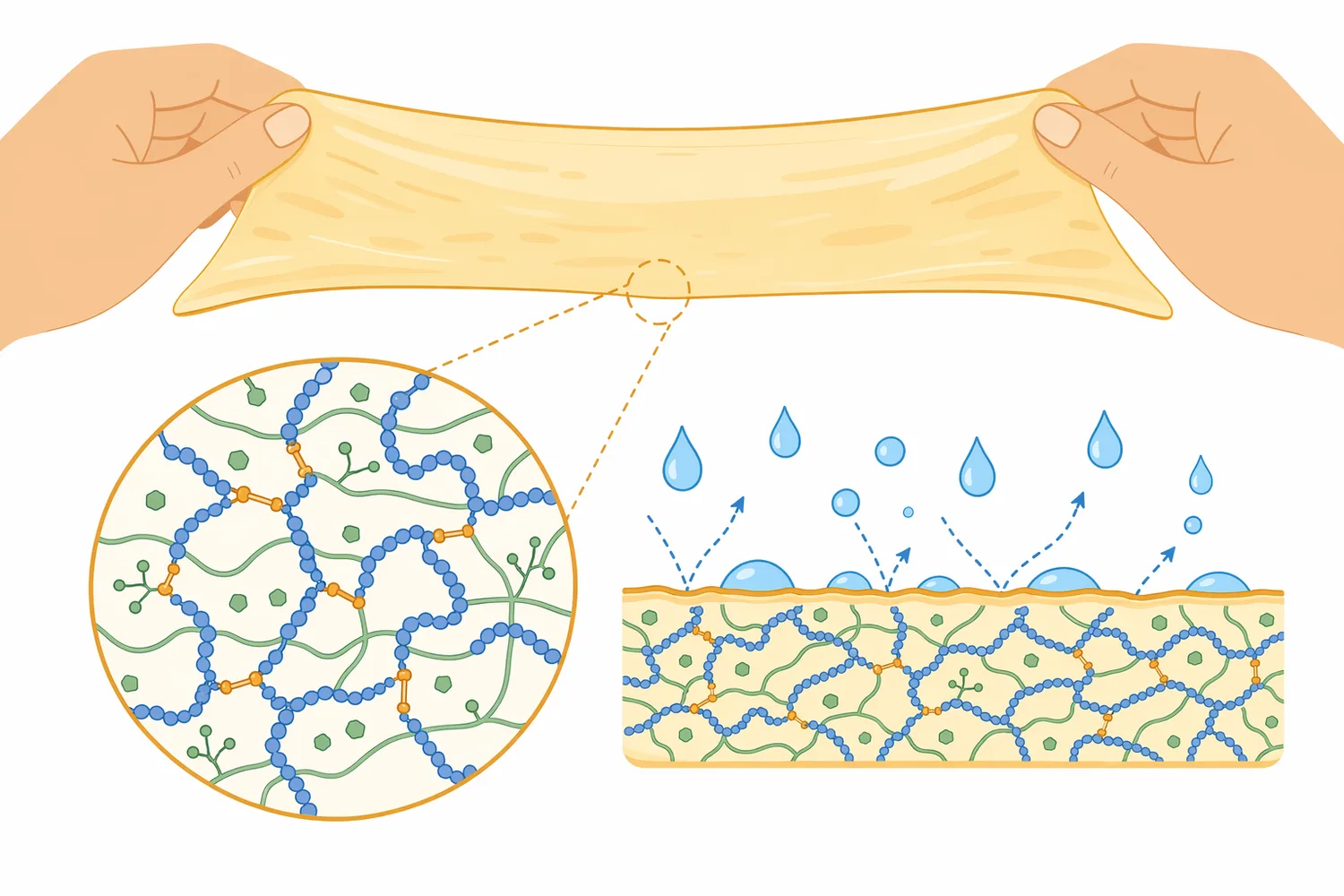
Beyond meat, dairy, and plant-based foods, transglutaminase is studied in edible films and protein-based packaging. These systems depend on forming a continuous matrix that resists tearing, controls water vapor movement, and holds shape. Protein cross-linking can reduce excessive solubility and improve mechanical strength by increasing the number of covalent connections within the film [17].
Reviews of transglutaminase-cross-linked protein-based food packaging films describe how enzymatic cross-linking can modify film strength, barrier properties, and water sensitivity. Mechanistically, a film becomes less like a loose dried protein layer and more like a connected polymer network, which can make it stronger and less prone to rapid disintegration in humid conditions [17].
Quinoa protein-chitosan films show how this idea works in mixed biopolymer systems. Research on protein isolates from two quinoa varieties with chitosan found that transglutaminase cross-linking affected physicochemical properties of edible films. The protein provides the enzymatic substrate, while chitosan contributes polysaccharide structure, charge interactions, and film-forming behavior [18].
Protein-polysaccharide conjugates are also important in modern food systems because they can improve emulsification, stability, and texture. Transglutaminase can contribute when the protein portion remains available for enzymatic modification, although many protein-polysaccharide conjugation routes also rely on non-enzymatic reactions such as Maillard-type chemistry [19].
| Application area | Main substrate the enzyme acts on | What physically changes | Typical value in the finished product |
|---|---|---|---|
| Meat glue transglutaminase for formed meat | Muscle proteins on lean surfaces or in minced matrices | Protein chains become linked across seams or throughout the matrix | Better cohesion, portion integrity, and sliceability |
| Sausages and farces | Extracted and dispersed myofibrillar proteins | The protein network becomes more continuous around water and fat | Improved bite, handling, and reduced crumbling |
| Dairy and whey gels | Casein and/or whey protein networks | Gel connectivity and rheology change | More controlled body, viscosity, firmness, or water retention |
| Plant-based meat analogues | Soy, wheat gluten, pea, peanut, bean, or mixed plant proteins | Protein particles and strands become more connected | Improved structure and chew in suitable formulations |
| Protein films and coatings | Film-forming proteins, sometimes with polysaccharides | The dried matrix becomes more cross-linked | Improved strength and moisture response |
This comparison highlights the same underlying mechanism in different applications: transglutaminase changes the protein network. Whether the visible result is a bonded steak, a firmer yogurt-style gel, a better plant-based patty, or a stronger edible film depends on the substrate and process, not on a different basic enzyme function [3].
Protein accessibility is the first practical factor. A food may contain a high total protein content but still respond weakly if reactive residues are buried inside compact aggregates or shielded by fat, starch, or insoluble particles. Pretreatments such as heating, hydration, homogenization, ultrasound, or microfluidization can change accessibility, which is why many studies evaluate transglutaminase together with physical processing [13].
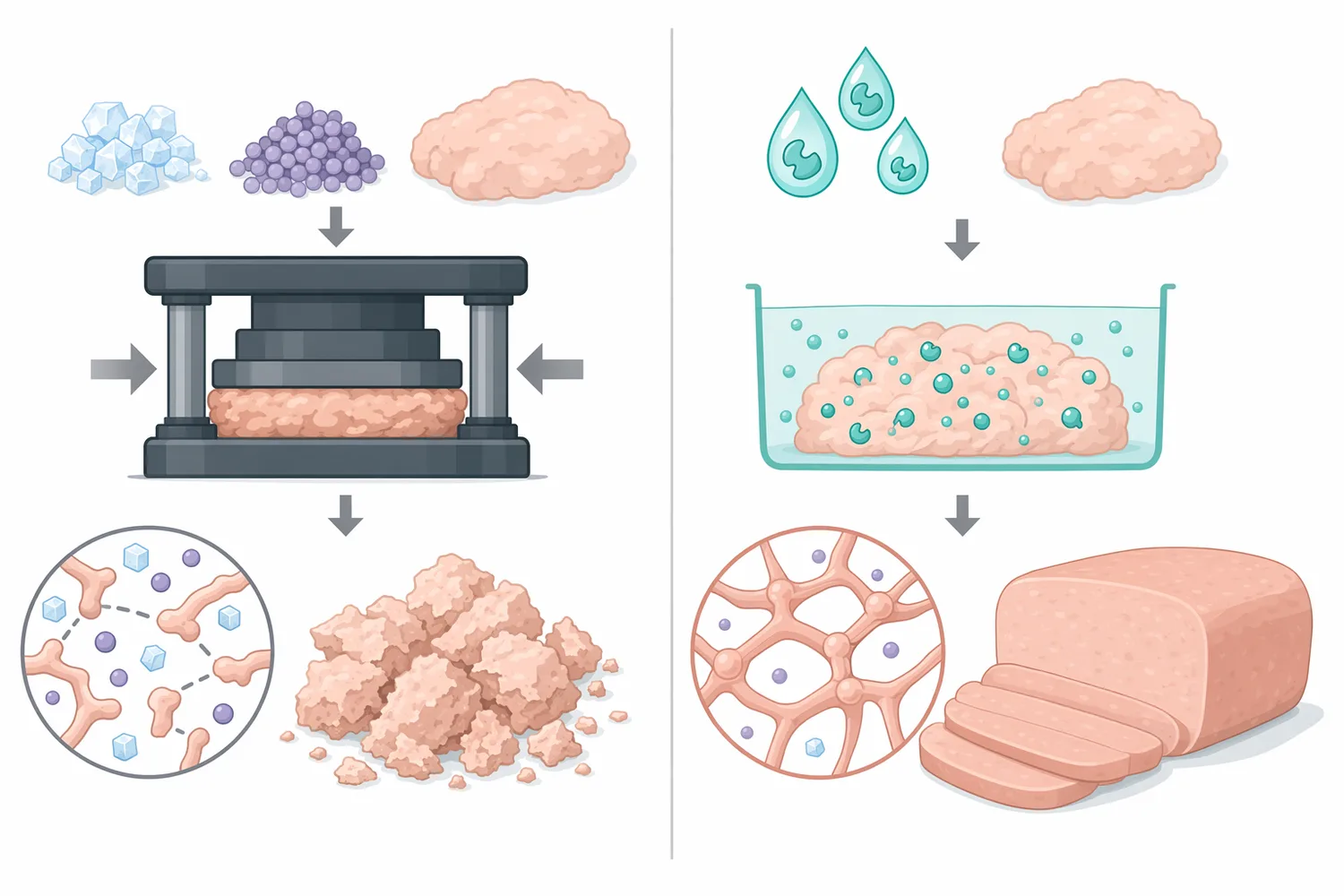
Hydration is equally important. Enzymes operate in an aqueous environment, so dry powder sitting on a dry surface is not the same as enzyme contacting a hydrated protein. In surface bonding, moisture helps dissolve and distribute the enzyme at the seam; in minced products, mixing helps spread the enzyme through the protein phase. Without sufficient distribution, cross-linking can be patchy, leading to weak spots [2].
Physical contact determines whether separate pieces can become one structure. Transglutaminase can create molecular bridges only across very close protein interfaces; it cannot span air gaps or thick layers of fat. This is why compression, shaping, casing, vacuum packing, or forming can matter in practice: those operations hold protein-rich surfaces close while the enzyme reaction proceeds [9].
Temperature and time affect the reaction because enzyme activity and protein mobility are temperature-dependent. Warmer conditions generally increase molecular motion until the enzyme or substrate proteins begin to lose functional structure, while chilled conditions slow reactions but may be useful in products that need controlled handling. The correct balance is application-specific, and the product label and Safety Data Sheet supplied with the order should be followed for safe handling [20].
Heating after enzymatic action can set or stabilize the finished food matrix. In meat, cooking denatures proteins and fixes the formed structure; in dairy and plant gels, heat can either help create a network before cross-linking or lock in a network after cross-linking. The best sequence depends on whether unfolding exposes useful reactive sites or whether excessive aggregation blocks enzyme access [7].
Not all proteins are equally good transglutaminase substrates. The enzyme needs both suitable chemical groups and physical access to those groups. A protein may contain glutamine and lysine residues on paper, yet behave poorly if those residues are buried, sterically blocked, or locked inside dense aggregates [8].
This is why studies often combine transglutaminase with structural pretreatments. Ultrasonic pretreatment improved transglutaminase-cross-linked soybean-whey mixed protein gels, while microfluidization changed the conformation and functional properties of peanut arachin and conarachin before or during cross-linking. In both cases, physical processing changes what the enzyme can reach [12].
The same principle explains why mixed systems can outperform single-protein systems. A blend may provide a better balance of soluble proteins, exposed reactive residues, gel-forming capacity, and water binding. In plant-based meat analogues, for example, soy protein and wheat gluten can contribute different network properties, while additional gel systems such as calcium alginate can provide a second structuring pathway [15].
It also explains why “transglutaminase meat” applications are strongest at lean protein interfaces. A surface dominated by fat is a poor target because fat does not supply the required protein-bound glutamine and amine groups. If the meat surface has enough exposed myofibrillar protein, the enzyme has a substrate; if the interface is mostly lipid or air, cross-linking cannot create a strong seam [6].
The term “meat glue” can make transglutaminase sound like an artificial adhesive, but the enzyme’s action is biochemical and protein-specific. It does not bond everything it touches. It is useful because foods such as meat, fish, dairy, and plant-protein matrices contain proteins that can be enzymatically cross-linked under suitable conditions [2].
A second misunderstanding is the confusion between microbial transglutaminase used in food processing and tissue transglutaminase in humans. Tissue transglutaminase, transglutaminase tissue, or transglutaminase tTG appears in medical contexts, including tests described with phrases such as tissue transglutaminase antibody IgA, tissue transglutaminase IgA antibody, tissue transglutaminase IgG, and transglutaminase IgA. Those terms refer to human biology and diagnostics, not to the food enzyme’s role in binding proteins in a formulation [4].
Food safety remains a process responsibility. When separate raw meat pieces are bonded, surfaces that were once external may become internal seams, so cooking and handling must be appropriate for the finished product format. The enzyme improves structure; it does not sterilize food, replace sanitation, or remove the need for validated cooking practices [20].
Powder handling should also be practical and controlled. As with other food-processing enzymes, unnecessary dust generation should be avoided and the Safety Data Sheet supplied with the order should be followed. This is about normal enzyme handling discipline, not because transglutaminase behaves like instant glue on skin or lungs [3].
Enzymes.bio supplies Transglutaminase directly online by the 1 kg unit. Buyers can add the product to cart, pay online, and the order is then processed and shipped. A Certificate of Analysis and Safety Data Sheet are included with the order.
This format is well suited to professional food development, pilot production, culinary R&D, and small-to-mid scale protein-processing work where a buyer needs a defined packaged enzyme product without a lengthy offline purchasing process. The article you are reading is intended to support practical understanding of what the enzyme does, why it works, and where it has limits.
The most important technical expectation is that transglutaminase is a protein-function enzyme, not a universal binder. It performs best when the product contains accessible protein, enough moisture for enzyme movement, close contact between the protein phases being joined, and a process that gives the enzyme time to form cross-links before the structure is cooked, chilled, dried, or otherwise fixed [9].
Transglutaminase is a well-established enzyme for protein cross-linking. Its value comes from creating covalent connections between suitable protein sites, which can turn loose protein particles, weak gels, or separate lean meat surfaces into a more cohesive structure [1].
The strongest applications are those where the mechanism matches the substrate: transglutaminase steak and other formed meat products, sausages and farces, seafood and poultry systems, dairy and whey protein gels, plant-based meat analogues, protein hydrolysates, and protein-based films. Across all of these, the enzyme acts through the protein phase; it does not bond fat, starch, or water by itself [3].
For buyers who want Transglutaminase from Enzymes.bio, the product is available for direct online purchase in 1 kg units, with online payment, order processing, shipment, and the accompanying Certificate of Analysis and Safety Data Sheet included with the order.
Sold by the 1 kg unit, in stock and ready to ship. Order directly on our store — pay online and we process your order. A Certificate of Analysis and Safety Data Sheet are included with every order.
Buy Transglutaminase →Numbered in order of first citation. Open-access sources, each verified reachable at publication; citation numbers in the text link here.