
Xylanase is a baking enzyme used to modify wheat arabinoxylans—the hemicellulose “pentosans” in flour, bran, and whole-grain fractions that strongly affect water binding, dough viscosity, gas retention, and crumb structure. In bread making, controlled xylanase action can make water more available to the gluten-starch matrix, improve dough expansion during proofing, and support better loaf volume, crumb softness, and processing consistency in suitable wheat-based formulas. The evidence is strongest in wheat, whole-wheat, bran-enriched, and high-fiber dough systems where arabinoxylans have a larger effect on dough behavior and finished bread quality [1].
Enzymes.bio supplies Xylanase Enzyme for Bread Making Powder as a bakery enzyme ingredient available for direct online purchase by the 1 kg unit. Orders are paid for online, processed, and shipped; a Certificate of Analysis and Safety Data Sheet are included with the order. Enzymes.bio is a product supplier, not the enzyme manufacturer or an analytical laboratory.
Wheat dough is often discussed in terms of starch, gluten, yeast, salt, and water, but the non-starch polysaccharides in wheat flour also have a large practical impact. Arabinoxylans are cell-wall hemicelluloses present in the wheat endosperm and at higher levels in bran and whole-grain fractions; they can bind water, increase dough viscosity, interfere with gluten network development, and influence the way gas cells form and expand during fermentation and baking [1].
This is why xylanase is used as a dough-conditioning enzyme rather than simply as a “fiber-degrading” additive. The goal is not to destroy the structure of the dough, but to partially modify arabinoxylans so that they behave more favorably during mixing, fermentation, proofing, and oven spring. When arabinoxylan behavior is limiting bread quality, controlled xylanase action can help the dough hydrate more evenly, expand more freely, and retain gas more effectively [2].
The effect is particularly relevant in whole-wheat and high-extraction flours because bran and germ bring more cell-wall material into the dough. Bran particles can physically disrupt the gluten-starch matrix, while insoluble arabinoxylans compete for water and increase mechanical interference during dough development. Studies on whole-wheat and bran-containing systems show that enzyme treatments, including xylanase, can modify dough rheology and improve bread quality, but the outcome depends on the flour system and formulation context [3].
Arabinoxylans are built mainly from a xylan backbone with arabinose side groups. In flour, they are commonly discussed as water-extractable and water-unextractable fractions. Water-unextractable arabinoxylans tend to be more disruptive because they are associated with cell-wall structures that hold water, increase dough resistance, and interfere physically with gluten continuity; water-extractable arabinoxylans can be more functional because they contribute viscosity in the aqueous phase around gas cells [1].
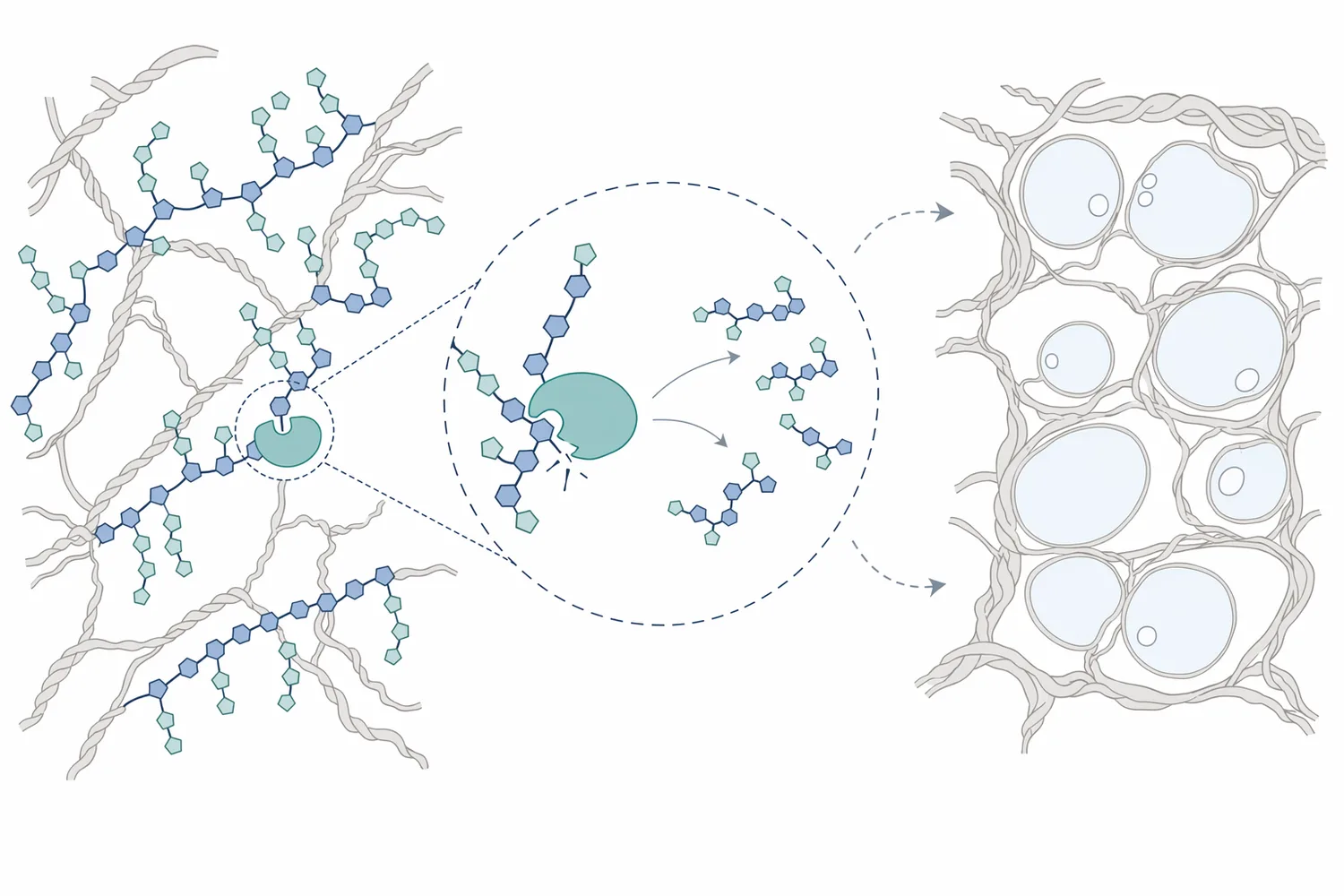
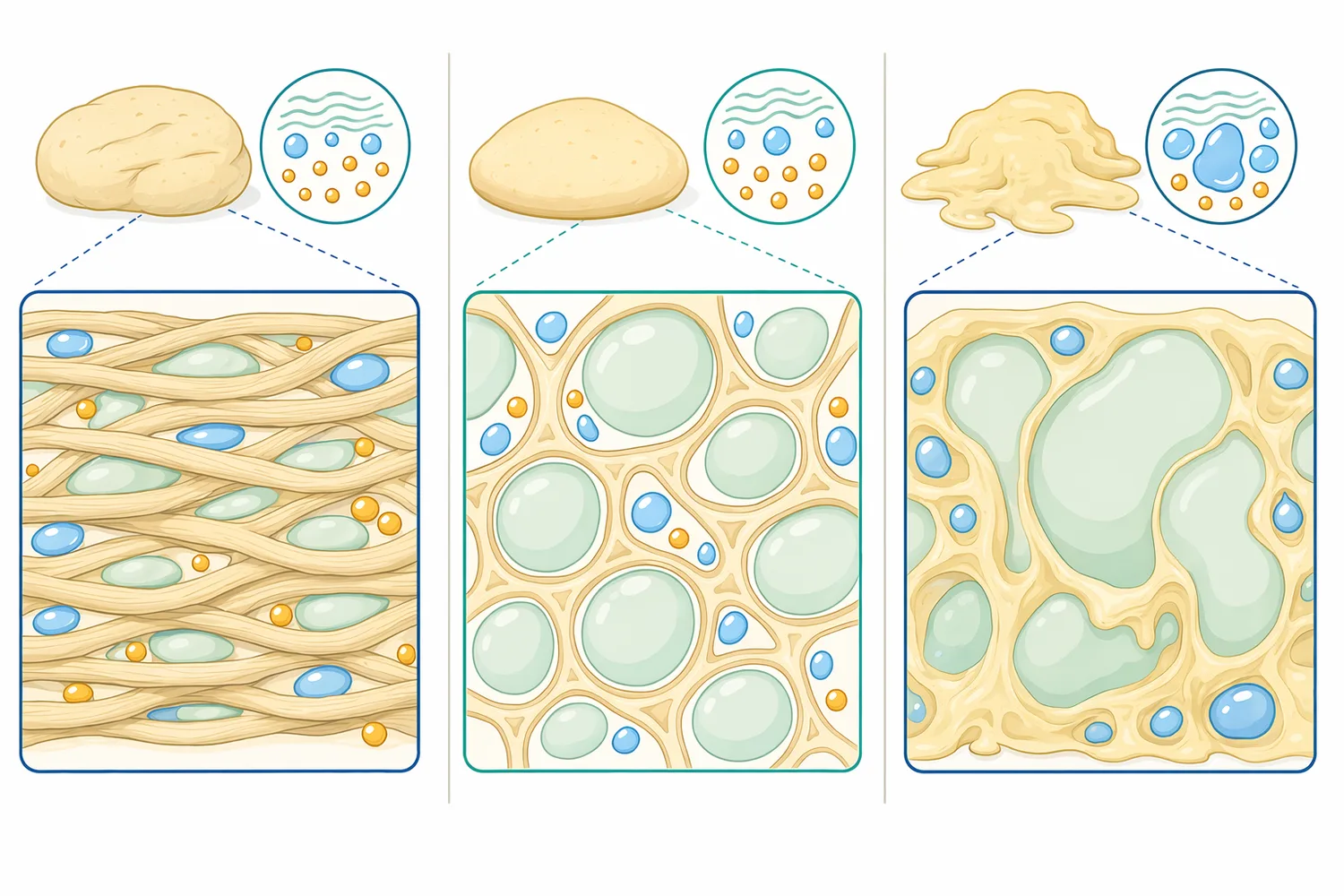
In a bread dough, water has to be shared among starch granules, gluten proteins, damaged starch, soluble components, and fiber-like cell-wall materials. If too much water is immobilized by arabinoxylans, gluten proteins hydrate less efficiently, the dough may feel tight or inconsistent, and gas cells may not stretch evenly during fermentation. Xylanase changes this balance by cutting arabinoxylan chains, reducing their molecular size, and helping convert part of the less accessible fraction into more soluble material [4].
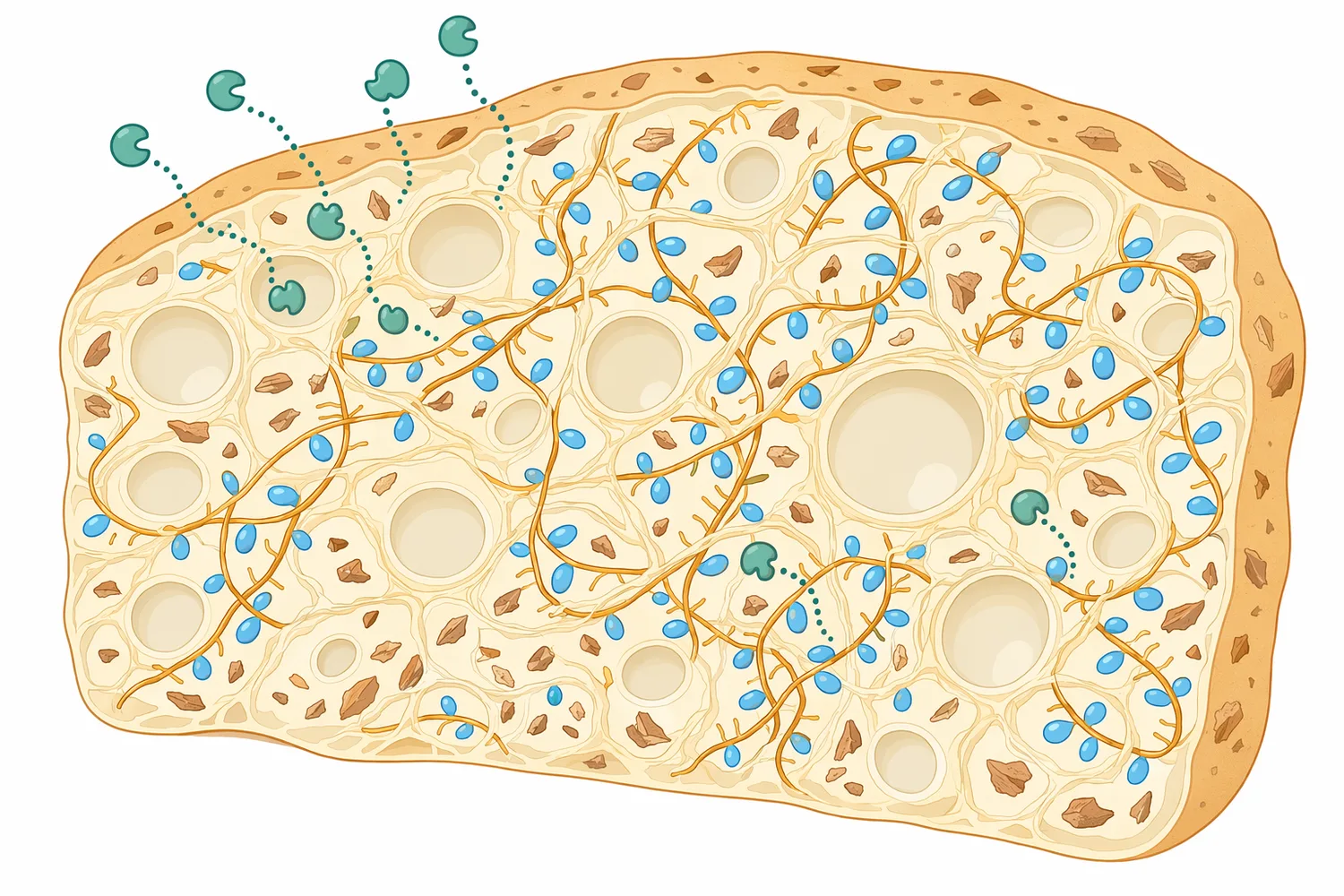
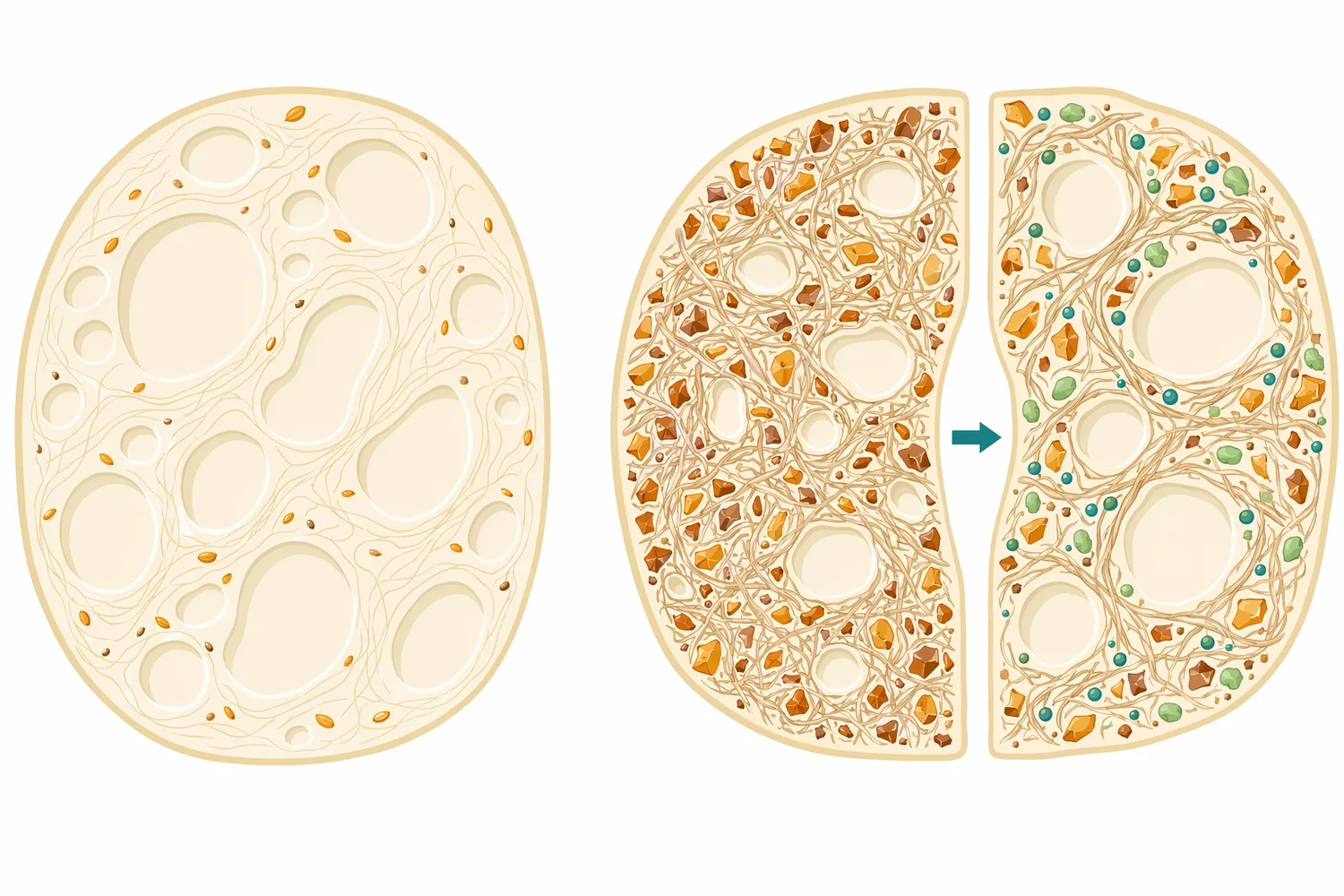
That chemical change has a physical consequence. As arabinoxylan chains become shorter or more soluble, the dough phase can redistribute water more effectively. Gluten proteins can align and interact more continuously, starch and gluten are less separated by rigid cell-wall fragments, and the dough can become better able to expand without tearing around gas cells. This is the practical reason xylanase can improve loaf volume and crumb structure even though it does not act directly on gluten [5].
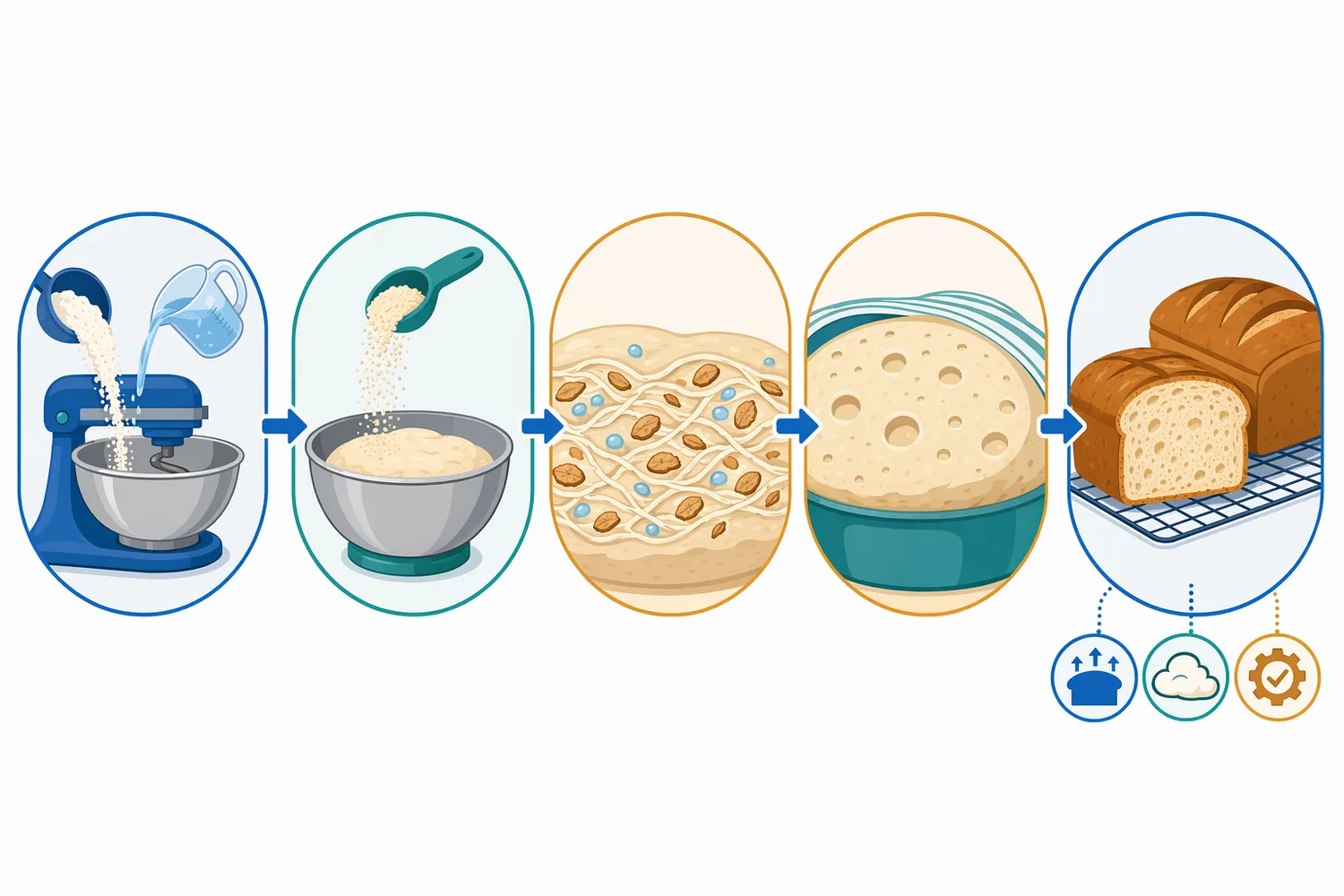
Xylanase acts before the bread is fully baked. During mixing and early dough development, flour becomes hydrated and the enzyme comes into contact with arabinoxylans dispersed through the dough. During bulk fermentation and proofing, the dough continues to change as yeast produces carbon dioxide, gluten relaxes, and gas cells expand; this is the window in which xylanase-modified arabinoxylans can influence extensibility, viscosity, and gas-cell stability [2].
Mechanistically, endo-xylanase cuts internal bonds in the xylan backbone of arabinoxylans. This is different from an enzyme that clips only from the ends of a chain; internal cutting can rapidly reduce chain length and alter the way the polysaccharide binds water and interacts with the dough phase. The result is not simply “more softness,” but a changed distribution of soluble and insoluble arabinoxylan fragments that affects dough viscosity, water mobility, and gas-cell support [1].
Once the loaf enters the oven, the dough temperature rises, yeast activity stops, starch gelatinizes, proteins set, and enzymes are progressively denatured by heat. Baking enzymes are therefore valued because their functional work occurs during processing, while the heat of baking stops their enzymatic activity in the finished product. Reviews of enzyme use in baking describe this process-stage role from dough development through finished bread quality, including volume, texture, and shelf-life-related effects when enzymes are properly matched to the application [2].
One of the main reasons xylanase is used in bread making is to support better loaf volume. When insoluble arabinoxylans tie up water and disrupt the gluten network, dough can ferment but fail to expand efficiently; gas cells may coalesce, collapse, or remain too small. By partially hydrolyzing arabinoxylans, xylanase can improve gas retention and dough expansion, which can translate into better oven spring and a higher, more uniform loaf in suitable wheat systems [6].
This effect is especially valuable in formulas where flour variability affects day-to-day performance. Wheat variety, milling extraction, bran content, and flour aging can all change water absorption and dough rheology. Enzyme studies using rheological tools show that xylanase and other bakery enzymes can measurably alter dough development, stability, and mixing behavior, which helps explain why xylanase is widely used in bread improver systems [7].
Crumb structure depends on how gas cells are formed, stabilized, expanded, and finally fixed during baking. If the dough phase is too tight, gas expansion is restricted; if it is too weak, gas cells merge or collapse. Xylanase can help by changing arabinoxylan behavior in the aqueous phase, allowing more even cell expansion and reducing the disruptive effect of bran and cell-wall fragments on the gluten-starch framework [1].
A better crumb does not necessarily mean a very open crumb in every bread style. In pan bread, the desired result may be a fine and even crumb grain for slicing; in baguettes or lean breads, it may be controlled openness and good expansion. The same underlying mechanism—improved water distribution and gas-cell stability—can support different finished-bread targets depending on the formula, mixing intensity, fermentation schedule, and baking process [2].
Bread crumb firmness is influenced by many factors, including starch retrogradation, moisture migration, gluten network structure, and the distribution of water in the crumb. Xylanase is not the same as a dedicated anti-staling amylase, but it can contribute to softer texture by improving the dough structure before baking and by influencing how water is held in the baked crumb matrix. Research on enzyme supplementation in whole-wheat bread has reported improvements in bread quality and textural properties when xylanase is used appropriately [3].
This is most meaningful where arabinoxylans are part of the reason for a firm or dense crumb. Whole-wheat and high-fiber breads often become firm because bran particles and cell-wall polysaccharides interrupt the continuous gluten-starch structure and compete strongly for water. By modifying those polysaccharides, xylanase can help produce a crumb that is less compact and easier to bite, even though softness still depends on the complete formulation and baking process [8].
Dough handling is not controlled by one variable. Water absorption, mixing time, gluten strength, fermentation tolerance, extensibility, and stickiness all interact. Xylanase can improve handling when arabinoxylans are causing excessive water competition or structural interference, but its effect is best understood as a shift in dough rheology rather than a universal strengthening or weakening action [5].
Some studies show improved dough development and bread quality with xylanase, while others show that the effect depends strongly on flour type, added fiber source, and enzyme combination. This is why xylanase is best described as a formulation tool: it can help bring difficult wheat, whole-wheat, or fiber-enriched doughs into a more workable range, but the outcome is shaped by the full dough system [9].
Xylanase is often used alongside other bakery enzymes, but it has a distinct substrate and role. The table below summarizes the conceptual differences without treating one enzyme as a substitute for another.
| Enzyme type | Main substrate in bread dough | Primary functional role | Typical bread-quality contribution |
|---|---|---|---|
| Xylanase | Wheat arabinoxylans / pentosans | Modifies non-starch polysaccharides that bind water and affect gas-cell structure | Better dough handling, gas retention, loaf volume, crumb uniformity, and texture in suitable wheat systems |
| Alpha-amylase | Damaged and gelatinizing starch fractions | Produces fermentable sugars and modifies starch behavior | Supports fermentation, crust color, volume, and crumb characteristics |
| Maltogenic amylase | Starch components during baking and cooling | Helps manage starch retrogradation-related firming | Supports softness retention and delayed staling |
| Lipase | Flour and added lipids | Generates lipid reaction products that interact with gluten and starch interfaces | Can improve dough strength, volume, and crumb structure |
| Glucose oxidase | Glucose and oxygen in dough water | Produces oxidative effects that can strengthen dough structure | Can improve dough strength and handling in selected formulas |
The important point is that xylanase works on the cell-wall polysaccharide side of the dough system, while amylases work mainly on starch and oxidative enzymes influence protein or dough-strengthening chemistry. Research on multi-enzyme bread improvers shows that combinations can outperform single-enzyme use because different enzymes act on different limiting factors in the same dough [10].
The strongest evidence for xylanase in bread making comes from studies where wheat arabinoxylans are directly connected to dough and bread performance. In whole-wheat systems, researchers have shown that xylanase treatment can degrade water-unextractable arabinoxylans, increase more functional soluble fractions, improve dough organization and air-holding capacity, and enhance bread quality compared with untreated controls [1].
Whole-wheat flour is a demanding test case because it contains more bran and germ than refined flour. Those fractions increase the level of cell-wall polysaccharides, introduce sharp or rigid particles that disrupt gluten continuity, and alter the balance of water across the dough. Studies on whole-wheat bread improvement with enzymes and emulsifiers have reported that enzyme supplementation can improve dough characteristics and baking quality when the formulation is properly balanced [3].
Research on individual enzyme effects in wheat flour dough also supports the idea that microbial enzymes can act as alternatives to some chemical additives in baking. Xylanase is part of this wider movement because it works through a specific biochemical mechanism—hydrolysis of arabinoxylan structures—rather than through direct chemical oxidation or emulsification. Rheological studies show that the effects of enzymes are measurable but also formulation-dependent, which is important for realistic expectations [5].
Recent work on xylanase production and functional characterization for dough and bread quality has continued to focus on whether the enzyme remains active under dough-relevant conditions and whether it improves finished bread attributes. Thermostable and process-tolerant xylanases are of interest because they can maintain useful activity during the early heating stages of dough processing before baking heat finally inactivates enzyme function [6].
High-fiber breads are a natural fit for xylanase because added bran, oat bran, or other cereal fractions increase non-starch polysaccharides and complicate water management. In wheat bread supplemented with oat bran, enzyme-assisted bioprocessing has been studied as a way to improve rheological properties and bread quality, reflecting the broader role of xylanase-containing systems in fiber-enriched formulas [8].
The challenge in these systems is that fiber ingredients do not behave like refined wheat flour. Bran can dilute gluten, absorb water slowly, introduce physical discontinuities, and alter dough mixing tolerance. Xylanase can reduce some of the negative effects linked to arabinoxylans, but it cannot replace gluten strength or fully remove the structural impact of coarse particles. This is why high-fiber applications often show meaningful but formulation-specific results [3].
Composite flour systems add another layer of complexity. Work on gluten-free cookie formulations using xylanase from Aureobasidium pullulans in mulberry and rice flour systems shows that xylanase can affect dough properties beyond standard wheat bread, but the desired outcome differs from yeast-leavened wheat bread because there is no conventional gluten network to support gas retention [11].
For wheat-based bread, the most relevant lesson from high-fiber and composite systems is not that xylanase guarantees the same result everywhere. It is that arabinoxylan modification is a powerful lever when cell-wall polysaccharides are part of the quality limitation, and that the visible benefit depends on the surrounding matrix—gluten, starch, hydration, mixing energy, fermentation, and baking profile [4].
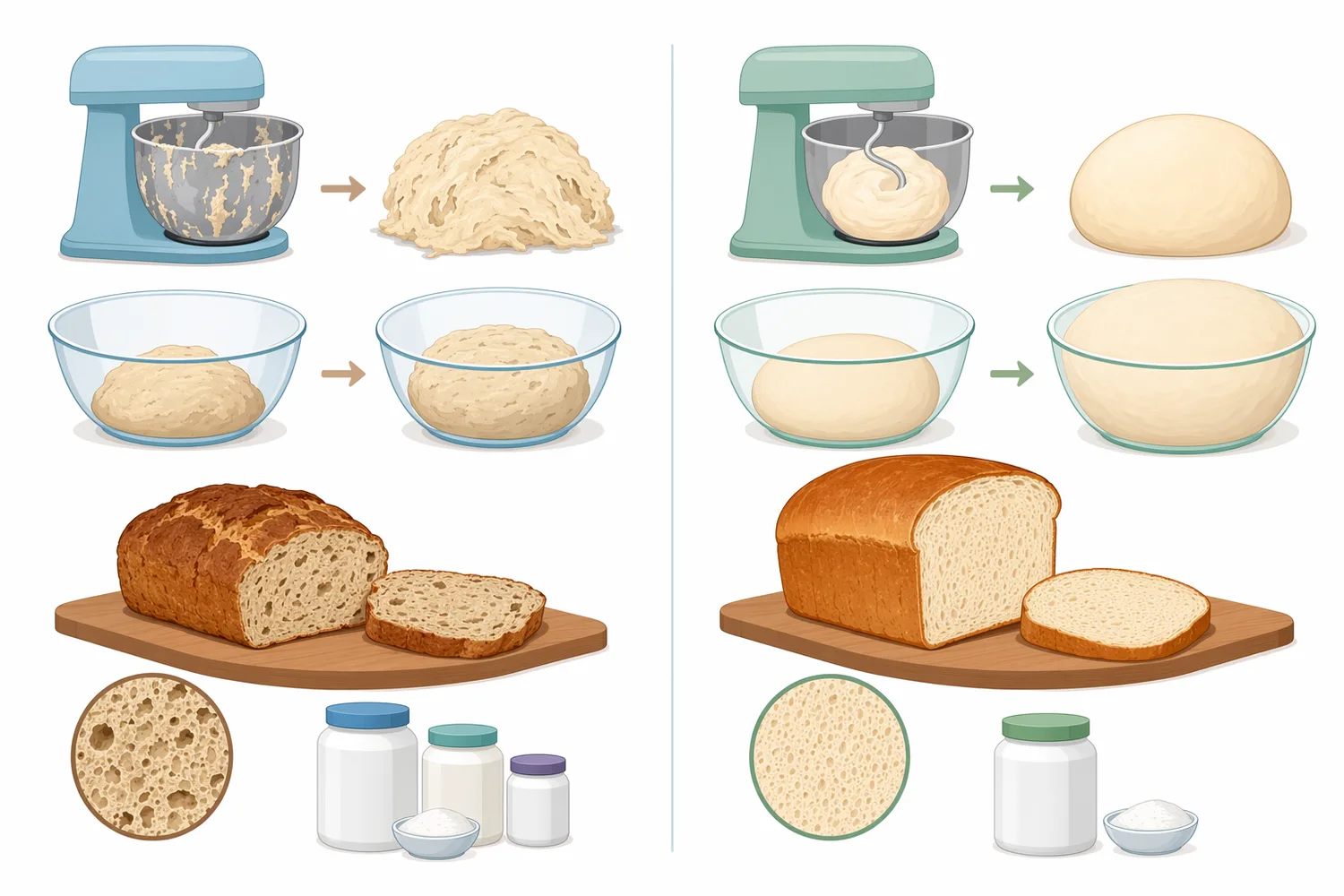
Frozen dough presents a different challenge from fresh bread dough. Freezing and thawing can damage yeast cells, disrupt gluten structure, redistribute water as ice forms and melts, and reduce gas retention during final proofing. Studies on frozen dough prepared from different wheat varieties have examined alpha-amylase and xylanase activities because both starch modification and arabinoxylan modification can influence final bread quality after frozen storage [12].
In this context, xylanase can help by improving the dough matrix before freezing and supporting gas retention after thawing, while alpha-amylase contributes through starch and fermentable sugar pathways. The two enzymes do not perform the same job; rather, they address different weaknesses that can appear in frozen or retarded dough systems. Research on combined enzyme use has reported improvements in dough properties and bread quality when alpha-amylase, xylanase, and cellulase activities are used together under studied conditions [9].
The same principle applies to fresh bread improver systems. Xylanase is commonly combined with amylases, lipases, glucose oxidase, or other enzymes because bread quality is controlled by several substrates at once. Arabinoxylans affect water and gas cells, starch affects fermentation and crumb setting, lipids affect interfaces, and protein chemistry affects dough strength. Multi-enzyme systems can therefore be effective when the actions complement each other rather than pushing the dough too far in one direction [10].
Baking enzymes are often discussed in clean-label formulation because they can improve processing and bread quality through catalytic action rather than through conventional chemical additives. Reviews of enzyme applications in baking describe enzymes as tools for dough development, loaf quality, and shelf-life support, with their activity occurring mainly during dough processing and early baking stages [2].
Xylanase fits this context because it acts on a naturally present flour component. It does not add gluten, starch, or emulsifier; instead, it changes how arabinoxylans already present in the flour behave. For bakers trying to improve bread volume, crumb quality, and handling in wheat-based formulas, this mechanism can be attractive because it works through targeted substrate modification rather than broad chemical restructuring [13].
Regulatory treatment and label terminology vary by country and product type, so buyers should follow the rules that apply to their own finished food and market. From a functional standpoint, however, xylanase is used for its process effect during dough preparation: it modifies arabinoxylans before the bread structure is fixed by oven heat [2].
Xylanase is effective, but it is not a universal fix for every bread problem. If poor bread volume is caused mainly by weak flour protein, under-mixing, insufficient fermentation, excessive salt, damaged yeast, or incorrect baking, xylanase alone cannot solve the issue. Its specific value is greatest when arabinoxylan behavior—water binding, insoluble cell-wall interference, or gas-cell instability—is part of the limiting factor [5].
It is also possible to push xylanase action too far. Excessive hydrolysis of arabinoxylans can make dough overly slack, sticky, or less able to retain structure, depending on the flour and formula. Scientific studies repeatedly show that enzyme effects are dose- and system-dependent, and that the most favorable bread result comes from controlled modification rather than maximum breakdown of the substrate [1].
A practical expectation is therefore qualitative rather than absolute: in suitable wheat, whole-wheat, or fiber-enriched formulas, xylanase may help improve hydration balance, dough handling, fermentation tolerance, oven spring, loaf volume, crumb uniformity, and eating texture. The final result will still depend on flour extraction level, protein quality, hydration, mixing, fermentation schedule, other enzymes, and the style of bread being produced [7].
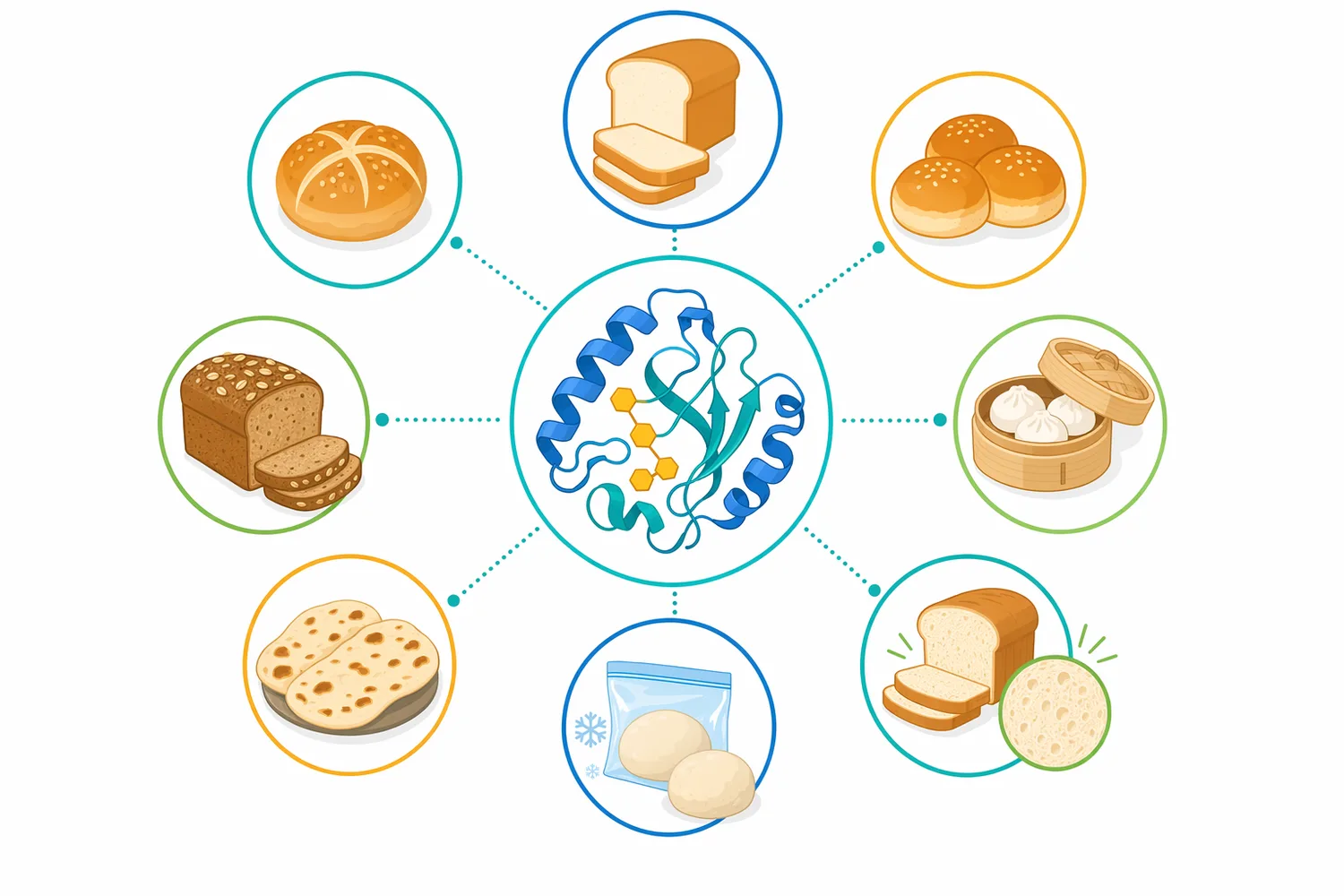
Enzymes.bio’s Xylanase Enzyme for Bread Making Powder is suited to customers who want a practical bakery enzyme ingredient for wheat-based dough conditioning. Its technical role is to modify arabinoxylans so the dough system can manage water more effectively, develop a more functional gluten-starch structure, and support gas retention during proofing and early baking. This makes it especially relevant for bread, whole-wheat bread, high-fiber loaves, buns, rolls, and related yeast-leavened wheat products where dough expansion and crumb structure are important .
The product is purchased directly online by the 1 kg unit. After online payment, the order is processed and shipped, with a Certificate of Analysis and Safety Data Sheet included. This purchasing model is straightforward for bakeries, food developers, and small food-processing operations that want to incorporate a xylanase powder into their own formulation work without a separate quote or sample-request process.
The best way to understand the product’s value is through the underlying dough chemistry. Xylanase targets arabinoxylans, not starch or gluten directly. By changing those arabinoxylans from highly water-binding, structure-disrupting materials into shorter and more functional fragments, it can help the dough release and redistribute water, expand with yeast gas, and bake into bread with improved volume and crumb quality where arabinoxylans are limiting performance [1].
Xylanase is a well-supported bakery enzyme for improving wheat dough performance through targeted arabinoxylan modification. In practical bread making, it can help address dense loaves, tight crumb, variable flour behavior, difficult dough handling, and reduced gas retention—especially in whole-wheat, high-extraction, and fiber-enriched systems where arabinoxylans have a stronger effect on dough behavior [3].
Its mechanism is concrete: the enzyme cuts the xylan backbone of arabinoxylans, reducing molecular size, changing solubility, improving water distribution, and helping the gluten-starch matrix expand and hold gas more effectively. This is why xylanase can improve loaf volume, oven spring, crumb structure, and texture without acting directly as a gluten-building enzyme or a starch-modifying amylase [1].
For customers purchasing from Enzymes.bio, Xylanase Enzyme for Bread Making Powder is a convenient online-order bakery ingredient supplied by the 1 kg unit. Used in suitable wheat-based formulations, it offers an evidence-backed route to better dough conditioning and more consistent bread quality, with performance grounded in the well-established relationship between arabinoxylans, water management, gas retention, and finished bread structure [2].
Sold by the 1 kg unit, in stock and ready to ship. Order directly on our store — pay online and we process your order. A Certificate of Analysis and Safety Data Sheet are included with every order.
Buy Xylanase Enzyme For Bread Making - 5,500 U/G Powder →Numbered in order of first citation. Open-access sources, each verified reachable at publication; citation numbers in the text link here.