
Xylanase enzyme powder is used in bread making to modify cereal arabinoxylans—the water-binding non-starch polysaccharides in wheat, whole-grain, bran-containing, and other cereal flours. By partially breaking down xylan-rich cell-wall material, xylanase can improve dough handling, gas retention, loaf volume, crumb structure, and softness when it is used appropriately in the bakery formulation [1].
For buyers using Enzymes.bio, Xylanase Enzyme Powder for bread-making quality is available for direct online purchase by the 1 kg unit. After online payment, the order is processed and shipped, and a Certificate of Analysis and Safety Data Sheet are supplied with the order .
Xylanase is a carbohydrase enzyme that hydrolyses xylan, a major hemicellulose found in plant cell walls. In cereal flours, the most important xylan-type structures for baking are arabinoxylans: polysaccharides built mainly from a xylose backbone with arabinose substitutions. These arabinoxylans are present in refined wheat flour and become more prominent in whole wheat, bran-enriched, multigrain, and high-fiber formulations because the outer grain layers contain more cell-wall material [2].
In dough, arabinoxylans are not just “fiber.” They strongly affect water distribution, dough viscosity, gluten development, gas-cell stability, and crumb formation. Some arabinoxylans are water-extractable and can behave like functional hydrocolloids, contributing viscosity and stabilizing the aqueous phase around gas cells. Others are water-unextractable and remain associated with cell-wall fragments, where they can compete for water, interrupt gluten continuity, and physically disturb the expanding dough structure [3].
Xylanase works by cleaving β-1,4 linkages in the xylan backbone. In practical baking terms, it shortens selected arabinoxylan chains and converts part of the less functional, water-unextractable fraction into smaller, more soluble fragments. The goal is controlled modification: enough hydrolysis to improve hydration and dough expansion, but not so much that the dough becomes overly slack, sticky, or weak [1].
Bread dough is a hydrated, aerated, viscoelastic system. Gluten proteins build the elastic network, starch granules fill the structure, yeast produces carbon dioxide, and water enables all of these components to move, hydrate, and interact. Arabinoxylans influence this system because they bind water strongly and occupy space within the gluten–starch matrix [3].
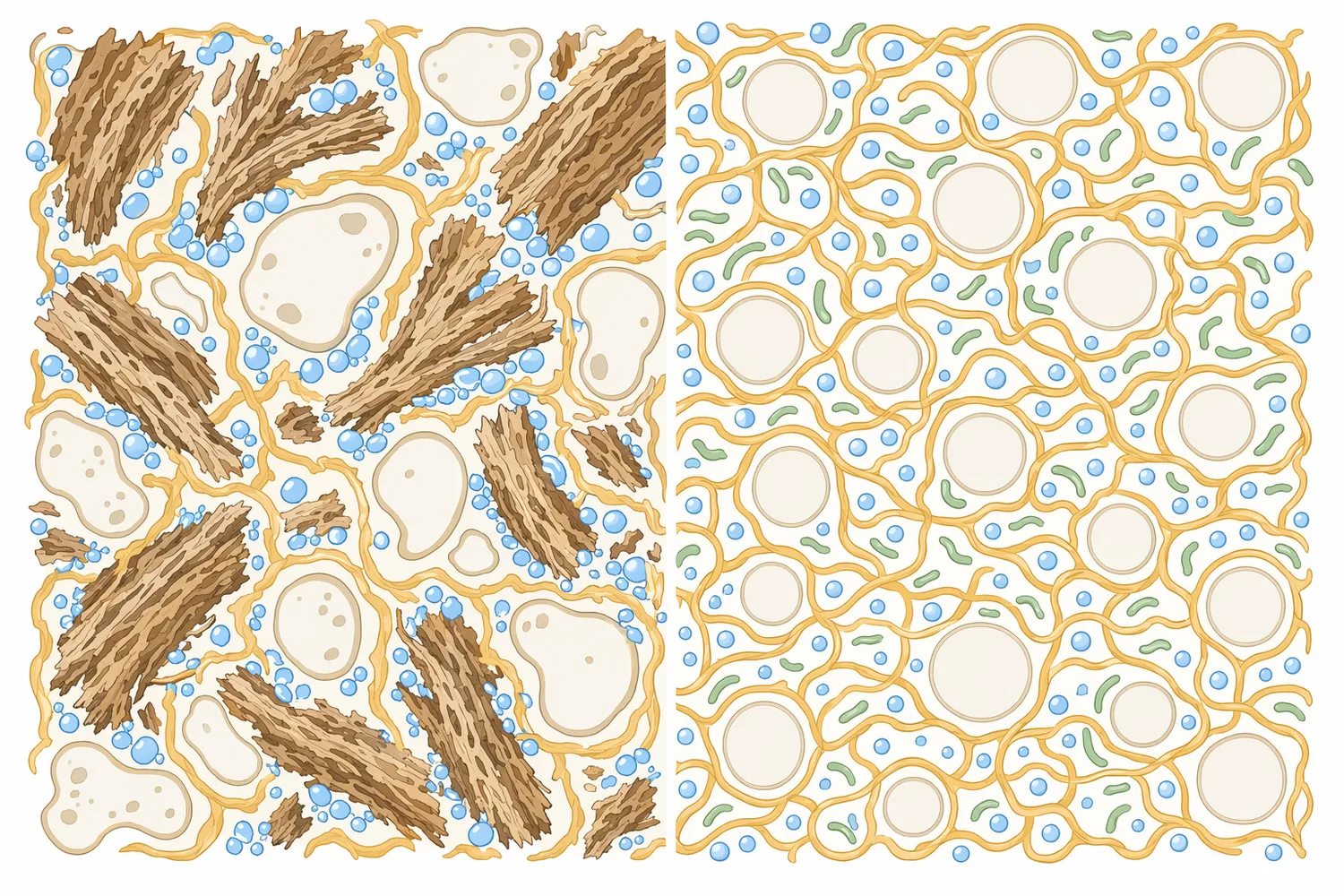
When water-unextractable arabinoxylans are abundant or poorly integrated, they can act like rigid plant-cell-wall particles inside the dough. They absorb water that would otherwise hydrate gluten and starch, and they can interrupt the formation of a continuous gluten network. This is one reason bran-containing and whole-grain doughs often feel tighter, less extensible, or more difficult to expand than refined white flour doughs [4].
Xylanase changes that environment. By cutting xylan chains in the arabinoxylan fraction, the enzyme reduces the size and disruptive effect of some insoluble structures. At the same time, it increases the amount of soluble arabinoxylan material that can help thicken and stabilize the aqueous phase. The practical effect is often improved dough mobility, better gas-cell stability, and a finer crumb structure after baking [1].
This mechanism also explains why xylanase is most useful when the formulation contains enough arabinoxylan substrate for the enzyme to act on. White flour still contains arabinoxylans, but whole wheat, bran, millet bran, oat bran, and other cereal-fiber additions can increase the influence of xylan-rich material on dough behavior. Studies on cereal bran and xylanase pretreatment show that particle size, fiber structure, and enzymatic modification can all influence physical, sensory, and nutritive properties of bread systems [4].
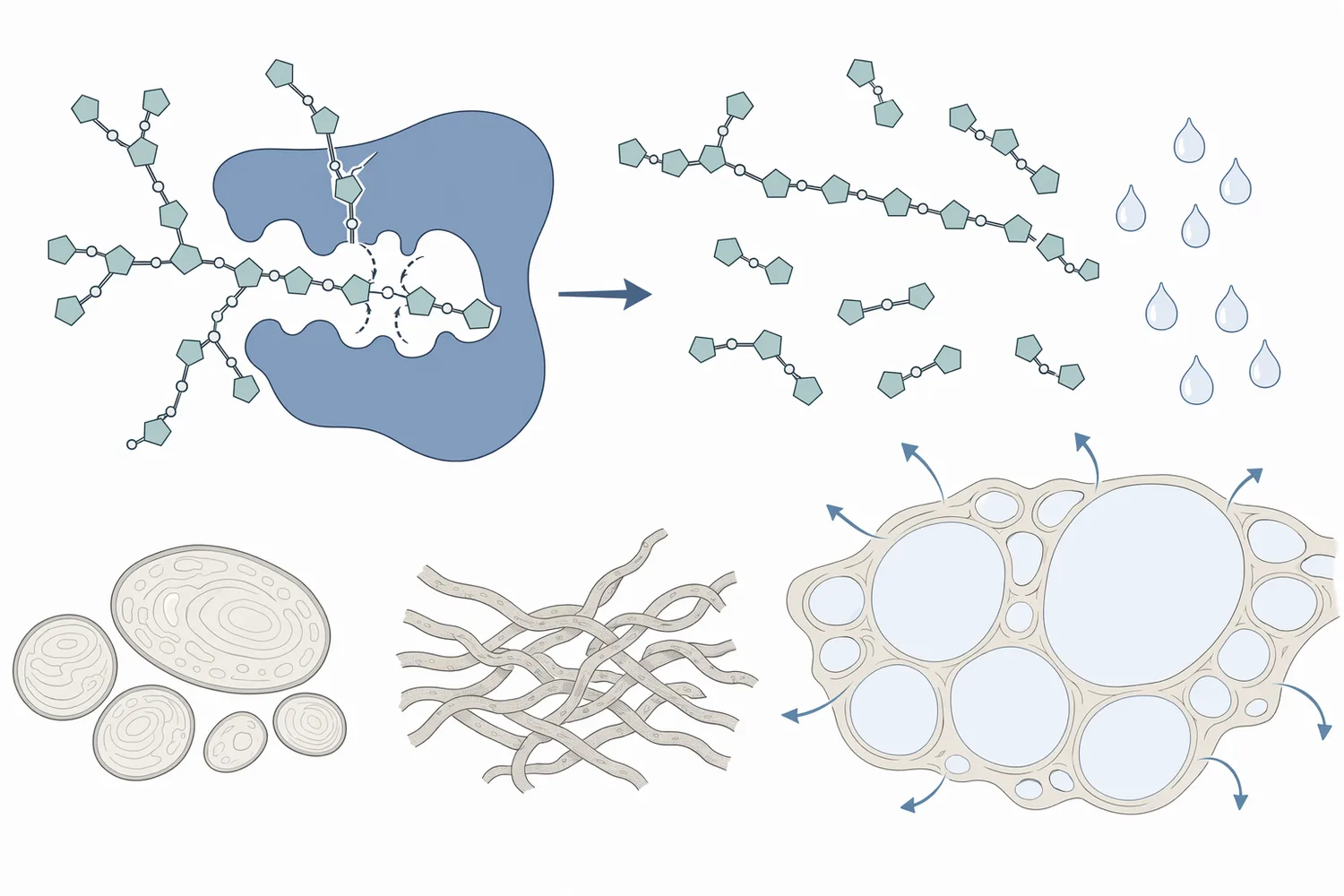
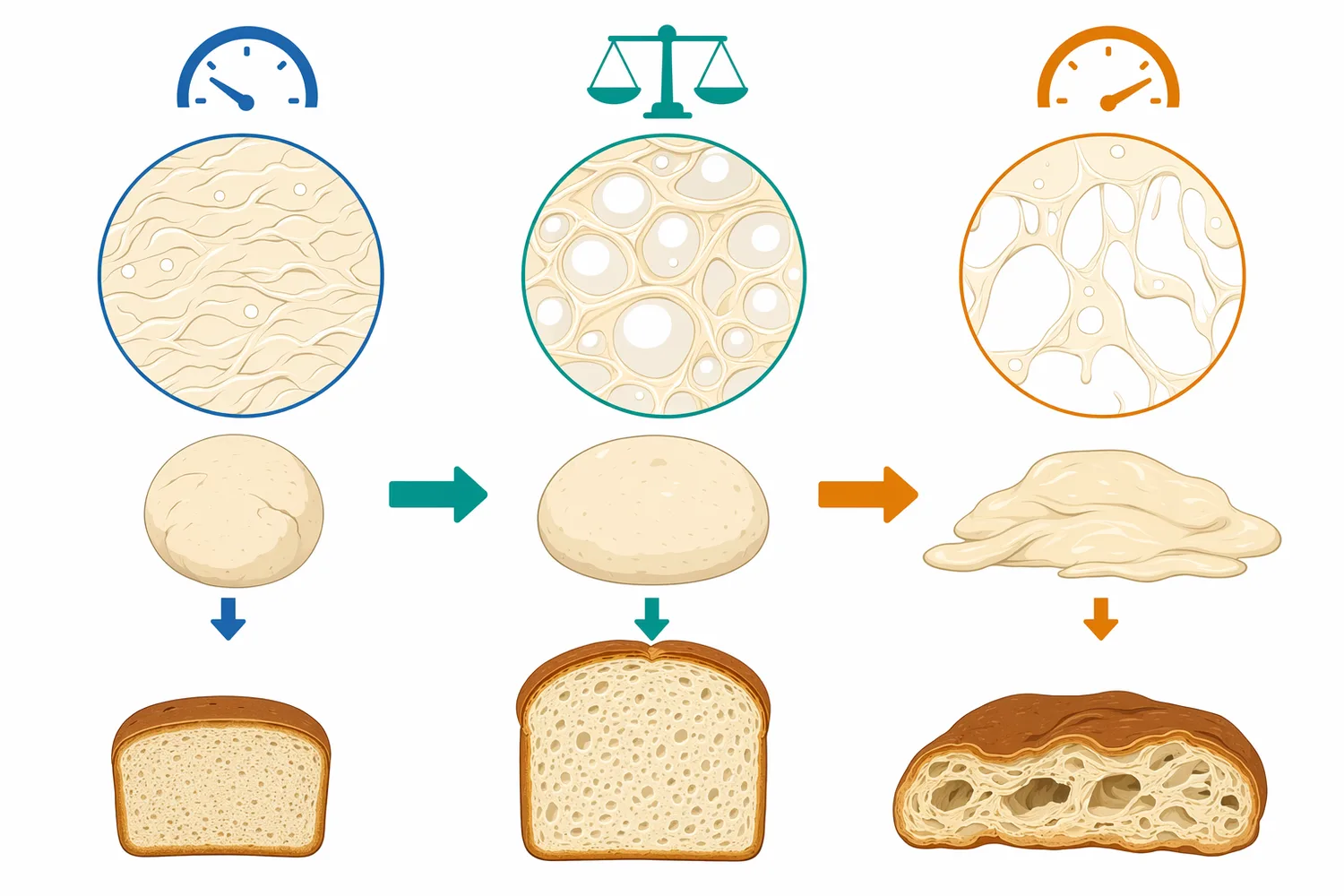
In bread production, dough must survive mixing, dividing, rounding, sheeting or moulding, proofing, and transfer without tearing, collapsing, or becoming unmanageable. Dough that is too tight resists expansion; dough that is too weak cannot retain gas. Xylanase can help move dough toward a more workable balance by modifying arabinoxylans that affect hydration and resistance to deformation [1].
The mechanism is physical as much as chemical. When insoluble arabinoxylan networks are partially opened, water can redistribute more evenly between fiber, gluten, and starch. This can reduce excessive resistance during extension and help the dough expand more smoothly during proofing. In automated or semi-automated bread processes, that improved extensibility and relaxation can translate into more consistent dough pieces and more predictable loaf shape [3].
Yeast-leavened bread depends on the formation and retention of gas cells. During proofing, carbon dioxide expands existing bubbles; during early baking, those bubbles expand further before the structure sets. If the dough matrix is discontinuous, too rigid, or poorly hydrated, gas cells can rupture or coalesce, leading to lower volume and coarse crumb [1].
Xylanase supports gas retention indirectly by changing the arabinoxylan phase around the gluten network. More soluble arabinoxylan fragments can increase viscosity in the liquid films surrounding gas cells, while reduced insoluble interference allows the gluten–starch matrix to expand more evenly. This combination helps explain the common bakery observation that xylanase can improve oven spring and loaf volume, especially where flour fiber fractions are limiting expansion [3].
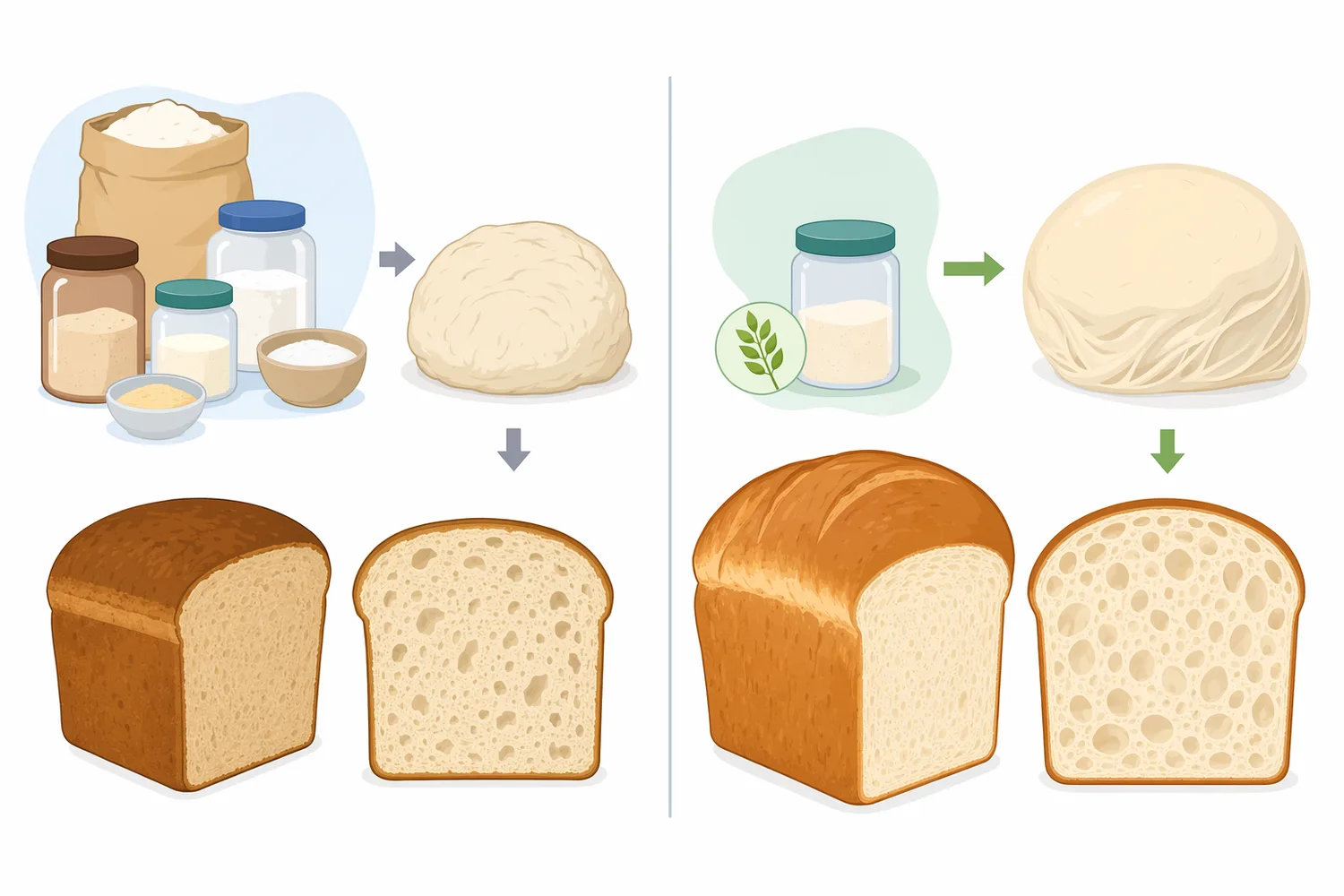
A good crumb is not only about volume. It also depends on the size, distribution, and stability of gas cells. When dough expands unevenly, the crumb may become coarse, open, or irregular. Xylanase can contribute to a finer crumb by supporting more stable gas-cell films and reducing the disruptive effect of insoluble arabinoxylan particles within the gluten network [1].
Softness is also linked to water distribution and starch retrogradation. Xylanase does not stop bread from staling, but by modifying the water-binding fiber fraction it can influence how water is held and redistributed in the crumb. Research on enzyme and hydrocolloid systems in steamed bread has shown that anti-staling effects can be associated with texture, retrogradation enthalpy, and water mobility, reinforcing that crumb firmness is governed by several interacting mechanisms rather than one ingredient alone [5].
Whole wheat and bran-enriched breads are a natural application area for xylanase because bran layers are rich in non-starch polysaccharides. These fibers can improve nutritional value but often reduce loaf volume, make dough harder to process, and produce a denser crumb. Xylanase helps by targeting part of the xylan-rich cell-wall fraction that contributes to these processing challenges [4].
In gluten-free and alternative cereal systems, the same principle applies even though the protein network differs from wheat gluten. A study on proso millet bran examined particle size and xylanase pretreatment in gluten-free bread and reported that both physical bran structure and enzymatic treatment influenced bread features. That kind of evidence is useful because it shows xylanase is not limited to standard white wheat bread; its value follows the presence and behavior of xylan-containing cereal fiber [4].
Xylanase is often discussed alongside other baking enzymes, but its main substrate and function are distinct. The table below gives a practical, non-specification comparison of how xylanase differs from other enzyme types commonly used in bread systems.
| Enzyme type | Main dough target | What changes in the dough | Typical bread-quality relevance |
|---|---|---|---|
| Xylanase | Arabinoxylans and xylan-rich cereal cell-wall material | Partially solubilizes and shortens arabinoxylan structures; changes water distribution and fiber–gluten interaction | Dough handling, gas retention, loaf volume, crumb structure, softness |
| Alpha-amylase | Damaged and gelatinizing starch | Produces fermentable and dextrin-like starch fragments | Fermentation support, crust color, crumb softness, anti-firming effects |
| Cellulase | Cellulose-rich plant cell-wall fractions | Modifies insoluble fiber structures | Can affect dough softness, viscosity, and fiber-containing formulations |
| Glucose oxidase | Dough redox environment through glucose oxidation | Promotes oxidative strengthening effects in the protein network | Dough strength, tolerance, gas retention |
| Lipase | Flour and added lipids | Produces lipid-derived emulsifying effects in situ | Dough stability, crumb texture, volume |
This comparison matters because xylanase should not be understood as a general “dough improver” with no defined target. Its primary value comes from arabinoxylan modification. Other enzymes may affect starch, protein strength, lipids, or broader plant-cell-wall components, which is why enzyme systems in bread can have complementary but formulation-dependent effects [3].
The industrial use of xylanase is supported by broad literature on microbial xylanases, their classification, and their applications in food, feed, pulp, paper, and other sectors. In bakery systems, the relevant feature is their ability to act on xylan-containing cereal polysaccharides under dough-compatible conditions, producing functional changes in dough rheology and bread quality [2].
A 2025 study on selection, heterologous production, and characterization of a thermostable xylanase from Anoxybacillus specifically framed the enzyme for dough and bread quality enhancement. The importance of this type of work is not merely that a xylanase exists, but that different xylanases can differ in how they behave under bread-processing conditions and how effectively they modify cereal substrates during mixing and fermentation [6].
A 2024 study described a bioengineered xylanase from the Misiones Argentina rainforest as a bakery enhancement approach. Research of this kind reflects a continuing trend in enzyme technology: xylanases are being screened, engineered, and characterized not only for general xylan breakdown, but for functional performance in specific food-processing environments such as dough [7].
Research on arabinoxylans and xylanase treatment in dough and noodle systems helps explain the mechanism relevant to bread. A 2024 study assessing arabinoxylans on dough mixing properties and noodle-making performance through xylanase treatment directly connects arabinoxylan structure with processing behavior. Although noodles are not bread, the dough-stage principle is highly relevant: arabinoxylans alter mixing behavior, and enzymatic modification changes how cereal dough develops and handles [8].
The same logic applies in bread systems where mixing behavior predicts later processing performance. If arabinoxylans bind water too strongly or remain as disruptive insoluble particles, the dough may require different energy input, show altered resistance, or fail to develop an even network. Xylanase modifies that polysaccharide fraction before baking heat inactivates enzymes, so its useful action occurs during the hydrated dough stages [1].
A study on proso millet bran and xylanase pretreatment in gluten-free bread found that both bran particle size and enzymatic pretreatment affected physical, sensory, and nutritive features. This is particularly relevant for bread developers working with high-fiber or alternative-grain products, because it shows that the structure of the bran fraction and its enzymatic modification both matter [4].
The mechanism is concrete: coarse or intact bran particles can interfere with dough or batter structure, while xylanase pretreatment can alter the hemicellulose-rich cell-wall fraction. In wheat bread, that can support a more continuous gluten network; in gluten-free bread, it can influence the hydrocolloid-like behavior of the cereal-fiber phase and how it supports gas cells without gluten [4].
Bread firmness during storage is influenced by starch retrogradation, moisture migration, protein–starch interactions, and the behavior of hydrocolloids and fiber fractions. A study on potato steamed bread evaluated texture, retrogradation enthalpy, water mobility, and anti-staling effects of enzymes and hydrocolloids, showing that enzyme-based texture improvement must be understood as part of a water-structure system rather than as a simple softening additive [5].
Xylanase contributes to that system by changing the arabinoxylan fraction. When arabinoxylans are modified into more functional soluble fragments, they can influence how water is retained in the crumb and how the structure firms over time. This does not mean xylanase alone guarantees shelf-life extension, but it explains why xylanase-containing enzyme systems are often associated with softer crumb and slower firming in suitable formulations [1].
Bread quality is affected by many interacting ingredients besides xylanase. For example, research on pectin–gluten interaction in wheat bread showed that polysaccharides can alter starch digestibility and texture, which supports the broader concept that non-starch polysaccharides influence bread structure beyond their nutritional role [9].
Studies on frozen dough bread, sourdough, highland barley bread, and steamed bread also show that polysaccharides, fermentation, proteins, and added ingredients can reshape dough microstructure, retrogradation, texture, and starch digestion. These studies are not xylanase-specific, but they reinforce a key point for practical baking: changes in the carbohydrate and hydrocolloid phase can strongly affect finished bread quality [10].
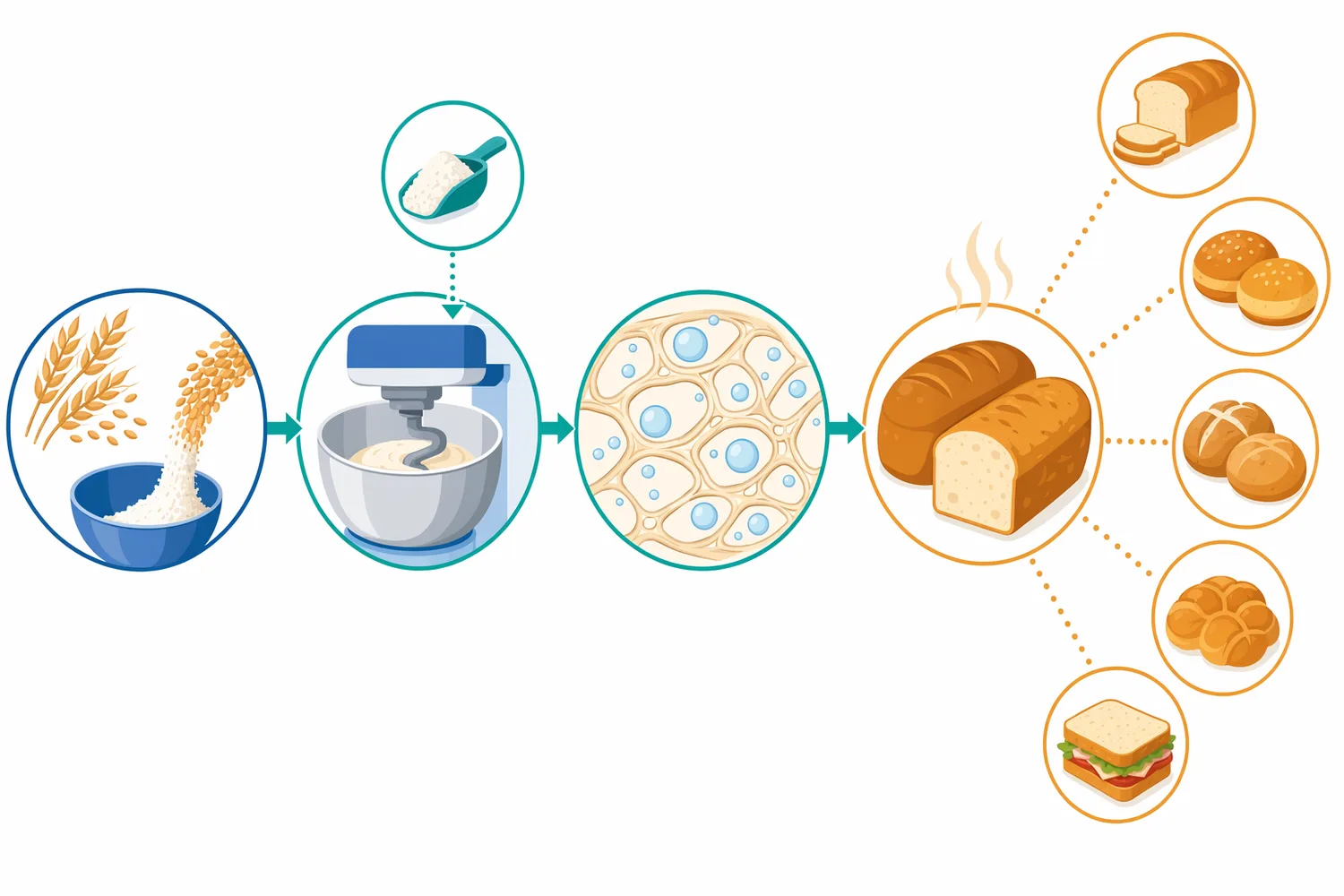
Xylanase begins to act once flour is hydrated. During mixing, water penetrates flour particles, gluten proteins hydrate and align, starch granules become suspended in the matrix, and arabinoxylans swell or disperse depending on their structure. This is the stage where xylanase can reach soluble and accessible xylan-rich regions and begin cutting arabinoxylan chains [1].
During fermentation and proofing, the dough continues to change. Yeast produces carbon dioxide, gas cells expand, and the dough matrix must stretch without rupturing. Xylanase-modified arabinoxylans can support this stage by reducing insoluble interference and increasing soluble viscosity around gas cells. The result can be improved expansion and a more uniform crumb if the overall formula remains balanced [3].
During baking, heat rapidly changes the system. Gas expands, starch gelatinizes, proteins set, and enzymes are progressively inactivated as temperature rises. Xylanase is therefore most important before the crumb structure is fully set. Its value is created earlier, during hydration and fermentation, when arabinoxylans are still being reorganized inside the dough [1].
Xylanase enzyme powder is convenient for dry blending or direct addition with flour and other minor ingredients. In bakery use, the powder format allows the enzyme to distribute through the flour phase before hydration, helping it contact arabinoxylan substrate as dough mixing begins. This is why xylanase is commonly treated as a functional processing aid in bread systems rather than as a visible finished-product component [1].
Because enzyme performance depends on the flour and process, xylanase effects should be interpreted through actual dough and bread behavior: handling during mixing and moulding, proof height, oven spring, loaf symmetry, crumb cell distribution, and eating softness. The scientific literature consistently shows that the same class of enzyme can produce different outcomes depending on cereal source, bran fraction, formulation, and process conditions [2].
For Enzymes.bio buyers, the commercial process is straightforward: Xylanase Enzyme Powder for bread-making quality is sold online by the 1 kg unit. The buyer places the order and pays online; the order is then processed and shipped, with the Certificate of Analysis and Safety Data Sheet supplied with the order .
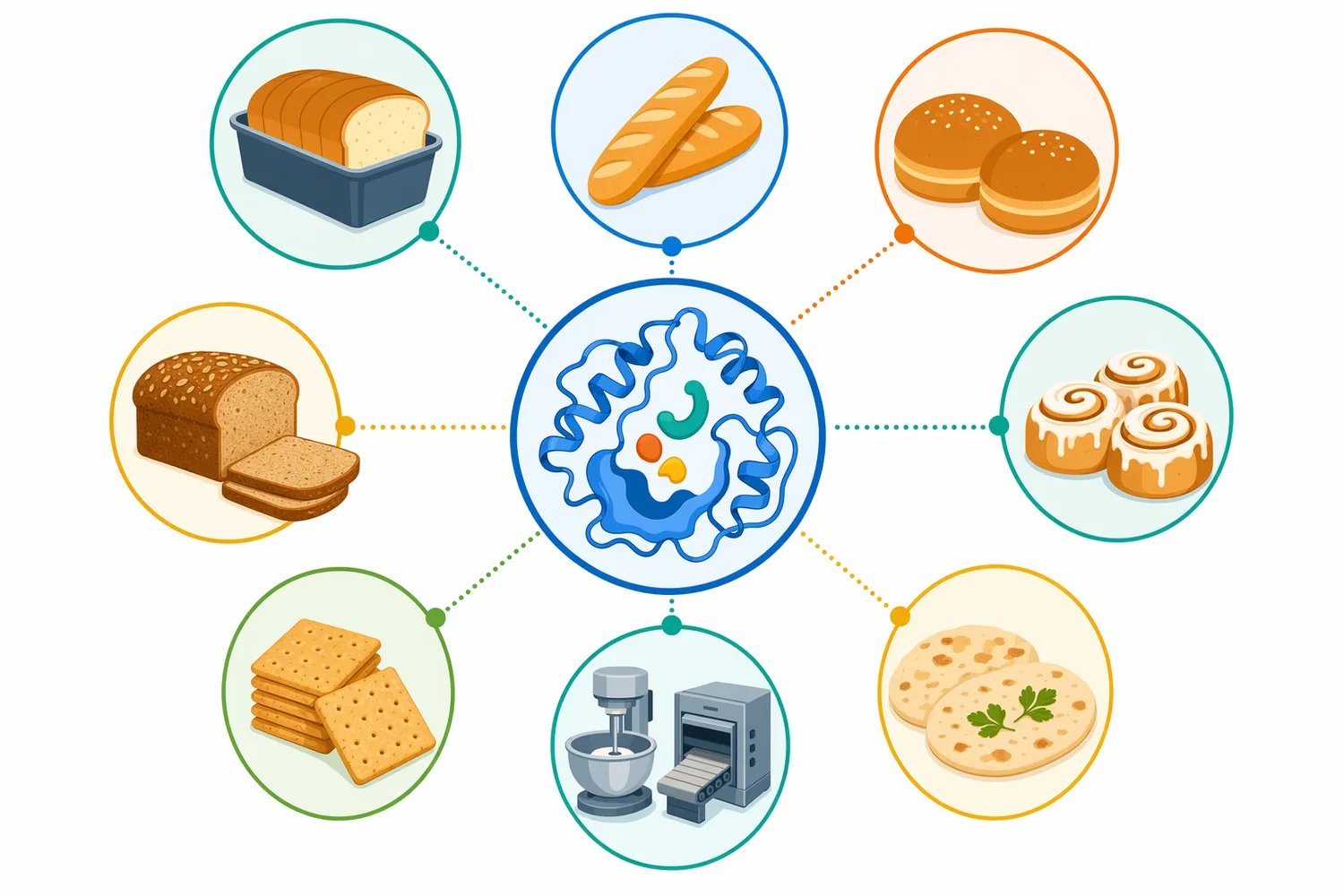
In white pan bread, xylanase is used to improve dough tolerance, gas retention, loaf volume, and crumb uniformity. Even refined wheat flour contains arabinoxylans, and small changes to this fraction can affect dough viscosity and expansion. The most visible results are typically better oven spring, finer grain, and a softer eating texture when the enzyme action is well matched to the flour system [1].
White bread also illustrates why xylanase is a precision ingredient rather than a bulk improver. The substrate level is lower than in whole-grain systems, so the desired effect is controlled adjustment of dough structure. Excessive arabinoxylan breakdown would not be beneficial; the aim is to improve how gluten, starch, water, and gas cells interact during the dough stage [3].
Whole wheat bread contains more bran and germ material, which means more cell-wall polysaccharides and more potential interference with gluten development. Xylanase can be especially useful here because it acts on the arabinoxylan-rich fraction responsible for much of the added water binding and structural disruption [4].
The practical value is a more expandable dough and a less dense crumb. By reducing the negative impact of insoluble arabinoxylans and increasing soluble fragments, xylanase can help whole wheat dough behave more like a cohesive, gas-retaining matrix instead of a gluten network interrupted by fiber particles [1].
Multigrain breads often contain wheat flour plus other cereal or seed fractions that bring different fibers, proteins, and starches into the dough. Xylanase can help when xylan-containing cereal fibers are a major contributor to dough tightness, poor expansion, or coarse crumb. Its effect will be most relevant where arabinoxylans and related hemicelluloses are functionally important in the formula [2].
In these products, xylanase is often part of a broader formulation approach. Other ingredients may contribute hydrocolloid behavior, emulsification, acidity, or protein dilution. Xylanase specifically addresses the xylan-rich polysaccharide fraction, helping make the fiber phase less disruptive and more functionally integrated into the dough structure [3].
Bran-enriched breads are challenging because bran changes both the chemistry and the mechanics of dough. It absorbs water, cuts or interrupts gluten strands, changes viscosity, and affects gas-cell development. Xylanase pretreatment or inclusion can modify the bran hemicellulose fraction, which is why studies on millet bran and gluten-free bread are relevant beyond that specific grain [4].
Alternative cereal breads, including barley, millet, and other non-standard grain systems, may not respond exactly like wheat bread because protein networks differ. However, the central mechanism remains useful: xylanase changes xylan-rich polysaccharides, and those polysaccharides influence hydration, viscosity, and structure in cereal-based doughs or batters [8].
Xylanase is also relevant in steamed bread and other soft cereal products where volume, elasticity, surface quality, and crumb texture matter. Steamed bread does not develop crust in the same way as oven-baked bread, but its internal structure still depends on gas retention, starch gelatinization, protein setting, and water mobility [5].
In these systems, xylanase can influence the dough before steaming by modifying arabinoxylans and altering water distribution. The result may be improved softness or structural uniformity when the formulation is suited to arabinoxylan modification, especially where fiber-rich flour fractions are used [1].
When used in a suitable formulation, xylanase may support several practical quality improvements:
These benefits are strongest when understood mechanistically. Xylanase does not add gluten, does not replace flour quality, and does not correct every processing issue. It works because it changes a defined cereal substrate—arabinoxylan—and that substrate affects water, gluten, starch, and gas cells throughout bread making [3].
The evidence for xylanase in baking is strong at the mechanism level. Xylanases hydrolyse xylan-type polysaccharides, and cereal arabinoxylans are known to influence dough hydration, rheology, gas retention, and bread texture. This makes xylanase a rational enzyme choice for bread-quality improvement, particularly in wheat and high-fiber cereal systems [2].
The evidence is also practical, with bakery-focused studies continuing to evaluate xylanases for dough and bread quality enhancement. Recent research on thermostable, engineered, and application-oriented xylanases shows that the enzyme class remains active in bakery innovation, not only as a legacy ingredient but as a targeted tool for improving cereal processing performance [6].
At the same time, results are formulation-dependent. Flour type, bran content, particle size, fermentation system, water level, other enzymes, hydrocolloids, and processing conditions all affect the final bread. The most accurate claim is therefore not that xylanase always produces a fixed improvement, but that it can improve bread-making quality by controlled arabinoxylan modification where that substrate is limiting dough performance [4].
Enzymes.bio supplies Xylanase Enzyme Powder for the improvement of bread-making quality as a direct online 1 kg product. It is intended for buyers who want a practical baking enzyme ingredient for bread and cereal dough applications where arabinoxylan modification can support better dough handling, gas retention, loaf structure, and crumb quality .
Enzymes.bio is a supplier, not the enzyme manufacturer or a testing laboratory. This article therefore focuses on the established food-science role of xylanase in bread systems: how it acts on cereal arabinoxylans, why that changes dough behavior, and where the evidence supports its use in bread-quality improvement .
Xylanase enzyme powder improves bread-making quality by acting on arabinoxylans, the xylan-rich cereal fibers that strongly affect dough hydration, gluten network continuity, gas-cell stability, and crumb texture. Controlled xylanase action can convert part of the disruptive water-unextractable arabinoxylan fraction into more functional soluble fragments, helping dough expand more evenly and produce bread with better volume, crumb structure, and softness [1].
For white bread, whole wheat bread, multigrain bread, bran-enriched bread, gluten-free cereal systems, and steamed bread, xylanase is best understood as a targeted arabinoxylan-modifying enzyme rather than a generic improver. Enzymes.bio supplies Xylanase Enzyme Powder online by the 1 kg unit, with order processing and shipment after online payment and documentation supplied with the order .
Sold by the 1 kg unit, in stock and ready to ship. Order directly on our store — pay online and we process your order. A Certificate of Analysis and Safety Data Sheet are included with every order.
Buy Xylanase Enzyme Powder For The Improvement Of Bread Making Quality →Numbered in order of first citation. Open-access sources, each verified reachable at publication; citation numbers in the text link here.