
Xylanase hemicellulase is used in bread baking to partially break down wheat arabinoxylans—the water-binding hemicellulose fibers in flour, bran, whole wheat, rye, and multigrain ingredients. By modifying these fibers, xylanase can improve dough extensibility, water distribution, gas retention, loaf volume, crumb uniformity, and softness when it is used in a balanced bread formulation [1].
For bread makers buying a 1 kg food-grade enzyme online, the practical value is straightforward: xylanase helps manage the cereal fiber fraction that often makes dough tight, sticky, dense, or difficult to expand. Enzymes.bio supplies Xylanase Hemicellulase Bread Baking Food Grade Additive directly online by the 1 kg unit; the buyer pays online, the order is processed and shipped, and a Certificate of Analysis and Safety Data Sheet come with the order.
Xylanase is a hemicellulase-type enzyme that hydrolyzes xylan-based plant cell-wall polysaccharides. In wheat and related cereal flours, the most important target is usually arabinoxylan, a hemicellulose made of a xylan backbone with arabinose side groups. Bakerpedia describes xylanase as a hydrolytic enzyme used in breadmaking to act on arabinoxylan fibers naturally present in refined and whole-grain cereal flours [1].
That distinction matters because arabinoxylans have an outsized effect on dough behavior despite being minor flour components compared with starch and gluten proteins. They bind water, change the viscosity of the dough’s liquid phase, influence gluten network continuity, and affect the stability of gas cells during proofing and oven spring. Xylanase does not “make gluten” and does not replace flour quality; it changes the surrounding fiber-water environment so gluten, starch, yeast gas, and dough films can interact more favorably [1].
The term hemicellulase is broader than xylanase. Hemicellulases act on hemicellulose fractions of plant cell walls, while xylanase specifically targets xylan-type linkages. In bakery use, xylanase is one of the most relevant hemicellulase activities because cereal arabinoxylans are central to water absorption, dough viscosity, extensibility, and crumb structure [2].
Bread dough is not only gluten and starch. It also contains cell-wall fragments from the wheat kernel, especially in whole wheat, high-extraction flour, bran-enriched bread, rye-containing formulas, multigrain bread, and high-fiber bakery products. These cell-wall fragments are rich in arabinoxylans, and their effect depends on whether they are water-extractable or water-unextractable [1].
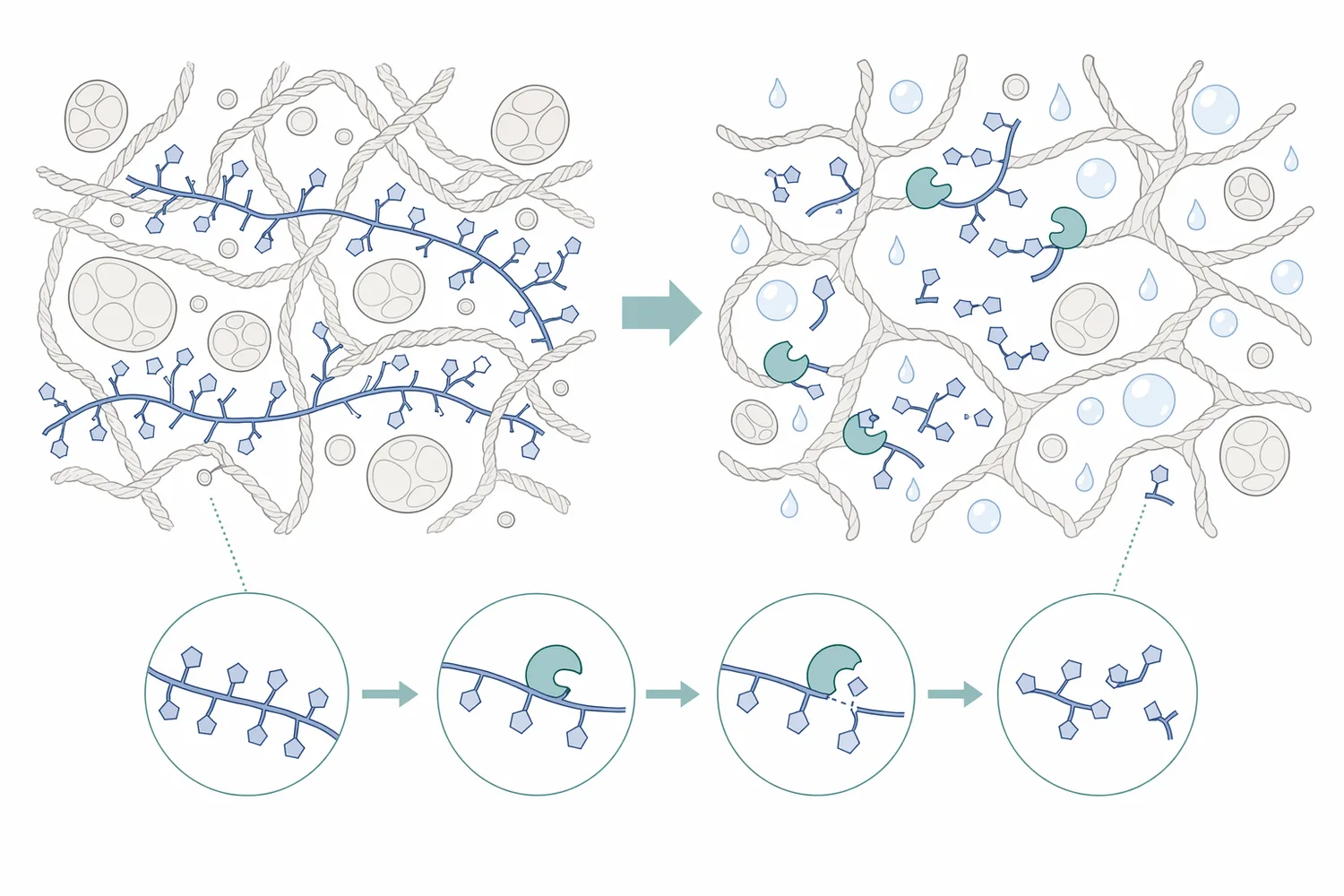
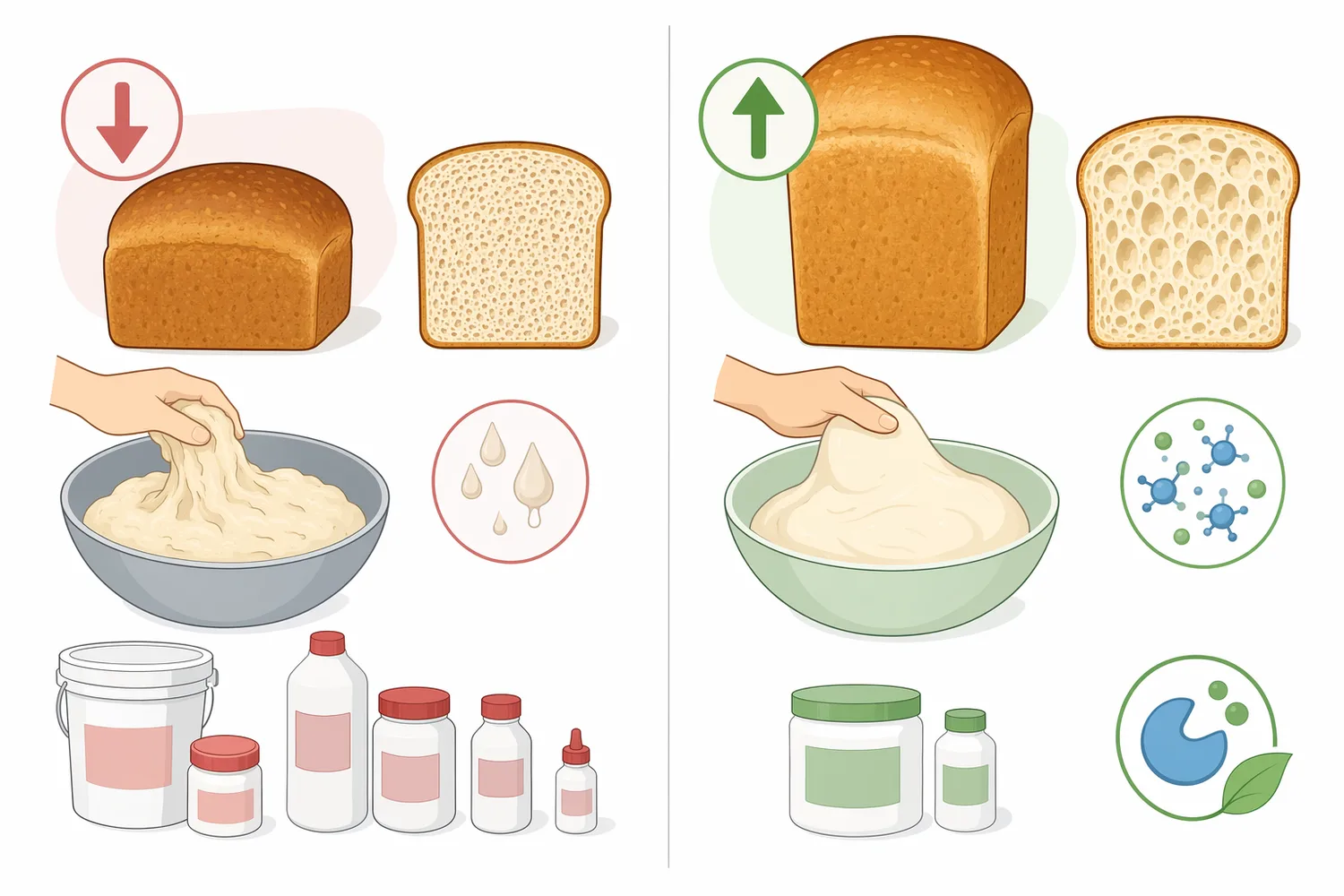
Water-unextractable arabinoxylans can behave like physical obstacles in dough. They compete for water, interrupt the continuity of the gluten network, and can make the dough less able to expand smoothly during proofing. In whole wheat and bran-rich systems, this helps explain the common pattern of higher water demand, tighter dough, lower loaf volume, and denser crumb compared with refined wheat bread.
Water-extractable arabinoxylans can be more beneficial when present in the right amount and molecular size. They can increase the viscosity of the aqueous phase in dough, helping stabilize thin films around carbon dioxide bubbles. Controlled xylanase action can convert part of the water-unextractable arabinoxylan fraction into smaller, more soluble fragments, shifting the dough toward better gas retention and more uniform expansion [1].
This is why the enzyme’s effect is not simply “more breakdown is better.” The useful outcome is partial modification: enough hydrolysis to improve water distribution and extensibility, but not so much that the dough becomes overly soft, sticky, or slack. Research on dough handling has shown that xylanase can increase stickiness and reduce dough strength in some systems, especially where the formulation does not need that kind of arabinoxylan modification.
At the molecular level, xylanase cuts internal bonds in the xylan backbone of arabinoxylans. That reduces the size of large hemicellulose chains and changes how they bind water. In bread dough, this can release water that was previously held tightly by insoluble fiber structures and redistribute it into the gluten-starch matrix [1].
That water redistribution changes dough feel. A dough that was tight or resistant may become more extensible, easier to sheet or mould, and more able to expand under yeast gas pressure. In pan bread, this can support better pan flow and oven spring; in rolls or buns, it can help the dough expand without tearing or forming irregular crumb cells [2].
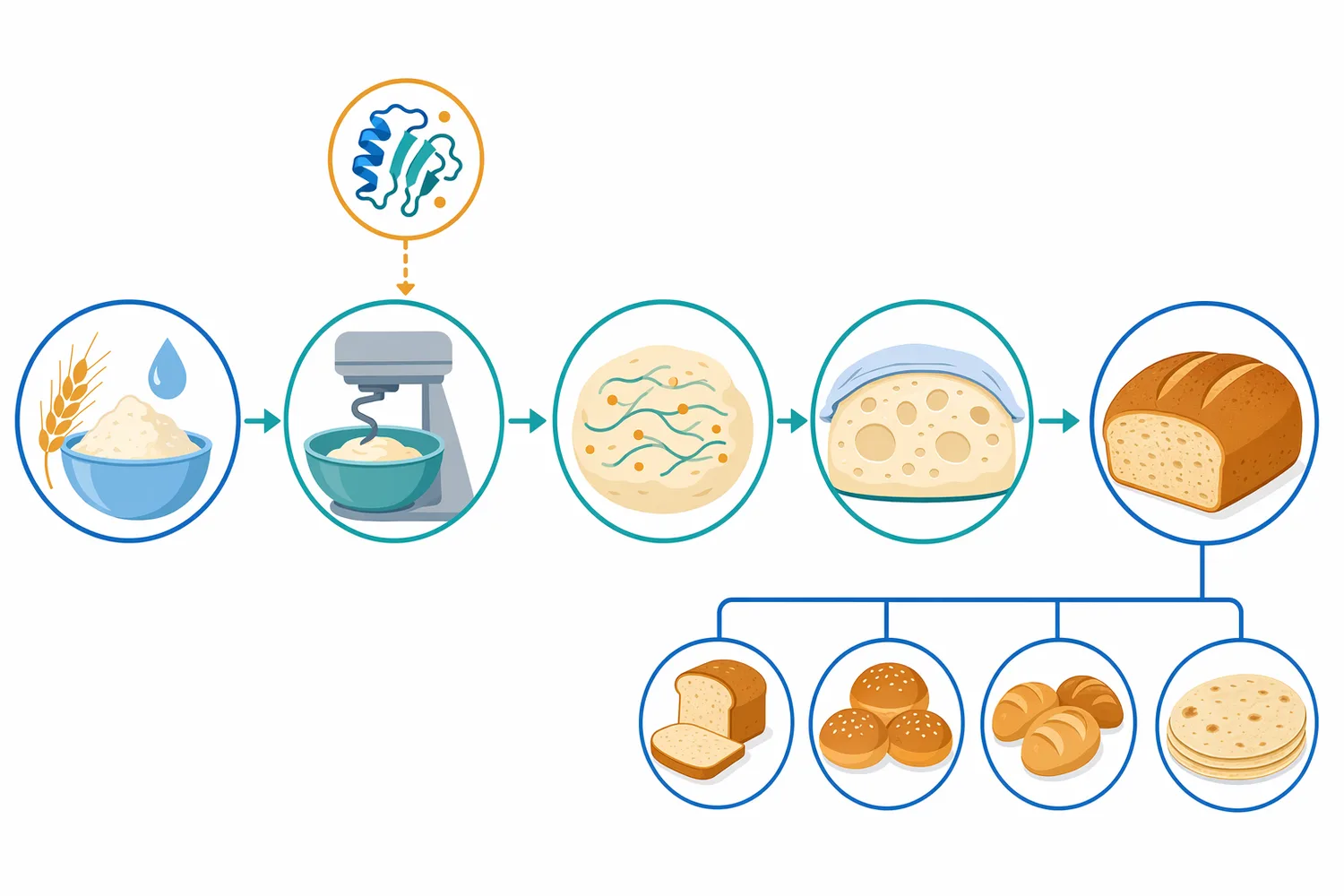
The gluten network also changes indirectly. Xylanase does not chemically crosslink gluten like an oxidative improver. Instead, by reducing the disruptive effect of arabinoxylan-rich cell-wall material, it can allow gluten proteins to form a more continuous network during mixing and fermentation. A 2025 study on a wheat arabino-xylanase from Podospora comata specifically connected arabinoxylanase action with improved gluten matrix development and bread quality in whole wheat dough.
Gas cell stability is another important mechanism. During fermentation, yeast produces carbon dioxide, which inflates existing gas cells. If the dough films around those cells are too weak, gas escapes; if the dough is too tight, the cells cannot expand evenly. Controlled arabinoxylan modification can improve the viscosity and structure of the liquid films around gas bubbles, helping produce a finer and more uniform crumb [1].
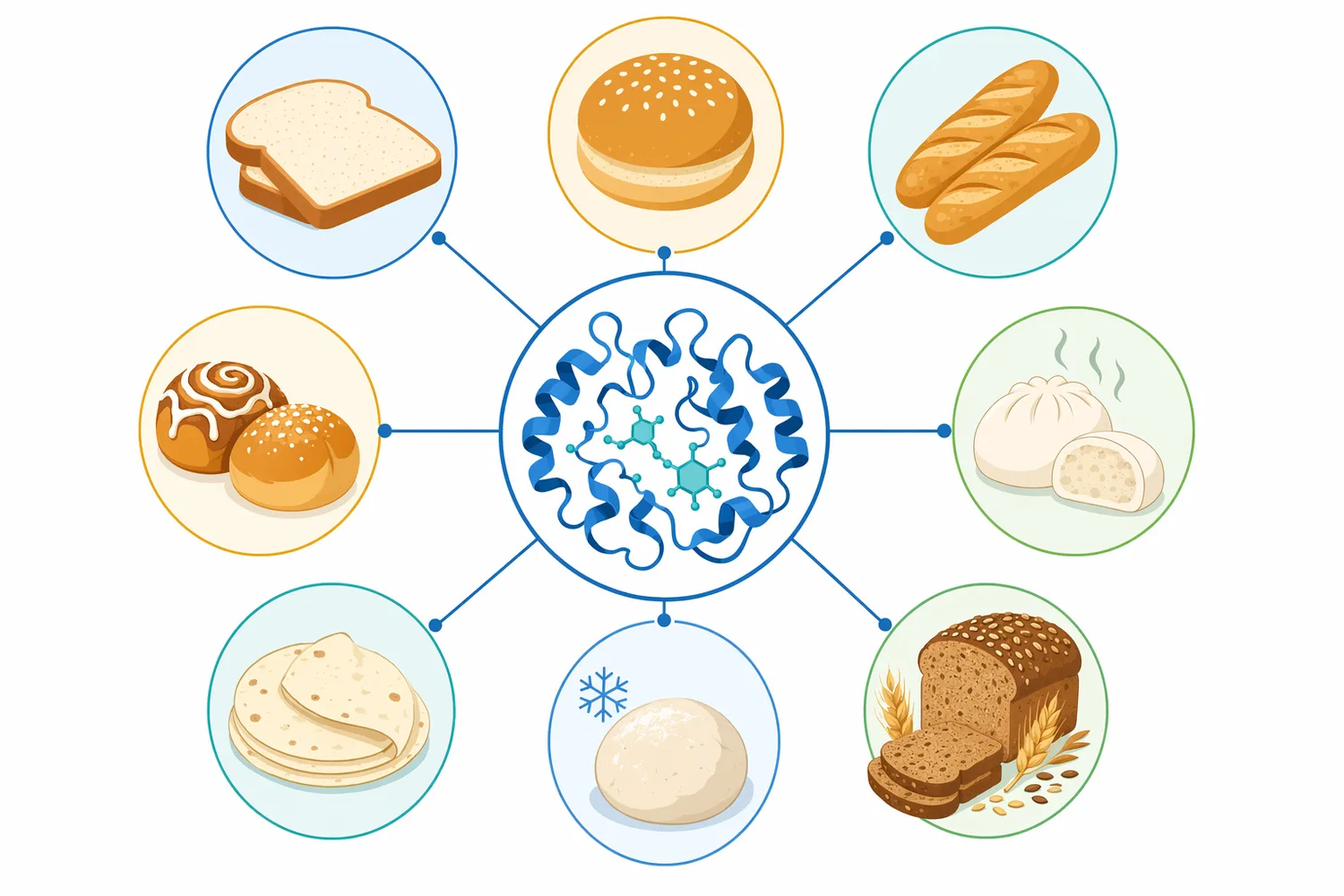
Xylanase is most relevant where arabinoxylans are a limiting factor in dough performance. That includes whole wheat bread, bran-enriched bread, high-fiber bread, multigrain bread, rye-containing wheat bread, industrial pan bread, rolls, buns, tortillas, and wheat-based flatbreads. These products often need a balance of machinability, gas retention, volume, and softness while carrying more cereal fiber or more process stress than simple white pan bread [2].
In whole wheat bread, bran particles and cell-wall polysaccharides tend to reduce loaf volume and create a firmer, denser crumb. A 2021 study in whole wheat bread found that xylanase used with emulsifiers improved dough rheology and bread attributes; the authors reported better dough stability, extensibility, antioxidant activity, general acceptability, and reduced bread hardness under the tested conditions.
In bran-containing systems, xylanase can be especially valuable because it acts on the arabinoxylan-rich material that drives much of the processing challenge. A 2019 Food Chemistry study treated wheat bran with xylanase and α-arabinofuranosidase before using it in steamed bread. Compared with single-enzyme treatment, the two-enzyme treatment improved bran hydrolysis, increased soluble xylooligosaccharides and phenolic acids, and improved technological properties including extensibility, stability time, porosity, specific volume, springiness, and cohesiveness while lowering crumb firmness, gumminess, and chewiness.
Oat-bran-enriched wheat bread is another example of the same principle. A 2017 study reported that enzyme-assisted bioprocessing with xylanase and sourdough fermentation improved rheological properties and bread quality in oat-bran-supplemented wheat bread. The broader lesson is that xylanase often performs best where fiber enrichment would otherwise compromise dough development and finished bread texture.
The strongest evidence for xylanase in baking is not a single isolated benefit, but a pattern of related effects: improved dough extensibility, better gas retention, more favorable crumb structure, reduced hardness in some systems, and improved eating quality when the enzyme is matched to the flour and formula. These effects are consistent with the underlying mechanism of arabinoxylan modification [1].
A 2024 study using an enzyme cocktail containing α-amylase, xylanase, and cellulase tested the blend in weak wheat flour. The enzyme cocktail reduced the alveograph P/L ratio, meaning the dough became less tenacious relative to its extensibility. In practical terms, that type of change can help a dough expand more easily during proofing and early baking instead of resisting gas pressure.
The same 2024 study also reported a strong reduction in bread firmness increase during storage compared with control bread. That does not mean xylanase alone is a complete shelf-life system, because bread firmness also depends on starch retrogradation, water level, fat, sugar, emulsifiers, packaging, and storage conditions. It does show that xylanase-containing enzyme systems can contribute to softer crumb and slower firming under defined breadmaking conditions.
Earlier work also supports xylanase as part of a broader improver system. A 2016 study evaluated ascorbic acid with commercial enzyme complexes containing amylase and xylanase/amylase. The formulation containing xylanase/amylase with ascorbic acid was reported as more efficient for dough rheology, and improved shelf life was observed in formulations containing xylanase.
Xylanase is sometimes misunderstood because its benefits overlap with those of other improvers, while its mechanism is different. It is best viewed as a fiber-management enzyme, not as a direct substitute for every dough strengthener, emulsifier, or starch-active enzyme. The table below gives a practical comparison at a conceptual level.
| Ingredient or enzyme type | Main substrate or target | What changes in dough | Typical bread-quality contribution | Key limitation |
|---|---|---|---|---|
| Xylanase hemicellulase | Arabinoxylans in wheat, bran, rye, and cereal cell walls | Partially reduces large water-binding hemicellulose structures; redistributes water; changes liquid-phase viscosity | Better extensibility, gas retention, crumb uniformity, volume, and softness in suitable systems | Too much or poorly matched action can cause sticky or slack dough |
| Amylase | Damaged starch and starch fractions | Generates fermentable sugars and dextrins; affects yeast activity, crust color, and crumb softness | Supports fermentation, browning, volume, and softness | Excessive starch breakdown can make crumb gummy or weak |
| Oxidative improvers | Gluten proteins and dough redox system | Promote stronger protein networking and dough strength | Increased tolerance, strength, and gas-holding capacity | They strengthen differently from xylanase and may not address fiber-driven water binding |
| Emulsifiers | Dough interfaces, starch-lipid and protein-lipid interactions | Improve gas-cell stabilization and crumb softening | Better volume, crumb texture, and softness | Effects depend on formula and may be synergistic with enzymes rather than replacing them |
| Sourdough fermentation | Flour carbohydrates, proteins, acids, microbial metabolites | Changes acidity, flavor, enzyme activity, and dough rheology | Flavor, texture, and improved performance in some fiber-rich breads | Requires fermentation control and process time |
This comparison helps explain why xylanase frequently appears in enzyme blends rather than as a single “fix.” In one flour system, xylanase may supply the missing extensibility and arabinoxylan modification; in another, the limiting factor may be gluten strength, starch conversion, emulsification, or fermentation balance.
Whole wheat bread is one of the most important applications for xylanase because whole wheat flour contains more bran and aleurone material than refined flour. These fractions increase the amount of arabinoxylan-rich cell-wall material in the dough, which can raise water absorption and interfere with gluten continuity. Xylanase helps by reducing some of that interference and changing how water is held and released during mixing and fermentation.
The 2021 whole wheat bread study with xylanase, amylase, and emulsifiers is especially relevant because it reflects the way bread improvers are often used in practice: as a system. Xylanase combined with SSL and DATEM significantly enhanced dough stability, extensibility, antioxidant activity, and general acceptability while reducing phytic acid content and bread hardness in the studied whole wheat bread formulations.
The 2019 wheat-bran steamed bread study provides more detail on what happens to fiber-rich material before it reaches the finished crumb. Treating bran with xylanase plus α-arabinofuranosidase improved hydrolysis and increased soluble xylooligosaccharides and phenolic acids. In the dough and bread, the treatment decreased resistance to extension, softening degree, water absorption, and development time while improving extensibility, stability time, porosity, sensory characteristics, specific volume, springiness, and cohesiveness.
Those findings align well with the practical experience that xylanase is often more visible in whole grain and bran-enriched products than in low-fiber refined flour systems. Where there is more arabinoxylan substrate, there is more opportunity for controlled enzyme action to improve the balance between hydration, gluten development, gas retention, and crumb texture [1].
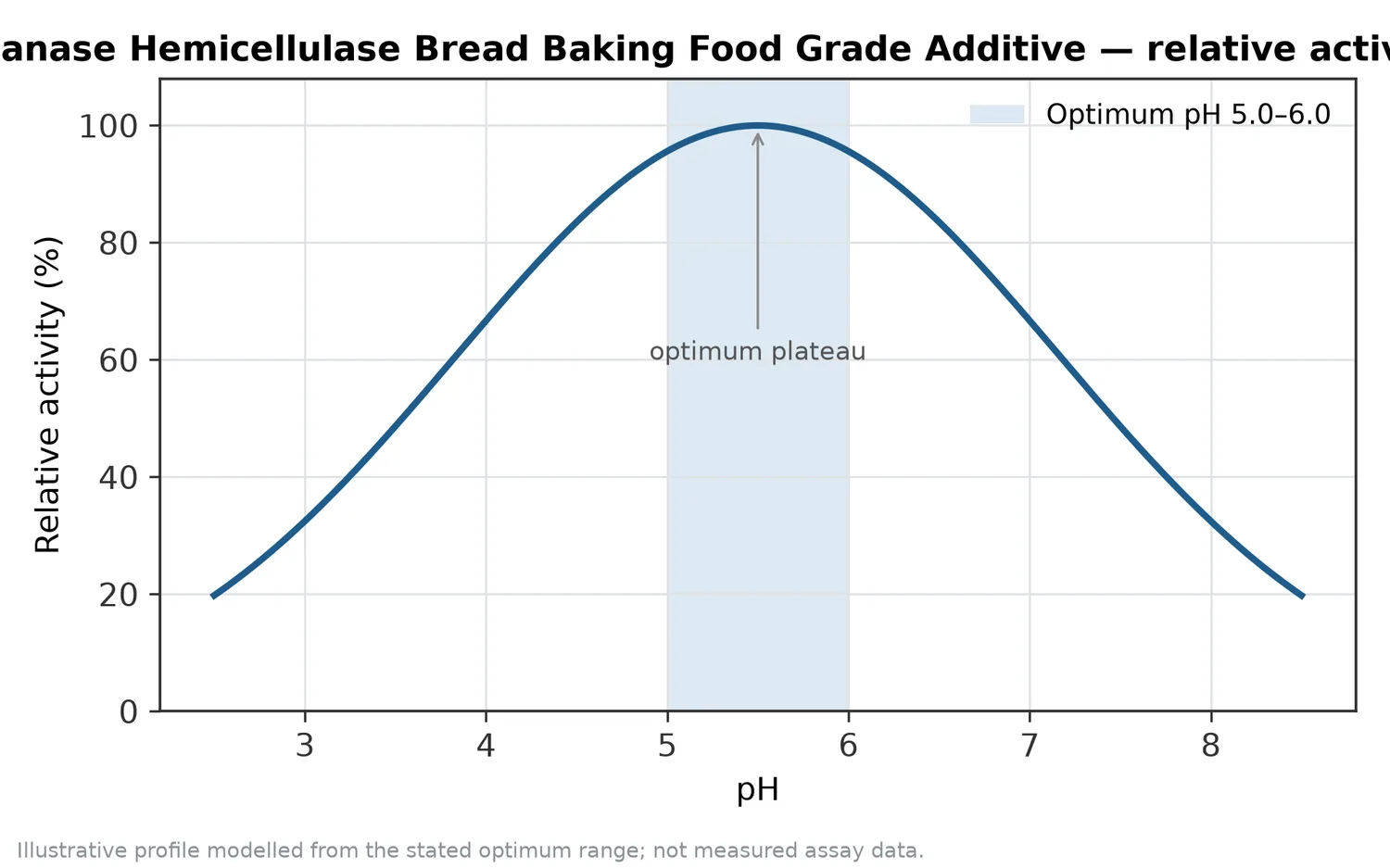
Rye dough behaves differently from wheat dough because rye relies less on a strong gluten network and more on pentosans, arabinoxylans, starch behavior, and acidity. Even so, rye research helps illustrate how strongly cereal arabinoxylans influence dough structure. In rye and rye-containing bread, the hemicellulose fraction can dominate water binding and dough viscosity.
A 2017 Food Chemistry study on rye dough and bread evaluated xylanase and transglutaminase together. The researchers reported that dosing the two enzymes positively affected rye dough and bread characteristics, increased the protein network by up to 38%, and produced a higher volume rise compared with standard rye dough.
That does not mean rye results should be transferred one-to-one to wheat pan bread. It does support the broader principle that arabinoxylan modification can influence protein networking, gas retention, and loaf structure in cereal doughs. For mixed wheat-rye, multigrain, and high-fiber bakery products, this principle is commercially relevant because the dough often contains several fiber sources with different water-binding behavior.
In bakery processing, dough handling is often as important as finished loaf measurements. A dough may have acceptable laboratory volume potential but still fail in production if it is too tight for sheeting, too sticky for dividing, too weak for moulding, or too variable during proofing. Xylanase can help by changing dough mobility through arabinoxylan hydrolysis and water redistribution [2].
Bakerpedia lists improved dough extensibility, machinability, gas retention, oven spring, gluten network continuity, pan flow, and crumb gas-cell uniformity among xylanase-related benefits in yeast-leavened dough systems. These are practical processing outcomes: the dough moves more predictably through equipment, expands more evenly, and supports a more regular crumb structure [1].
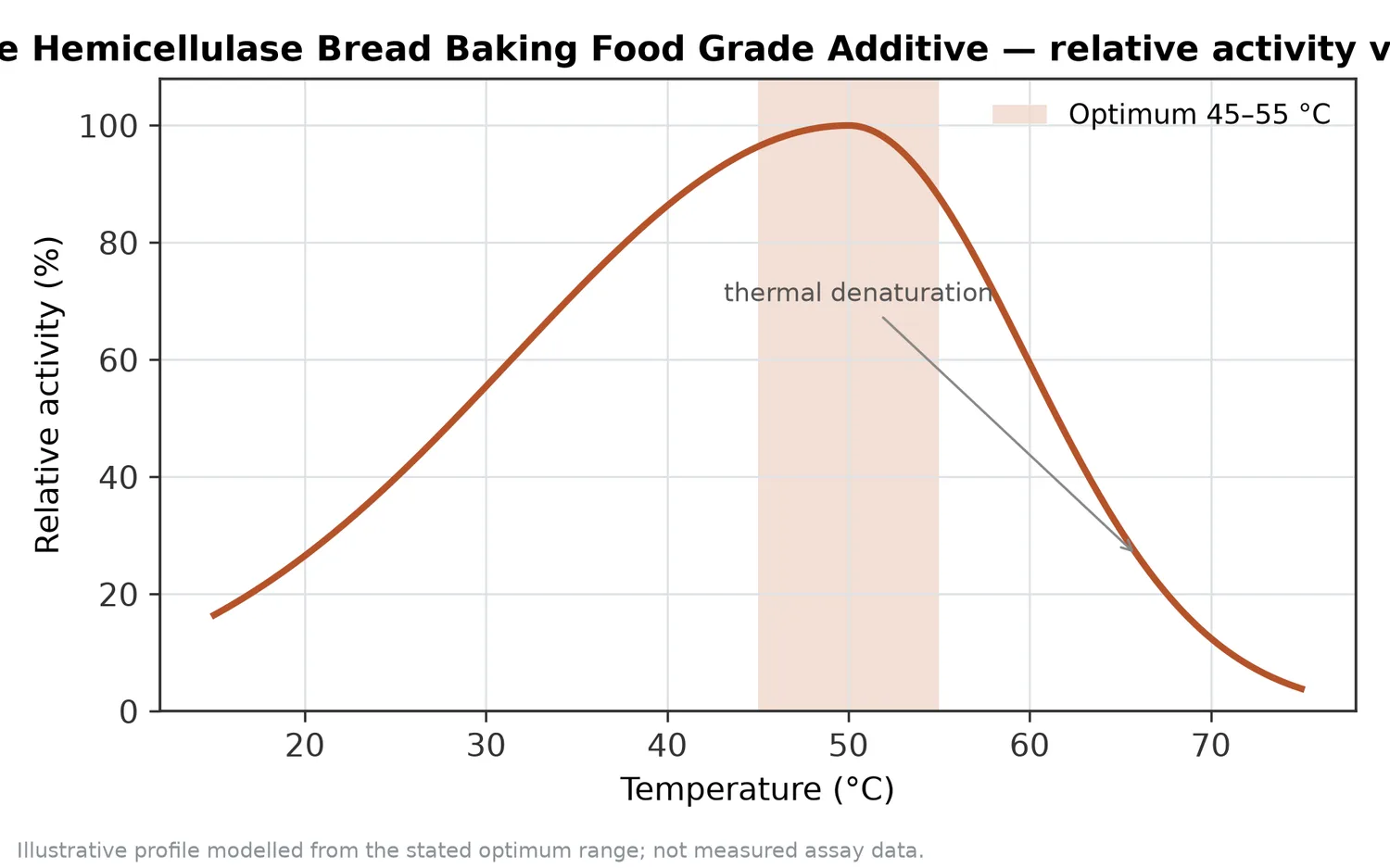
The caution is that xylanase does not always increase “strength” as a baker might define it. A 2020 study on dough handling in normal and reduced sodium systems found that xylanase and combinations with oxidative enzymes increased stickiness, produced lower dough strength by rheology, and reduced the ratio of resistance to extension and extensibility. Oxidative enzymes such as glucose oxidase and hexose oxidase produced stronger dough effects in that study.
That result is not a contradiction; it clarifies the role of the enzyme. Xylanase primarily improves the fiber-water balance and extensibility side of dough behavior. If the problem is insufficient oxidative gluten strengthening, xylanase alone may not solve it. If the problem is fiber-driven tightness, poor expansion, or dense crumb, xylanase is often much more directly relevant.
Crumb softness is influenced by several mechanisms at once: starch gelatinization and retrogradation, moisture migration, gluten-starch interactions, fat and emulsifier effects, sugar level, and packaging. Xylanase contributes mainly by changing water distribution and the arabinoxylan fraction, which can lead to a more open, uniform, and less firm crumb in suitable formulas.
The 2021 whole wheat bread study reported reduced bread hardness when xylanase was combined with emulsifiers, alongside improved acceptability and rheological properties. This supports the idea that xylanase can contribute to eating quality, especially where whole wheat fiber would otherwise create a dense or firm bite.
The 2024 enzyme cocktail study also reported reduced bread firmness increase during storage. Since the cocktail contained α-amylase, xylanase, and cellulase, the anti-firming effect should be understood as a blend effect rather than proof that xylanase alone controls shelf life. Still, the result is consistent with xylanase’s role in improving the hydrated structure of the crumb and supporting a softer texture over time.
Industry guidance similarly describes xylanase as a tool for improving bread quality through dough water management, gas retention, oven spring, and crumb texture. In commercial terms, those effects matter because consumers judge bread not only by label or nutrition but by volume, slice appearance, softness, resilience, and freshness perception [2].
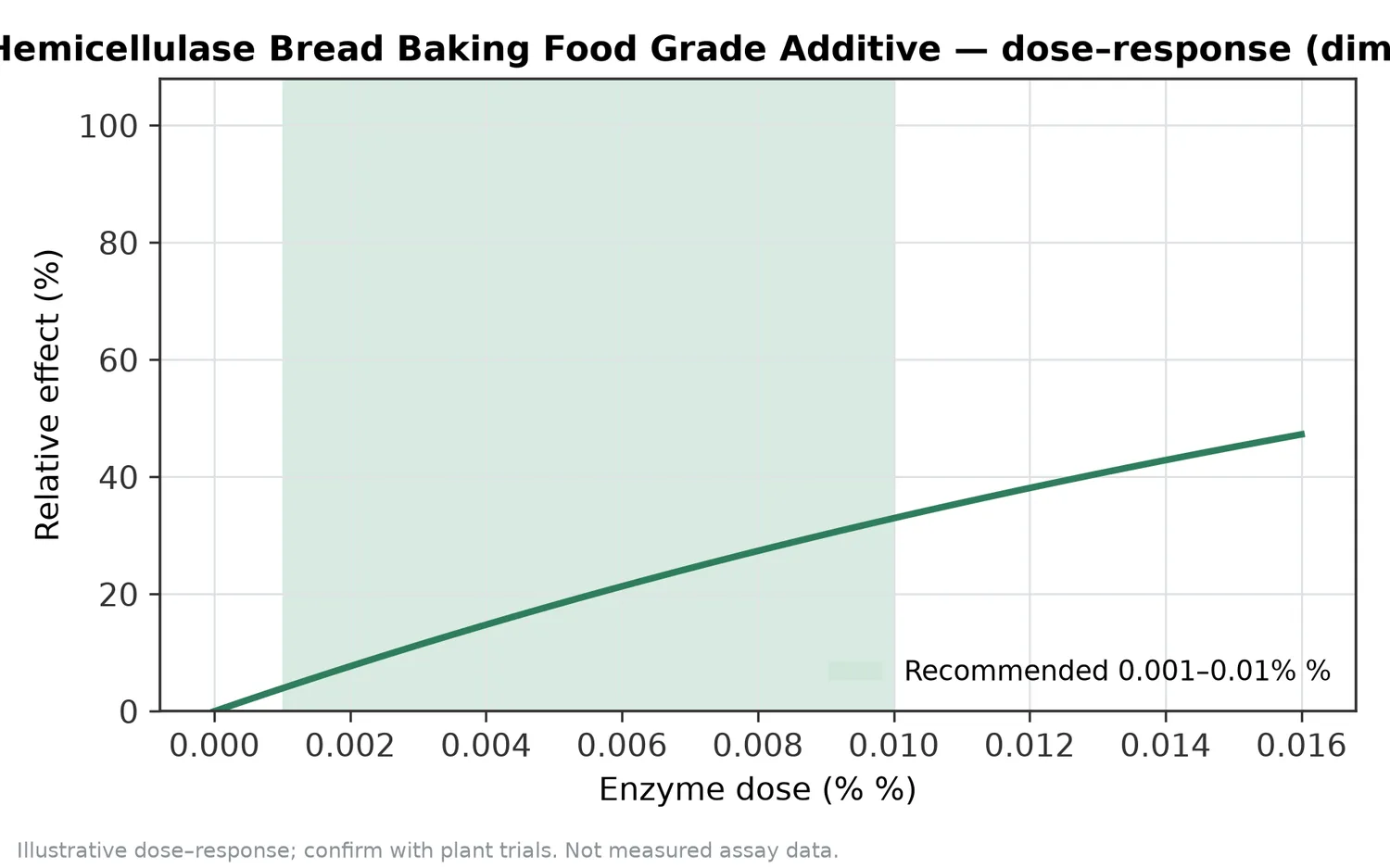
Xylanase Hemicellulase Bread Baking Food Grade Additive is best treated as one component in a complete bread formulation. Flour quality, extraction rate, bran level, water addition, mixing energy, fermentation time, dough temperature, salt level, yeast activity, emulsifiers, amylases, oxidizing systems, fat, sugar, and packaging all influence the final outcome.
In many bread systems, xylanase is added with the dry ingredients or during mixing so it can act as the flour hydrates and the dough develops. Its most important period of action is during mixing, resting, proofing, and the early stages of baking before heat inactivation. During that window, the enzyme modifies arabinoxylans while the gluten network is forming and gas cells are expanding [1].
The goal is not maximum hydrolysis. Excessive arabinoxylan breakdown can release too much water into the dough phase, reduce resistance, and create stickiness or slackness. The best bread results usually come from enough enzyme action to improve extensibility and gas-cell stability while preserving the dough strength needed for dividing, rounding, moulding, proofing, and baking.
This balanced view is important for bromate-reduction or oxidant-reduction strategies as well. Xylanase can improve extensibility and processing behavior, but it does not provide the same oxidative strengthening mechanism as ingredients that act directly on gluten protein networking. Where stronger dough structure is required, xylanase may need to work alongside other formulation tools rather than replacing them entirely.
Enzymes.bio supplies Xylanase Hemicellulase Bread Baking Food Grade Additive as a food-grade enzyme product for bread and wheat-based bakery applications. It is sold directly online by the 1 kg unit: the buyer places the order online, pays online, and the order is processed and shipped. A Certificate of Analysis and Safety Data Sheet are included with the order.
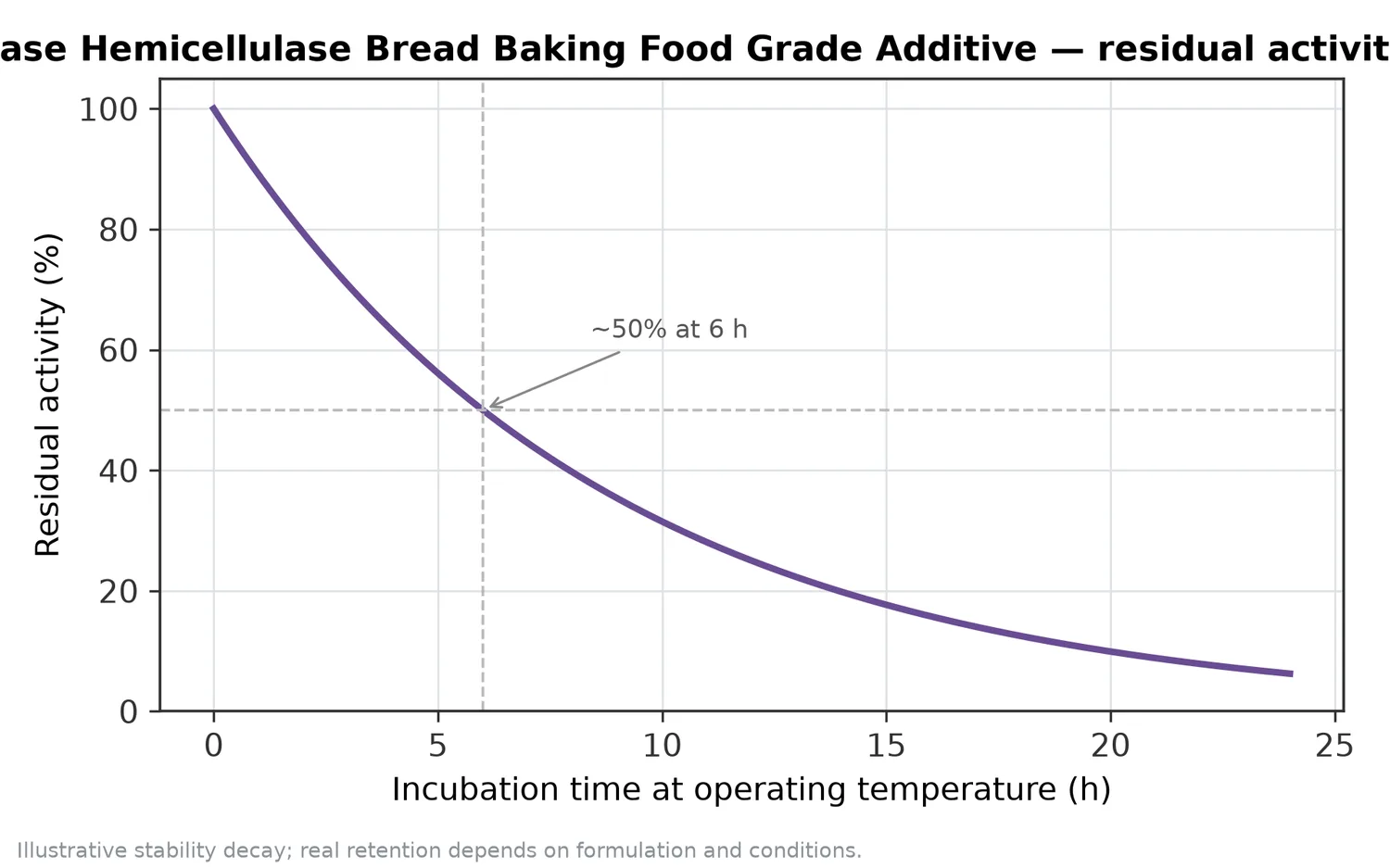
For customers using wheat flour, whole wheat flour, bran, rye-containing flour blends, or multigrain bakery bases, the product is intended to support practical breadmaking goals: improved dough handling, better expansion, more consistent crumb, and softer finished texture where arabinoxylan modification is beneficial. The strongest evidence supports xylanase in whole wheat, high-fiber, bran-enriched, rye-related, and enzyme-blend bakery systems.
Xylanase hemicellulase has a clear and well-supported role in bread baking: it partially modifies cereal arabinoxylans so water, gluten, starch, and gas cells behave more favorably during mixing, proofing, and baking. In suitable wheat-based systems, that can mean improved extensibility, machinability, gas retention, loaf volume, crumb uniformity, and reduced firmness [1].
The research evidence is strongest in whole wheat, bran-containing, high-fiber, rye-related, and multi-enzyme bread systems. Studies report improvements in dough stability, extensibility, specific volume, porosity, sensory quality, springiness, cohesiveness, and bread softness, while also showing that excessive or poorly matched xylanase action can make dough sticky or weak.
For online buyers looking for a food-grade bread enzyme in a practical 1 kg format, Xylanase Hemicellulase Bread Baking Food Grade Additive from Enzymes.bio is best understood as a fiber-management tool for cereal doughs. Used as part of a balanced formulation, it can help turn difficult arabinoxylan-rich flour systems into more manageable doughs and better-quality baked products.
Sold by the 1 kg unit, in stock and ready to ship. Order directly on our store — pay online and we process your order. A Certificate of Analysis and Safety Data Sheet are included with every order.
Buy Xylanase Hemicellulase Bread Baking Food Grade Additive →Numbered in order of first citation. Open-access sources, each verified reachable at publication; citation numbers in the text link here.