
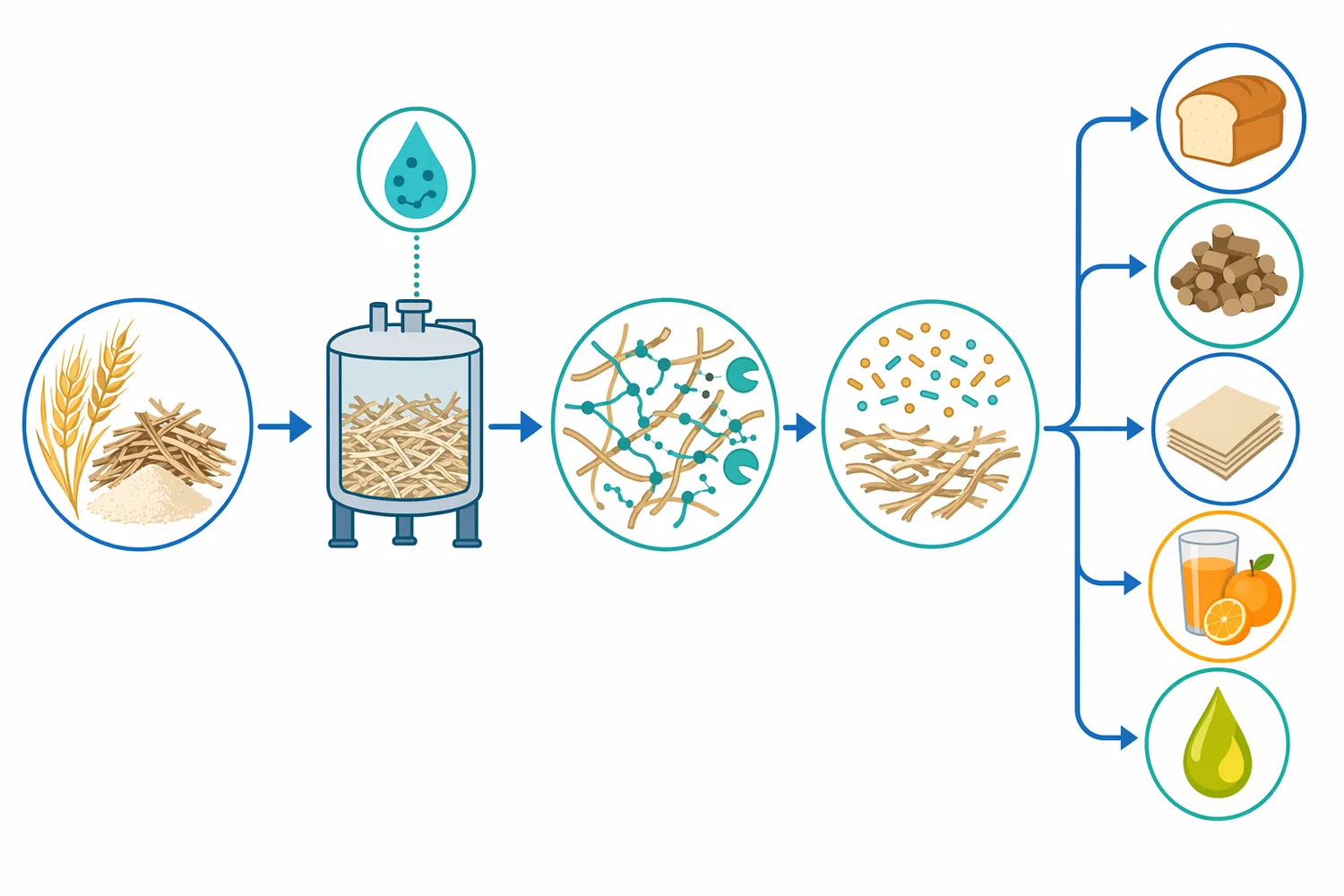
Xylanase is an enzyme that breaks down xylan, the main hemicellulose in many plant cell walls, by cleaving the β-1,4-linked xylose backbone into shorter xylo-oligosaccharides and soluble fragments. In practical processing, the xylanase function is to open plant materials, reduce hemicellulose-related viscosity or barrier effects, and improve access for bleaching chemicals, digestive enzymes, fermentation organisms, or downstream separation steps [1].
For buyers using Enzymes.bio, Xylanase is available directly online by the 1 kg unit: pay online, the order is processed, and the product is shipped. A Certificate of Analysis and Safety Data Sheet are included with the order.
Xylanase, sometimes searched as “xylanase enzyme,” “enzyme xylanase,” or “xylanase enzymes,” refers to a group of glycoside hydrolases that act on xylan, a hemicellulose built mainly from β-1,4-linked xylose units. The most industrially relevant activity is often described as endo xylanase or endo-1,4-β-xylanase because the enzyme cuts inside the xylan chain rather than only trimming from the ends [1].
In plain terms, if the question is “what does xylanase break down?”, the answer is xylan and related arabinoxylans rather than starch, protein, fat, or cellulose as the primary substrate. Xylan is abundant in cereal brans, agricultural residues, wood pulps, grasses, soybean meal, and other plant-derived materials, where it forms part of the matrix surrounding cellulose microfibrils and can be linked or associated with lignin, phenolics, arabinose side chains, and glucuronic acid substituents [2].
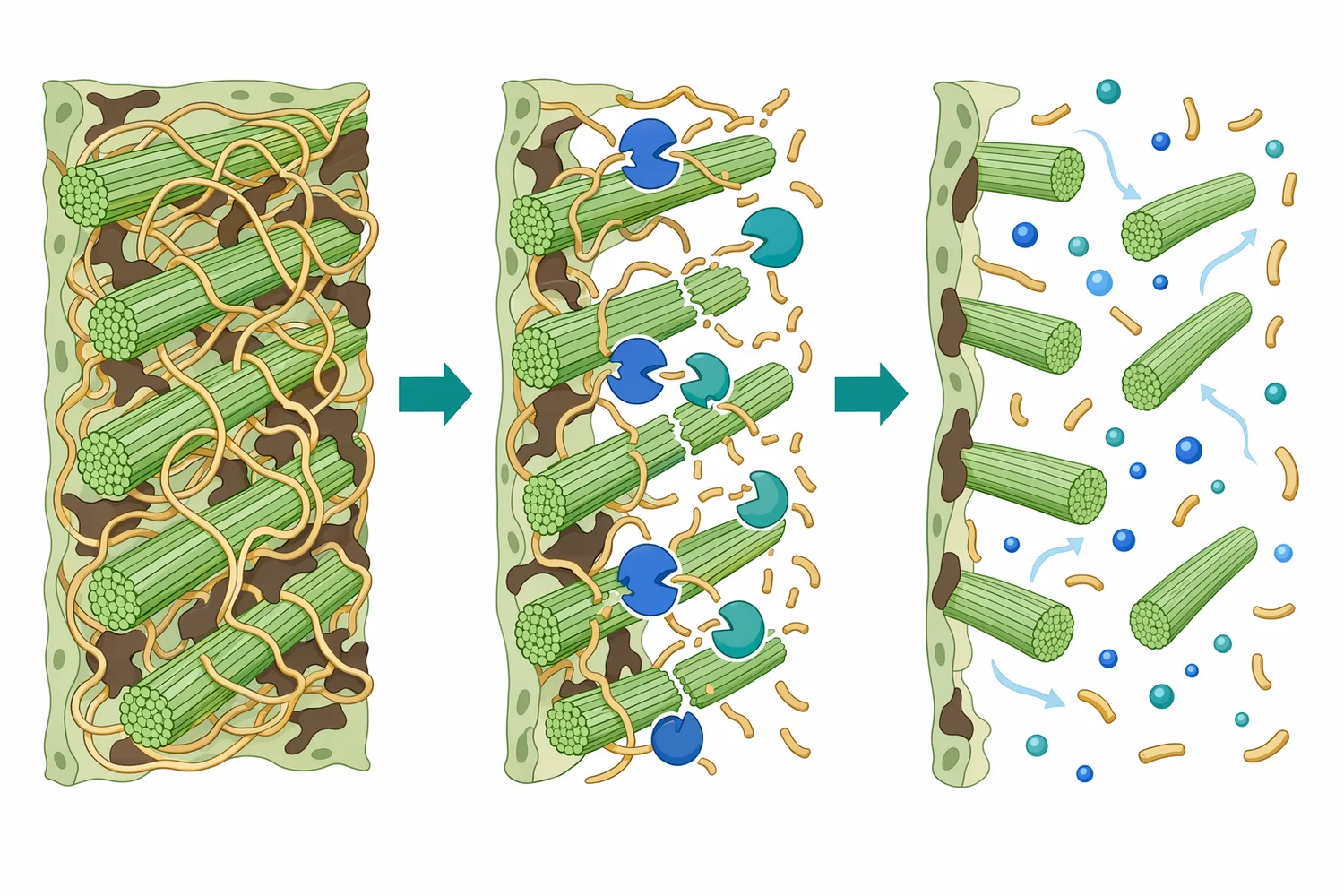
The practical importance of xylanase comes from what changes after the xylan backbone is cut. Long, less-mobile hemicellulose chains become shorter soluble fragments; plant cell-wall pores can become more open; trapped lignin fragments and phenolics can become easier to extract; and high-molecular-weight arabinoxylans that contribute to viscosity can be reduced into smaller xylo-oligosaccharides [2].
For clarity, xylanase pronunciation is commonly “ZY-lan-ase” or “ZY-luh-nase.” The spelling varies in searches—“what is xylanase,” “xylanase supplement,” “xylanase in food,” and “xylanase enzyme benefits”—but the core science is the same: it is a plant-cell-wall hemicellulose enzyme used where xylan limits processing performance [1].
The structure of xylanase depends on the enzyme family, with GH10 and GH11 among the most widely discussed industrial families. GH10 xylanases typically have a broader active-site cleft that can accommodate substituted xylans, while GH11 xylanases are often smaller, β-jelly-roll enzymes that act efficiently on accessible xylan backbones; both families hydrolyze β-1,4-xylosidic bonds but can differ in substrate preference and product pattern [1].
At the catalytic level, many xylanases use two acidic amino-acid residues positioned in the active site to promote glycosidic bond cleavage. Classic work on Bacillus circulans xylanase examined the acid/base catalyst position, showing that correct placement of the catalytic residue is essential for efficient hydrolysis of the xylan chain [3].
Mechanistically, the enzyme binds a segment of xylan across subsites in the active-site cleft. The catalytic residues then help protonate the glycosidic oxygen and stabilize the transition state, causing the β-1,4 bond between xylose residues to break; the result is a shorter xylan chain plus a xylo-oligosaccharide fragment that can diffuse away from the substrate surface [4].
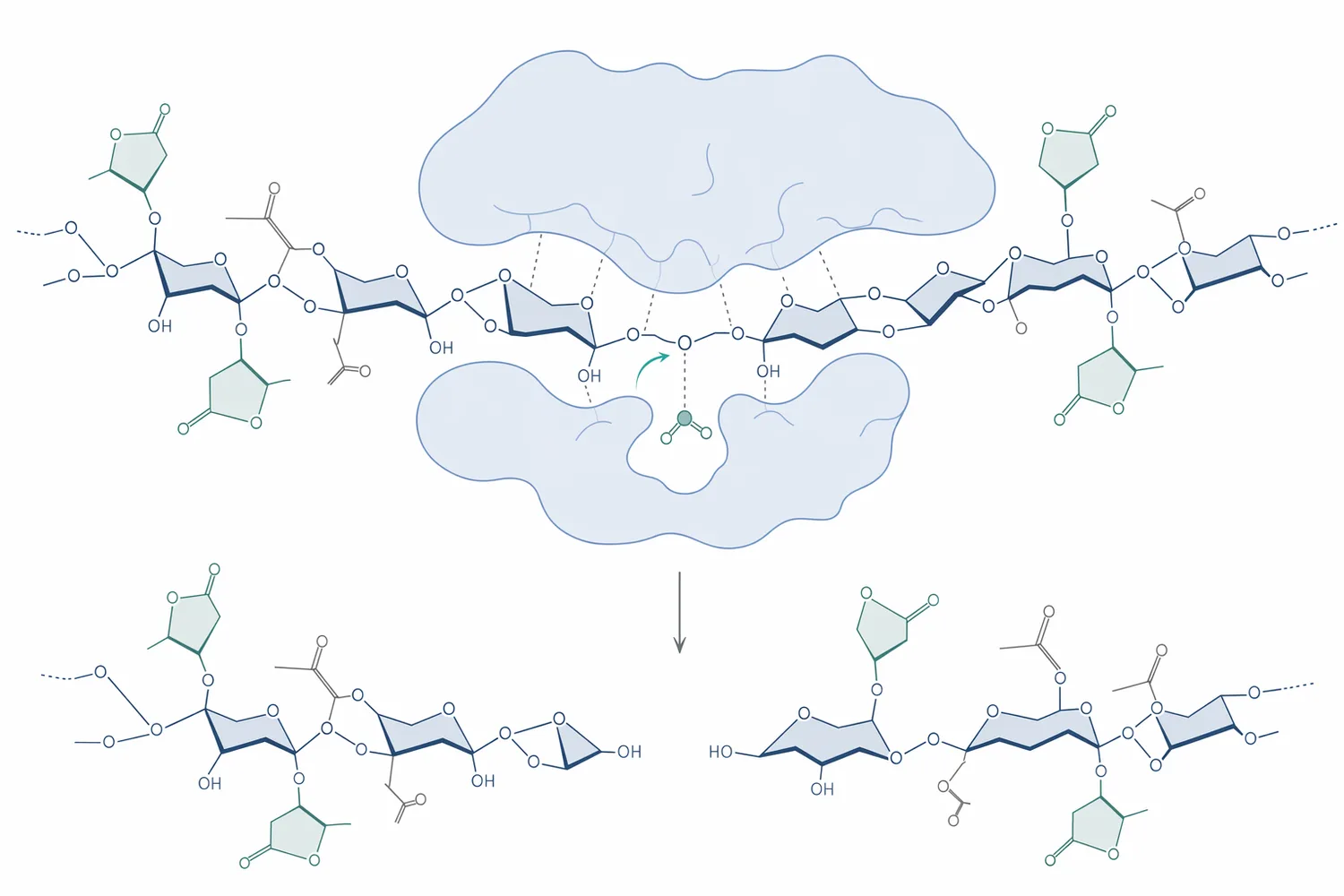
This is why xylanase is not simply a “fiber dissolver.” It does not randomly destroy all plant biomass. It changes a specific hemicellulose fraction, and the process benefit depends on whether that xylan fraction is the material blocking bleaching, digestion, extraction, clarification, saccharification, or fiber separation [2].
Endo xylanase attacks internal bonds within the xylan backbone, so its first visible effect is usually a reduction in xylan molecular size rather than complete conversion to xylose. That distinction matters industrially: shorter xylo-oligosaccharides can reduce viscosity, loosen cell-wall structure, improve extractability, or act as fermentable/intermediate products depending on the process [5].
In lignocellulosic materials, xylan is physically and chemically entangled with cellulose and lignin. When xylanase removes part of that hemicellulose barrier, cellulose surfaces and lignin-containing regions become more accessible to other enzymes, chemicals, or microbes; this is one reason xylanase is often used as a processing aid in multi-step systems rather than as the only treatment [2].
In cereal materials, arabinoxylans can bind water and increase viscosity. Cutting their backbone into smaller fragments can make liquid phases easier to separate, reduce the physical barrier around nutrients, and generate arabinoxylo-oligosaccharides that may be further metabolized by gut or fermentation microbiota [6].
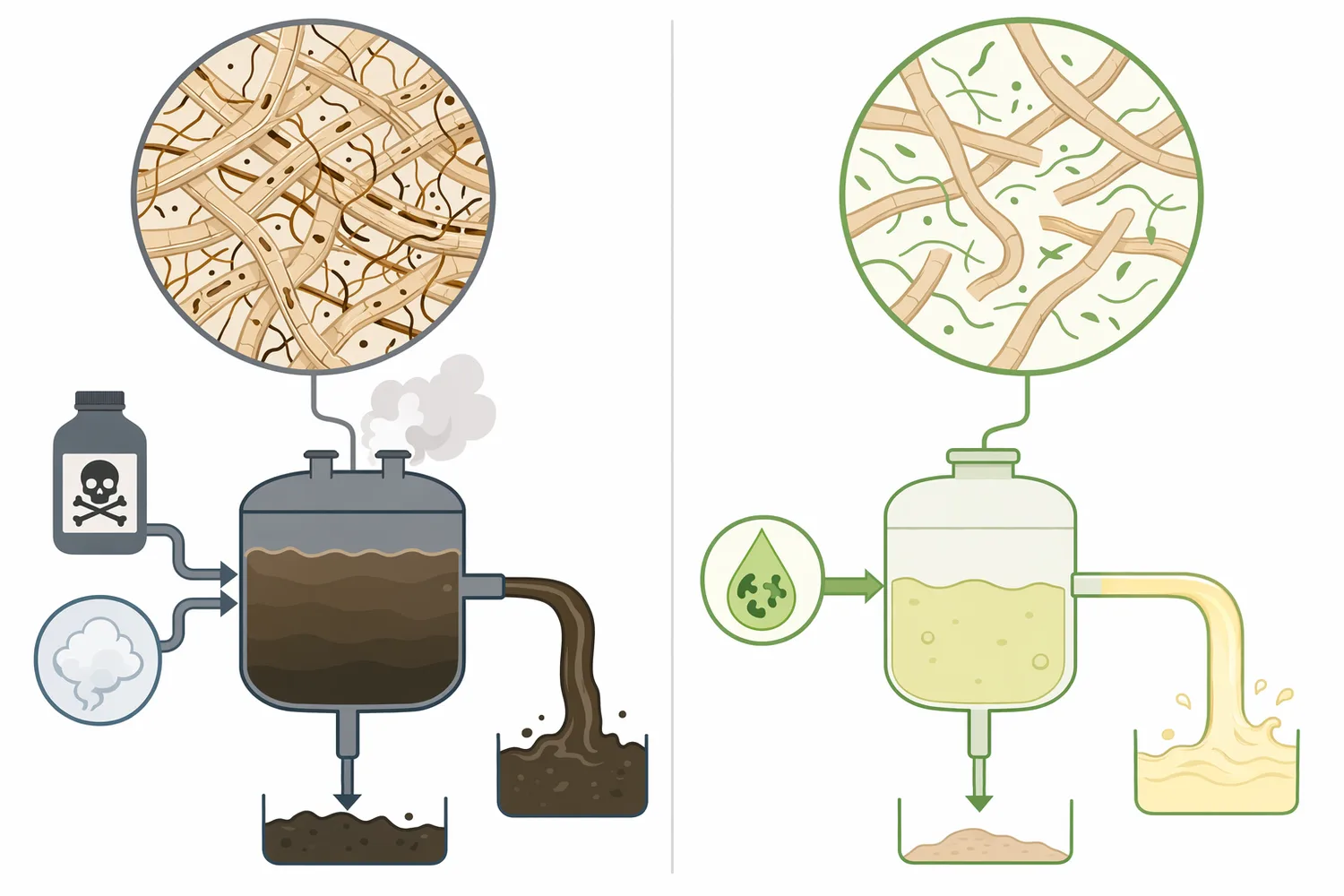
In pulp fibers, xylanase can hydrolyze xylan that has redeposited on fiber surfaces during pulping. Removing or shortening that layer improves diffusion pathways so bleaching chemicals can reach lignin-rich regions more effectively, which is why xylanase has been studied extensively as a prebleaching enzyme in paper pulp processing [7].
Xylanase enzymes are often discussed by the pH region in which they perform best, because application environments differ. Food, feed digestion, biomass hydrolysis, pulp processing, and detergent-like alkaline systems do not expose the enzyme to the same chemistry, and the xylanase structure must remain stable enough for catalysis under the relevant conditions [1].
| Xylanase type | Typical process context | What the enzyme is doing to the substrate | Practical significance |
|---|---|---|---|
| Acid xylanase | Animal digestion, acidic food or beverage steps, some biomass hydrolysis stages | Cuts cereal or plant arabinoxylans under lower-pH conditions | Can reduce viscosity or release oligosaccharides where acidic environments are unavoidable |
| Neutral xylanase | Food processing, brewing, moderate biomass systems, some textile treatments | Hydrolyzes accessible hemicellulose without strongly acidic or alkaline chemistry | Useful where the material or process is sensitive to extreme pH |
| Alkaline xylanase | Pulp bleaching, some fiber and detergent-related applications | Opens xylan-coated or xylan-rich fiber structures under alkaline-compatible conditions | Valuable where existing process liquor or fiber chemistry is alkaline |
Research on alkaline xylanase isoforms from Bacillus pumilus highlights why alkaline stability is industrially important: pulp and fiber processes often operate outside the mild neutral conditions used in many laboratory systems, so enzymes that remain active in alkaline environments can be more process-relevant [8].
Thermotolerant and thermostable xylanases are also important because industrial substrates are often processed warm. Studies on Bacillus haynesii, Bacillus safensis, and Peniophora incarnata xylanases show continuing interest in enzymes that retain performance at elevated temperatures and in cellulose-free preparations for applications where cellulose damage is undesirable [9].
Pulp bleaching is one of the clearest industrial applications for xylanase because the target problem is well defined. During kraft and related pulping, xylan can dissolve and then reprecipitate onto fiber surfaces; that redeposited hemicellulose can limit fiber permeability and slow the movement of bleaching chemicals into lignin-containing regions [7].
Xylanase prebleaching works by partially hydrolyzing that surface or near-surface xylan. Once the long xylan chains are cut, some fragments become soluble and leave the fiber wall, creating more open pathways for chemical penetration and for lignin-derived chromophores to move out of the pulp during subsequent bleaching stages [10].
The environmental value is connected to chlorine chemistry. Reviews of microbial xylanases in pulp bleaching describe reduced demand for harsh bleaching chemicals and lower formation of adsorbable organic halides when xylanase is properly integrated into bleaching sequences, especially where mills aim to reduce chlorine-based load while maintaining brightness [7].
A thermotolerant xylanase from Bacillus haynesii was studied not only for synthesis and optimization by Box-Behnken design but also for biobleaching activity, showing that bacterial xylanases remain an active research area for pulp applications requiring heat tolerance and compatibility with industrially relevant fiber treatment [9].
Selectivity is important in this application. Cellulase-free or low-cellulase xylanase is preferred in pulp bleaching because cellulose is the structural polymer responsible for paper strength; the goal is to alter xylan enough to improve bleachability, not to weaken the cellulose fiber network [11].
In animal feed, xylanase is used because cereals and plant proteins contain non-starch polysaccharides such as arabinoxylans that animals cannot efficiently hydrolyze on their own. These polymers can increase digesta viscosity, trap nutrients inside cell-wall structures, and alter microbial fermentation patterns in the gut [6].
A study in pigs fed corn-based fiber described a “stimbiotic” mechanism: xylanase did not simply release large amounts of sugar for direct nutrition, but modulated the large-intestine microbiota by generating smaller xylan-derived fragments that encouraged fiber-fermenting bacterial populations [6].
Another pig study investigated the mechanism of xylanase action in insoluble corn-based fiber and showed that the benefits are linked to structural changes in dietary fiber and downstream fermentation effects rather than a simple one-step conversion of feed fiber into digestible sugar [12].
In poultry, xylo-oligosaccharides generated from xylan hydrolysis have been studied as prebiotic compounds. Broiler research found that xylo-oligosaccharides supplemented into wheat- or corn-based diets displayed prebiotic activity, supporting the idea that controlled xylan breakdown can influence gut microbial ecology [13].
This mechanism explains why a “xylanase supplement” in feed contexts is different from a nutritional supplement aimed at adding a nutrient directly. The xylanase enzyme acts on plant cell-wall arabinoxylan in the feed matrix, producing smaller fragments and changing the physical and microbial environment in the digestive tract [14].
Xylanase in food processing is mainly relevant where cereal arabinoxylans influence dough rheology, water distribution, filtration, extraction, or viscosity. Wheat flour, bran, rye, barley, oats, and other cereal materials contain arabinoxylans that bind water and interact with gluten, starch, and proteins during mixing and heating [15].
In dough systems, xylanase can convert water-unextractable arabinoxylans into more soluble fragments, changing how water is held in the dough. Work on the combined effect of xylanase and glucose oxidase in dough systems showed that xylanase can modify arabinoxylan behavior while oxidative crosslinking influences the protein network, helping explain why enzyme combinations can affect loaf volume and dough handling differently from single enzymes [15].
Studies on enzymatic preparations for improving bread quality similarly connect baking effects to arabinoxylan modification. When the xylan fraction is cut to an appropriate degree, dough can become more extensible, gas retention can improve, and crumb structure may change; excessive hydrolysis, however, can remove too much water-binding structure and produce less desirable handling [16].
In oats and other cereals, xylanase-related cell-wall hydrolysis can also influence release of bound phenolics. During solid-state fermentation of oats with Monascus anka, enzymatic action was linked to phenolic mobilization, showing that xylan breakdown can affect not only texture or viscosity but also the availability of cell-wall-associated bioactive compounds [17].
In brewing and cereal extraction, arabinoxylans can interfere with mash separation and wort filtration because they increase viscosity and contribute to gel-like cell-wall residues. Xylanase can help by cutting arabinoxylan into smaller, more soluble fragments that pass through the process more easily [1].
The details matter because barley and malt contain endogenous enzymes and inhibitors. Research on xylanase inhibitors in plants shows that plant proteins can inhibit microbial or endogenous xylanases, which helps explain why the same theoretical xylanase activity may perform differently across grain varieties and processing conditions [18].
For brewing, the practical mechanism is not that xylanase “makes alcohol.” Instead, it modifies the hemicellulose fraction that affects extract release, runoff, and filtration. Where arabinoxylan is a limiting factor, targeted xylanase activity can support smoother liquid-solid separation and more predictable cereal processing [1].
Plant-based beverages and fruit or vegetable juices often contain suspended cell-wall fragments, pectin, cellulose, hemicellulose, proteins, and phenolic complexes. Xylanase can contribute to clarification when xylan-containing hemicellulose is part of the haze, pulp structure, or viscosity problem [1].
The mechanism is physical as much as chemical: hydrolyzing hemicellulose weakens the fine plant-particle network that keeps solids dispersed. As xylan chains are shortened, particles may settle or filter more readily, and other enzymes such as pectinases or cellulases may gain better access to the wall matrix depending on the material [19].
Research on xylanase secretion by Aspergillus oryzae in solid-state fermentation included application in saccharification of agro-industrial waste, illustrating the broader food and agricultural processing interest in fungal xylanases for breaking down plant residues into soluble carbohydrate fractions [19].
Xylanase in food and beverage processing should therefore be viewed as a hemicellulose-targeted aid. It is most relevant when the raw material contains enough xylan or arabinoxylan for that fraction to influence viscosity, haze, extraction, or separation [1].
In biomass processing, xylanase is used to increase access to lignocellulosic carbohydrates. Xylan wraps around or fills spaces between cellulose microfibrils and lignin-rich structures, so removing part of it can make subsequent enzymatic hydrolysis more effective [2].
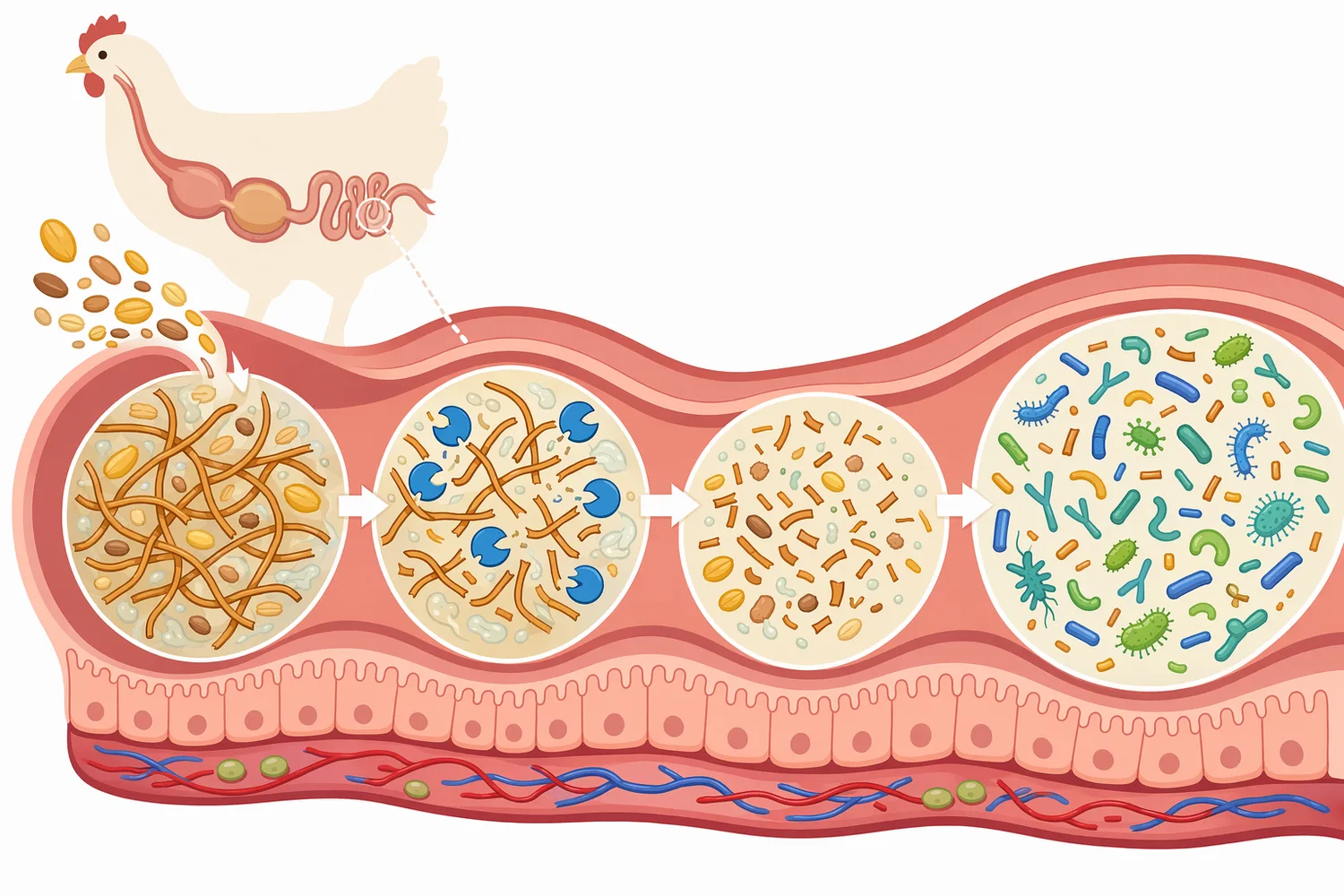
A review of xylanase sources, classification, action modes, fermentation processes, and applications describes xylanase as a promising biocatalyst for lignocellulosic conversion because it can release xylo-oligosaccharides and improve saccharification of agricultural residues [1].
Xylo-oligosaccharides are not just breakdown by-products. Recombinant GH10 Aspergillus niger xylanase A was used to generate xylo-oligosaccharides from beechwood xylan, and the resulting compounds were evaluated for antioxidant capacity; the same work also examined competitive inhibition by a rice xylanase inhibitor protein, linking product formation with real substrate and inhibitor interactions [20].
For bioethanol, xylitol, organic acids, and other biorefinery routes, xylanase is usually part of a larger enzyme or microbial system. Its role is to release hemicellulose-derived sugars or oligosaccharides and to expose cellulose, while other enzymes and organisms handle further hydrolysis, fermentation, or product conversion [21].
Plant fibers such as ramie, flax, hemp, and similar bast fibers contain gums, pectins, hemicelluloses, waxes, and lignified materials that must be reduced or removed for clean fiber separation. Xylanase contributes by hydrolyzing hemicellulose, making the non-cellulosic matrix easier to loosen without relying only on harsh chemical degumming [1].
For textile degumming, the desired effect is selective matrix removal. The enzyme should help detach xylan-containing gums and wall components around the fiber bundles, while preserving the cellulose-rich structural fiber that gives the textile its strength [11].
The same selectivity principle appears in pulp and textile applications: xylanase is valuable when it opens or cleans the hemicellulose layer, but uncontrolled degradation of structural polysaccharides would be counterproductive. That is why research frequently emphasizes cellulase-free xylanase systems for fiber-sensitive applications [11].
The production of xylanase is commonly microbial because bacteria and fungi secrete enzymes that allow them to use plant cell-wall polysaccharides as carbon sources. Industrial and research literature includes xylanase producing bacteria such as Bacillus species, actinomycetes such as Streptomyces, and fungi such as Aspergillus, Trichoderma, and white-rot fungi [1].
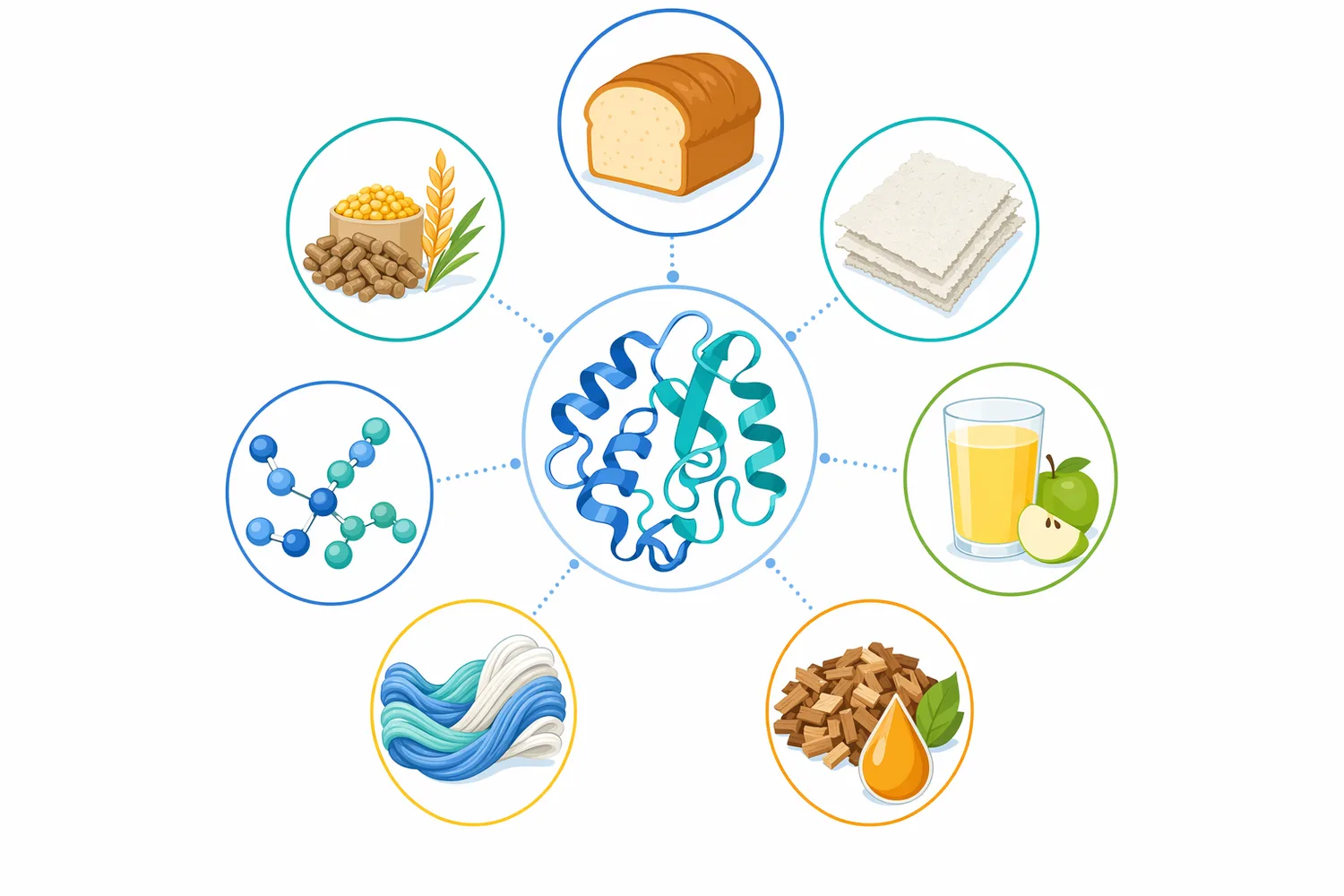
Bacillus xylanases are often investigated for alkaline and thermostable applications. Studies on Bacillus haynesii, Bacillus pumilus, and Bacillus safensis illustrate how bacterial xylanases are characterized for heat tolerance, alkaline compatibility, biochemical behavior, and potential pulp or industrial processing use [22].
Fungal xylanases are widely studied because fungi naturally decompose plant biomass and often secrete extracellular enzyme mixtures. Work on Aspergillus niger using agro-industrial residues and surfactants, and on Aspergillus oryzae in solid-state fermentation, reflects the continuing use of low-cost plant residues as substrates for xylanase production research [23].
Actinomycetes also contribute useful xylanase systems. A study using an indigenously isolated Streptomyces lividans evaluated crude and purified xylanase and cellulase produced by substrate fermentation, highlighting the diversity of microbial routes used to obtain xylan-degrading enzymes [24].
Modern xylanase production research increasingly uses statistical design, chemometrics, and machine learning to optimize secretion and process variables. These studies do not change the enzyme’s basic function, but they show why commercial xylanase availability has improved: microbial strains, fermentation substrates, and process conditions can be systematically optimized for enzyme output and performance [25].
One reason xylanase performance can vary is that plants produce xylanase inhibitor proteins as part of their defense systems. These inhibitors can bind xylanases and reduce their activity, especially in cereal and grain-derived systems where plant defense proteins remain present after milling or processing [18].
This matters in applications such as feed, baking, brewing, and cereal fractionation. A xylanase that performs well on purified beechwood xylan may respond differently in wheat, barley, corn, soybean meal, or mixed agricultural residues because the real substrate contains side chains, phenolics, proteins, minerals, and potential inhibitors [20].
The existence of inhibitors does not negate xylanase benefits. It explains why published studies often compare enzyme families, microbial sources, and action patterns, and why GH10 and GH11 xylanases may produce different oligosaccharide profiles even when both are classified as endo-1,4-β-xylanases [5].
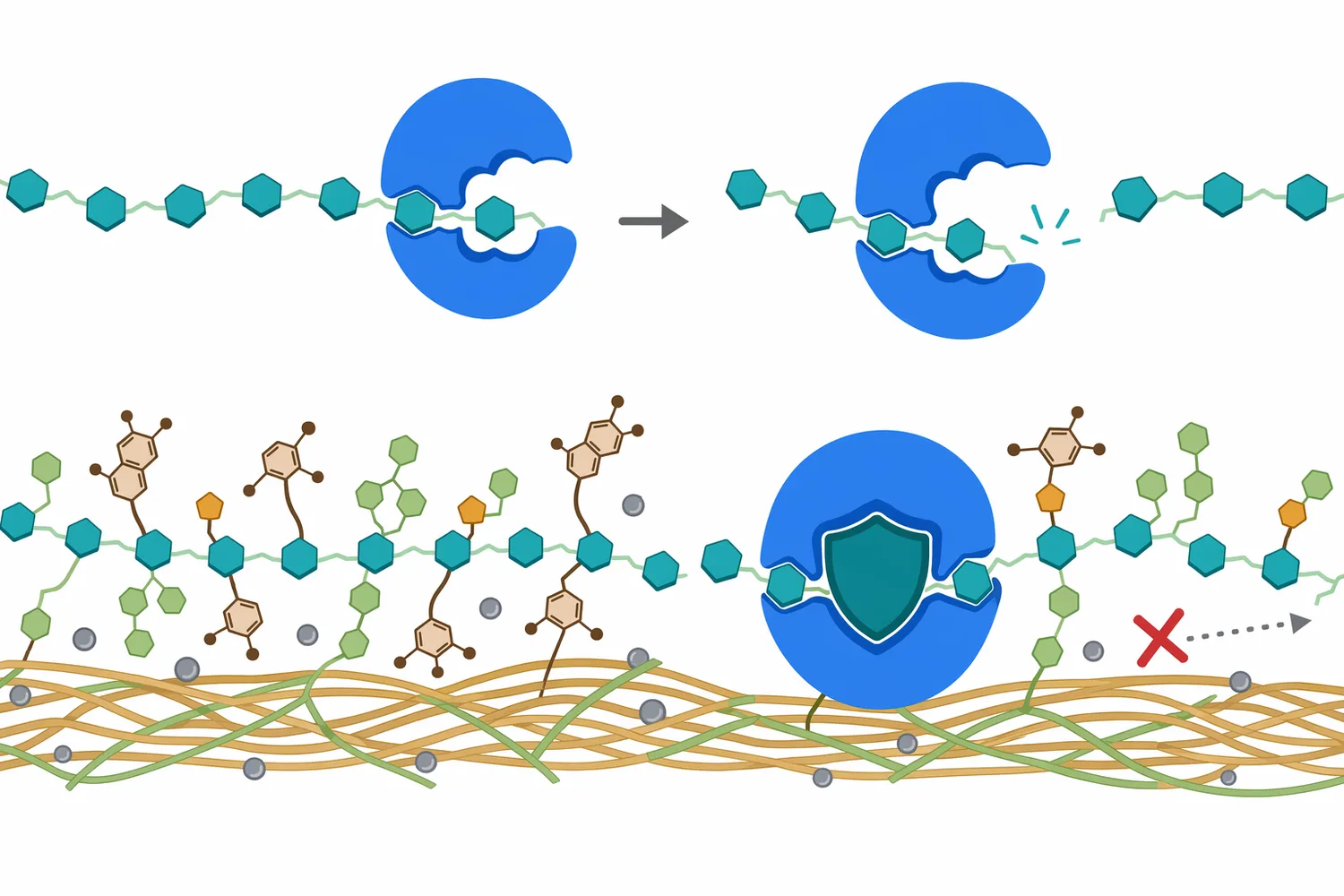
The strongest industrial evidence for xylanase is in pulp and paper, where the mechanism is direct and well documented: xylanase hydrolyzes surface or redeposited xylan, improves fiber permeability, assists lignin removal, and can reduce bleaching chemical demand under suitable process conditions [7].
Animal feed also has a strong and growing evidence base, especially in pig and poultry diets containing corn, wheat, or other arabinoxylan-rich ingredients. The benefit is increasingly understood as a combination of reduced fiber barriers, altered oligosaccharide generation, and microbiota modulation rather than only improved nutrient release [6].
Food, baking, brewing, and beverage clarification have solid mechanistic support but are more formulation-dependent. Xylanase can improve dough behavior, cereal extraction, wort separation, or clarification when arabinoxylan is a limiting factor, but the outcome depends on the cereal type, processing conditions, and interaction with other enzymes and ingredients [15].
Biomass conversion and biorefining are promising but complex. Xylanase is valuable for hemicellulose deconstruction and access to fermentable fractions, yet overall yields depend on pretreatment, enzyme combinations, substrate composition, and the organism or chemical route used after hydrolysis [21].
Xylanase from Enzymes.bio is suitable for buyers who need a xylan-targeting enzyme for plant-based materials in professional processing, development, or production environments. The most relevant use cases are those where xylan or arabinoxylan creates a practical limitation: pulp bleachability, cereal viscosity, plant-fiber gum removal, feed non-starch polysaccharide effects, beverage haze, or restricted biomass saccharification [1].
The enzyme’s value is best understood as targeted hemicellulose modification. It cuts the xylan backbone, reduces the size of xylan-containing polymers, changes how plant cell-wall material holds water and blocks access, and can generate xylo-oligosaccharides with downstream processing or nutritional relevance [2].
Enzymes.bio supplies Xylanase directly online by the 1 kg unit. The buyer completes payment online, the order is processed and shipped, and the order includes a Certificate of Analysis and Safety Data Sheet.
Sold by the 1 kg unit, in stock and ready to ship. Order directly on our store — pay online and we process your order. A Certificate of Analysis and Safety Data Sheet are included with every order.
Buy Xylanase →Numbered in order of first citation. Open-access sources, each verified reachable at publication; citation numbers in the text link here.