
Alkaline protease from Bacillus licheniformis is used to break down fish and shrimp by-product proteins into smaller, more soluble peptides under neutral-to-alkaline processing conditions. In seafood scrap treatment, that means the enzyme can help solubilize residual flesh, loosen protein bound to shrimp shell, support chitin-rich residue preparation, and create peptide-rich hydrolysates from materials that would otherwise be low-value waste. Enzymes.bio supplies this alkaline protease for direct online purchase in 1 kg units; orders are paid for online, processed, and shipped with a Certificate of Analysis and Safety Data Sheet included.
Fish and shrimp scraps are not a single material. A fish-processing stream may include frames, heads, skins, viscera, belly flaps, trimmings, scales, and residual muscle. A shrimp-processing stream may include heads, shells, tails, attached tissue, pigments, minerals, chitin, and soluble or insoluble proteins. The common target for alkaline protease across these materials is the protein fraction: muscle proteins, collagen-associated proteins, membrane proteins, viscera proteins, and shell-associated proteins.
Proteases catalyze hydrolysis of peptide bonds—the chemical links that connect amino acids into proteins and polypeptides. When alkaline protease contacts accessible protein in a hydrated seafood slurry, it cleaves those long chains into shorter peptides and amino-acid-containing fragments; as molecular size decreases, more nitrogen-containing material can move from the solid phase into the liquid phase, depending on raw material structure and processing conditions [1].
In practical terms, the enzyme does three useful jobs. First, it converts part of the insoluble protein mass into soluble hydrolysate. Second, it weakens the protein “glue” that holds tissue particles, shell surfaces, collagen-rich pieces, and fine solids together. Third, in shrimp shells, it can reduce the amount of protein remaining attached to the chitin-mineral matrix, which is why protease-based deproteinization is studied as part of shrimp waste valorization and chitin recovery workflows [2].
The effect is not magic dissolution. Bone mineral, shell mineral, chitin, lipid, pigment, and scale material do not become protein hydrolysate simply because protease is present. Instead, the enzyme changes the protein architecture around those fractions: large structural proteins are clipped, protein films detach more readily, viscous tissue networks collapse, and more peptide material becomes separable in the aqueous phase.
Bacillus licheniformis is a well-established microbial source of extracellular alkaline proteases. In enzyme production research, this species is repeatedly studied because it secretes protease into the surrounding medium and because its alkaline protease systems have been optimized through strain engineering, transcriptional regulation, and fermentation-process studies [3].
The industrial relevance of B. licheniformis is tied to the nature of many alkaline proteases from Bacillus species. They are commonly associated with robust performance in alkaline environments, where many food or technical processing streams operate for protein solubilization, cleaning, dehairing, detergent action, or waste treatment. Research on B. licheniformis alkaline protease production continues to focus on improving extracellular accumulation and understanding regulatory mechanisms that control protease biosynthesis [4].
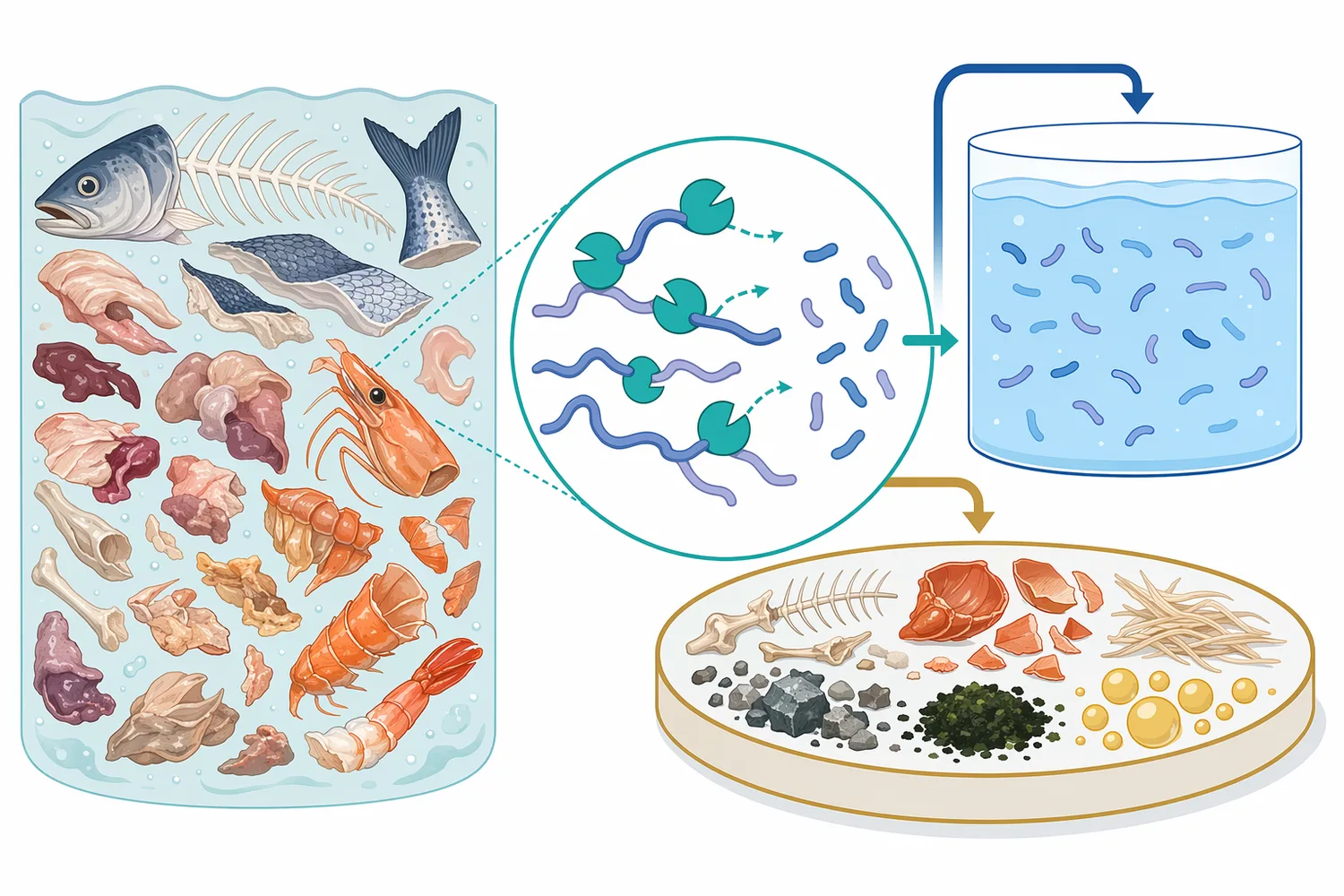
For seafood by-products, the appeal is straightforward: fish and shrimp residues contain protein mixed with non-protein solids, and alkaline conditions can help swell, expose, or loosen proteinaceous matrices. The enzyme then attacks exposed peptide bonds. This combination—alkaline process environment plus proteolytic cleavage—can make downstream separation easier than relying on mechanical separation alone.
Different proteases are not interchangeable. They all hydrolyze proteins, but their preferred pH environment changes how they interact with seafood substrates, what downstream conditions they fit into, and what type of process they are typically associated with.
| Protease type | General pH environment | Typical fit in seafood by-product processing | What changes in the substrate | Practical distinction |
|---|---|---|---|---|
| Acid protease | Acidic | Processes already designed around low pH, certain fermentation or extraction steps | Protein chains are cleaved under acid conditions; some minerals may also behave differently in acid systems | Useful when low pH is part of the process, but not the natural choice for alkaline shell deproteinization |
| Neutral protease | Near neutral | Mild hydrolysis where less alkaline exposure is desired | Proteins are cut while the slurry remains closer to neutral; useful for some food-oriented hydrolysates | Often chosen for milder conditions, though performance depends strongly on substrate and endpoint |
| Alkaline protease | Neutral-to-alkaline | Shrimp shell deproteinization, technical protein hydrolysis, detergent-like removal of protein soils, some feed or by-product workflows | Protein films, tissue proteins, and connective protein networks are cleaved under alkaline conditions, often improving solubilization and detachment | Best aligned when the process already uses alkaline pH or when protein removal from solids is the priority |
This table is conceptual rather than a product-selection checklist. The important point is that alkaline protease is chosen when the process benefits from protein breakdown in a neutral-to-alkaline environment, not simply because it is “stronger” than every other protease. Protease reviews consistently classify these enzymes by catalytic behavior, substrate action, and pH domain, with alkaline proteases occupying an important position in detergent, leather, food, and waste-treatment applications [1].
Shrimp shell is a composite material. Chitin fibers are embedded with protein, mineral, pigment, and other organic matter. In untreated shell, protein is not present only as loose meat stuck on the outside; it can be associated with the shell matrix, trapped in surface layers, and bound into fine structural regions. That is why simple rinsing cannot produce a clean chitin-rich residue.
When alkaline protease is added to a properly hydrated shrimp-shell slurry, the enzyme diffuses into accessible shell surfaces and attacks peptide bonds in shell-associated proteins. As those proteins are cut into shorter peptides, they lose some of the structure and binding strength that kept them attached to the shell. Smaller hydrolysis products can then leave the solid surface and enter the liquid phase, while the remaining solid becomes relatively enriched in chitin and minerals.
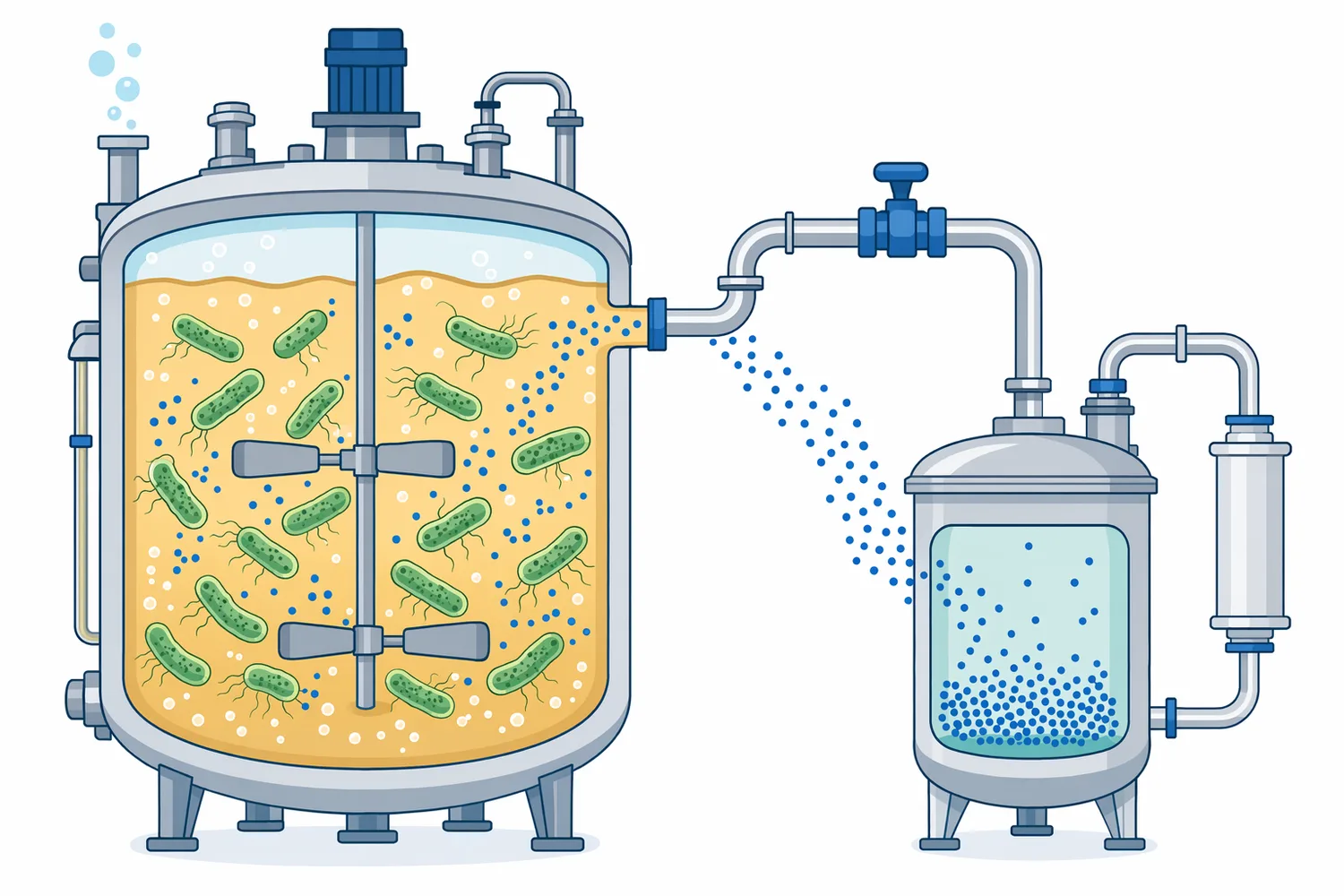
This mechanism explains why enzymatic shrimp waste treatment is often discussed as a valorization route rather than just a disposal step. Vieira and co-workers studied enzymatic hydrolysis of shrimp waste for production of radical-scavenging peptides and recovery of carotenoids, showing that shrimp residues can be treated as sources of multiple fractions rather than as a single undifferentiated waste stream [2].
The same logic applies to shrimp-head and shrimp-shell mixtures. Protease can hydrolyze residual tissue and shell protein, but pigments, chitin, lipids, and minerals follow their own separation behavior. A process designed for chitin-rich solids may emphasize removal of protein from the shell; a process designed for hydrolysate may emphasize soluble peptide recovery; a process designed for pigment recovery may manage the liquid and lipid fractions differently.
Fish by-products have a different structure from shrimp shells. In fish frames and trimmings, much of the protein is muscle protein attached to bone, skin, connective tissue, and fat. In fish skins, collagen and collagen-associated proteins become more important. In viscera, endogenous enzymes, membranes, soluble proteins, and lipids can influence the hydrolysis behavior.
Alkaline protease acts by cutting accessible proteins into smaller peptides. In muscle-rich scraps, this weakens the tissue structure and increases soluble nitrogen in the liquid phase. In skin and connective tissue, hydrolysis can loosen the protein network around collagenous material, although the exact outcome depends on whether the goal is gelatin-related processing, peptide hydrolysate, or simple protein removal. Tilapia fish skin waste has been studied for optimized enzymatic hydrolysis to produce bioactive peptides, demonstrating the broader feasibility of converting fish-skin proteins into peptide fractions by controlled protease treatment [5].
In mixed fish waste, the visible process changes can include softening of tissue, release of liquid hydrolysate, reduced particle cohesion, and easier separation of bones or other solids. At the molecular level, the important change is loss of intact high-molecular-weight protein structure. Long chains that previously formed gels, membranes, fibers, or tissue networks become shorter peptides with different solubility, viscosity, emulsifying behavior, and nutritional accessibility.
Fish visceral waste provides a clear example of why the extent of hydrolysis matters. Research on Labeo rohita visceral waste found that functional properties of protein hydrolysates are influenced by how far enzymatic hydrolysis proceeds, meaning that over- or under-hydrolysis can change properties such as solubility and other techno-functional behavior [6]. For a processor, this means the endpoint matters: a light hydrolysis may mainly improve separation, while deeper hydrolysis may produce a more peptide-rich liquid with different taste, odor, filtration, and drying behavior.
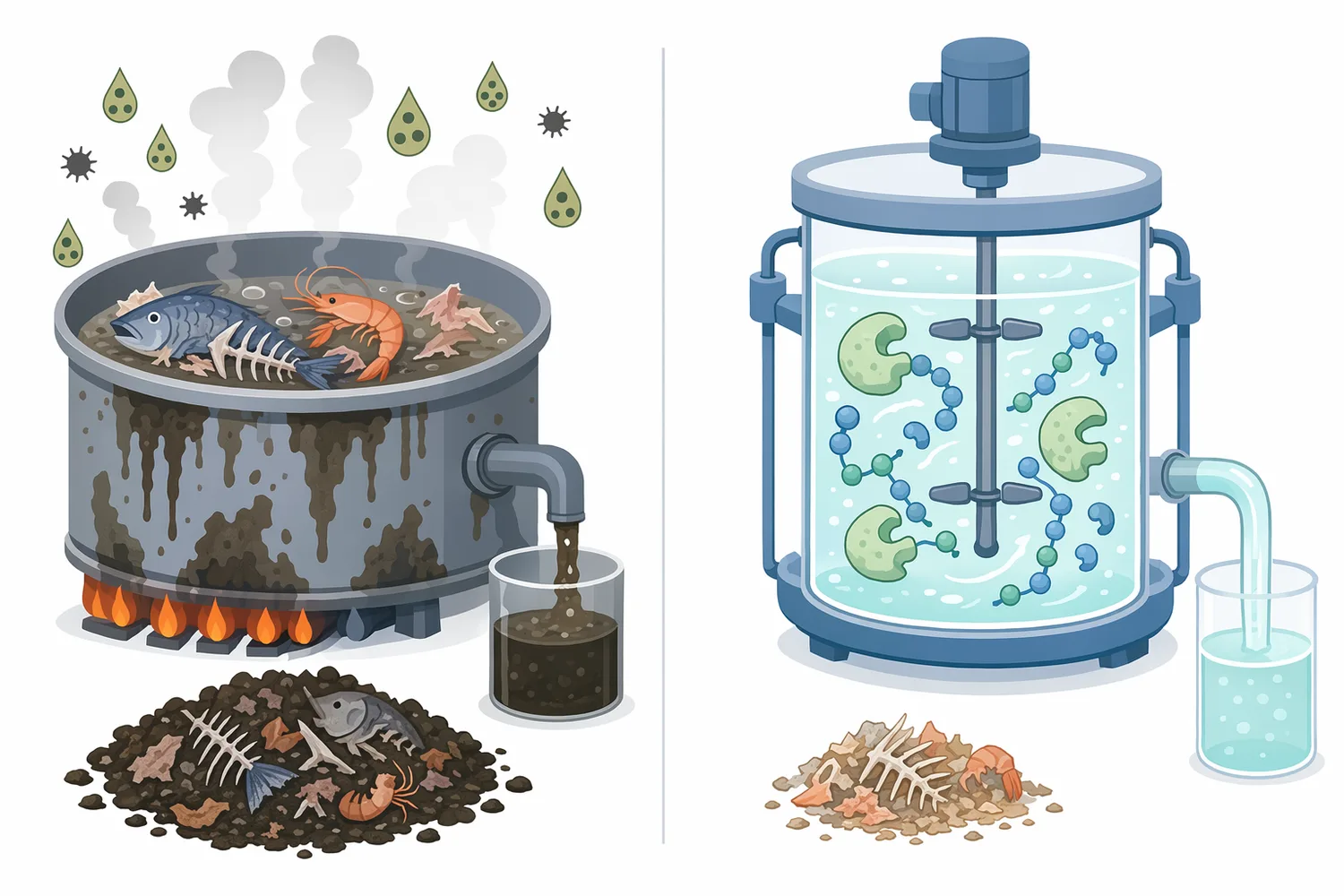
Shrimp by-products are among the strongest examples for protease-based seafood waste valorization because they contain both recoverable protein and non-protein materials such as chitin and carotenoids. Enzymatic hydrolysis allows the protein fraction to be separated or transformed without treating the entire stream as low-grade waste.
Vieira et al. investigated shrimp waste hydrolysis for production of peptides with radical-scavenging activity and recovery of total carotenoids. The work is relevant because it shows the dual nature of shrimp waste processing: protease treatment can generate peptide-containing hydrolysates while other valuable components remain available for recovery through appropriate downstream handling [2].
Leiva-Portilla et al. also studied valorization of shrimp processing waste through enzymatic hydrolysis, reporting protein extractions, hydrolysates, and antioxidant peptide fractions from Heterocarpus reedi waste. This supports the broader point that shrimp waste hydrolysis is not merely a cleanup operation; it can create fractions with measurable composition and bioactivity, depending on the enzyme process and separation strategy [7].
For alkaline protease specifically, the relevance is the fit between substrate and process environment. Shrimp shell deproteinization often benefits from alkaline conditions because the protein matrix can be loosened while protease cleaves exposed peptide bonds. That combined chemical and enzymatic action can reduce protein load on the shell solids and increase the amount of proteinaceous material recovered in the liquid phase.
Fish by-product hydrolysis has been studied across many raw materials, including skins, bones, viscera, and mixed processing residues. The common objective is to convert proteins that are difficult to recover mechanically into soluble or functional hydrolysates.
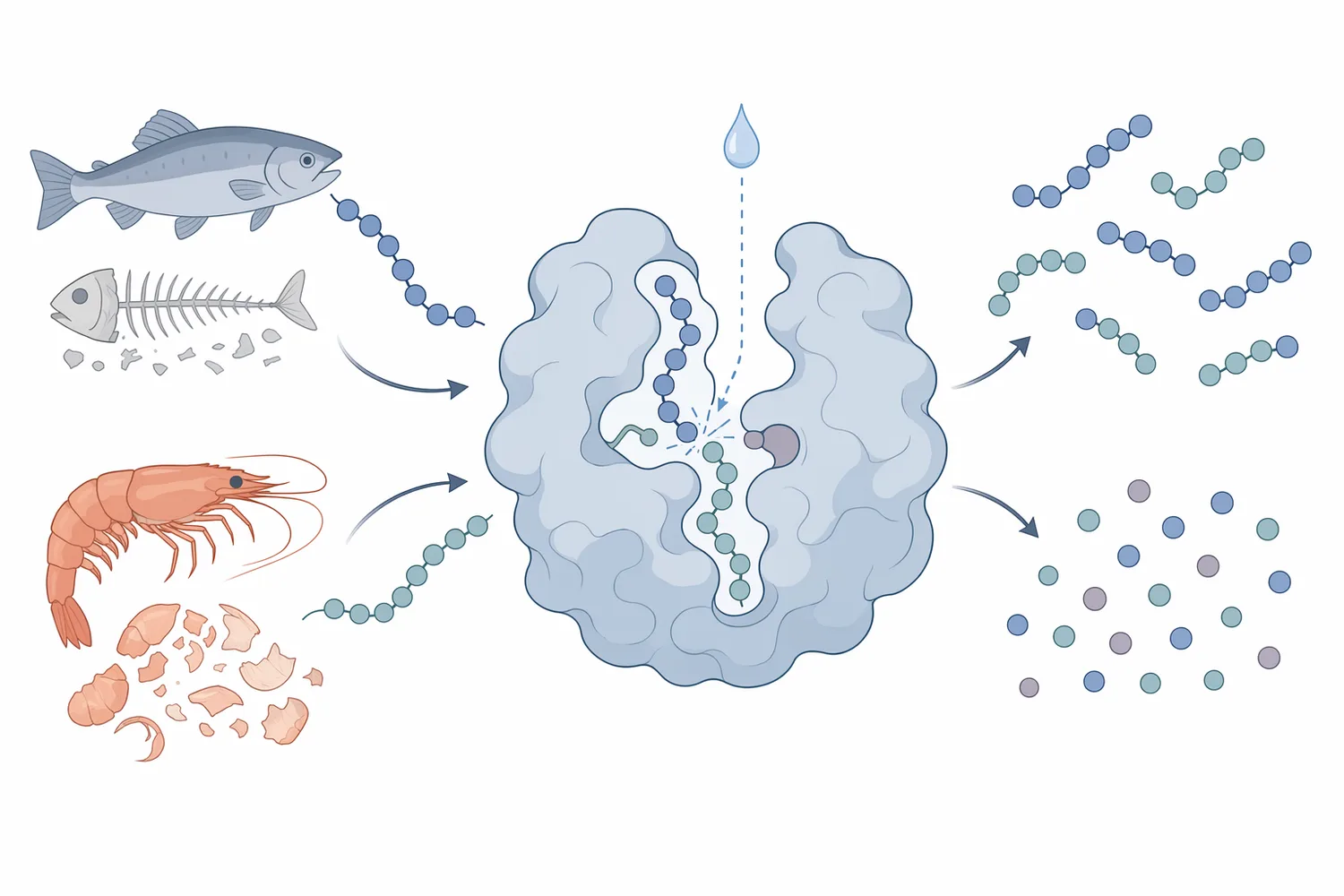
Mohammad et al. optimized enzymatic hydrolysis of protein from tilapia fish skin waste using a commercial protease preparation, with the goal of producing bioactive peptides. The study is useful for understanding fish-skin waste as a hydrolysis substrate: proteins in skins can be enzymatically cut into peptide fractions under controlled process conditions, rather than discarded or downgraded [5].
Mohanty et al. examined how the extent of enzymatic hydrolysis changes functional properties of hydrolysates from visceral waste of Labeo rohita. That distinction is important because fish hydrolysate is not defined only by “more hydrolysis”; the degree of peptide formation affects how the hydrolysate behaves in water, how it interacts with other ingredients, and how it may perform in downstream feed or technical applications [6].
Recent life-cycle work has also evaluated enzymatic hydrolysis-based extraction of fish protein and oil from an environmental and economic perspective. Bashiri et al. assessed fish protein and oil extraction based on enzymatic hydrolysis, reflecting growing interest in processes that recover value from seafood side streams rather than sending protein-rich material to disposal or low-value uses [8].
It is tempting to describe protease treatment as “breaking proteins into smaller pieces,” but the consequences are more specific. Protein structure controls solubility, water binding, emulsification, foaming, viscosity, gelation, bitterness, digestibility, and separation behavior. By cutting peptide bonds, alkaline protease changes not only molecular size but also the exposure of charged, hydrophobic, and reactive groups along the peptide fragments.
When large proteins are hydrolyzed, buried amino acid regions may become exposed. Some fragments dissolve more readily because they are shorter and carry more accessible ionizable groups. Other fragments may taste bitter if hydrophobic peptide sequences are exposed. Some hydrolysates disperse better in water; others may foam or emulsify differently. This is why the same raw material can produce different functional outcomes depending on hydrolysis endpoint.
Bekiroğlu et al. discuss enzymatic hydrolysis as a way to modify waste proteins into protein hydrolysates with techno-functional applications, emphasizing that hydrolysis changes how proteins behave rather than simply reducing their size [9]. In seafood processing, that principle applies to fish skins, viscera, frames, shrimp heads, and shrimp shells: the enzyme changes the molecular form of the protein fraction, and the process design determines whether that change is used for separation, ingredient production, feed use, or chitin preparation.
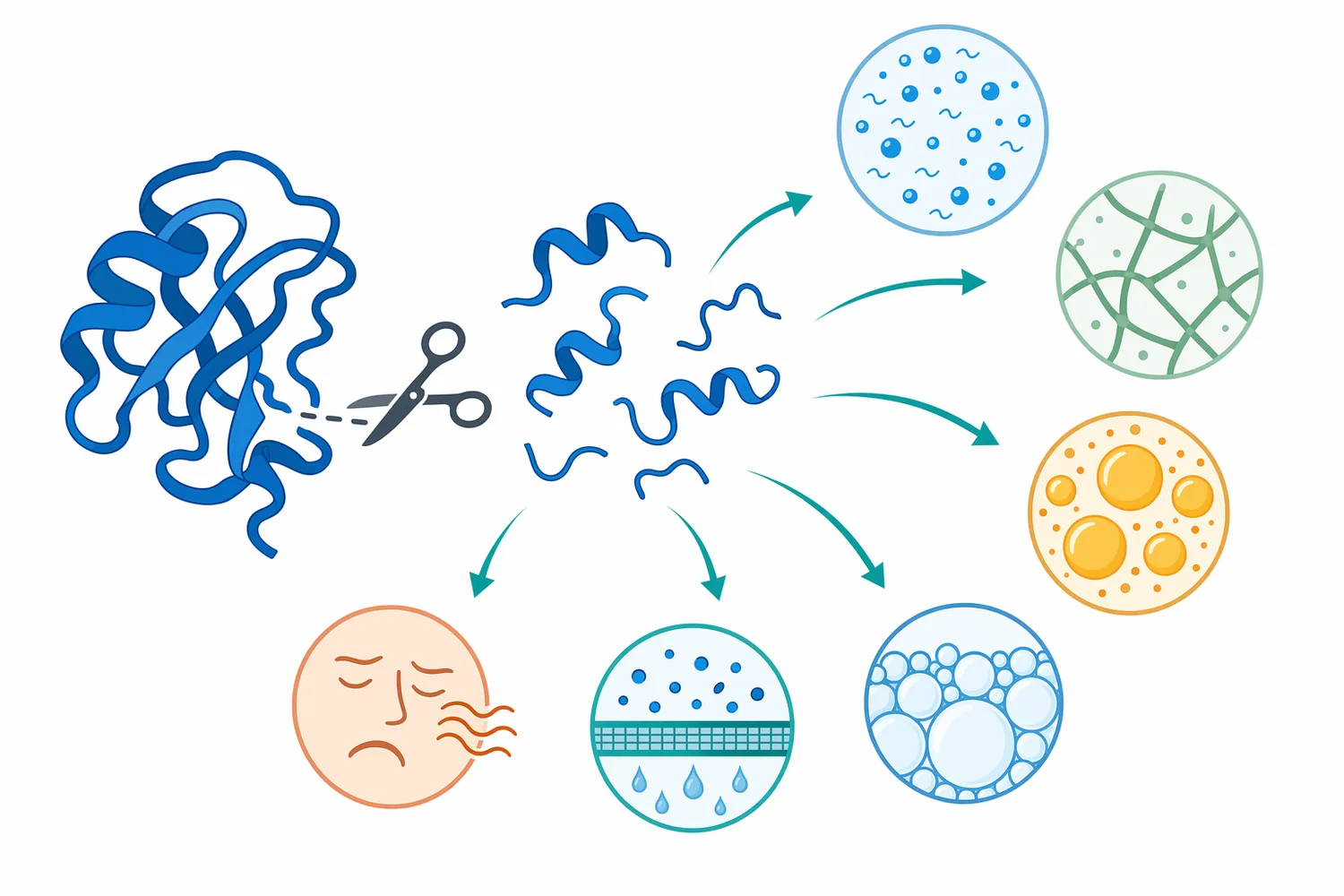
A fish or shrimp scrap slurry must bring enzyme, water, and protein into contact. Large dry particles hydrolyze poorly because the enzyme needs hydrated surfaces and access to peptide bonds. Grinding, chopping, soaking, heating within enzyme-tolerant limits, and agitation can all influence how quickly protein becomes accessible, but the enzyme’s biochemical role remains the same: it cleaves proteins once it reaches them.
During hydrolysis, the liquid phase usually becomes richer in dissolved peptides and soluble nitrogen. The solid phase loses part of its protein load. In shrimp shells, that means the remaining solid may become more chitin-rich relative to its starting composition. In fish frames, it may mean residual bones and connective solids separate more readily from a liquid hydrolysate. In viscera-rich streams, hydrolysis can be faster but may also interact with native enzymes and lipids already present in the raw material.
Temperature and pH influence reaction speed because they affect both enzyme conformation and substrate structure. Alkaline proteases are used where alkaline conditions are compatible with the process objective, and many Bacillus alkaline proteases are studied for stability and activity in industrially relevant alkaline environments [10]. Excessive severity, however, can reduce enzyme performance or change product quality, so industrial processes normally define their own validated operating window.
Time matters because hydrolysis is progressive. Early in the reaction, easily accessible proteins are cut first. Later, the enzyme may act on more resistant structures or already-formed peptides. The liquid may become more soluble and less viscous, but further hydrolysis may also change flavor, odor, peptide profile, or downstream drying behavior. This is why fish protein hydrolysate studies often focus on the relationship between hydrolysis extent and final functional properties [6].
For shrimp shell processors, the most direct application is enzymatic deproteinization. The enzyme helps remove protein from the shell surface and matrix by converting it into soluble peptides. After hydrolysis, separation steps can divide the process stream into a protein-rich liquid fraction and a shell-derived solid fraction that is relatively enriched in chitin and minerals.
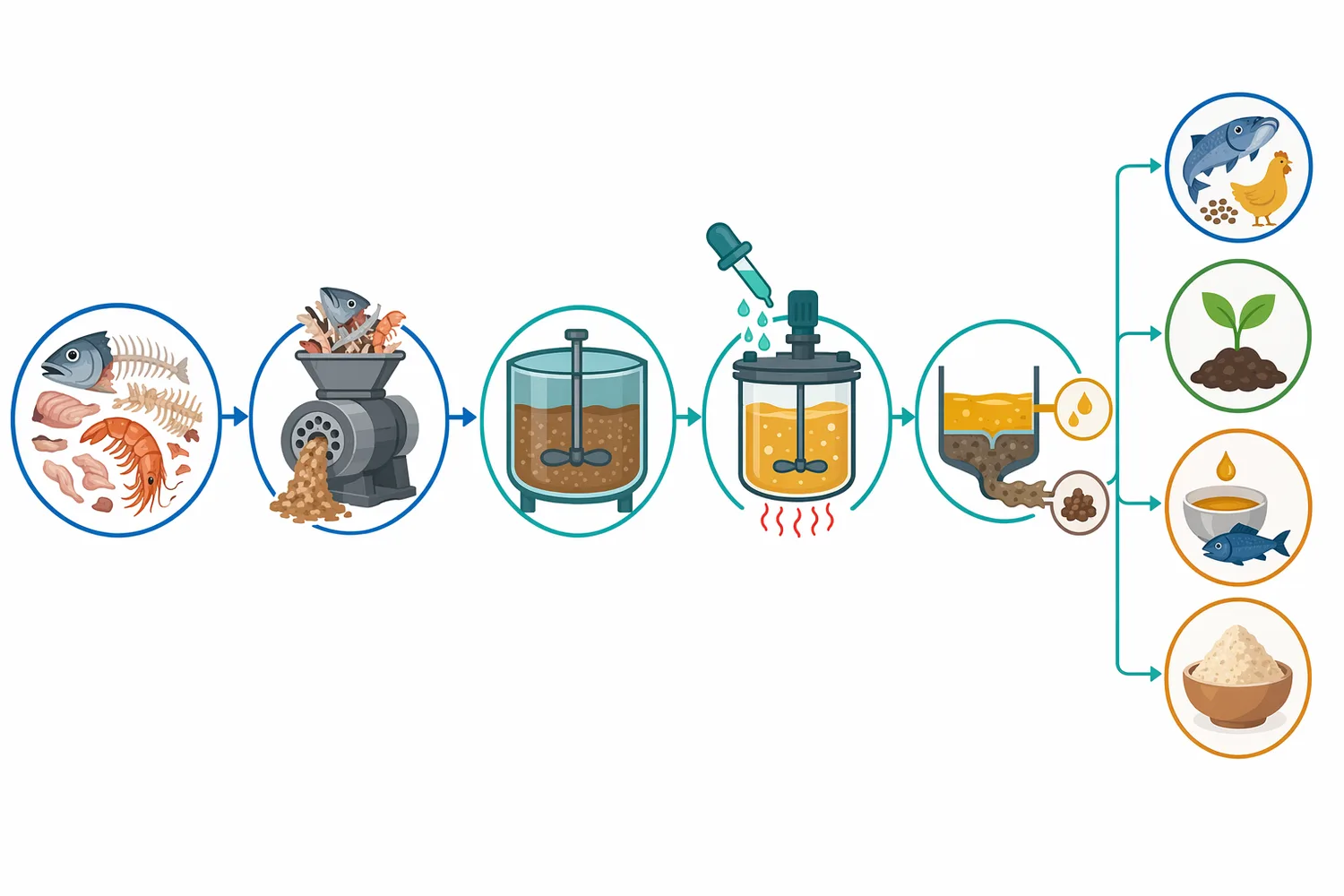
This approach fits the broader movement toward waste valorization. Szopa et al. describe chemo- and enzymatic hydrolysis as part of waste conversion into industrial products, reflecting how biological treatment can be combined with physical and chemical steps to recover useful materials from residues [11]. In shrimp processing, alkaline protease is one tool in that broader fractionation strategy.
The benefit is not only cleaner solids. The hydrolysate itself may contain recoverable peptides, nitrogen, pigments, and other compounds depending on how the process is configured. Research on shrimp waste hydrolysates and antioxidant peptide fractions demonstrates that enzymatic treatment can create measurable liquid products rather than simply washing protein away [7].
Fish scraps can be hydrolyzed to produce protein-rich liquids or dried hydrolysates for suitable industrial, feed, or ingredient applications, subject to the buyer’s own regulatory and quality requirements. In this context, alkaline protease helps convert residual fish protein into smaller peptide fractions that are easier to separate, pump, concentrate, or dry than intact tissue.
Aquatic feed is one important area of interest for hydrolyzed protein raw materials. Wang et al. review enzymatic hydrolysis and microbial fermentation technologies in protein raw materials for aquatic feed, highlighting the role of bioprocessing in modifying protein ingredients for feed applications [12]. Fish and shrimp by-products are relevant because they already come from aquatic supply chains and contain amino-acid-rich material.
Meat and animal by-product hydrolysis research also supports the same circular-economy principle: protein-rich residues can be transformed through enzymatic processes rather than treated only as disposal burdens. Angulo et al. describe enzymatic hydrolysis as a green technology approach for valorizing meat waste within a circular-economy framework [13]. While meat waste is not seafood, the underlying protease function—controlled cleavage of protein into hydrolysate—is the same.
A large body of research focuses on how B. licheniformis produces alkaline protease and how production can be increased or regulated. Zhou et al. reported optimized expression and enhanced production of alkaline protease in genetically modified B. licheniformis 2709, illustrating the level of scientific attention given to this enzyme system [3].
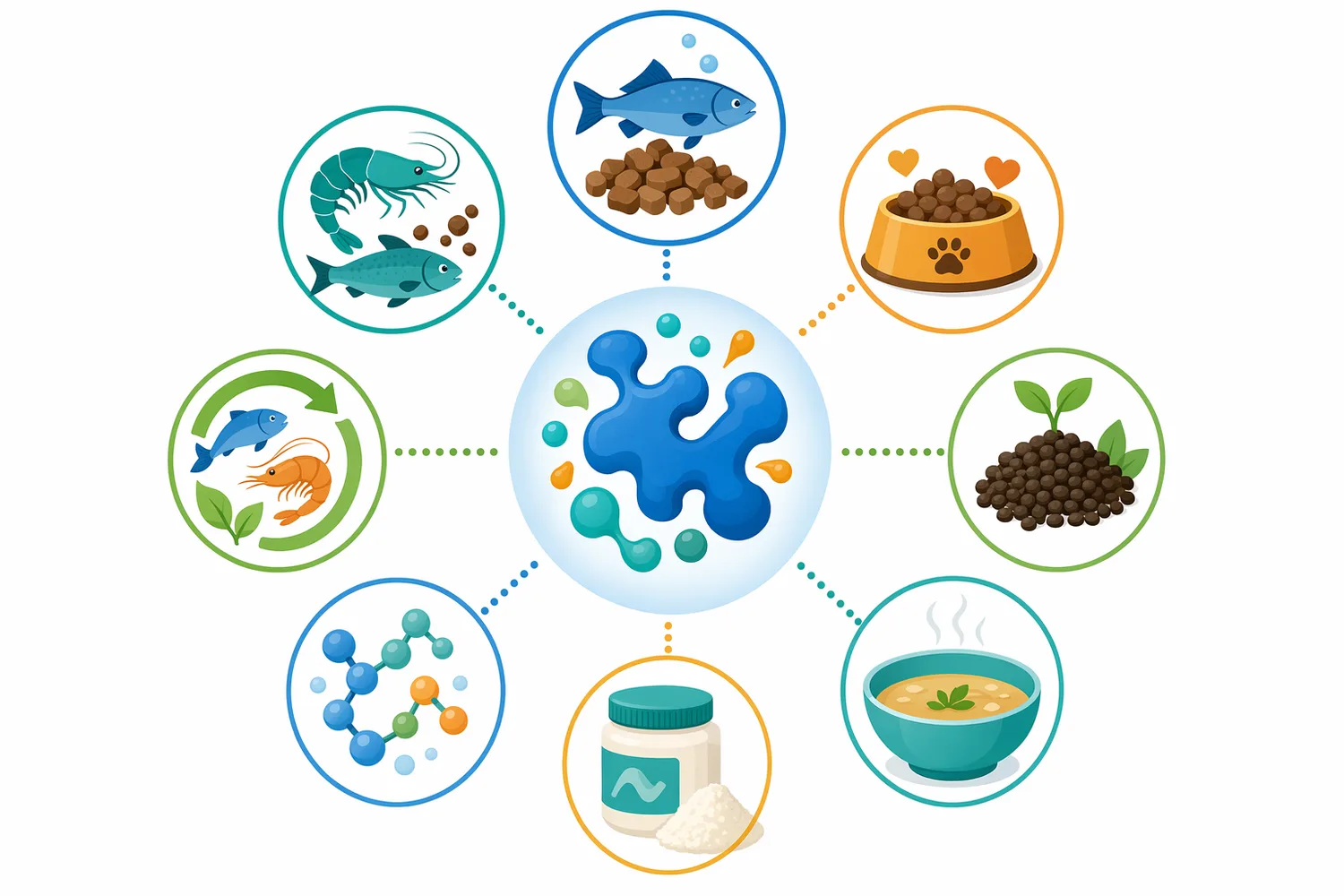
Other work has examined rational deletion of sporulation-related genes, regulatory systems, and integrated overproducer construction to improve alkaline protease accumulation in B. licheniformis. These studies are not seafood application trials, but they explain why B. licheniformis remains a prominent source organism for alkaline protease supply: the organism’s secretion biology and regulation have been studied in detail [14].
Transcriptomic studies add another layer by identifying regulatory networks that influence alkaline protease biosynthesis. Research on the DegS/DegU two-component system and alkaline protease biosynthesis in B. licheniformis 2709, for example, shows that protease production is controlled by coordinated cellular regulation rather than by a single isolated gene [15]. For buyers, the practical takeaway is that B. licheniformis alkaline protease is not an obscure enzyme class; it is a heavily studied industrial protease platform.
The main benefit of alkaline protease in fish and shrimp scraps hydrolysis is targeted protein transformation. Instead of treating the whole by-product stream with severe chemistry, the enzyme acts specifically on peptide bonds in proteins. This can help generate a soluble hydrolysate, reduce protein on solids, and make non-protein fractions easier to separate.
A second benefit is improved use of side streams. Fish and shrimp scraps contain valuable nitrogen, but the value is locked inside tissue, shell, and mixed organic solids. Enzymatic hydrolysis can move part of that value into a liquid peptide fraction or improve the recovery of chitin-rich, bone-rich, or mineral-rich solids. Life-cycle assessment work on enzymatic hydrolysis-based fish protein and oil extraction reflects the growing interest in evaluating these processes not only technically but also environmentally and economically [8].
A third benefit is process specificity. Protease does not perform demineralization in the same way an acid does, and it does not extract oil in the same way a solvent or mechanical separation process does. Its specificity for protein is precisely why it can be useful in fractionation: it changes the protein fraction while leaving other fractions available for separate recovery.
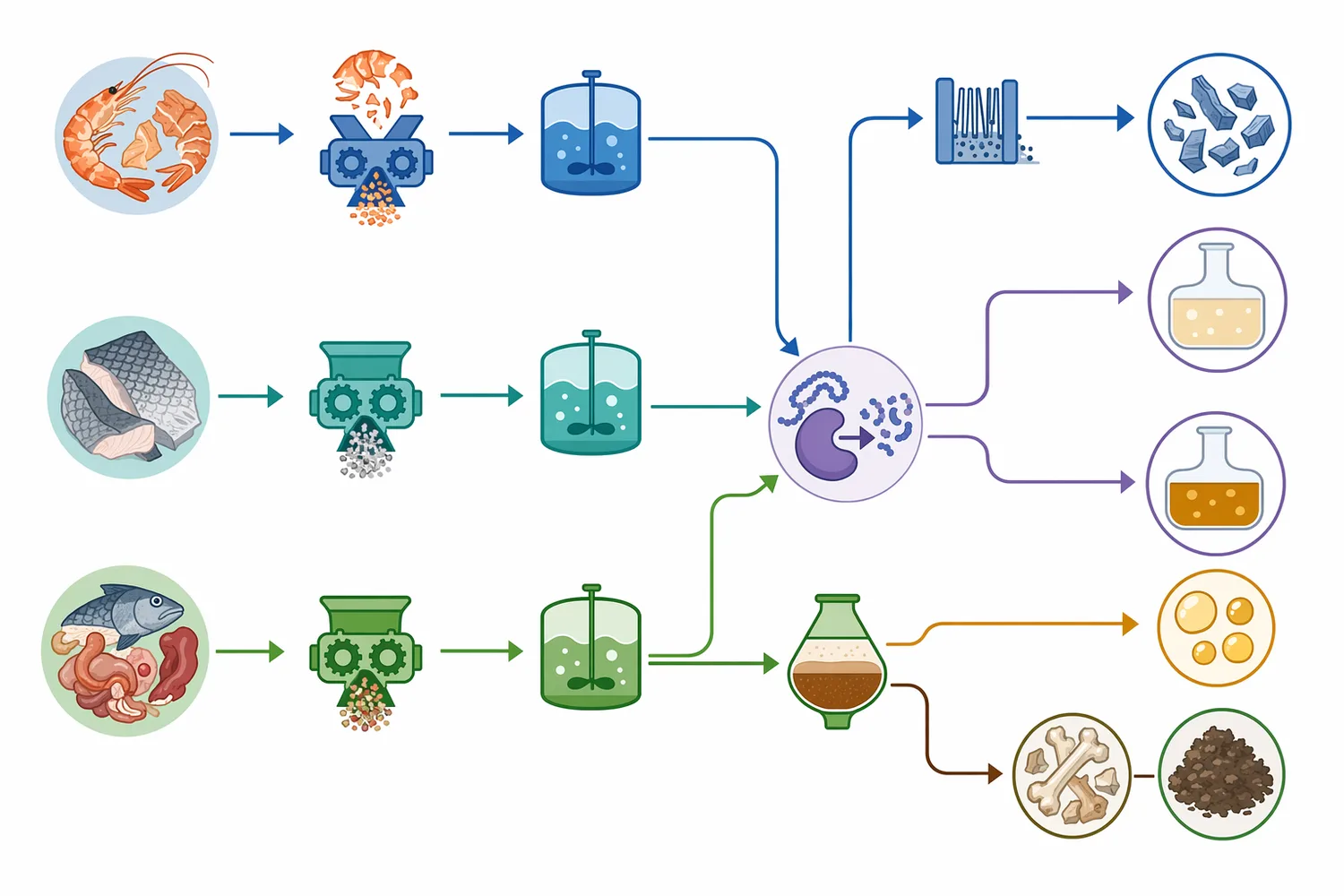
Alkaline protease is best understood as a protein-hydrolysis aid, not a universal seafood-waste conversion system. It can help hydrolyze proteins in fish and shrimp scraps, but final yield, odor, color, filtration behavior, peptide size profile, chitin purity, and hydrolysate functionality depend on raw material composition and the complete process around the enzyme.
The evidence base is strongest for the general biochemical function of proteases, the industrial importance of alkaline proteases, shrimp waste enzymatic hydrolysis, fish protein hydrolysate formation, and broader seafood by-product valorization. It is also clear from fish hydrolysate research that the extent of hydrolysis strongly affects functional properties, so the desired endpoint matters as much as the fact that hydrolysis occurs [6].
It should not be assumed that one set of conditions will optimize every substrate. Shrimp shells, shrimp heads, fish skins, fish viscera, fish frames, and mixed seafood scraps each present different physical barriers and different protein compositions. A chitin-focused process, a feed-hydrolysate process, and a gelatin-related process may all use protease, but they do not define success in the same way.
Enzymes.bio supplies alkaline protease from Bacillus licheniformis for industrial fish and shrimp scraps hydrolysis and related protein-processing uses. The product is sold directly online by the 1 kg unit: the buyer places the order, pays online, and the order is processed and shipped. A Certificate of Analysis and Safety Data Sheet are included with the order.
For buyers working with seafood by-products, the enzyme is most relevant where the process goal is protein removal, protein solubilization, shrimp-shell deproteinization, chitin-rich residue preparation, or production of peptide-containing hydrolysate. The science behind the application is concrete: alkaline protease cleaves peptide bonds, reduces intact protein structure, increases soluble peptide formation, and helps separate the protein fraction from fish and shrimp scrap matrices.
Sold by the 1 kg unit, in stock and ready to ship. Order directly on our store — pay online and we process your order. A Certificate of Analysis and Safety Data Sheet are included with every order.
Buy Alkaline Protease 100,000 U/G Fish And Shrimp Scraps Hydrolysis Protease Bacillus Licheniformis Protease →Numbered in order of first citation. Open-access sources, each verified reachable at publication; citation numbers in the text link here.