
Alkaline protease powder is a dry enzyme ingredient used to break down protein soils under alkaline washing or processing conditions. It works by cleaving peptide bonds in proteins such as blood, milk, egg, sweat, gelatin, casein, hair-root proteins, and other proteinaceous residues, converting them into smaller fragments that are easier to rinse, disperse, or further process. Protease enzymes are among the most widely used industrial biocatalysts, with detergent, leather, textile, food-processing, and waste-protein applications repeatedly described in industrial enzyme literature [1].
Enzymes.bio supplies alkaline protease powder directly online by the 1 kg unit. Buyers can purchase online, pay online, and the order is processed and shipped with a Certificate of Analysis and Safety Data Sheet.
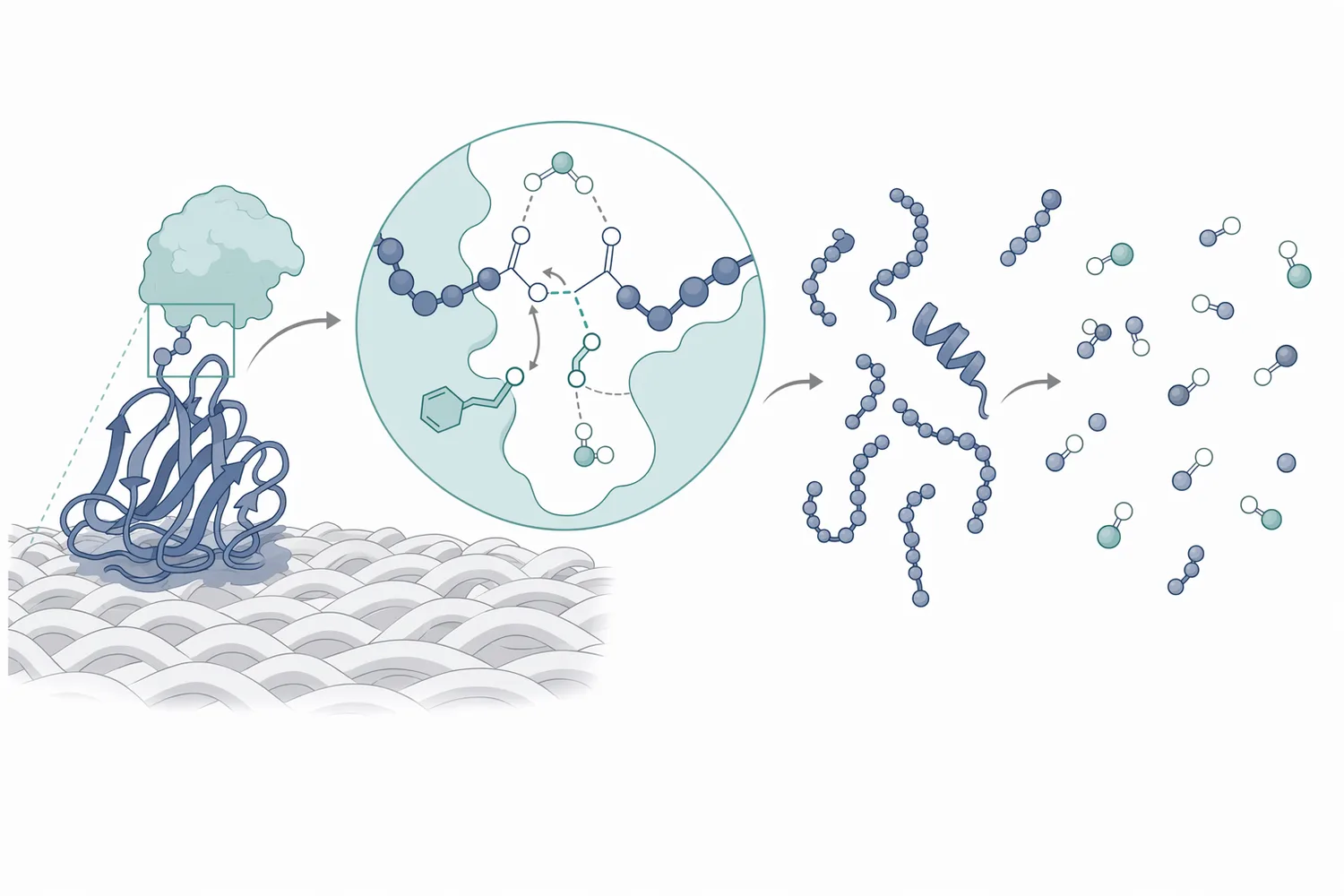
Proteins are long chains of amino acids connected by peptide bonds. When a protein stain dries on cotton, polyester, stainless steel, leather, or process equipment, the protein can denature: its folded structure opens, spreads across the surface, and forms a more tenacious film. Alkaline protease attacks the chemical backbone of that protein film by hydrolyzing peptide bonds, which turns a large, sticky macromolecule into shorter peptides and amino-acid fragments with lower molecular size and better water dispersibility [2].
The alkaline environment is important because many industrial cleaning systems and detergent formulations operate above neutral pH. Alkalinity can help swell or loosen proteinaceous deposits, expose buried peptide bonds, and improve wetting of the soil layer. Once the protein structure is more accessible, the protease can cut exposed peptide bonds; surfactants and mechanical action then help detach the hydrolyzed fragments from the surface. This is why alkaline protease is normally used as part of an aqueous cleaning or processing system, rather than as a dry powder acting alone [3].
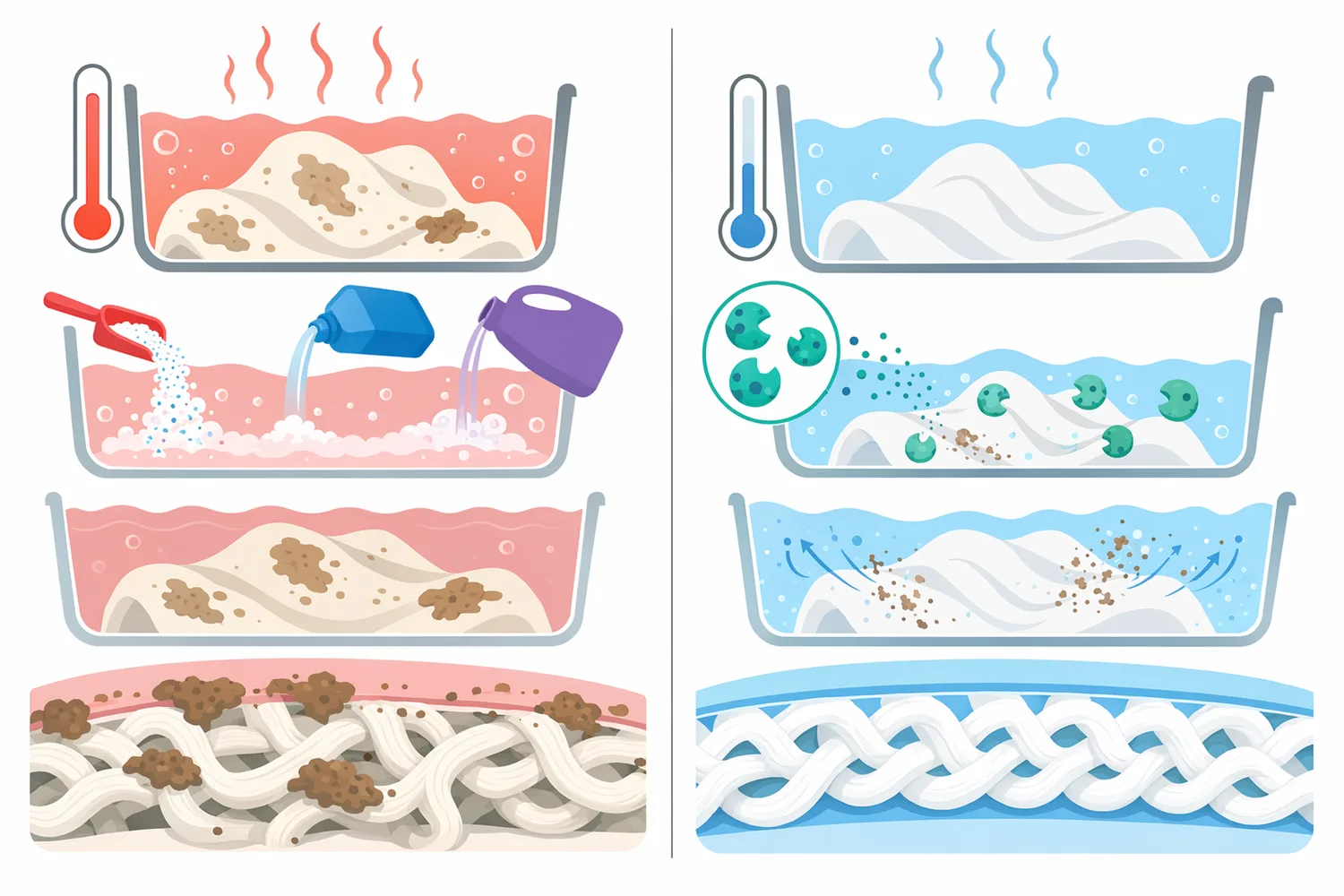
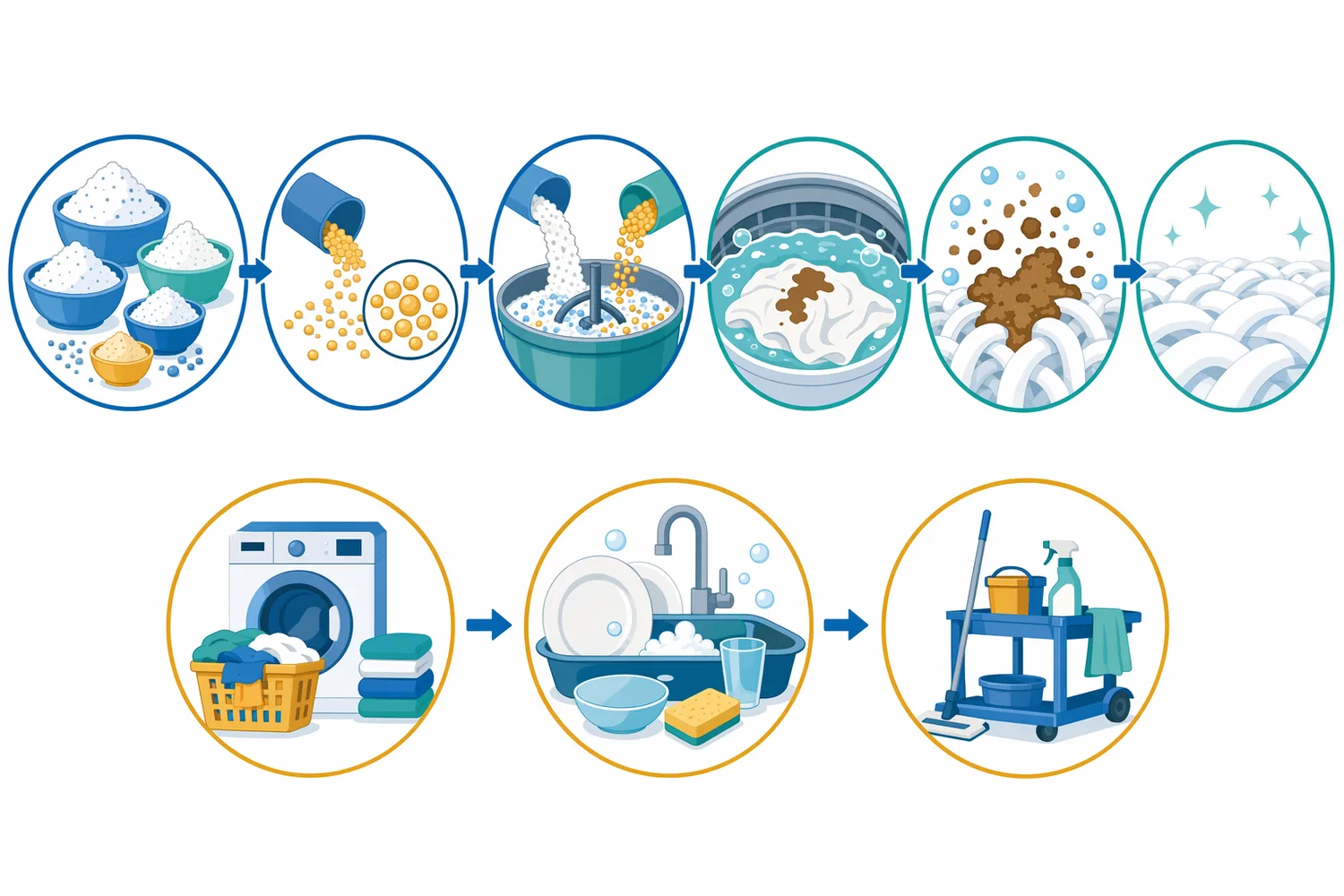
In a laundry application, the mechanism can be visualized in stages. A blood or egg stain contains proteins that bind to fabric fibers and trap pigments, lipids, salts, and other components. Water hydrates the stain, alkalinity opens and swells parts of the protein matrix, the protease cuts accessible peptide bonds, and detergent surfactants emulsify or suspend the loosened fragments. The visible result is not that the enzyme “bleaches” the stain; it removes the protein scaffold that helps the stain cling to the textile [4].
In industrial cleaning, the same chemistry applies to proteinaceous residues on equipment, membranes, containers, or films. Casein, gelatin, albumin, soy protein, blood protein, and similar residues can form cohesive layers that resist surfactants alone. Proteolysis reduces that cohesion by breaking the polymeric protein network into smaller soluble or dispersible fragments, making subsequent rinsing more effective under compatible conditions [5].
Proteases are grouped partly by the pH range in which they are most useful. This distinction matters because the same protein substrate behaves differently in acidic, neutral, and alkaline systems, and because enzyme structure is sensitive to pH. Alkaline proteases are preferred where the process pH is above neutral, especially in laundry detergents, leather dehairing, and alkaline industrial cleaning [6].
| Protease type | Typical operating environment | Practical substrate effect | Common application logic |
|---|---|---|---|
| Acid protease | Acidic systems, below neutral pH | Hydrolyzes proteins where acidity helps solubilize or condition the substrate | Used where the process is naturally acidic or where acid-compatible hydrolysis is required |
| Neutral protease | Near-neutral systems | Cuts proteins under milder pH conditions, often where substrate damage must be limited | Useful where alkaline or acidic treatment would be too aggressive |
| Alkaline protease | Mildly to strongly alkaline systems, often above pH 8 | Hydrolyzes proteins while alkalinity swells, loosens, or exposes protein deposits | Favored in detergents, protein-stain removal, leather operations, and alkaline cleaning systems |
This comparison is conceptual rather than a specification table. Individual proteases differ by microbial source, enzyme family, stabilizing formulation, and process environment. Industrial literature describes alkaline proteases from bacterial, fungal, and marine microbial sources, with many studies focused on improving stability in detergents, alkaline pH, salts, surfactants, and elevated temperatures [3].
Detergent cleaning is the most familiar application for alkaline protease because many everyday stains are partly protein-based. Blood contains hemoglobin and serum proteins; milk contains casein and whey proteins; egg contains albumen proteins; sweat and body soils contain skin proteins and enzymes; grass and food stains often include proteinaceous components mixed with pigments and carbohydrates. When these proteins dry onto fabric, they form a binding layer that can hold other stain components in place [1].
Alkaline protease improves cleaning by attacking that binding layer. The enzyme does not need to destroy every molecule in the stain; it needs to weaken the protein network enough that agitation, surfactants, builders, and rinse water can remove the residue. This is why detergent proteases are often described as synergistic with detergent chemistry: surfactants improve wetting and dispersion, while the protease performs selective chemical cleavage of peptide bonds [7].
Research continues to focus on detergent-compatible alkaline proteases because detergent systems can be harsh environments for proteins. Builders, surfactants, salts, alkalinity, and sometimes oxidizing components can all affect enzyme folding and stability. Studies on detergent-relevant alkaline proteases from Bacillus and other microorganisms repeatedly evaluate alkaline pH behavior, thermal tolerance, and compatibility with cleaning formulations because these factors determine whether the enzyme remains active long enough to hydrolyze the stain during washing [4].
The detergent benefit is especially important at moderate wash temperatures. Heat can help remove soils, but higher temperature costs energy and can damage fabrics or colors. Enzyme-assisted stain removal allows protein hydrolysis to contribute to cleaning under practical wash conditions, reducing dependence on temperature alone. Reviews of microbial proteases emphasize their role as eco-friendly industrial catalysts because they can replace or reduce more severe chemical or thermal treatment in selected processes [2].
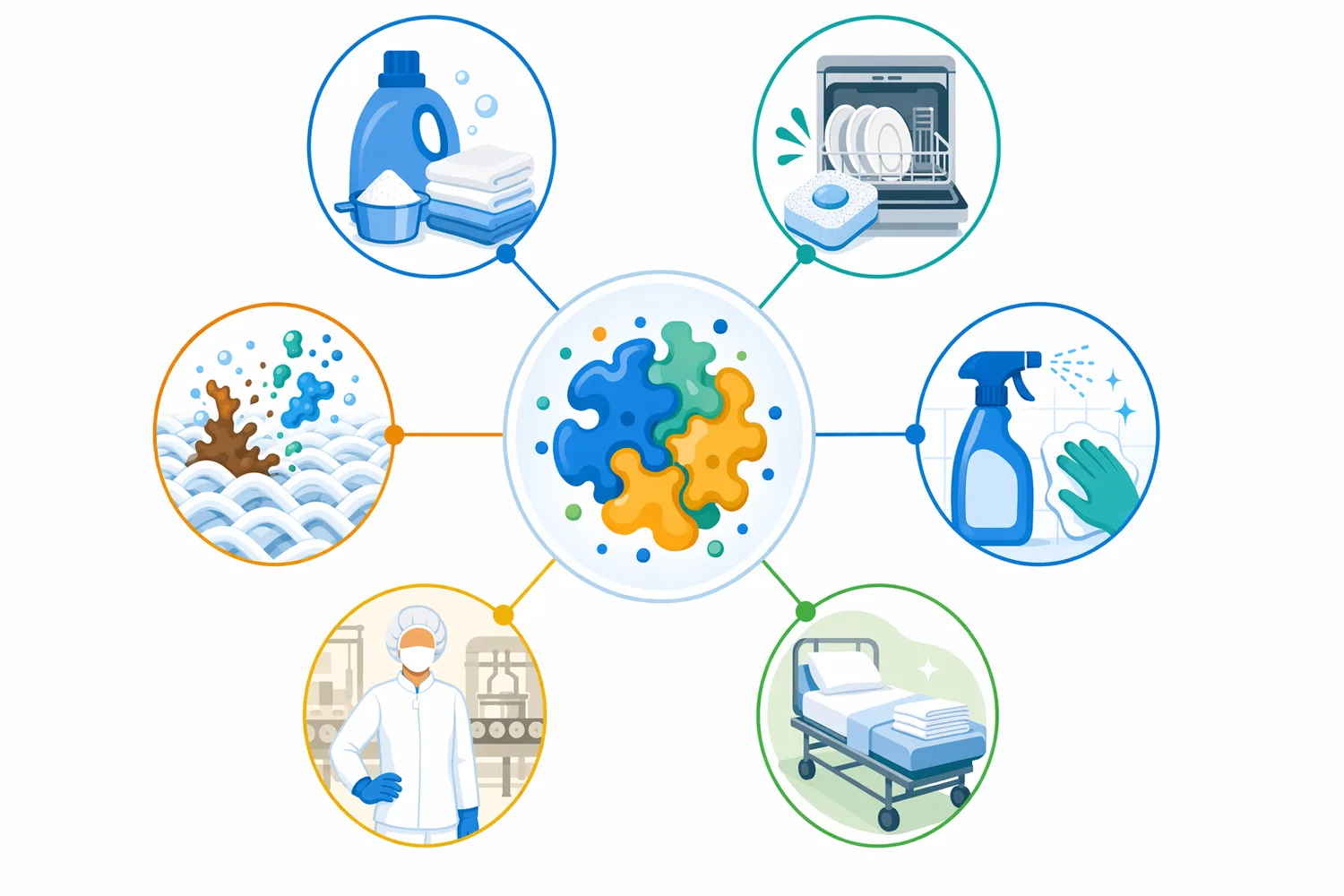
Alkaline protease is not a universal stain remover. It targets proteins, so it is strongest where protein is a meaningful part of the soil. Grease, mineral scale, starch, cellulose, and pigment stains may require lipases, amylases, cellulases, chelants, surfactants, oxidants, or other cleaning components. In a balanced detergent system, alkaline protease handles the protein fraction while the rest of the formulation addresses non-protein soils [5].
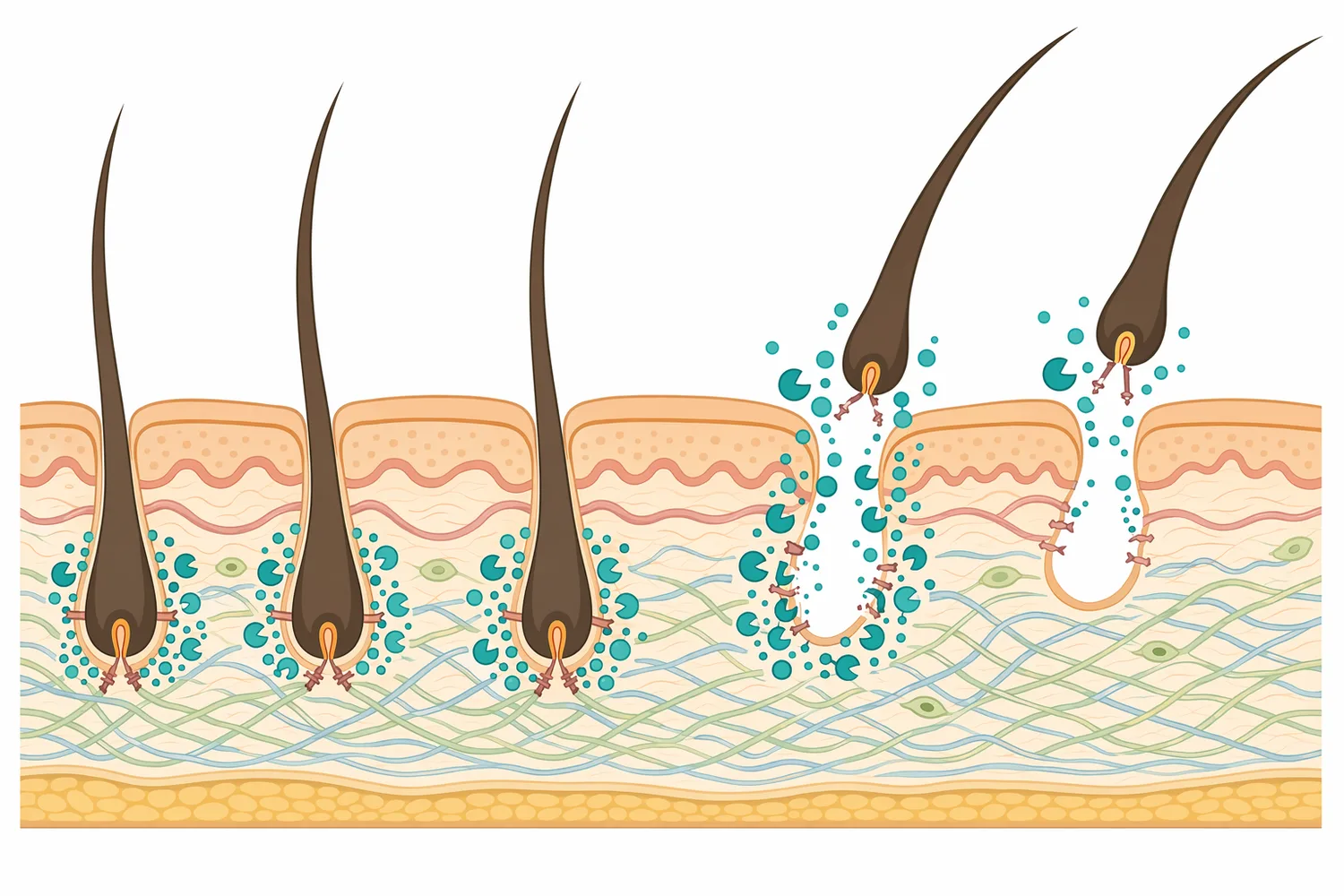
Leather processing is another important area for alkaline protease because hides and skins contain multiple protein structures. The goal in dehairing is to loosen hair and remove unwanted proteinaceous components without excessive damage to collagen, which is the valuable structural protein that becomes leather. Conventional chemical dehairing has often relied on strong alkaline and sulfide chemistry, which can contribute to high wastewater load if not carefully managed [4].
Alkaline protease assists dehairing by hydrolyzing proteins around the hair root and follicle area. In alkaline baths, swelling of the hide and hair-root region can expose protein structures that anchor the hair. Protease cleavage weakens those anchoring proteins, making hair release easier. The useful mechanism is selective weakening at the follicle and non-collagenous protein fraction, rather than indiscriminate destruction of the hide matrix [2].
A study identifying a thermostable alkaline protease from Bacillus megaterium TK1 specifically evaluated relevance for detergent and leather industry applications. The importance of such work is that leather operations need enzymes that can function under alkaline conditions and tolerate processing stresses while still delivering controlled protein removal [4].
Enzymatic leather processing is often described as a cleaner-production approach because it can reduce dependence on aggressive chemicals in selected steps. That does not mean the enzyme replaces every chemical operation or removes the need for process control. It means the biochemical action of peptide-bond hydrolysis can do part of the work that would otherwise require harsher chemical attack, especially where protein loosening or removal is the core task [2].
Textile applications use protease chemistry when the target is a protein fiber or protein coating. Wool, silk, and certain specialty textile residues are protein-based, so carefully controlled proteolysis can modify surface feel, remove unwanted proteinaceous material, or prepare fibers for downstream finishing. The central challenge is control: enough hydrolysis to remove or modify the target protein, but not so much that the valuable fiber is weakened [1].
Silk degumming is a clear example. Raw silk contains fibroin, the structural silk fiber, coated with sericin, a gummy protein that affects handle, luster, dyeing, and downstream processing. Alkaline protease can hydrolyze sericin into soluble peptides, helping remove it from the fibroin surface under milder biochemical conditions than strongly chemical degumming routes [8].
The mechanism in silk degumming is surface-selective hydrolysis. Sericin is more accessible on the outside of the filament, so the enzyme first attacks the coating protein. As sericin is cleaved into smaller fragments, it detaches into the bath, leaving the fibroin filament cleaner and softer. Process intensity must be controlled because fibroin is also a protein and can be damaged if proteolysis becomes too aggressive [8].
Protein-fiber processing illustrates a broader rule for alkaline protease use: the enzyme is valuable when the unwanted material is proteinaceous and accessible, but the process must respect any useful protein structure that should remain intact. This distinction is why detergent stain removal is comparatively forgiving, while textile and leather applications require closer control of contact time, alkalinity, and treatment severity [5].
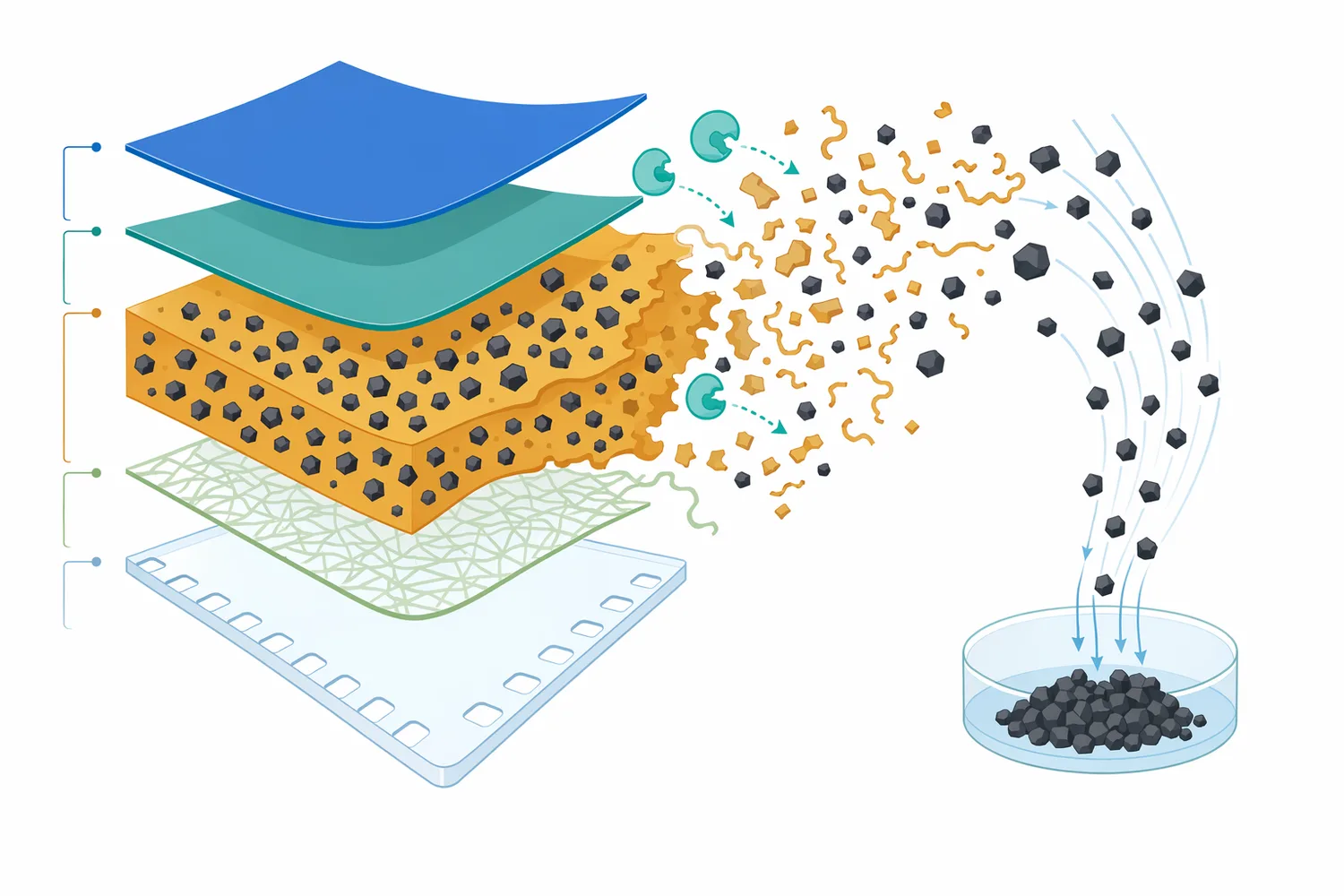
Used X-ray film is a specialized but well-studied example of alkaline protease applied to a protein film. The film contains a gelatin layer that holds silver-containing image material. Gelatin is a denatured collagen-derived protein, and alkaline protease can hydrolyze it into soluble peptides, allowing the gelatin layer to detach and enabling silver recovery from the film [9].
The practical mechanism is straightforward. The gelatin coating forms a continuous protein matrix on the plastic film. When alkaline protease hydrolyzes that matrix, it loses its film-forming strength and separates from the support. This can support recovery of silver while reducing reliance on harsher burning or strongly chemical stripping approaches, depending on the process design [9].
This application is useful because it shows that alkaline protease is not limited to “stains.” It can act on structured protein materials—gelatin coatings, protein films, and other formed protein layers—provided the enzyme can access the substrate in water under compatible pH and temperature conditions. That same principle is relevant to cleaning tanks, removing dried protein deposits, and treating protein-rich waste streams [10].
Protein-rich waste streams can be difficult to handle because intact proteins may be insoluble, odorous, viscous, or slow to degrade. Examples include fish-processing residues, feather waste, dairy residues, gelatinous materials, and shrimp or chitin-associated protein fractions. Alkaline protease helps by hydrolyzing insoluble or bulky proteins into smaller peptides that are more soluble and easier to separate, pump, dry, ferment, or further process [11].
Fish waste is frequently discussed as a low-cost substrate and protein-rich resource in bacterial protease research. The relevance for industrial users is twofold: protein waste can support enzyme-related bioprocesses, and protease treatment can also help convert difficult residues into hydrolysates with improved manageability. The chemistry is again peptide-bond cleavage, but the business objective shifts from stain removal to waste reduction or resource recovery [11].
Feather waste is another demanding substrate because keratin is a tough structural protein with strong crosslinking. Not every protease efficiently degrades keratin, but alkaline microbial proteases are studied for their ability to contribute to feather hydrolysis and related waste-treatment strategies. When hydrolysis is successful, rigid protein fibers are converted into smaller nitrogen-containing fractions that can be more useful than untreated waste [2].
Chitin extraction from crustacean waste also benefits from protease action because shell waste contains protein bound with chitin and minerals. A study on alkaline protease production using agro-industrial byproducts described relevance as a detergent additive and for chitin extraction, showing how protease hydrolysis can help remove protein from mixed biological materials [12].
Many commercial alkaline proteases are microbial because bacteria and fungi provide diverse enzyme systems that can be selected for alkaline stability, detergent compatibility, thermostability, solvent tolerance, or other industrially useful traits. Reviews describe microbial proteases as major industrial enzymes because microbes grow quickly and generate enzymes suitable for large-volume applications [1].
Bacillus species are especially prominent in alkaline protease research. They are known for secreting extracellular proteases, including alkaline serine proteases relevant to detergent and cleaning systems. Studies continue to identify and characterize Bacillus-derived alkaline proteases for detergent and leather use, reflecting the long industrial association between Bacillus enzymes and alkaline protein hydrolysis [4].
Alkaline proteases are not all the same enzyme family. Many detergent proteases are serine proteases, where a serine residue in the active site participates directly in peptide-bond cleavage. Other alkaline proteases are metalloproteases, where a metal ion helps activate water for hydrolysis of the peptide bond. A study on an alkaline solvent-stable metalloprotease from Bacillus sp. DEM05 highlights this diversity within the alkaline protease category [10].
This enzyme-family distinction matters scientifically because serine proteases and metalloproteases may respond differently to chelators, salts, surfactants, oxidants, and stabilizers. For the user, however, the practical effect is still protein hydrolysis under alkaline conditions. The key point is that “alkaline protease” describes a functional category, not a single identical molecule [3].
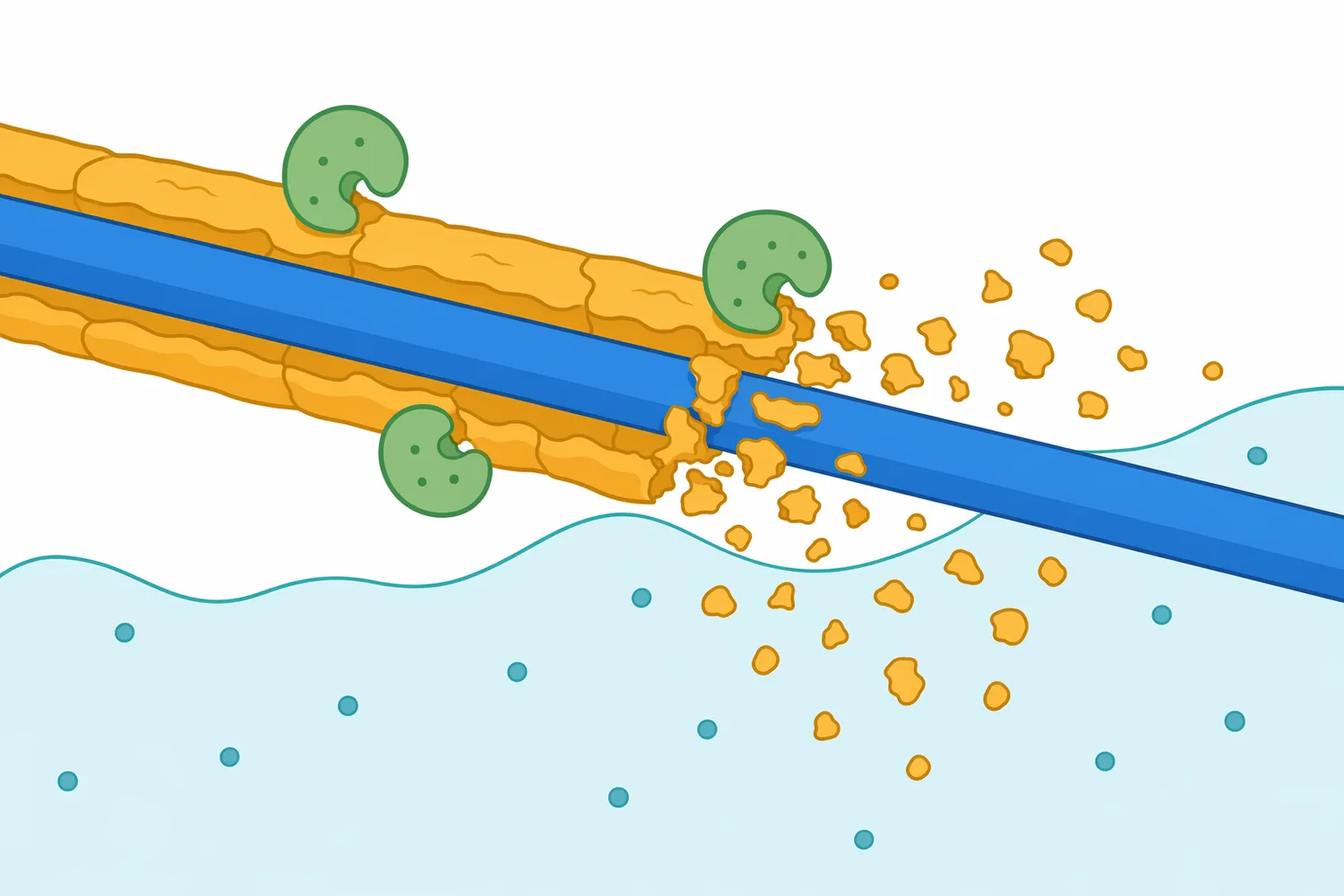
Alkaline protease requires water, suitable pH, accessible protein substrate, and enough contact time for hydrolysis to occur. In dry powder form the enzyme is stable for handling and storage, but catalytic action begins only when it is hydrated in a compatible aqueous environment. The substrate must also be reachable: a fresh protein soil, swollen protein film, or dispersed protein waste is more accessible than a sealed, crosslinked, or heavily coated deposit [2].
Most alkaline protease applications are designed around mildly to strongly alkaline conditions, commonly above neutral pH. Published alkaline protease studies often evaluate activity in alkaline ranges because detergent washing, leather dehairing, and alkaline cleaning baths rely on elevated pH to swell protein soils and expose peptide bonds. The enzyme and the alkaline medium therefore work together: alkalinity opens the structure, and protease cuts the backbone [6].
Temperature has a dual effect. Moderate warmth usually increases molecular motion and can accelerate enzyme-substrate contact, but excessive heat can unfold the enzyme itself. Thermostable alkaline proteases are an active research area because detergents and industrial processes may involve elevated temperatures, but stability depends on the specific enzyme and surrounding formulation [7].
Surfactants and builders can also help or hinder. Surfactants improve wetting and help remove hydrolyzed fragments, while alkaline builders maintain pH and can assist swelling of protein soils. However, some formulation components can destabilize proteins, alter enzyme structure, or reduce useful activity over time. This is why detergent-compatible alkaline proteases are repeatedly studied for performance in the presence of cleaning ingredients rather than only in simple water systems [7].
Oxidizing agents require particular care in enzyme-containing systems because proteases themselves are proteins. Strong oxidants can chemically modify amino-acid side chains and reduce enzyme function. Modern detergent enzyme work often focuses on improving robustness, but the underlying vulnerability remains: an enzyme must retain its folded active structure long enough to catalyze hydrolysis [13].
The research base for alkaline protease in detergent use is broad. Reviews of industrial proteases consistently list detergents as a major application because protein stain removal is a natural fit for protease catalysis. The combination of alkaline pH, wetting agents, mechanical agitation, and enzyme hydrolysis gives detergent systems multiple routes to remove protein soils from fabrics and surfaces [1].
A study on alkaline protease from a marine shipworm bacterium evaluated industrial cleansing applications, reflecting the long-standing search for enzymes that remain useful in practical cleaning environments. Marine and extremophile microorganisms are of interest because their enzymes may show tolerance to salt, pH variation, or other stresses relevant to industrial use [14].
More recent work on thermostable alkaline and detergent-biocompatible protease production also emphasizes the “green detergent” concept. The reason is not simply marketing language: if an enzyme removes protein soils efficiently, a formulation may achieve useful cleaning with less reliance on harsh chemical intensity, high thermal input, or prolonged treatment, depending on the complete detergent system [7].
For buyers using alkaline protease powder in detergent-related work, the scientific takeaway is clear but bounded. Alkaline protease is strongly supported for proteinaceous stains and residues; it should be viewed as a protein-targeting component within a broader cleaning formulation, not as a stand-alone replacement for surfactants, builders, water, agitation, or rinsing [5].
Leather and textile studies support alkaline protease where controlled protein modification is required. In leather, the desired action is loosening or removing nonessential proteins, particularly around hair and interfibrillar material, while preserving the collagen structure needed for finished leather. This makes enzyme selectivity and process control central to successful use [4].
In silk, the desired action is removal of sericin while preserving fibroin. Research on silk degumming using alkaline protease from Beauveria demonstrates how protease hydrolysis can support a greener approach to sericin utilization and silk processing. The application is chemically elegant because the unwanted coating is itself protein, so the enzyme targets the material that needs removal [8].
In X-ray film treatment, the target is gelatin. The alkaline protease hydrolyzes the gelatin binder, allowing silver-bearing material to separate from the plastic support. This is a practical example of enzyme-assisted recovery from a composite material, where the enzyme removes the protein phase and exposes or releases the valuable non-protein component [9].
These applications show the same principle across different industries: alkaline protease is most useful when the problem material is protein, the process medium is alkaline and aqueous, and the product or surface being treated can tolerate controlled proteolysis. Where the valuable material is also protein, such as collagen or fibroin, treatment intensity must be managed so the enzyme modifies the target fraction without excessive damage [2].
Alkaline protease can contribute to cleaner processing because enzymes act catalytically and selectively. Instead of relying only on strong chemicals to break down complex biological residues, the process uses a biological catalyst that targets peptide bonds. This selectivity is valuable in cleaning, leather, textiles, and waste treatment because the unwanted material is often protein embedded in a more complex matrix [2].
In detergent use, enzyme-assisted cleaning may support lower-temperature or shorter cleaning approaches where the formulation and soil type are suitable. In leather and textile processing, enzyme steps may reduce dependence on harsher chemicals. In waste treatment, proteolysis can turn bulky protein residues into hydrolysates that are easier to handle or valorize [11].
The environmental benefit should be understood realistically. Enzymes do not eliminate the need for water, pH control, surfactants, separation, or downstream treatment. Their value is that they perform a specific chemical reaction—peptide-bond hydrolysis—under conditions that can be milder than purely chemical alternatives for the same protein-removal task [5].
Enzymes.bio offers alkaline protease powder as a 1 kg online purchase. The buyer adds the product to the cart, pays online, and the order is processed and shipped. A Certificate of Analysis and Safety Data Sheet are included with the order for documentation and safe handling.
The powder format is convenient for buyers who need an enzyme ingredient that can be incorporated into compatible aqueous processes. As with any enzyme powder, practical handling should avoid unnecessary dust generation and follow the Safety Data Sheet supplied with the order. Enzymes are proteins, and responsible handling helps reduce exposure while preserving product usability [15].
Alkaline protease powder is best understood as a protein-removal and protein-hydrolysis tool. It is most relevant where the unwanted material is proteinaceous, the process is aqueous, and the pH is alkaline enough for the enzyme class to function effectively. Typical targets include detergent protein stains, food and body soils, gelatin films, sericin coatings, hair-root proteins, casein residues, and protein-rich biological waste [1].
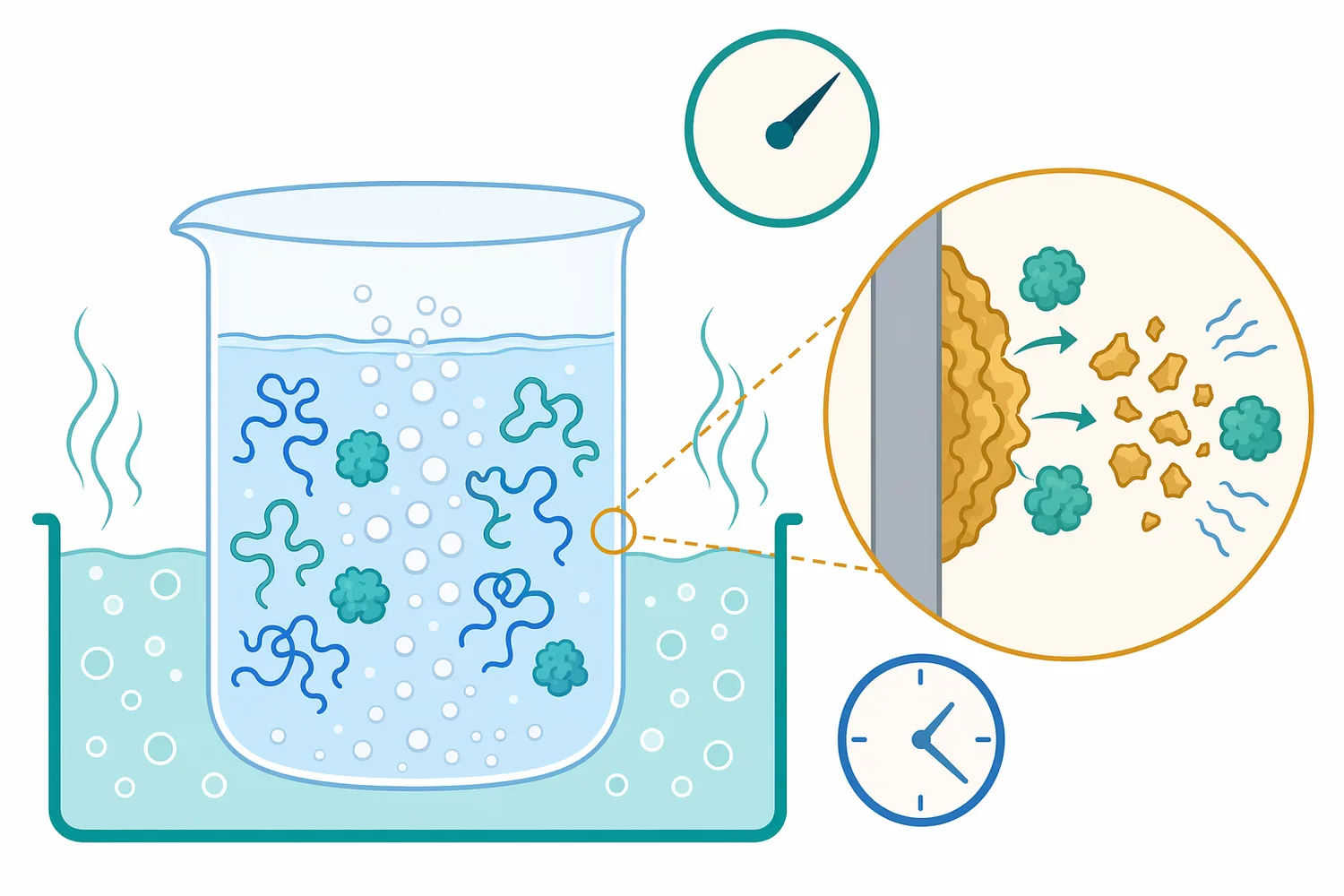
The enzyme’s value comes from a concrete molecular change: large proteins become smaller peptides. That change reduces film strength, weakens stain adhesion, increases dispersibility, and can convert solid or sticky residues into more manageable hydrolysates. In many applications, this biochemical step makes the following physical steps—rinsing, agitation, filtration, separation, or finishing—more effective [2].
At the same time, alkaline protease should not be treated as a universal cleaner or universal processing aid. It does not dissolve mineral scale, saponify fats, bleach pigments, or hydrolyze starch as its primary function. It complements other process components by removing the protein fraction that often anchors or protects mixed soils [5].
Alkaline protease powder is a well-established enzyme ingredient for breaking down proteins under alkaline conditions. Its core mechanism is peptide-bond hydrolysis: the enzyme cuts large protein molecules into smaller fragments that are easier to rinse away, disperse, separate, or convert into useful hydrolysates. This makes it especially relevant for detergent protein-stain removal, industrial cleaning, leather dehairing, silk degumming, gelatin film removal, and protein-rich waste treatment [1].
The strongest support comes from detergent and leather applications, where alkaline proteases have been repeatedly studied for alkaline pH function, detergent compatibility, thermostability, and controlled protein removal. Additional evidence supports specialty uses such as silk sericin removal, X-ray film gelatin hydrolysis, chitin-associated protein removal, and treatment of protein-rich by-products [9].
Enzymes.bio supplies alkaline protease powder directly online by the 1 kg unit. Orders are placed and paid for online, then processed and shipped with a Certificate of Analysis and Safety Data Sheet included.
Sold by the 1 kg unit, in stock and ready to ship. Order directly on our store — pay online and we process your order. A Certificate of Analysis and Safety Data Sheet are included with every order.
Buy Alkaline Protease Powder Protease Enzyme Detergent Alkaline Protease 100,000U/G →Numbered in order of first citation. Open-access sources, each verified reachable at publication; citation numbers in the text link here.