
Alpha Amylase Starch Sugar Enzyme breaks starch into shorter dextrins and sugars by cutting internal α-1,4 glucosidic bonds in amylose and amylopectin. In processing terms, that means lower paste viscosity, faster starch liquefaction, improved flow, and better preparation of starch-rich materials for fermentation, sweetener production, food processing, textile desizing, or cleaning applications. Alpha-amylase is best understood as a liquefying and dextrinizing enzyme: it rapidly opens up long starch polymers, but it does not by itself remove every branch point in amylopectin [1].
Enzymes.bio supplies Alpha Amylase Starch Sugar Enzyme directly online by the 1 kg unit. The buyer pays online, the order is processed and shipped, and a Certificate of Analysis and Safety Data Sheet are included with the order.
Starch is a storage carbohydrate made from glucose units linked together in long chains. The two main starch polymers are amylose, which is mostly linear, and amylopectin, which is highly branched. Alpha-amylase acts inside these polymers rather than only from the chain ends, cutting α-1,4 linkages and turning large, high-molecular-weight starch molecules into smaller dextrins, maltose-rich fragments, and other soluble carbohydrates [1].
That internal cutting pattern is the reason alpha-amylase changes starch systems so quickly. A gelatinized starch paste is thick because swollen starch granules and long hydrated chains occupy a large volume and resist flow. When alpha-amylase cuts those chains, the average chain length falls, the hydrated network loses strength, and viscosity drops. The physical change can be obvious long before the starch has been fully converted to simple sugars, because viscosity is strongly affected by polymer length.
The enzyme’s action is selective. Alpha-amylase hydrolyzes α-1,4 bonds efficiently, but amylopectin also contains α-1,6 branch linkages. Those branch points remain as “limit dextrin” structures unless other enzymes or processing steps are used. This is why alpha-amylase is widely used for liquefaction and dextrin production, while more complete glucose production typically requires a broader starch-conversion system [2].
In practical language, Alpha Amylase Starch Sugar Enzyme makes starch less pasty, less resistant to mixing, and more available for downstream conversion. It does not make insoluble plant structures disappear, and it does not fully debranch starch on its own. Its main value is the rapid conversion of bulky starch polymers into shorter, more processable carbohydrate fragments.
Native starch granules are partly crystalline and partly amorphous. In dry or insufficiently hydrated form, much of the starch is physically inaccessible to enzyme attack. When starch is heated with water, granules swell, crystalline order is disrupted, and chains become more exposed. This gelatinized state gives alpha-amylase much better access to α-1,4 bonds, which is why enzymatic amylolysis of gelatinized starch is a common model for studying starch breakdown [3].
Once alpha-amylase binds to an accessible starch chain, catalytic groups in the enzyme active site position the glycosidic bond for hydrolysis. Water is used to cleave the bond, producing shorter carbohydrate fragments and new chain ends. Repeated cuts reduce the average chain length, and the starch paste loses the long-chain entanglement that created high viscosity. This is not just a chemical conversion; it is a mechanical processing benefit because the slurry becomes easier to move, mix, heat, and filter.
The sugar profile depends on how far hydrolysis proceeds and what starch source is being processed. Research on gadung starch hydrolysis using alpha-amylase focused on conversion toward glucose, while work on commercial corn starch showed that alpha-amylase treatment variables influence maltodextrin production and dextrose-equivalent development [4]. These studies reflect a common industrial pattern: the same enzyme class can be used to create different carbohydrate profiles depending on process design and the intended product.
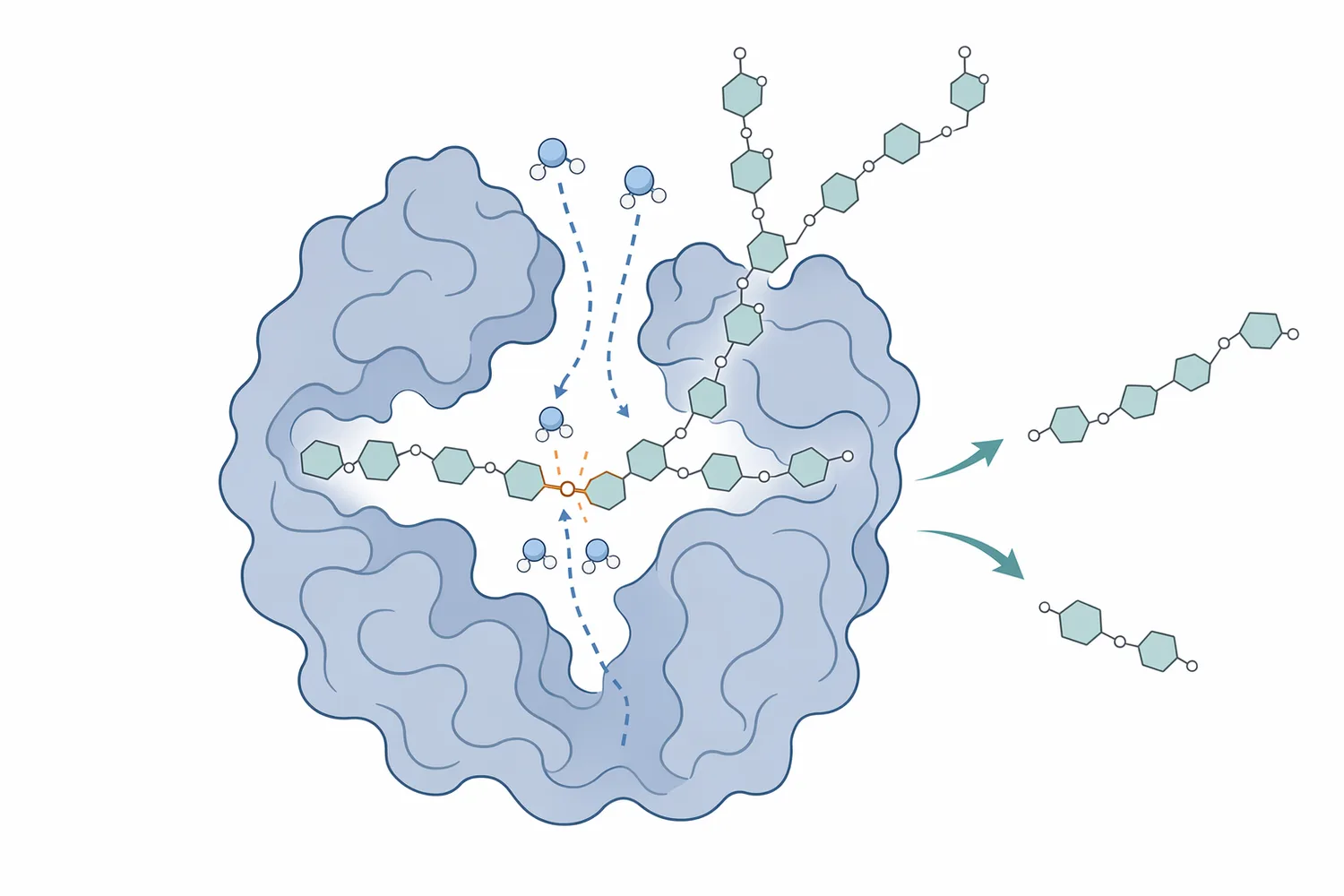
Because alpha-amylase cuts internally, it can quickly reduce viscosity even when only part of the starch has been hydrolyzed. This is different from an enzyme that releases single glucose units only from chain ends. Internal scission breaks the polymer backbone at many points, so the hydrodynamic size of the molecules falls rapidly. That is why alpha-amylase is so useful where starch paste handling is the immediate bottleneck.
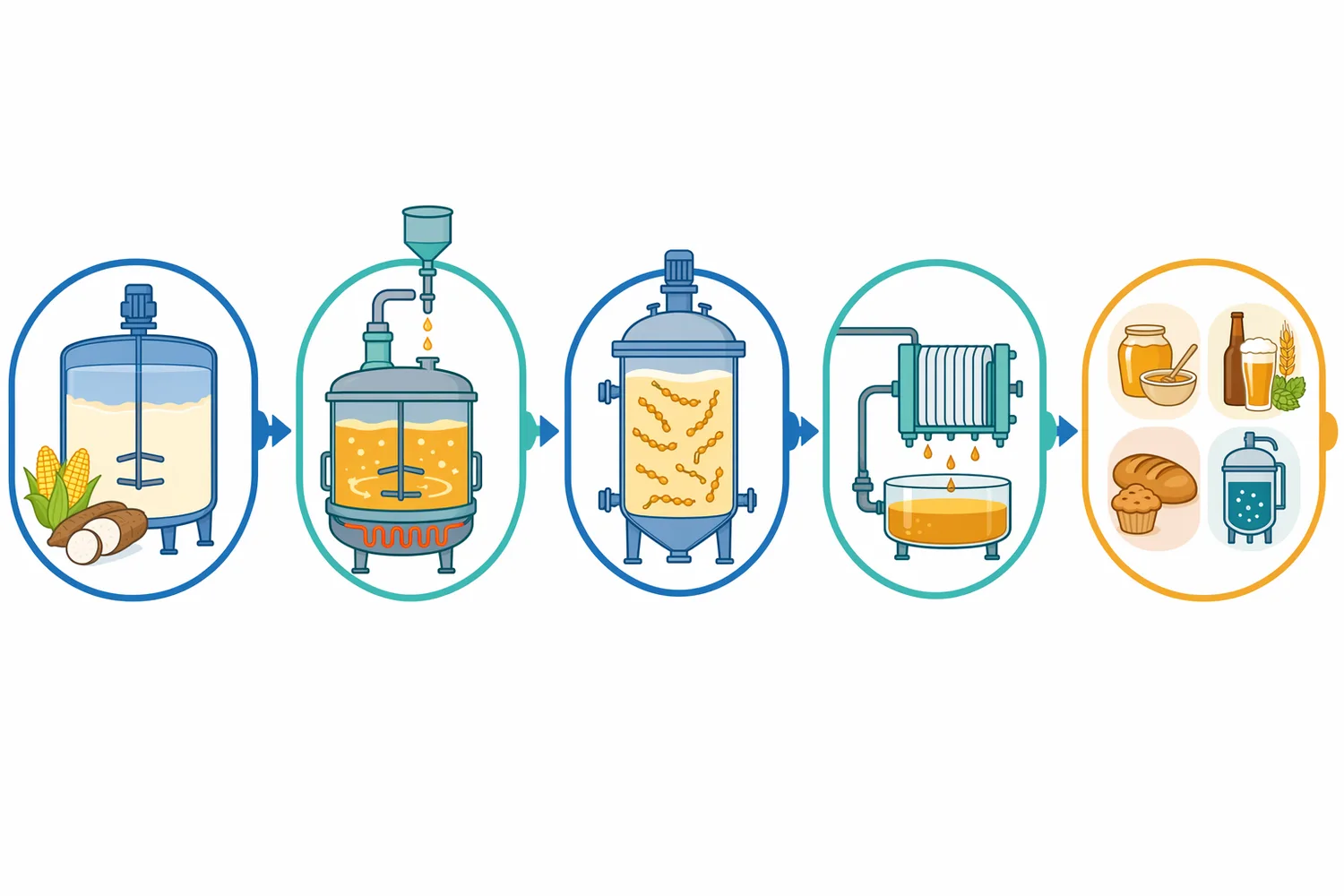
In starch sugar production, alpha-amylase is typically associated with the first major conversion stage: liquefaction. The goal is to convert a thick starch slurry into a lower-viscosity dextrin solution that can be handled more easily and converted further if a sweeter or more fermentable syrup is required. Studies on starch-rich biomass saccharification continue to examine alpha-amylase enzymes, including GH-13 alpha-amylases, because this enzyme family is central to breaking down starch-containing feedstocks [5].
For maltodextrin production, alpha-amylase is especially relevant because maltodextrins are partially hydrolyzed starch products rather than fully converted glucose syrups. Research on commercial corn starch has examined how alpha-amylase treatment conditions affect maltodextrin synthesis and dextrose-equivalent value, showing the link between enzymatic hydrolysis and carbohydrate functionality [6]. In application terms, shorter dextrins can change solubility, viscosity, sweetness perception, and drying behavior.
For glucose-oriented conversion, alpha-amylase can open the starch structure and create soluble fragments, but it is usually not the final enzyme in the pathway. The α-1,6 branches of amylopectin and remaining dextrins may need further enzymatic conversion to increase simple-sugar yield. The important point is that alpha-amylase performs the heavy first cut: it reduces the long-chain starch burden that otherwise slows downstream processing [2].
Sweet sorghum juice processing provides another example of why starch hydrolysis matters outside conventional corn or tuber starch systems. A study on alpha-amylase treatment in sweet sorghum juice for crystal sugar quality reflects a practical issue in sugar processing: starch residues can interfere with clarification, crystallization, and product quality if they remain as high-viscosity or haze-forming components [7].
The first noticeable effect is viscosity reduction. A starch slurry that is difficult to agitate can become more fluid as alpha-amylase shortens the polymer chains. Lower viscosity improves heat transfer because the liquid circulates more evenly, reduces dead zones in mixing, and can make downstream separation or transfer less energy-intensive.
The second effect is increased solubility of starch-derived material. Long starch chains and swollen granule remnants behave differently from soluble dextrins. After enzymatic cutting, more carbohydrate material remains dispersed or dissolved, which can reduce sedimentation and improve consistency in starch-based foods, beverages, and fermentation media.
The third effect is improved availability for microbes or additional enzymes. Fermentation organisms generally cannot use intact starch as efficiently as smaller carbohydrates unless they also produce their own amylolytic enzymes. By liquefying starch first, alpha-amylase can make carbon sources more accessible for brewing, ethanol, enzyme production, or other bio-based conversion processes [5].
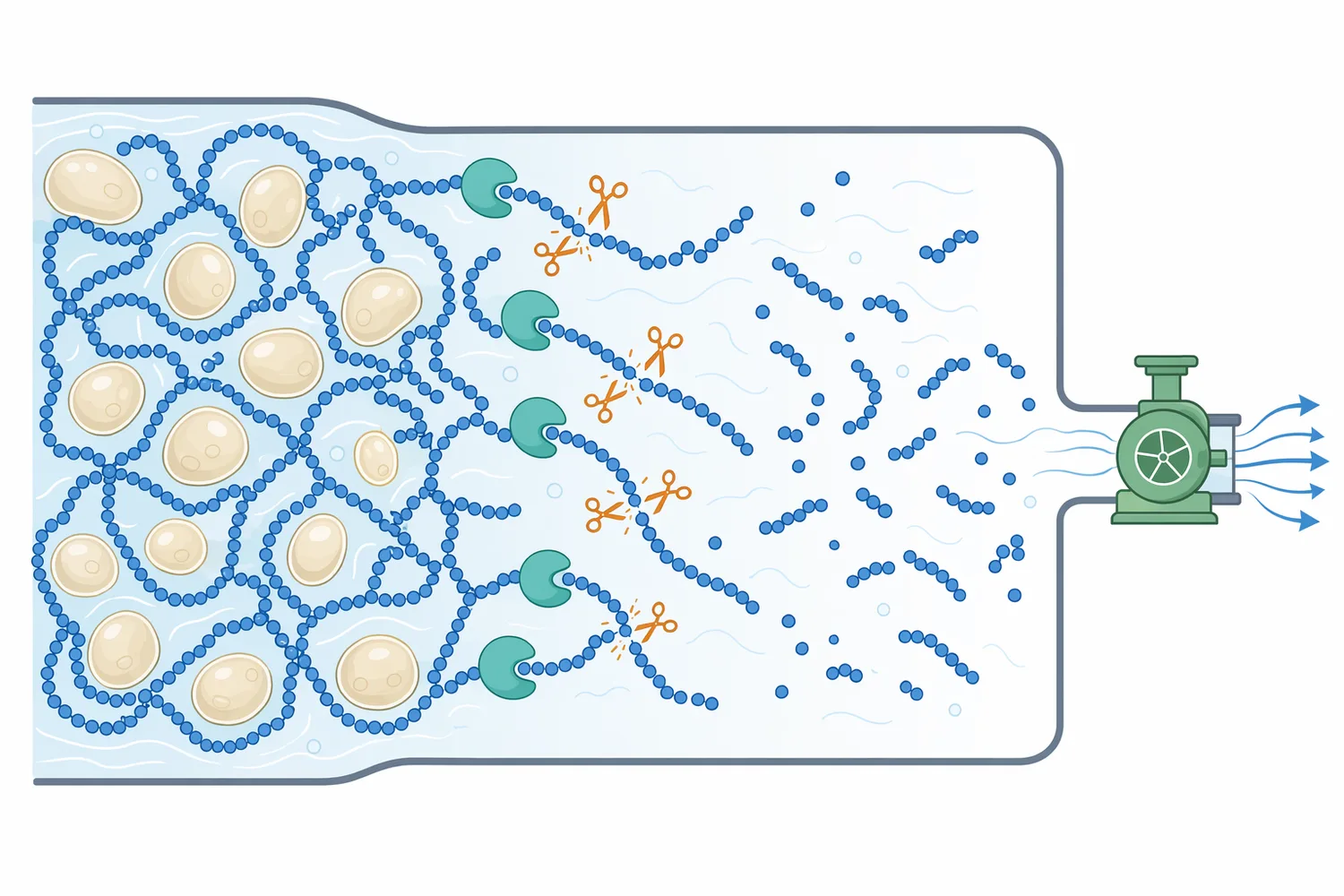
The fourth effect is better control of texture in starch-rich products. Too much intact starch can create gumminess, thickening, or unstable viscosity; too much breakdown can make a product thin or sticky. Alpha-amylase is useful because it provides a controlled route to reduce starch structure without relying only on mechanical shear or extended heating.
The core application is the conversion of gelatinized starch into shorter dextrins. This is important for corn, cassava, potato, rice, wheat, sorghum, and other starch-containing raw materials. Alpha-amylase cuts the long chains that create paste viscosity, giving a lower-viscosity intermediate that can be used as a dextrin product or converted further [6].
In starch sugar operations, this liquefaction step improves processability. A high-solids starch paste can be difficult to pump and heat uniformly; after enzymatic cutting, the same carbohydrate load can behave more like a manageable syrup. That change can support more consistent downstream saccharification, filtration, evaporation, or fermentation.
Alpha-amylase is used in food systems where starch affects thickness, mouthfeel, sweetness development, or stability. Oat milk research has examined how alpha-amylase type and enzyme activation time influence sensory and physicochemical properties, which is directly relevant to plant-based beverages where starch breakdown affects viscosity and perceived sweetness [8].
In cereal and grain systems, amylase activity can be beneficial when controlled and problematic when uncontrolled. Wheat studies on late maturity alpha-amylase show that endogenous amylase activity can affect starch properties during grain development and germination [9]. The processing lesson is straightforward: starch quality is not determined only by the raw material; enzyme activity can materially change final flour, dough, or grain behavior.
Bread and baked products also depend heavily on starch transformation. During baking, starch gelatinizes, competes for water, and contributes to crumb structure. Controlled amylase activity can generate fermentable sugars and modify crumb softness, but excessive activity can weaken structure or create sticky textures. The same biochemical action—cutting α-1,4 starch chains—can therefore be helpful or harmful depending on the product context.
Starch-rich feedstocks need hydrolysis before many microbes can efficiently ferment them. Alpha-amylase reduces the size and viscosity of starch molecules, creating soluble dextrins and smaller sugars that are easier to convert. Research on alpha-amylase from a rumen metagenome for saccharification of starch-rich biomass highlights continuing interest in enzymes that can unlock carbohydrate value from renewable feedstocks [5].
In brewing and alcohol production, alpha-amylase supports the conversion of grain starch into fermentable carbohydrate streams. It is not the only enzyme involved in a full mash or saccharification system, but it is important because it rapidly liquefies gelatinized starch. Without this early breakdown, thick mash viscosity can limit mixing, heat transfer, and access for other enzymes.
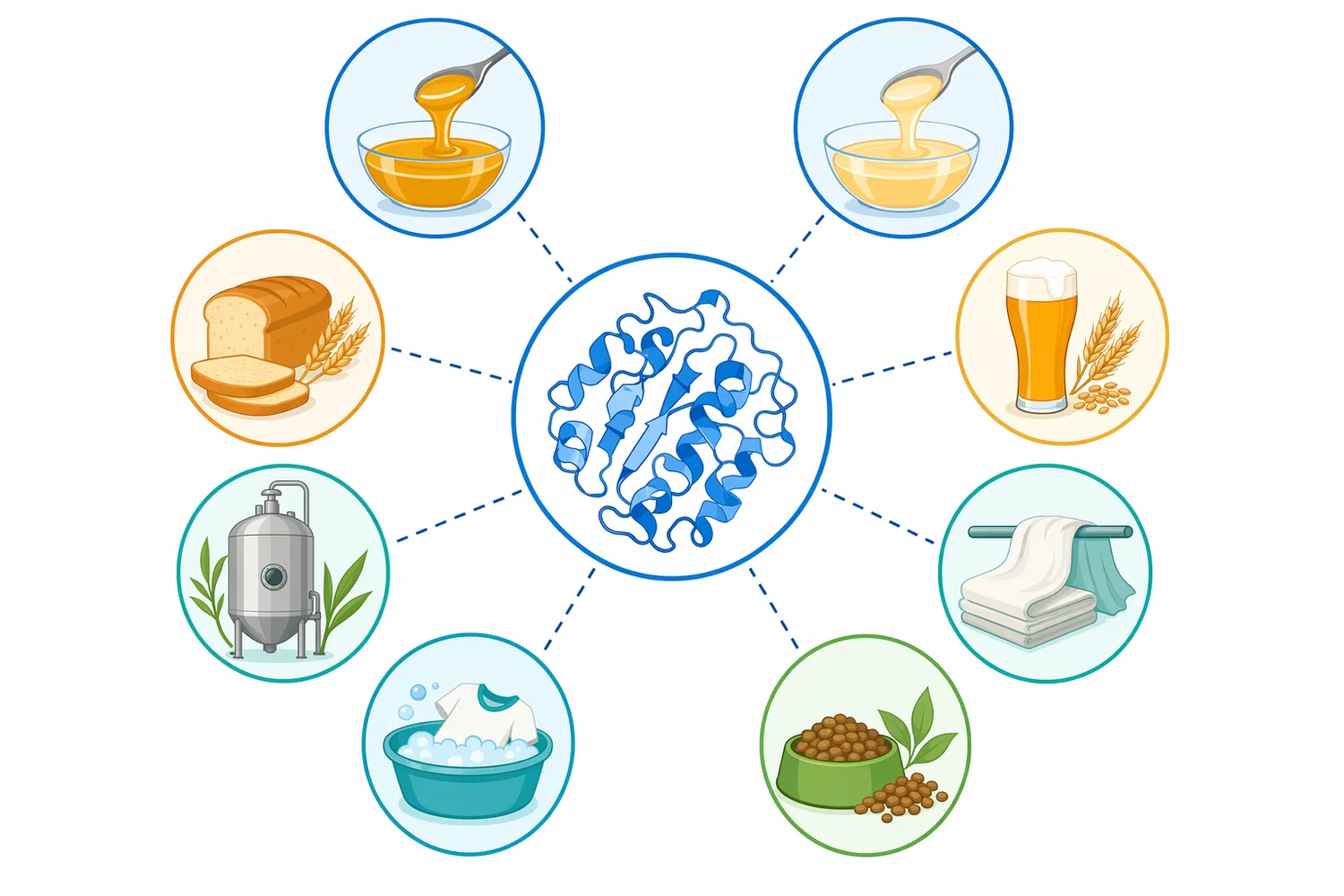
In textile production, starch-based sizes are often applied to yarns to improve weaving performance. Before dyeing or finishing, that starch size must be removed. Alpha-amylase is well suited to this task because it hydrolyzes the starch film into smaller soluble fragments that can be washed away from the fabric surface.
Research on alpha-amylase from Bacillus amyloliquefaciens investigated industrial wastewater treatment and textile desizing, linking the enzyme directly to starch removal from textile processes [10]. Mechanistically, the enzyme attacks the starch size rather than the cellulose fiber, helping release the size layer while preserving the textile substrate when conditions are appropriate.
Starch is a common component of food soils such as sauces, gravies, cereals, chocolate-containing residues, and cooked starch films. When starch dries onto a surface or fabric, it can act as a glue that binds other soil components. Alpha-amylase breaks that carbohydrate matrix into shorter, more water-soluble fragments, making the residue easier to lift and rinse.
Microbial alpha-amylases are widely discussed in industrial biotechnology because of their relevance across food, textile, detergent, and starch-conversion applications [2]. In cleaning systems, the practical value is not that the enzyme “dissolves all stains,” but that it specifically weakens starch-based adhesion so surfactants and mechanical washing can remove soils more effectively.
Starch-containing waste streams can be viscous, high in organic load, and difficult to handle. Alpha-amylase can reduce polymeric starch into smaller soluble carbohydrates, which may improve downstream biological treatment or recovery depending on the system. The same Bacillus amyloliquefaciens study that examined textile desizing also evaluated industrial wastewater treatment, illustrating the overlap between starch hydrolysis and environmental processing [10].
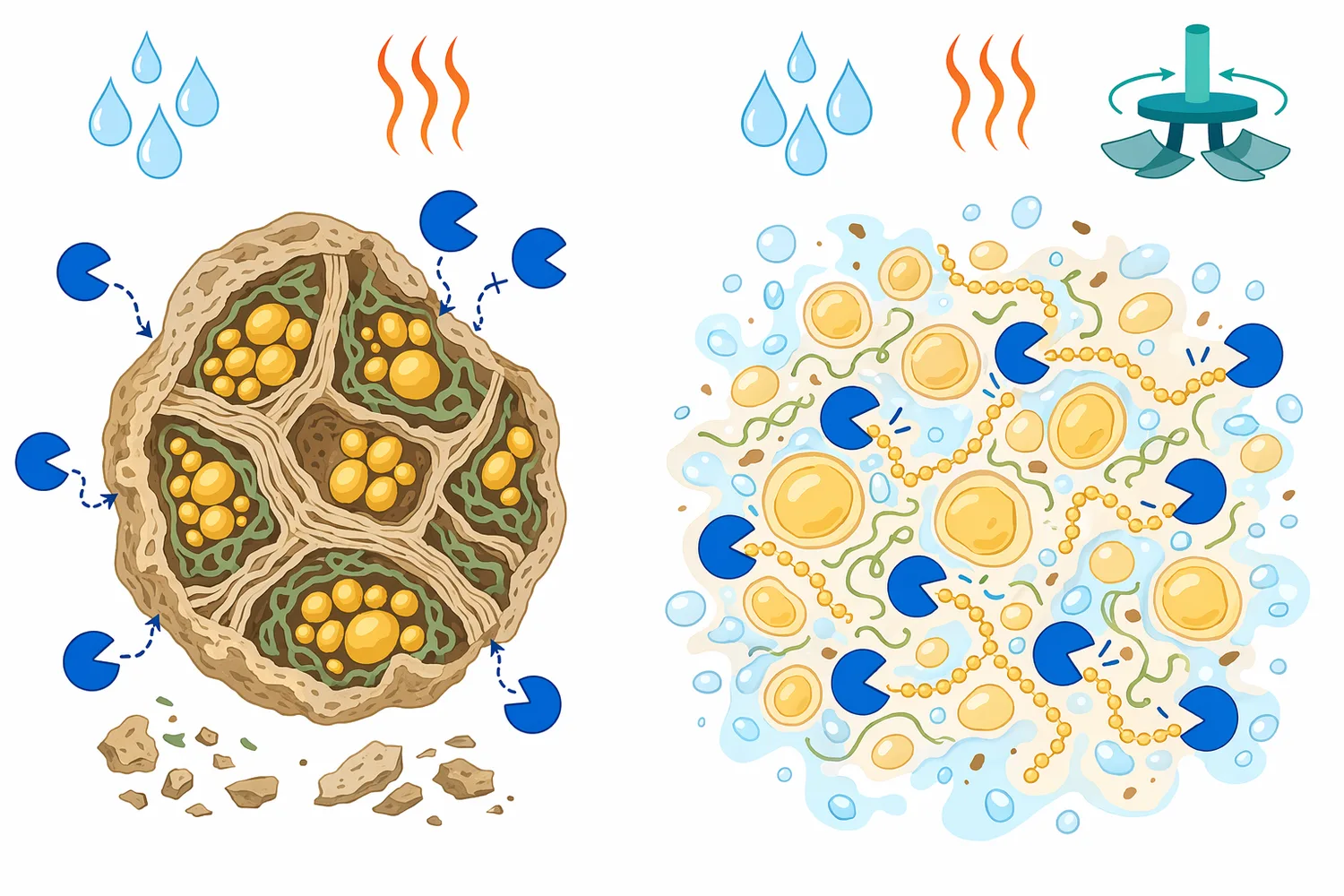
Side streams from food, grain, and agro-industrial operations can contain residual starch mixed with fiber, protein, minerals, and lipids. In these complex matrices, enzyme access is often the limiting factor. Milling, hydration, heating, and mixing influence how much starch surface is exposed; alpha-amylase can only cut bonds it can physically reach.
Different alpha-amylases can be associated with different operating environments. This table is conceptual rather than a product specification; it explains why pH environment matters to starch hydrolysis and application fit.
| Alpha-amylase environment | Typical application context | What changes mechanistically | Practical implication |
|---|---|---|---|
| Acidic-leaning systems | Some food, beverage, fruit, or mildly acidic starch streams | Catalytic groups and substrate-binding residues must remain correctly protonated for starch-chain binding and bond cleavage | Useful when starch hydrolysis is needed without shifting a food matrix far from its natural acidity |
| Near-neutral systems | Many cereal, starch slurry, brewing, and food-processing operations | Enzyme structure and starch hydration can both be favorable, especially after gelatinization | Often associated with balanced liquefaction, viscosity reduction, and compatibility with food-style processes |
| Alkaline-leaning systems | Textile desizing, cleaning, and detergent-adjacent applications | The enzyme must retain folded structure while attacking starch films or soils in alkaline wash conditions | Valuable where starch removal must occur in a cleaning or desizing environment rather than a food process |
The reason pH matters is structural. Enzymes are folded proteins, and their active sites depend on the charge state of amino-acid side chains. If the environment shifts too far from what a given enzyme tolerates, starch may still be present, but binding and catalysis become less efficient. Microbial alpha-amylases are studied widely because different organisms produce enzymes with different stability patterns and industrial usefulness [2].
Temperature has a similar effect. Heating starch helps expose chains by gelatinizing granules, but excessive heat can unfold enzymes that are not stable under those conditions. Thermotolerant alpha-amylase has been important enough to appear in regulatory assessment for genetically modified maize 3272 intended for food and feed uses, import, and processing [11]. The industrial significance is that starch conversion often benefits from heat, while the enzyme must remain functional long enough to perform hydrolysis.
Alpha-amylase is effective only when it can contact the starch. Raw botanical materials contain starch inside cells, granules, fiber networks, and protein matrices. Even after cooking, some structures can limit enzyme access. Insoluble dietary fiber from wheat bran has been reported to retard starch digestion by reducing alpha-amylase activity, showing that surrounding matrix components can interfere with enzyme–starch interaction [12].
Legumes provide another useful processing lesson. Research on underutilized legumes examined how four processing methods affected trypsin, chymotrypsin, and alpha-amylase inhibitors [13]. Although that study focused on inhibitors, the broader point for starch processing is important: plant materials contain compounds and structures that can reduce the effective action of digestive or industrial enzymes.
Particle size, hydration, gelatinization, and shear therefore matter. Finely milled, well-hydrated, gelatinized starch usually presents more accessible α-1,4 bonds than intact raw particles. Conversely, dense, fibrous, or under-hydrated material may show slower hydrolysis even when the enzyme itself is capable. This is why the same alpha-amylase chemistry can produce different results in purified corn starch, wholegrain mash, oat slurry, textile size, or agro-industrial side streams.
Inhibitors can also be relevant in biological or food matrices. Many plant extracts and phytochemicals are studied for alpha-amylase inhibitory effects because slowing starch digestion is of interest in nutrition and antidiabetic research [14]. For industrial starch conversion, the practical lesson is that non-starch components are not always passive; they can interact with enzymes and reduce apparent performance.
Commercially useful alpha-amylases are commonly associated with microbial sources because microorganisms can produce extracellular enzymes that are practical for industrial use. Bacillus species are frequently studied for alpha-amylase production, including work on submerged fermentation conditions for Bacillus sp. and studies using Bacillus licheniformis [15].
Fungal alpha-amylases are also important. Research on Aspergillus oryzae has examined production using agro-industrial wastes under solid-state fermentation, reflecting the long-standing relevance of fungal enzymes in food and starch-processing biotechnology [16]. These studies do not mean every alpha-amylase product behaves the same way; they show why enzyme source influences process behavior.
Production research has also explored alternative substrates and organisms. Pomelo albedo has been investigated as a substrate for alpha-amylase production using Bacillus licheniformis, while marine sponge-associated systems have been studied for amylase production potential [17]. This breadth of research illustrates the continued search for enzymes with useful stability, substrate interaction, and sustainability profiles.
Safety assessment is organism- and enzyme-specific. EFSA has evaluated particular food-enzyme alpha-amylases, including an alpha-amylase from genetically modified Bacillus subtilis strain NBA [18]. Such assessments are useful background for understanding the regulated nature of food enzymes, but they should not be read as a blanket statement about every enzyme product or every end use.
Lower viscosity in gelatinized starch systems. By cutting long α-1,4-linked chains into shorter dextrins, alpha-amylase reduces the molecular size responsible for thick paste behavior. The result is easier mixing, improved flow, and more uniform heat transfer.
Faster preparation for sugar conversion. Alpha-amylase creates soluble dextrins and smaller carbohydrate fragments that are more accessible to additional enzymes or microbes. Work on starch-rich biomass saccharification reflects this role in making starch-based raw materials more convertible [5].
Improved handling of starch-containing side streams. In textile, food, and wastewater contexts, starch can increase viscosity, form films, or contribute to organic load. Enzymatic hydrolysis changes that starch into more soluble, lower-molecular-weight material, which can support washing, clarification, or downstream biological processing [10].
Better control of plant-based beverage texture. In oat milk and similar cereal-based drinks, starch hydrolysis affects thickness, sweetness development, and sensory properties. Research comparing alpha-amylase types and activation time in oat milk confirms that enzyme treatment can change both physicochemical and sensory outcomes [8].
Support for maltodextrin and dextrin applications. Alpha-amylase is directly relevant where the target is partial starch hydrolysis rather than complete glucose release. Corn starch maltodextrin work shows how alpha-amylase treatment is tied to dextrose-equivalent development and functional carbohydrate production [6].
Alpha-amylase is not a universal “all carbohydrates to sugar” enzyme. It acts primarily on α-1,4 starch linkages and is not designed to hydrolyze cellulose, pectin, proteins, fats, or all starch branch structures. If a material’s processing problem is caused by fiber, protein gelation, lipid emulsions, or pectin haze rather than starch, alpha-amylase may help only where starch is actually part of the issue [1].
It also does not fully debranch amylopectin. Because α-1,6 linkages remain, alpha-amylase commonly leaves branched dextrin fragments after hydrolysis. That is not a failure; it is the expected action pattern of the enzyme. For many uses—liquefaction, viscosity reduction, desizing, and maltodextrin production—partial hydrolysis is exactly the desired outcome.
The surrounding matrix can slow or limit hydrolysis. Wheat bran fiber can reduce alpha-amylase activity in starch digestion systems, and plant materials may contain natural enzyme inhibitors or physical barriers [12]. In industrial practice, this means that accessible gelatinized starch responds much more predictably than intact or highly fibrous raw material.
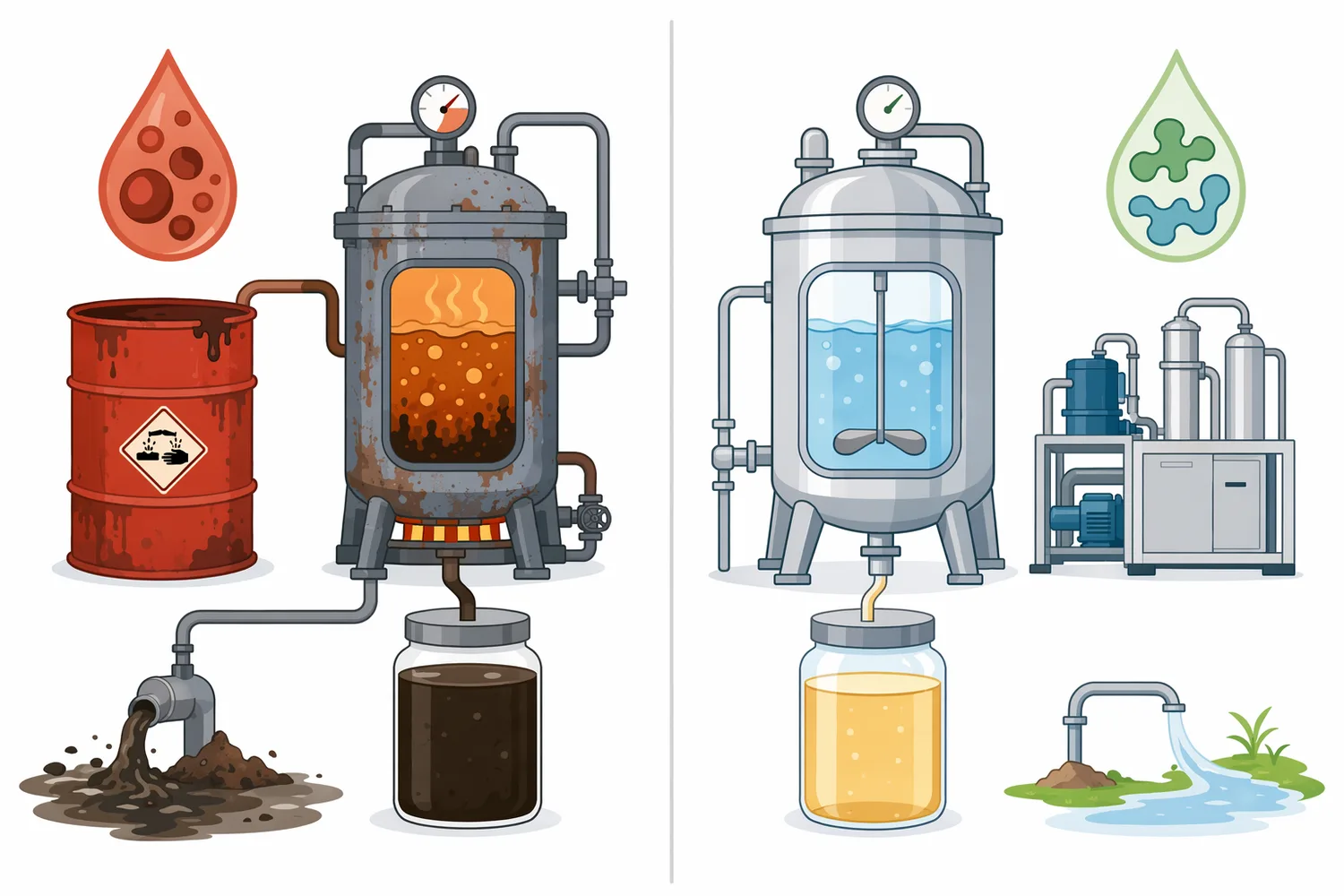
Finally, alpha-amylases differ by source and formulation. A thermotolerant enzyme, a food-process enzyme, and an enzyme intended for alkaline cleaning environments may all be called alpha-amylase, but they are not interchangeable in every process. The common chemistry is starch-chain hydrolysis; the practical behavior depends on the enzyme’s stability and the process environment.
Enzymes.bio supplies Alpha Amylase Starch Sugar Enzyme for customers who want to purchase the product directly online in a 1 kg unit. The online order is paid for at checkout, processed, and shipped. A Certificate of Analysis and Safety Data Sheet are included with the order.
For customers working with starch-rich materials, the main expectation should be clear: Alpha Amylase Starch Sugar Enzyme is used to cut starch chains, reduce viscosity, create dextrins and soluble sugars, and make starch easier to process. Its strongest value is in liquefaction and starch-structure modification, especially where long-chain starch is causing thickness, handling difficulty, or limited downstream conversion.
Alpha Amylase Starch Sugar Enzyme is a practical enzyme for converting starch from a thick, high-molecular-weight polymer system into shorter dextrins and sugars. It works by hydrolyzing internal α-1,4 glucosidic bonds in starch, which rapidly lowers viscosity and improves access for further processing [1].
The evidence base supports its relevance across starch liquefaction, maltodextrin production, plant-based beverages, biomass conversion, textile desizing, and starch-containing wastewater or side-stream treatment [10]. Used with realistic expectations, alpha-amylase is not a complete one-enzyme solution for every carbohydrate problem; it is a focused and valuable tool for starch hydrolysis, viscosity reduction, and preparation of starch-rich materials for the next processing step.
Sold by the 1 kg unit, in stock and ready to ship. Order directly on our store — pay online and we process your order. A Certificate of Analysis and Safety Data Sheet are included with every order.
Buy Alpha Amylase Starch Sugar Enzyme →Numbered in order of first citation. Open-access sources, each verified reachable at publication; citation numbers in the text link here.