
Food Grade Water Soluble Soybean Peptide Hydrolase is a food-processing enzyme supplied by Enzymes.bio for converting soy proteins into smaller, more water-dispersible peptide fractions. In practical use, it cleaves peptide bonds in hydrated soy protein materials, changing molecular size, exposure of water-interacting residues, viscosity behavior, digestibility, and compatibility with beverage, nutrition, fermented, and savory food systems. Enzymes.bio supplies the product for direct online purchase in 1 kg units, with order documentation supplied with the shipment .
Soybean protein is valuable because it is abundant, plant-based, and nutritionally dense, but intact soy proteins can be difficult to formulate. Glycinin and β-conglycinin-rich soy protein systems can hydrate unevenly, form aggregates, increase viscosity, sediment in beverages, or behave unpredictably when heated, acidified, dried, or blended with minerals, starches, flavors, and other proteins. Food Grade Water Soluble Soybean Peptide Hydrolase is used to make these protein structures more manageable by hydrolyzing them into shorter peptide chains that disperse more readily in water-based processing systems .
The word “hydrolase” describes the mechanism: the enzyme uses water to cleave chemical bonds. For soy protein processing, the relevant bonds are peptide bonds—the amide links that connect amino acids into long protein chains. Once the chains are cut into smaller pieces, the material is no longer the same functional ingredient: its molecular-weight distribution shifts downward, buried residues may become exposed, hydration changes, and the peptides interact differently with water, oil droplets, starch granules, minerals, microbes, and other proteins. Recent work on enzymatic hydrolysis of soybean meal found that hydrolysis altered protein structure and changed in vitro protein digestive dynamics, illustrating that protease treatment changes both the physical protein matrix and how the material is broken down during digestion models [1].
For food processors, the important distinction is that soybean peptide hydrolase is not a finished consumer supplement and not a flavor or nutrition claim by itself. It is a processing aid for producing soy peptide hydrolysates, soluble protein fractions, or modified soy protein ingredients inside a validated food-manufacturing workflow. Enzymes.bio supplies this enzyme product online for food-processing use, and the buyer can purchase the 1 kg unit directly through the product page rather than starting a custom quotation process .
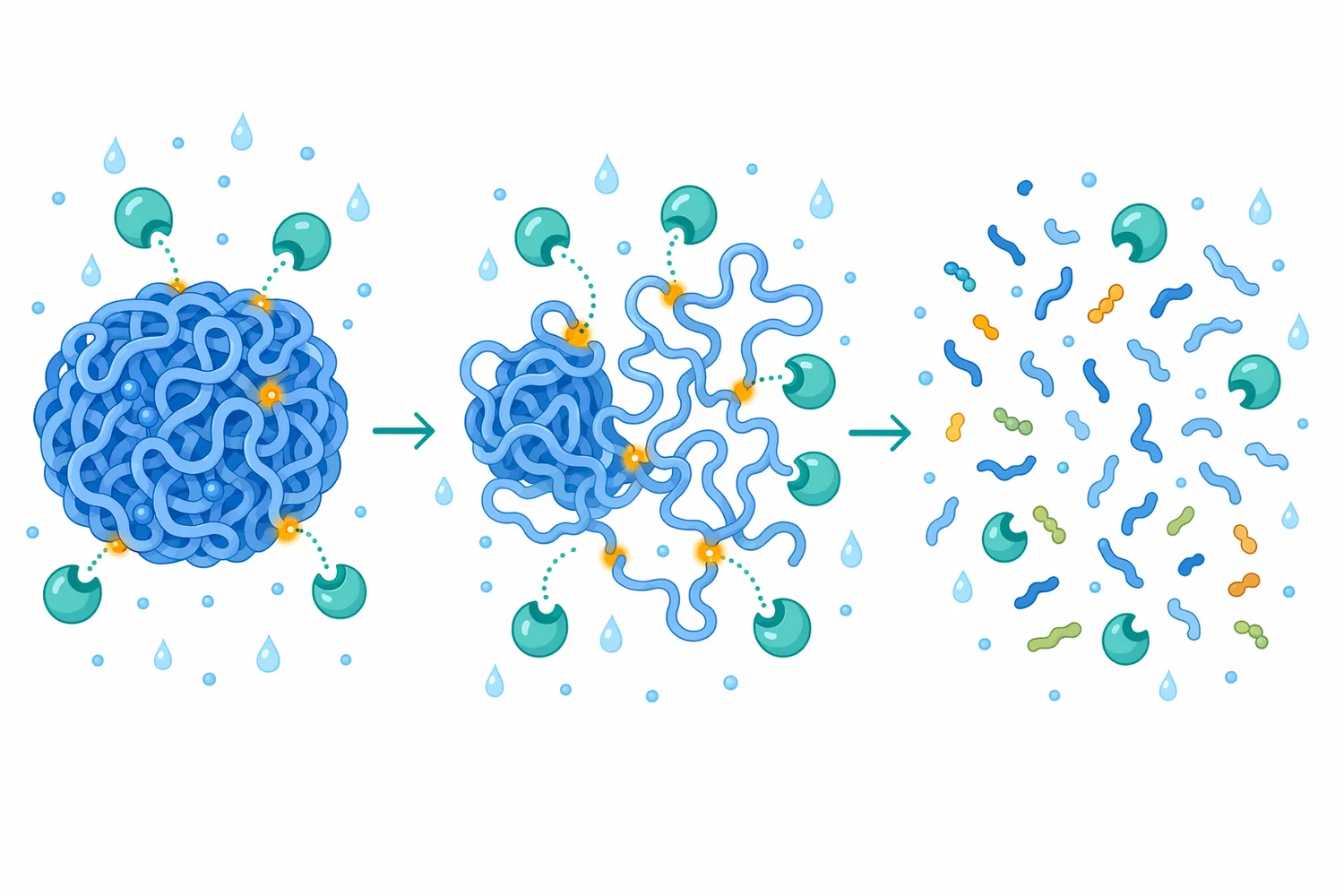
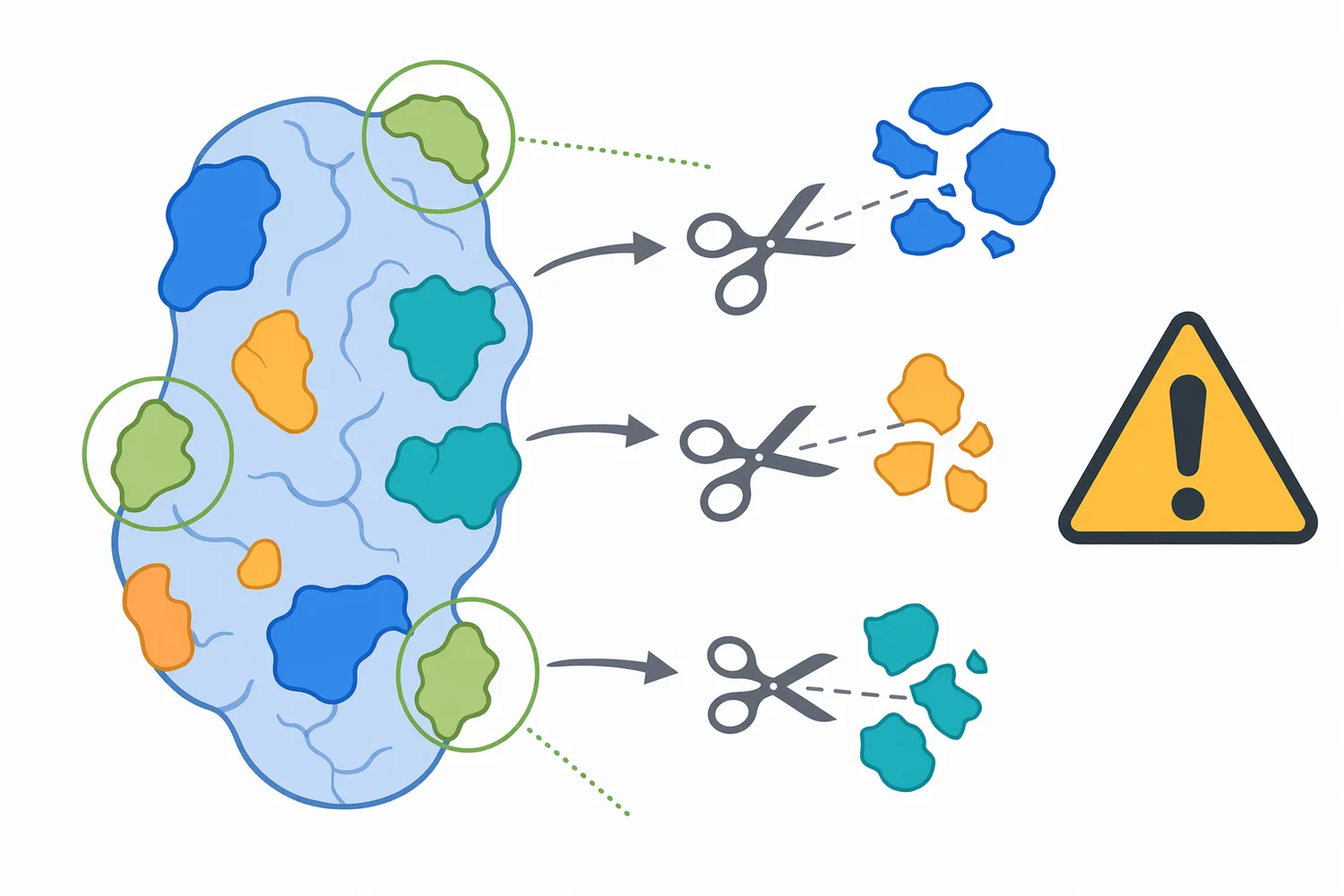
Intact soy proteins are large macromolecules folded into compact and partially aggregated structures. In soy flour, soy protein concentrate, soy protein isolate, soybean meal, and okara-derived streams, the proteins are also embedded in a matrix that may include carbohydrate, fiber, lipids, minerals, phenolic compounds, and heat-denatured protein aggregates. Hydrolase treatment starts by attacking accessible peptide bonds on protein surfaces and exposed flexible regions; as cleavage proceeds, the protein unfolds further, exposing additional sites and generating shorter peptides that are less likely to behave like the original insoluble or high-viscosity protein network. Selective enzymatic hydrolysis studies on soybean protein isolate show that changing the hydrolysis pattern can alter structural properties and gel behavior, which is exactly why controlled cleavage is useful rather than simply destructive [2].
The practical result is a shift from “protein particles and networks” toward “peptide-rich dissolved or dispersible solids.” Smaller peptides can move more freely in water, hydrate faster, and contribute less to coarse sedimentation than large aggregated proteins. However, hydrolysis does not automatically make every soy system clear, neutral-tasting, or stable; the result depends on the starting substrate, previous heat history, extent of cleavage, and downstream processing. Research on dual hydrolysis of soybean emphasizes this point by linking hydrolysis strategy with functional properties and protein digestibility, showing that hydrolysis is a controllable modification rather than a single fixed outcome [3].
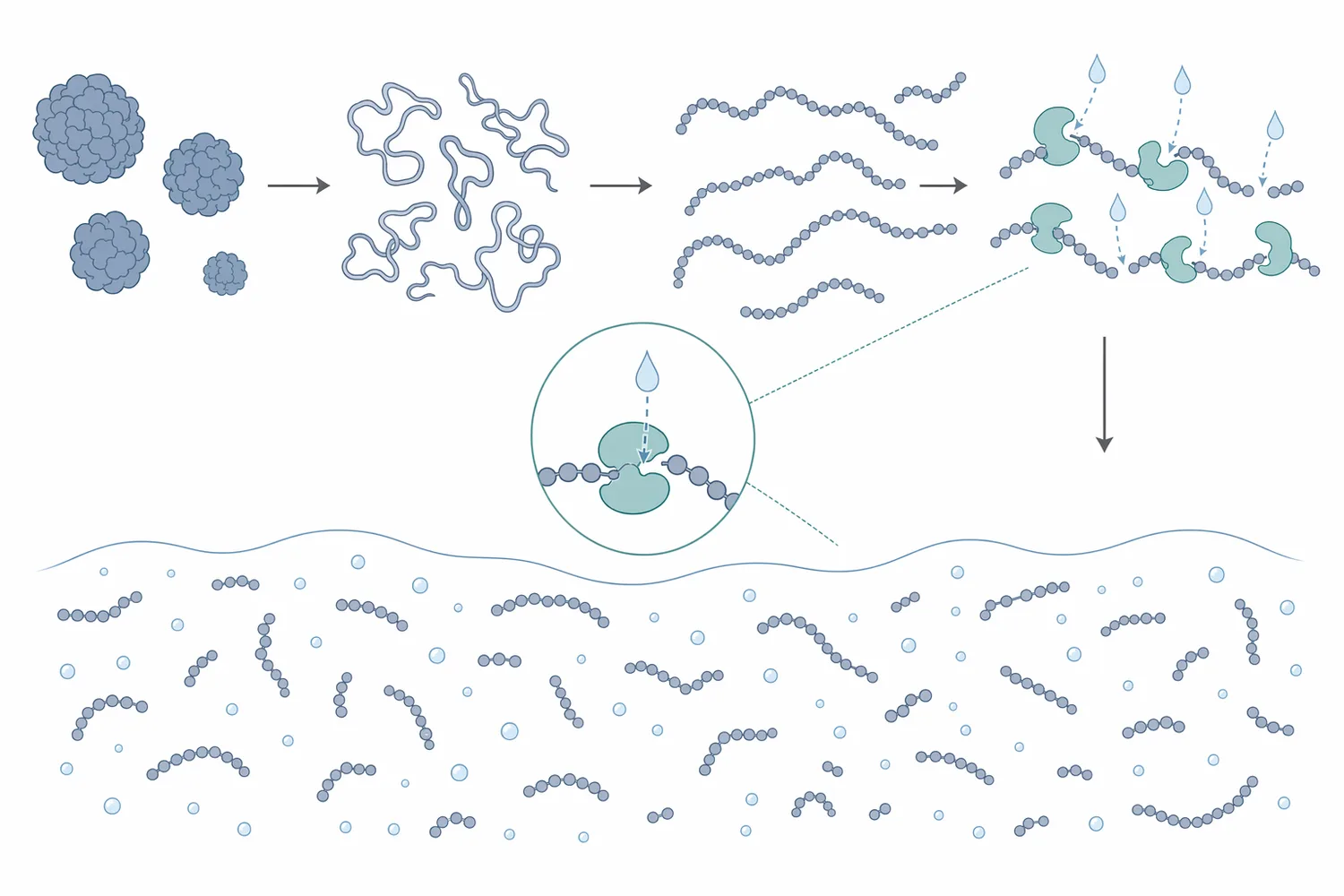
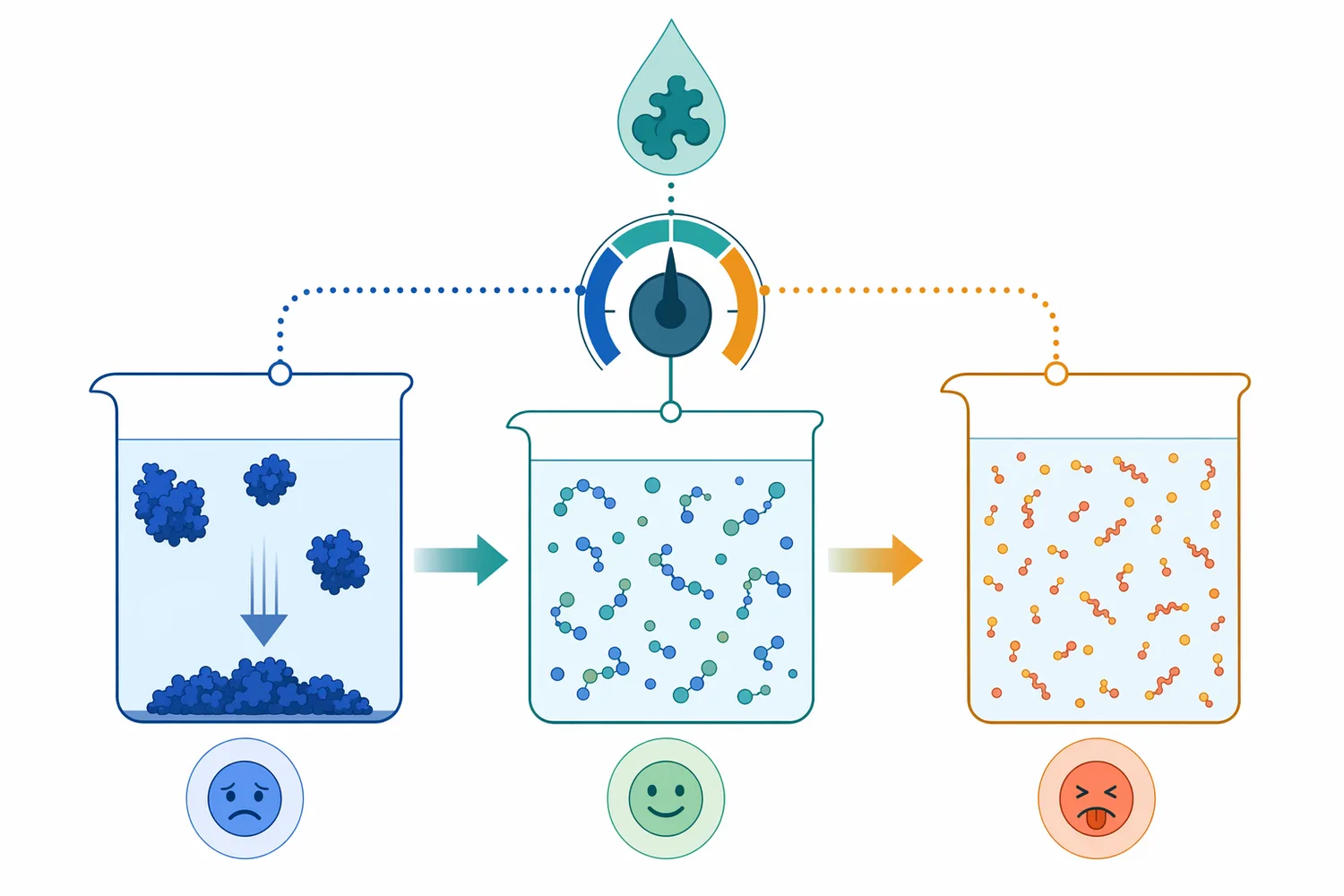
Water dispersibility improves when the soy protein structure no longer forms the same large, insoluble aggregates. Cleavage reduces chain length, breaks parts of the protein network, and increases the number of terminal amino and carboxyl groups, which can strengthen interaction with water. At the same time, hydrolysis can reveal hydrophobic amino acid patches that were previously buried inside the protein, and those hydrophobic patches can either help emulsification or contribute to bitterness and aggregation if the process is pushed too far. This balance is visible in research combining Alcalase hydrolysis with transglutaminase cross-linking, where structural modification of soybean protein hydrolysates was used to improve bitterness and techno-functional properties rather than relying on hydrolysis alone [4].
This is why soybean peptide hydrolase is best viewed as a precision tool for controlled functional change. A short, mild hydrolysis may loosen aggregates and improve hydration while retaining some body and gel-forming character. A more extensive hydrolysis may produce a more soluble peptide fraction but reduce gel strength or create stronger bitter notes if hydrophobic peptides accumulate. The science behind soy protein hydrolysates repeatedly shows that peptide sequence, size, and conformation matter; the enzyme does not just “make protein smaller,” it changes the surface chemistry and interaction behavior of the ingredient [4].
Digestibility changes because proteolysis partially pre-processes the protein before consumption or fermentation. When long protein chains are cleaved into shorter peptides, digestive enzymes have more chain ends and accessible sites to work on. In animal nutrition research, enzymatic hydrolysis processing of soybean meal altered the structure of the meal and changed in vitro protein digestive dynamics in pigs, supporting the general principle that hydrolyzed soy matrices can behave differently from untreated soy protein during digestion models [1].
For human food and nutrition applications, this does not mean a finished product automatically earns a health claim. It means the hydrolysis step can create a peptide-rich ingredient that is structurally closer to the fragments generated during digestion. Specific physiological outcomes depend on the final peptide profile, dosage in the food, the complete formulation, and applicable regulatory substantiation. Studies on soybean-derived peptides continue to identify antioxidant, hepatoprotective, antihypertensive, and other bioactive sequences, but those findings apply to characterized peptides or tested hydrolysates rather than every soy peptide ingredient made by hydrolysis [5].
Soy protein hydrolysis can be performed with different protease environments. Food Grade Water Soluble Soybean Peptide Hydrolase is positioned by Enzymes.bio as a food-grade, water-soluble enzyme for soy peptide processing; the table below gives a conceptual comparison of how acid, neutral, and alkaline protease approaches are generally understood in soy and plant-protein hydrolysis work, without implying that every commercial enzyme behaves identically .
| Protease environment | Conceptual role in soy protein hydrolysis | What tends to change in the substrate | Typical formulation implications |
|---|---|---|---|
| Acid protease conditions | Often associated with gastric-style protein breakdown or acidic food systems | Protein structures may unfold under acidic conditions, exposing cleavage sites; peptide release can resemble early digestive fragmentation | Useful conceptually for acidic beverages or digestion-oriented research, but sensory balance and solubility still need finished-product validation |
| Neutral protease conditions | Often used where processors want moderate hydrolysis without strongly acidic or alkaline treatment | Can reduce protein size while preserving more natural color and flavor context in some systems | May support beverages, powders, fermented foods, and savory bases where a balanced hydrolysate is desired |
| Alkaline protease conditions | Often associated with strong protein solubilization and extensive peptide release | Can rapidly open protein structures and generate lower-molecular-weight peptides; may also increase bitter peptide formation if not controlled | Can be powerful for producing soluble hydrolysates, but taste, viscosity, and downstream stabilization become important |
The key lesson from soybean hydrolysis literature is that the enzyme environment shapes the peptide profile. Alcalase-based hydrolysis, for example, has been studied for soybean protein hydrolysates, and when combined with transglutaminase cross-linking it improved bitterness and techno-functional behavior through structural modification [4]. Dual hydrolysis approaches have also been investigated as a way to tune functional properties and digestibility, reinforcing that the processing route—not merely the soybean raw material—drives the final ingredient behavior [3].
Protein beverages are one of the clearest uses for soybean peptide hydrolase because beverage systems expose every weakness of intact soy protein: slow hydration, sedimentation, heat instability, chalky mouthfeel, and high viscosity at elevated protein levels. Hydrolysis helps by reducing the average size of the protein material and increasing the proportion of smaller peptides that remain dispersed. The product page for Food Grade Water Soluble Soybean Peptide Hydrolase identifies soluble protein beverages among the relevant application areas for this enzyme .
Mechanistically, beverage performance improves when large protein aggregates are broken before they can settle or form coarse particles. Smaller peptides create less three-dimensional network structure than intact globular proteins, which can reduce viscosity and improve pourability. At the same time, excessive cleavage may thin the beverage too much or introduce bitter notes, so the hydrolysis step is normally integrated with flavor design, heat treatment, filtration or separation, and final stabilization. Selective enzymatic hydrolysis research on soybean protein isolate demonstrates that gel and structural properties change with hydrolysis, showing why beverage processors use hydrolysis to steer texture rather than simply maximize cleavage [2].
In sports and active-nutrition formats, soy peptide hydrolysates are used mainly for process and formulation reasons: faster wetting, easier dispersion, reduced lumping, and compatibility with high-solids powder blends. A hydrolyzed soy fraction can disperse differently from intact soy protein isolate because it contains shorter peptides with more accessible charged and polar groups. Enzymes.bio lists sports nutrition as an application area for this food-grade soybean peptide hydrolase product .
The nutrition science around soy peptides is promising but should be handled carefully. Individual soybean peptides and defined hydrolysate fractions have been studied for antioxidant or other biological activities, including enzymatically prepared antioxidant soybean peptides investigated for protection against lead-exposure-related toxicity in experimental models [5]. Those studies support scientific interest in soy peptides, but the processing value of soybean peptide hydrolase remains the primary point: it enables the production of peptide-rich soy ingredients whose final nutritional claims must be based on the actual finished product.
Nutritional powders, meal replacements, soups, sauces, and high-protein food systems need protein ingredients that hydrate predictably and do not destabilize the finished texture. Soybean peptide hydrolase can help create protein hydrolysate fractions that blend into dry mixes and reconstitute with fewer coarse particles. Enzymes.bio includes nutritional formulations among the product’s application areas .
Hydrolysis changes how the ingredient behaves with other components. In a starch-containing matrix, for example, soybean peptides can interact with starch during heat-moisture treatment and change structural, physicochemical, and digestibility properties of starch–soybean peptide complexes [6]. That matters in real foods because soy peptides are rarely used alone; they are mixed with starches, fibers, sugars, salts, fats, minerals, flavors, and stabilizers. The enzyme step therefore influences not only the soy fraction but the behavior of the full food matrix.
Fermented soy foods depend on protein breakdown, microbial metabolism, amino nitrogen availability, and flavor precursor formation. Hydrolyzing soy protein before or during a compatible process can increase the pool of peptides and amino acids available to microbes and enzymatic reactions. Enzymes.bio identifies fermented soy foods as an application area for Food Grade Water Soluble Soybean Peptide Hydrolase .
The mechanism is straightforward: microbes do not use intact soy protein as easily as small peptides and amino acids. Hydrolysis opens the protein structure and releases nitrogen sources that can support fermentation pathways, depending on the organism and process. Reviews of fermented soybean foods describe functional components, mechanisms of action, and factors influencing health benefits, while also making clear that fermentation outcomes depend on microbial species, substrate composition, and processing conditions [7].
Savory systems may also benefit because peptides and free amino acids contribute to taste. Hydrolysis can release glutamate-containing, phenylalanine-containing, and other taste-active fragments, while also producing hydrophobic peptides that may taste bitter. This is why controlled hydrolysis and, in some cases, secondary modification such as cross-linking are studied for bitterness management in soybean hydrolysates [4].
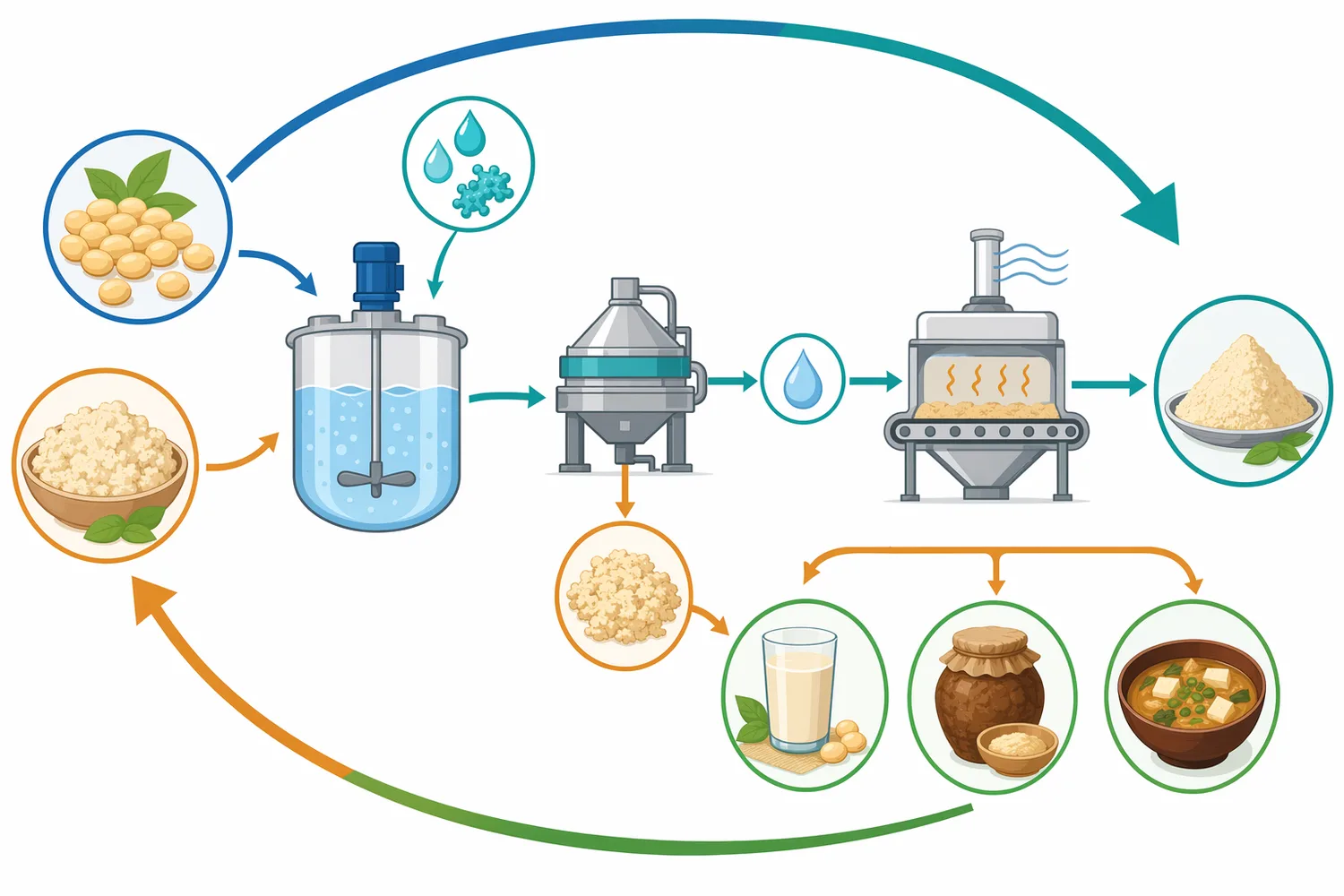
Soybean processing generates substantial side streams, including soybean meal and okara, that still contain useful protein. Soybean peptide hydrolase can support the conversion of these lower-functionality materials into more dispersible hydrolysate fractions for food or feed-related ingredient development where permitted by the application. Recent reviews on soybean by-products describe their potential for sustainable waste processing and health-oriented ingredient development, highlighting the value of converting underused soy streams into higher-value materials [8].
New applications of soybean residues in food development are an active research area because these streams are abundant and often underutilized. Enzymatic hydrolysis is attractive because it can work in aqueous systems and can be integrated with separation, fermentation, drying, and blending. A review on soybean residues in food development supports the broader trend of using soy side streams as functional food resources rather than treating them only as low-value waste [9].
Soybean meal is also important in animal and fermentation contexts. Reviews of fermented soybean meal describe how fermentation and enzymatic processes can improve the quality of soybean meal as a protein source for livestock and poultry, including changes in antinutritional factors, digestibility, and microbial effects [10]. For food processors, the same underlying principle applies: modifying the soy protein matrix can unlock functionality that is not available in the untreated material.
Bitterness is one of the most important sensory risks in protein hydrolysates. It is not caused simply by “hydrolysis” in the abstract; it is caused by the release and accumulation of certain peptide sequences, especially fragments with exposed hydrophobic residues that bind strongly to bitter taste receptors. If hydrolysis is too limited, the ingredient may remain poorly soluble; if it is too extensive or poorly balanced, the hydrolysate may become more bitter even as solubility improves. Research on soybean protein hydrolysates has specifically addressed bitterness improvement through combined Alcalase hydrolysis and transglutaminase cross-linking, showing that structural modification can influence both sensory and techno-functional behavior [4].
In application terms, this means soybean peptide hydrolase should be used as part of a finished formulation strategy. Sweet beverages, neutral nutrition powders, savory bases, and fermented foods tolerate different peptide profiles. A peptide fraction that is acceptable in a savory fermented product may be too bitter for a lightly flavored beverage, while a mild hydrolysate suitable for beverages may not generate enough amino nitrogen for a fermentation target. The enzyme creates the opportunity to tune the soy protein material, but the final taste comes from the complete formulation.
Soy is a regulated allergen in many markets, and enzymatic hydrolysis should not be presented as a universal allergen-elimination method. Proteolysis can break some allergenic protein structures and epitopes, but residual allergenic fragments may remain, and some allergens are stable under food-processing conditions. Research on the soybean allergen Gly m 6 examined its stability in food processing using advanced analytical detection, underscoring that allergen behavior must be evaluated in the specific processed food rather than assumed from the presence of an enzyme step [11].
For food producers, the practical conclusion is conservative: hydrolysis may reduce or modify certain protein epitopes in a controlled product, and hypoallergenic soybean protein hydrolysates have been studied, but allergen labeling and claim decisions must be based on applicable regulation and finished-product evidence. The enzyme’s role is to hydrolyze soy protein; it should not be treated as a standalone allergen-control guarantee.
Soybean peptides are widely studied for biological activities, including antioxidant, hepatoprotective, antihypertensive, antimicrobial, and immune-related effects. Examples include soybean meal-derived antioxidant peptides studied under oxidative-stress models, soybean peptide sequences investigated for vascular endothelial protection, and soybean peptide supplementation examined in animal nutrition contexts [12]. This research is valuable because it explains why soy peptide production is scientifically interesting beyond basic solubility.
However, the presence of hydrolyzed soy protein does not prove that a finished food contains the same active sequence at an effective level. Peptide bioactivity depends on exact amino acid sequence, resistance to digestion, absorption, dose, food matrix, and biological endpoint. Work on absorbed soybean peptides with hepatoprotective effects, for example, points to the importance of specific sequence motifs rather than generic “soy peptide” identity [13]. For commercial foods, any health-oriented statement should be built on the characterized finished product and the rules of the target market.
The strongest support for Food Grade Water Soluble Soybean Peptide Hydrolase is technological: soybean proteins are structurally modified by enzymatic hydrolysis, and that modification changes solubility, gel behavior, digestibility, and processing performance. Selective enzymatic hydrolysis of soybean protein isolate has been studied specifically for structural and gel properties, making it directly relevant to food textures where soy proteins contribute body, water holding, and network formation [2].
Soybean meal research adds support for side-stream processing. Enzymatic hydrolysis of soybean meal has been shown to alter structure and in vitro protein digestive dynamics in pigs, which supports the idea that hydrolysis changes both the physical and nutritional behavior of a soy protein matrix [1]. This is particularly relevant when processors are working with meal-derived proteins or other less refined soy streams rather than highly purified isolates.
The literature also shows that hydrolysis route matters. Dual hydrolysis of soybean has been studied as a sustainable approach for changing functional properties and protein digestibility, indicating that multiple enzyme actions or staged hydrolysis can produce different outcomes from a single treatment [3]. For buyers using a ready-to-purchase enzyme product, the practical takeaway is that soybean peptide hydrolase provides a route into controlled hydrolysis; the finished ingredient properties still come from the complete processing system.
There is also specific evidence that commercial protease concepts can produce highly hydrolyzed soybean peptide fractions. Immobilized Flavourzyme has been studied for producing soybean peptide with a high degree of hydrolysis, supporting the general feasibility of enzyme-based soybean peptide production [14]. While that study does not define this Enzymes.bio product, it reinforces the broader processing logic behind soy peptide hydrolases.
Fermentation research supports another application path. Fermented soybean foods contain functional components shaped by microbes, enzymes, substrate composition, and processing conditions; reviews emphasize that the health and quality outcomes of fermented soy depend on multiple factors rather than fermentation alone [7]. A soybean peptide hydrolase can contribute peptide and amino acid precursors, but the microbial culture and food matrix determine the final sensory and functional result.
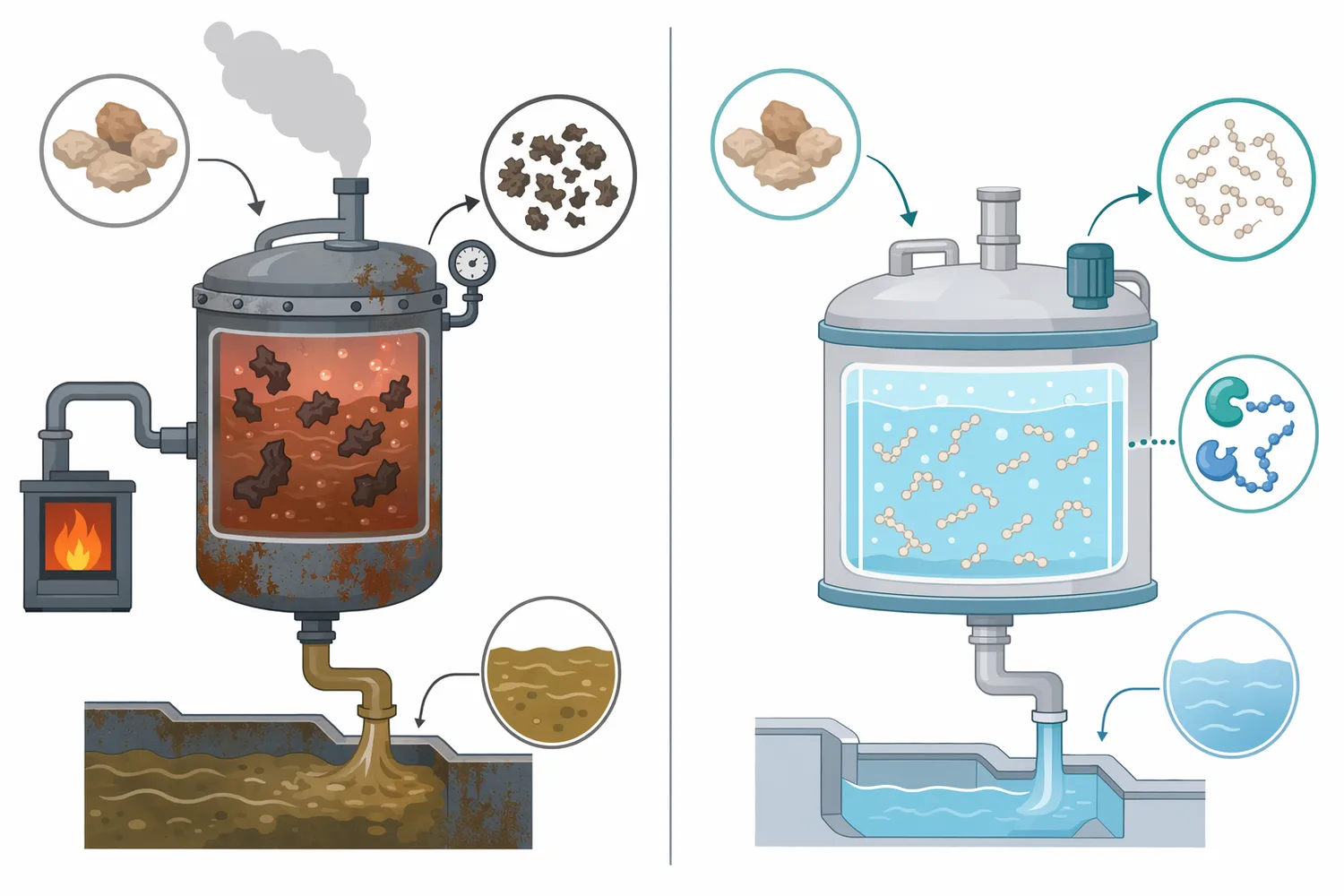
In a typical workflow, the soy material is dispersed in water, mixed until the protein phase is accessible, treated with the hydrolase under controlled food-processing conditions, and then processed further by heat treatment, separation, concentration, drying, fermentation, or blending. The visible changes during processing may include lower viscosity, fewer insoluble particles, improved hydration, changed foaming or emulsifying behavior, and a different flavor profile. Enzymes.bio positions this product as water-soluble and food-grade, which supports its use in aqueous soy protein processing systems .
The mechanism explains why order of operations matters. If soy protein is poorly hydrated before enzyme addition, parts of the substrate remain inaccessible and hydrolysis becomes uneven. If the material has already been heavily heat-denatured, aggregation may shield cleavage sites while also exposing others. If hydrolysis continues too far, the ingredient may lose structure or become bitter. These effects are consistent with soybean protein isolate studies showing that selective hydrolysis changes structural and gel properties rather than simply improving every property in the same direction [2].
Downstream processing also changes the final ingredient. Heating can stop enzymatic activity and denature remaining proteins; filtration or centrifugation can remove insoluble residue; drying can affect rehydration; fermentation can consume peptides and amino acids; blending with starch or minerals can create new interactions. Research on starch–soybean peptide complexes shows that soybean peptides can participate in matrix-level changes during heat-moisture treatment, which is important for real foods where peptides interact with other macromolecules [6].
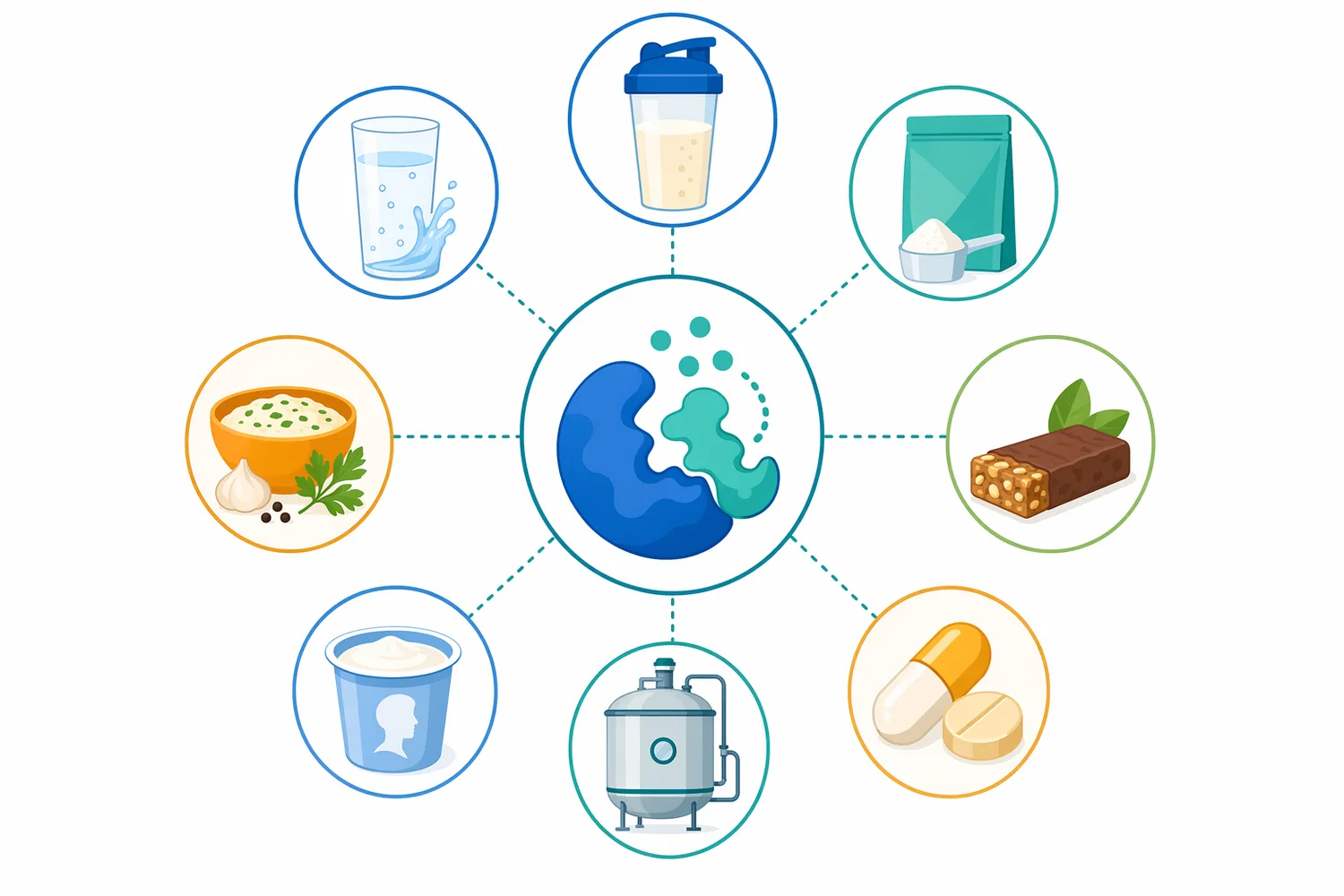
Food Grade Water Soluble Soybean Peptide Hydrolase is most relevant where the process goal is to make soy protein easier to use in water-rich or reconstituted systems. That includes soluble protein beverages, powdered nutrition blends, plant-protein drinks, fermented soy foods, savory bases, specialized foods, and soy by-product valorization. Enzymes.bio lists several of these application areas on the product page, including soluble protein beverages, sports nutrition, nutritional formulations, fermented soy foods, and specialized foods .
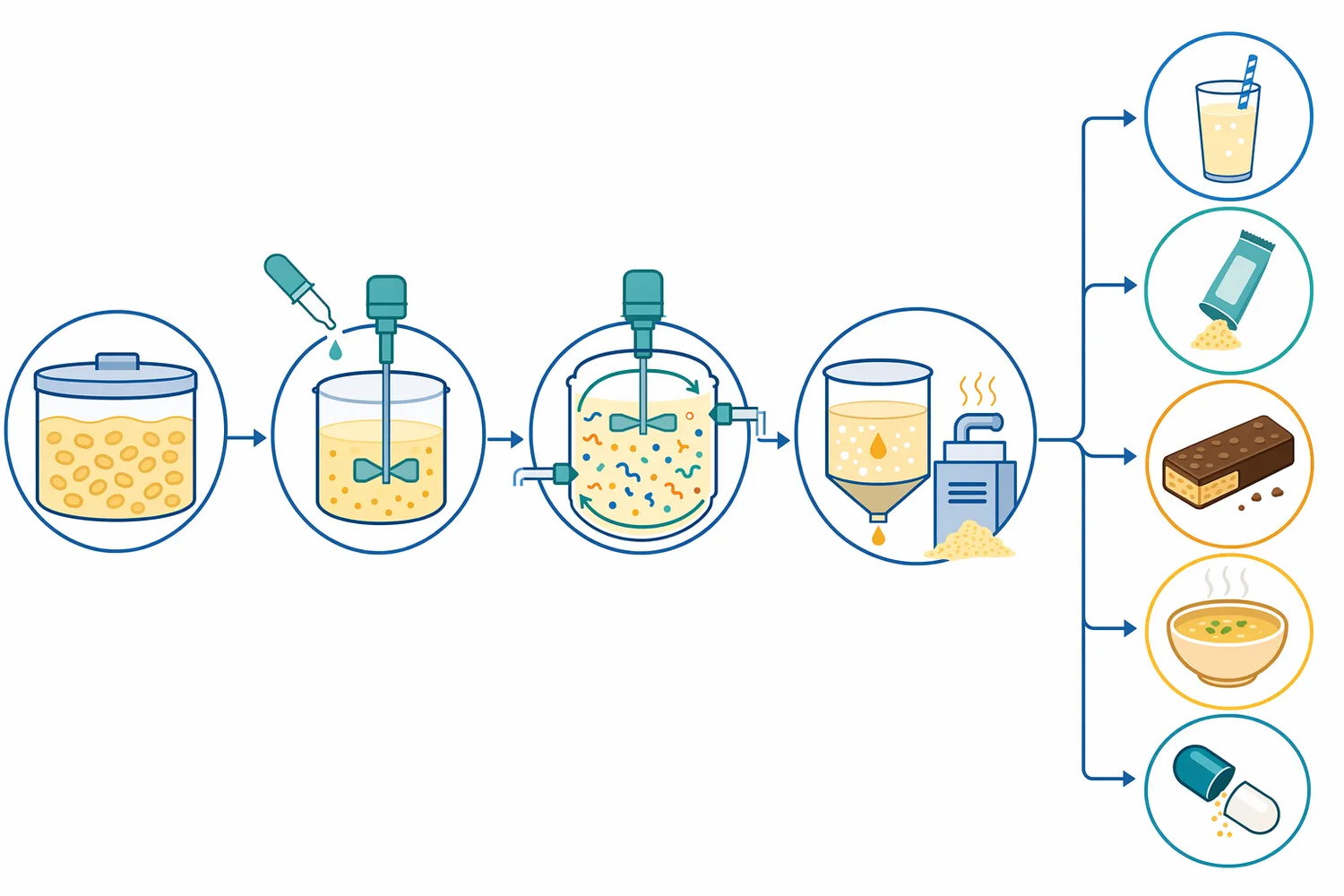
The realistic benefit is process enablement. The enzyme helps convert difficult soy protein structures into peptide-rich fractions that may disperse more easily, digest differently, support fermentation, or interact differently with starches and other ingredients. It does not, by itself, guarantee a clear beverage, a non-bitter hydrolysate, an allergen-free product, or a regulated health claim. Studies on soybean peptides show promising bioactivities, but those effects are tied to defined peptide sequences and validated biological models [15].
For buyers who already know they need a food-grade soybean peptide hydrolase, the online purchase model is straightforward: the product is sold directly by Enzymes.bio in 1 kg units, payment is completed online, and the order is processed and shipped. A Certificate of Analysis and Safety Data Sheet are supplied with the order, supporting routine receiving and documentation needs for food-processing use .
Food Grade Water Soluble Soybean Peptide Hydrolase is a practical enzyme for producing soy peptide hydrolysates from soy protein substrates. It works by cleaving peptide bonds, reducing protein size, opening the protein structure, and changing the way soy-derived material hydrates, disperses, gels, ferments, and digests. The strongest evidence supports its processing role: enzymatic hydrolysis of soybean protein and soybean meal changes structure, functional properties, and digestibility behavior [1].
The value is highest in applications where intact soy protein creates formulation limits—beverages that need better dispersion, nutrition powders that need faster hydration, fermented foods that benefit from peptide nitrogen, savory systems where peptide flavor precursors matter, and by-product streams that need conversion into higher-value ingredients. Enzymes.bio supplies Food Grade Water Soluble Soybean Peptide Hydrolase online in 1 kg units for buyers ready to use a food-grade, water-soluble enzyme in soy peptide processing .
Sold by the 1 kg unit, in stock and ready to ship. Order directly on our store — pay online and we process your order. A Certificate of Analysis and Safety Data Sheet are included with every order.
Buy Food Grade Water Soluble Soybean Peptide Hydrolase →Numbered in order of first citation. Open-access sources, each verified reachable at publication; citation numbers in the text link here.