
Fungal alpha amylase is a bakery enzyme used to convert part of flour starch into smaller carbohydrates during dough processing. In bread, that controlled starch breakdown gives yeast more fermentable substrate, supports gas production and loaf expansion, and leaves sugars that can improve crust colour and flavour during baking.
Enzymes.bio supplies fungal alpha amylase powder directly online by the 1 kg unit. Buyers place and pay for the order online; the order is then processed and shipped, with a Certificate of Analysis and Safety Data Sheet included.
Fungal alpha amylase belongs to the amylase family of starch-converting enzymes. In dough, its main substrate is starch from wheat flour or other cereal and tuber flours. Starch is present mostly as granules made from amylose and amylopectin; alpha amylase acts by cutting internal α-1,4 glycosidic bonds in those starch chains, reducing large, relatively inaccessible polymers into shorter dextrins and sugars that can participate in fermentation and baking reactions. Research specifically addressing the bread-improving mechanism of fungal alpha amylase has treated this controlled starch hydrolysis as central to its value in bread systems [1].
The practical reason this matters is that yeast does not ferment intact starch granules efficiently. Yeast ferments smaller sugars, while flour starch must first become available through flour damage, hydration, endogenous cereal enzymes, added malt, or added amylase. Fungal alpha amylase helps bridge that gap by steadily releasing fermentable carbohydrates during mixing, resting and proofing, rather than depending only on sugars already present in the recipe. Reviews of starch-based functional ingredients in baking describe starch modification as a major route for improving dough and baked-product quality because starch strongly controls viscosity, expansion, crumb setting and eating texture [2].
Fungal alpha amylase is valued in bread because its action is strong enough to influence fermentation and crumb quality but is normally curtailed by oven heat as the loaf bakes. That gives it a processing-aid character: it acts while the dough is being transformed, then its catalytic role declines as the crumb structure sets. Food-processing guidance on enzymes in bakery applications describes enzymes as tools used to improve process performance and product quality, with heat processing limiting their activity in the finished food [3].
During mixing, flour hydrates and starch granules begin to interact with water. Some starch is mechanically damaged during milling, and that damaged fraction is much more accessible to amylase than intact crystalline granules. Fungal alpha amylase can attack these accessible starch regions, producing maltose-rich and dextrin-rich fractions that reduce the dependence of fermentation on added sugars alone. This is why amylase effects are often most visible in dough systems where flour enzyme activity or fermentable sugar availability is low.
During fermentation and proofing, yeast consumes the sugars that are available in the dough liquor phase. As fungal alpha amylase continues to generate smaller carbohydrates from starch, yeast has a steadier supply of substrate for carbon dioxide production. That carbon dioxide inflates gas cells already created during mixing; if the gluten-starch matrix can hold those gas cells, the dough expands into a larger loaf. Studies on fungal alpha amylase for baking have focused precisely on this link between enzyme-driven sugar release, dough expansion and bread quality [4].
The enzyme’s effect is not limited to “more gas.” Starch hydrolysis also changes dough viscosity and the behaviour of the aqueous phase around starch, gluten and pentosans. Shorter dextrins bind and release water differently from intact starch polymers; this can affect dough stickiness, extensibility, gas-cell wall thickness and crumb tenderness. The bread-improving mechanism study by Pritchard examined fungal alpha amylase in relation to these practical bread-quality changes, showing that the mechanism is more than a simple addition of sweetness [1].
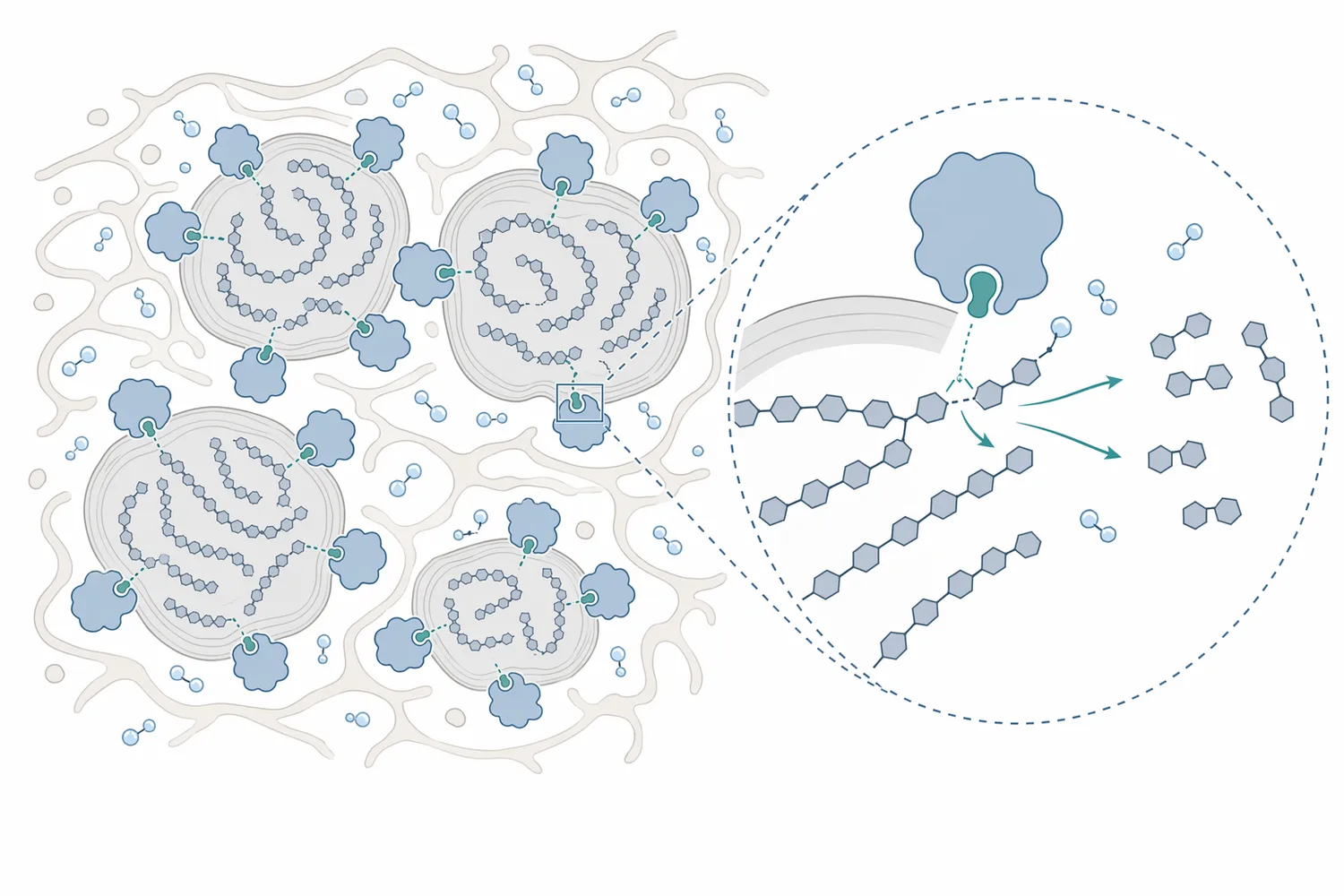
During baking, starch gelatinisation and protein setting create the final crumb. As temperature rises, starch granules swell and lose ordered structure, making starch temporarily more accessible; alpha amylase may continue acting during early heating until heat inactivation becomes dominant. The sugars and dextrins produced before inactivation then remain in the loaf system, contributing to crust browning, crumb softness and the way the crumb firms during cooling and storage. Research on maltogenic alpha amylase and maize starch retrogradation illustrates the same broad principle: enzyme-modified starch chains can change the reassociation behaviour that contributes to firming [5].
Flour quality varies naturally. Grain variety, growing conditions, sprouting history, milling intensity and flour treatment can all influence damaged starch and endogenous enzyme activity. When fermentable sugar generation is insufficient, yeast performance may be slower or less consistent, especially in lean doughs where there is little added sugar. Fungal alpha amylase supports fermentation by creating a more continuous supply of small carbohydrates from starch.
The effect is especially useful in production environments where proofing time and finished volume need to stay predictable from batch to batch. The enzyme does not replace yeast and does not create gas by itself; it improves the carbohydrate supply available to yeast. Studies of dough proofing and steaming that included fungal alpha amylase show why the enzyme is considered part of fermentation management rather than only a crumb improver [6].
Bread volume depends on both gas production and gas retention. Fungal alpha amylase mainly supports the gas-production side by providing fermentable sugars, while the dough’s gluten network, starch behaviour and emulsifier or hydrocolloid system determine how well that gas is retained. If starch conversion is too low, expansion can be limited by yeast substrate; if conversion is excessive, gas cells can become unstable and crumb may weaken.
In grain amaranth–wheat blended bread, fungal alpha amylase has been studied together with ascorbic acid for optimisation of loaf quality, showing its relevance when non-standard flour blends alter fermentation and structure formation [7]. This is important because composite flours often dilute gluten, change water absorption and alter starch availability; controlled amylase action can help compensate for part of the fermentation limitation while other ingredients support structure.
Fresh bread softness depends strongly on the state of gelatinised starch, moisture distribution and the integrity of the gas-cell walls. As bread cools and is stored, starch molecules reassociate in a process commonly described as retrogradation. This reassociation contributes to crumb firming. Amylase-modified starch fragments can interfere with some of that reassociation and can change the balance between firm starch networks and softer dextrin-rich regions.
The strongest anti-staling literature often discusses maltogenic amylases, but conventional alpha amylases are still relevant because they shape the starch-degradation profile before and during baking. High hydrostatic pressure pre-treatment research on maltogenic alpha amylase and maize starch demonstrates how multi-level starch structure and enzymatic modification can influence retrogradation properties, which is the same physical phenomenon behind much of bread staling [5].
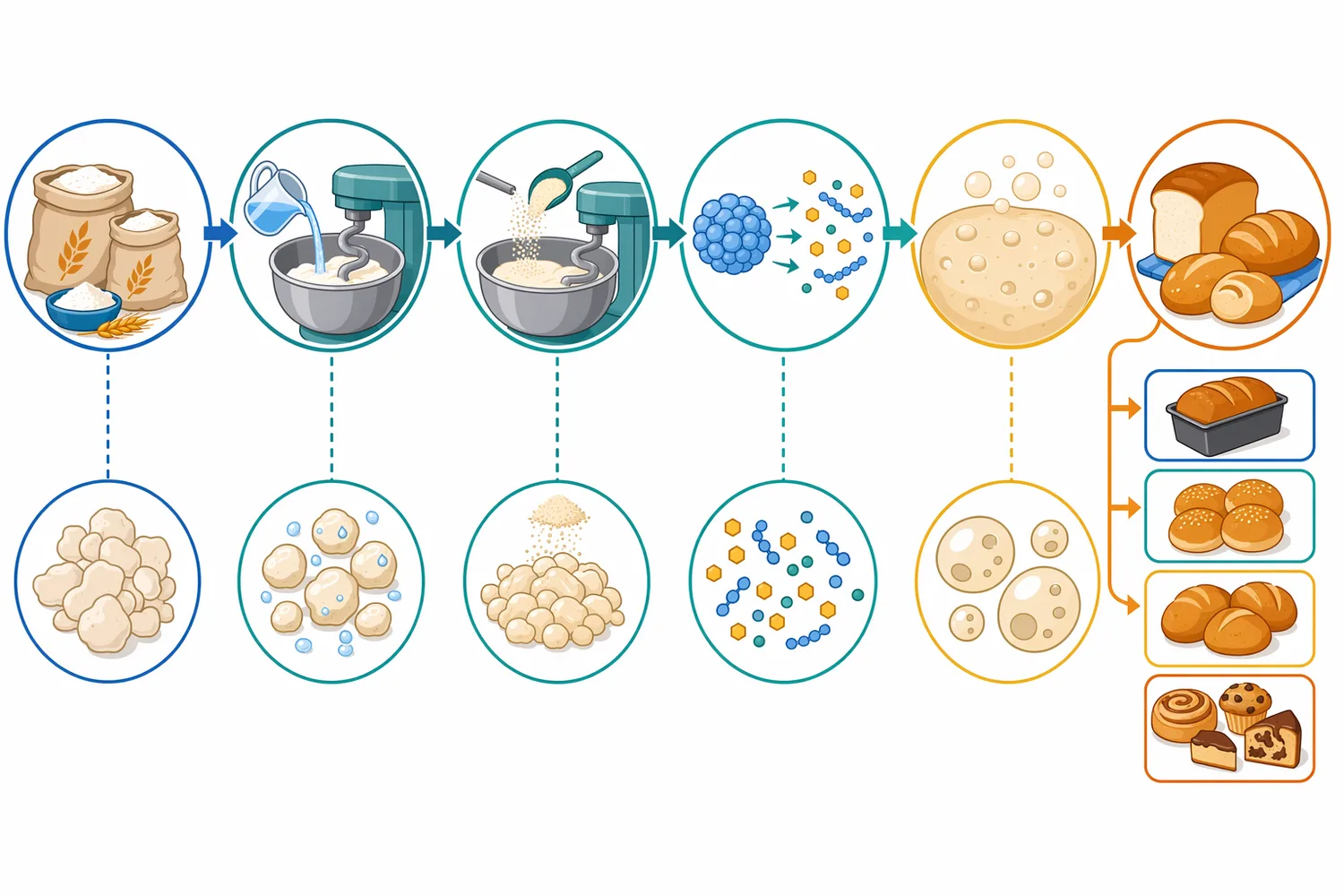
Crust browning depends partly on reducing sugars and amino compounds participating in Maillard reactions. If little sugar remains after fermentation, crust colour can be pale and flavour development may be weaker. By generating sugars from starch during processing, fungal alpha amylase can leave more browning substrate available at the dough surface during baking.
This does not mean the enzyme is a flavouring ingredient. It changes the carbohydrate pool that thermal reactions can use. In practical bread making, that often appears as a more even crust colour, better baked aroma and a less “flat” visual appearance, particularly in lean breads where added sugar is limited.
A well-balanced alpha amylase effect can help produce a more uniform crumb because gas production and starch gelatinisation are better matched to dough expansion. If fermentation is underpowered, crumb can be tight and dense. If starch is over-hydrolysed, crumb can become weak, gummy or overly sticky. The desirable zone is controlled hydrolysis: enough sugar and dextrin formation to support expansion and tenderness, but not so much that the structure loses strength.
Research on wheat breads treated with alpha amylase and cellulase has examined physical, nutritional and sensory properties, reflecting how enzyme action can be evaluated through the finished bread rather than only through the dough stage [8]. This matters because the final quality target is not maximum starch breakdown; it is balanced eating quality, volume, resilience and process reliability.
Fungal alpha amylase is often discussed alongside other bakery enzymes, but each enzyme class acts on a different substrate and creates a different physical change. The table below compares common enzyme functions at a practical level.
| Enzyme type | Main substrate in dough | What the enzyme changes | Typical bread-quality contribution | What imbalance can look like |
|---|---|---|---|---|
| Fungal alpha amylase | Starch, especially accessible or damaged starch | Cuts starch chains into shorter dextrins and fermentable sugars | Supports yeast fermentation, volume, crust colour and crumb softness | Sticky dough, gummy crumb or weak structure if starch breakdown is excessive |
| Maltogenic amylase | Gelatinised starch during baking | Produces maltose-rich fragments and modifies retrogradation behaviour | Stronger anti-firming and shelf-life effects in many bread systems | Over-soft or tacky crumb if not balanced |
| Xylanase | Arabinoxylans and other hemicellulose fractions | Changes water binding and dough viscosity | Better handling, volume and crumb in wheat and high-fibre breads | Over-relaxed or sticky dough if excessive |
| Protease | Gluten proteins | Partially hydrolyses protein network | Softer dough, improved extensibility in specific applications | Weak dough, poor gas retention or collapsed structure |
| Oxidative enzymes such as laccase | Phenolic or protein-associated components depending on system | Promotes cross-linking or oxidative structural changes | Can strengthen or modify dough structure, especially in rye or fibre systems | Tight, tough or process-sensitive dough if unbalanced |
The comparison is useful because alpha amylase is sometimes expected to solve problems that actually arise from gluten strength, fibre water binding or dough oxidation. For example, xylanases are often central in high-fibre or whole-grain systems because arabinoxylans strongly affect water distribution, while alpha amylase remains focused on starch conversion and sugar release. Rye bread studies with fungal laccases also show that non-amylase enzymes can alter bread quality through completely different mechanisms from starch hydrolysis [9].
Fungal alpha amylase has a long record in wheat bread, where gluten provides the main gas-retaining network and starch provides the major gelatinising phase. In this system, the enzyme’s contribution is relatively direct: it increases the availability of fermentable carbohydrates and modifies the starch fraction that later sets into crumb. Work on fungal alpha amylase mechanisms in bread supports this classic bakery use case [1].
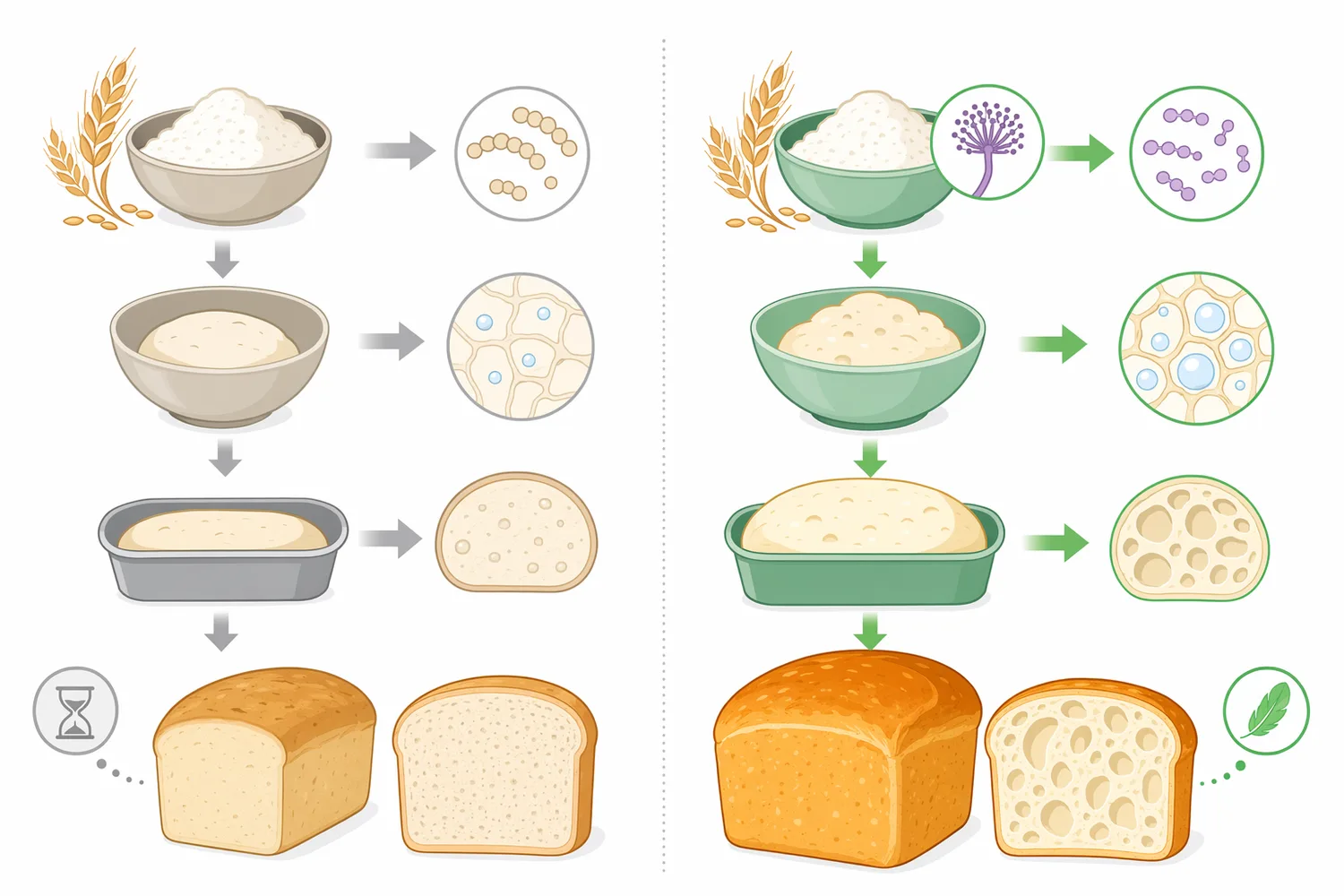
Composite breads can benefit from alpha amylase because replacing part of wheat flour with amaranth, cassava, rice or other flours changes both starch composition and gluten dilution. In grain amaranth–wheat bread, fungal alpha amylase and ascorbic acid were studied together, reflecting a common formulation reality: one ingredient supports fermentation and starch conversion, while another supports dough strength and gas retention [7]. That pairing is logical because better gas production only improves loaf volume if the dough matrix can hold the gas.
Cassava–wheat bread provides another example. Cassava flour contributes starch but no gluten, so the bread system has abundant carbohydrate but reduced elastic network strength. Optimisation work with cassava–wheat bread has examined alpha amylase together with xylanase, showing that starch conversion and non-starch polysaccharide modification can be complementary rather than interchangeable [10]. In such breads, alpha amylase can help fermentation, while xylanase can influence water distribution and dough handling.
Gluten-free bread systems are more formulation-dependent. Without wheat gluten, gas retention depends on starch gelatinisation, hydrocolloids, proteins, emulsifiers and process design. A study on gluten-free bread made with high-protein rice flour evaluated alpha-amylase effects on bread properties, confirming that the enzyme is relevant beyond conventional wheat bread but that its impact must be interpreted within the full structure-building system [11]. In gluten-free products, too much starch hydrolysis can be particularly risky because starch is often one of the main structural materials.
Thermal-enzymatic flour modification is also being studied for cleaner-label bread improvement. Research on conventional and hybrid thermal-enzymatic modified wheat flours as bread improvers reflects a broader movement toward using physical and enzymatic transformations of flour functionality rather than relying only on additive systems [12]. Fungal alpha amylase fits naturally into this trend because it changes the flour’s own starch functionality during processing.
The desirable function of fungal alpha amylase in bread is controlled starch conversion. More enzyme action is not automatically better. If too little starch is hydrolysed, yeast may lack fermentable sugars and the loaf can be small, pale or dense. If too much starch is hydrolysed, the dough can become slack or sticky, the crumb can set poorly, and the finished bread may feel gummy rather than soft.
Mechanistically, excessive hydrolysis reduces the molecular size of starch fragments too far. Long starch chains and swollen granules help create viscosity and crumb structure during baking; shorter dextrins contribute softness and fermentable sugars, but they do not build structure in the same way. The art of use is therefore not to “liquefy” the flour starch, but to release enough smaller carbohydrates to improve fermentation, browning and tenderness while leaving sufficient starch functionality for crumb setting.
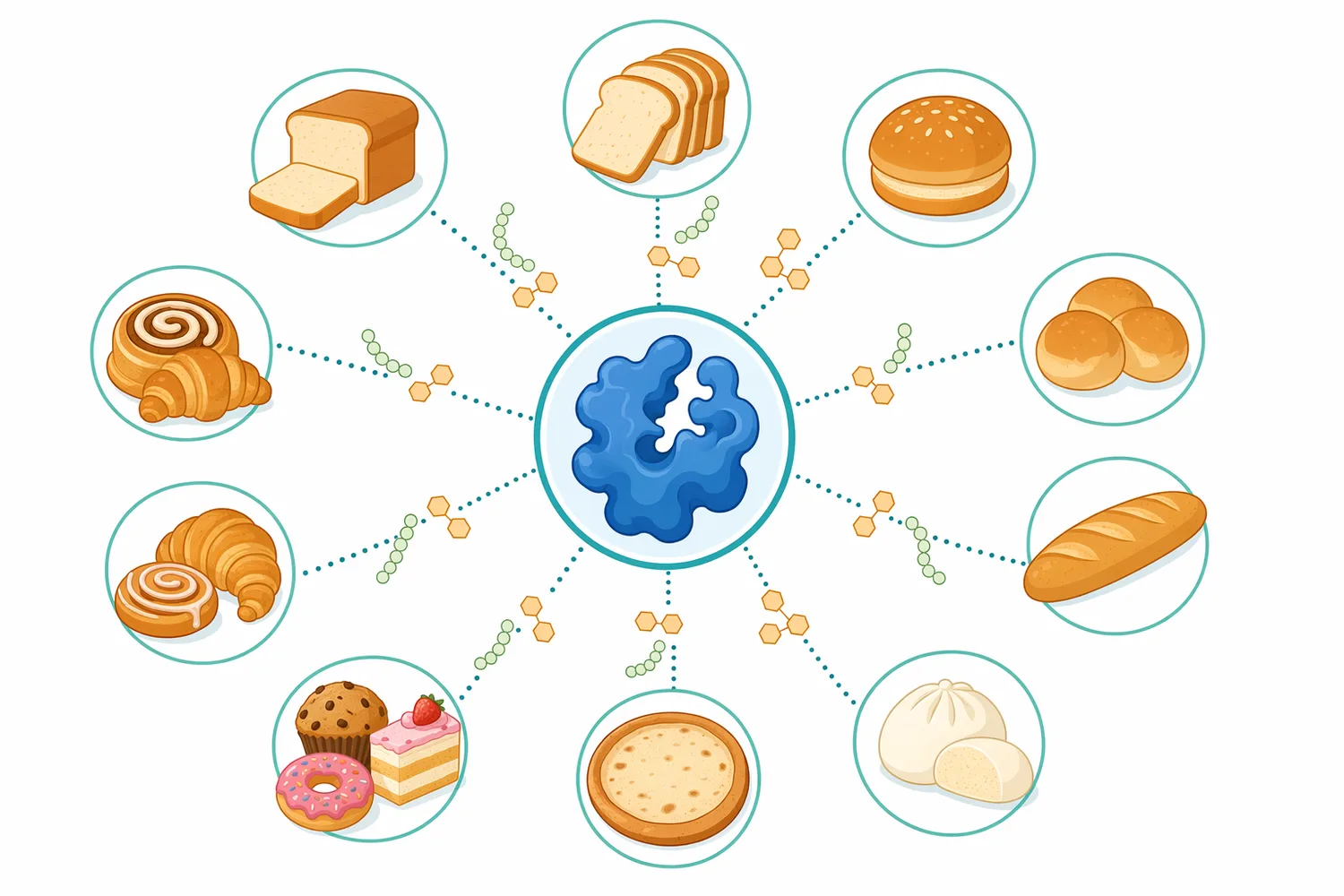
This balance is also why fungal alpha amylase is often only one part of a bread-improvement system. In high-fibre breads, water-binding fibres may need separate management. In weak flours, gluten strength may be limiting. In rich doughs, sugar and fat already influence yeast activity and crumb softness. Enzymatic modification of starch blends for gluten-free baked goods has been studied together with heat-moisture treatment, showing how starch behaviour is shaped by the full processing environment rather than enzyme identity alone [13].
Pan bread needs dependable proofing, controlled oven spring, fine crumb and softness after slicing. Fungal alpha amylase supports these targets by helping yeast generate gas and by modifying starch in a way that can reduce a dry or firm eating texture. Because sandwich bread quality is judged strongly by crumb resilience and slice softness, starch conversion can be commercially meaningful even when the change is not obvious during mixing.
In standard wheat pan bread, the most visible effects are typically loaf volume, more even crumb and improved crust colour. The enzyme’s contribution is most apparent when flour has limited natural amylase activity or when process time requires reliable sugar release over fermentation.
Rolls and buns often require soft crumb, even browning and predictable proof height. Fungal alpha amylase can support these features by improving fermentable sugar availability and leaving some carbohydrates for browning reactions. In sweeter or enriched formulas, the enzyme’s role may be less about providing all fermentable sugar and more about fine-tuning starch behaviour and crumb softness.
The effect must still be balanced with the formula. Sugar, fat, milk solids and emulsifiers already influence softness and colour, so fungal alpha amylase contributes within an existing system rather than acting alone.
Whole wheat and high-fibre breads are more complex because bran particles disrupt gluten continuity and fibre competes for water. Alpha amylase can still support fermentation by acting on accessible starch, but it does not directly solve fibre interference. In these breads, amylase may work alongside enzymes that target non-starch polysaccharides or alongside process changes that manage hydration.
The benefit is most practical when whole-grain doughs show slow fermentation, dense crumb or insufficient crust development. However, if the limiting issue is mechanical disruption from bran or weak gluten, starch conversion alone cannot fully correct the bread structure.
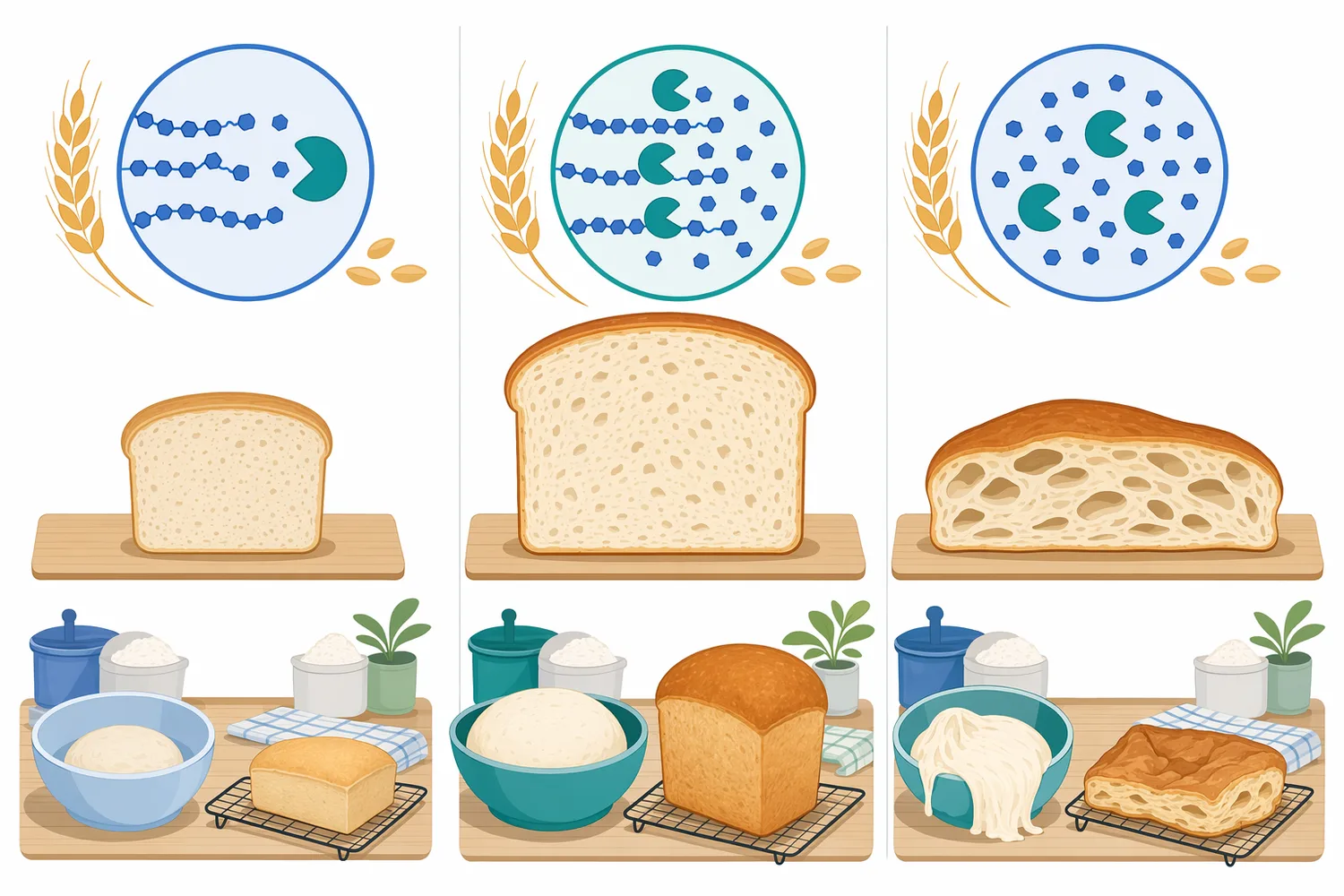
Composite flour breads made with cassava, amaranth, rice or other non-wheat materials can have changed starch gelatinisation behaviour and reduced gluten strength. Alpha amylase helps make part of the starch fraction more useful for fermentation, but it does not create gluten elasticity. This is why studies such as cassava–wheat bread optimisation examine alpha amylase in combination with other functional tools [10].
In these systems, the main value is flexibility: the enzyme can help adapt fermentation and crumb properties when flour composition changes. The final outcome still depends on the balance of wheat gluten, alternative starches, water and process time.
In gluten-free bread, starch is not just a filler; it is often the main structure-setting material. Alpha amylase can improve fermentation and change crumb tenderness, but the margin between useful softening and structural weakening can be narrower. Rice-based gluten-free bread research confirms that alpha-amylase can alter bread properties in these systems [11].
For gluten-free applications, the mechanism remains the same—starch chain cleavage—but the consequences differ because there is no gluten network to compensate for excessive starch weakening. The enzyme is therefore best understood as a starch-functionality tool rather than a universal volume improver.
Fungal alpha amylase preparations used in bakery are derived from industrial fungal biotechnology. Fungal production organisms such as Aspergillus niger, Aspergillus oryzae and Trichoderma reesei have been extensively discussed as major industrial biotechnology workhorses, including safety considerations around secondary metabolites and strain control [14]. That background supports why fungal enzymes are common in food processing, while also underscoring the importance of responsible use of supplied enzyme preparations.
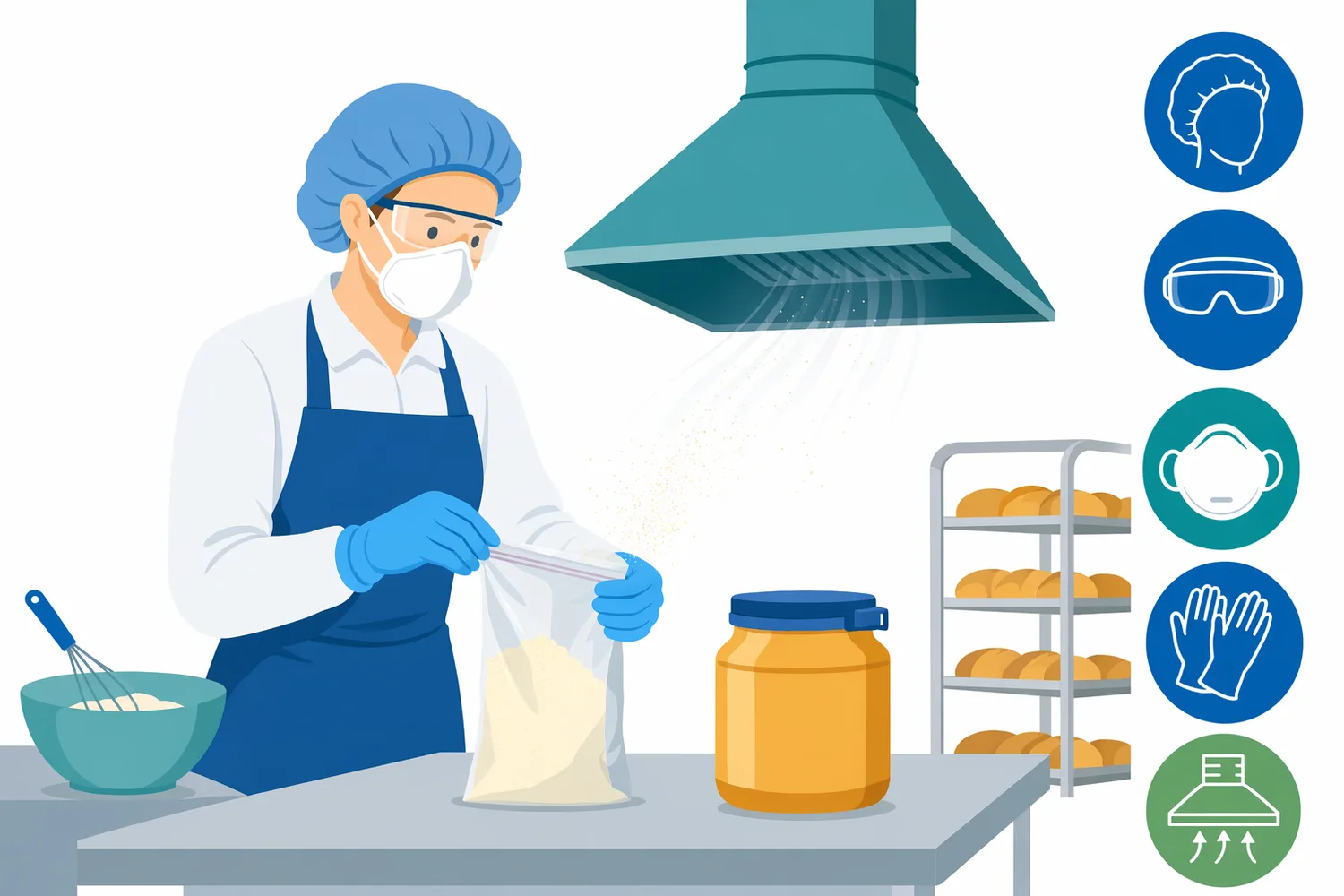
The main practical handling concern with powdered enzymes is dust exposure. Enzyme proteins can be respiratory sensitizers in occupational settings, particularly where powders are handled repeatedly or aerosolised. Bakery-related literature has identified fungal alpha amylase as relevant to baker’s asthma risk, so workplace handling should minimise airborne dust and follow the Safety Data Sheet supplied with the order [15].
Baking heat generally reduces catalytic enzyme activity, but “inactive” does not necessarily mean that every protein fragment has disappeared. For this reason, good manufacturing practice, dust control and appropriate food-safety procedures remain important even though the enzyme’s functional activity is intended for the dough and early baking stages. This distinction is important: catalytic activity, protein residue and occupational exposure are related but not identical issues.
Enzymes.bio supplies fungal alpha amylase powder as an online product sold by the 1 kg unit. The buying process is straightforward: the product is purchased and paid for online, then the order is processed and shipped. A Certificate of Analysis and Safety Data Sheet are included with the order.
This product should be viewed as a bakery processing aid for starch conversion in bread and related dough systems. Its value is strongest where controlled fermentable sugar release, improved loaf expansion, better crust development and softer crumb are desired. The observable effect depends on the flour, recipe and process, because enzyme action always occurs inside a complete dough system rather than in isolation.
Enzymes.bio is a supplier of the product, not the manufacturer and not an in-house testing laboratory. The purpose of this page is to explain the science and practical role of fungal alpha amylase clearly so that buyers can understand how the ingredient functions in bread making before purchasing the 1 kg unit online.
Fungal alpha amylase improves bread performance by changing starch at the right point in the process. It cuts accessible starch chains into smaller carbohydrates, giving yeast more fermentable material, supporting dough expansion, leaving sugars for crust browning and modifying the starch fraction that influences crumb softness. The mechanism is concrete: starch polymers become shorter dextrins and sugars, and those smaller carbohydrates behave differently in fermentation, baking and storage.
The evidence base supports fungal alpha amylase as an established bakery enzyme, with studies covering bread-improving mechanisms, wheat and composite breads, proofing systems, gluten-free rice bread and enzyme-assisted flour modification [1]. Used in a balanced formula, it can be a practical tool for better fermentation, volume, crust colour and crumb quality; used without balance, excessive starch hydrolysis can weaken texture.
For bakeries and food processors that want a direct online purchase route, Enzymes.bio supplies fungal alpha amylase powder by the 1 kg unit, with the order processed and shipped after online payment and documentation included with the shipment.
Sold by the 1 kg unit, in stock and ready to ship. Order directly on our store — pay online and we process your order. A Certificate of Analysis and Safety Data Sheet are included with every order.
Buy Fungal Alpha Amylase For Bread Making - Powder 100,000 U/G →Numbered in order of first citation. Open-access sources, each verified reachable at publication; citation numbers in the text link here.