
Glucose oxidase is a baking enzyme used to strengthen dough by converting glucose and oxygen into gluconic acid and hydrogen peroxide; the hydrogen peroxide then promotes oxidative changes in gluten and related dough components. In bread flour systems, this controlled oxidation can improve dough stability, reduce stickiness, support gas retention, and contribute to better loaf volume and crumb structure when balanced within the formula and process. Enzymes.bio supplies this food-grade glucose oxidase bread flour product for direct online purchase in 1 kg units, with a Certificate of Analysis and Safety Data Sheet included with the order.
Glucose oxidase, commonly abbreviated as GOX or GOD, is an oxidoreductase enzyme used in baking because it generates oxidative conditions inside the dough rather than acting as a bulk strengthening ingredient. In a wheat dough system, its main reaction is the oxidation of glucose in the presence of oxygen, producing gluconic acid and hydrogen peroxide; the hydrogen peroxide is the functional oxidizing species that drives many of the dough-strengthening effects associated with the enzyme [1].
For bread flour applications, this matters because dough strength is not only a property of the flour itself. It is also shaped during mixing, hydration, fermentation, and mechanical handling, as gluten proteins unfold, interact, and form a gas-retaining network. Glucose oxidase supports that network by encouraging oxidative cross-linking reactions, so the dough can become more cohesive and less sticky while retaining fermentation gas more effectively [2].
Enzymes.bio supplies glucose oxidase as a food-grade bread flour enzyme ingredient for baking and food-processing applications. The product is sold directly online by the 1 kg unit: the buyer places the order, pays online, and the order is processed and shipped with the accompanying Certificate of Analysis and Safety Data Sheet .
The functional reaction is simple:
Glucose + Oxygen → Gluconic acid + Hydrogen peroxide
Glucose oxidase catalyzes the oxidation of beta-D-glucose using molecular oxygen as the electron acceptor. In dough, the glucose can come from the flour system and from starch breakdown during mixing and fermentation, while oxygen is incorporated mainly during mixing when the dough is exposed to air and mechanically developed [1].
The important product for dough strengthening is hydrogen peroxide. It does not “add structure” by itself in the way gluten proteins or starch granules do; instead, it changes the redox environment of the dough. That oxidative environment can convert reactive sulfhydryl groups on gluten proteins into disulfide bonds, helping link protein chains into larger, more elastic structures [2].
Gluconic acid, the other reaction product, is not usually the main reason glucose oxidase is used in breadmaking. The more relevant processing effect is the in-situ generation of hydrogen peroxide at the point where flour, water, yeast, salt, and other ingredients are being transformed into a viscoelastic dough. Because the reaction depends on available oxygen, the strongest action is expected during mixing and early dough development, before oxygen becomes limited by yeast metabolism and dough structure [1].
Wheat dough depends on gluten, a hydrated protein network formed mainly from glutenins and gliadins. Glutenins contribute elasticity and strength, while gliadins contribute extensibility and flow; bread quality depends on the balance between these properties. If the network is too weak, dough may be sticky, slack, difficult to machine, and unable to retain gas; if it is too strong or too tight, dough may resist expansion and produce lower volume.
Glucose oxidase affects that balance by increasing oxidative linkages within the gluten network. Research on glucose oxidase effects on gluten and water-soluble dough components showed that GOX can modify gluten proteins and water solubles, supporting the view that its breadmaking effect is not limited to one isolated reaction but involves broader changes in the dough matrix [2].
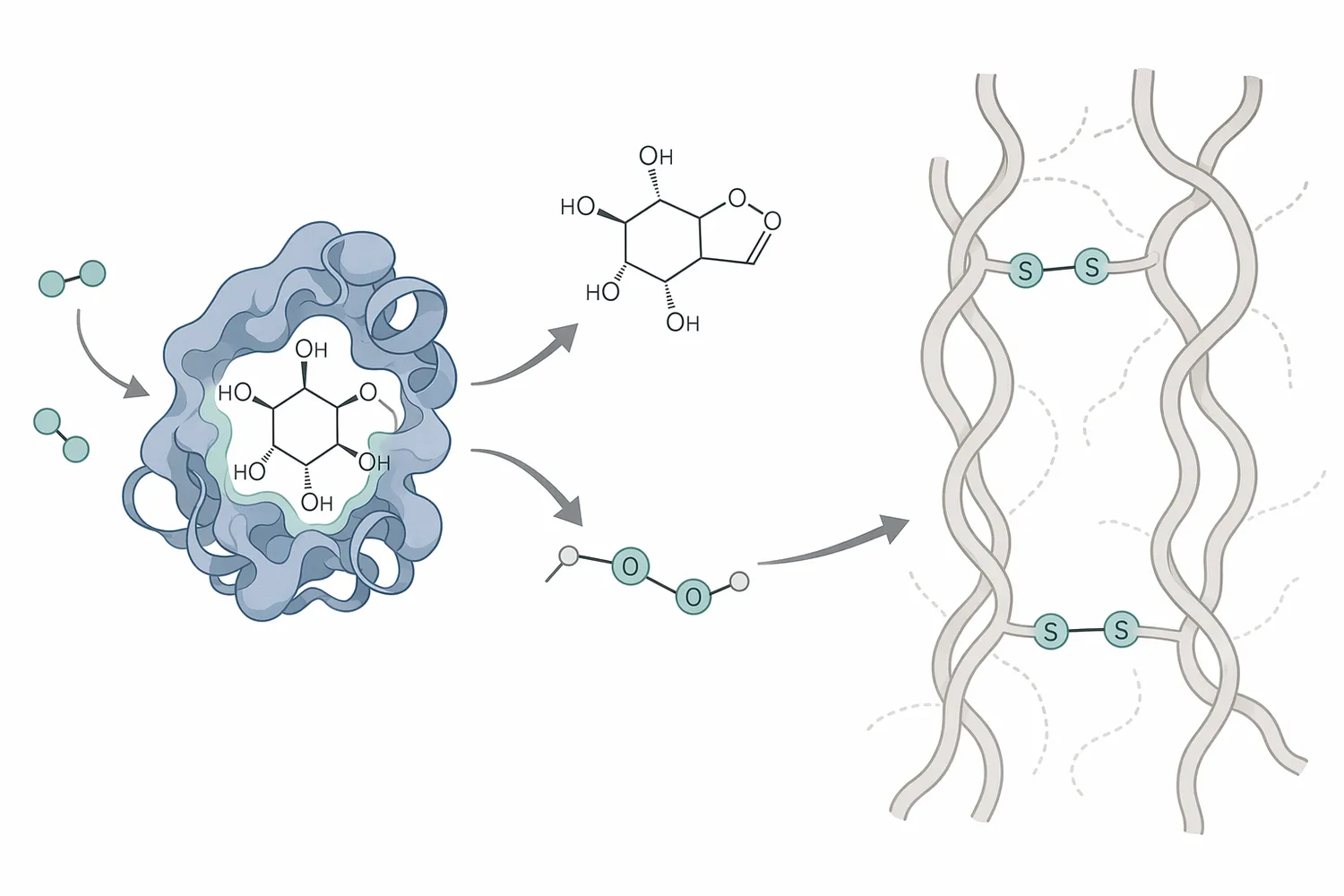
At the protein level, hydrogen peroxide can promote formation of disulfide bonds between gluten proteins. These bonds act like molecular bridges: they connect protein chains that would otherwise slide past each other too easily. When enough of these bridges form in the right places, the dough becomes more cohesive, better able to recover after deformation, and more tolerant of stress during dividing, rounding, sheeting, moulding, or panning [1].
Glucose oxidase may also influence non-protein components, especially arabinoxylans, which are hemicellulose polysaccharides present in wheat flour. Oxidative reactions can contribute to arabinoxylan cross-linking, which changes water binding and can reinforce the dough’s continuous phase. This helps explain why the enzyme can affect stickiness, foam stability, and gas-cell behavior rather than only protein strength [3].
A key reason bakers use glucose oxidase is improved dough strength. During mixing, the enzyme-generated hydrogen peroxide encourages gluten proteins to form stronger associations, so the dough can better withstand mechanical work and fermentation stress. Studies on dough quality have repeatedly connected glucose oxidase with increased dough stability and mixing resistance, especially when used alongside other dough-structuring enzymes such as transglutaminase [4].
In a production setting, stronger dough is valuable because dough pieces are handled repeatedly before baking. Dough that tears, smears, or collapses can create inconsistency in piece weight, shape, proof height, and final loaf symmetry. By improving the underlying network, glucose oxidase can help the dough behave more predictably through makeup and proofing.
Sticky dough is not only a sensory issue for hand bakers; it is a throughput issue for commercial baking. Dough that adheres to belts, dividers, rollers, or moulders can slow production and create product defects. Glucose oxidase can reduce stickiness by strengthening the gluten matrix and changing water distribution, so less free or weakly bound water remains available at the dough surface [1].
This effect is especially relevant in higher-hydration doughs, formulas with fiber-rich flour fractions, or systems where whole wheat components increase water competition. In whole wheat dough liquor, glucose oxidase and xylanase were shown to affect composition and foam properties, illustrating that GOX can influence the liquid phase and interfacial behavior that contribute to dough handling and gas-cell stability [3].
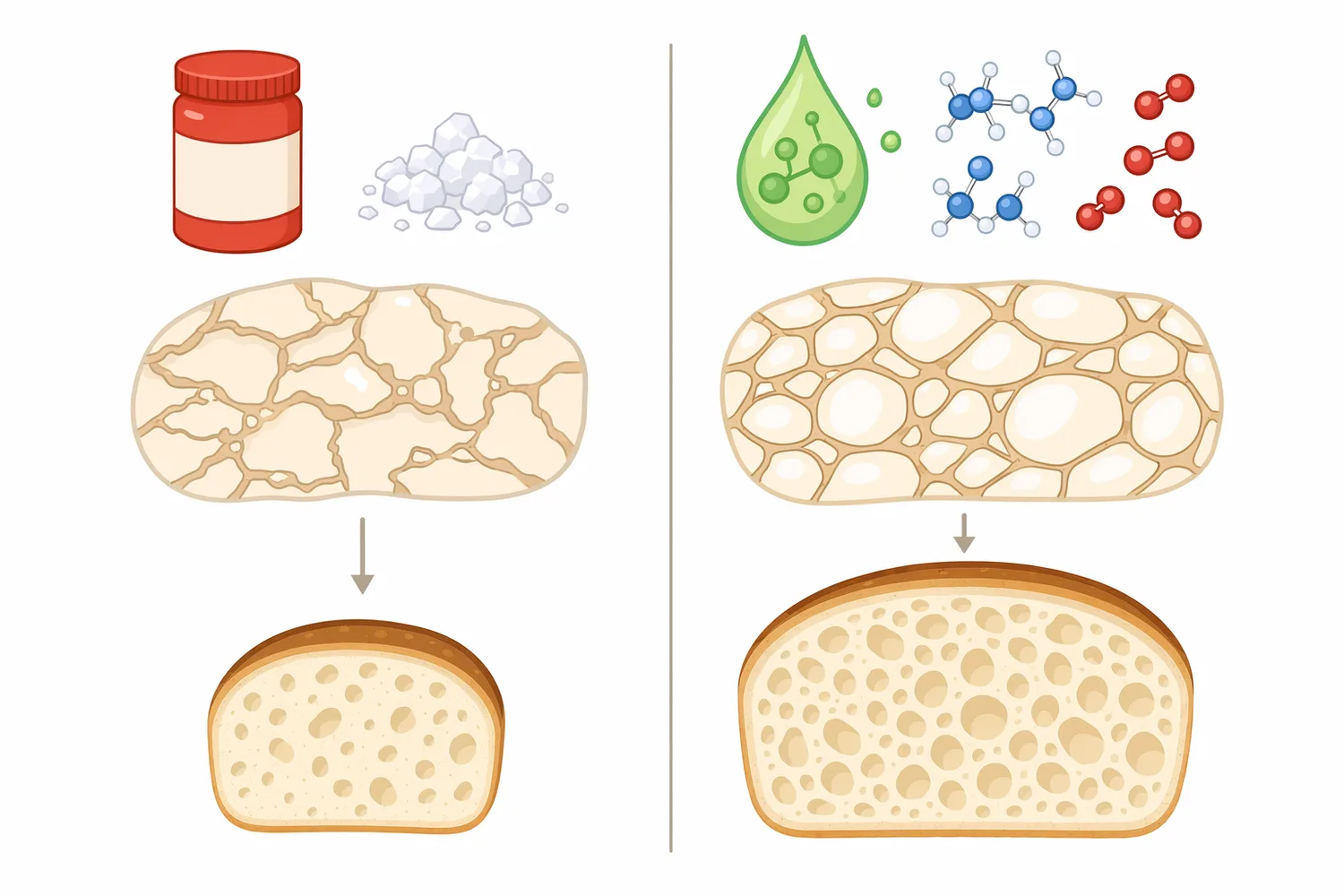
Bread volume depends on yeast gas production and the dough’s ability to hold that gas. Yeast can produce carbon dioxide, but if the dough network is weak, gas cells coalesce, rupture, or escape before the structure sets in the oven. Glucose oxidase supports gas retention by making the gluten-starch matrix more continuous and elastic, so gas cells are better stabilized during proofing and early baking [1].
The result can be improved oven spring and a more open, even crumb when the formula and process are well balanced. The enzyme is not a leavening agent and does not replace yeast; rather, it helps the dough preserve the gas that fermentation already produces.
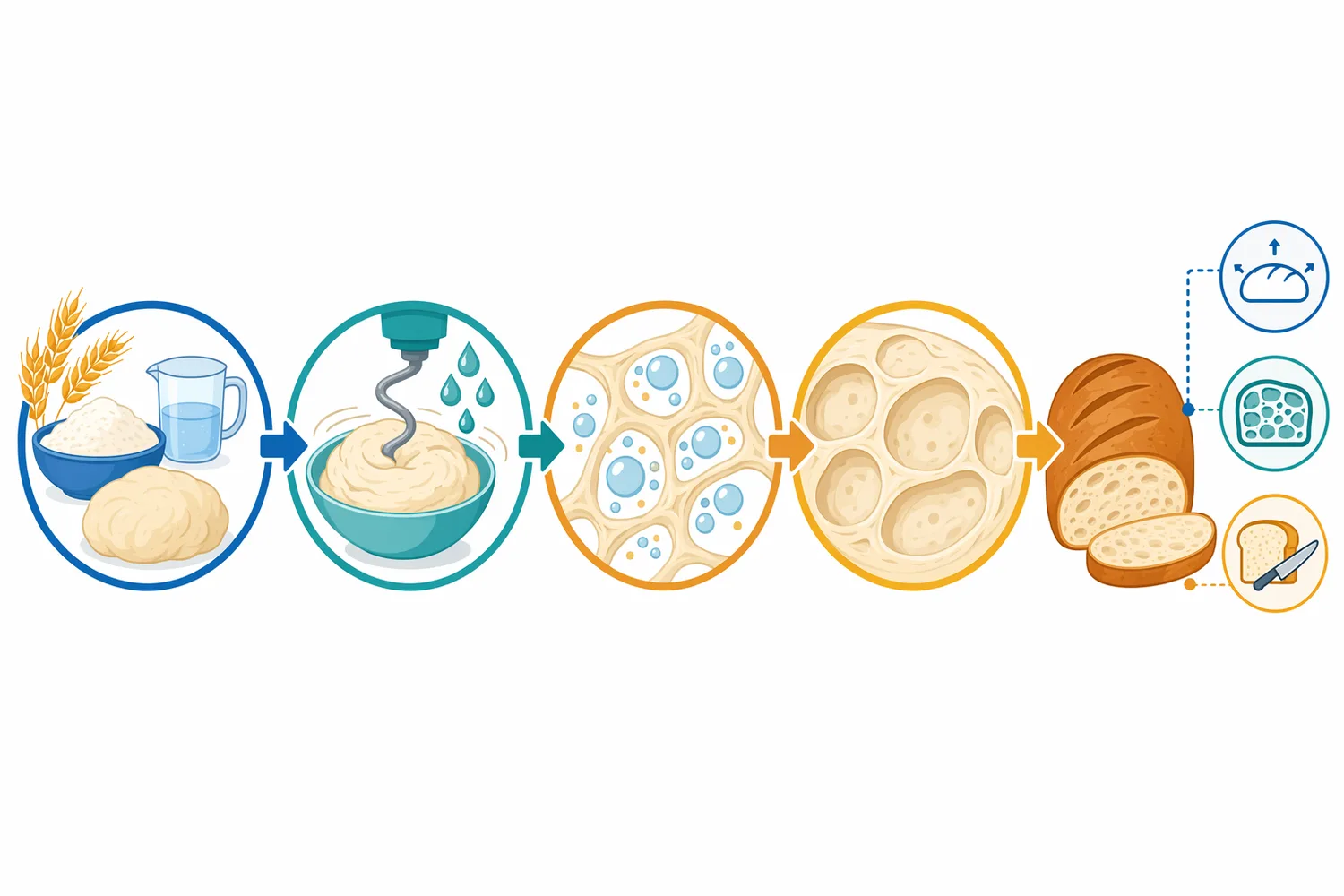
A bread crumb with large voids, tunnels, or uneven density often reflects poor gas-cell control. Oxidative strengthening from glucose oxidase can help stabilize small gas cells during mixing and proofing, producing a crumb that is more regular and less prone to collapse. Research on bread quality and shelf-life improvement using glucose oxidase systems has linked the enzyme to improvements in structural bread properties, supporting its role as a dough network modifier [5].
A more uniform crumb can be commercially important in pan bread, sandwich bread, buns, rolls, and filled products where slicing, spreading, or filling performance depends on consistent internal structure. The benefit comes from physical network control rather than from a direct flavor or color effect.
Glucose oxidase is one of several ways to strengthen dough. Its distinguishing feature is that it generates hydrogen peroxide enzymatically inside the dough, while chemical oxidants add oxidative power directly and other enzymes may build structure through different molecular pathways.
| Dough-strengthening approach | Main functional route | What changes in the dough | Practical implication |
|---|---|---|---|
| Glucose oxidase | Enzymatic oxidation of glucose using oxygen | Produces hydrogen peroxide, promoting gluten oxidation and possible arabinoxylan interactions | Supports controlled dough strengthening during mixing and early development |
| Ascorbic acid | Redox-mediated oxidation system in dough | Helps convert sulfhydryl groups toward stronger gluten structure after oxidation to dehydroascorbic acid | Widely used dough improver; effect depends on flour and process conditions |
| Transglutaminase | Enzymatic protein cross-linking | Forms covalent links between protein residues without relying on peroxide generation | Can increase dough resistance and structure; often studied with GOX in combined systems |
| Xylanase | Hemicellulose modification | Alters arabinoxylans, water distribution, viscosity, and gas-cell behavior | Can improve dough handling and volume, but may soften dough if not balanced |
| Traditional chemical oxidants | Direct chemical oxidation | Strengthens gluten through oxidative reactions | Effective in some systems but less aligned with enzyme-based reformulation strategies |
Studies comparing enzyme systems show why glucose oxidase is often considered alongside transglutaminase, xylanase, alpha-amylase, or ascorbic acid. For example, research on transglutaminase and glucose oxidase reported effects on dough stability and mixing resistance, while work combining glucose oxidase with ascorbic acid and alpha-amylase examined dough properties, baking quality, and bread shelf life [6].
The strongest case for glucose oxidase in baking comes from studies that connect mechanism with measurable dough and bread outcomes. Work on glucose oxidase and sodium stearoyl lactate as compound modifiers in wheat dough and steamed bread reported improvements in wheat dough quality and steamed bread quality, showing that GOX can function in steamed bread systems as well as conventional baked bread formats [7].
Steamed bread is useful evidence because it relies heavily on dough gas retention and protein-starch structure but does not undergo the same dry oven-baking environment as pan bread. If glucose oxidase improves dough structure in that system, it reinforces the conclusion that the enzyme’s core value lies in dough network formation rather than only crust development or oven surface effects.
Glucose oxidase has also been studied in combination with other enzymes for fresh whole wheat dough. In research on glucose oxidase, papain, and xylanase, the combined system affected browning inhibition and characteristics of fresh whole wheat dough, which is relevant because whole wheat systems contain bran, phenolics, and higher fiber fractions that complicate dough development [8].
The enzyme has further been explored in shelf-life-oriented bread systems. Research using glucose oxidase immobilized on zinc oxide nanoparticles studied bread quality and shelf life, reporting the enzyme’s relevance to bread structure and food safety-oriented shelf-life work [5].
Frozen dough creates a different challenge. Ice formation, freeze-thaw stress, yeast injury, and redistribution of water can weaken the gluten network and reduce final bread quality. Enzymes that strengthen dough before freezing can help the matrix resist damage, although results depend on the whole frozen-dough formulation and process.
Research on transglutaminase and glucose oxidase in frozen dough examined water distribution, rheological properties, and microstructure. That study is relevant because it connects enzyme action to the physical organization of water and dough structure, not only to final loaf appearance [9].
Another study on improving sensory quality of frozen dough bread analyzed the mechanism of enzyme effects, again showing that glucose oxidase is part of a broader category of enzyme tools used to preserve dough quality under processing stress [10].
For buyers working with frozen or chilled dough formats, the scientific point is that glucose oxidase can contribute to a stronger pre-freeze dough network. However, frozen dough quality also depends on yeast tolerance, freezing rate, thawing conditions, hydration, emulsifiers, and other formulation factors, so the enzyme should be viewed as one structural tool within the full system.
Glucose oxidase is most directly associated with wheat flour because its primary baking target is the gluten network. However, studies show that it can also influence more complex cereal systems where fiber, non-starch polysaccharides, or alternative flours change dough behavior.
In whole wheat systems, bran and fiber interfere with gluten continuity, compete for water, and can puncture or weaken gas cells. Research on whole wheat dough liquor showed that glucose oxidase and xylanase affected foam properties and dough-liquid composition, which helps explain why oxidase systems may alter gas-cell stability in high-fiber doughs [3].
Gluten-free systems are more complex because there is no wheat gluten network to strengthen. In maize-based gluten-free bread, research examined the influence of dietary fiber, water, and glucose oxidase on rheological and baking properties, indicating that GOX can still affect structure through water distribution and non-gluten matrix interactions [11].
For gluten-free bread, the mechanism is therefore different from wheat bread. The enzyme cannot strengthen gluten that is not present; instead, any benefit must come from interactions with other structural components such as starch, hydrocolloids, proteins, fibers, and soluble polysaccharides. This distinction is important because it prevents overclaiming: glucose oxidase is best established as a wheat dough strengthener, while gluten-free use is more formulation-specific [11].
Glucose oxidase should be understood as a controlled oxidizing tool, not a universal “stronger is always better” additive. The same chemistry that improves dough tolerance can become limiting if it makes the network too tight, resistant, or inelastic. Over-strengthened dough may resist expansion during proofing and oven spring, resulting in lower volume or a denser crumb.
This is why the most useful outcome is balanced viscoelasticity. Dough needs enough elasticity to hold gas, but enough extensibility to expand as gas pressure increases. If oxidative cross-linking proceeds too far, the dough can become tough and less able to stretch around expanding gas cells [2].
This balance also depends on the starting flour. A weak flour may benefit more visibly from oxidative strengthening than an already strong flour. A high-fiber whole wheat dough may respond differently from a refined pan-bread flour because bran, arabinoxylans, water absorption, and endogenous enzymes all influence how the dough network forms [3].
Formula context matters as well. Salt, sugar, yeast level, acidity, emulsifiers, reducing agents, and other enzymes can all influence gluten development and enzyme performance. Studies combining glucose oxidase with sodium stearoyl lactylate, transglutaminase, ascorbic acid, alpha-amylase, xylanase, or papain demonstrate that GOX is often evaluated as part of a multi-component dough system rather than as an isolated input [7].
Glucose oxidase needs oxygen to function. In bread dough, the most important oxygen incorporation step is mixing, when air is folded into the dough and the flour-water matrix is still being developed. As mixing continues, oxygen becomes less available because it is consumed by enzymatic and yeast-related reactions and because the dough structure limits diffusion [1].
This explains why glucose oxidase is strongly associated with dough development and mixing tolerance. The enzyme’s action is most relevant when oxygen is still available and gluten proteins are being hydrated, stretched, and aligned. Hydrogen peroxide generated at that stage can influence the architecture of the developing network.
The mixing relationship also explains why results can differ between production systems. Spiral mixers, high-speed mixers, planetary mixers, vacuum mixing, dough temperature, batch size, and mixing time can all change oxygen incorporation and gluten development. The enzyme’s chemistry is consistent, but the amount and timing of oxygen exposure shape how much functional oxidation occurs in the dough.
Baking formulas often use enzyme systems because different enzymes solve different structural problems. Glucose oxidase primarily strengthens through oxidation, while xylanase modifies arabinoxylans, alpha-amylase affects starch breakdown and fermentable sugars, and proteases can soften or relax dough. The net result depends on how those actions overlap.
Xylanase and glucose oxidase are a particularly common conceptual pairing because arabinoxylans influence water binding, viscosity, and gas-cell stability. Research on whole wheat dough liquor found that xylanase and glucose oxidase altered foam properties, suggesting that the two enzymes can affect the liquid and interfacial phases that help stabilize gas cells [3].
Transglutaminase and glucose oxidase are another important pairing in the literature because both can increase protein cross-linking, but by different pathways. Transglutaminase forms covalent bonds between protein residues, while glucose oxidase creates peroxide-driven oxidative conditions. Studies on the two enzymes have reported effects on stability and mixing resistance, reinforcing their relevance to dough strength management [4].
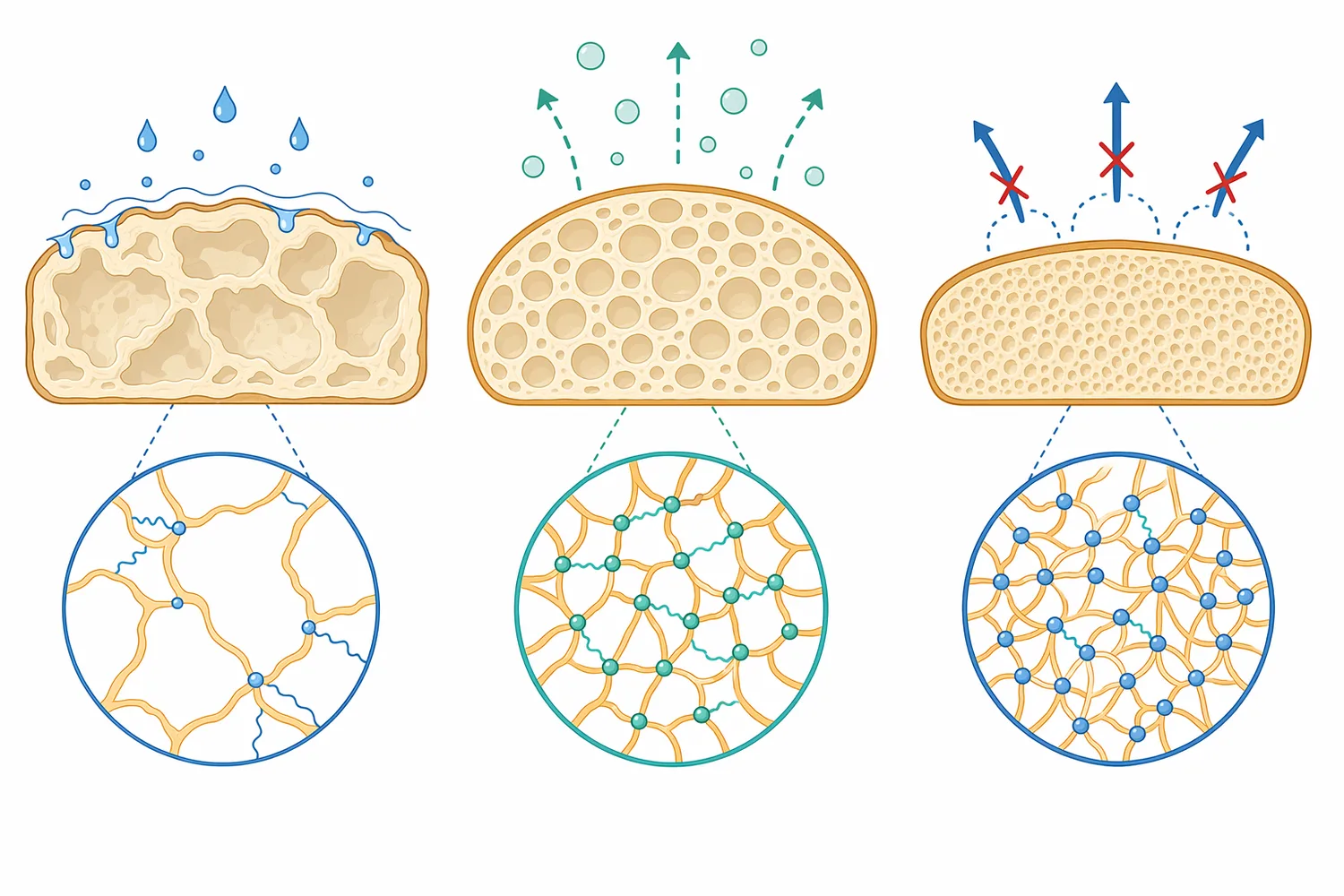
In practice, this means glucose oxidase is often part of a broader bread-improvement strategy. Its role should be understood clearly: it is the oxidative-strengthening component, especially useful where the dough needs better cohesion, gas retention, and handling tolerance.
Bread shelf life is influenced by starch retrogradation, moisture migration, microbial stability, crumb firmness, and the integrity of the baked structure. Glucose oxidase is not primarily an anti-staling enzyme in the way some amylases are, but by improving dough structure and crumb formation it can indirectly affect the eating quality and physical stability of finished bread.
Research on glucose oxidase systems for bread quality and shelf life has explored how the enzyme can contribute to improved bread characteristics and longer acceptable storage performance. In one study, glucose oxidase immobilized on zinc oxide nanoparticles was evaluated for enhancing bread quality and shelf life, illustrating the enzyme’s relevance beyond immediate dough handling [5].
The practical connection is that a better-organized dough structure can produce a more consistent crumb, and a more consistent crumb may retain desirable texture longer under normal product conditions. However, shelf life remains a multi-factor outcome involving packaging, water activity, formulation, sanitation, and storage temperature.
For baking and food-processing applications, buyers need an ingredient that fits food-grade use and arrives with appropriate order documentation. Enzymes.bio supplies this glucose oxidase bread flour enzyme as a food-grade product for baking applications, available for direct online purchase in 1 kg units .
A Certificate of Analysis and Safety Data Sheet are included with the order. These documents support routine receiving, internal documentation, and safe handling practices without requiring the buyer to initiate a separate technical consultation process.
The product is intended for industrial and food-processing use, not as a consumer supplement or direct-consumption product. In bakery use, it is handled as a functional enzyme ingredient within a formulated flour or dough system.
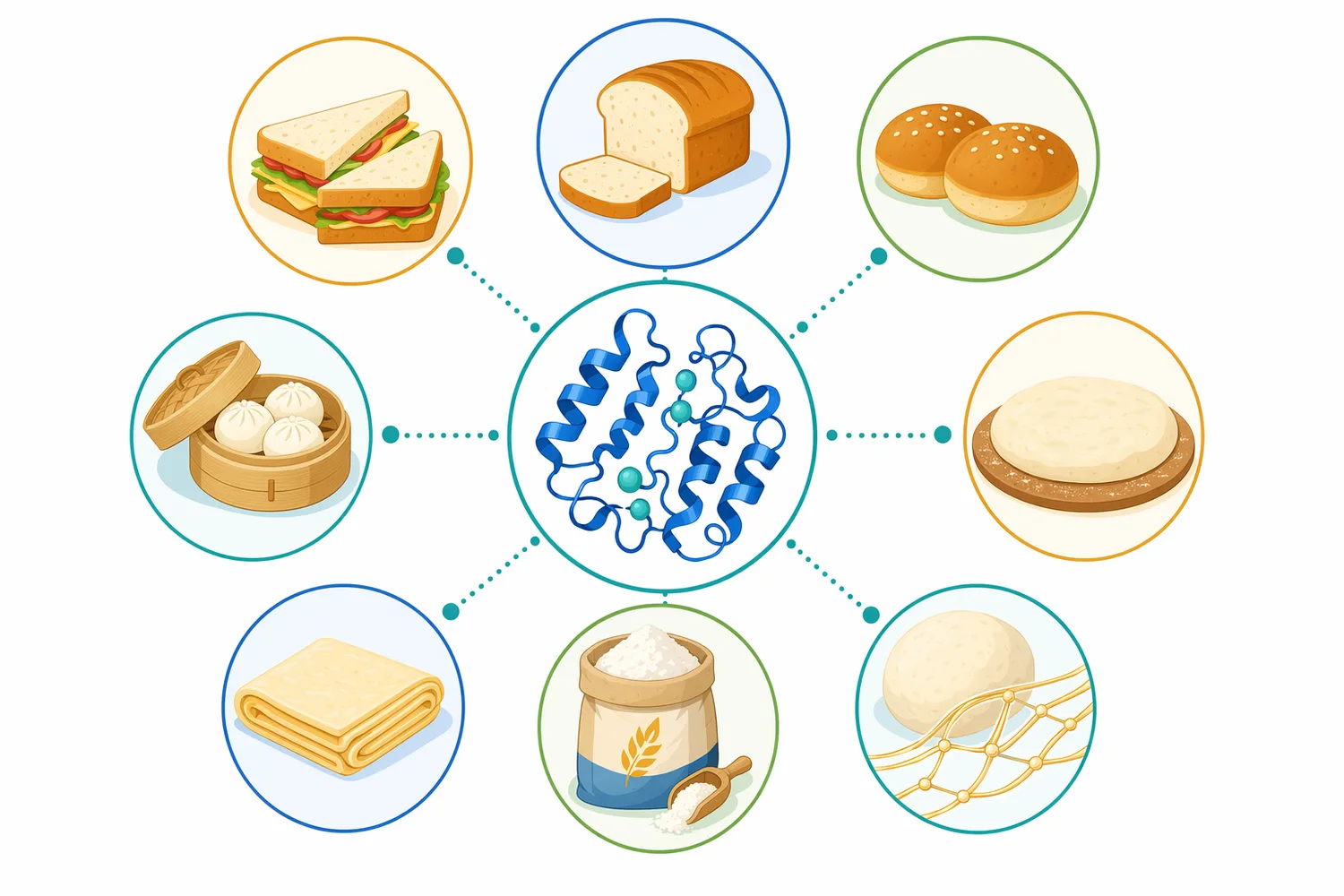
Glucose oxidase is most relevant where the main processing goal is dough strengthening. That includes bread, rolls, buns, steamed bread, flour improver systems, frozen dough, and selected whole grain or fiber-enriched doughs where better structure and handling are desired.
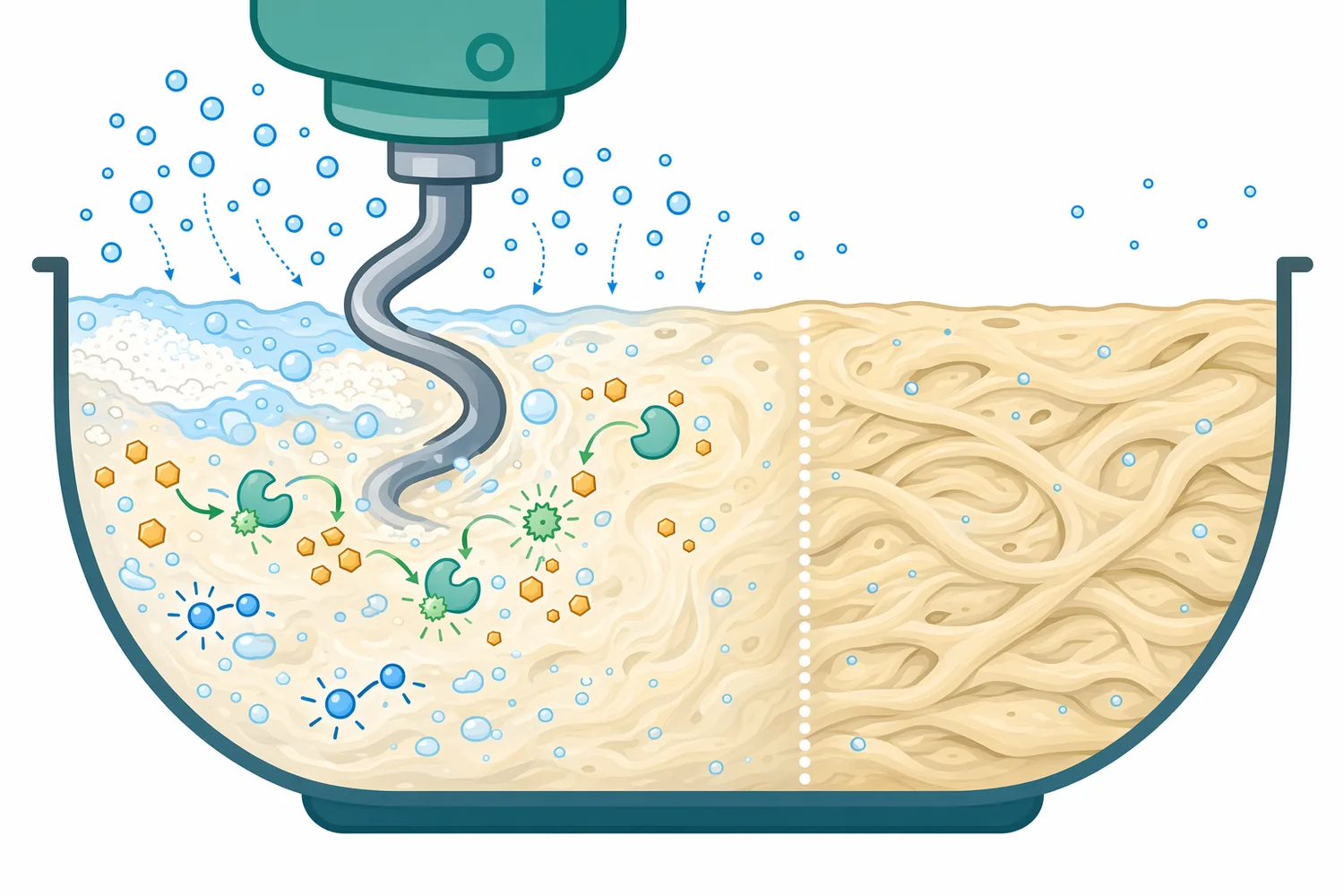
In refined wheat bread, the enzyme’s primary value is reinforcement of the gluten network. In whole wheat bread, it may also help manage the more complex interaction of gluten, bran, arabinoxylans, and water. In frozen dough, it may help the dough matrix better withstand freezing-related structural stress [9].
The enzyme is less appropriate to describe as a flavor enzyme, sweetener, leavening agent, preservative, or emulsifier. Its core identity is an oxidizing dough-strengthening enzyme. When it improves volume, crumb, or handling, those outcomes follow from changes in dough structure.
Enzymes.bio offers the glucose oxidase bread flour enzyme for direct online purchase by the 1 kg unit. The buying process is straightforward: place the product in the cart, pay online, and the order is processed and shipped with the accompanying Certificate of Analysis and Safety Data Sheet .
This model is designed for customers who already know they need a food-grade glucose oxidase enzyme for baking or food-processing use and want to purchase a packaged unit online. The product page provides the commercial route for ordering without requiring sample requests, quote requests, or wholesale discussions.
Glucose oxidase strengthens dough by creating hydrogen peroxide inside the dough from glucose and oxygen. That hydrogen peroxide promotes oxidative changes in gluten proteins and related dough components, helping the dough become more cohesive, more tolerant, and better able to retain gas [1].
The best-supported baking benefits are improved dough strength, reduced stickiness, better machinability, improved gas retention, and more consistent loaf or crumb structure. These effects are strongest in wheat-based systems where gluten structure is central to performance, but research also shows relevance in whole wheat, steamed bread, frozen dough, and some gluten-free formulations [7].
The main limitation is balance. Too little oxidative effect may be unnoticeable, while too much can make dough overly strong or resistant to expansion. Glucose oxidase is therefore best viewed as a controlled dough-strengthening enzyme used within the full flour, hydration, mixing, fermentation, and baking system.
For buyers seeking a food-grade glucose oxidase bread flour enzyme, Enzymes.bio supplies the product online in 1 kg units, with the order documentation included.
Sold by the 1 kg unit, in stock and ready to ship. Order directly on our store — pay online and we process your order. A Certificate of Analysis and Safety Data Sheet are included with every order.
Buy Glucose Oxidase 10,000 U/G Bread Flour Product Baking Food Grade →Numbered in order of first citation. Open-access sources, each verified reachable at publication; citation numbers in the text link here.