
Hemicellulase Enzyme Breaker is used in breadmaking to partially hydrolyze cereal hemicellulose—especially arabinoxylan-rich cell-wall material in wheat flour, wholemeal flour, bran, and multigrain blends. By changing how these fiber fractions bind water and interact with gluten, hemicellulase can improve dough machinability, gas retention, loaf volume, crumb uniformity, and softness when the formulation and process are suitable.
In practical terms, hemicellulase does not “create” gluten or replace good mixing and fermentation control. It modifies the non-starch polysaccharide fraction of flour so the dough system behaves more predictably during mixing, proofing, and baking.
Hemicellulase is a functional enzyme category rather than one single activity. In cereal doughs, its most relevant substrates are hemicellulose-type plant cell-wall polysaccharides, including arabinoxylans and related pentosans. These materials are present in flour particles and are especially concentrated in bran, wholemeal flour, wheat meal, and high-fiber cereal ingredients. Enzymes.bio describes hemicellulase as an enzyme used to break down hemicellulose into smaller, more usable fragments, with applications that include baking as well as other fiber-processing industries .
The reason hemicellulose matters in bread is that it is not an inert “fiber filler.” It competes for water, changes dough viscosity, affects the continuity of the gluten network, and can either help or harm gas-cell stability depending on its solubility, particle structure, and degree of hydration. Studies on dough rheology repeatedly show that flour composition and added cereal or plant fractions strongly change dough resistance, extensibility, and bread quality outcomes, which is why small changes in non-starch components can have visible effects in finished bread [1].
In white flour systems, hemicellulose is present at lower levels than in wholegrain flour but still influences water absorption and dough consistency. In whole wheat, bran-enriched, and multigrain systems, the effect is much stronger because bran particles and associated cell-wall materials interrupt gluten development and alter water distribution. Research on buckwheat, amaranth, chickpea, pea, microalgae, and other composite flours illustrates the same broader principle: adding non-wheat particulate or fiber-rich ingredients changes dough rheology and often requires a processing adjustment to maintain bread quality [2].
A “hemicellulase breaker” should therefore be understood as a controlled dough improver for fiber modification. It does not indiscriminately destroy dough structure; instead, it partially cuts selected hemicellulose chains during the hydrated stages of dough processing, before baking heat inactivates enzymatic activity.
The core action of hemicellulase is hydrolysis: the enzyme cleaves specific bonds in hemicellulose chains. In wheat-based dough, that means some larger, water-binding cell-wall polymers are converted into smaller fragments. The physical result is not only “more sugar”; the more important bakery effect is a shift in solubility, hydration, viscosity, and how fiber particles interact with gluten and gas bubbles.
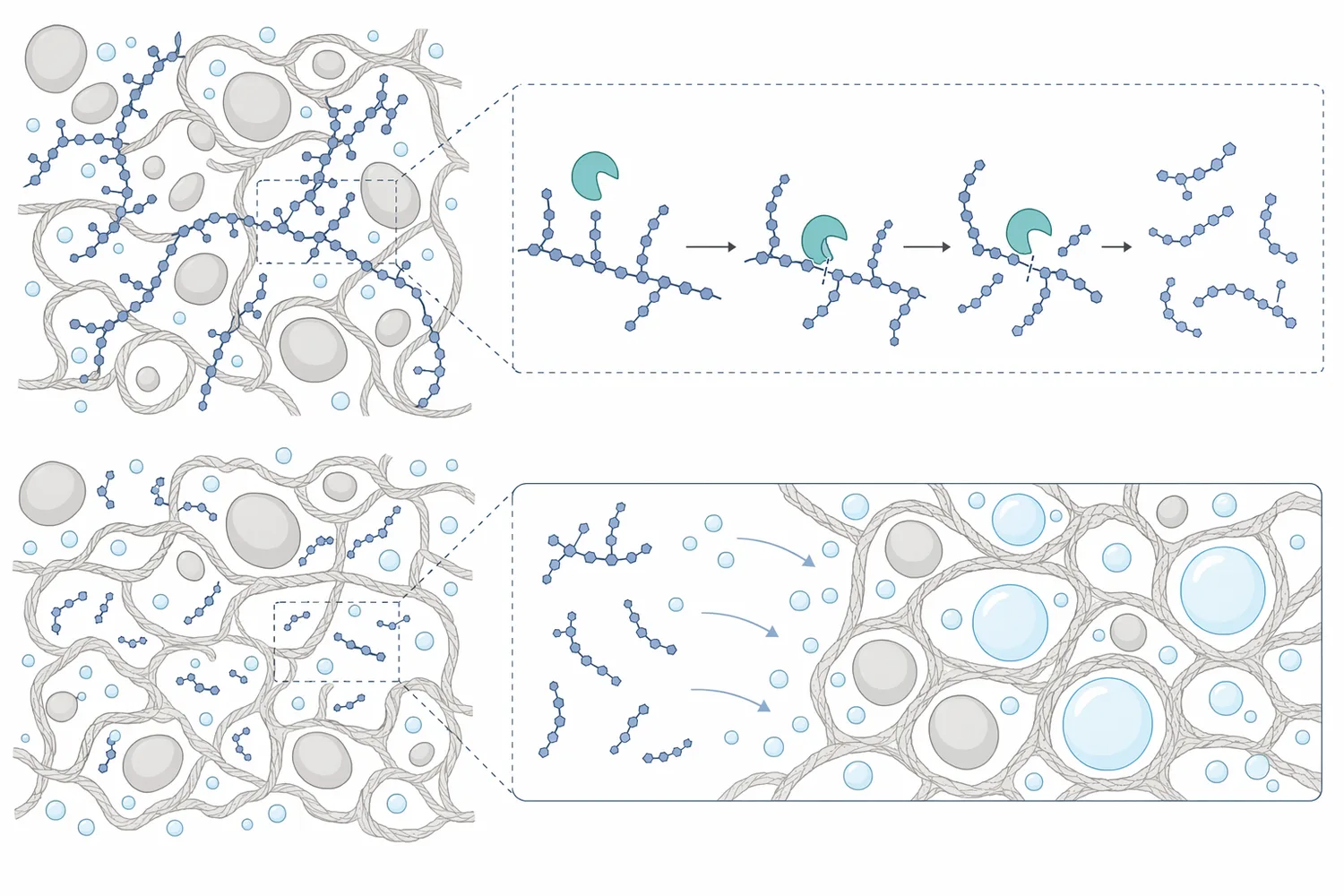
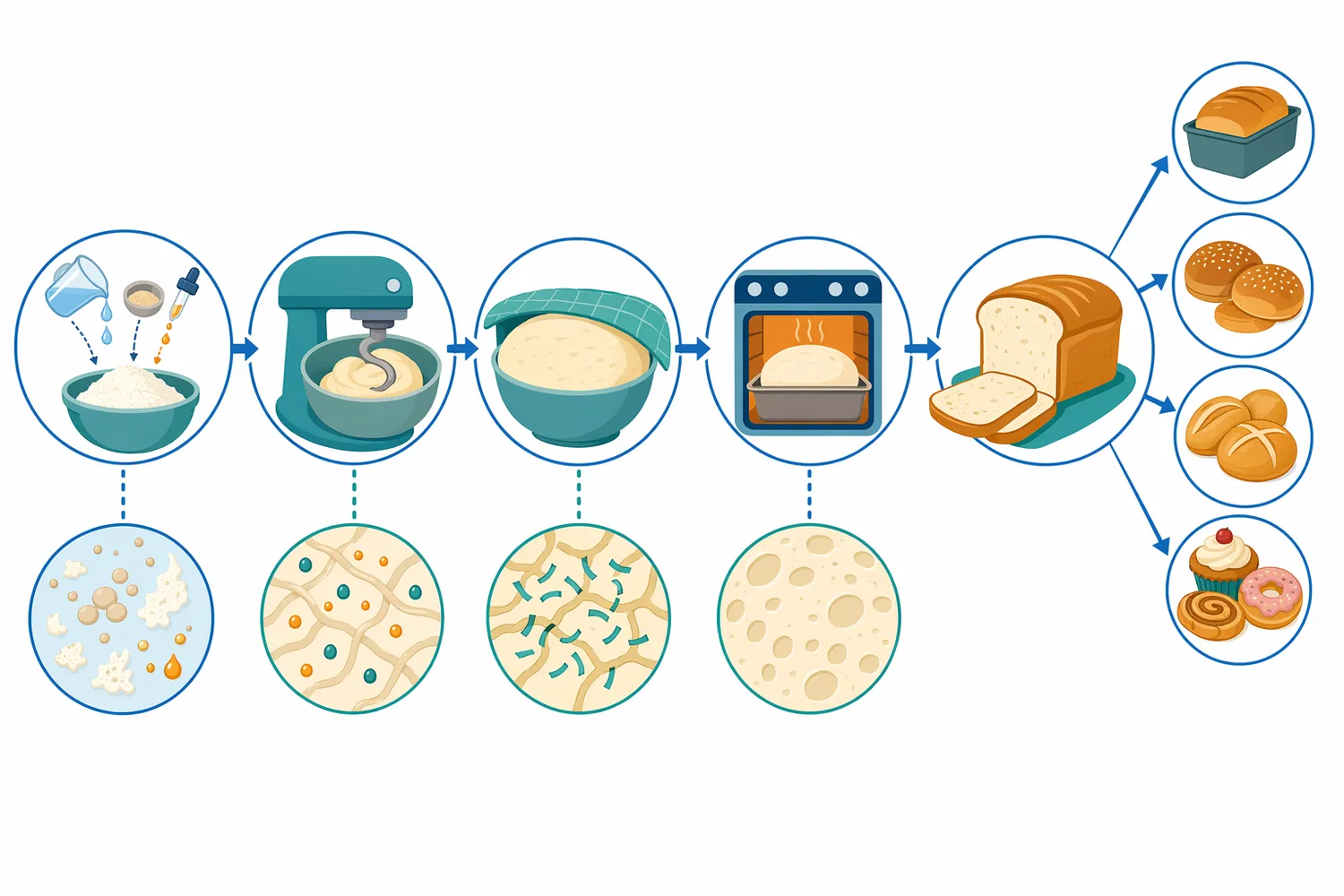
A useful way to visualize the dough is as a hydrated network of gluten proteins, starch granules, bran or flour particles, yeast-generated gas cells, dissolved solutes, and non-starch polysaccharides. Insoluble hemicellulose-rich particles can behave like rough inclusions in the gluten network. They take up water, restrict gluten continuity, and can become weak points around expanding gas cells. Controlled hydrolysis makes part of that fiber fraction more mobile and less disruptive, allowing the dough matrix to stretch and retain gas more evenly.
This is especially important during fermentation and proofing. As yeast produces carbon dioxide, the dough must expand without tearing or collapsing. If the gluten network is too restricted by poorly hydrated bran and insoluble arabinoxylan-rich material, gas cells coalesce or rupture and the loaf bakes with lower volume and a denser crumb. Enzyme treatments used in breadmaking are widely discussed in relation to dough handling, volume, crumb structure, and softness because they change the underlying macromolecular interactions rather than simply masking symptoms [3].
Hemicellulase also affects water distribution. Fiber fractions can bind water strongly, leaving less water available for gluten hydration and starch gelatinization. Partial hydrolysis can release some immobilized water or convert insoluble material into smaller soluble fragments that participate differently in the dough phase. In a bread formula, this can translate into improved dough development, less harsh bran interference, better expansion during proofing and oven spring, and a finer crumb.
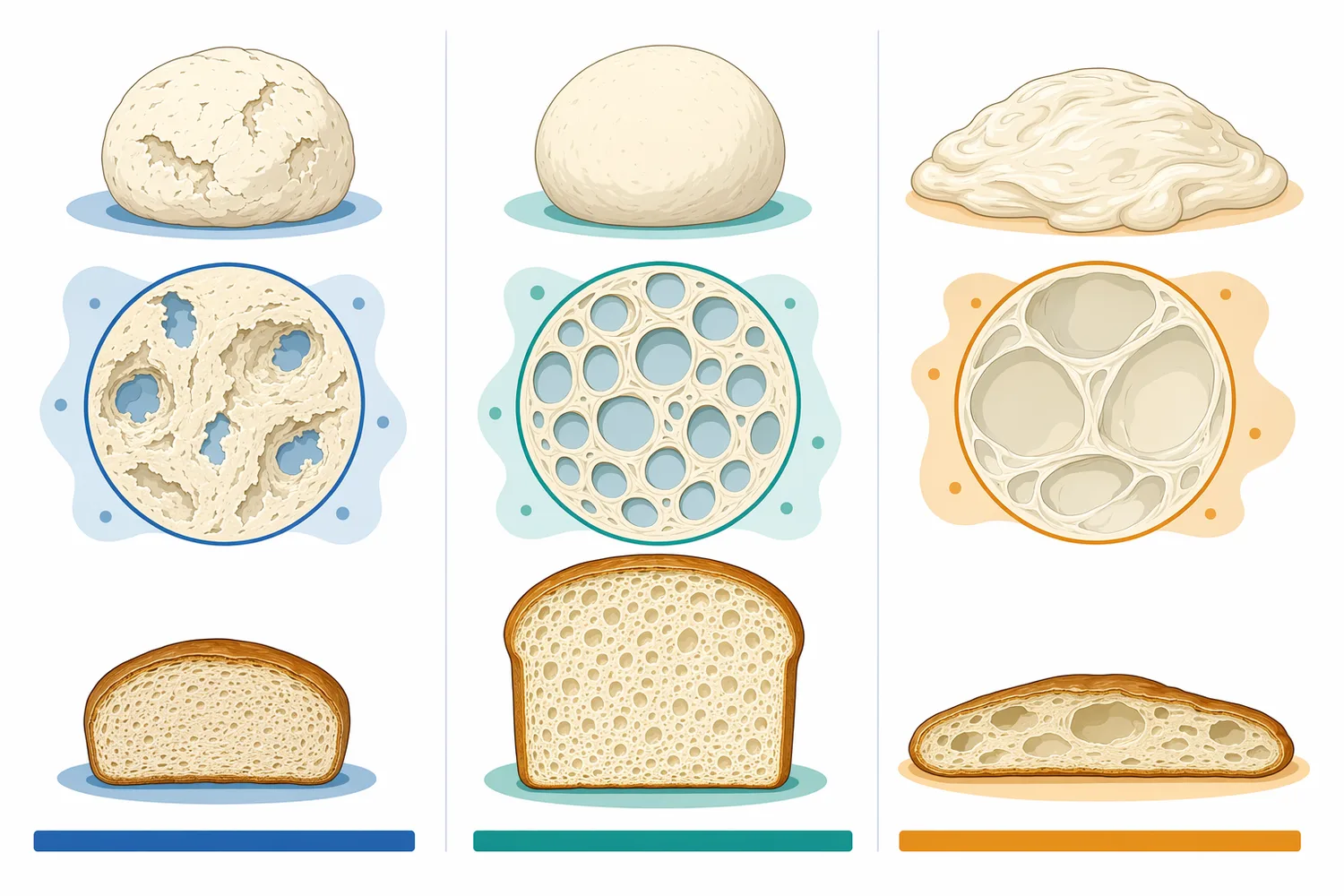
The balance is important. Too little modification may not overcome the water-binding and gluten-interrupting effect of high-fiber ingredients. Too much modification can make the dough overly slack, sticky, or weak because the viscosity contribution of the polysaccharide network has been reduced too far. This is why hemicellulase is best viewed as a precision processing aid rather than a universal correction for every dough problem.
In bakery practice, hemicellulase and xylanase are closely related terms because arabinoxylans are among the most important hemicellulose-type polysaccharides in wheat. Xylanase acts on xylan backbones within arabinoxylan structures, while broader hemicellulase preparations may include complementary activities that modify related side chains or mixed hemicellulose fractions. Regulatory and scientific evaluations of xylanase food enzymes show how established this enzyme class is in cereal processing contexts, including xylanase from Aspergillus oryzae evaluated as a food enzyme [4].
For bread quality, the distinction matters because arabinoxylans can be either water-extractable or water-unextractable. Water-unextractable arabinoxylans are more likely to behave as insoluble structural material that competes for water and physically disrupts gluten. Enzymatic cleavage can increase the proportion of smaller, more soluble fragments, changing the dough from a system with rigid fiber interference toward one with more functional hydration and viscosity control.
The effect is not purely chemical; it is mechanical. A dough with better-balanced arabinoxylan behavior can stretch more uniformly around gas cells. During proofing, this can help maintain smaller, more evenly distributed bubbles. During baking, as starch gelatinizes and proteins set, that improved gas-cell distribution becomes the crumb structure of the finished loaf.
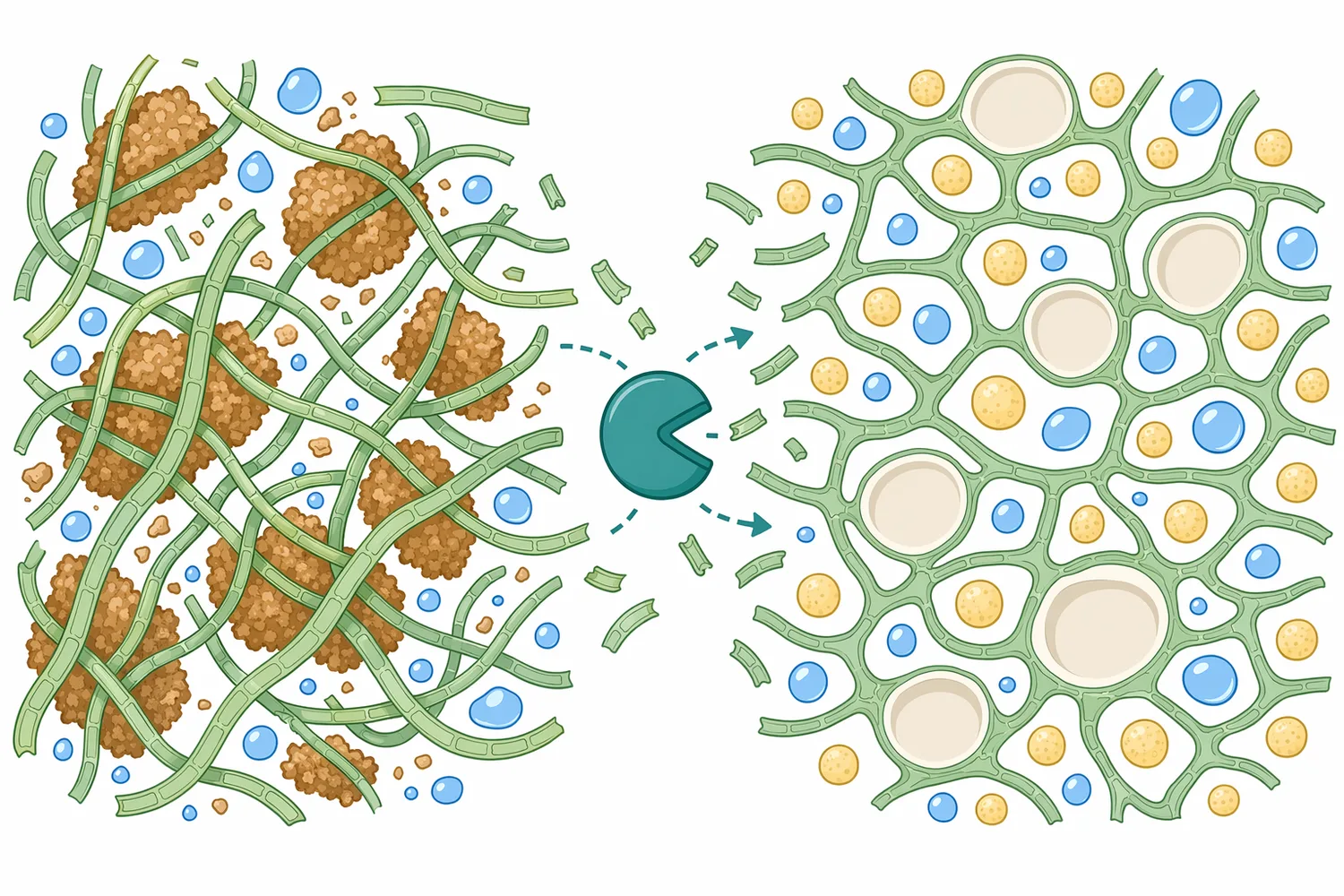
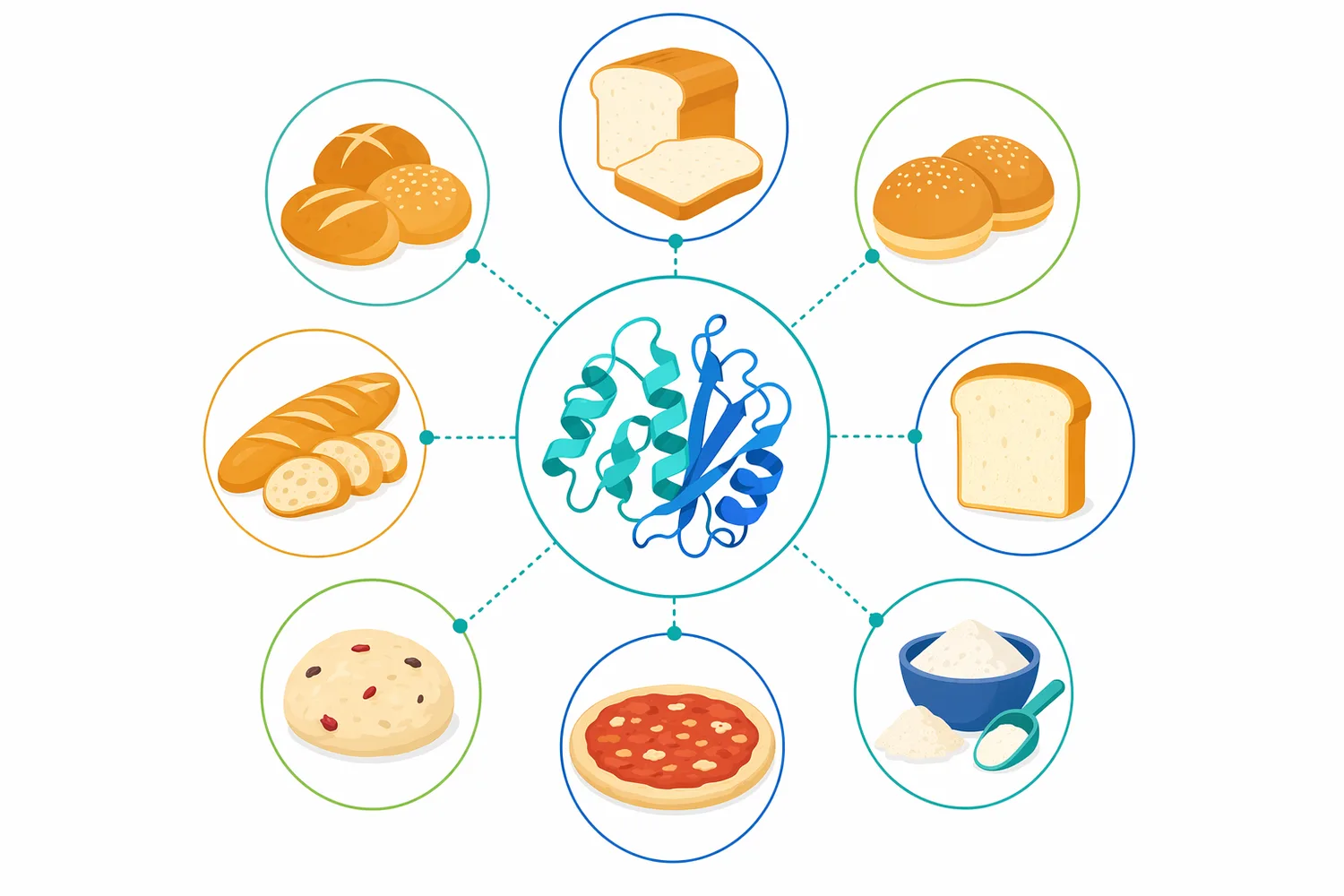
White pan bread can benefit from hemicellulase, but the strongest logic is in wholemeal and bran-containing breads. Wholegrain and high-fiber formulas contain more cell-wall material, more particulate bran, and more non-starch polysaccharides than refined white flour systems. These components can improve nutritional positioning but often reduce loaf volume, increase crumb firmness, and make dough more difficult to process.
Research on composite and fortified doughs supports the broader challenge. Adding germinated chickpea flour changes dough rheology and bread quality; roasted yellow split pea flour affects wheat dough and fortified bread structure; amaranth particle size and addition level influence dough rheology and bread features; and buckwheat milling fractions alter wheat bread dough behavior [5]. Although these ingredients are not identical to wheat bran, they demonstrate the same production reality: when fiber, protein, particle size, and water-binding components change, the dough matrix responds.
In wholemeal bread, the gluten network must form in the presence of bran and germ particles. Bran edges can act as physical discontinuities, while associated hemicellulose binds water and changes local viscosity. If hydration is not balanced, the dough may feel firm at mixing yet lack elastic gas retention later in proofing. Hemicellulase can help by softening the functional impact of that cell-wall material, improving the way water and gas are managed through the dough system.
Multigrain breads present a similar challenge. Oats, rye, barley, seeds, pulse flours, and added fibers each contribute their own polysaccharides and water-binding behavior. Some increase viscosity; others create weak points or make the dough sticky. Hemicellulase is not a substitute for formula development, but it is a practical tool where cereal hemicellulose is one of the limiting factors.
When hemicellulase is working well in a suitable bread system, the first changes are usually seen in dough handling. Dough may become easier to mix to a consistent state, more extensible during dividing and molding, and less prone to tight, under-expanded behavior. In automated bakeries, this can support smoother transfer through dividing, rounding, sheeting, panning, or depositing steps.
The second visible effect is gas retention. A dough that stretches more uniformly around gas cells can hold fermentation gases more effectively. This tends to support loaf volume and a more even crumb, especially where the original formula was constrained by bran, wholemeal flour, or high-fiber inclusions. Studies of extensional dough rheology show that flour composition and extension conditions strongly influence how dough deforms under stress, which is directly relevant to proofing and oven expansion [1].
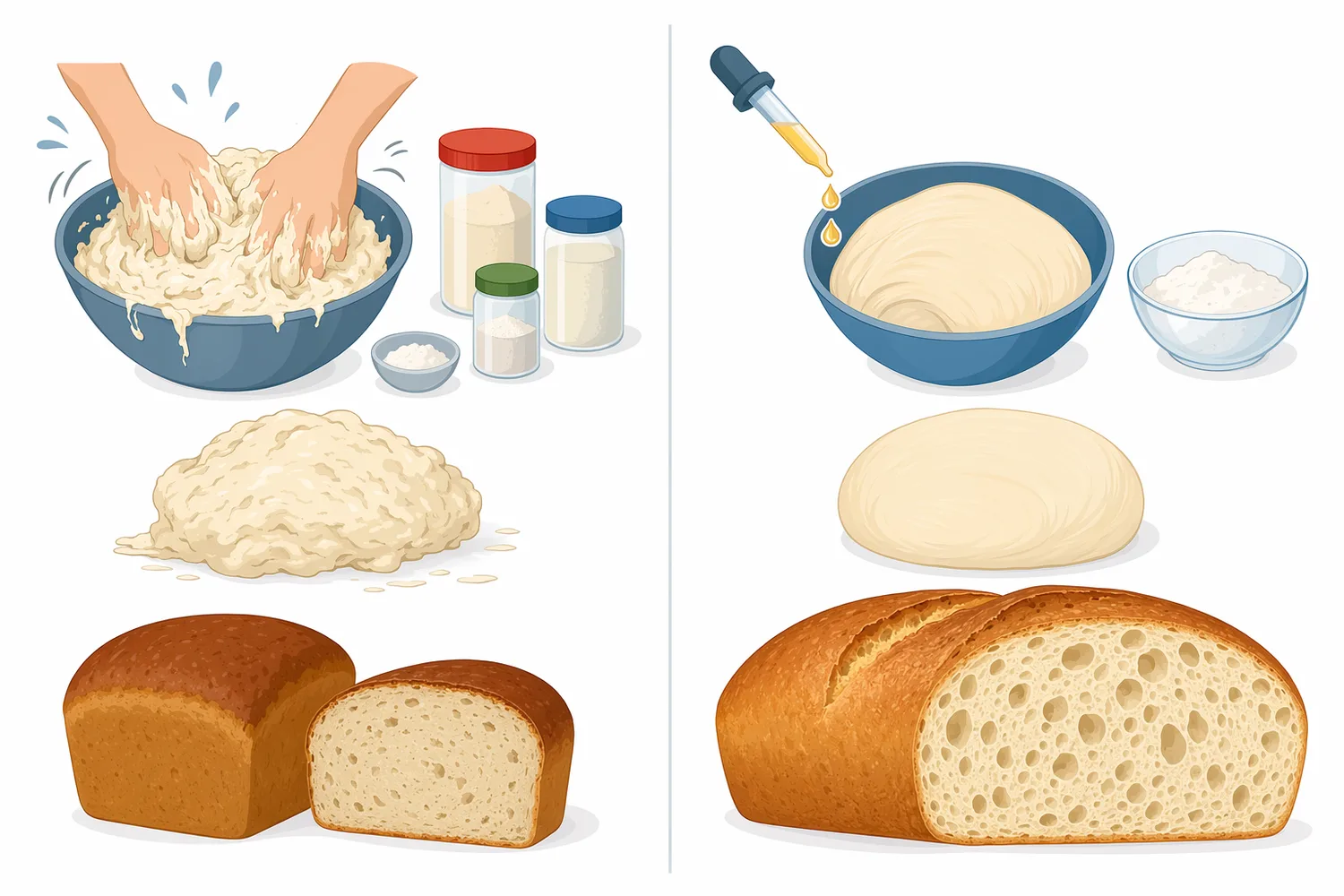
The third effect is crumb texture. Better hydration distribution and less severe fiber interference can reduce dense or coarse crumb formation. Instead of large irregular voids beside compact gummy zones, the crumb can become more regular. In soft breads, rolls, and sandwich loaves, that can mean a more consistent slice and a softer eating quality.
The fourth effect is moisture behavior. Hemicellulose fragments still interact with water, but they do so differently from large insoluble fiber structures. This can help support perceived softness and reduce harsh dryness in wholegrain or fiber-enriched bread. The outcome depends on the formula, because fats, emulsifiers, starch damage, sugar, salt, fermentation acidity, and baking profile all influence moisture retention as well.
Hemicellulase is often discussed alongside other bakery enzymes because bread quality is controlled by several substrates at once: starch, gluten proteins, lipids, fiber, yeast metabolism, and water. The table below shows how hemicellulase fits conceptually within a bread enzyme system without treating the categories as interchangeable.
| Enzyme type | Main dough substrate | Primary functional change | Typical bread-quality relevance |
|---|---|---|---|
| Hemicellulase / xylanase-related enzymes | Hemicellulose, arabinoxylans, pentosans | Partially hydrolyzes cereal cell-wall polysaccharides; shifts fiber solubility and water-binding behavior | Improved dough handling, gas retention, loaf volume, crumb regularity, especially in wholemeal and high-fiber breads |
| Amylase | Starch and damaged starch | Produces fermentable sugars and dextrins; supports yeast activity and crust color | Fermentation support, loaf volume, crust color, crumb softness |
| Protease | Gluten proteins | Partially relaxes protein network | Reduced dough resistance, improved extensibility in selected applications |
| Lipase / phospholipase | Flour lipids and polar lipids | Modifies lipid interactions with gluten and starch | Volume, crumb softness, dough tolerance |
| Glucose oxidase | Dough water phase and gluten-related oxidation pathways | Promotes oxidative strengthening effects | Dough strength, tolerance, gas retention |
Modern bread enzyme systems are used because no single substrate controls bread performance on its own. Commercial enzyme application materials describe breadmaking benefits such as improved dough handling, volume, softness, freshness, and process consistency through targeted enzyme use.
This comparison also clarifies what hemicellulase does not do. It does not primarily generate fermentable sugar from starch like amylase. It does not primarily relax gluten like protease. It does not primarily strengthen dough through oxidation like glucose oxidase. Its distinctive contribution is controlled modification of the cereal fiber fraction.
In white bread, hemicellulase can support dough consistency and crumb refinement even though the flour contains less bran than wholemeal flour. The target is usually subtle: more balanced water handling, smoother dough development, improved expansion, and a finer, more uniform crumb. Because white pan bread has strong consumer expectations for volume and slice structure, small rheological improvements can be commercially meaningful.
White flour systems also vary in damaged starch, protein quality, flour extraction, and native enzyme activity. Hemicellulase contributes most when arabinoxylan behavior is part of the reason the dough is tight, inconsistent, or limited in expansion. It is often used as one element within a broader bakery improver approach rather than as the only enzyme in the formula.
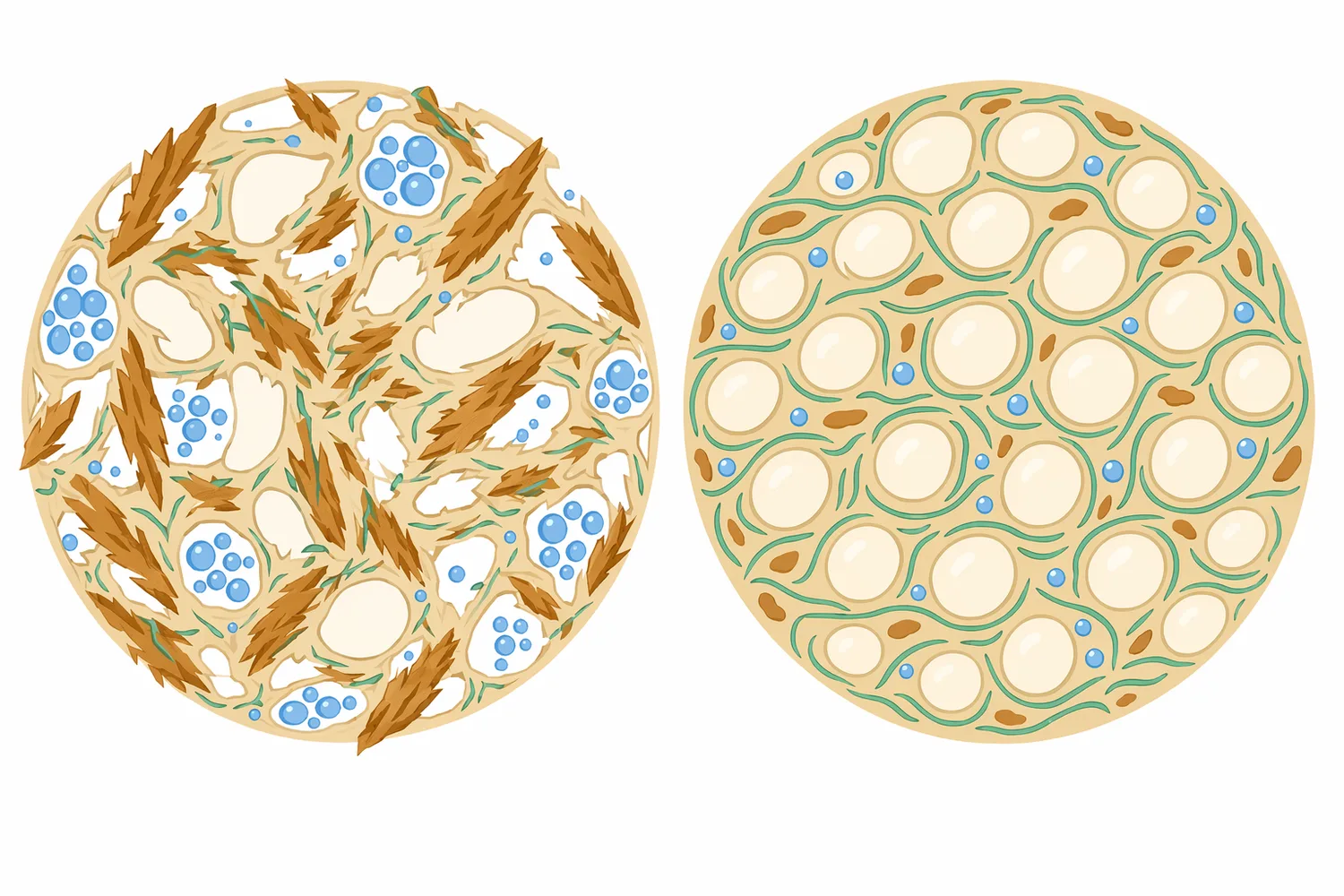
Whole wheat bread is one of the clearest uses for hemicellulase because the substrate level is higher and the technological challenge is more obvious. Bran and germ components reduce the continuity of the gluten network, increase water absorption, and can produce dense loaves if the dough does not expand properly. Enzyme-based improvement of bread systems has been studied because wholegrain and composite formulas often need support to maintain acceptable rheology and finished bread quality [3].
In these systems, hemicellulase can help convert part of the insoluble hemicellulose fraction into smaller fragments. This reduces the disruptive effect of bran-associated cell-wall material and helps the hydrated dough matrix become more extensible. The desired result is not a weak dough, but a dough that stretches and retains gas instead of resisting expansion or tearing around bran particles.
Multigrain breads often contain ingredients with very different hydration rates. Oat, rye, barley, seeds, cracked grains, pulse flours, and added fibers can absorb water slowly or unevenly. Some ingredients increase viscosity, while others weaken the gluten matrix or create discontinuities. Studies on high-fiber composite doughs, including systems using extruded soybean okara, show that fiber-rich additions can significantly alter texture, rheology, and structural properties [6].
Hemicellulase is relevant where cereal hemicellulose contributes to these changes. It can help manage water distribution and reduce excessive fiber-related interference, improving the chance of a stable dough during mixing and proofing. However, multigrain formulas are complex, and the effect will depend on the specific grain blend, hydration strategy, fermentation time, and overall improver system.
Soft buns and rolls require dough that is extensible enough for expansion but strong enough to hold shape. They also need a fine crumb and pleasant softness after baking. Hemicellulase can contribute by reducing fiber-related tightness and improving gas-cell distribution, especially in soft wholegrain buns or enriched doughs containing added cereal fibers.
Because these products may also contain sugar, fat, milk solids, emulsifiers, or inclusions, hemicellulase should be understood as one contributor to texture. Its main role remains hemicellulose modification; sweetness, fat plasticization, emulsification, yeast activity, and baking conditions all contribute to the final eating quality.
Flatbreads rely on fast expansion, moisture migration, and rapid structure setting. Thermal analysis of flatbread baking highlights how expansion and heat transfer are central to final product structure in high-temperature tunnel baking [7]. In these systems, dough rheology before baking is critical because the product has limited time to expand and set.
Hemicellulase may be useful where wholemeal flour or bran-containing blends make flatbread dough difficult to sheet or expand evenly. By improving fiber hydration and dough extensibility, it can support more uniform processing. The benefit is most relevant when the limiting issue is fiber-related dough resistance or uneven expansion rather than yeast activity or baking temperature.
The performance of hemicellulase depends strongly on the flour and process. Flour protein quality, bran level, particle size, starch damage, water addition, mixing energy, dough temperature, fermentation time, salt, sugar, fat, acidity, and other enzymes all influence the result. Research on sourdough-type systems shows that organic acids such as acetic, lactic, and succinic acids can change dough rheology, breadmaking behavior, and specific volume, illustrating how one processing variable can reshape the entire dough system [8].
This is why the same hemicellulase concept can produce different outcomes in different bakeries. A whole wheat pan bread with long fermentation gives the enzyme more time to act on hydrated substrate than a short-time, high-speed process. A bran-rich dough with coarse particles may respond differently from a finely milled wholemeal dough. A high-sugar bun dough has a different water phase and fermentation profile from a lean bread dough.
The correct expectation is controlled improvement, not guaranteed transformation. Hemicellulase can help when hemicellulose and arabinoxylan behavior are limiting dough performance. It cannot compensate for severely unsuitable flour, incorrect water balance, under-mixing, over-fermentation, poor yeast performance, or baking conditions that do not set the loaf properly.
There is also a practical upper limit to fiber hydrolysis. Moderate cleavage can improve solubility and reduce physical interference. Excessive cleavage can reduce the structure-building contribution of polysaccharides too much, creating slackness or stickiness. That is why hemicellulase is best used as a process ingredient within a balanced bread formula rather than treated as a standalone fix.
Fermentation changes dough chemistry while hemicellulase changes fiber structure. Yeast produces carbon dioxide and flavor-active compounds; sourdough microorganisms also produce organic acids and other metabolites that influence dough strength, extensibility, and bread quality. Reviews of sourdough systems describe their functional and health-related features, including their impact on bread characteristics through fermentation-driven biochemical changes [9].
In sourdough or sourdough-style breads, acidity can alter gluten behavior and enzyme performance. Acidified doughs may become more extensible or weaker depending on acid type and concentration, and wholemeal systems can respond strongly because bran, gluten, starch, and fiber all interact. Hemicellulase in such systems acts on hemicellulose, but the observed dough behavior reflects both enzymatic hydrolysis and fermentation chemistry.
For wholemeal sourdough-style breads, the practical benefit may be improved handling and crumb openness where bran and arabinoxylans otherwise restrict expansion. However, the acid profile and fermentation duration matter. Longer fermentation gives more time for both endogenous flour enzymes and added enzyme systems to act, so process control remains important.
By the time bread enters the oven, hemicellulase has already done most of its useful work. During early baking, dough temperature rises, gases expand, yeast activity briefly accelerates and then stops, starch begins gelatinizing, and proteins set. The enzyme’s direct activity is reduced as heat denatures it, but the structural changes created earlier remain embedded in the dough matrix.
The key oven-stage benefit is better expansion before the structure sets. If hemicellulase has helped the dough become more extensible and less disrupted by insoluble fiber, gas cells can expand more uniformly during oven spring. When starch gelatinization and protein coagulation fix that expanded structure, the result is improved loaf volume and crumb regularity.
Crust and flavor development are controlled by many factors beyond hemicellulase, including reducing sugars, amino compounds, baking temperature, and time. Research on Maillard and caramelization reactions in baked model systems shows that flavor and color markers form and degrade dynamically during baking, emphasizing that enzyme-driven dough improvement and baking chemistry are connected but distinct parts of bread quality [10].
Food enzymes such as xylanase and related hemicellulase activities are commonly evaluated in food-processing contexts because they are used as processing aids rather than as nutrients in the finished bread. The scientific opinion on xylanase from a genetically modified strain of Aspergillus oryzae is one example of formal food-enzyme evaluation for bakery-relevant enzyme activity [4].
For a buyer ordering from Enzymes.bio, the practical purchasing model is straightforward: hemicellulase products are available online by the 1 kg unit, payment is completed online, and the order is processed and shipped. The product is intended for industrial and food-processing use, not direct consumption. A Certificate of Analysis and Safety Data Sheet come with the order so the received material can be documented and handled appropriately in a professional processing environment .
Enzymes.bio is a supplier of enzyme products, including hemicellulase for applications such as baking and other fiber-modification processes. The value for bakery users is access to a practical enzyme ingredient that can be incorporated into established process development work without treating the supplier as a formulation laboratory.
Hemicellulase Enzyme Breaker improves dough and bread quality by acting on cereal hemicellulose, especially arabinoxylan-rich cell-wall material that affects water binding, dough viscosity, gluten continuity, and gas-cell stability. In wholemeal, wheat-meal, bran-enriched, multigrain, and high-fiber breads, that mechanism directly addresses common problems such as tight dough, low loaf volume, coarse crumb, and inconsistent machinability.
The strongest practical case is in formulas where fiber and bran are beneficial for product positioning but difficult for processing. Hemicellulase partially modifies those fiber structures so the dough can hydrate, stretch, ferment, and bake more effectively. It is not a replacement for flour quality, hydration control, mixing, fermentation management, or a balanced improver system, but it is a well-established tool for controlled fiber modification in breadmaking.
For bakeries and food-processing users ready to work with a 1 kg online order, Enzymes.bio supplies hemicellulase as a direct-purchase enzyme product for industrial and food-processing applications, with order documentation supplied with the shipment .
Sold by the 1 kg unit, in stock and ready to ship. Order directly on our store — pay online and we process your order. A Certificate of Analysis and Safety Data Sheet are included with every order.
Buy Hemicellulase Enzyme Breaker For Improving The Properties Of Dough And The Quality Of Bread →Numbered in order of first citation. Open-access sources, each verified reachable at publication; citation numbers in the text link here.