
High Temperature Tolerant Alpha Amylase Enzyme for Brewers is an exogenous brewing enzyme used to support starch breakdown during mashing, especially where heat, adjunct starch, specialty malts, or variable malt enzyme power make conversion less predictable. It cuts internal α-1,4 bonds in starch, reducing large gelatinized starch molecules into shorter dextrins and soluble carbohydrate fragments that the mash can further convert into fermentable wort sugars. Enzymes.bio supplies this product directly online by the 1 kg unit; the buyer pays online, and the order is processed and shipped with a Certificate of Analysis and Safety Data Sheet included with the order .
For brewers, high-temperature tolerant alpha amylase is a process aid for starch conversion, not a flavor additive or a substitute for mash control. Its practical value is that it keeps hydrolyzing starch in temperature conditions where less stable amylases may lose activity, helping the mash move from swollen starch granules to soluble dextrins and fermentable sugar precursors more consistently [1].
In an all-malt mash, barley malt supplies its own enzymes; in adjunct-rich, high-temperature, or lower-diastatic-power grists, the natural enzyme reserve may be less aligned with the process. A thermostable alpha amylase gives the mash additional endo-amylase capacity, so large starch molecules are opened internally rather than relying only on enzymes naturally present in the malt [2].
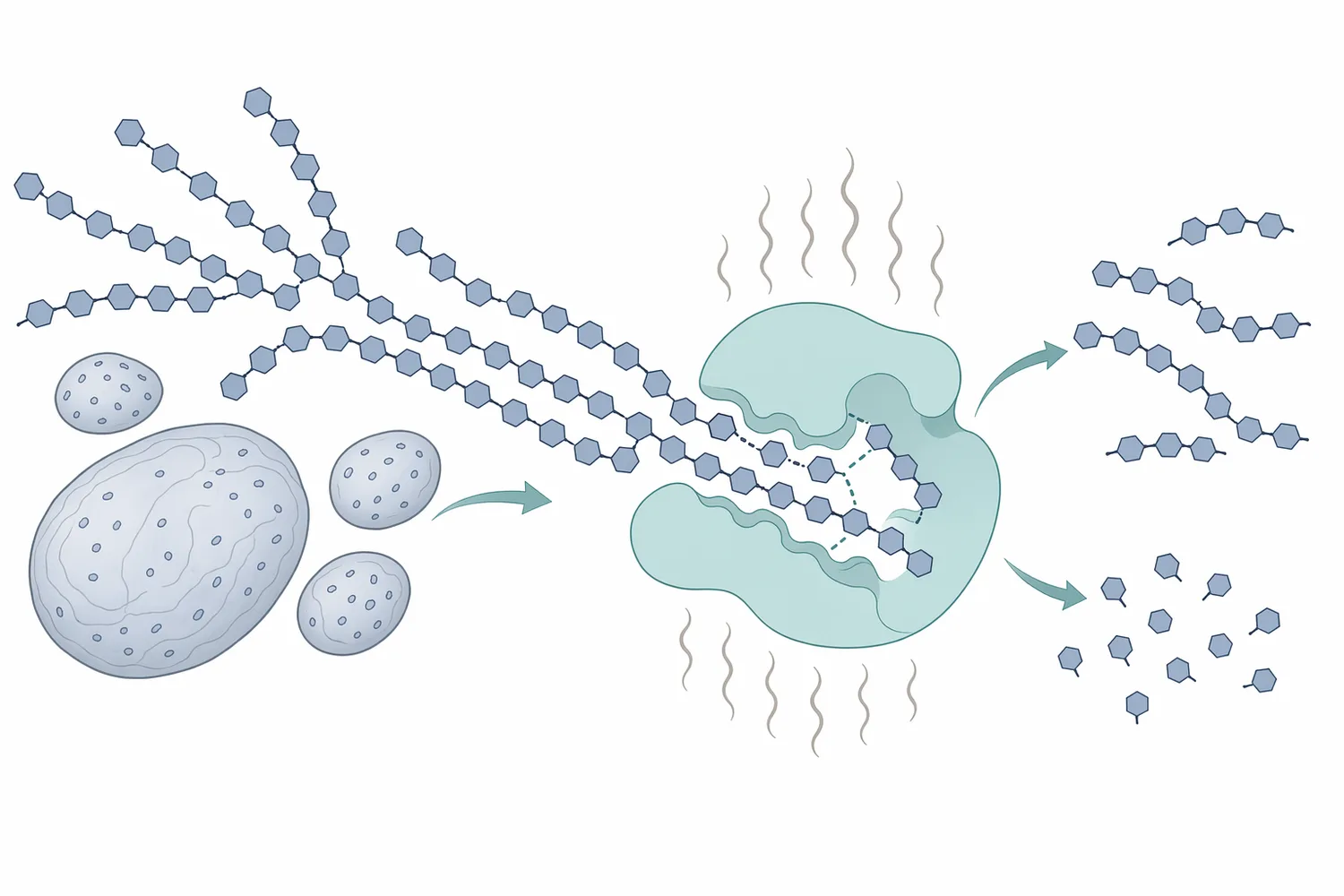
Starch in brewing raw materials is mainly present as amylose and amylopectin. Amylose is mostly linear, while amylopectin is highly branched; both are made from glucose units linked largely by α-1,4 glycosidic bonds, with α-1,6 branches in amylopectin. Alpha amylase is an endo-acting enzyme: it binds along the starch chain and cleaves internal α-1,4 linkages, producing shorter dextrins rather than simply nibbling glucose units from the ends [1].
That internal cutting changes the mash physically and chemically. Large, hydrated starch polymers hold water and contribute viscosity; as alpha amylase cuts them into shorter fragments, the mash becomes easier to convert because more chain ends and smaller soluble molecules are created. This is why alpha amylase is often described as a liquefying enzyme in starch processing: it reduces the size of starch polymers before other enzymes finish saccharification [3].
In brewing terms, alpha amylase does not directly decide the final alcohol level by itself. It creates a spectrum of dextrins and shorter carbohydrates that beta amylase and other malt enzymes can further convert, especially into maltose. The balance between fermentable sugars and residual dextrins influences attenuation, body, mouthfeel, and perceived fullness in the finished beer [1].
A high-temperature tolerant alpha amylase is especially useful because starch needs heat to become enzyme-accessible. As starch granules hydrate and gelatinize, their ordered internal structure loosens; the enzyme can then reach glycosidic bonds that were previously protected inside compact granules. If an enzyme remains folded and active during this hotter phase, it can begin shortening starch chains while the substrate is at its most accessible [4].
Mashing is a controlled compromise between enzyme activity and enzyme survival. Brewing education commonly distinguishes beta amylase, which favors lower saccharification temperatures, from alpha amylase, which remains more active in warmer mash conditions; a commonly cited brewing range places beta amylase around 131–150°F / 55–65°C and alpha amylase around 154–162°F / 68–72°C [1].
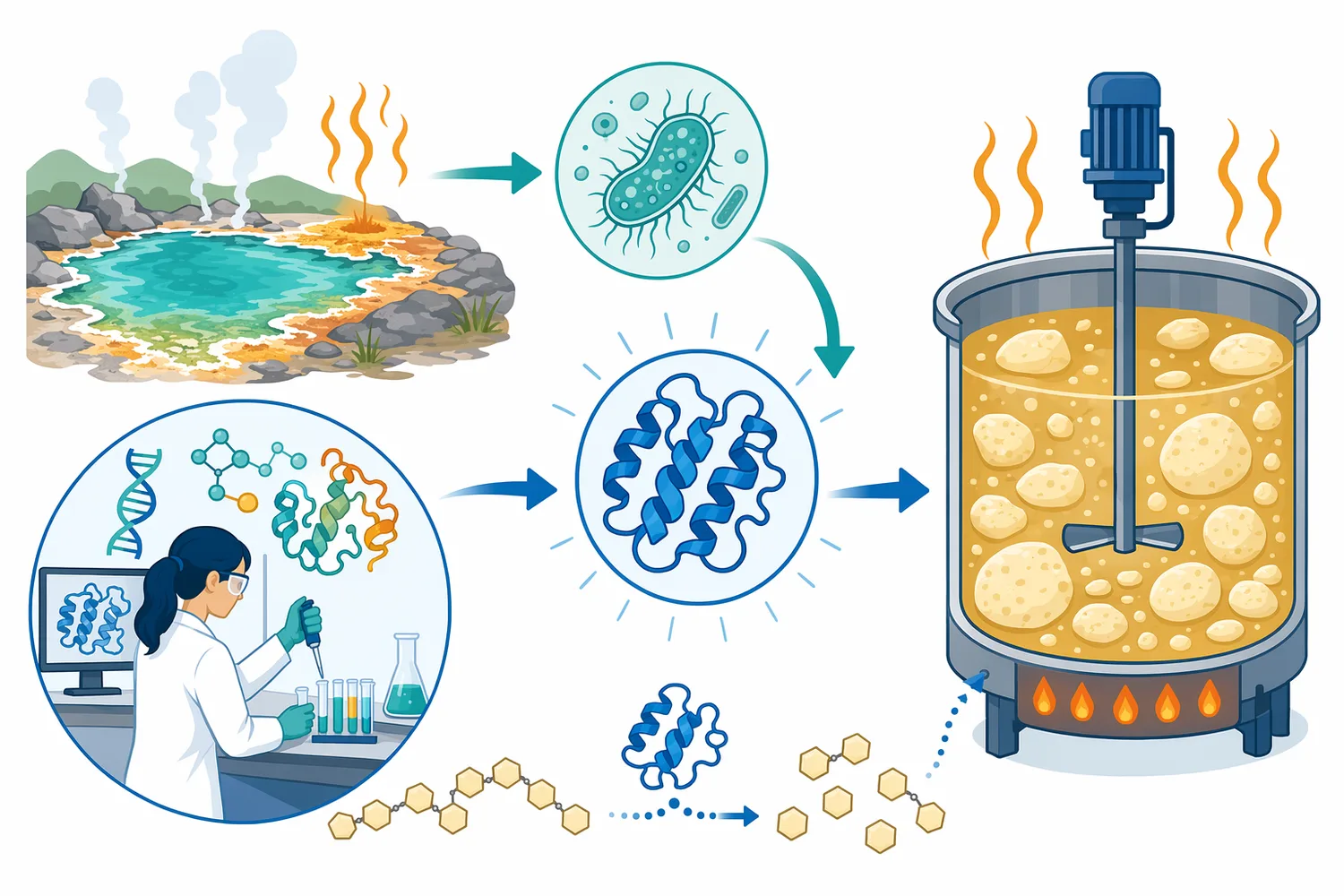
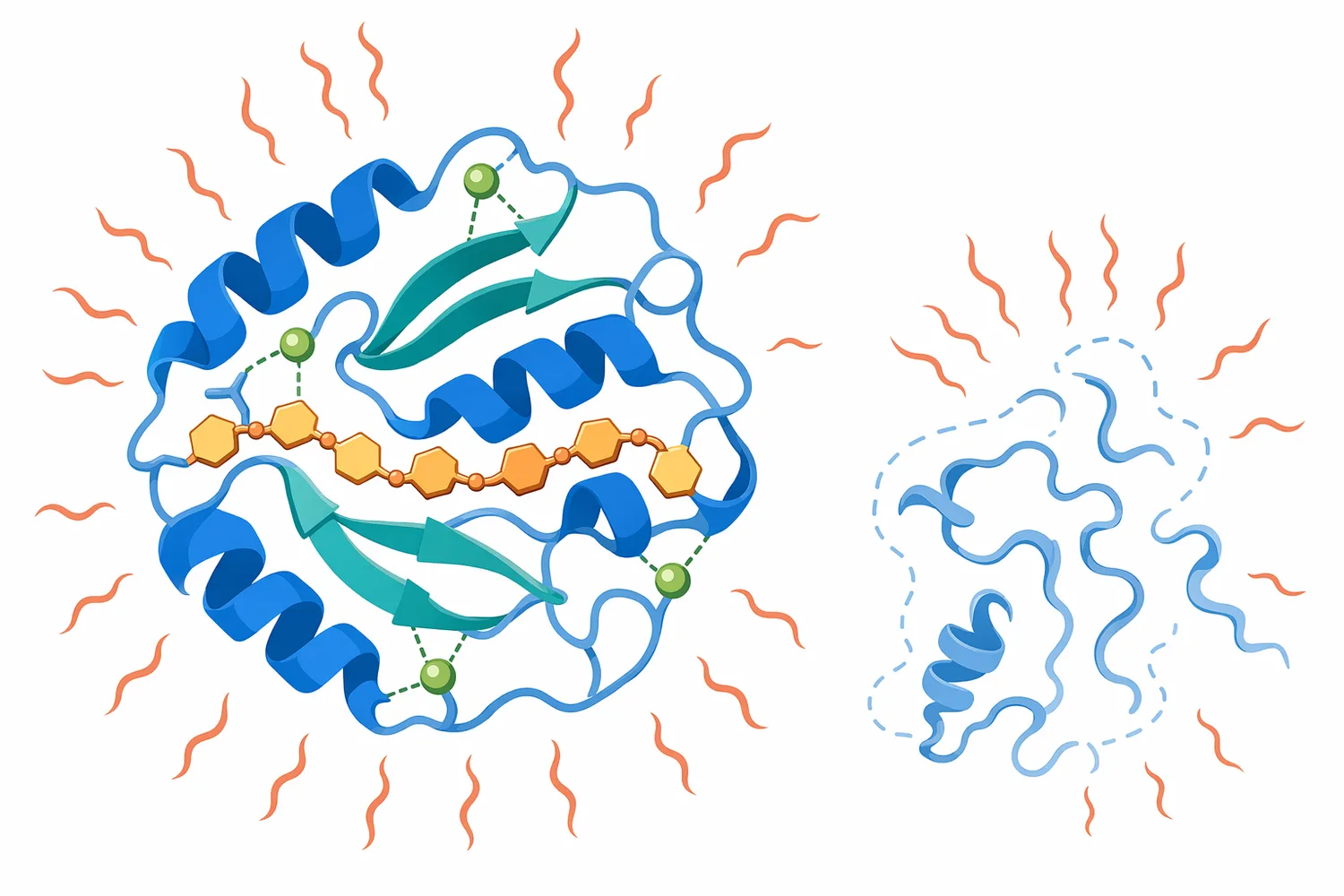
Those ranges matter because enzymes are proteins, and proteins depend on a three-dimensional fold to work. Heat increases molecular motion; if the enzyme unfolds, the active site no longer holds starch in the right orientation for bond cleavage. A high-temperature tolerant alpha amylase is valuable because its structure resists that heat-driven loss of shape for longer, allowing starch hydrolysis to continue in warm mash or adjunct-cooking conditions [5].
Thermostable alpha amylases are widely studied for exactly this reason. Recent research has characterized thermostable enzymes from organisms and environments associated with heat tolerance, including Bacillus licheniformis strains, geothermal-source metagenomes, thermophilic microbes, and Geobacillus strains used for starch-focused applications [6]. The brewing relevance is not that every research enzyme is a brewing product, but that the industrial goal is the same: keep the starch-cutting catalyst active while the process is hot enough to make starch accessible [4].
Alpha amylase works best when viewed as part of the mash enzyme system rather than as an isolated additive. It opens starch molecules internally, while beta amylase releases maltose from non-reducing chain ends. Limit dextrinase and related debranching activity can act on some branch points, although their practical contribution depends strongly on mash conditions and enzyme survival [1].
| Mash enzyme | Main action on starch | Practical effect in wort | Temperature behavior in brewing context |
|---|---|---|---|
| Alpha amylase | Cuts internal α-1,4 bonds in starch chains | Produces shorter dextrins and opens starch for further conversion | More active in warmer mash ranges than beta amylase; heat tolerance is central to performance [1] |
| Beta amylase | Releases maltose from chain ends | Increases fermentable maltose when suitable chain ends are available | Generally favors lower mash temperatures and is more heat-sensitive than alpha amylase [1] |
| Limit dextrinase / debranching enzymes | Acts on selected α-1,6 branch points | Can reduce branched dextrins where process conditions permit | Often more sensitive to mash conditions, so its effect is process-dependent [1] |
| Glucoamylase-type activity | Removes glucose units from chain ends, including dextrins | Can increase fermentability and dryness in specific beer styles or alcohol processes | Used differently from alpha amylase because it pushes conversion further toward glucose [7] |
This table also shows why alpha amylase does not automatically make a beer thin or over-attenuated. By itself, alpha amylase produces dextrins and shorter fragments; whether those fragments become highly fermentable depends on the rest of the enzyme system, mash temperature profile, time, yeast, and recipe design. Brewers use alpha amylase to improve access to starch, not to surrender control of beer character [2].
Adjuncts such as unmalted cereals, flakes, and other starch-bearing ingredients can contribute extract, flavor, color, body, or cost advantages, but they do not necessarily bring the same natural enzyme package as malted barley. When a grist contributes starch without enough endogenous amylase, the mash has more substrate than its natural enzyme reserve may comfortably handle. Added alpha amylase helps by attacking gelatinized adjunct starch internally, converting it into soluble dextrins that the mash can further process [1].
The mechanism is concrete: heat swells the starch granule, water enters, and the ordered starch matrix becomes less crystalline. Alpha amylase then binds exposed chains and cuts internal α-1,4 bonds. As those long chains shorten, viscosity drops and soluble extract becomes more accessible, which is why thermostable amylases are a recurring focus in industrial starch processing literature [3].
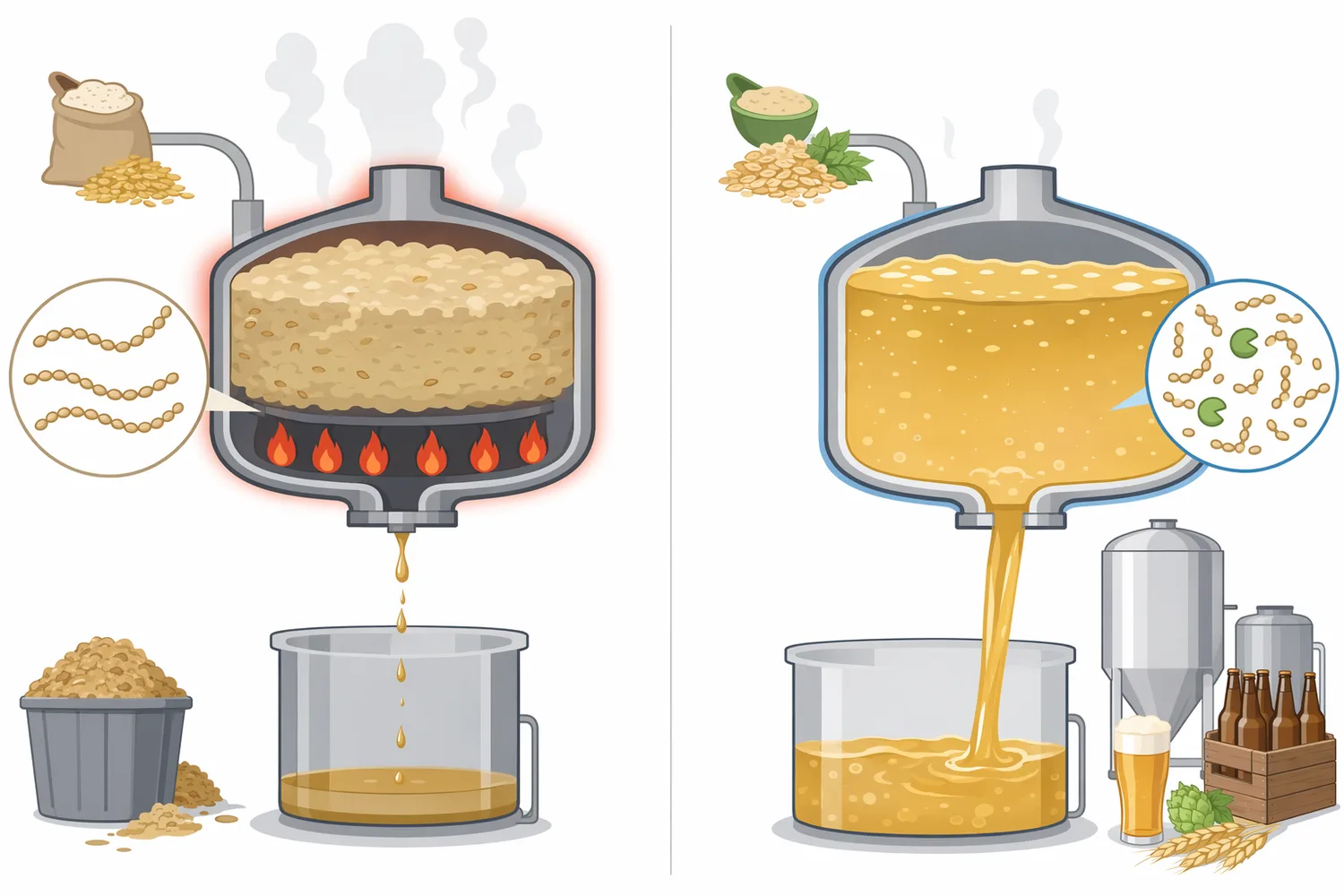
Malt enzyme content is not uniform across all ingredients. Pale base malt usually contributes meaningful diastatic power, while more highly heated or roasted materials contribute flavor and color but much less active enzyme because heat damages proteins. In a recipe with a large specialty malt fraction, the starch and dextrin load may not be matched by the same active enzyme reserve found in a base-malt-heavy mash [2].
Supplemental alpha amylase can help stabilize this situation by adding more internal starch-cleaving capacity. It does not replace the flavor contribution of specialty grains or change the basic recipe objective; it simply gives the mash more ability to reduce large starch molecules into smaller, soluble carbohydrate fragments. That can support conversion consistency when the grist is designed for color, roast character, body, or adjunct expression rather than maximum enzymatic strength [1].
Some processes deliberately operate at elevated temperatures because heat is needed to gelatinize certain starches, reduce viscosity, or fit a particular mash schedule. The challenge is that the same heat that opens starch can also inactivate enzymes. A high-temperature tolerant alpha amylase is designed for this tension: it is useful where the brewer wants starch molecules open and hydrated without losing the main enzyme responsible for liquefaction [5].
Research on thermostable alpha amylases has repeatedly focused on industrial relevance under demanding temperature conditions. For example, Bacillus licheniformis has been the subject of multiple recent thermostable alpha-amylase studies, including work on strain 104.K and acid-stable strain B4-423, reflecting the importance of enzymes that maintain function under processing stress [6]. Other work has investigated thermophilic microbial sources and geothermal metagenomic resources, reinforcing the broader industrial demand for heat-stable starch-hydrolyzing enzymes [8].
High-gravity brewing increases the amount of extract targeted per unit of wort, which often means denser mashes and higher carbohydrate loading. In such systems, large starch polymers can contribute to viscosity and slow access to substrate. Alpha amylase helps by reducing polymer size early in conversion, creating shorter dextrins and more soluble carbohydrate fragments that are easier for the rest of the mash enzyme system to handle [1].
This is not a magic correction for every high-gravity problem. Mash thickness, mixing, temperature uniformity, pH, grist composition, and lautering performance still matter. The enzyme’s specific contribution is narrower and more concrete: it increases the mash’s capacity to cut internal starch bonds under process conditions where natural malt enzymes may be stretched [2].
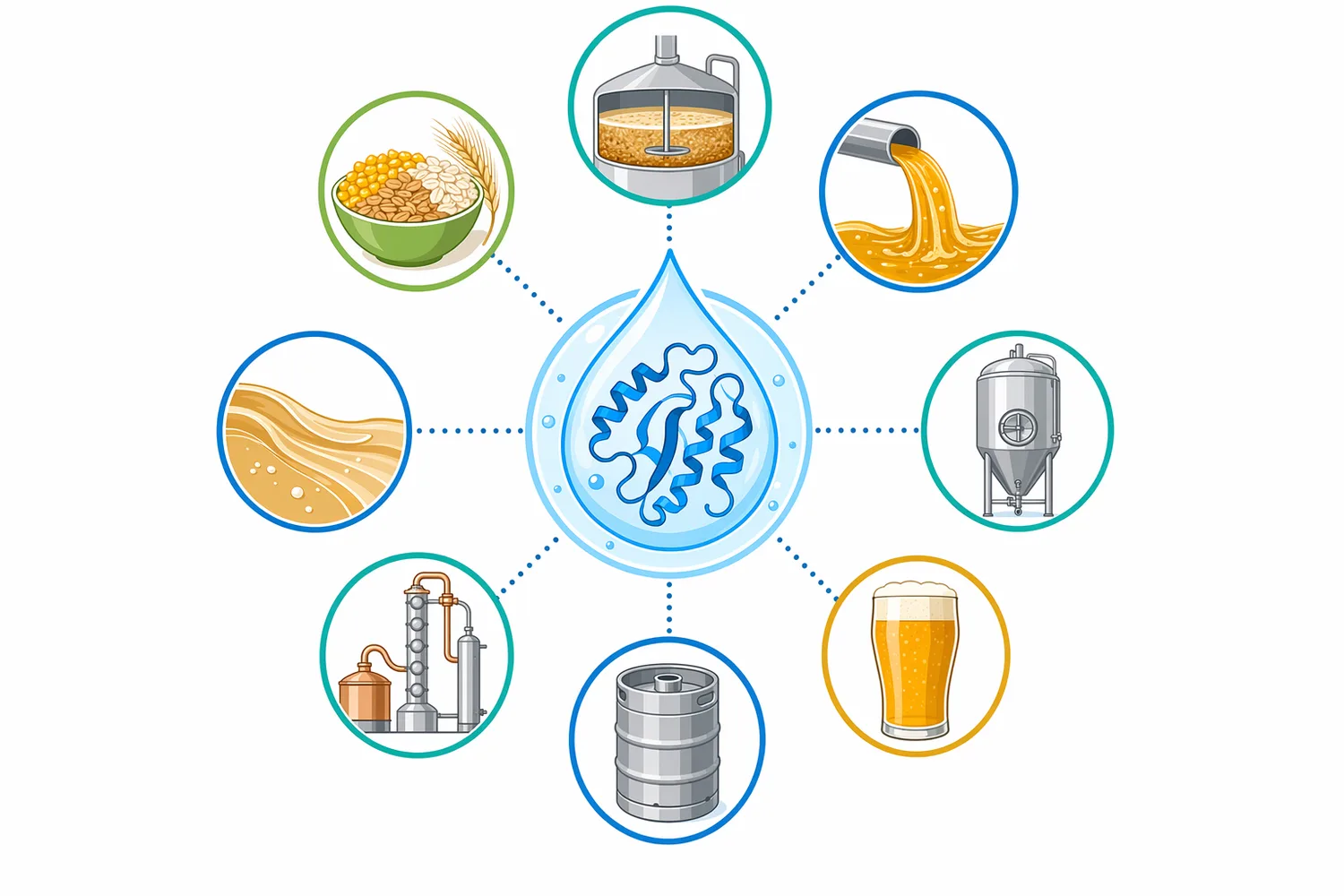
When alpha amylase performs well, the first change is molecular size reduction. Large starch molecules are broken into shorter dextrins; these smaller fragments dissolve more readily and expose more chain ends. That creates a better substrate field for beta amylase and other saccharifying activities, which can then produce a fermentable sugar spectrum appropriate to the mash program [1].
The second change is process consistency. If raw-material enzyme strength varies, an added alpha amylase can reduce the dependence on the malt’s natural alpha-amylase reserve. This is particularly relevant when the grist includes adjuncts or specialty materials with little enzymatic contribution of their own [2].
The third change is the balance between extract recovery and beer body. Alpha amylase supports extract by converting starch into soluble carbohydrate, but it also produces dextrins that may remain partially unfermented depending on the rest of the process. In other words, alpha amylase can support both conversion and body, because its products are not exclusively simple sugars [1].
The fourth change is resilience to heat. In a hot mash or adjunct-liquefaction step, a less stable enzyme may unfold before it has done enough work. A thermostable alpha amylase remains catalytically useful longer under heat exposure, so starch can be shortened during the same phase in which gelatinization improves substrate access [4].
The scientific basis for using alpha amylase in brewing is strong: starch must be hydrolyzed into smaller carbohydrates before yeast can ferment the resulting wort effectively, and alpha amylase is one of the central mash enzymes responsible for that conversion. Brewing education sources describe alpha and beta amylase as complementary enzymes whose activity ranges and products shape the fermentable and dextrin composition of wort [1].
Industrial enzyme literature supports the specific value of thermostability. Reviews of thermostable alpha amylases describe their importance across starch-processing applications because elevated temperatures are common where starch is gelatinized, liquefied, or processed at scale. Heat-stable enzymes reduce the mismatch between the temperature needed to open starch and the temperature that ordinary proteins can tolerate [3].
Recent studies continue to expand the known sources of thermostable amylases. Bacillus licheniformis 104.K has been characterized for industrial applications; Bacillus licheniformis B4-423 has been described as thermostable and acid-stable; and thermophilic-microbe reviews continue to emphasize production, engineering, and industrial application of heat-tolerant amylases [9]. These studies are not all brewing trials, but they directly support the underlying technical principle: alpha amylase performance depends on maintaining catalytic structure under process heat [4].
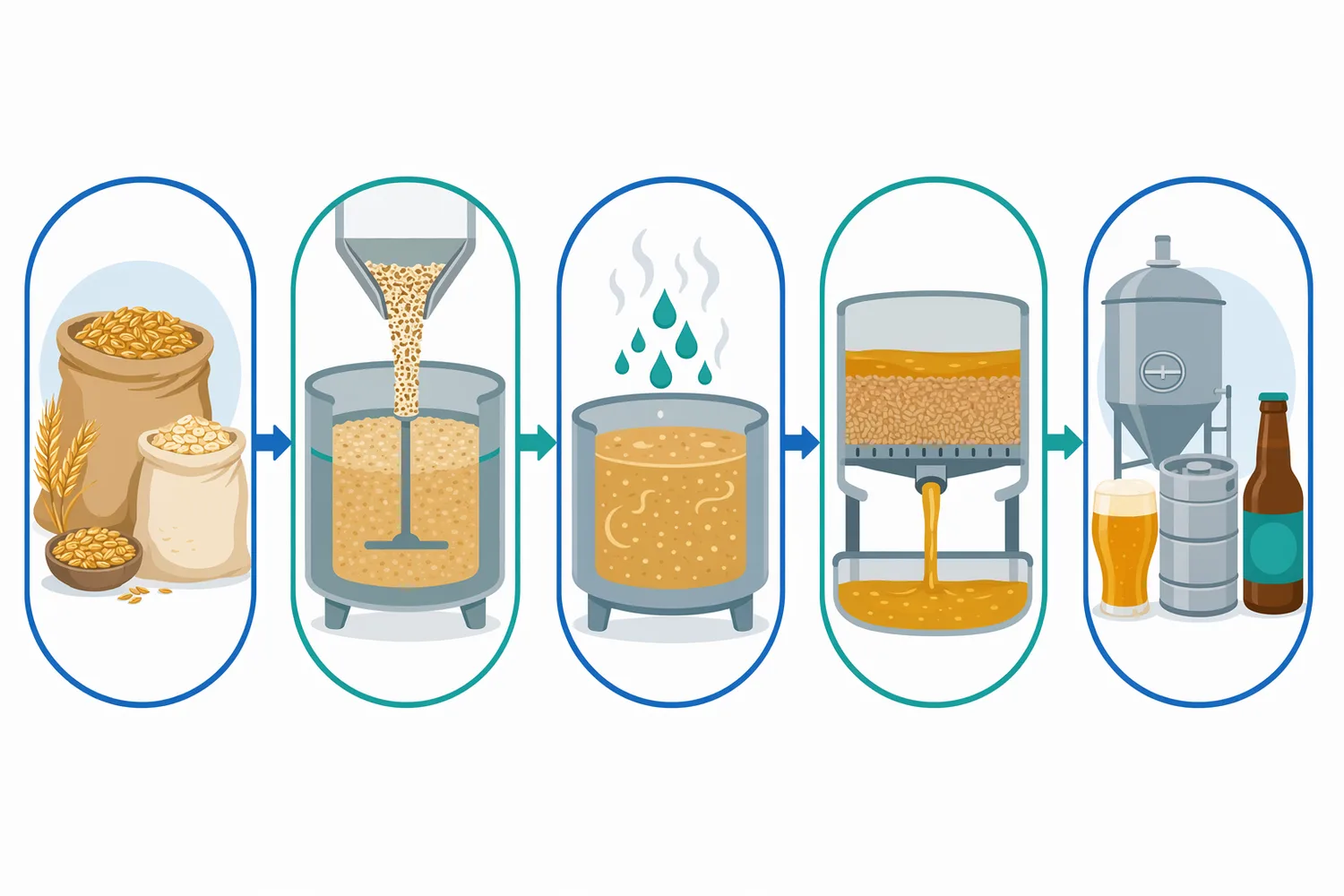
Other research routes include metagenomic mining from geothermal springs and enzyme work from Geobacillus sp. DS3. These studies show that researchers look for amylase genes and enzyme structures in heat-associated environments because natural thermostability can be valuable for starch conversion. The same logic applies in brewing when mash temperatures rise toward conditions that challenge less stable enzymes [8].
Protein engineering studies also reinforce the point that thermostability is a design target, not a marketing adjective. Work on Bacillus amyloliquefaciens alpha amylase has examined multipoint mutations to improve thermostability, while structural and functional studies of Bacillus licheniformis alpha amylase investigate how protein features relate to stability and catalytic behavior [10]. For a brewer, the practical takeaway is simple: the enzyme must remain folded enough, long enough, at the relevant mash temperature to keep cutting starch [11].
Temperature is only one part of enzyme performance. Mash pH affects the charged groups in the enzyme active site and the starch-binding region. If pH moves too far from the enzyme’s useful range, catalytic residues may not donate or accept protons correctly, substrate binding can weaken, and starch hydrolysis slows even if the enzyme has not fully denatured [2].
Brewing mashes are mildly acidic, which is compatible with the natural operating environment of many brewing enzymes. Alpha amylase generally has a somewhat different optimum from beta amylase, and mash programs often manage the trade-off between these enzymes by controlling temperature and rest timing. The result is not simply “more enzyme activity,” but a managed carbohydrate profile in the wort [1].
Thermostable and acid-stable research enzymes are therefore relevant because real processes involve combined stresses. A hot mash with mildly acidic pH, mineral content, dissolved solids, and adjunct particles is more demanding than a simple buffered model system. Studies on thermostable and acid-stable alpha amylases, including Bacillus licheniformis B4-423, reflect the industrial need for enzymes that tolerate more than one process stress at a time [9].
Many alpha amylases are metalloenzymes or calcium-stabilized proteins, meaning that bound ions can help maintain the structural geometry needed for catalysis. In brewing references, calcium is commonly noted as supportive for alpha-amylase stability, which fits the broader understanding that ion binding can reduce structural flexibility and help the enzyme resist heat-driven unfolding [2].
Mechanistically, this matters because the active site must hold a starch chain in a precise orientation. If heat or unfavorable chemistry distorts the binding groove, the enzyme may still be present in the mash but no longer productive. Stabilizing features help preserve the shape of the catalytic region so that α-1,4 bonds are positioned for cleavage [5].
This is also why “temperature tolerant” is not the same as “unaffected by process conditions.” Heat-stable enzymes still have limits; they simply retain useful activity under hotter conditions than less stable alternatives. In brewing, that means they should be understood as robust process aids, not as ingredients that override the fundamentals of mash design [1].
High-temperature tolerant alpha amylase can fit different brewing objectives because its biochemical role is upstream of style expression. In a clean lager, it may support predictable conversion; in an adjunct beer, it may help process cereal starch; in a darker beer, it may compensate for lower enzyme contribution from specialty grains. The enzyme itself does not create a beer style—it helps make starch available to the rest of the brewing process [2].
For beers where body and residual dextrin are important, the key is to understand that alpha amylase produces dextrins as well as shorter fragments. It is not equivalent to using an enzyme that drives carbohydrates all the way to glucose. Mash temperature, rest duration, grist design, yeast attenuation, and any other enzymes present determine whether the wort remains dextrinous or becomes highly fermentable [1].
For efficiency-focused processes, the main benefit is reduced starch limitation. If gelatinized starch remains as large polymers, it may not contribute fully to soluble extract and can create quality issues downstream. Alpha amylase addresses that limitation by converting inaccessible or oversized starch molecules into soluble fragments that are more compatible with wort production [3].
The strongest evidence for alpha amylase in brewing comes from core brewing science: starch conversion depends on amylolytic enzymes, and alpha amylase is central because it cleaves internal starch bonds. The strongest evidence for high-temperature tolerance comes from industrial enzyme research, where thermostable alpha amylases are repeatedly investigated for hot starch-processing environments [1].
At the same time, not every thermostable alpha-amylase paper is a finished-beer trial. Some studies focus on discovering new enzymes, expressing them in host systems, improving stability, or characterizing behavior under controlled conditions. Those studies support the mechanism and industrial relevance, but final brewing outcomes still depend on the recipe and process in which the enzyme is used [4].
That distinction is important for practical confidence. The product’s role is well defined—supporting starch hydrolysis under brewing-relevant conditions—but beer quality is always the result of the complete process. Alpha amylase can improve the starch-conversion step; it does not replace raw-material quality, fermentation management, sanitation, packaging control, or sensory design [2].
Enzymes.bio supplies High Temperature Tolerant Alpha Amylase Enzyme for Brewers as an online product sold by the 1 kg unit. Buyers can place the order directly online, pay online, and have the order processed and shipped; a Certificate of Analysis and Safety Data Sheet are included with the order .
This product is best understood as a brewing process aid for mash starch conversion. Its technical value is that it adds thermostable alpha-amylase activity to the brewing process, helping convert gelatinized starch into soluble dextrins and carbohydrate fragments during hot mash conditions .
High Temperature Tolerant Alpha Amylase Enzyme for Brewers supports more reliable starch conversion by cutting internal α-1,4 bonds in starch during mashing. That action reduces large starch polymers into smaller dextrins and soluble carbohydrate fragments, improving access for the broader mash enzyme system and supporting wort extract formation [1].
Its main advantages are strongest where the mash is hot, adjunct-rich, high in specialty materials, or otherwise demanding for natural malt enzymes. Used as part of a controlled brewing process, it helps brewers manage starch hydrolysis while preserving control over fermentability, body, and final beer character [2].
Sold by the 1 kg unit, in stock and ready to ship. Order directly on our store — pay online and we process your order. A Certificate of Analysis and Safety Data Sheet are included with every order.
Buy High Temperature Tolerant Alpha Amylase Enzyme For Brewers →Numbered in order of first citation. Open-access sources, each verified reachable at publication; citation numbers in the text link here.