
Invertase is the enzyme used to split sucrose into glucose and fructose, producing the glucose–fructose mixture commonly called invert sugar. In practical food and beverage work, that single reaction can change sweetness, crystallization behavior, texture, moisture handling and fermentable-sugar availability in sucrose-containing systems.
Enzymes.bio supplies Invertase directly online by the 1 kg unit. The buyer pays online, the order is processed and shipped, and a Certificate of Analysis and Safety Data Sheet come with the order.
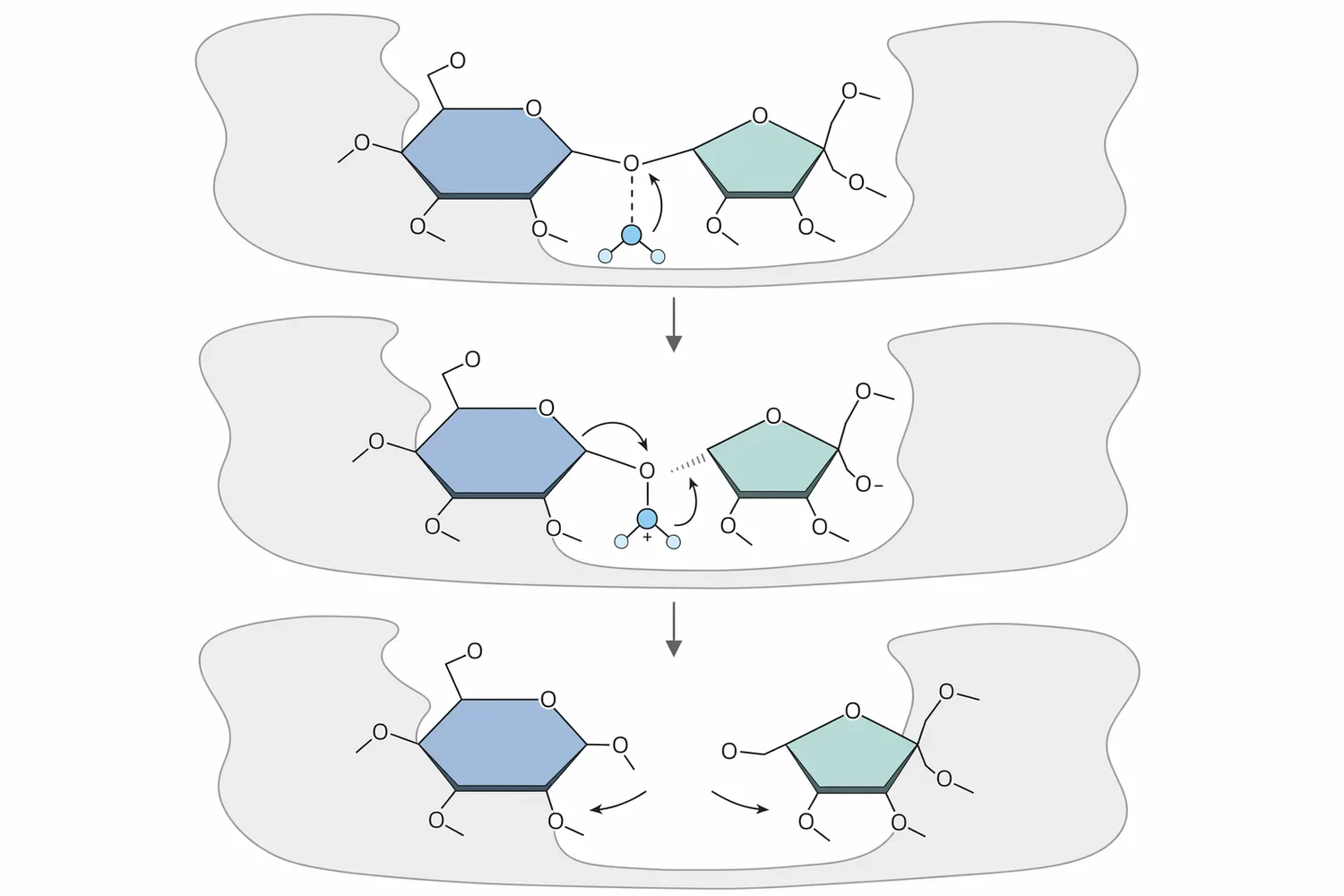
The simplest invertase definition is: invertase is a sucrose-hydrolyzing enzyme. If you are searching “what is invertase,” “define invertase,” or “invertase meaning,” the answer is not a general sweetener or preservative; it is a biocatalyst that acts on sucrose and converts it into two smaller sugars, glucose and fructose. In biochemical language, invertases are sucrose-cleaving glycoside hydrolases, and modern structural work describes how their active sites recognize sucrose and catalyze hydrolysis of the glycosidic bond connecting the glucose and fructose portions of the molecule [1].
That chemical change is why the invertase enzyme is useful in commercial carbohydrate processing. Sucrose behaves as one disaccharide; after enzyme action, the system contains two monosaccharides with different sweetness, solubility and crystallization behavior. Research on plant fruit systems, including postharvest pear storage, shows the same core principle in biology: acid invertase activity participates in sucrose hydrolysis, shifting sugar composition during storage [2].
In commercial wording, “enzyme invertase” and “invertase enzyme” usually refer to the same functional ingredient: a preparation used where sucrose conversion is desired. The enzyme is relevant wherever the substrate actually contains sucrose—fondants, sugar syrups, fruit-style fillings, confectionery centers, beverage syrups, some brewing or fermentation contexts, and honey-style products. Broad food-enzyme reviews continue to place microbial enzymes among the important processing tools for food applications because they catalyze targeted reactions under comparatively mild process conditions [3].
Sucrose consists of a glucose unit linked to a fructose unit. Invertase binds sucrose in an active-site pocket shaped to position the fructofuranoside portion of the substrate close to catalytic amino-acid residues. The enzyme then uses water to cleave the glycosidic bond, releasing free glucose and free fructose rather than leaving the two sugars locked together as sucrose [1].
The practical consequence is not merely “more sweetness.” Sucrose crystals form when sucrose molecules align and pack into an ordered lattice. When invertase converts part of that sucrose into glucose and fructose, fewer intact sucrose molecules remain available to build that lattice, and the monosaccharides interrupt the regular packing behavior. In confectionery systems, that is one reason invertase for candy can help a firm sucrose-rich center become softer over time rather than staying as a hard, crystalline mass.
The same reaction also changes osmotic and water-binding behavior. A solution containing glucose and fructose has more individual sugar molecules than the original sucrose solution at the same molar sucrose conversion, and those smaller sugars interact differently with water. In filled candies, syrups and fruit-style systems, this can influence perceived juiciness, center flow, and the rate at which a texture changes during storage. Plant studies of fruit development also show that soluble acid invertase and neutral invertase are part of the larger sugar-metabolism network that governs the balance between sucrose and reducing sugars [4].
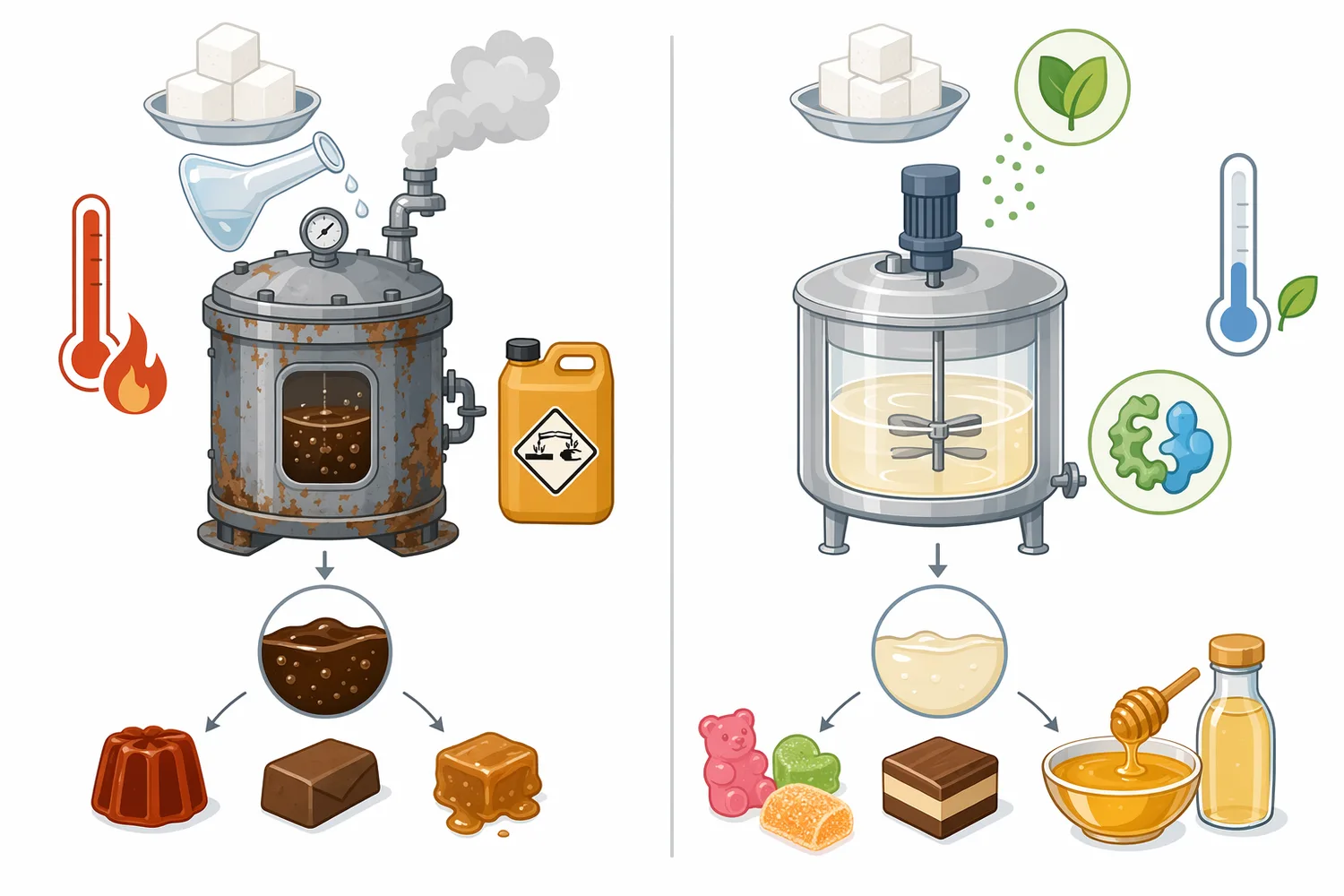
Because the reaction produces reducing sugars, invertase can also influence downstream heat reactions. Glucose and fructose participate more readily than sucrose in browning chemistry when heat, amino compounds and suitable water activity are present. That can be useful or undesirable depending on the product: a bakery syrup may benefit from color and flavor development, while a pale beverage syrup may not. The enzyme’s job is specific—sucrose hydrolysis—but the formulation consequences can extend into texture, appearance and flavor.
Searches for “invertase pH” often imply that the enzyme has a single universal operating pH. In reality, invertases occur in different biological forms, and their behavior depends on source, structure and environment. Plant work commonly distinguishes soluble acid invertase, cell-wall invertase and neutral invertase as separate parts of sugar metabolism rather than one interchangeable enzyme category [5].
| Invertase type | Typical biological context | What it means for sucrose hydrolysis | Practical interpretation |
|---|---|---|---|
| Acid invertase | Vacuoles and cell-wall/apoplastic spaces in plants | Supports sucrose breakdown in acidic cellular compartments and extracellular spaces | Relevant conceptually to acidic foods, fruit systems and confectionery-style environments, but performance still depends on the actual enzyme preparation |
| Neutral invertase | Cytosolic sugar metabolism in plants | Participates in intracellular sucrose balance where conditions are closer to neutral | Helps explain why not all invertases are designed around strongly acidic environments |
| Alkaline invertase | Reported in organisms such as cyanobacteria; structural studies describe distinct catalytic behavior | Can hydrolyze sucrose but may differ structurally and mechanistically from classical acid invertases | Demonstrates that “invertase” covers a family of enzymes, not a single pH profile |
Structural analysis of an alkaline invertase from Anabaena showed that this enzyme type has distinctive catalytic and substrate-specificity features, reinforcing that invertase performance cannot be reduced to one generic pH statement [6]. For food and beverage buyers, the useful takeaway is straightforward: invertase is selected for sucrose hydrolysis, but the surrounding matrix—acidity, temperature exposure, solids level, salts, water availability and processing time—affects how quickly the conversion is expressed in the finished product.
Minerals and formulation components can also matter. A study specifically examining calcium ions reported an inhibitory effect on sucrose hydrolysis using invertase, showing that ions present in a syrup, filling or beverage can change the reaction environment rather than acting as passive background ingredients [7]. This does not mean calcium-containing products cannot use invertase; it means the enzyme reaction occurs inside a real formulation, not in an idealized sugar-water system.
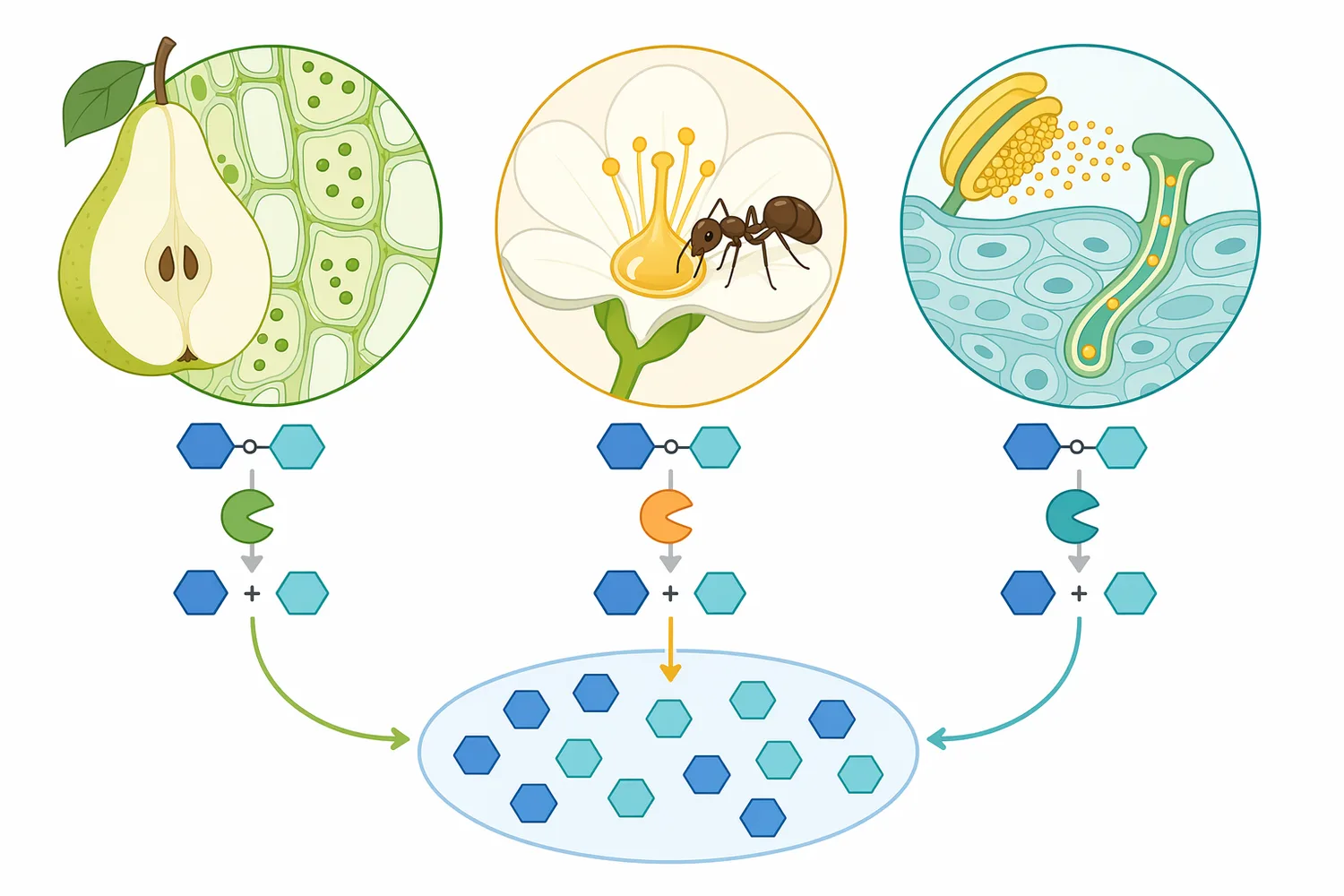
Invertase is commercially useful because it performs a reaction that living systems rely on constantly: moving sucrose into forms that cells, tissues or organisms can use. In pears, acid vacuolar invertase and an invertase inhibitor were implicated in sucrose hydrolysis during postharvest storage, demonstrating that invertase-mediated sucrose breakdown affects the sugar profile of fruit after harvest [2].
Nectar systems provide another clear example. Research on postsecretory hydrolysis of nectar sucrose showed that sucrose can be converted after secretion, shaping nectar sugar composition and ecological interactions between plants and ants [8]. For industrial processors, this is a useful analogy: invertase can act after a sucrose-containing matrix has already been formed, progressively changing the sugar profile over time.
Cell-wall invertase also has a direct role in growth systems. In tomato, pollen germination and pollen tube elongation were regulated by cell-wall invertase through sucrose hydrolysis, linking enzyme action to the local generation of utilizable hexoses [9]. The same underlying chemistry—sucrose converted to glucose and fructose—explains why invertase can make sucrose more accessible in fermentation or beverage contexts where microorganisms or process steps respond differently to monosaccharides than to intact sucrose.
Sugarcane and fruit-development studies reinforce that sucrose accumulation and sucrose breakdown are controlled by coordinated enzyme networks. Transcriptome work in sugarcane identified major genes involved in sucrose accumulation, while goji fruit studies measured expression patterns and activities of sucrose-phosphate synthase, sucrose synthase, neutral invertase and soluble acid invertase during development [10]. These studies are not confectionery trials, but they support the broader biochemical point: invertase is one of the key enzyme classes that shifts carbohydrate systems between stored sucrose and available glucose–fructose sugars.
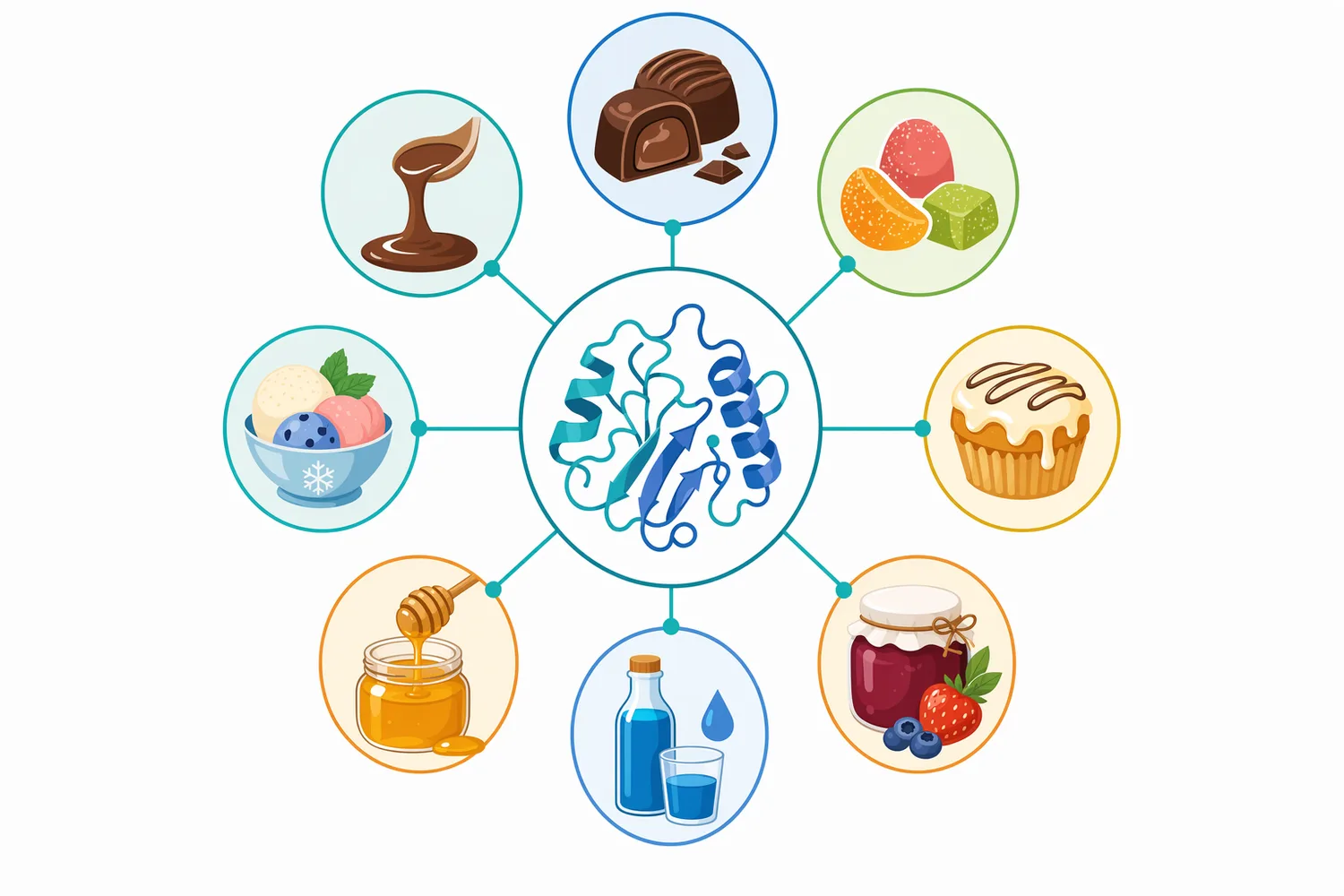
Invertase candy applications are among the most familiar commercial uses of the enzyme. In a sucrose-rich fondant or cream center, invertase gradually hydrolyzes sucrose into glucose and fructose after the product has been formed. That gradual conversion can soften the center, reduce graininess and support the classic texture change associated with filled chocolates and cordial-style products.
This is also why consumer searches such as “invertase for candy,” “chocolate covered cherries recipe with invertase,” “LorAnn Oils invertase,” or “LorAnn invertase” often lead to small-pack retail candy-making products. Enzymes.bio is positioned differently: it supplies Invertase online in 1 kg units for business use, while the biochemical function is the same core sucrose conversion. The enzyme does not create cherry flavor, alcohol character or chocolate structure by itself; it modifies the sucrose phase inside the filling.
Mechanistically, a fondant center begins as a structured mixture containing sucrose crystals, dissolved sugar, water and other ingredients. As invertase acts, dissolved sucrose is converted into glucose and fructose. More sucrose can then dissolve from crystals to re-establish equilibrium, and that dissolved sucrose can also be hydrolyzed. Over time, this cycle can reduce the amount of crystalline sucrose and produce a softer, more fluid center.
The timing of that texture change is formulation-dependent. Water availability affects molecular mobility; temperature affects enzyme movement and protein stability; acidity affects catalytic state; and solids level affects how freely sucrose and water can reach the active site. Research using calorimetry has examined delays before peak invertase activity, highlighting that observable enzyme performance can depend on time-dependent physical and binding behavior rather than beginning instantly at maximum rate [11].
For finished candy, this means invertase is best understood as a controlled conversion tool. It is not a mechanical softener added for instant effect. The enzyme changes the sugar composition, and the texture follows from that chemistry as the filling equilibrates.
In syrups and beverages, invertase is used when a sucrose-based formulation benefits from partial or substantial conversion to glucose and fructose. The resulting invert sugar profile can taste different from sucrose alone because fructose has a higher sweetness impact, while glucose and fructose together alter body, solids behavior and crystallization tendency. The enzyme’s value comes from changing the carbohydrate composition without requiring the product to begin with separate glucose and fructose streams.
Concentrated syrups are especially sensitive to crystallization. A sucrose syrup that is near saturation can seed crystals during storage, temperature cycling or evaporation. By converting a portion of sucrose into monosaccharides, invertase lowers the amount of sucrose available to crystallize and introduces sugars that do not fit into the sucrose crystal lattice. That is why the same enzyme logic applies across confectionery fillings, beverage bases and sweet sauces.
Honey-style products are another natural fit. Nectar and honey systems are defined by sugar transformation: sucrose-rich plant inputs can become glucose- and fructose-rich sweet matrices through enzymatic action. Studies of nectar sucrose hydrolysis show that sucrose conversion after secretion can substantially alter sugar composition in real biological fluids [8]. Industrial honey-style syrups use the same general carbohydrate principle, although product identity, labeling and regulatory treatment depend on the finished market and formulation.
Beverage systems add their own constraints. Acids, minerals, preservatives, heat treatment and flavor compounds can all influence enzyme performance or the desirability of the converted sugar profile. Thermal and non-thermal food-processing reviews emphasize that processing conditions can affect food quality attributes as well as biochemical stability, so enzyme use should be considered as part of the complete process rather than as an isolated ingredient addition [12].
“Invertase brewing” can mean two different things in search results. Some people are looking for enzyme use in brewing or fermentation; others may be searching for names such as “Invertase Brewing Company,” “Invertase Brewery,” “Invertase Brewing Lambertville,” or “Invertase Brewing Company Lambertville.” This article is about the enzyme invertase, not a brewery business or taproom.
In fermentation, the relevance of invertase is simple: many microorganisms readily use glucose and fructose, while sucrose utilization depends on whether the organism can transport or hydrolyze sucrose effectively. If sucrose is hydrolyzed before or during fermentation, the carbohydrate pool shifts toward monosaccharides that may be more directly accessible to the fermenting organism. Biological studies support this logic by showing that invertase-mediated sucrose hydrolysis can provide usable hexoses in living systems such as pollen tubes and fruit tissues [9].
For brewing-adjacent beverage work, invertase may be considered where sucrose-containing syrups, adjuncts or sweet bases are part of the process design. The enzyme does not replace mash enzymes that act on starch, and it does not create fermentable maltose from grain. Its specific role is sucrose hydrolysis. That narrow specificity is a strength when the target substrate is sucrose, but it also defines the boundary of what invertase can do.
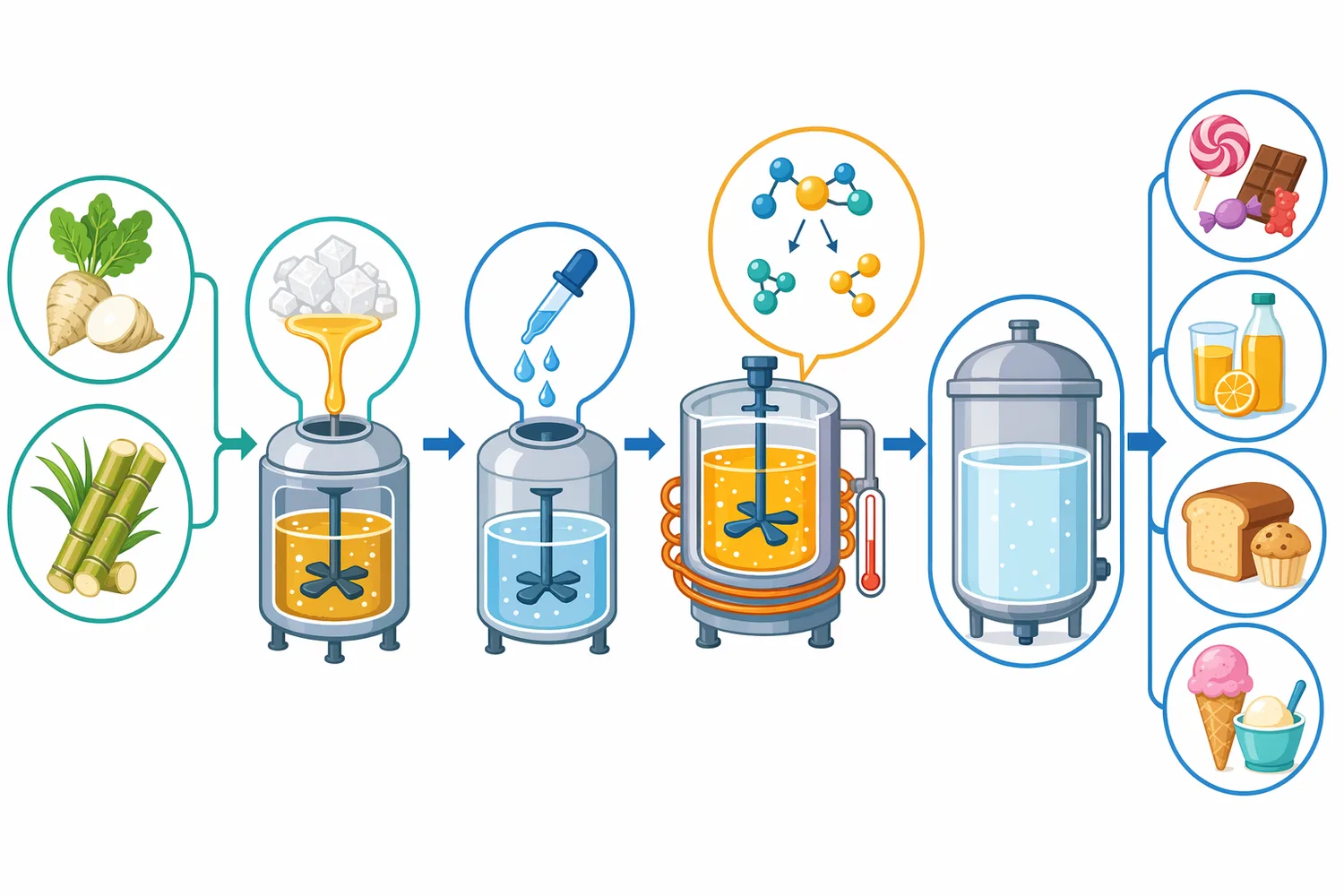
Bakery and sweet baked goods can use invert sugar functionality for softness, browning and moisture perception. When invertase is used upstream to prepare an invert syrup, or when sucrose conversion occurs in a moist filling, the generated glucose and fructose can change how water is held and how the product behaves during storage. Those effects come from the physical chemistry of smaller sugars interacting with water and solids.
In baked systems, the presence of reducing sugars may also increase browning potential during heat exposure. That can contribute to crust color and flavor in some sweet baked goods, but the same chemistry may be unwelcome in products where a pale color is required. Reviews of food processing technologies note that processing conditions can affect quality attributes and reaction products, which is why sugar composition, heat history and product goals need to be aligned [13].
Fruit fillings, glazes and syrups often sit between confectionery and bakery logic. They need sweetness, body, stability and controlled flow. Invertase can help when sucrose conversion supports those goals, but it is not a pectinase, amylase or preservative. It does not break fruit cell walls, liquefy starch, or independently control microbial stability. Its contribution is specifically the conversion of sucrose into glucose and fructose.
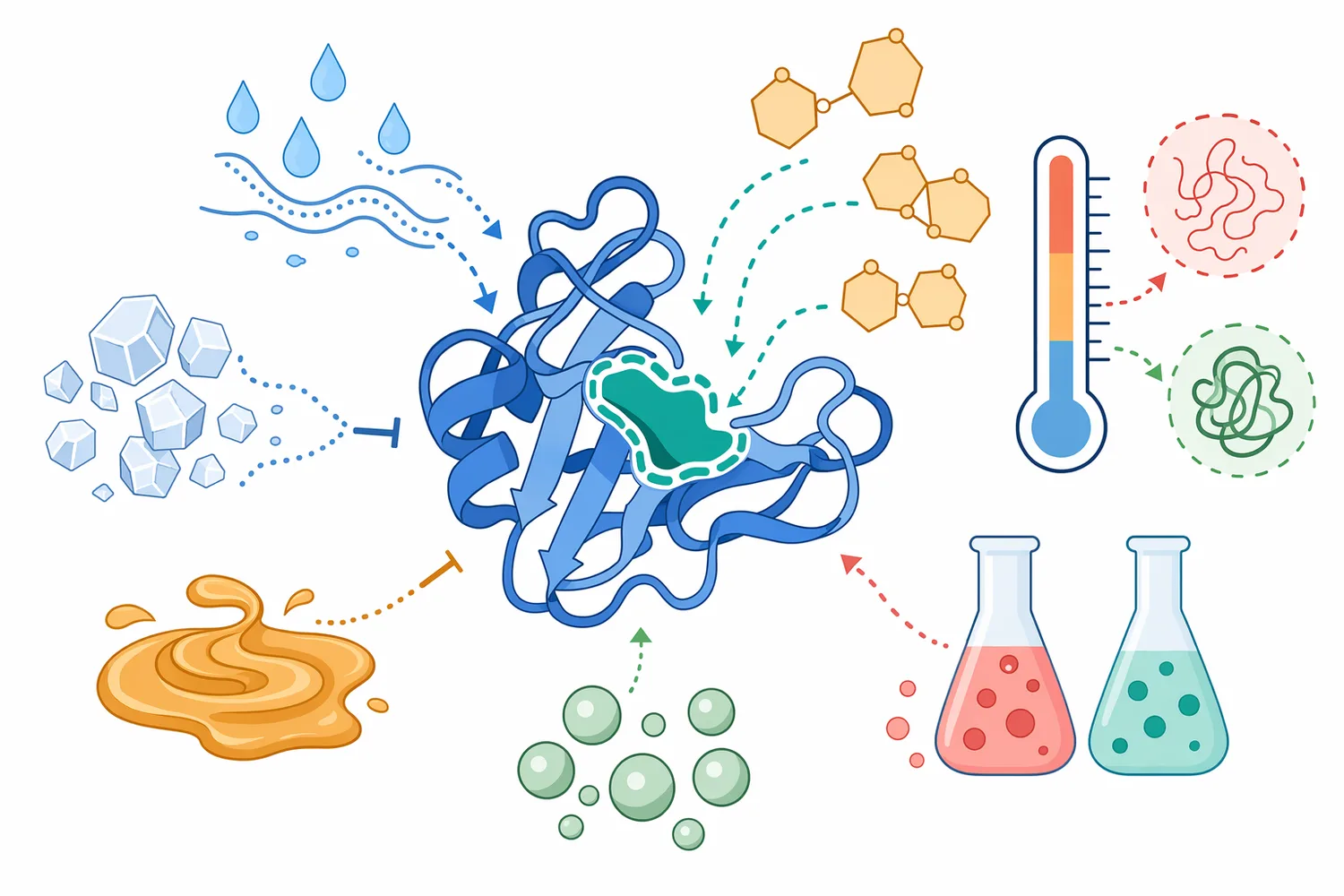
Invertase is a protein catalyst, so its performance depends on whether the protein remains folded and whether sucrose can reach the active site. In a dilute sucrose solution, diffusion is easier and the enzyme can encounter substrate readily. In a high-solids fondant or dense syrup, molecular movement is slower, water is less freely available, and the observed texture change may take longer even though the same hydrolysis chemistry is occurring.
pH affects the ionization state of catalytic residues in the active site. If those residues are not in the right protonation state, the enzyme cannot efficiently donate and accept protons during bond cleavage. This is why acid, neutral and alkaline invertases differ in their functional environments, and why plant studies distinguish soluble acid invertase from neutral invertase during fruit development [4].
Temperature has a dual effect. Moderate heat generally increases molecular motion and collision frequency, which can increase reaction rate up to the point where the protein begins losing its functional structure. Excessive heat can denature enzymes, changing the active-site shape so sucrose no longer binds and reacts efficiently. Thermal-processing reviews describe heat treatments as powerful preservation tools, but they also underline that heat changes food components and biological molecules [14].
Water availability is equally important. Hydrolysis literally uses water as a reactant; the enzyme helps water cleave the sucrose bond. In very low-moisture systems, the reaction may be limited not because sucrose is absent, but because the physical environment restricts enzyme mobility and access. This explains why filled candies can change over days or weeks rather than immediately after mixing.
Ions and co-solutes can modify the enzyme environment. Calcium inhibition studies show that even common ions can affect sucrose hydrolysis with invertase [7]. Sugars, acids, salts, polyols, flavor carriers and preservatives can all change viscosity, water activity, protein stability or substrate accessibility. The visible outcome is therefore the combined result of enzyme chemistry and food-matrix physics.
Invertase is primarily used for hydrolysis, but some sucrose-active enzymes can also support fructosyl transfer under particular conditions. Instead of water acting as the acceptor that completes hydrolysis, another sugar molecule can sometimes receive a fructosyl group, forming short fructose-containing oligosaccharides. This is not the standard expectation for every invertase application, but it is part of the broader chemistry of fructofuranoside-processing enzymes.
The distinction matters because hydrolysis and transfer reactions compete. A dilute, water-rich environment favors hydrolysis because water is abundant. A highly concentrated sucrose environment can increase the chance that another sugar molecule is positioned as the acceptor. Structural and computational work on GH32-type sucrose enzymes helps explain how substrate positioning and catalytic residues govern whether a bond is cleaved and how the fructosyl intermediate is resolved [1].
For most candy, syrup and beverage applications, the desired outcome is straightforward sucrose conversion into glucose and fructose. Oligosaccharide formation is a specialized carbohydrate-processing topic and should not be assumed as the normal commercial result of adding invertase to a sucrose-containing formulation.
Invertase can convert sucrose. It cannot convert starch, cellulose, lactose, proteins or fats. It cannot correct an unstable emulsion, replace a preservative system, or guarantee shelf life. Its value is high when the functional problem is tied to sucrose: unwanted crystallization, a need for invert sugar character, a desired softening effect in a fondant center, or improved availability of glucose and fructose from sucrose.
Invertase also cannot make every sugar system behave the same way. A cherry cordial center, a beverage syrup, a bakery glaze and a fermentation feed all present different water levels, pH environments, heat histories and ingredient interactions. The enzyme reaction is the same, but the practical expression of that reaction differs.
This is why scientific evidence from fruit, nectar and cellular systems is useful without being overextended. Pear storage, nectar hydrolysis and pollen-tube growth all show that invertase-mediated sucrose hydrolysis is real, biologically important and capable of changing sugar profiles [2]. They do not imply that every commercial formulation will convert at the same speed or produce the same sensory result.
Enzymes.bio supplies Invertase as a 1 kg online product for business buyers who want a straightforward purchasing route. The order is placed and paid for directly online, then processed and shipped. A Certificate of Analysis and Safety Data Sheet are included with the order.
Enzymes.bio is a product supplier, not a brewery, not a recipe blog, and not an in-house enzyme laboratory. The role of this page is to explain what invertase does and why the enzyme is used in sucrose-containing products. The core science is well established: invertase hydrolyzes sucrose into glucose and fructose, and that conversion can alter sweetness, crystallization, texture and sugar availability.
For buyers comparing options, the practical question is whether sucrose hydrolysis is the transformation needed in the product. If the answer is yes, invertase is the enzyme class designed for that reaction. The rest of the product outcome comes from the formulation: how much sucrose is present, how much water is available, how the matrix is processed, and how the finished product is stored.
Invertase is a targeted enzyme for converting sucrose into glucose and fructose. That conversion is the biochemical basis for invert sugar syrups, softer fondant-style centers, reduced sucrose crystallization tendency, altered sweetness profile and improved access to monosaccharides in selected beverage or fermentation systems.
The strongest evidence is the reaction itself: invertase hydrolyzes sucrose, and biological studies repeatedly show that this reaction changes sugar metabolism and sugar composition in fruits, nectar and growing tissues [8]. In commercial use, the same mechanism is applied deliberately in candy, syrups, beverages, bakery fillings, honey-style products and brewing-adjacent sucrose systems.
Enzymes.bio makes Invertase available for direct online purchase by the 1 kg unit, with order documentation supplied after purchase. For sucrose-containing formulations where glucose–fructose formation is the desired change, invertase is the established enzyme designed to make that conversion.
Sold by the 1 kg unit, in stock and ready to ship. Order directly on our store — pay online and we process your order. A Certificate of Analysis and Safety Data Sheet are included with every order.
Buy Invertase →Numbered in order of first citation. Open-access sources, each verified reachable at publication; citation numbers in the text link here.