
Direct answer: Trypsin Leather Softener is a protease-based leather processing enzyme used mainly in the bating or enzymatic softening stage after deliming. It helps loosen the pelt structure by selectively hydrolyzing accessible non-collagenous proteins and interfibrillary materials, improving softness, grain feel, and preparation for tanning and post-tanning operations .
For buyers who already use enzyme-assisted beamhouse processing, trypsin is valued because it is a relatively specific serine protease rather than a broad, aggressive protein-degrading system. Enzymes.bio supplies this product directly online by the 1 kg unit; orders are placed and paid for online, then processed and shipped with the accompanying Certificate of Analysis and Safety Data Sheet .
Leather processing converts animal hide into a stable, flexible material by removing unwanted components while preserving and stabilizing the collagen network. Enzymes are used in several beamhouse and post-beamhouse operations—including soaking, dehairing, bating, degreasing, and related treatments—because they can act on specific biological substrates under milder conditions than many conventional chemical steps [1].
Trypsin Leather Softener belongs to the protease category. In leather terminology, its main function is associated with bating, the controlled enzymatic treatment normally applied after liming and deliming. The purpose is not to digest the hide; it is to reduce harshness, open the fiber structure, remove residual non-structural proteins, and prepare the pelt for more uniform tanning, dyeing, retanning, fatliquoring, and finishing [2].
Trypsin has a specific biochemical identity that matters in leather. It is a serine protease that preferentially cleaves peptide bonds on the carboxyl side of lysine and arginine residues when those sites are accessible in a protein substrate. That selectivity helps explain why trypsin has long been considered a controlled bating enzyme compared with many broader proteases used for more intensive protein breakdown [3].
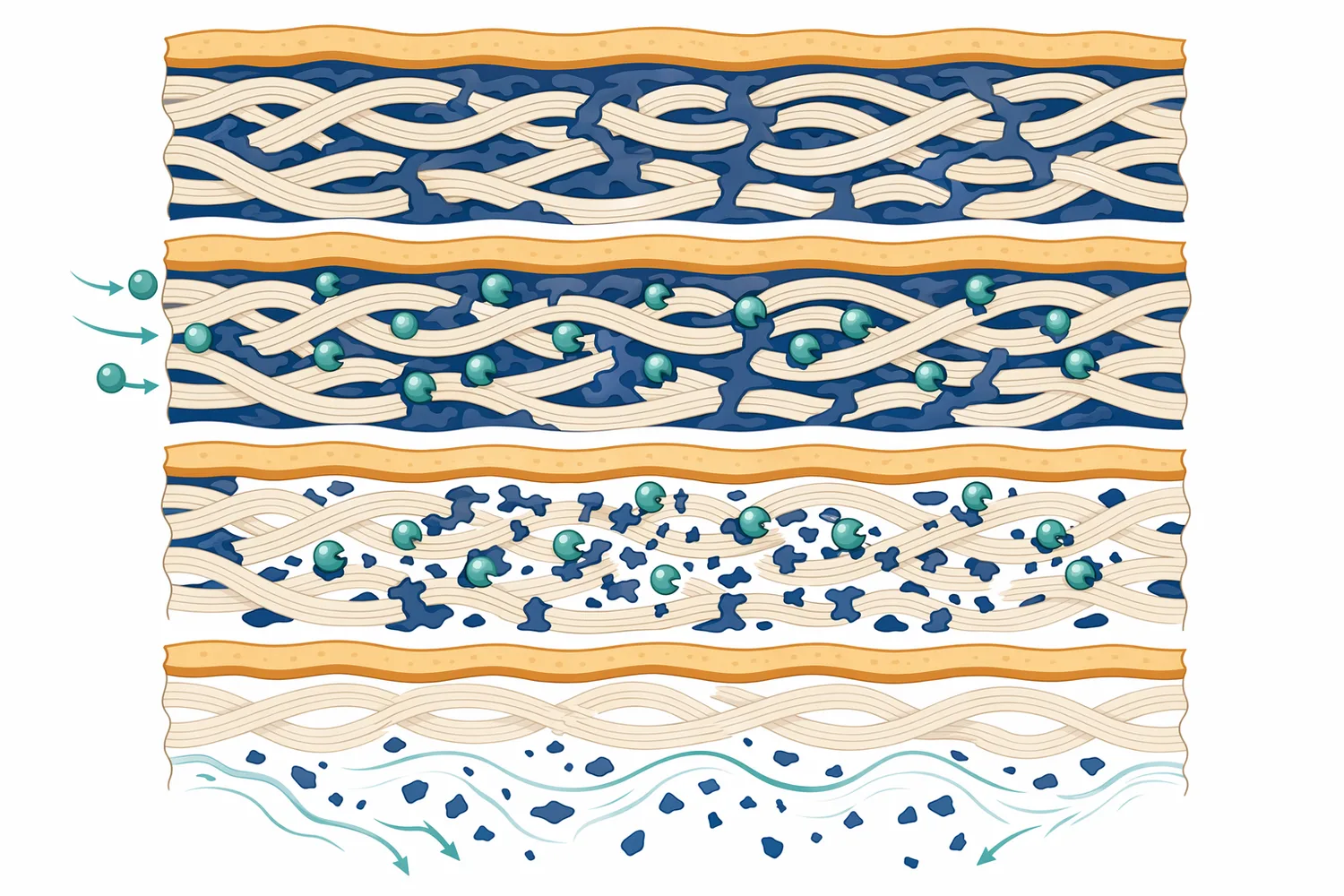
In the hide, the collagen fiber network is the value-bearing structure that must be retained. Around and between those collagen fibers are non-collagenous proteins, proteoglycans, mucin-like materials, epidermal residues, and other interfibrillary substances that can make the pelt tight, stiff, or uneven. Controlled proteolysis reduces those obstructing materials and allows the fiber bundles to separate more cleanly, which is why protease-based leather processing is repeatedly discussed in the literature as a route to cleaner and more precise beamhouse operations [4].
A useful way to understand trypsin bating is to picture the pelt as a dense collagen scaffold filled with biological “cement.” Some of that cement is useful during the animal’s life, but undesirable in leather manufacture because it restricts fiber movement, blocks penetration, and contributes to harsh handle. Trypsin acts by cutting accessible protein chains within this non-structural material, breaking larger proteins into smaller fragments that can be washed out or redistributed during drum processing [2].
The change is physical as well as chemical. As interfibrillary proteins are hydrolyzed, collagen fiber bundles become less glued together. The pelt can relax, the grain becomes cleaner and less boardy, and subsequent process liquors can move more evenly through the cross-section. Studies and reviews of leather proteases consistently connect enzymatic action with opening-up of the hide matrix, improved softness, and better preparation for later tanning and finishing stages [1].
Trypsin’s specificity is central to its usefulness. A broad protease may attack many peptide sites across a wider range of proteins, which can be useful in some applications but may increase the risk of over-action if the process is not tightly controlled. Trypsin’s preference for lysine and arginine cleavage sites gives a more defined hydrolysis pattern, so its softening effect is associated with controlled modification rather than indiscriminate protein solubilization [3].
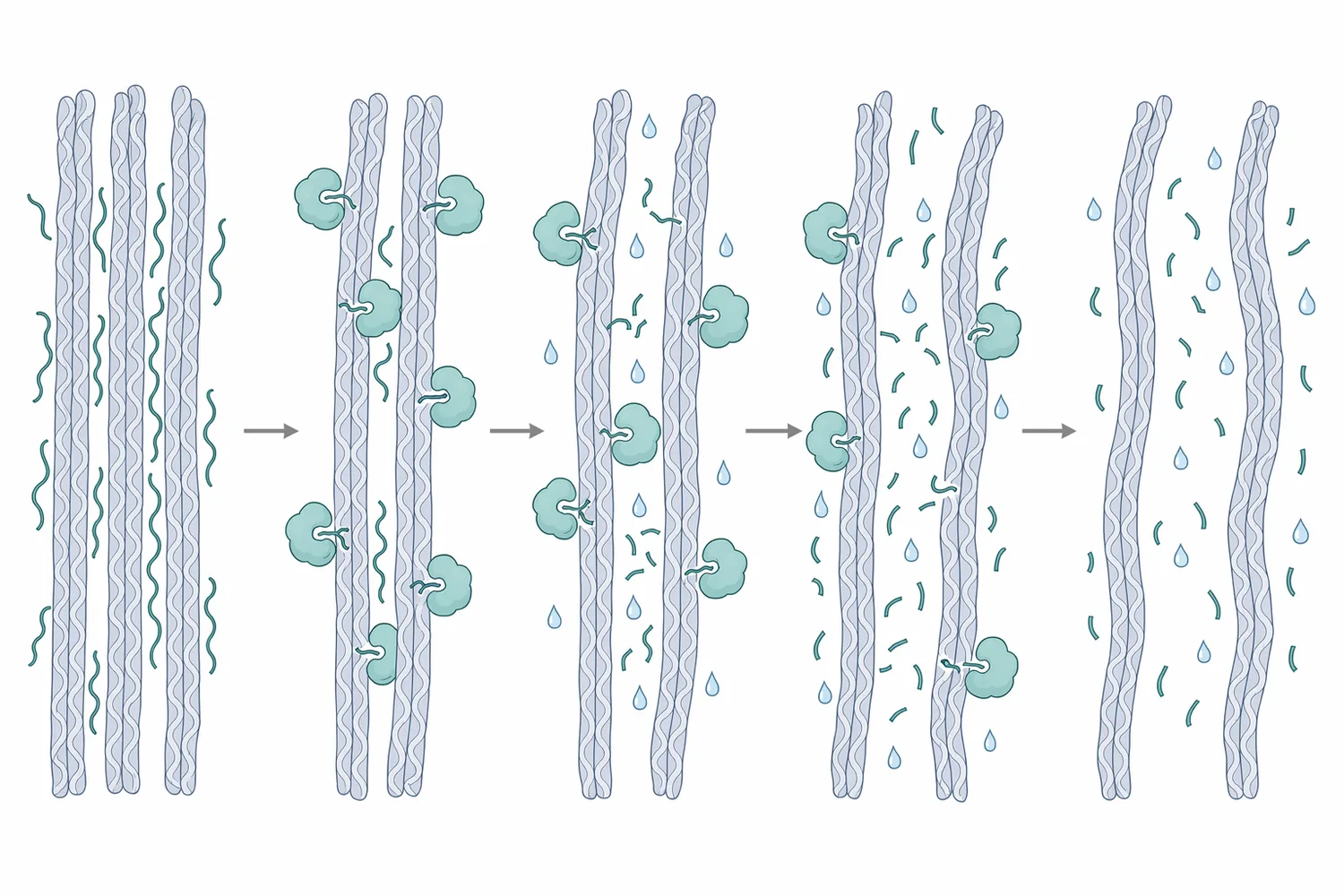
The practical goal is a balanced pelt: open enough to accept tanning and post-tanning materials uniformly, but not weakened, loose-grained, or over-bated. Reviews of protease-based leather processing emphasize that enzyme specificity and process control are essential because the same class of enzymes that improves fiber opening can also damage quality if exposure is excessive or poorly directed [2].
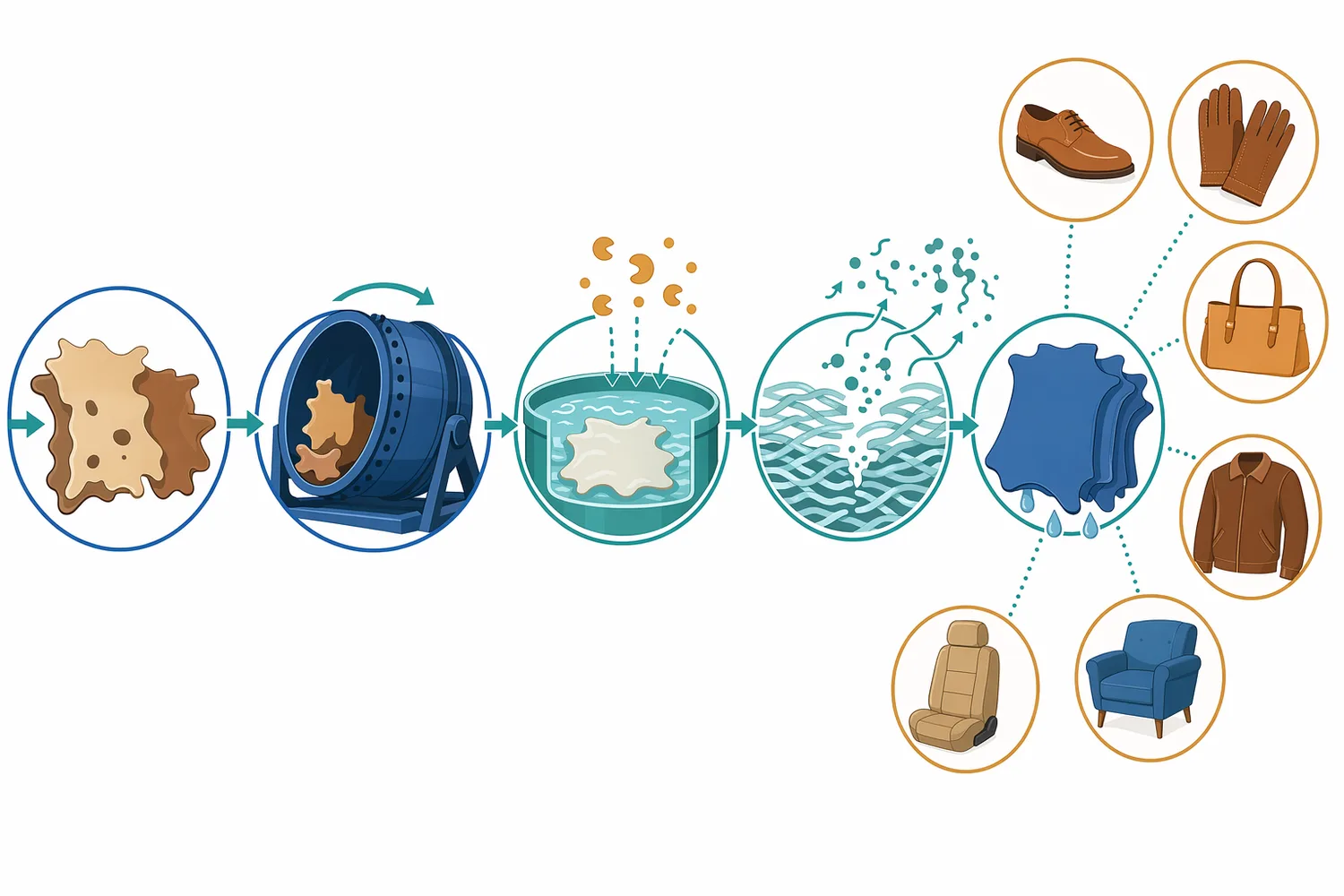
Trypsin Leather Softener is most naturally positioned after liming and deliming, when the pelt is no longer in the strongly alkaline liming condition and is ready for a controlled enzymatic treatment. This stage is where bating traditionally reduces scud, residual proteins, harshness, and tightness before pickling and tanning [1].
The sequence is important because liming swells and opens the hide, dehairing removes hair and epidermal material, and deliming reduces alkalinity before bating. Trypsin then works on accessible proteinaceous residues and interfibrillary components under the gentler conditions used for softening. If the pelt is not properly prepared before bating, enzyme action may be uneven because areas of the hide can differ in swelling, chemical load, and accessibility [2].
In chrome-tanning workflows, bating is one of the steps that influences how evenly tanning agents later penetrate and bind. A pelt with better fiber opening can show more uniform chemical distribution through the cross-section, supporting more consistent softness, dyeing, and handle in the finished article. Enzymatic treatments have also been studied in relation to chrome uptake and post-tanning performance, showing that controlled biological modification can affect downstream leather behavior [5].
Trypsin softening is therefore not an isolated “soft feel” additive. It is part of the structural preparation of the pelt. The benefit appears later as the material moves through tanning, retanning, dyeing, fatliquoring, drying, staking, and finishing, where a better-opened fiber structure responds more uniformly to mechanical and chemical treatment [1].
Leather processors use several protease families depending on the process stage and objective. Trypsin is one option within a wider protease landscape that includes alkaline proteases, neutral proteases, acidic proteases, keratinases, and complex enzyme systems. Reviews describe proteases as important tools for cleaner leather processing, but they also show that the best-known mechanisms and applications differ by enzyme type [4].
| Protease type | Typical leather-processing association | Main substrate emphasis | Conceptual strength | Main caution |
|---|---|---|---|---|
| Trypsin / trypsin-like serine protease | Bating and controlled softening after deliming | Accessible proteins with lysine or arginine cleavage sites | More defined proteolysis profile; useful where controlled softening is desired | Still requires controlled exposure to avoid over-bating |
| Alkaline protease | Soaking, dehairing, opening-up, some beamhouse treatments | Non-collagenous proteins, epidermal materials, proteoglycan-associated structures | Strong action under alkaline beamhouse conditions | Can be too aggressive if not matched to the process |
| Keratinolytic protease | Hair and keratin-rich residues | Keratin and hair-associated proteins | Supports enzyme-assisted dehairing and reduced reliance on harsh dehairing chemistry | Keratin selectivity and collagen safety are critical |
| Neutral protease | Mild protein removal and controlled processing | Accessible non-structural proteins | Often compatible with moderate conditions | Effect may be less intensive than alkaline systems |
| Acidic protease | Specialized bating or post-beamhouse concepts | Proteins accessible in acidic environments | Can fit processes designed around lower pH stages | Not automatically interchangeable with trypsin bating |
Keratinolytic proteases, for example, are more directly associated with breaking down keratin-rich hair structures. Research on keratinolytic protease from Pseudomonas aeruginosa has explored its use in leather skin processing, illustrating how enzyme choice can be directed toward specific substrates such as hair or epidermal components rather than general softening alone [6].
Alkaline proteases are widely discussed for dehairing and beamhouse cleaning because many early leather steps occur at alkaline pH. Studies on alkaline and microbial proteases show their potential in soaking, dehairing, and pollution-reduction strategies, but they are not identical to trypsin bating because their substrate range and operating context can differ substantially [7].
Trypsin’s place in this comparison is controlled bating. Its value is not that it is the most aggressive protease; its value is that it can soften and open the pelt in a measured way when the leather maker wants to preserve the collagen framework while removing selected non-collagenous material [3].
The scientific case for leather enzymes is broad. Reviews describe protease-based leather processing as a cleaner alternative to some conventional operations because enzymes can act selectively, reduce process severity, and help target biological materials that are otherwise removed by harsher chemistry [2].
A 2024 bibliometric analysis of protease use in cleaner leather processing shows that research attention has continued to grow around proteases as tools for more sustainable leather production. That does not mean every enzyme automatically improves every process, but it does show that protease-assisted leather operations are an established area of technical development rather than a niche claim [4].
Proteases have been studied in salt-preserved hide soaking, where the goal is to remove soluble proteins, dirt, blood residues, and preservation-related material before later beamhouse steps. Work on enzymatic soaking of salt-preserved buffalo hides illustrates the wider role of proteases in preparing hides for more consistent downstream processing [7].
Proteases have also been evaluated at pilot scale for eco-friendlier leather processing. For example, research on a serine protease designated ZMS-2 reported characterization and pilot-scale application for leather processing, reinforcing that serine proteases are not only laboratory curiosities but have been examined in process-relevant settings [8].
Recent studies on crude protease treatment in tanning contexts have reported enhanced leather properties together with pollution-reduction aims. Such work supports the broader principle that controlled protease use can influence both the physical quality of leather and the environmental load of processing, although results depend strongly on process design [5].
Trypsin itself is one of the best-known proteases in biotechnology because its cleavage preference is well characterized. In non-leather fields, it is commonly used precisely because it cuts proteins in a predictable way at lysine and arginine residues, and the same biochemical specificity explains its historical relevance as a controlled leather bating enzyme [3].
Trypsin production and stability have been the subject of biotechnology research, including work on secretory production of active trypsin through protein engineering. While that research is not a leather-processing trial, it reinforces the industrial relevance of trypsin as an enzyme whose activity, stability, and self-degradation behavior are important technical topics [9].
In leather softening, the key implication is that trypsin’s action can be directed toward accessible non-collagenous proteins without treating the hide as a bulk protein waste stream. The bating effect comes from partial hydrolysis and loosening of the pelt structure, not from destructive digestion of the collagen matrix. This distinction is central to why trypsin-like enzymes are discussed differently from highly aggressive dehairing proteases [2].
Patents and technical documents in the leather field also describe protease-based methods for preparing leather and treating leather-processing wastes. These sources are useful as technical-development evidence because they show how proteases are incorporated into process designs, although patent examples should be read as process concepts rather than universal performance guarantees [10].
The most visible reason to use Trypsin Leather Softener is the improvement of leather handle. When the interfibrillary material is reduced and fiber bundles are allowed to move more freely, the pelt becomes less harsh and more pliable. This change is especially important for articles where softness, fullness, drape, or grain smoothness affects commercial value [1].
The grain layer also benefits from controlled cleaning. Residual epidermal proteins and surface-associated materials can contribute to roughness, tightness, or uneven response during finishing. Protease-based treatment can help reduce these residues, allowing the grain to present more cleanly after mechanical and finishing operations [2].
Downstream uniformity is just as important as hand feel. Tanning agents, dyes, retanning agents, and fatliquors all depend on penetration, distribution, and interaction with the fiber matrix. A pelt that is insufficiently opened can show uneven chemical uptake, while a well-bated pelt is more receptive to consistent process liquor movement [5].
This is why enzymatic bating is often evaluated not only by immediate softness but also by finished-leather properties. The effect of the enzyme continues to matter after tanning because the structural changes made during bating influence later mechanical behavior, dye penetration, fullness, and final handle [1].
Protease use is frequently discussed in the context of cleaner leather processing. Enzymes can reduce reliance on severe chemical conditions in certain steps, act more selectively on biological substrates, and support process designs that aim to lower pollution burden. Reviews of protease-based cleaner processing describe this as a major reason for sustained interest in leather enzymes [4].
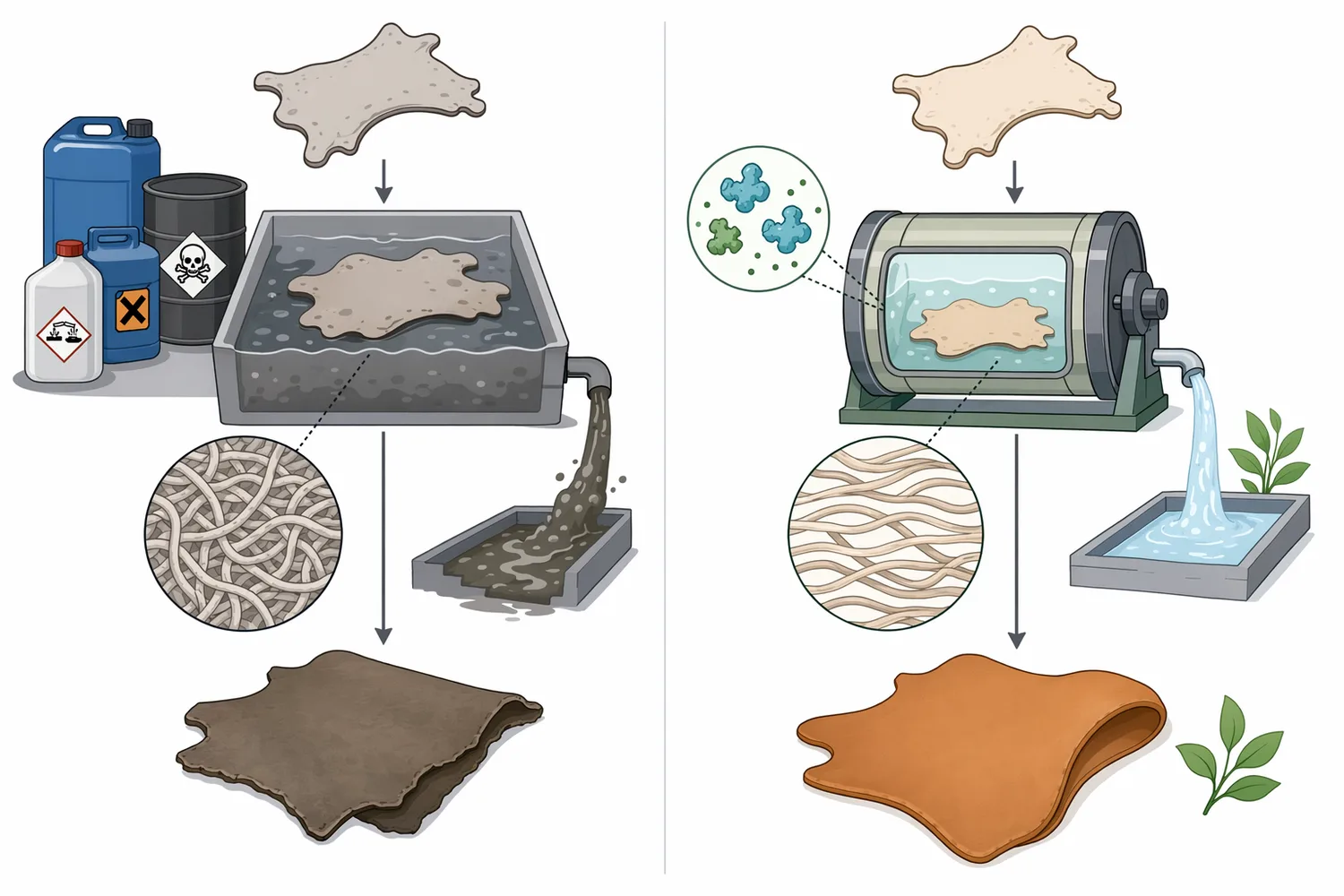
However, enzyme use should not be described as a complete sustainability solution by itself. Leather’s environmental profile also depends on hide preservation, water use, salt, sulfide, lime, chrome management, retanning chemistry, dyeing, fatliquoring, effluent treatment, sludge handling, and energy. Clean-technology studies in leather processing show that pollution reduction requires integrated process thinking, not a single additive [11].
Trypsin Leather Softener fits best into that realistic view. It is a targeted enzyme process aid that can support milder and more controlled softening, but its overall environmental value depends on how it is integrated into the whole beamhouse and tanning system. This measured claim is stronger and more credible than treating any enzyme as automatically “green” in isolation [1].
Research into enzyme encapsulation and delivery systems further shows that the industry is exploring ways to improve enzyme efficiency and control. For example, protease-encapsulated liposomes have been studied for combined unhairing and soft leather production, demonstrating active interest in improving how proteases reach their substrates in the hide [12].
One practical challenge in all enzyme treatment of hides is penetration. The hide is not a uniform liquid substrate; it is a layered, fibrous biological material with grain, corium, variable thickness, and prior chemical history. If enzyme action is concentrated only at the surface, the surface can be over-treated while inner fiber bundles remain tight [2].
Mechanical action, water movement, prior deliming, and pelt opening all influence whether the enzyme reaches the regions where it can usefully hydrolyze non-structural proteins. This is one reason enzyme-assisted leather processing is normally discussed as a controlled process stage rather than as a simple additive mixed into any bath without regard to conditions [1].
Trypsin’s specificity helps, but specificity does not eliminate the need for balanced exposure. If the enzyme has too little access, softening may be insufficient. If exposure is excessive while conditions remain favorable, the pelt may become too loose or weak. Reviews of protease leather processing repeatedly emphasize the same principle: beneficial proteolysis and damaging proteolysis are separated by process control [4].
This is also why modern research explores different protease forms, microbial sources, encapsulation concepts, and enzyme combinations. The technical direction is toward delivering enzyme action where it is needed while limiting unnecessary attack on valuable hide structure [12].
Trypsin Leather Softener is relevant wherever controlled bating is used to improve softness and prepare pelts for tanning. This includes many bovine, buffalo, goat, sheep, and other hide or skin processes, although the actual effect depends on thickness, fiber compactness, liming history, and the intended leather article [2].
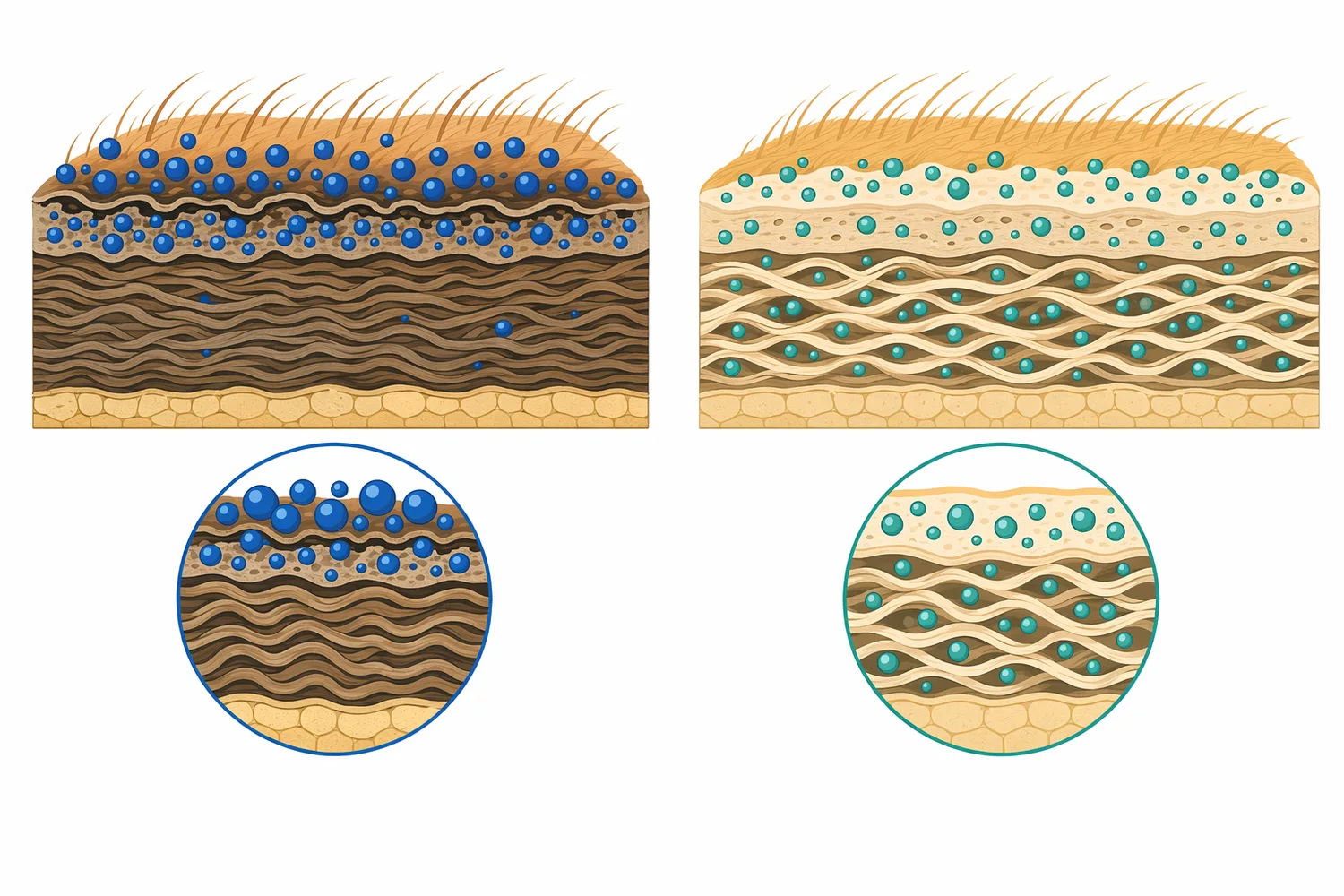
Thicker hides require more attention to uniform opening because the distance from grain to flesh side is greater. Looser skins may respond faster and can require gentler handling. These differences are not unique to trypsin; they are basic features of enzyme processing in fibrous animal substrates [1].
For upper leather, upholstery, garment leather, and soft goods, bating quality can influence softness, fullness, break, grain smoothness, and dye uniformity. For firmer articles, the goal may be more moderate: enough cleaning and opening for even tanning, but not so much softening that the final leather loses body [5].
Trypsin is therefore best understood as a controllable softening tool rather than a one-result product. It contributes to a processing outcome that is also shaped by liming, deliming, pickling, tanning, retanning, fatliquoring, drying, and mechanical finishing [1].
Trypsin Leather Softener can help improve pelt softness, fiber opening, and downstream uniformity, but it is not a fix for every leather defect. Problems caused by poor curing, excessive bacterial damage, uneven liming, incomplete deliming, harsh mechanical handling, or unsuitable finishing cannot always be corrected by bating [2].
The strongest expectation is structural refinement: reduction of selected non-collagenous proteins, loosening of interfibrillary material, cleaner grain feel, and better readiness for tanning and post-tanning processes. These are the outcomes most consistent with the known mechanism of protease action and the broader leather enzyme literature [1].
A second responsible expectation is process support. Enzymatic softening can make later chemical penetration more uniform, but it does not replace the need for appropriate tanning chemistry, washing, pH transition, mechanical action, and finishing control. Studies of sustainable tanning and protease treatment show that enzymes work as part of an integrated process, not as a standalone substitute for the rest of leather manufacture [5].
A third expectation is controlled mildness rather than maximum digestion. Trypsin’s value is its defined proteolytic behavior; it is chosen for softening and bating, not for uncontrolled destruction of protein matter. That distinction is important for buyers who want softness without sacrificing the collagen structure that gives leather strength [3].
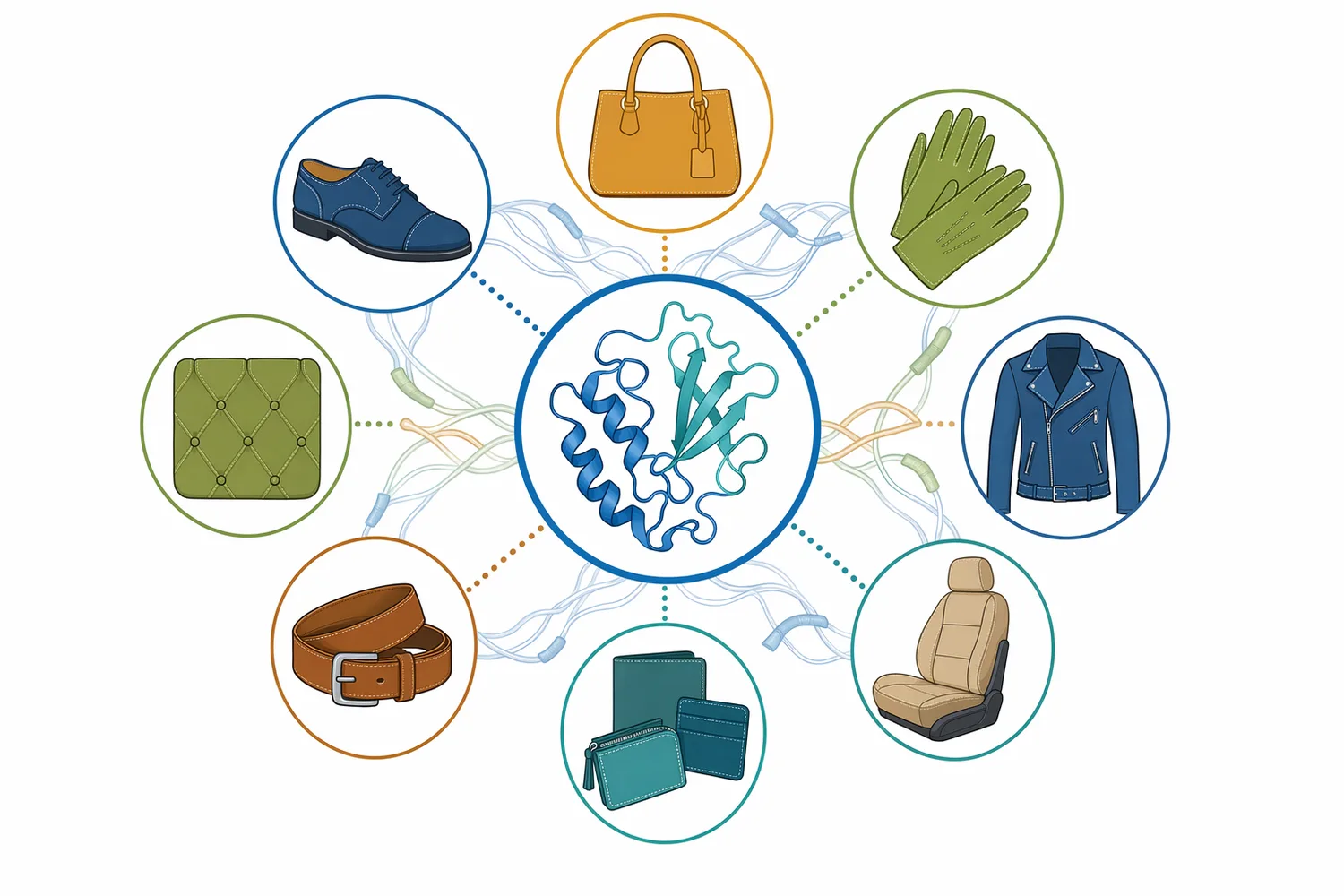
Enzymes.bio supplies Trypsin Leather Softener as a leather-processing enzyme product available for direct online purchase. The product is sold by the 1 kg unit, with online payment, order processing, and shipment handled through the website .
Each order is accompanied by a Certificate of Analysis and Safety Data Sheet. Enzymes.bio is a supplier, not a leather tannery, testing laboratory, or original equipment process designer, so this article is intended to give clear educational context on the enzyme’s role rather than replace the buyer’s established production controls .
For buyers already familiar with leather bating, the product fits into the conventional understanding of trypsin as a protease softener: a controlled enzymatic aid for improving pelt handle, opening fiber structure, and preparing the material for more uniform tanning and post-tanning treatment [2].
Trypsin Leather Softener is used primarily for enzymatic bating after deliming. It works by selectively hydrolyzing accessible proteinaceous materials that hold collagen fiber bundles tightly together, allowing the pelt to become softer, cleaner, and more receptive to later process liquors [1].
Its biochemical advantage is specificity. Trypsin preferentially cleaves at lysine and arginine residues, giving it a more defined mode of action than many broad proteases. In leather terms, that supports controlled softening rather than aggressive protein breakdown [3].
The evidence base for leather proteases is substantial: reviews, pilot-scale studies, soaking research, keratinase work, cleaner-processing analyses, and sustainable tanning studies all point to proteases as important tools in modern leather processing. The most balanced conclusion is that trypsin is a proven and technically credible softening enzyme when used as part of a controlled leather process [4].
For straightforward purchasing, Enzymes.bio offers Trypsin Leather Softener online by the 1 kg unit, with the order processed and shipped after online checkout. The product is best viewed as a practical enzymatic process aid for buyers who want controlled pelt softening, improved handle, and better preparation for downstream leather operations .
Sold by the 1 kg unit, in stock and ready to ship. Order directly on our store — pay online and we process your order. A Certificate of Analysis and Safety Data Sheet are included with every order.
Buy Leather Processing Enzyme: Trypsin Leather Softener →Numbered in order of first citation. Open-access sources, each verified reachable at publication; citation numbers in the text link here.