
Liquid glucoamylase is a saccharification enzyme used after starch has been cooked, gelatinized, and/or liquefied to convert starch-derived dextrins into fermentable glucose. In beer brewing and alcohol distillation, that extra glucose gives yeast a more accessible sugar source, supporting stronger attenuation, more complete starch-to-alcohol conversion, and better use of grain, cassava, rice, corn, bakery waste, and other starch-rich materials.
Enzymes.bio supplies Liquid Glucoamylase Enzyme for Beer Brewing and Alcohol Distillation as a directly orderable online product by the 1 kg unit. Buyers can purchase online, pay at checkout, and the order is processed and shipped with a Certificate of Analysis and Safety Data Sheet included.
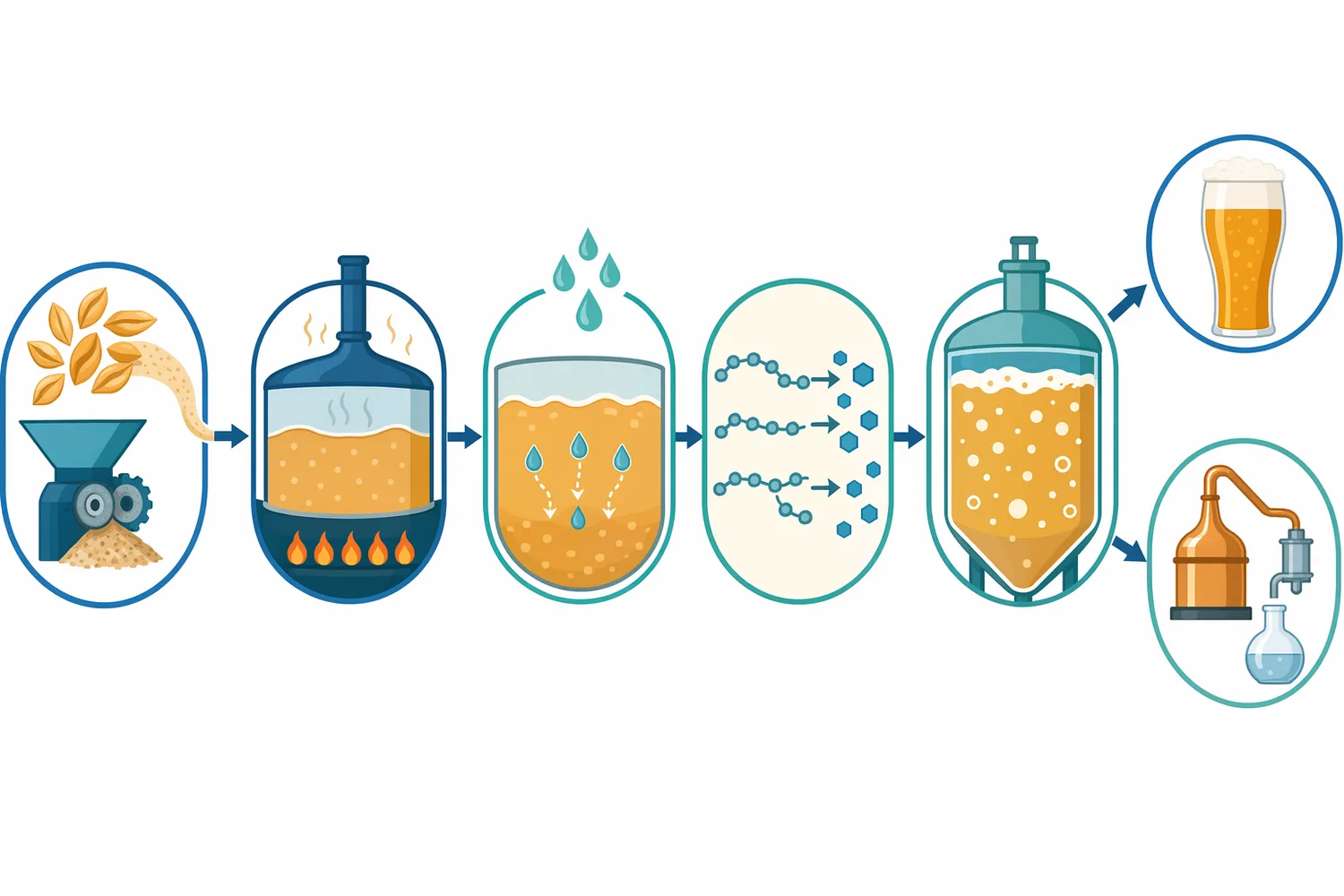
Glucoamylase is an amylolytic enzyme: it acts on starch-derived carbohydrate chains and releases glucose that yeast can ferment. In practical brewing and distilling language, it is the enzyme that helps finish saccharification after starch has been opened up by heat and shortened by liquefying enzymes such as alpha-amylase. Brewing education literature describes mashing as a starch-and-carbohydrate conversion step, where grain starch is transformed into sugars that can be carried into fermentation [1].
Starch itself is a plant storage carbohydrate built from glucose units. Cereal grains, tubers, cassava, rice, corn, and many food by-products contain starch in granules that are not automatically available to yeast. Plant storage-organ research describes starch as a major carbon-storage product, alongside storage proteins, which explains why starch-rich crops are valuable fermentation feedstocks only after the stored carbohydrate has been enzymatically mobilized [2].
In a grain or tuber mash, glucoamylase does not create alcohol directly. It changes the carbohydrate profile of the mash: longer dextrins become shorter, glucose increases, and the fermenting yeast sees more simple sugar instead of residual unfermentable carbohydrate. This is why studies on ethanol production from starch often pair saccharifying enzyme action with yeast fermentation, rather than treating hydrolysis and fermentation as unrelated steps [3].
For buyers using liquid glucoamylase in beer brewing or alcohol distillation, the key point is simple: the enzyme’s value is tied to glucose availability. When starch conversion is incomplete, fermentable extract is left behind; when saccharification is effective, more of the starch fraction becomes useful to yeast. Dry-grind ethanol research has shown that starch-processing enzyme strategy affects ethanol production efficiency and can reduce dependence on added external enzymes when the raw material and yeast system are designed around starch conversion [4].
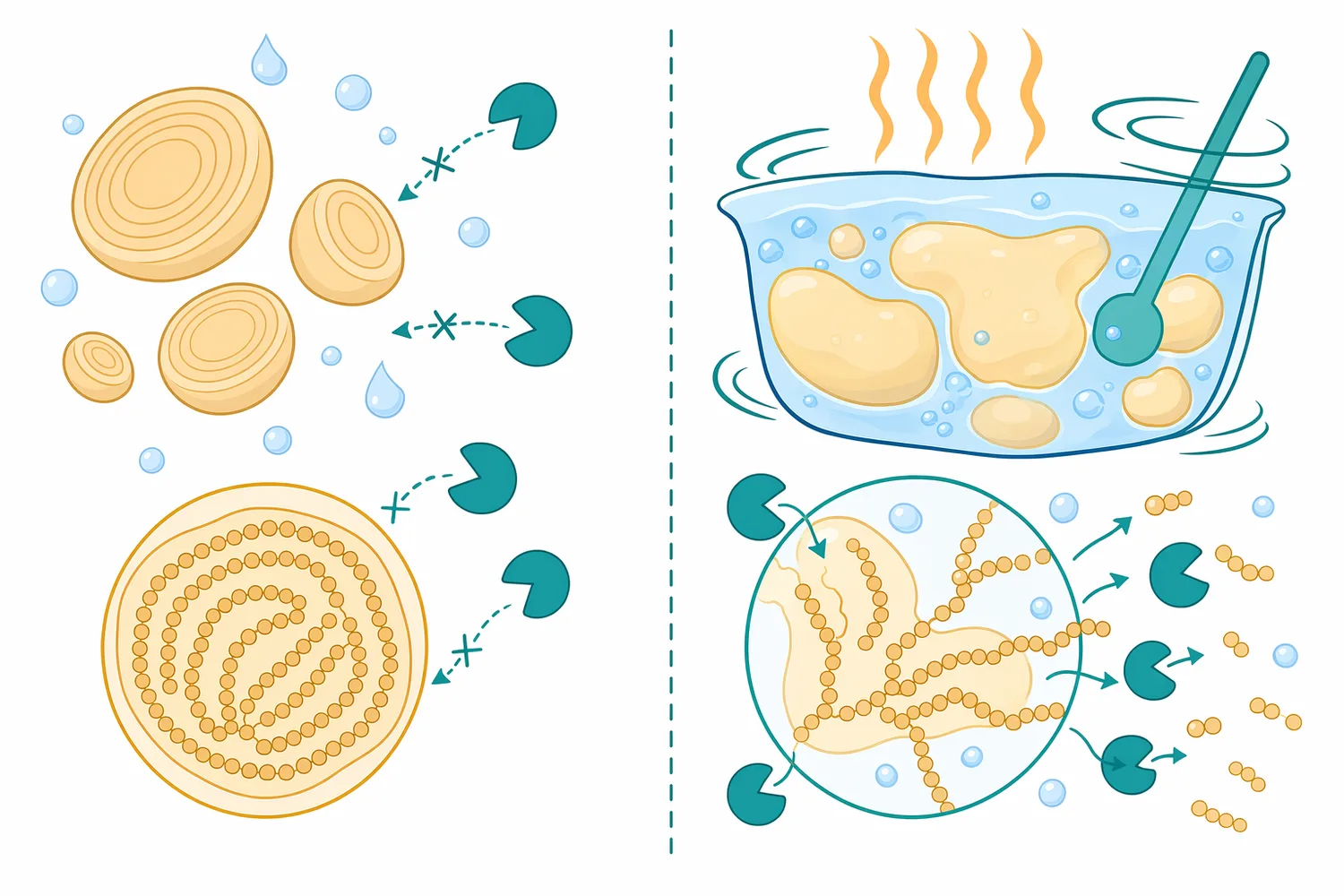
A starch mash begins as a dense physical and chemical system. Starch granules absorb water and swell when heated; as gelatinization progresses, the crystalline structure loosens and enzymes can reach the carbohydrate chains more easily. Without that physical opening, much of the starch remains protected inside granules, and saccharification is slower or incomplete. Brewing laboratory work on mashing uses this exact relationship between starch, heat, and carbohydrate conversion to illustrate why mash conditions matter [1].
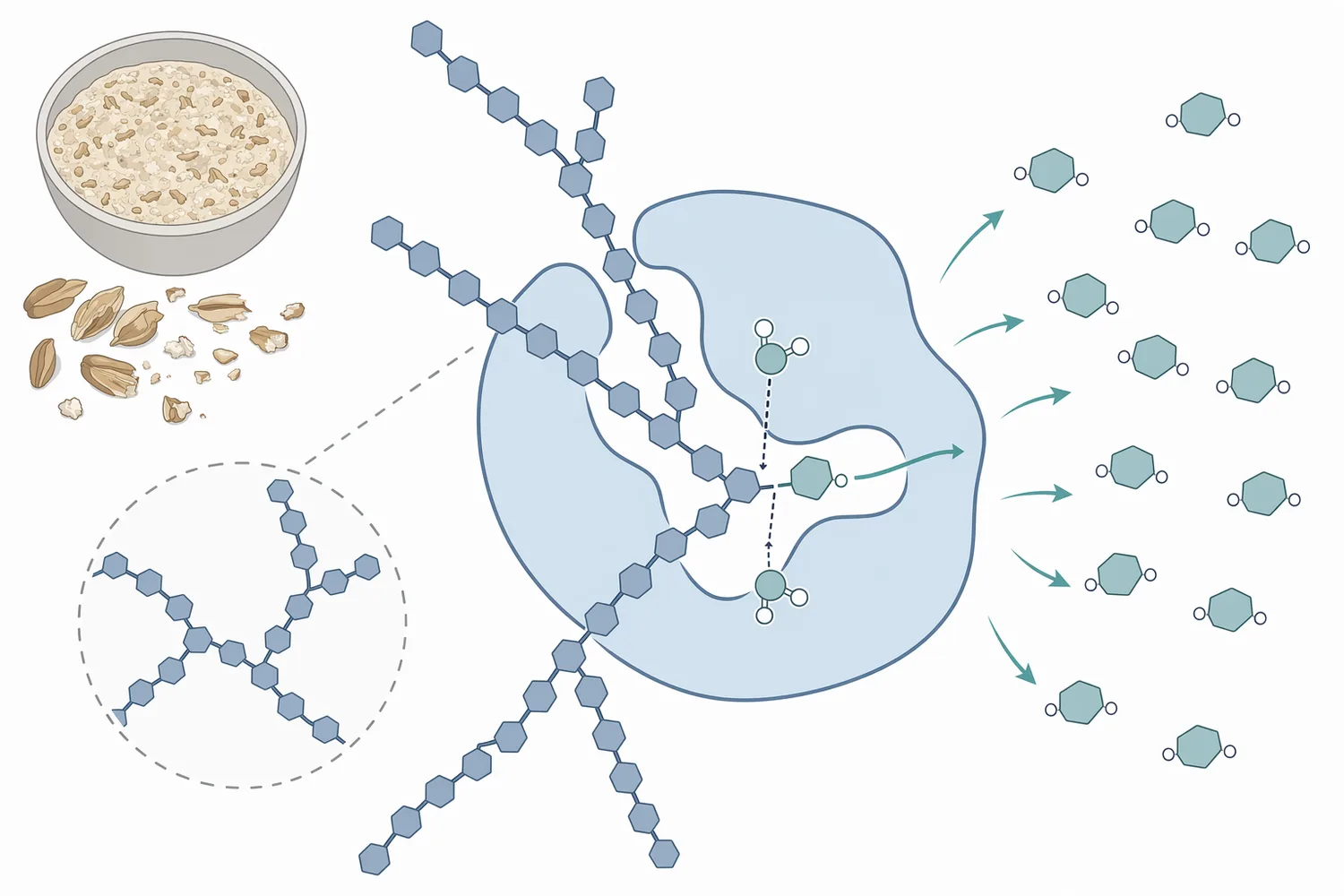
Alpha-amylase and glucoamylase perform different jobs. Alpha-amylase attacks internal bonds along gelatinized starch chains, rapidly reducing long molecules into shorter dextrins and lowering mash viscosity. Glucoamylase then works from the non-reducing ends of those dextrins, releasing individual glucose units. In other words, alpha-amylase creates more chain ends; glucoamylase turns those chain ends into fermentable sugar. Direct fermentation research using yeast expressing both glucoamylase and alpha-amylase reflects this complementary logic: raw starch conversion to ethanol improves when both chain-cutting and glucose-releasing functions are present [3].
The two main starch structures are amylose, which is mostly linear, and amylopectin, which is branched. Glucoamylase is especially important because liquefaction alone leaves many short dextrins that yeast cannot fully ferment. By releasing glucose step by step from dextrin ends, glucoamylase changes the wort or wash from a dextrin-rich liquid into a more glucose-rich fermentation feed. Research on engineered yeast systems carrying glucoamylase genes has long connected glucoamylase expression with ethanol productivity, showing the importance of this glucose-releasing step in starch-based fermentation [5].
This mechanism also explains why enzyme timing and substrate preparation matter. If starch remains ungelatinized, glucoamylase has fewer accessible chain ends. If alpha-amylase liquefaction is weak, there may be fewer short dextrin fragments for glucoamylase to finish. If fermentation begins with insufficient saccharification, yeast may consume available glucose quickly while residual dextrin remains unused. Studies on starch-based liquid sugar production from cassava show that converting local cassava starch into soluble sugars depends on effective starch hydrolysis, not simply on the presence of starch in the raw material [6].
In beer brewing, glucoamylase is used when a brewer wants a more fermentable wort. That may mean reducing residual dextrin in a highly attenuated beer, improving fermentability in adjunct-heavy recipes, or making starch-rich alternative ingredients more useful. The enzyme does not replace malt character, yeast performance, or recipe design; it specifically changes the carbohydrate fraction by increasing glucose availability. Mashing research demonstrates that brewing fermentability begins with controlled starch conversion before fermentation ever starts [1].
In distillation, the goal is usually less about residual mouthfeel and more about alcohol yield from the starch fraction. Corn, rice, wheat, barley, cassava, and other starch materials must first be converted into sugars before yeast can produce ethanol. Research on dry-grind processing and bioethanol production highlights how amylase systems and yeast performance together determine the efficiency of starch-to-ethanol conversion [4].
Liquid format is practical because it disperses into aqueous mash or wash systems more readily than a dry powder would under many production conditions. The important functional point is not the physical form alone, but contact: the enzyme must meet accessible dextrins under conditions that allow catalytic activity. In simultaneous saccharification and fermentation studies, enzyme-catalyzed sugar release and yeast sugar consumption occur in the same processing environment, showing why enzyme dispersion and substrate access are central to performance [7].
Glucoamylase is often discussed alongside other enzymes, but each enzyme changes the mash in a different way. The table below gives a practical comparison for brewing and distilling contexts.
| Enzyme type | Main action on the substrate | What changes in the mash or wort | Practical relevance in beer and distilling |
|---|---|---|---|
| Alpha-amylase | Cuts internal starch bonds in gelatinized starch chains | Long starch molecules become shorter dextrins; viscosity drops | Liquefaction step; prepares starch for further saccharification |
| Glucoamylase | Releases glucose from dextrin chain ends | Fermentable glucose increases; residual dextrin can decrease | Saccharification step; supports attenuation and ethanol production |
| Beta-amylase | Releases maltose from chain ends under mash conditions | Maltose increases when substrate and conditions suit the enzyme | Important in malt-based brewing fermentability |
| Debranching activity | Acts on branch points in amylopectin-derived structures | More linear chains become available for further hydrolysis | Useful where highly branched residual dextrins limit conversion |
| Cell-wall enzymes such as beta-glucanase or xylanase | Break non-starch polysaccharides, not starch itself | Mash viscosity and filtration behavior may improve | Helps with certain grain materials but does not replace glucoamylase |
This distinction is important because glucoamylase is not a general “mash fixer.” It is targeted at starch-derived dextrins and glucose release. In starch-to-ethanol research, efficient conversion depends on matching carbohydrate breakdown with fermentation, rather than expecting one enzyme to solve every physical, viscosity, or yeast-performance issue [3].
A strong evidence base for glucoamylase comes from ethanol studies that combine starch hydrolysis with fermentation. In direct fermentation of raw starch, researchers used a Kluyveromyces marxianus strain expressing glucoamylase and alpha-amylase to produce ethanol, directly connecting these enzymes with the conversion of starch into fermentable sugar and then alcohol [3]. This supports the practical brewing and distilling view that glucoamylase is most valuable as part of a complete starch-conversion system.
Earlier work with Saccharomyces cerevisiae transformed with a glucoamylase gene from Saccharomyces diastaticus also linked glucoamylase production conditions with ethanol productivity [5]. The relevance for professional users is not that the yeast strain must be engineered, but that the glucose-releasing function of glucoamylase has a direct relationship to ethanol fermentation performance.
Dry-grind ethanol research using amylase corn and improved yeast showed that changes to the starch-conversion system can reduce exogenous enzyme requirements and influence bioethanol production efficiency [4]. This reinforces a practical principle: enzyme performance is part of the whole process architecture—raw material, liquefaction, saccharification, yeast, and residence time all interact.
Starch-based fermentation is not limited to clean grain. Whole-crop forage rice has been studied in solid-state simultaneous saccharification and fermentation for ethanol production, demonstrating that starch-containing agricultural materials can be processed through combined hydrolysis and fermentation strategies [7]. This is relevant to distillers and brewers exploring rice or other cereal-derived substrates where the starch must be converted before fermentation.
Cassava is a major example of a non-barley starch source. Research comparing starch-based liquid sugar production from local cassava focuses directly on converting cassava starch into soluble sugars, showing how enzymatic hydrolysis can make tuber starch more useful as a sugar source [6]. For beverage alcohol or neutral-spirit style fermentations using cassava, the same carbohydrate logic applies: starch must become fermentable sugar before yeast can produce ethanol efficiently.
Cassava peel waste has also been studied for ethanol production after alkali-assisted hydrothermal pretreatment, showing that even by-product streams can become fermentation feedstocks when pretreatment and hydrolysis make the carbohydrate fraction accessible [8]. Glucoamylase fits this broader processing pattern by converting starch-derived dextrins into glucose after upstream preparation has improved access to the substrate.
Food waste studies further expand the evidence base. Ethanol production from kitchen waste using a flocculating Saccharomyces cerevisiae strain shows that mixed food residues can be fermentation substrates when their carbohydrate content is made available [9]. These systems are more complex than grain mashes, but they illustrate the same principle: fermentable sugar availability governs yeast conversion to alcohol.
Expired cookies have also been investigated for bioethanol production and practical economic application [10]. Bakery residues typically contain processed starch and sugars, making them interesting fermentation substrates when contamination control, hydrolysis, and process handling are appropriate. For brewing and distilling buyers, this evidence supports the broader role of saccharifying enzymes in recovering fermentable value from starch-rich by-products.
Municipal organic waste has been studied under low-dosage enzymatic hydrolysis for sugar and ethanol production, again connecting enzyme-mediated carbohydrate release with downstream fermentation [11]. Although brewery and distillery mashes are more controlled than municipal waste streams, the underlying biochemical requirement remains the same: yeast needs accessible fermentable sugars, not intact starch or inaccessible polysaccharide structures.
In brewing, glucoamylase is most relevant where residual dextrin reduction is desired. A conventional malt mash naturally produces a mix of maltose, glucose, maltotriose, and dextrins; yeast fermentability depends on how that carbohydrate profile is shaped during mashing. When glucoamylase is used, it pushes the sugar profile toward more glucose by hydrolyzing dextrins that would otherwise contribute body and residual extract. Brewing mashing literature treats starch conversion as a central chemical transformation in wort production, which is the foundation for this use [1].
This can be useful in highly attenuated beer concepts where the brewer wants a drier finish. It can also support adjunct brewing, where unmalted corn, rice, or other starch sources contribute extract but may not provide enough native enzyme activity on their own. The enzyme should be understood as a process tool for fermentability, not as a flavoring ingredient.
Glucoamylase may also be relevant when brewing with non-traditional starch ingredients. Cassava, bakery materials, or other starch-rich additions require effective hydrolysis if they are intended to contribute fermentable extract rather than haze, viscosity, or unconverted carbohydrate. Cassava liquid-sugar research demonstrates the importance of turning starch into soluble sugars before it can function as a fermentation-ready carbohydrate stream [6].
Because glucoamylase can reduce residual dextrin, it can also change beer body. A mash or fermentation treated aggressively for high glucose release may produce a drier, lighter-bodied beer than the same recipe without glucoamylase. That can be desirable in some beer styles and undesirable in others. The key is to view the enzyme as a carbohydrate-profile tool: it changes what yeast can consume, and that changes attenuation and residual extract.
In distilling, glucoamylase supports the conversion of cooked and liquefied starch into glucose for yeast fermentation. This is relevant to grain spirits, neutral alcohol production, rice-based fermentations, corn mashes, and tuber-based alcohol streams. The enzyme’s role is especially clear in starch-to-ethanol studies where hydrolysis and fermentation are linked in the same process design [3].
Distillers often focus on ethanol yield, fermentation completion, and consistent conversion of raw material into alcohol. If starch conversion is incomplete, some of the purchased raw material remains as residual carbohydrate rather than becoming ethanol. Glucoamylase helps address that loss pathway by increasing glucose release from dextrins after liquefaction.
For rice-based or whole-crop cereal fermentations, simultaneous saccharification and fermentation research is especially relevant. The wrapped round-bale forage rice study demonstrates ethanol production from whole-crop rice using solid-state simultaneous saccharification and fermentation, showing that cereal biomass can be processed when starch hydrolysis and yeast fermentation are coordinated [7].
Distilling applications may also include cassava and other tubers. Cassava peel waste research shows that pretreatment can improve ethanol production from cassava-derived residues, reinforcing the point that starch-rich materials perform better when structure and accessibility are addressed before or during enzymatic conversion [8].
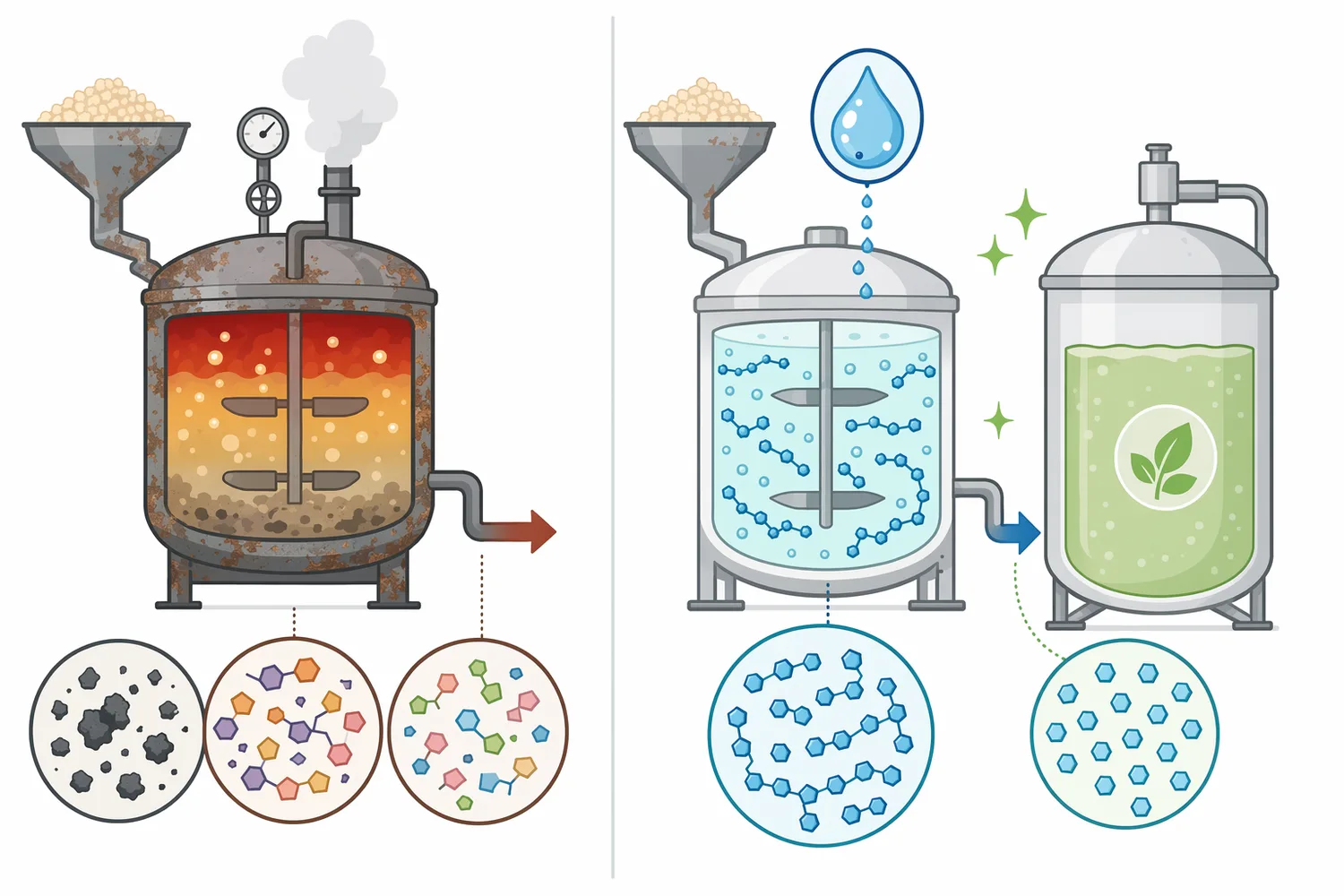
Glucoamylase activity is limited by access. If starch granules remain intact, the enzyme cannot fully reach the carbohydrate chains. If the mash is too viscous or poorly mixed, contact between enzyme and substrate is uneven. If liquefaction has not generated enough dextrin ends, glucoamylase has fewer productive attack points. These are process realities, not product defects.
Heat treatment, hydration, particle size, and prior liquefaction all influence how much usable substrate is available. Brewing mashing education emphasizes that starch and carbohydrate conversion depends on controlled mash conditions, which is why temperature and time are treated as functional process variables rather than incidental details [1].
The same is true for alternative substrates. Cassava, rice, expired bakery products, and food waste each present starch differently. Processed bakery products may contain damaged starch and sugars; cassava roots and peels may require stronger preparation; cereal grains may need milling and cooking. Studies on cassava, expired cookies, and kitchen waste all demonstrate that feedstock identity affects how carbohydrate is released and fermented [9].
This is why glucoamylase should be seen as part of a starch-conversion sequence. The enzyme performs a defined biochemical step, but upstream physical preparation determines how much substrate is available for that step.
Some alcohol processes run saccharification separately before fermentation; others allow enzyme hydrolysis and yeast fermentation to overlap. In simultaneous saccharification and fermentation, glucoamylase continues releasing glucose while yeast consumes it. This can help keep free glucose from accumulating excessively while maintaining a supply of fermentable sugar.
Research on whole-crop forage rice used simultaneous saccharification and fermentation for ethanol production, showing how saccharification and yeast activity can be combined in a single fermentation-oriented process [7]. Direct raw-starch fermentation using microorganisms expressing amylolytic enzymes follows the same broad concept: carbohydrate breakdown and ethanol production are coordinated rather than isolated [3].
For practical brewing and distilling, the benefit of this concept is process continuity. Instead of treating saccharification as a purely upstream event, the enzyme can support ongoing sugar release as fermentation progresses, provided the process conditions remain compatible with enzyme activity and yeast health.
The main benefit of liquid glucoamylase is increased fermentable glucose from starch-derived dextrins. In brewing, that can mean higher attenuation potential and a drier beer profile. In distilling, it can mean better conversion of starch extract into fermentable sugar and, ultimately, alcohol. The connection between glucoamylase activity and ethanol productivity is supported by yeast and enzyme studies focused on starch-based ethanol conversion [5].
A second benefit is broader raw-material flexibility. Grain, rice, cassava, bakery residues, and other starch-rich feedstocks become more useful when the starch fraction is effectively hydrolyzed. Research on expired cookies, kitchen waste, cassava, and municipal organic waste shows that many carbohydrate-rich materials can support ethanol production when enzymatic hydrolysis and fermentation are properly integrated [11].
A third benefit is process consistency when working with starch ingredients that vary from batch to batch. Enzyme-assisted saccharification can help reduce dependence on native malt enzymes alone, especially when adjuncts or alternative starches contribute a significant portion of extract. Dry-grind ethanol research illustrates how starch-conversion strategy can affect external enzyme requirements and overall fermentation performance [4].
These benefits should be understood as process-support outcomes, not fixed guarantees. Alcohol yield, attenuation, and fermentation completion still depend on raw material composition, cooking, liquefaction, yeast strain, fermentation temperature, sanitation, and the overall mash or wort design.
Glucoamylase is powerful, but it is not a substitute for proper starch preparation. If starch is not adequately hydrated, cooked, gelatinized, milled, or liquefied, the enzyme has limited access to the carbohydrate chains it is meant to hydrolyze. Brewing mashing studies show that starch conversion is condition-dependent, which is why mash design remains central even when enzymes are used [1].
It also does not solve every viscosity or filtration issue. Some mash problems come from proteins, beta-glucans, pentosans, fiber, or suspended solids rather than starch-derived dextrins. Glucoamylase targets starch fragments; it does not act as a universal clarification, viscosity-reduction, or filtration enzyme.
In beer, more complete dextrin hydrolysis can reduce body and residual sweetness. That is useful when a dry, highly attenuated beer is desired, but it may be counterproductive where fullness and dextrin-derived mouthfeel are part of the intended profile. The enzyme changes fermentability; the brewer decides whether that change supports the recipe.
In distilling, glucoamylase can support starch-to-sugar conversion, but fermentation performance still depends on yeast nutrition, pH control, contamination management, oxygen exposure where relevant, and temperature control. Ethanol studies using starch or food-waste substrates consistently pair carbohydrate release with suitable fermentation organisms, reinforcing that hydrolysis alone is only one part of alcohol production [9].
Enzymes.bio supplies Liquid Glucoamylase Enzyme for Beer Brewing and Alcohol Distillation for direct online purchase by the 1 kg unit. The product is intended for buyers who need a practical saccharification enzyme for starch-based brewing, distilling, and fermentation workflows.
Orders are placed and paid for online, then processed and shipped. A Certificate of Analysis and Safety Data Sheet are included with the order, so the buyer receives the product documentation needed for normal professional handling and internal records.
Liquid glucoamylase is used in beer brewing and alcohol distillation to convert starch-derived dextrins into fermentable glucose. Mechanistically, it works after starch gelatinization and liquefaction by releasing glucose from dextrin chain ends, giving yeast a more accessible sugar source for ethanol production. Research on mashing, starch-based ethanol, cassava sugar production, raw-starch fermentation, rice fermentation, and food-waste ethanol all supports the central principle: alcohol production from starch depends on effective enzymatic conversion of stored carbohydrate into fermentable sugars [3].
For brewers, glucoamylase is a tool for increasing fermentability and reducing residual dextrin when that matches the beer target. For distillers, it supports more complete use of starch-rich raw materials such as grain, rice, corn, cassava, and other carbohydrate streams. Enzymes.bio makes the liquid enzyme available for direct online purchase in 1 kg units, with the order processed and shipped after checkout.
Sold by the 1 kg unit, in stock and ready to ship. Order directly on our store — pay online and we process your order. A Certificate of Analysis and Safety Data Sheet are included with every order.
Buy Liquid Glucoamylase Enzyme For Beer Brewing And Alcohol Distillation 150000 U/G →Numbered in order of first citation. Open-access sources, each verified reachable at publication; citation numbers in the text link here.