
Maltogenic amylase for baking is a starch-acting enzyme used to slow crumb firming in bread, buns, rolls, flatbreads, and other starch-rich baked goods. It works by trimming gelatinized starch during baking, especially amylopectin side chains, so the crumb structure is less able to recrystallize into a firm, stale texture during storage.
For bakers, the practical result is better softness retention, improved eating quality, and a longer freshness window in packaged products. Enzymes.bio supplies Maltogenic Amylase for Baking directly online by the 1 kg unit; orders are paid online, processed, and shipped, with a Certificate of Analysis and Safety Data Sheet included with the order.
Maltogenic amylase is part of the broader amylase family, but its value in baking is more specific than simply “making sugar.” In wheat bread studies, exogenous maltogenic α-amylase has been compared with maltotetraogenic amylase for its effect on sugar release, showing that different amylase types produce different carbohydrate profiles in the bread system rather than behaving as interchangeable starch cutters [1].
In practical bakery language, maltogenic amylase is used mainly as an anti-staling enzyme. It acts on starch when heat and water make the granules more accessible, then converts selected starch chains into maltose and short malto-oligosaccharides. Maltose is a two-glucose sugar, often described as DP2, while maltotetraose is DP4; that difference in product size matters because it changes how starch fragments interact with water, gluten, and each other during cooling and storage [2].
The enzyme is especially relevant in products where softness must last beyond the day of baking. Packaged sliced bread, sandwich loaves, hamburger buns, hot dog rolls, soft rolls, tortillas, wraps, and other starch-rich baked goods all face the same physical problem: starch gelatinizes during baking, then progressively reorganizes after cooling. Maltogenic amylase helps reduce the rate and extent of that reorganization, which is why it is widely discussed in research on starch structure, rheology, and retrogradation [3].
Fresh bread crumb is soft because baked starch and hydrated gluten form a flexible, water-containing matrix. During baking, starch granules absorb water, swell, lose some crystalline order, and gelatinize. As the loaf cools, amylose begins to reassociate relatively quickly, while amylopectin reorganizes more gradually over hours and days; this slower amylopectin retrogradation is a major contributor to the firming consumers recognize as staling [4].
This process is not simply “drying out.” Bread can feel stale even when total moisture loss is modest because water migrates and starch chains realign into more ordered regions. When amylopectin branches find each other again and pack into crystalline zones, the crumb becomes less elastic, more resistant to compression, and more likely to crumble or tear during slicing and eating [5].
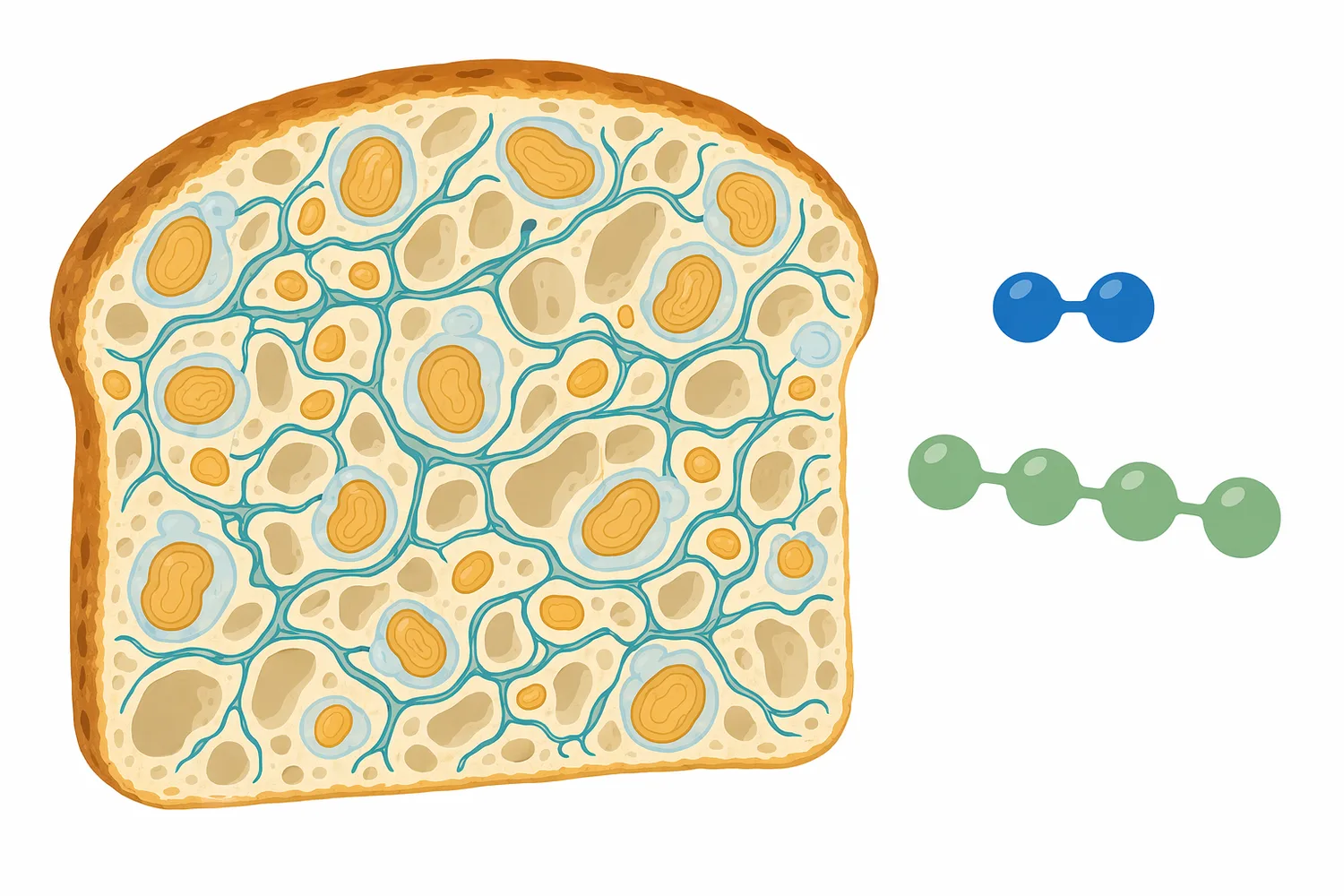
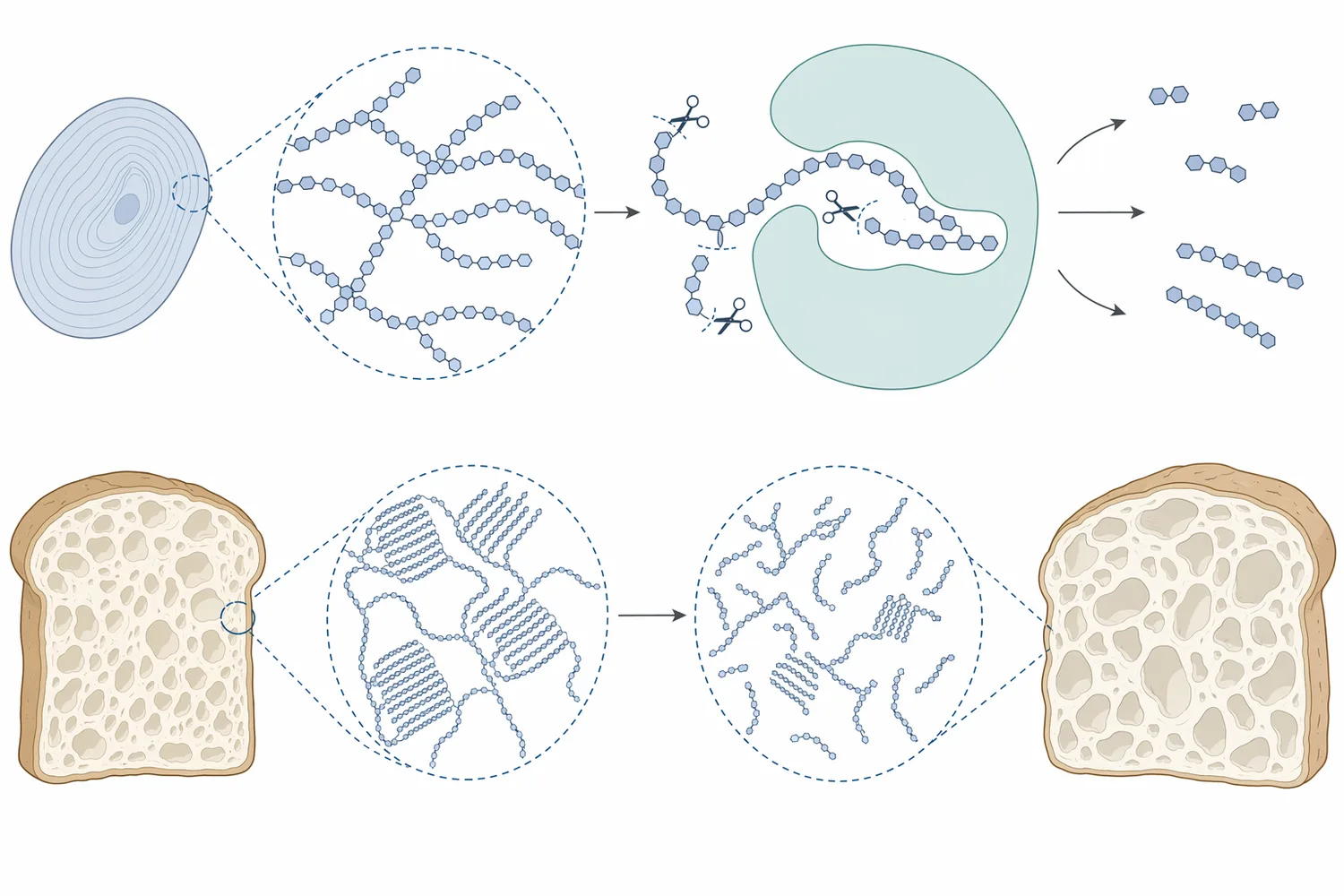
Maltogenic amylase targets that structural pathway. By shortening some of the starch chains that would otherwise reassociate, it reduces the ability of amylopectin to form firm retrograded networks. The enzyme does not stop starch from changing completely, but it shifts the structure toward a softer and more flexible crumb over the product’s intended shelf life [3].
Wheat flour starch is composed mainly of amylose and amylopectin. Amylose is mostly linear, built primarily from α-1,4-linked glucose units. Amylopectin is much larger and highly branched, with α-1,4-linked chains connected through α-1,6 branch points. During baking, gelatinization exposes more of these chains to enzymatic action, giving maltogenic amylase access to bonds that are less available in raw, ungelatinized starch [6].
Maltogenic amylase works as a controlled starch trimmer. Rather than randomly destroying the starch network, it preferentially releases maltose and related short fragments from accessible starch chains. Computational work on maltogenic amylase from Bacillus lehensis G1 has examined substrate binding subsites and product specificity, supporting the idea that the enzyme’s active site architecture helps determine why maltose-rich products are favored [2].
The important bakery effect is that the enzyme changes chain length distribution. Long amylopectin side chains are better able to align and recrystallize; shorter chains and soluble fragments interfere with that packing. When maltogenic amylase creates more short chains, the cooled crumb contains starch that is less efficient at forming the ordered structures associated with firmness [3].
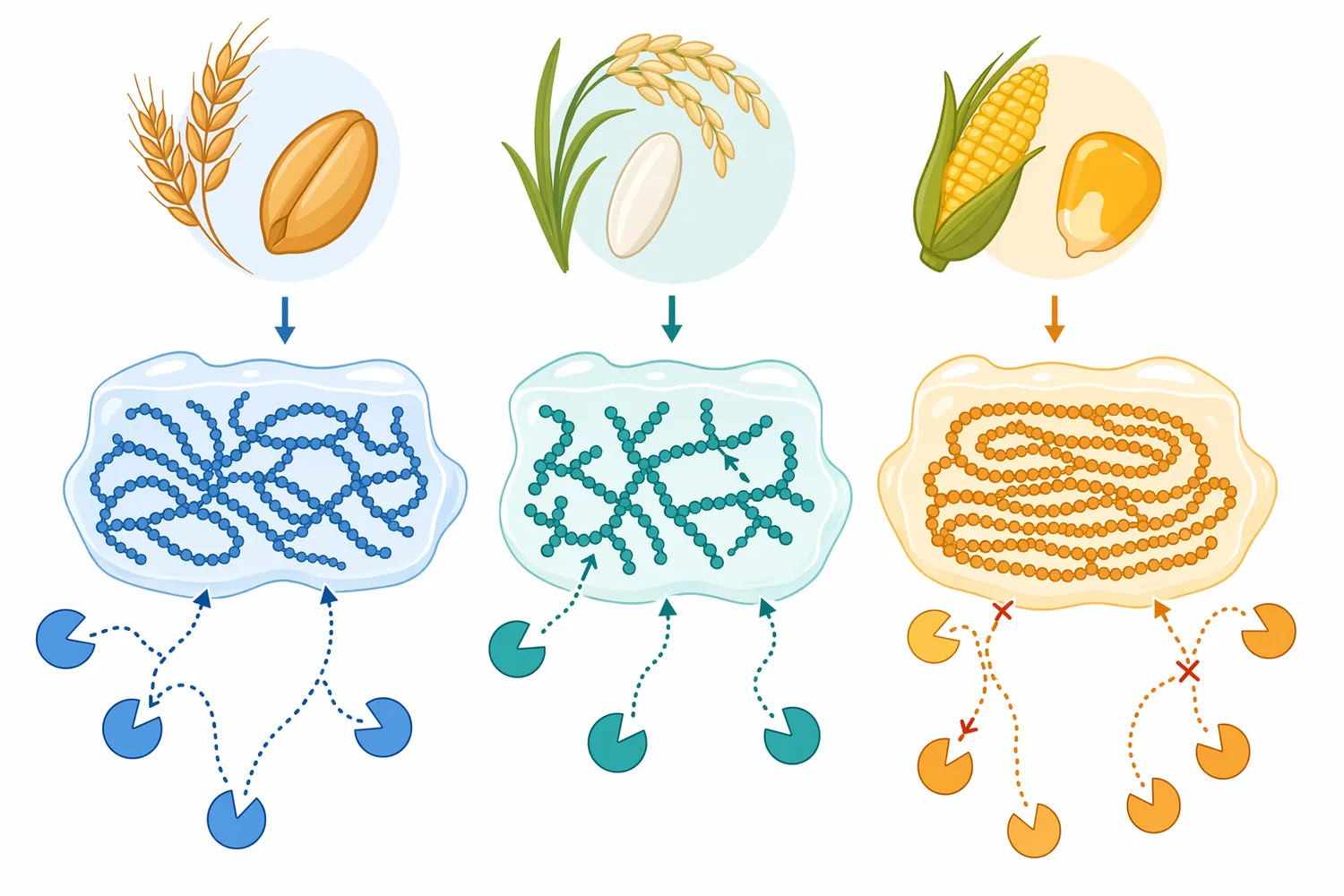
Research on rice starch provides a clear example of this structural effect. In a study of rice starch degradation by maltogenic α-amylase, the enzyme changed starch structure and rheological properties, showing that substrate structure affects how the enzyme modifies starch and how the modified starch behaves under processing conditions [6].
Maize starch studies show a similar principle in another cereal substrate. Ethanol pretreatment increased the efficiency of maltogenic α-amylase and branching enzyme on granular native maize starch, indicating that starch accessibility strongly influences the extent of enzymatic modification [7]. For baking, this reinforces a practical point: maltogenic amylase performs most meaningfully when heat, moisture, and processing make starch accessible enough for controlled modification.
Not every amylase gives the same result in bread. The name “amylase” covers enzymes that differ in product profile, heat behavior, substrate preference, and end-use effect. In wheat bread, maltogenic α-amylase and maltotetraogenic amylase have been studied side by side for sugar release, illustrating that the carbohydrate pattern produced by the enzyme is central to its bakery function [1].
| Enzyme type | Main starch effect in baking | Typical product emphasis | Practical bakery relevance |
|---|---|---|---|
| Maltogenic amylase | Trims gelatinized starch chains and favors maltose-rich fragments | Maltose, short malto-oligosaccharides | Freshness management, crumb softness, delayed firming |
| Conventional α-amylase | Hydrolyzes starch more broadly into dextrins and fermentable sugars | Mixed dextrins and sugars | Fermentation support, loaf volume, crust color, dough activity depending on system |
| Maltotetraogenic amylase | Produces a higher proportion of maltotetraose-type products | Maltotetraose-rich profile | Different sugar-release behavior and potentially different texture effects |
| Branching enzyme used with amylase | Rearranges starch branch architecture | More highly branched starch fragments | Starch modification applications where retrogradation behavior is being engineered |
This distinction matters because anti-staling performance is not just a function of “more hydrolysis.” Excessive starch breakdown can weaken crumb, increase gumminess, or change eating quality in the wrong direction. Maltogenic amylase is valued because it can deliver a more targeted degree of starch modification when used appropriately in a bakery formulation [3].
The most direct bakery evidence comes from wheat bread work. Rebholz and co-workers studied exogenous maltogenic α-amylase and maltotetraogenic amylase in wheat bread, focusing on sugar release and showing that enzyme choice changes the carbohydrate profile of the final bread system [1]. That is important because the sugar and oligosaccharide pattern influences fermentation residues, crumb interactions, browning potential, and storage texture.
Dough research also shows that enzyme effects must be understood in the full structure of bread, not in isolation. In dough enriched with resistant starch, combinations of enzymes changed fundamental rheological behavior, demonstrating that starch-active and other functional enzymes can alter dough mechanics before and during baking [8]. For maltogenic amylase, the main target remains starch and freshness, but the surrounding dough matrix affects how the final benefit appears.
Heating is another important part of the picture. Studies of torque variation in wheat dough found that enzymatic treatments and heating affect dough structure signatures, showing that the mechanical response of dough changes as enzymes act and temperature rises [9]. This aligns with how maltogenic amylase functions in baking: the enzyme’s useful window occurs as starch becomes hydrated and accessible, but before the baked crumb structure is fully set.
Recent work on enzymatic modification of wheat starch and dough further supports the idea that starch modification changes dough and product properties, not just laboratory carbohydrate composition [10]. For a baker, this means maltogenic amylase should be viewed as a functional processing ingredient that modifies the starch phase of the baked product and thereby affects the texture experienced days later.
Bread is the main commercial application, but starch studies in rice and maize help explain the mechanism more cleanly. Rice starch research found that degradation by maltogenic α-amylase changed rheological properties, meaning the enzyme altered how the starch paste flowed and set under processing conditions [6]. This is directly relevant to baked and steamed starch-rich foods because texture depends on the behavior of gelatinized starch after heating.
Waxy maize starch research is especially useful because waxy starch is dominated by amylopectin. A study on waxy maize starch hydrolyzed by maltogenic α-amylase examined structure in relation to retrogradation, connecting enzymatic chain modification with the tendency of starch to reorganize during storage [3]. Since amylopectin retrogradation is central to crumb firming, this type of evidence supports the anti-staling rationale for maltogenic amylase in bread.
Granular native maize starch work adds another layer: substrate accessibility changes enzyme efficiency. Ethanol pretreatment increased the efficiency of maltogenic α-amylase and branching enzyme in modifying native maize starch, showing that physical structure and pretreatment conditions influence how much the enzyme can change starch architecture [7]. In bakery production, hydration, mixing, fermentation, proofing, and baking all affect the moment when starch becomes available for enzyme action.
Other retrogradation-inhibition studies, including work with rice starch and protein hydrolysates, confirm the broader principle that interfering with starch reassociation can reduce firming behavior [11]. Maltogenic amylase does this enzymatically by changing the starch chains themselves, rather than only adding a material that physically competes with starch-starch interactions.
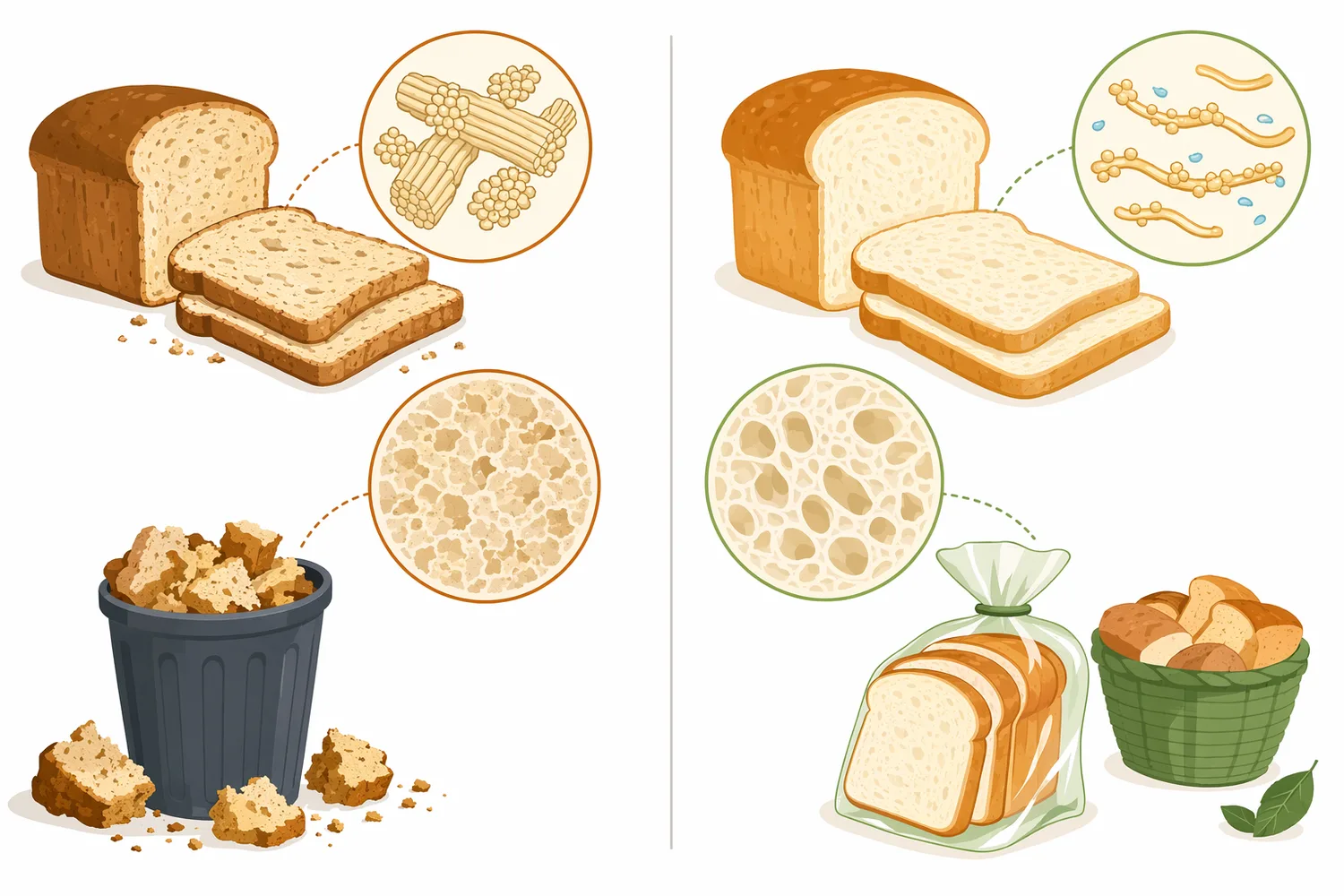
The most visible change is crumb softness retention. A loaf treated with maltogenic amylase is not necessarily dramatically different immediately after cooling; the value becomes clearer during storage, when untreated crumb firms faster. By slowing amylopectin recrystallization, the enzyme helps preserve a more compressible, elastic crumb structure [3].
A second change is improved eating resilience. Bread that firms rapidly can feel dry even when moisture is present, because the crumb fractures instead of deforming softly. When starch chains are less able to pack into rigid crystalline regions, the bite remains more tender and the crumb can recover better after compression [4].
A third practical change is slice quality. Firmer crumb is more likely to crumble, tear, or produce ragged slices, especially in soft sandwich bread and buns. Because maltogenic amylase supports a softer crumb matrix over time, it can help maintain cleaner slicing and reduce the perception of dryness during the product’s intended shelf life [1].
The enzyme can also influence sugar profile. Since maltogenic amylase produces maltose-rich fragments, it may contribute to the carbohydrate environment in bread, but that should not be confused with its primary role. In bakery applications, the stronger evidence-backed value is controlled starch modification and delayed firming, not sweetness adjustment or mold control [1].
Packaged pan bread is the classic use case. Sandwich bread must stay soft through slicing, bagging, distribution, shelf display, and household storage. Maltogenic amylase addresses the physical staling pathway by modifying starch during baking so the finished crumb firms more slowly after packaging [3].
Buns and rolls benefit for the same reason. A hamburger bun or dinner roll is expected to stay pliable, compressible, and tender rather than dry or crumbly. Because these products often contain sugar, fat, and emulsifiers, the finished response reflects the full formulation, but maltogenic amylase contributes through the starch phase rather than through the gluten or fat phase [8].
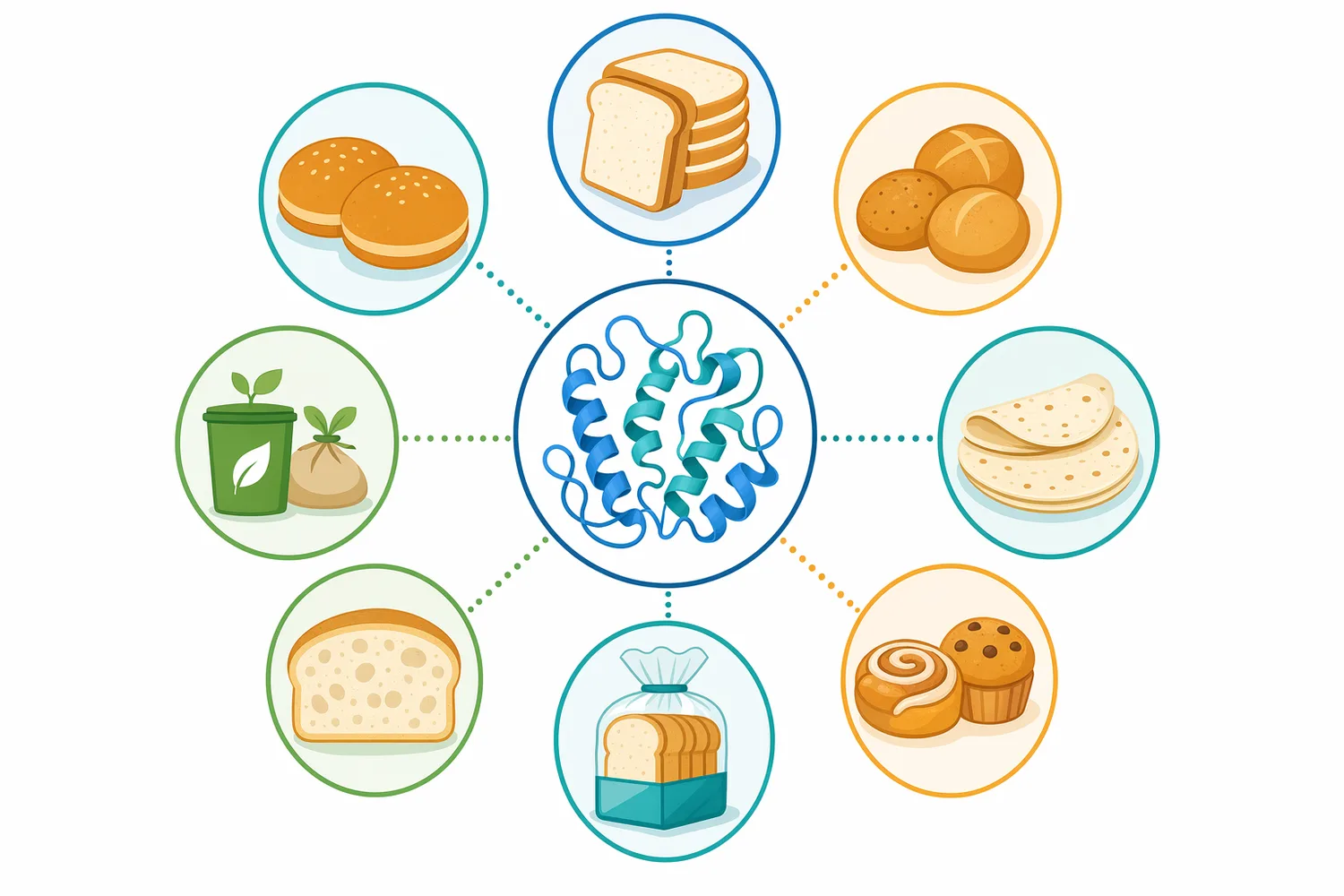
Flatbreads, tortillas, and wraps have a related problem: they can become brittle, crack, or lose foldability as starch retrogrades. While each product format behaves differently because thickness, moisture, fat, and baking intensity vary, the underlying anti-staling mechanism remains relevant whenever gelatinized starch is a major structural component [12].
Rice-based baked or steamed products are another area where the enzyme’s starch-modifying behavior is relevant. Rice starch degradation by maltogenic α-amylase changes rheological properties, indicating potential usefulness where rice starch texture and storage firmness are product-quality concerns [6].
Maltogenic amylase is often one part of a broader bakery texture system. Other enzymes may target different parts of the dough: xylanases modify arabinoxylans and water distribution, lipases affect lipid interactions and crumb structure, proteases modify protein strength, and oxidizing or cross-linking systems influence dough handling. These actions are not substitutes for maltogenic amylase because they act on different substrates [13].
For example, enzymatic cross-linking has been studied to improve dough handling in normal and reduced-salt environments, showing how protein-network modification can affect dough behavior [14]. Maltogenic amylase, by contrast, is not primarily a dough-strengthening enzyme; its main contribution appears after starch gelatinization and during storage, where it influences crumb firming.
Protease and lipase studies in bakery products also show how enzyme class determines function. Research on cookie quality found protease and lipase act as functional modifiers of dough rheology and finished product attributes, but their mechanisms are protein and lipid related rather than starch-retrogradation focused [15]. This is why maltogenic amylase occupies a distinct role in bread freshness systems.
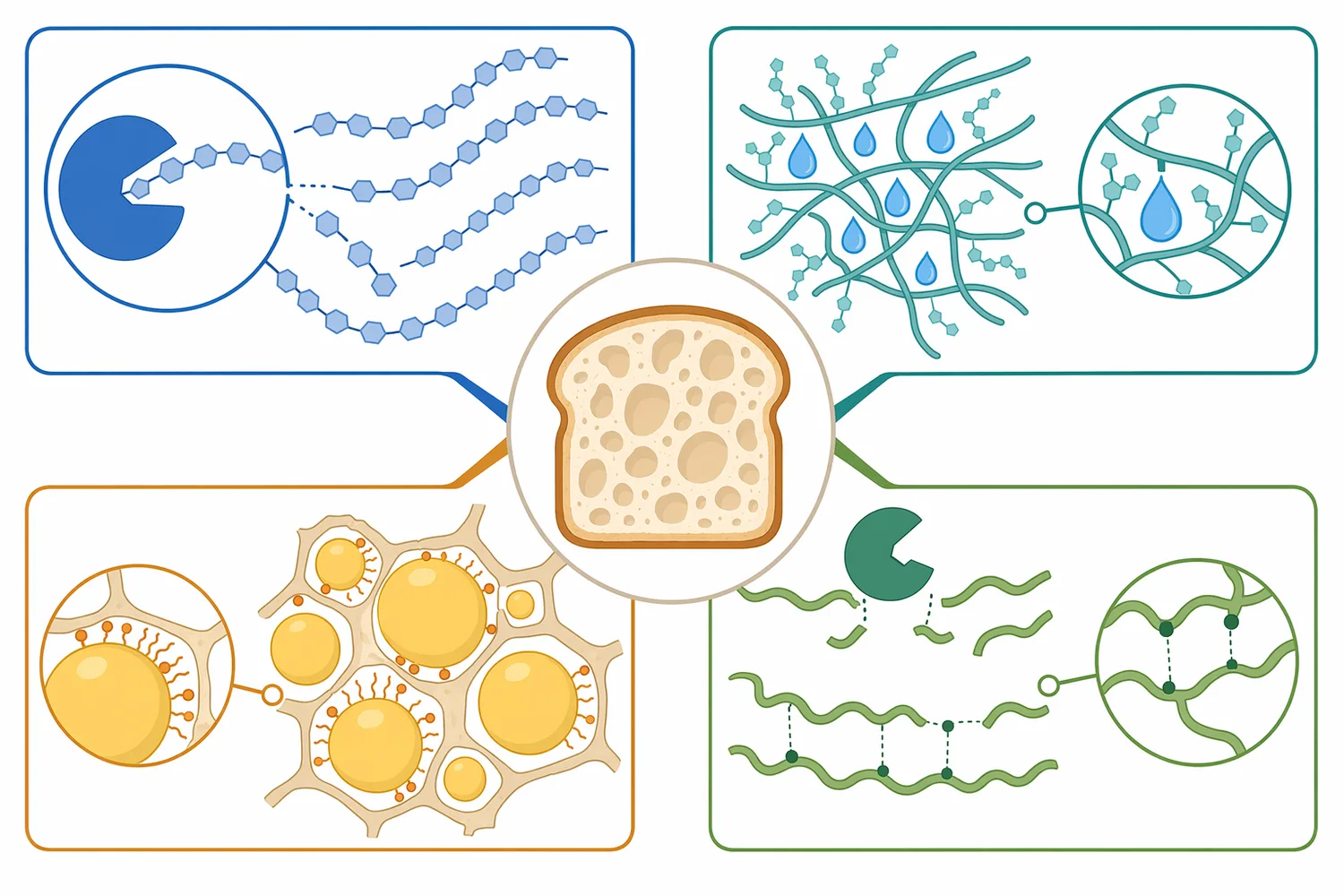
Hydrocolloids can also inhibit retrogradation and improve texture in some starch-rich foods. In Chinese pancake research, hydrocolloids improved baking characteristics and inhibited starch retrogradation, showing that non-enzyme systems can also manage firming [12]. Maltogenic amylase differs because it changes starch chain structure enzymatically rather than primarily binding water or increasing viscosity.
Maltogenic amylase performance depends on when and how starch becomes accessible. In raw flour, starch granules are relatively ordered and less available. As dough heats, granules absorb water and swell; gelatinization exposes chains, making enzymatic trimming more effective. Once heat has progressed far enough, enzyme activity declines and the crumb structure sets [6].
This timing explains why baking systems respond differently. A lean pan bread, a high-sugar bun, a laminated product, a tortilla, and a rice-based cake do not present starch to the enzyme in the same way. Water availability, dough solids, fat level, sugar level, fermentation, baking temperature profile, and product thickness all affect starch gelatinization and therefore the practical expression of maltogenic amylase activity [9].
Substrate structure is equally important. The rice starch study showed that starch structure affects degradation and rheological properties under maltogenic α-amylase treatment [6]. The maize starch pretreatment study similarly showed that making starch more accessible increased enzymatic modification efficiency [7]. These findings explain why a bakery may see strong freshness benefits in one product and a more modest effect in another.
The goal is controlled modification, not maximum starch breakdown. If starch is hydrolyzed too little, the freshness effect may be limited; if it is hydrolyzed too aggressively, the crumb can become weak, sticky, or gummy. The useful zone is the one in which enough amylopectin chain trimming occurs to slow retrogradation while the crumb still sets with the desired structure [3].
The primary benefit is delayed crumb firming. By reducing the ability of amylopectin chains to recrystallize, maltogenic amylase supports a softer crumb over storage. This is especially valuable in products sold after a distribution period rather than consumed immediately from the oven [3].
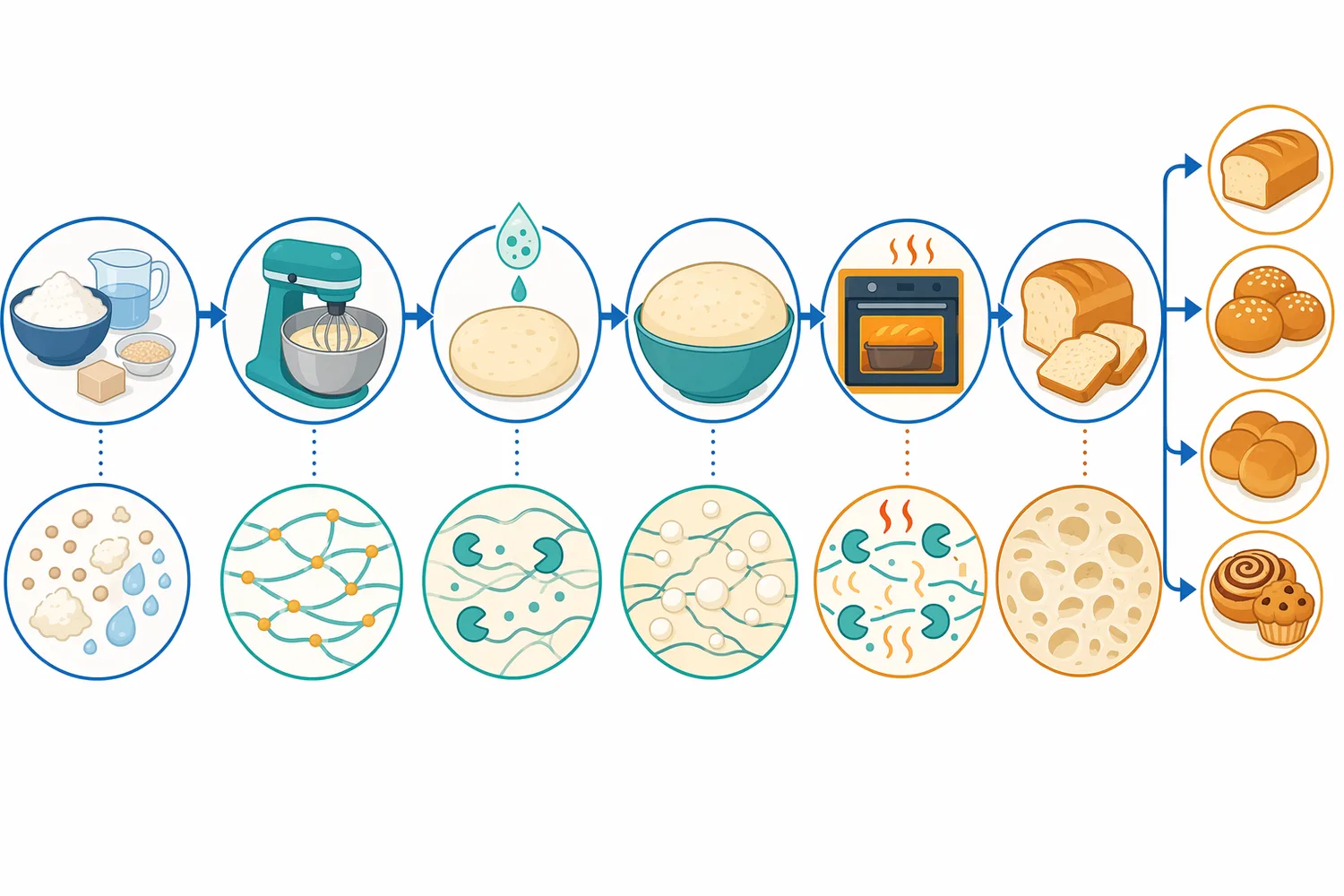
The second benefit is better perceived freshness. Consumers often judge freshness by squeeze, softness, chew, and the absence of dry crumbling. Because maltogenic amylase changes starch behavior inside the crumb, it addresses one of the main physical causes of stale texture rather than simply masking the symptom [4].
A third benefit is improved consistency through the product’s shelf life. Bread that remains softer tends to slice and handle more predictably, while buns and rolls remain more acceptable after packaging and transport. The effect is particularly useful where the finished product must retain softness over several days [1].
Maltogenic amylase can also support cleaner-label formulation strategies where enzymes are preferred over some conventional texture systems. That should be understood realistically: enzymes are functional processing aids or ingredients within a complete formulation, not universal replacements for emulsifiers, hydrocolloids, packaging, or process control [12].
Maltogenic amylase is not a mold inhibitor. It does not replace sanitation, packaging integrity, water-activity control, preservatives where used, or other food-safety measures. Its main function is starch modification for texture and freshness, not microbial preservation [3].
It is also not a gluten-degrading enzyme. The principal substrate is starch, so it should not be described as a way to remove gluten or create gluten-free claims. Enzymes that act on proteins, such as proteases or cross-linking enzymes, influence dough protein networks through different mechanisms [14].
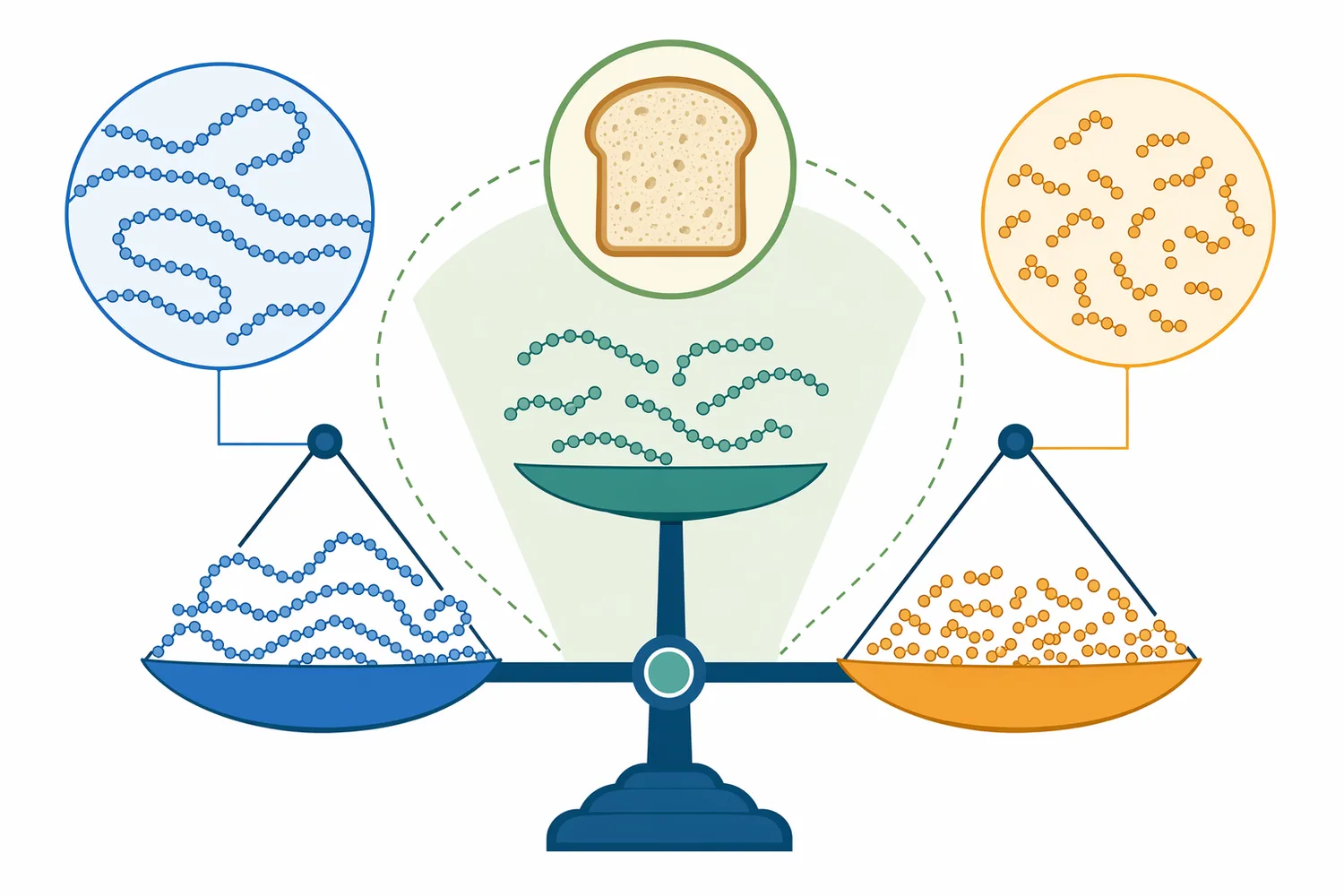
It is not simply a browning enzyme either. Because it can increase maltose and related sugars, it may contribute indirectly to crust color or flavor in some formulations, but that is secondary to its anti-staling function. Wheat bread research on sugar release confirms that amylase choice changes carbohydrate patterns, but freshness management remains the main reason maltogenic amylase is used in soft bread systems [1].
Finally, maltogenic amylase is not automatically beneficial in every baked product. High-moisture cakes, chemically leavened goods, gluten-free systems, highly sugared doughs, and specialty starch products may respond differently because their structure, water distribution, and starch gelatinization behavior differ. The strongest and most established fit remains starch-rich products where crumb firming limits eating quality [6].
Enzymes.bio supplies Maltogenic Amylase for Baking as a 1 kg online product for customers who want a practical bakery enzyme for starch-based freshness management. The ordering model is straightforward: purchase online, pay online, and the order is processed and shipped.
Each order includes a Certificate of Analysis and Safety Data Sheet. The product should be understood as a professional bakery enzyme for controlled starch modification, with its main value in helping baked goods retain softness and reduce the firming associated with starch retrogradation.
For bread, buns, rolls, flatbreads, and other starch-rich baked goods, maltogenic amylase offers a well-supported mechanism: it modifies gelatinized starch, favors maltose-rich short fragments, reduces the ability of amylopectin to recrystallize, and helps the crumb remain softer for longer [3].
Sold by the 1 kg unit, in stock and ready to ship. Order directly on our store — pay online and we process your order. A Certificate of Analysis and Safety Data Sheet are included with every order.
Buy Maltogenic Amylase For Baking →Numbered in order of first citation. Open-access sources, each verified reachable at publication; citation numbers in the text link here.