

Product Description
Maltogenic amylase is produced by submerged fermentation of Bacillus licheniformis followed by purification, formulation, and drying. The product is widely used in the industries of flour mill, baking, maltose syrup production, and in some other industries.
Function and Application
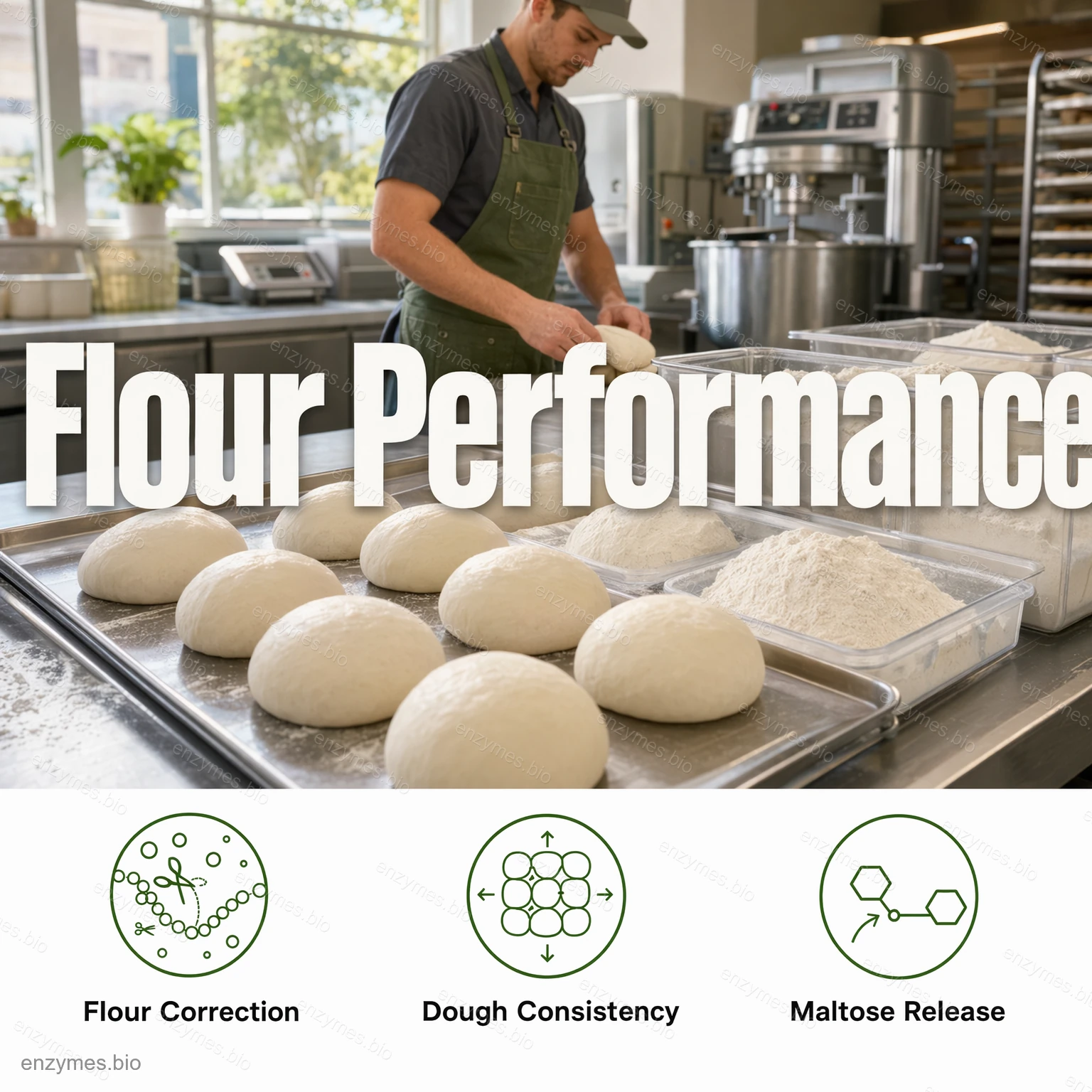
Flour Correction: For specialty flour with improved specifications.
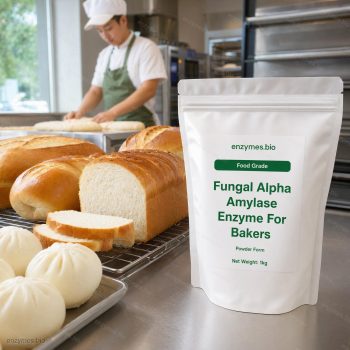
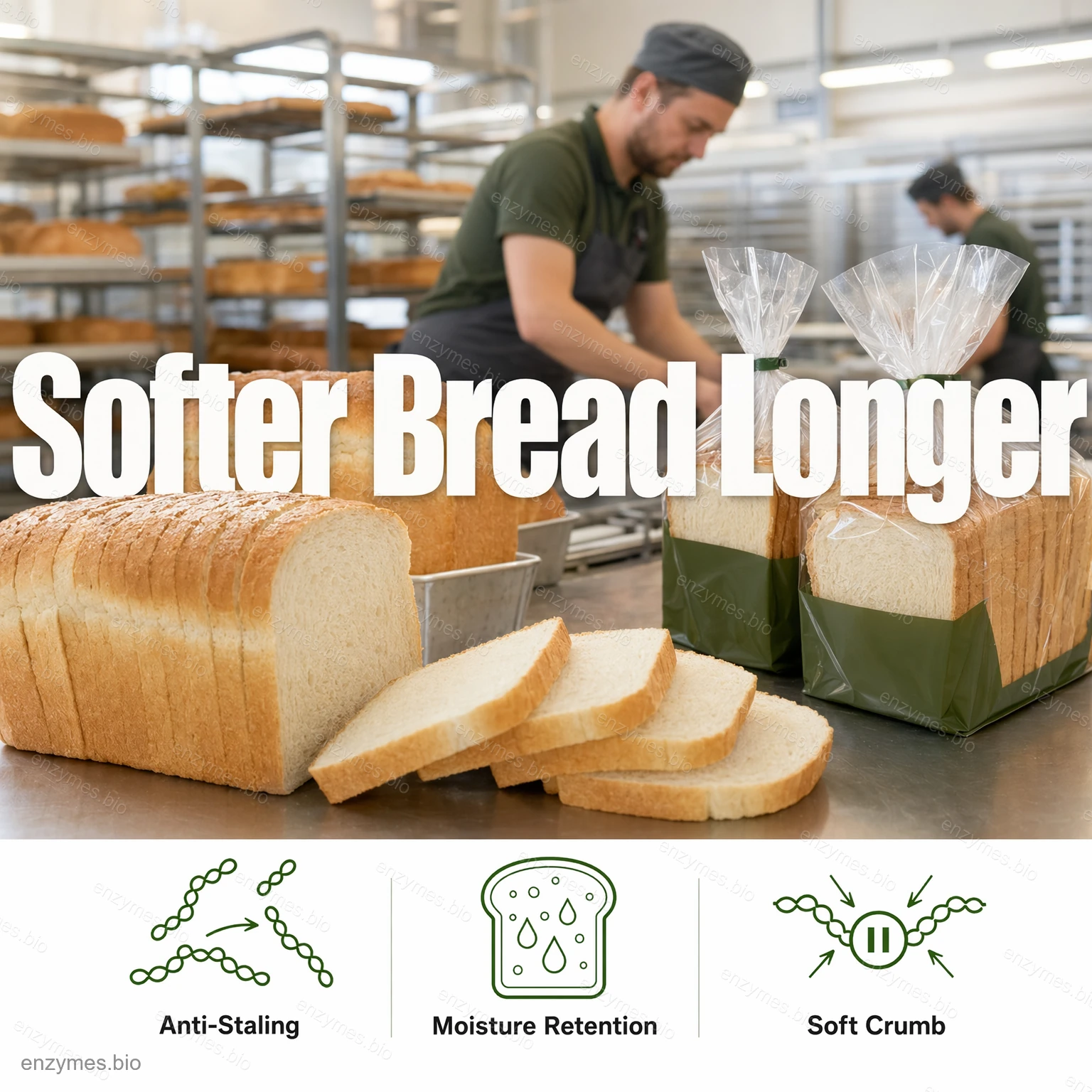
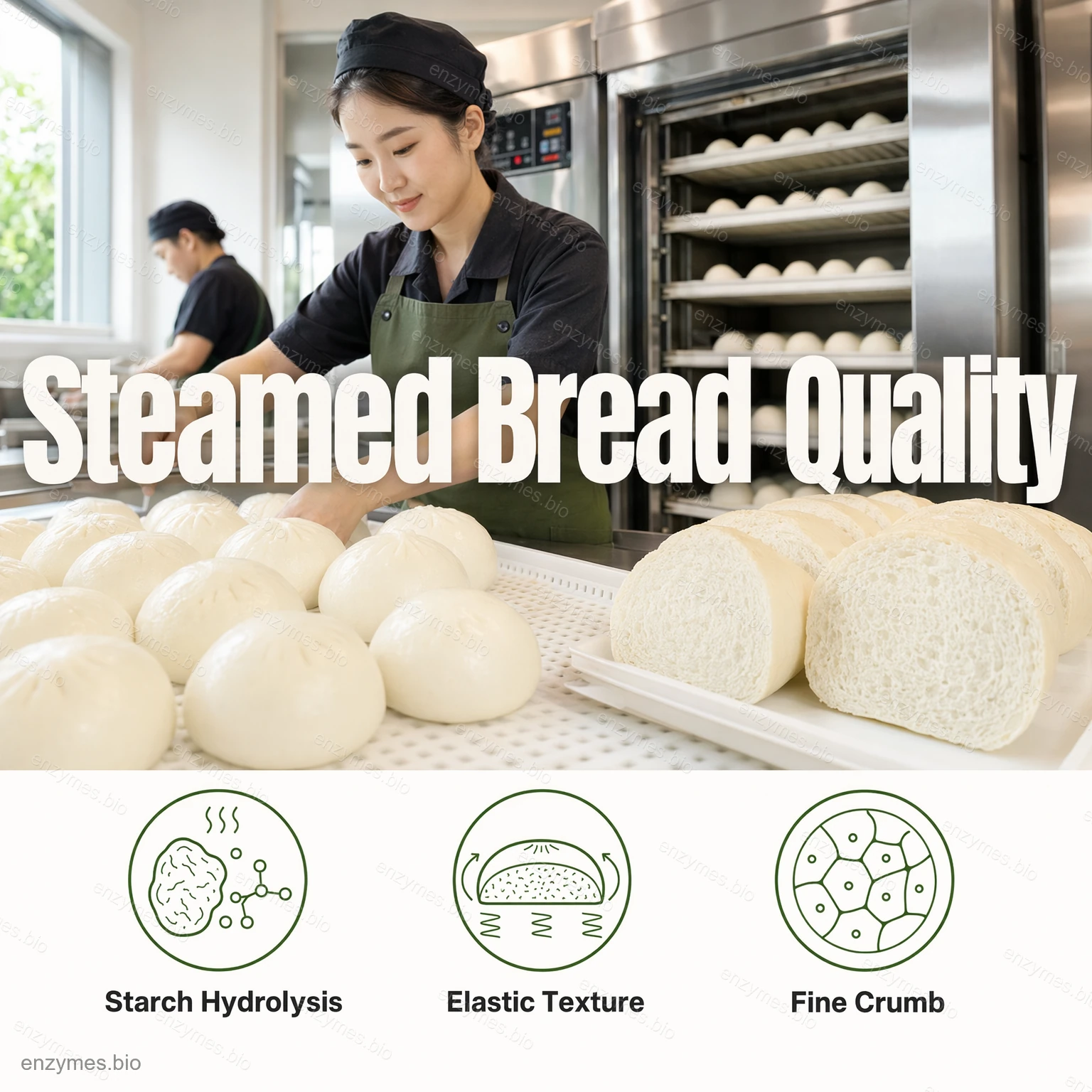
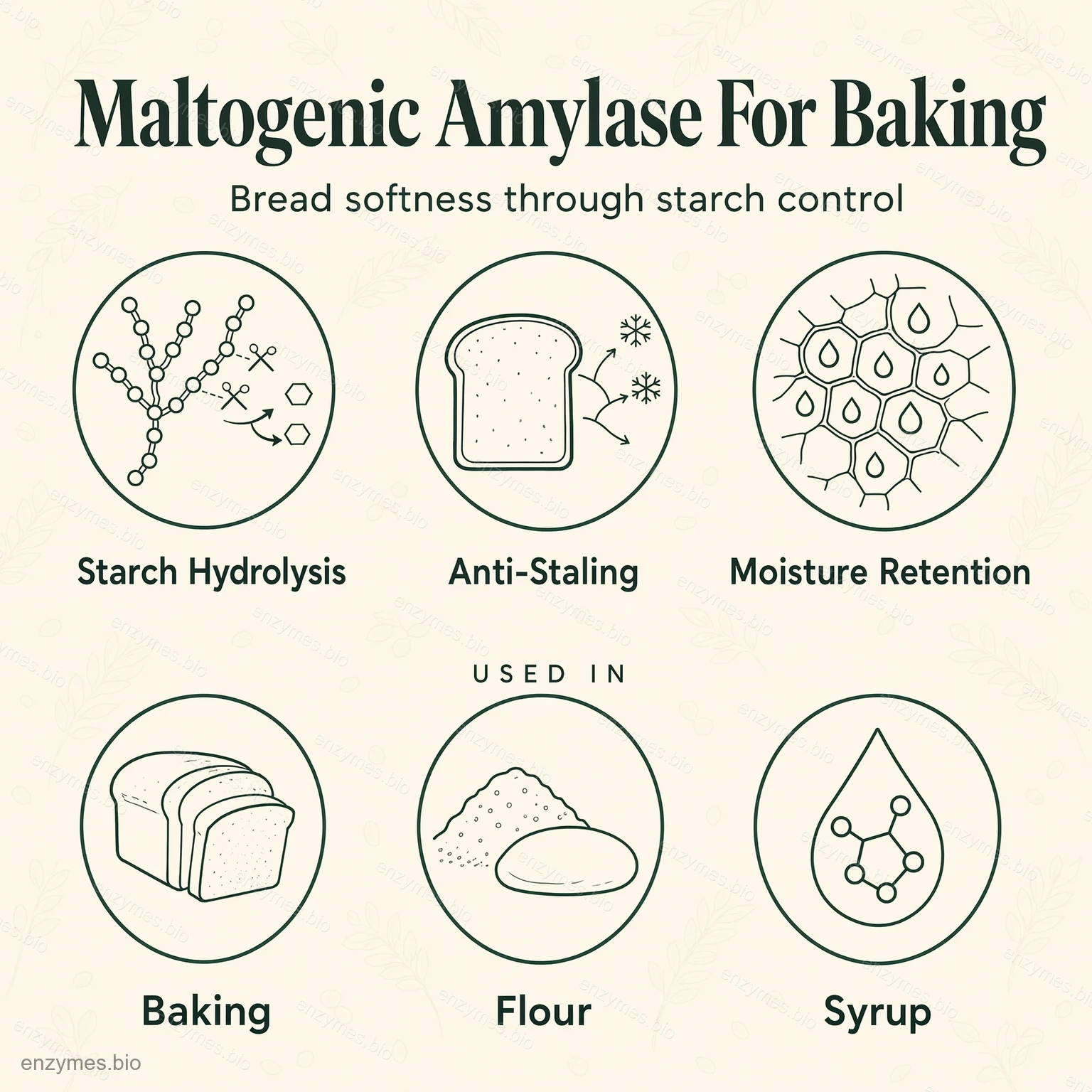
Steamed Bread and Bread Making: Improvement in crumb structure of bread and steamed bread; better softness, whiteness, elasticity, and taste of steamed bread; slowdown of aging, better moisture keeping and softness, and longer shelf life.
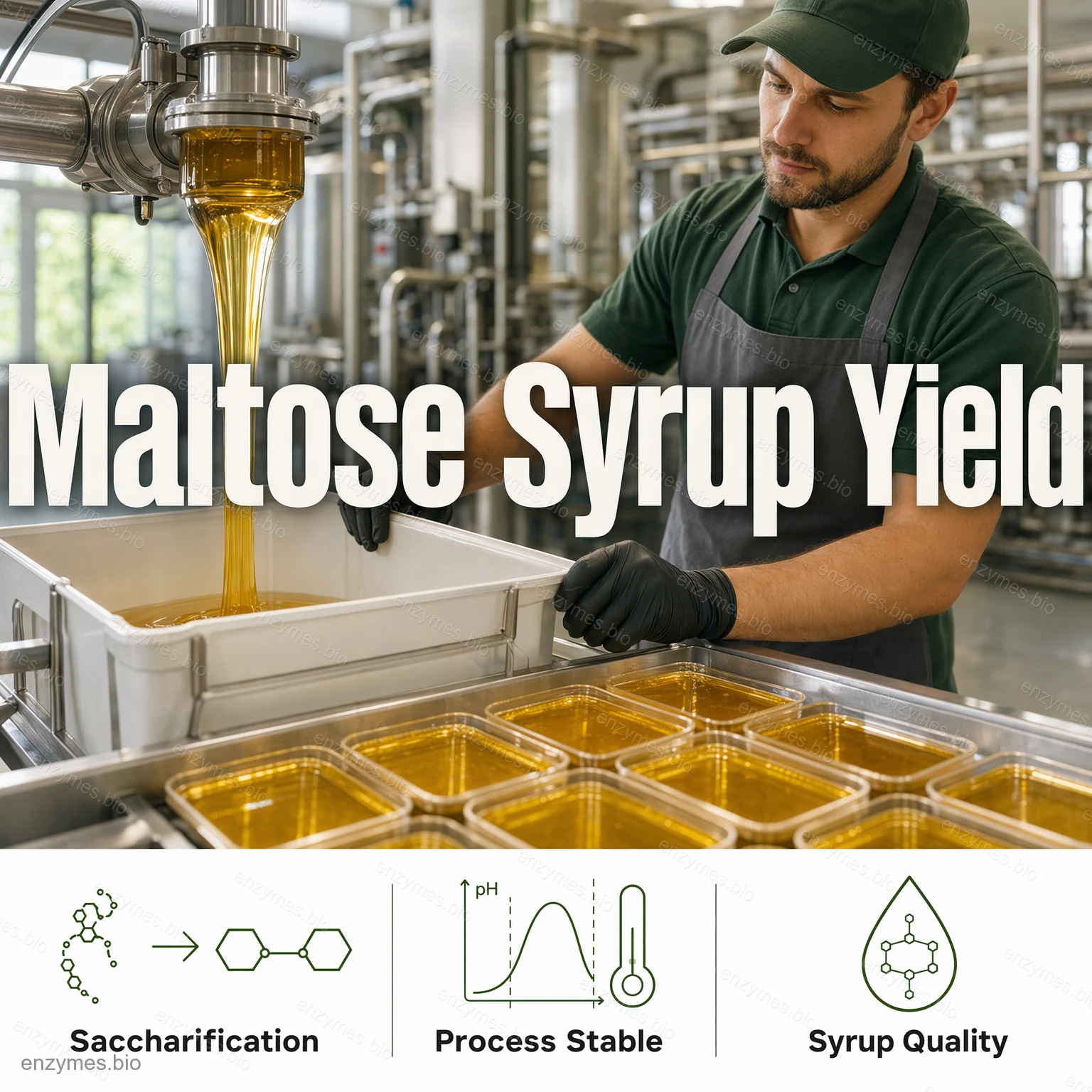
Production of Maltose or Malt Syrup: Stable and controllable performance during saccharification with quality product.
Mechanism and Product Standard
Maltose amylase can hydrolyze starch into maltose and a certain number of oligosaccharides.
Product Standard
| Items | Index | |
| Particle size (%<40 mesh) | ≥80 | |
| Loss on drying/(%) | ≤8.0 | |
| Lead/(mg/kg) | ≤5.0 | |
| Arsenic/(mg/kg) | ≤3.0 | |
| Total viable count/(CFU/g) | ≤50000 | |
| Coliform Bacteria/(CFU/g) | ≤30 | |
| Escherichia coli | (CFU/g) | <10 |
| (MPN/g) | ≤3.0 | |
| Salmonella/(25g) | Not Detected |
Reaction Parameters
| Condition | Range |
| Activity Temperature | 20℃-80℃ |
| Optimum Temperature | 65℃-75℃ |
| Activity pH | 3.5-6.5 |
| Optimum pH | 4.0-6.0 |
Application Rate Recommendation
The recommended application rate is 0.1-1 kg/t DS. The application rate has to be optimized based on each application, the raw material specifications, product expectation, and processing parameters. It is better to begin the test with the convenient volume.
Dosage:
Add 10–100 ppm based on flour weight (1.0–10.0 g per 100 kg of flour).
Application Process
(1) Application of Maltogenic Amylase for Anti-Staling in Bread Products
- Mix flour and ingredients together:
- Flour
- Salt
- Dry yeast
- Milk powder
- Sugar
- Add 25–100 ppm of the anti-staling enzyme preparation based on flour weight.
- Add water, mix evenly, and knead the dough for approximately 10 minutes.
- After the dough softens, add butter and continue kneading until a smooth gluten film develops. Cover with plastic wrap and allow the first fermentation at room temperature.
- When the dough reaches 2.5–3 times its original volume, degas and reshape the dough. Allow a second proofing, then place it into the mold.
- Continue proofing at approximately 35°C for about 1 hour.
- Bake until the finished bread product is obtained.
(2) Application of Maltogenic Amylase for Shelf-Life Extension and Softness Retention in Glutinous Rice Products
- Mix glutinous rice flour with ingredients:
- 20% corn starch
- 2× milk (based on the formulation)
- 20% sugar
- Steam the mixture until fully cooked and allow it to cool to approximately 60°C.
- Add 10–50 ppm of the enzyme preparation based on the weight of glutinous rice flour, then mix thoroughly.
- Proceed with forming and processing tangyuan or other glutinous rice food products.
Safety
Enzyme preparations are proteins that may induce sensitization and cause allergic types of symptoms in susceptible individuals. Prolonged contact may cause minor irritation for skin, eyes, or nasal mucosa. Any direct direct skin contact should be avoided. If irritation or allergic response for skin or eyes develops, please consult a doctor.
Storage
Storage: Keep sealed in a dry and cool place and avoid direct sunlight.
Shelf Life
Shelf life: 12 months in a dry and cool place.