
Neutral protease from Bacillus subtilis is an endo-acting protease used to partially hydrolyze flour proteins under mild, near-neutral processing conditions. In wheat flour and dough systems, that controlled protein cutting can reduce excessive gluten strength, improve dough relaxation, support sheeting or forming, and help tune texture in selected bakery and flour-based processes; Enzymes.bio supplies the product directly online by the 1 kg unit, with online payment, order processing, shipment, and a Certificate of Analysis and Safety Data Sheet included with the order .
The scientific basis is straightforward: proteases cleave peptide bonds in proteins, and baking enzyme literature identifies proteases as tools for modifying dough rheology, processing behavior, fermentation performance, and finished-product consistency [1]. The practical outcome is formulation-dependent, because the same protein-network weakening that improves cracker sheeting or flatbread extensibility can over-soften a dough if the exposure is too strong or too long.
Neutral Protease Bacillus subtilis Protease for flour-specific use is best understood as a protein-modifying processing enzyme for flour, dough, and cereal-protein applications. Enzymes.bio supplies it as an online 1 kg product for buyers who need a practical enzyme input for food-processing trials or production use, with the accompanying Certificate of Analysis and Safety Data Sheet supplied with the order rather than through a quotation or sample-request workflow .
“Neutral protease” describes both the enzyme class and the preferred style of application. It is a protease, meaning it cuts proteins into shorter peptides; it is “neutral” because it is generally associated with near-neutral food-processing environments rather than strongly acid conditions. In flour systems, the most important substrates are gluten-forming wheat proteins—mainly glutenins and gliadins—although albumins, globulins, bran-associated proteins, and proteins from composite flours may also be affected depending on the formulation [2].
In enzyme terminology, the useful action in flour is endo-proteolysis: the enzyme cuts within protein chains rather than simply trimming amino acids from the ends. That internal cutting changes protein size distribution, exposes new charged and hydrophilic groups, reduces the continuity of long gluten chains, and alters how proteins bind water, interact with each other, and transmit stress during mixing, resting, sheeting, or baking [3].
The product naming includes “flour-specific endonuclease,” but the process value in flour is proteolytic, not nucleic-acid related. In practical bakery and flour-processing language, the relevant function is an endo-acting Bacillus subtilis protease: a molecular tool for controlled protein-network adjustment rather than an enzyme intended to act on starch, pentosans, DNA, or RNA [1].
Wheat dough strength comes from hydrated gluten proteins that unfold, align, entangle, and form a viscoelastic network during mixing. Glutenins contribute elastic strength through large polymeric structures, while gliadins contribute flow and extensibility; when the balance is too strong for a product, dough can resist extension, spring back after sheeting, require long rest times, or create high stress on forming equipment [4].
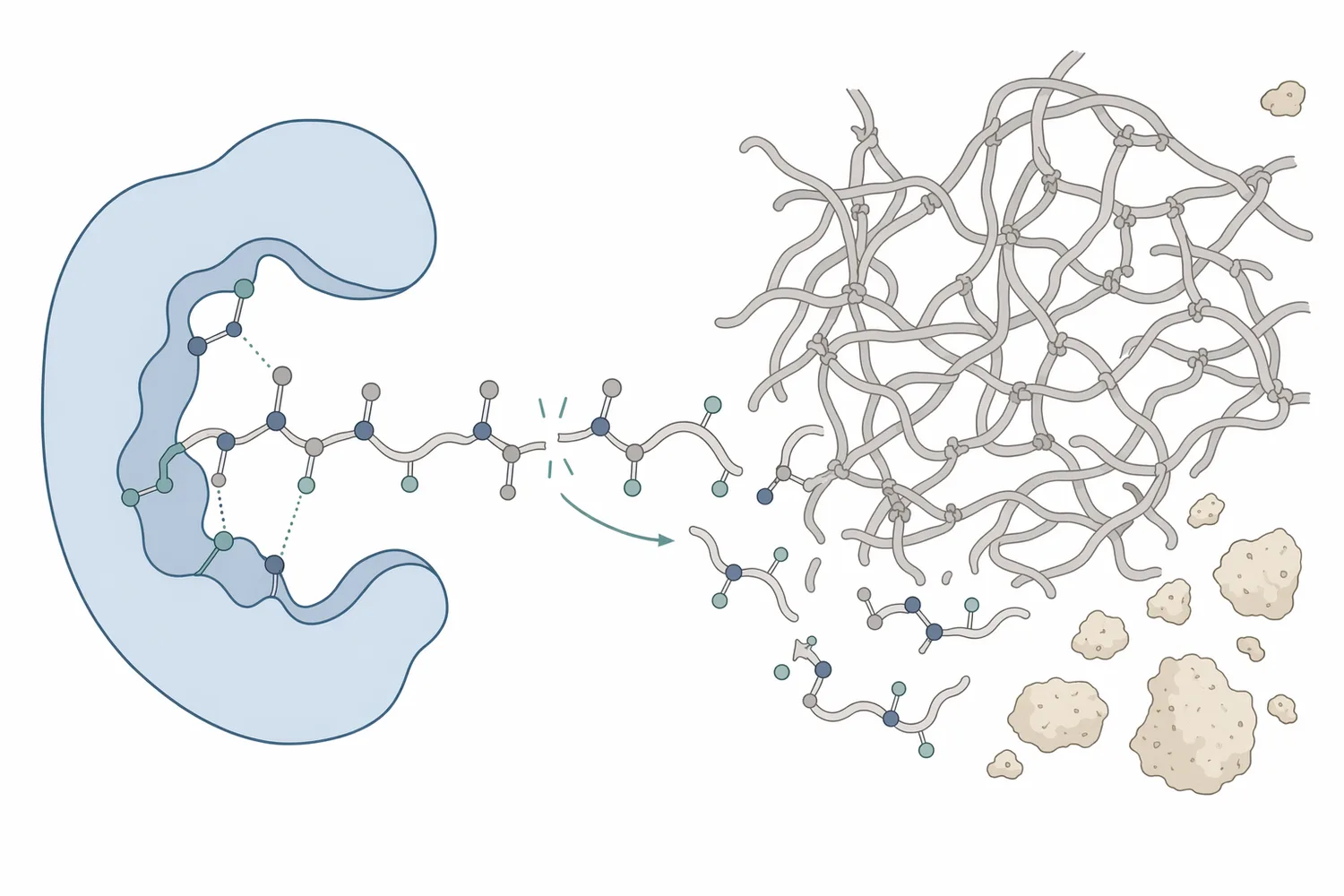
Neutral protease reduces that resistance by cleaving peptide bonds inside gluten proteins. Each cut shortens part of the protein chain and reduces its ability to participate in a continuous, elastic network. Instead of one long chain spanning multiple contact points, the dough contains more medium and smaller peptides that move more freely, hydrate differently, and contribute less elastic recoil under deformation [3].
This does not mean the enzyme “destroys gluten” in normal flour-processing use. The intended effect is partial hydrolysis: enough protein cleavage to change rheology, but not so much that the dough loses structure, becomes sticky, or fails to hold its intended shape. Wheat gluten hydrolysate research shows that enzymatic hydrolysis changes functional properties such as solubility and interfacial behavior because peptide size, exposed groups, and protein–water interactions all shift as hydrolysis proceeds [5].
The most visible processing change is often reduced elasticity and improved extensibility. A strong dough behaves like a stretched rubber band because intact gluten polymers store mechanical energy during mixing and sheeting; after protease action, fewer intact long chains remain to pull the dough back, so the sheet relaxes faster and resists shrink-back less. Studies of wheat gluten hydrolysis by neutral protease have specifically treated the process as limited hydrolysis, where the kinetics matter because functional change depends on how far protein breakdown is allowed to proceed [3].
A second change is water redistribution. Intact gluten proteins can trap and immobilize water inside a network, while hydrolyzed proteins and peptides expose additional charged and polar groups that change solubility and hydration. This is why wheat gluten hydrolysate studies often report changes in functional properties rather than simply “protein loss”: the protein is still present, but its molecular size, surface chemistry, and interaction pattern have changed [2].
A third change is interaction with other flour components. Wheat flour is not just starch plus gluten; it also contains arabinoxylans, lipids, endogenous enzymes, minerals, and bran components in wholegrain systems. Evidence for covalent cross-links between arabinoxylans and proteins in rye and wheat illustrates that flour proteins can be embedded in broader macromolecular networks, so protease action may indirectly influence water absorption, dough viscosity, and matrix continuity beyond gluten alone [6].
Neutral protease is most useful where the target product benefits from controlled dough relaxation rather than maximum gluten strength. Crackers, biscuits, wafers, flatbreads, pizza bases, laminated sheets, and some steamed or noodle products may need dough that is extensible, machinable, and dimensionally stable without excessive snap-back [1].
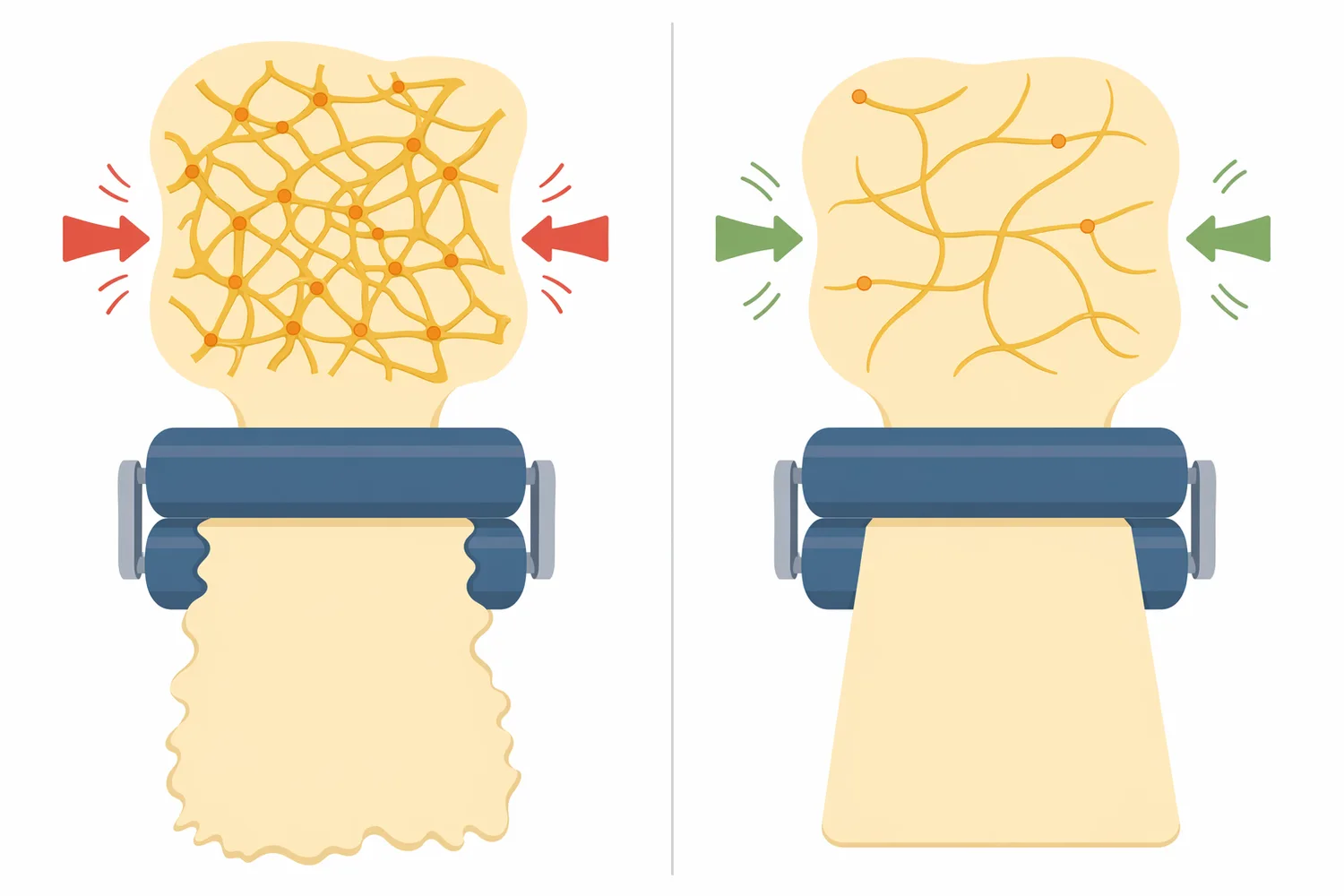
In sheeted products, the mechanism is especially practical. A dough sheet that springs back after rollers can create uneven thickness, distorted shapes, edge stress, and inconsistent bake. Protease lowers the elastic memory of the protein phase, so the dough can pass through reduction rolls or forming steps with less stored tension and better dimensional control [7].
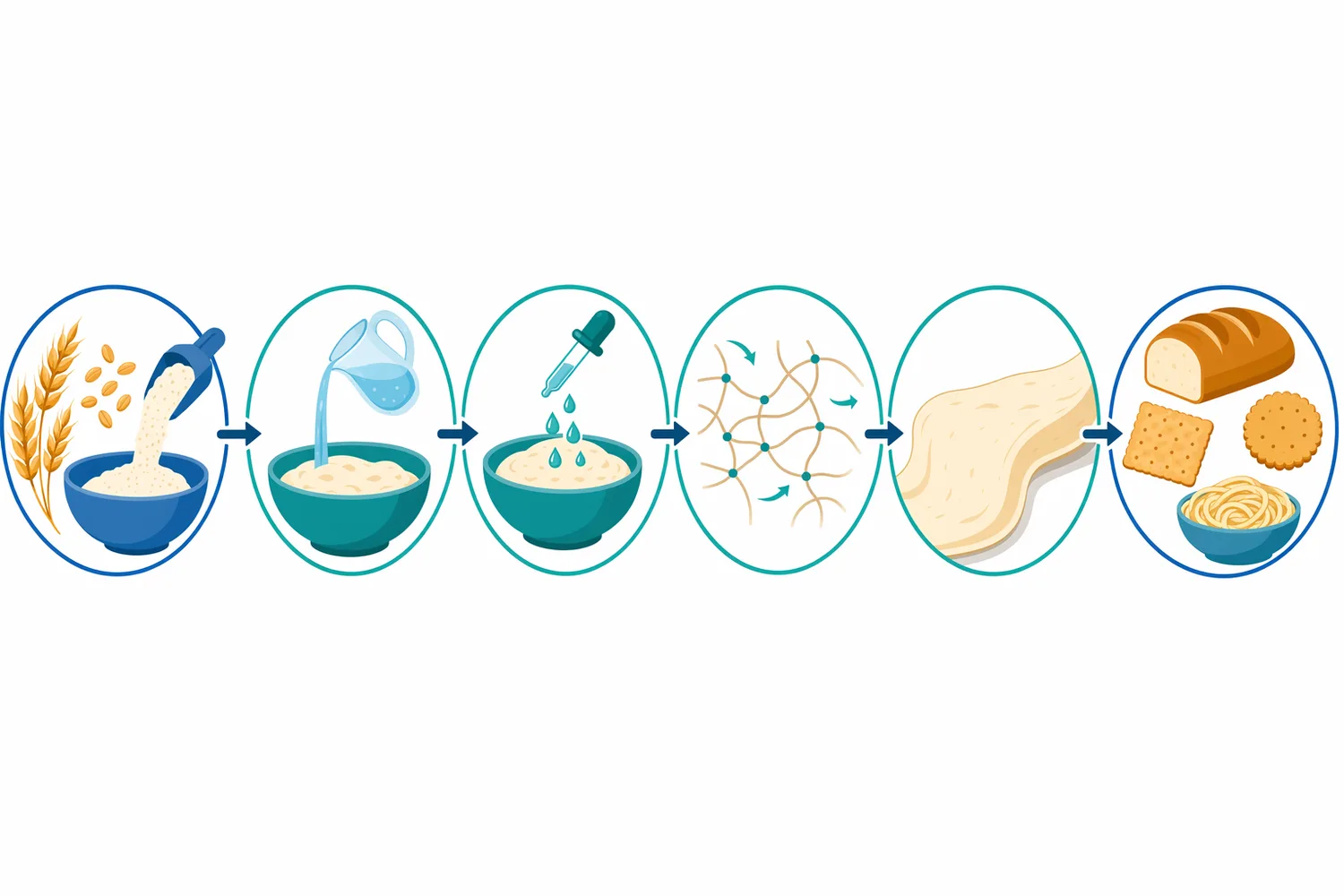
In biscuit and cracker systems, reduced gluten strength can support a shorter, more tender bite. The enzyme does this by weakening the protein framework that would otherwise make the product tough or chewy. This is different from adding fat or emulsifier: fat can physically interrupt the network, while protease chemically shortens the protein chains that build the network in the first place [1].
In flatbreads and pizza bases, protease can improve extensibility and make shaping easier when flour is stronger than the target process requires. The same hydrolysis that helps a dough stretch can also reduce gas-holding strength if pushed too far, so the relevant benefit is controlled relaxation rather than blanket softening [7].
In bread and fermented doughs, neutral protease has a more delicate role. Bread usually needs a coherent gluten network for gas retention and oven spring, so protease may be useful for dough conditioning but can become harmful if the network is weakened excessively. Reviews of baking enzymes place proteases among tools that influence dough development and fermentation, but the finished effect depends on the formula and process rather than enzyme class alone [1].
In flour-based ingredient systems, neutral protease can be used beyond finished dough handling. Wheat gluten hydrolysates are studied because enzymatic hydrolysis can generate peptides with improved solubility, emulsifying behavior, foaming properties, and potential bioactivity; the same molecular principle—controlled cleavage of wheat proteins—underpins both ingredient modification and dough-rheology adjustment [2].
Different protease families can all hydrolyze proteins, but they are not interchangeable in flour processing. Their working environment and hydrolysis style affect how quickly they act, how compatible they are with a dough system, and how much structural change they create before heat inactivation [1].
| Protease type | Typical processing context | Conceptual behavior in flour or protein systems | Practical implication |
|---|---|---|---|
| Acid protease | More acidic foods, fermented acidic systems, or low-pH hydrolysis | Acts best where the matrix is already acidic; may be less aligned with standard wheat doughs unless the formula is acidified | Useful when the process environment is acidic, but not the default choice for near-neutral dough systems |
| Neutral protease | Mild, near-neutral flour, dough, and food-protein systems | Cuts internal peptide bonds under gentle conditions, partially reducing gluten-chain length and network strength | Well suited to controlled dough relaxation and wheat protein modification when strong acid or alkali is not desirable |
| Alkaline protease | More alkaline processing environments and some non-bakery industrial protein hydrolysis uses | Often associated with robust protein breakdown under higher-pH conditions | Can be powerful, but may not match the pH environment of many flour and bakery systems |
This comparison is conceptual rather than a product-selection checklist. For flour-specific use, the appeal of a neutral Bacillus subtilis protease is that many doughs and flour slurries operate in a mild pH range where controlled hydrolysis can occur without moving the formula into a strongly acid or alkaline process window [1].
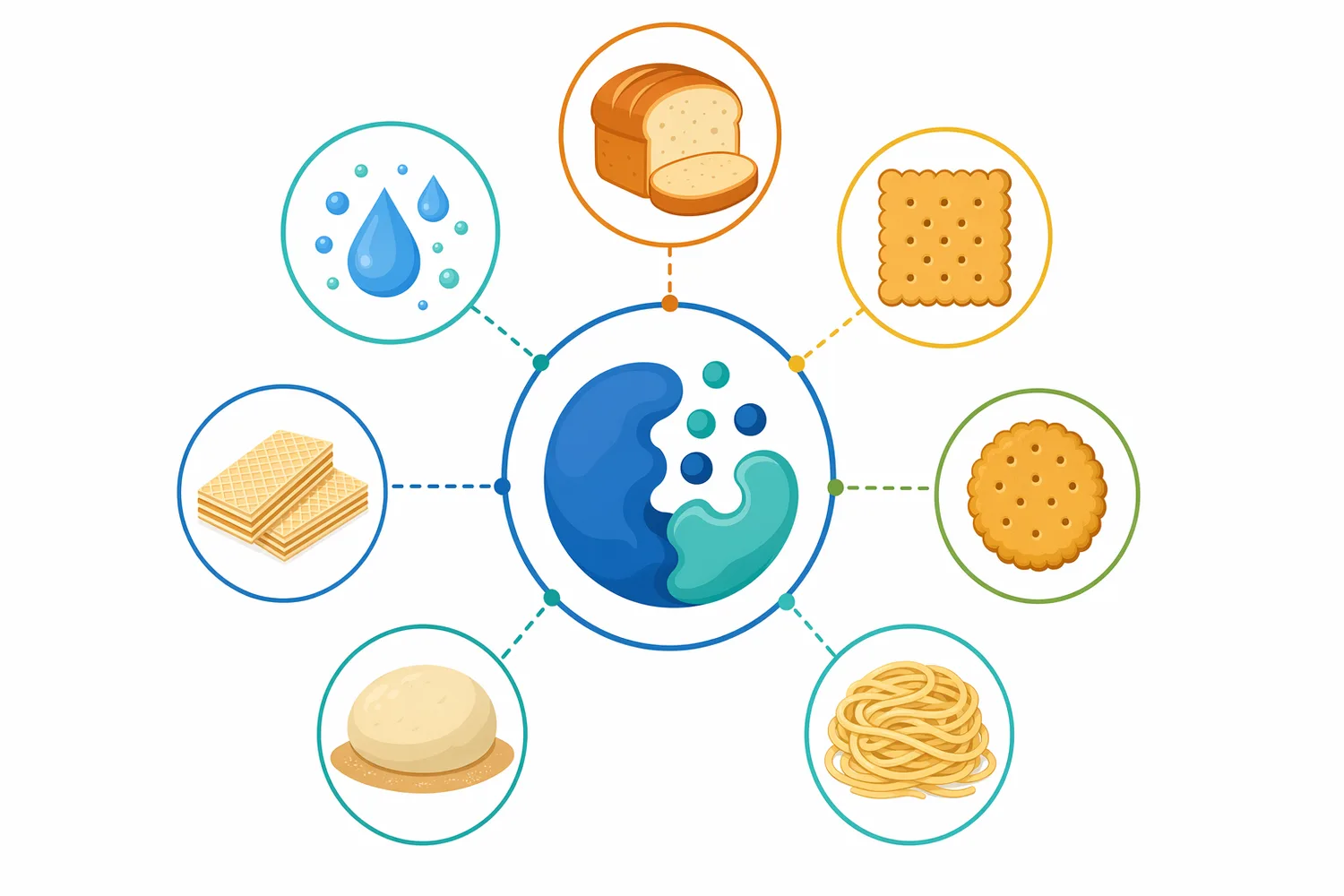
Wheat gluten is a difficult substrate because it is rich in repetitive sequences, forms large aggregates, and has low solubility in water compared with many food proteins. Enzymatic hydrolysis is therefore widely investigated as a way to convert gluten into smaller, more soluble peptides with improved functional behavior; recent work on wheat gluten hydrolysates emphasizes that protease treatment can combine functional improvement with potential health-related peptide generation [2].
A 2024 study on protease produced from Bacillus subtilis MTCC 2423 focused specifically on improving the functional properties of wheat gluten hydrolysates through enzymatic hydrolysis. For flour applications, the important point is not that a hydrolysate process is identical to dough processing, but that Bacillus subtilis protease can act on wheat gluten and shift its functional performance through controlled peptide-bond cleavage [5].
Research on limited hydrolysis of wheat gluten by neutral protease treats hydrolysis as a kinetic process, not a simple on/off reaction. That matters in production because the functional outcome depends on exposure: early cleavage may improve solubility and reduce network strength, while more extensive hydrolysis can move the system toward weak structure, high peptide release, and very different texture [3].
Studies on the changing functionality of wheat gluten during enzymatic hydrolysis also support a practical processing message: protein hydrolysis can improve one property while reducing another. As gluten is cut into smaller fragments, solubility may increase, but the ability to form a strong viscoelastic network can decline; in dough, that trade-off is the basis for relaxation benefits and the reason over-hydrolysis must be avoided [8].
Pretreatment can also change how gluten responds to protease. Work on wheat gluten hydrolysis has examined how pretreatment methods and protease types affect the preparation and processing properties of bioactive peptides, showing that substrate structure before enzyme addition influences hydrolysis behavior and final peptide characteristics [9].
Microwave treatment has likewise been studied as a way to influence enzymatic hydrolysis of wheat gluten. The relevance for flour processors is mechanistic: when heat or physical treatment unfolds proteins, disrupts aggregates, or exposes buried peptide bonds, protease access can change, which may alter how rapidly the protein network is weakened [10].
Baking enzyme reviews consistently place proteases alongside amylases, xylanases, lipases, oxidases, and related enzymes as tools for managing dough development, processing behavior, and shelf-life attributes. Proteases are specifically relevant because they act on the protein phase, while amylases act on starch and xylanases act on non-starch polysaccharides, so their effect is directly tied to dough strength and extensibility [1].
Whole-wheat and high-fiber systems add complexity because bran particles, endogenous enzymes, and fiber-bound proteins interfere with gluten continuity. Research on whole-wheat flour characteristics during sprouting shows that biological changes in the grain can alter flour composition and performance, including the protein system that contributes to breadmaking behavior [11].
Steeping and sprouting studies further show that enzyme activities can change protein solubility, composition, bioactivity, and breadmaking quality. This supports the broader point that proteolysis in wheat systems is not merely a chemical detail; it changes the flour’s functional behavior during mixing, fermentation, and baking [4].
Research on enzyme and emulsifier supplementation in whole-wheat dough shows that dough characteristics and baking quality can be modified through targeted ingredient systems. Neutral protease fits into this broader enzyme-toolbox approach, but its primary lever is protein cleavage rather than starch dextrinization, fiber solubilization, or lipid-interface modification [7].
Dough microstructure studies also show how added or modified ingredients can change rheology. Work on wheat flour dough systems containing enzyme-hydrolyzed mashed potatoes, for example, connects enzymatic hydrolysis with changes in dough rheology and microstructure, illustrating that enzymatically altered proteins or carbohydrates can affect the physical matrix of dough [12].
Sourdough systems add another layer because acidity, microbial proteolysis, fermentation time, and flavor development all interact. Reviews of sourdough ecology and practice emphasize that starter cultures and fermentation conditions influence sensory quality and baking performance, which is relevant when protease is used in formulas where fermentation already changes the protein network [13].
It is important to distinguish ordinary flour-processing protease use from targeted gluten detoxification or low-immunogenic product design. A neutral protease used for dough relaxation is intended to modify rheology and texture, not to make wheat products safe for people with celiac disease or medically diagnosed gluten disorders [14].
Targeted gluten degradation research often uses specialized enzymes such as prolyl endoproteases because immunogenic gluten peptides are rich in proline and resist many ordinary digestive and processing proteases. Work on targeted degradation of gluten proteins in wheat flour by prolyl endoprotease for low-immunogenic pasta shows that reducing immunogenic sequences is a distinct technical objective from routine dough conditioning [14].
Neutral protease can reduce gluten protein size and alter functionality, but that does not automatically eliminate clinically relevant epitopes or make a gluten-containing food “gluten-free.” For customer-facing product development, the safer technical framing is that neutral Bacillus subtilis protease modifies flour proteins for processing and texture, while gluten-free or low-immunogenic claims require separate validated systems and regulatory compliance [14].
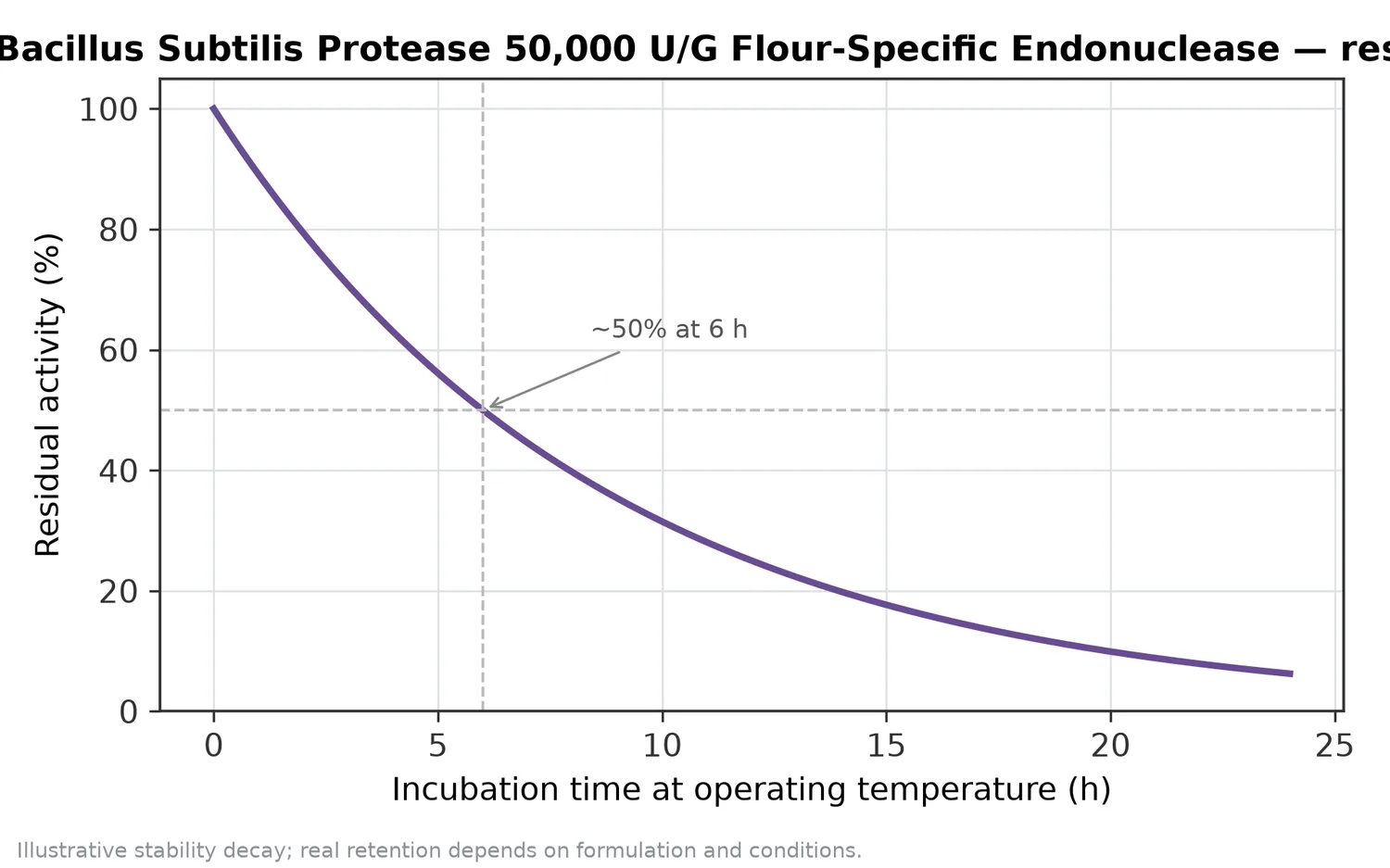
Protease action continues only while the enzyme has access to water, substrate, and suitable processing conditions. In a dough, hydrolysis may begin during mixing, continue during rest or fermentation, and slow or stop when heat denatures the enzyme during baking, cooking, drying, extrusion, or other thermal processing [1].
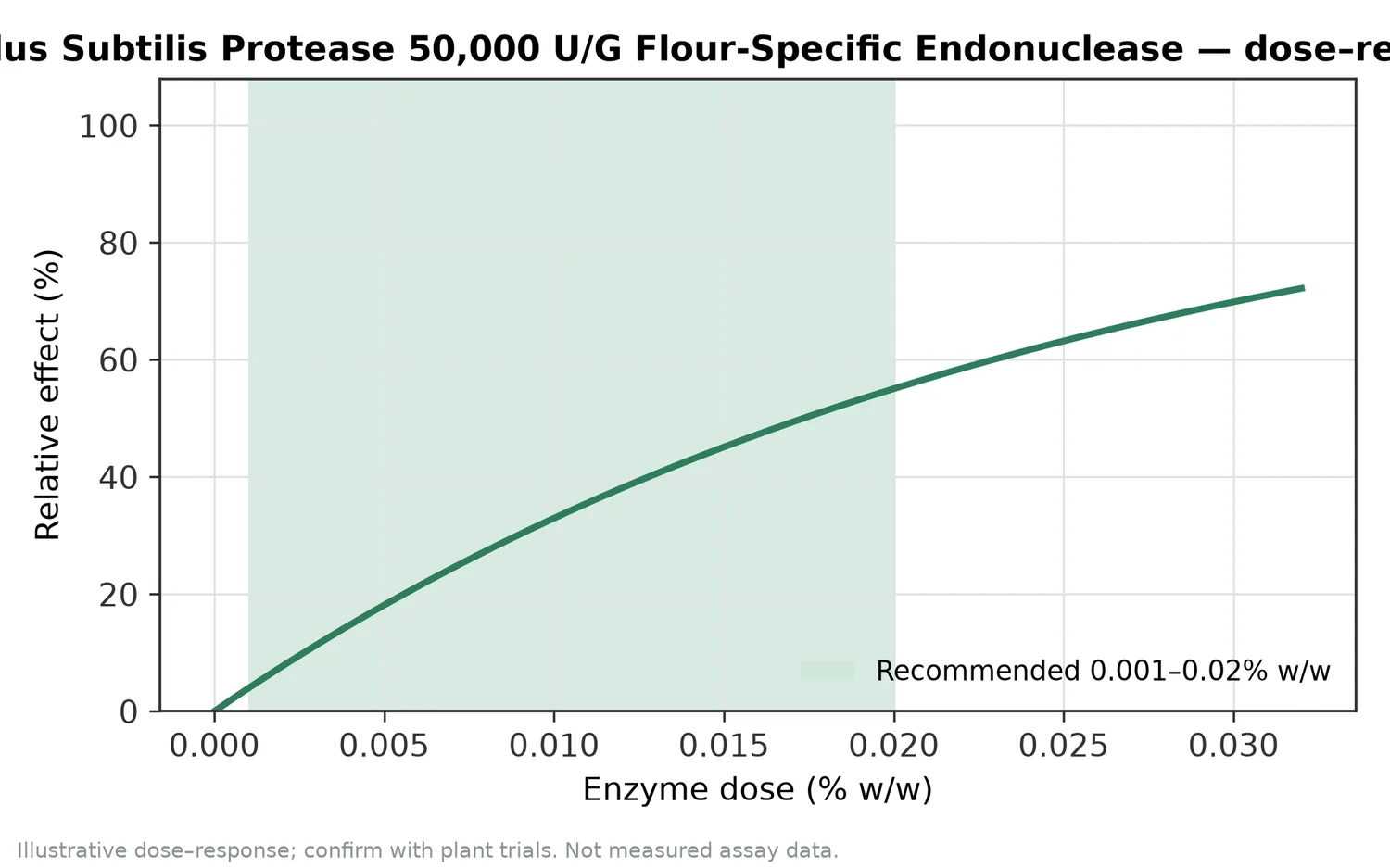
Water availability is one of the most important practical factors because enzymes act in the aqueous phase. A stiff cracker dough with limited free water may show a slower or more localized protease effect than a more hydrated dough or slurry, even if the flour and enzyme are the same. The underlying reason is diffusion: the enzyme must move through water and contact accessible peptide bonds before cleavage can occur [3].
Mixing changes the substrate before the enzyme has fully acted. Mechanical work hydrates flour, distributes the enzyme, aligns gluten proteins, incorporates air, and builds network strength; protease then cuts parts of that network as it forms. This is why two processes with the same formula can respond differently if one has longer mixing, warmer dough, or a rest period before forming [7].
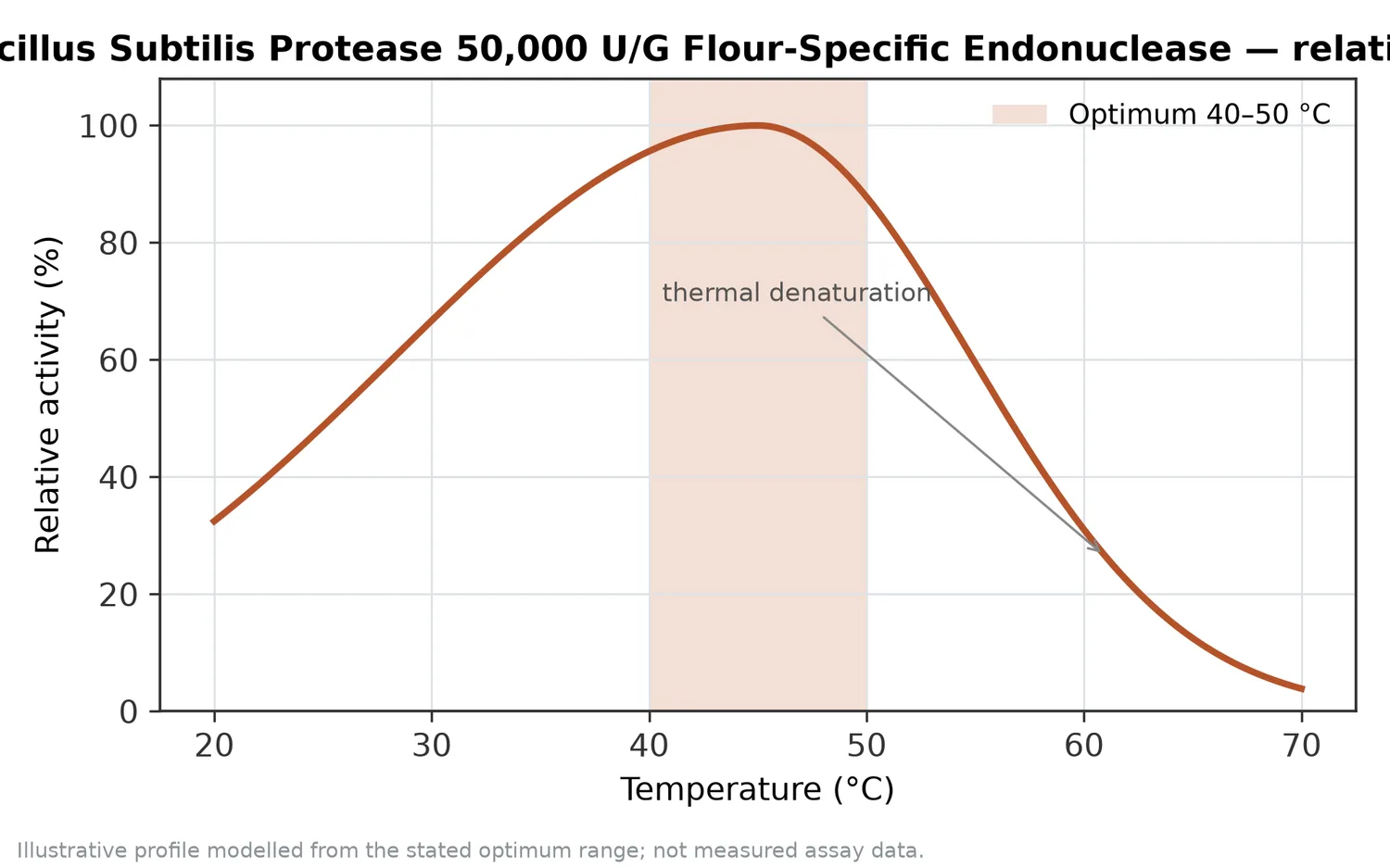
Temperature affects both reaction rate and enzyme stability. Mild warmth can increase molecular motion and reaction frequency, while excessive heat unfolds the enzyme protein itself and reduces catalytic function. In flour products, the important transition is usually between the pre-bake or pre-cook window, where protease can modify the dough, and the heat step, where activity is progressively reduced [1].
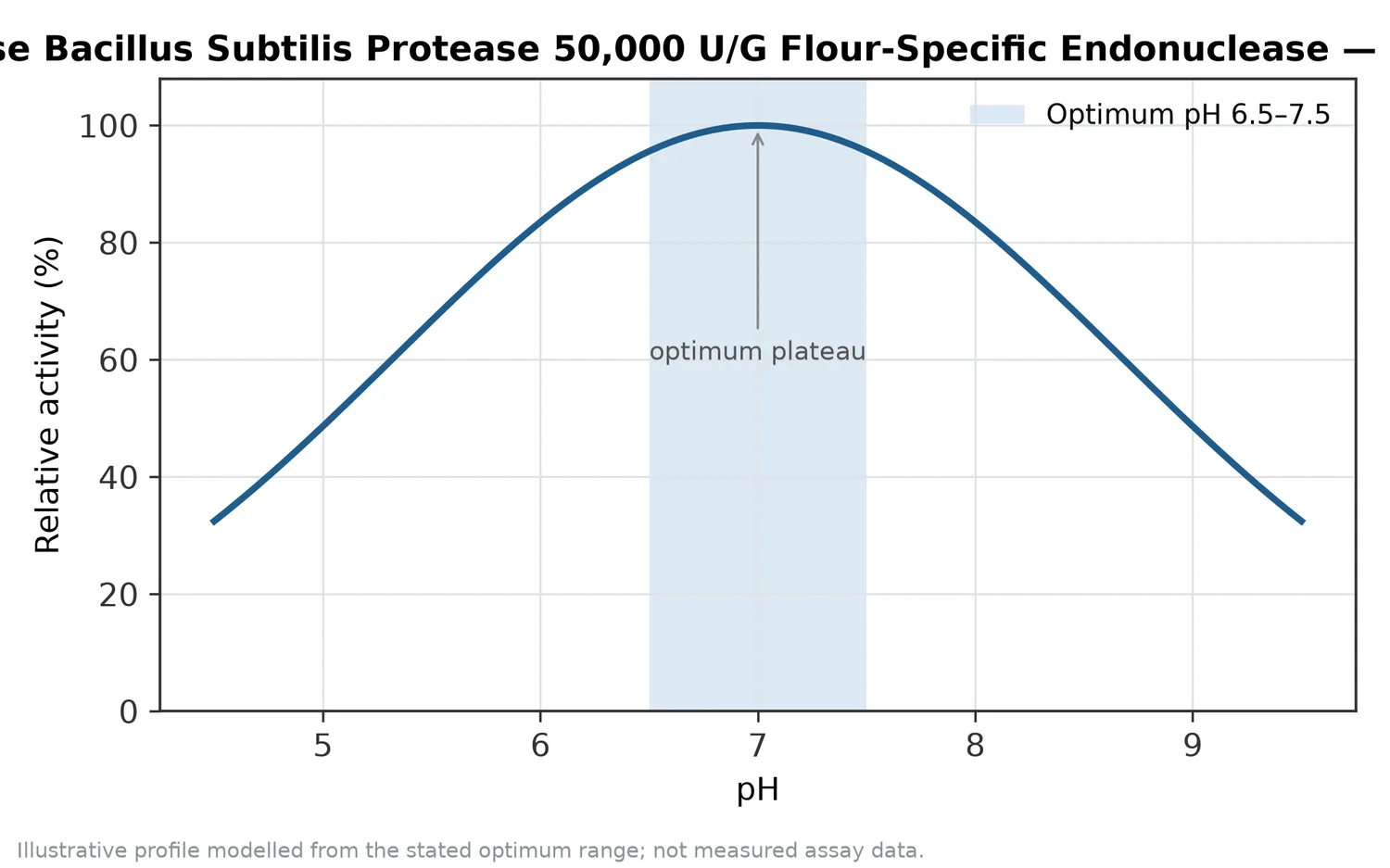
pH changes enzyme charge, substrate charge, and protein conformation. Near-neutral systems generally match the purpose of a neutral protease, while acidified doughs, sourdoughs, or chemically leavened systems may shift the enzyme’s behavior and the gluten network at the same time. Sourdough literature highlights that fermentation ecology and acidity are central to dough sensory and technological quality, which is why protease effects should be interpreted within the whole formula [13].
In a suitable flour system, the first observable effect is often improved relaxation. Dough that previously pulled back after sheeting may hold its dimensions more readily because the gluten network has fewer intact high-molecular-weight chains capable of storing and releasing elastic energy [3].
The second effect is easier machining. Lower resistance to extension can reduce stress during rolling, laminating, moulding, or extrusion-like forming. This is not because the enzyme lubricates the dough, but because it reduces the mechanical contribution of the protein network that resists deformation [1].
The third effect is texture adjustment after heat setting. A product that would otherwise bake into a tough or chewy texture may become shorter, softer, or more tender when the protein framework is partially hydrolyzed before the structure is fixed by heat. This is particularly relevant in products where crispness, bite, or low toughness is valued more than loaf volume [7].
The fourth effect can be improved functionality in ingredient systems. When wheat gluten is hydrolyzed into peptides, solubility and surface activity can change, which can influence emulsification, foaming, dispersibility, and flavor-base development. Wheat gluten hydrolysate research supports this broader functional-protein use case beyond conventional dough processing [2].
There are also clear signs of excessive proteolysis. Dough may become sticky, slack, smeary, difficult to sheet, weak in gas retention, or unable to maintain shape. These outcomes follow directly from the same mechanism that creates useful relaxation: if too many load-bearing protein chains are cut, the network no longer provides enough structure [8].
Protease rarely acts in isolation in modern flour processing. Amylases generate fermentable sugars and affect starch behavior, xylanases modify arabinoxylans and water distribution, lipases influence lipid interfaces, and oxidoreductases can strengthen or reorganize dough proteins; protease works on the protein backbone and therefore changes the balance among these effects [1].
In whole-wheat or high-bran formulas, bran particles can physically interrupt gluten and compete for water, while endogenous grain enzymes may already be active depending on sprouting, maturation, or storage history. Studies on wheat sprouting and flour maturation show that enzyme activities and flour composition change over time and with grain condition, which can alter how an added protease is perceived in the dough [11].
Lipids also matter because flour lipids and lipid-metabolizing enzymes influence dough behavior and aroma development. Research on lipid metabolites and enzyme activities during wheat flour maturation shows that flour is biochemically dynamic, so protein hydrolysis occurs within a matrix where lipid oxidation, endogenous enzymes, and storage-related changes may also affect final performance [15].
Protein cross-linking or strengthening systems can work in the opposite direction from protease. For example, studies involving transglutaminase and added proteins show that wheat flour structure and physicochemical properties can be modified by building or reinforcing protein interactions, whereas protease reduces chain length and weakens selected protein-network contributions [16].
This opposing relationship can be useful when understood correctly. A formulation may use strengthening ingredients to improve structure and protease to prevent excessive toughness, but the final dough behavior comes from the balance of network formation, network cleavage, water competition, and heat setting [1].
Enzymes.bio’s role is to supply the Neutral Protease Bacillus subtilis Protease product directly online by the 1 kg unit. The buyer places the order and pays online, after which the order is processed and shipped; the Certificate of Analysis and Safety Data Sheet are provided with the order for documentation and safe handling .
That direct model suits buyers who already know they need a neutral protease input for flour or food-protein work and want a straightforward purchase path rather than a quotation-led sourcing process. The product should be treated as a professional enzyme preparation for controlled food-processing use, with handling guided by the Safety Data Sheet supplied with the order .
Because enzyme powders can present inhalation and sensitization concerns, practical workplace handling should minimize dust and unnecessary exposure. The Safety Data Sheet accompanying the order is the appropriate document for safe-use instructions, personal protection information, and site-specific handling procedures .
Neutral protease is not a universal dough improver. It is a targeted protein-hydrolysis tool: valuable when a product needs relaxation, extensibility, softer bite, improved processing, or wheat-protein modification, but potentially counterproductive when the product depends on maximum gluten strength and gas retention [1].
The strongest evidence base supports the mechanism and category use: proteases break down proteins, wheat gluten hydrolysis changes functional properties, and baking enzyme literature recognizes proteases as useful tools for dough rheology and processing control. Product-specific performance in any flour system still depends on the full matrix: flour strength, hydration, mixing, hold time, pH, fermentation, other enzymes, fats, sugars, salts, fibers, emulsifiers, and heat processing [2].
For buyers using the 1 kg Enzymes.bio product, the most accurate expectation is practical and concrete: the enzyme can partially cut gluten and other flour proteins, reducing excessive network strength and changing dough behavior before the structure is heat-set. In the right flour-based process, that can mean better dough relaxation, easier sheeting, reduced snap-back, more controlled texture, or improved protein functionality; in an overexposed system, it can mean slackness, stickiness, or loss of structure [8].
Neutral Protease Bacillus subtilis Protease is therefore best positioned as a controlled biochemical tool for flour protein management. It does not replace formulation knowledge, mixing control, or thermal processing, but it gives food processors a direct way to adjust the protein phase—the part of flour responsible for much of dough elasticity, extensibility, and bite [1].
Sold by the 1 kg unit, in stock and ready to ship. Order directly on our store — pay online and we process your order. A Certificate of Analysis and Safety Data Sheet are included with every order.
Buy Neutral Protease Bacillus Subtilis Protease 50,000 U/G Flour-Specific Endonuclease →Numbered in order of first citation. Open-access sources, each verified reachable at publication; citation numbers in the text link here.