
Neutral Protease for Beer Brewing is used during mashing to partially hydrolyze malt, barley, and adjunct proteins into smaller peptides and amino-nitrogen compounds. In beer production, that controlled protein breakdown can support yeast nutrition, help compensate for lower-nitrogen adjunct grists, and reduce some protein material involved in haze formation when applied with care.
Enzymes.bio supplies Neutral Protease for Beer Brewing for direct online purchase by the 1 kg unit. Buyers can order and pay online; the order is then processed and shipped, with a Certificate of Analysis and Safety Data Sheet included.
Neutral protease is a protein-degrading enzyme used primarily in the mash, where grain proteins are hydrated, warmed, and made more accessible to enzymatic attack. “Neutral” describes the enzyme class’s preference for conditions closer to neutral than strongly acidic proteases, which makes it practically relevant to mash-stage work where brewers are already managing pH, temperature, starch conversion, and wort composition together.
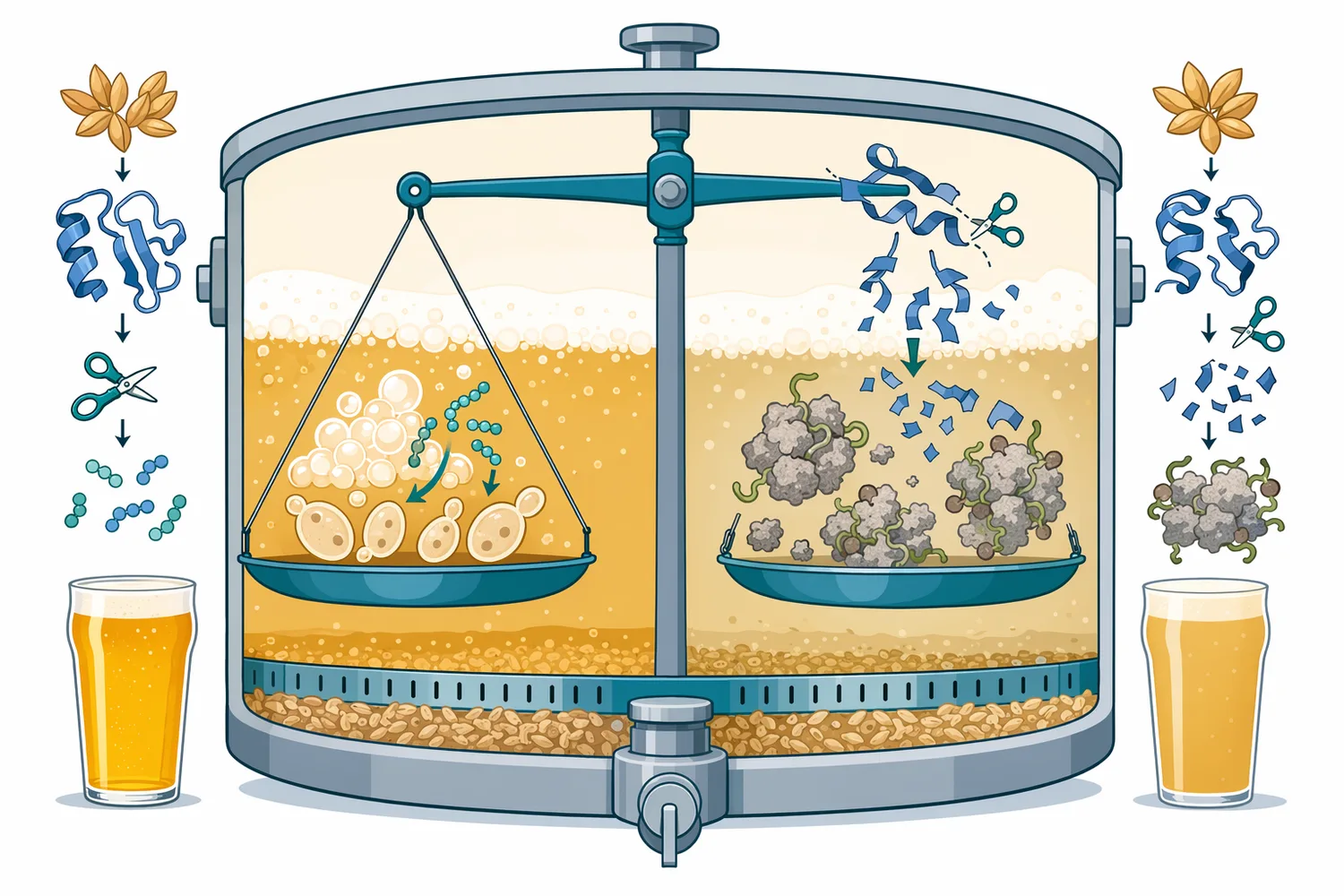
The purpose is not to remove all protein from beer. Brewing depends on a balance: some proteins and peptides support foam, mouthfeel, and yeast nutrition, while other protein fractions can participate in haze, instability, or poor fermentation performance. Neutral protease is therefore best understood as a controlled protein-modification tool rather than a blanket clarification additive.
At the molecular level, neutral protease hydrolyzes peptide bonds inside larger protein chains. Large malt and adjunct proteins are cut into shorter peptides, and continued hydrolysis increases the pool of smaller nitrogenous compounds that yeast can assimilate during fermentation. General food-protein literature describes enzymatic hydrolysis as a way to change protein solubility, molecular size distribution, functional behavior, and peptide release, which is exactly why proteases are useful in a mash environment where the protein fraction affects both process and finished beer quality [1].
For brewers working with high adjunct levels, unmalted grains, variable malt modification, or high-gravity wort, this enzymatic conversion can be useful because starch contribution and nitrogen contribution do not always rise together. Adjuncts may deliver extract but dilute malt-derived enzymes and amino nitrogen; neutral protease helps recover usable nitrogen from the protein that is present rather than relying only on the malt’s endogenous proteolytic system.
Beer proteins are technically complex because the same broad category of material can be desirable or undesirable depending on molecular size, structure, and interaction partner. Foam-active proteins and polypeptides migrate to gas–liquid interfaces and contribute to head formation and stability, while other protein fractions can interact with polyphenols to form chill haze or permanent haze during storage. Beer appearance and flavor are also influenced by yeast and microbial activity, so the protein program must be considered alongside fermentation performance, not just clarity [2].
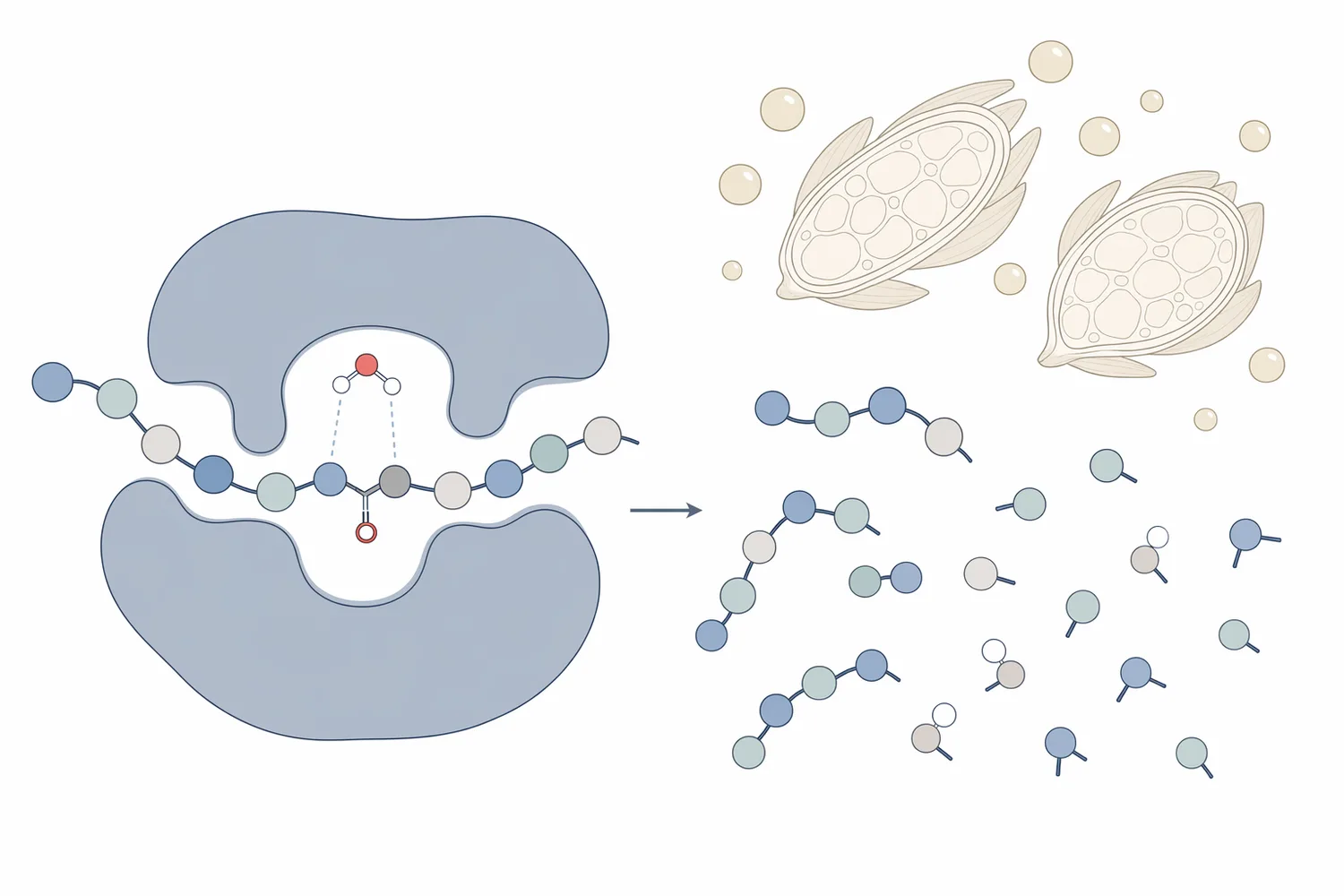
Neutral protease changes this balance by reducing the average size of selected protein molecules and increasing the proportion of soluble peptides. A large protein that might otherwise remain as a haze-active or poorly fermentable fraction can be cleaved into fragments that are less prone to cross-linking or more useful as yeast nutrients. The practical result is not simply “less protein”; it is a changed protein distribution.
The caution is that over-hydrolysis can also reduce beneficial fractions. Some barley proteins have unusually high stability in beer systems; the barley protein Z4, for example, has been studied for heat stability, protease inhibition, and gushing relevance, showing that beer proteins are not passive background material but active contributors to quality attributes [3]. A neutral protease program should therefore aim for measured hydrolysis, preserving the positive contribution of protein while reducing limitations associated with poor FAN or haze-forming material.
This is why neutral protease is typically discussed as a mash-stage aid for protein management, not as a finished-beer rescue treatment. Once the beer is fermented and packaged, protein-polyphenol complexes, yeast-derived effects, oxygen exposure, and storage conditions all interact. Earlier control in the mash gives the brewer a cleaner point of intervention because substrate proteins are still accessible and the wort composition is being built.
Yeast requires nitrogen for biomass formation, enzyme synthesis, amino acid metabolism, and healthy fermentation kinetics. In wort, free amino nitrogen and small peptides are the most relevant nitrogen sources. If nitrogen availability is too low or poorly balanced, yeast may ferment slowly, produce stress-related off-notes, or fail to deliver the intended attenuation and flavor profile.
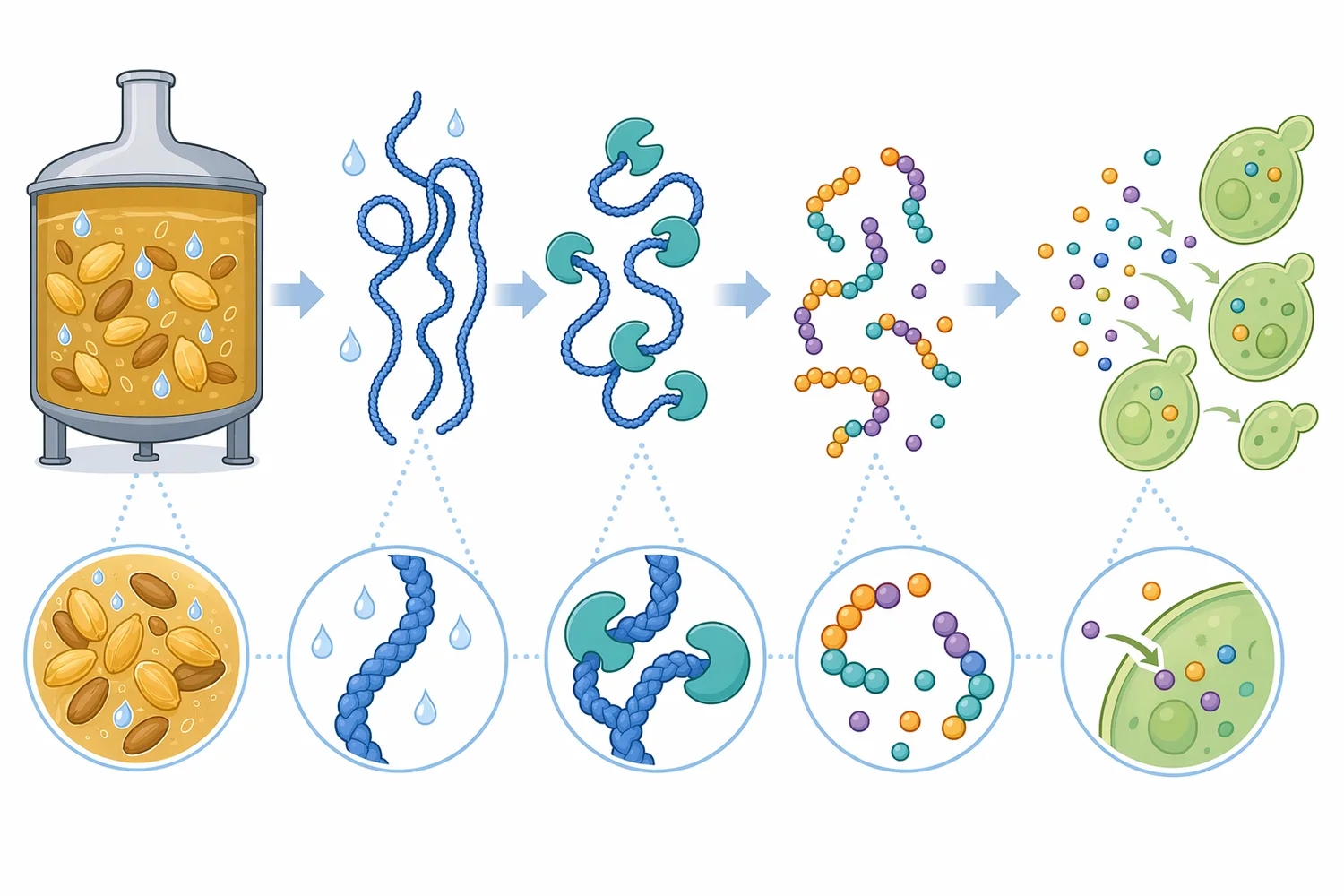
Neutral protease supports this requirement by converting insoluble or high-molecular-weight grain proteins into smaller peptides and amino acid-containing fragments. During mashing, heat and hydration loosen the grain matrix; proteins unfold, denature partially, or become exposed at particle surfaces. Protease can then bind accessible peptide regions and cleave them, increasing the soluble nitrogen fraction of wort.
A brewing-relevant study on a neutral metalloprotease from Bacillus amyloliquefaciens SYB-001 reported that adding the enzyme during mashing increased amino acid release in wort, including amino acids such as aspartic acid, arginine, methionine, and histidine. The authors connected this improved amino acid profile with benefits for yeast growth and beer flavor development, making the study directly relevant to mash-stage neutral protease use [4].
The mechanism matters because yeast does not simply need “more nitrogen” in the abstract. Different amino acids enter different metabolic routes, influence growth, affect sulfur metabolism, and contribute to flavor-active higher alcohol and ester pathways. A wort with improved amino acid availability gives fermentation a more stable biochemical foundation, especially in recipes where adjuncts or malt variability have reduced the natural nitrogen contribution.
In high-gravity brewing, the value of this nitrogen support can become more visible because yeast is exposed to higher osmotic pressure, higher ethanol formation, and greater nutrient demand per unit volume. Neutral protease does not solve every high-gravity fermentation issue, but it can help reduce one common constraint: insufficient release of usable nitrogen from the available grain protein.
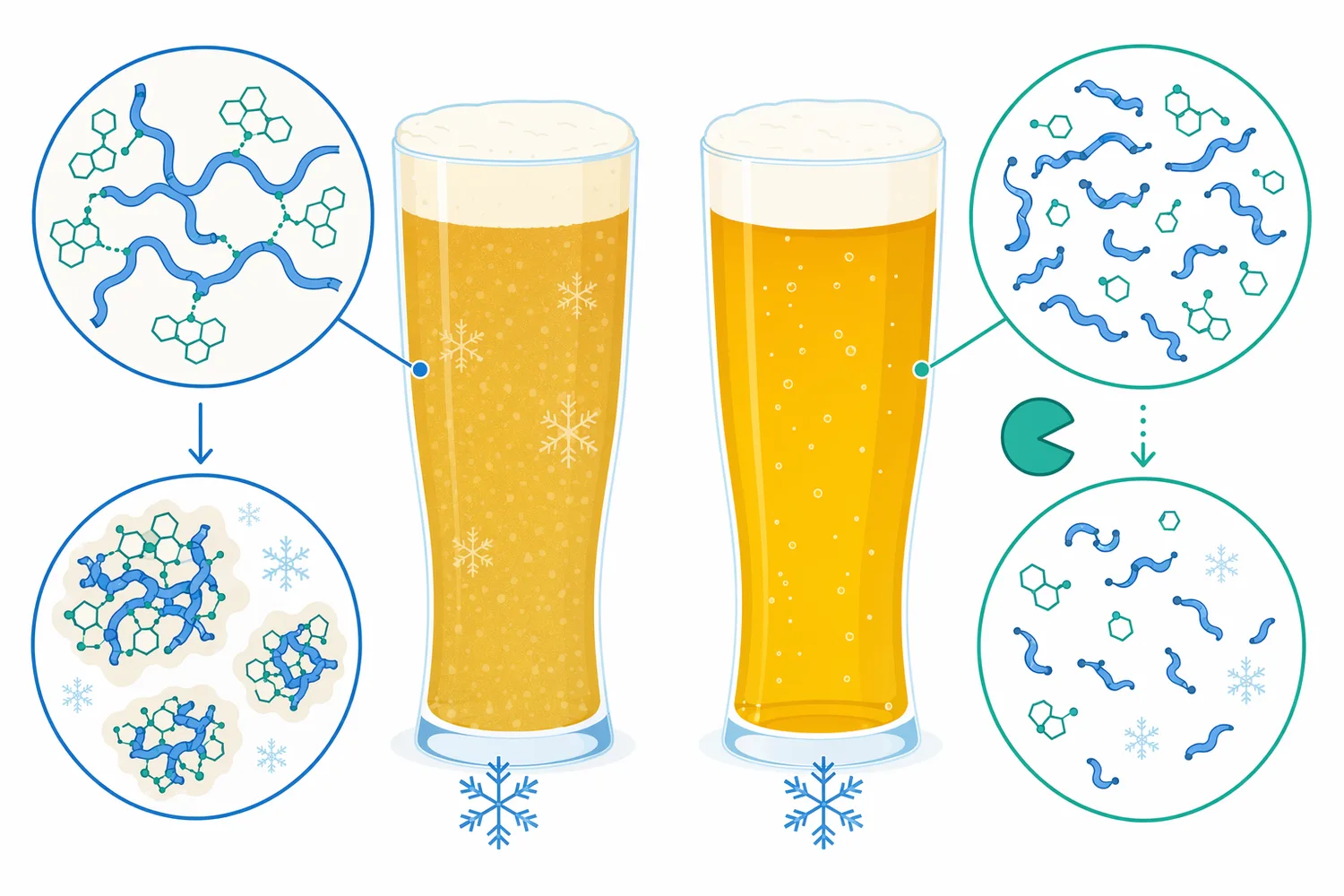
Protein-related haze in beer is commonly associated with interactions between proteins and polyphenols. When proteins with suitable binding sites encounter polyphenols, they can form soluble complexes that later become visible under cold storage or after oxidative changes. Chill haze appears when these complexes associate at low temperature; permanent haze develops when larger aggregates remain visible even after warming.
Neutral protease can reduce the pool of susceptible protein material by cutting larger proteins into smaller fragments. Smaller peptides may have fewer available binding regions, lower cross-linking capacity, or different solubility behavior. This can reduce the likelihood that a haze-active protein fraction will persist through fermentation, maturation, filtration, and packaging.
Brewing research on beer turbidity has identified proteinaceous material as an important contributor to colloidal instability, with potential turbid components arising from beer’s complex mixture of proteins, polyphenols, carbohydrates, and other matrix components [5]. This supports the practical idea that protein modification during mashing can influence later clarity, though haze remains a multi-factor problem rather than a single-enzyme issue.
Specialized proteases provide a useful comparison. Acid proline-specific endoprotease from Aspergillus niger has been reported as effective in preventing chill haze, because proline-rich haze-active proteins resist many common proteases but can be attacked by enzymes with the right specificity [6]. Neutral protease is not identical to a proline-specific endoprotease, yet the evidence from specialized brewing proteases shows why targeted protein cleavage can improve colloidal stability.
A newer proline-specific endoprotease has also been studied for improved beer colloidal stability and gluten reduction, again demonstrating that enzymatic attack on selected protein sequences can change beer stability outcomes [7]. For neutral protease, the practical expectation should be broader protein hydrolysis in the mash rather than the highly specific proline-directed action associated with gluten- and haze-specialized enzymes.
Different protease classes are useful because protein structure, enzyme stability, and cleavage specificity all change with pH. The terms acid, neutral, and alkaline do not mean that one class is universally better; they describe where the enzyme is most practically suited and what kinds of process environments it can support.
| Protease type | Conceptual operating environment | Main relevance to brewing | Typical protein effect | Key practical caution |
|---|---|---|---|---|
| Acid protease | More acidic process conditions | Used where low-pH protein hydrolysis is desired; specialized acid proteases can be relevant to beer haze or gluten-targeted processes | Cleaves proteins under acidic conditions, sometimes with sequence preferences depending on the enzyme | Not interchangeable with neutral protease; performance depends strongly on enzyme specificity |
| Neutral protease | Near-neutral to mildly acidic mash-compatible conditions | Mash-stage protein modification, FAN support, adjunct grist support, general protein hydrolysis | Breaks accessible malt and adjunct proteins into peptides and amino-nitrogen compounds | Excessive hydrolysis can reduce foam-positive or mouthfeel-supporting protein fractions |
| Alkaline protease | Alkaline process conditions | More common in non-brewing industrial protein hydrolysis and cleaning-type applications than in standard beer mash work | Strong protein degradation where alkaline conditions suit the enzyme | Generally less aligned with normal mash chemistry |
This comparison is important because “protease” is not a single functional category in beer. For example, neutral serine proteases in biological systems differ in mechanism and substrate recognition from acid aspartic proteases or specialized endoproteases, showing that enzyme class and active-site chemistry strongly influence which peptide bonds are cleaved [8]. In brewing, those differences translate into different outcomes for FAN formation, haze control, foam preservation, and gluten-related protein modification.
Neutral protease is most logically used during the early mash or protein-rest portion of a process, before the main emphasis shifts fully to starch conversion and fermentable extract development. At this stage, proteins are hydrated, endogenous malt proteases may also be active, and the grain matrix is still rich in available protein substrate.
Protein-rest temperatures in brewing are commonly discussed in the moderate range used for controlled protein modification rather than the higher temperatures used for starch liquefaction. Under these conditions, neutral protease can act before heat exposure and wort separation reduce its influence. Enzymes.bio’s brewing enzyme category places protease among enzymes used in brewing to improve process performance through substrate-specific action, alongside amylolytic and other brewing enzymes .
In the mash, the enzyme’s impact is shaped by grist composition. A well-modified all-malt grist may already provide enough soluble nitrogen and foam-positive protein balance, whereas a high-rice, high-maize, or unmalted-grain grist may deliver extract with less fermentable nitrogen. Neutral protease is most helpful when the protein fraction needs to be opened up and converted into soluble peptides without relying exclusively on malt’s natural proteolysis.
The practical effect can be seen in wort composition: more low-molecular-weight nitrogen, more soluble peptides, and a changed protein profile entering the kettle. Boiling will then denature and precipitate some proteinaceous material as hot break, while other peptide fractions remain in the wort and move into fermentation. The final beer reflects this entire sequence, not the protease step alone.
High-adjunct lager brewing often uses materials such as rice, maize, or other starch-rich adjuncts to control flavor profile, body, color, or cost. These adjuncts can contribute fermentable extract after starch conversion, but they may not provide the same amino acid and peptide contribution as malted barley. Neutral protease helps by hydrolyzing available grain proteins into smaller nitrogen compounds that yeast can use.
This is especially relevant where fermentation consistency matters. Yeast performance depends on the wort’s nutritional balance, not just original gravity. A mash that produces sufficient fermentable sugars but limited amino nitrogen can still ferment inefficiently or produce an unintended flavor balance.
Unmalted grains can be attractive for recipe design, local raw material use, or cost structure, but they do not undergo the same modification process as malt. Malting activates and develops endogenous enzymes, changes cell-wall structure, and begins the transformation of storage proteins. When unmalted material replaces malt, the mash may need additional enzymatic support.
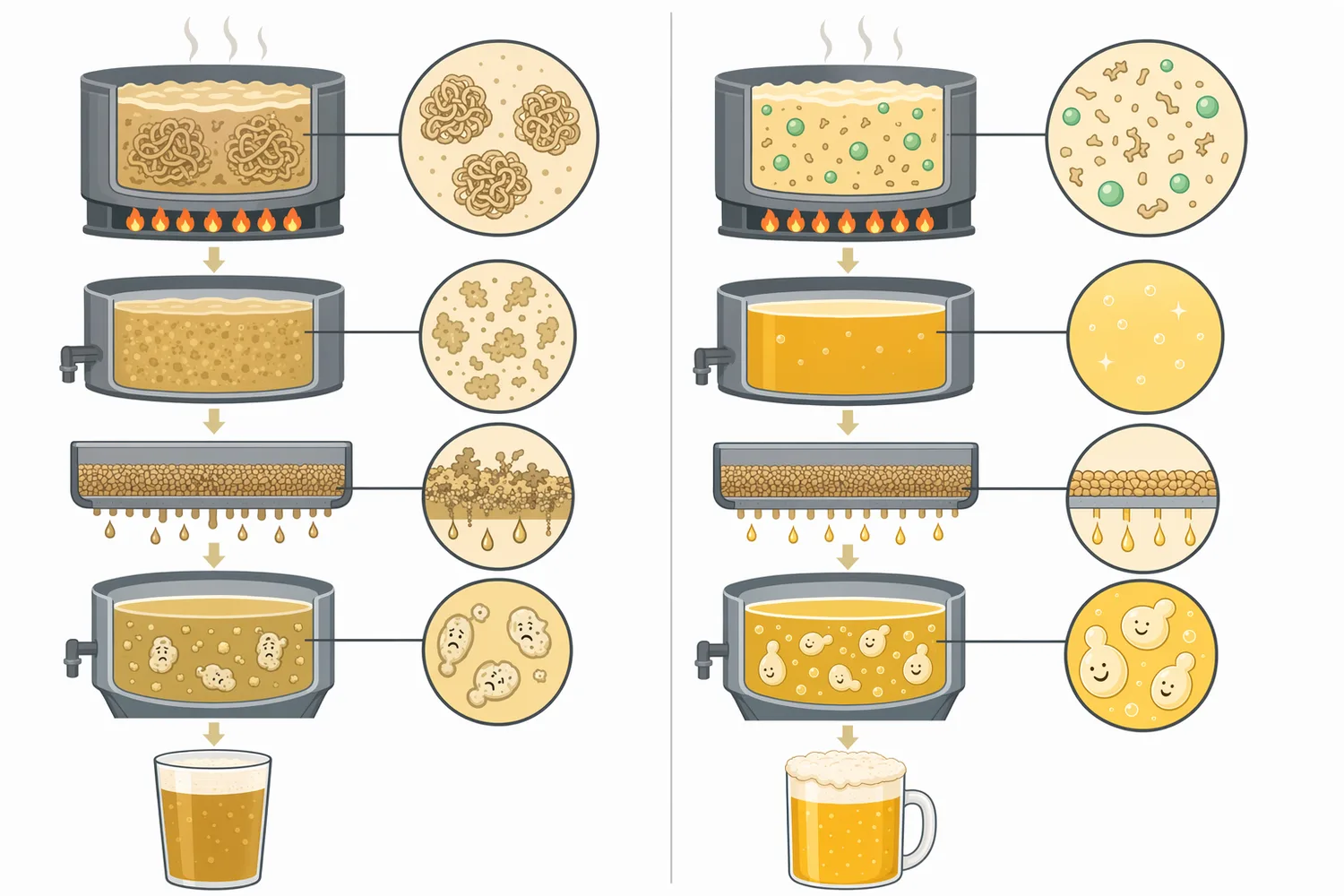
Neutral protease contributes by attacking proteins that have not been pre-modified through malting. The enzyme does not replace the need for starch-converting enzymes where starch conversion is the primary bottleneck, but it helps correct the nitrogen side of the equation. General plant-protein modification research shows that enzymatic hydrolysis can improve extraction, solubility, and release of peptide fractions from plant substrates, which supports the same principle in grain-based brewing systems [9].
High-gravity brewing concentrates extract production and can improve brewhouse efficiency, but it also creates a more demanding fermentation environment. Yeast must grow and metabolize under higher sugar concentration, higher osmotic pressure, and eventually higher ethanol stress. Nitrogen limitation under these conditions can make fermentation less predictable.
Neutral protease helps by increasing the amount of yeast-accessible nitrogen generated from the grist before fermentation starts. The advantage is preventative: rather than trying to correct a stressed fermentation later, the brewer builds a wort composition that gives yeast a better nutrient foundation from the beginning.
For beer styles where brightness and shelf stability are important, mash-stage protein modification can contribute to a broader clarity program. Neutral protease can reduce some larger protein substrates before they have the opportunity to survive into finished beer and form haze-active complexes. This does not eliminate the need for good boiling, trub separation, yeast management, cold conditioning, filtration where used, and oxygen control.
Beer maturation itself is a debated area; Bamforth has argued that the benefits of prolonged maturation are not always proven, which reinforces the value of understanding the specific biochemical changes being targeted rather than assuming time alone will solve stability issues [10]. Neutral protease gives brewers a defined biochemical action—protein hydrolysis—earlier in the process.
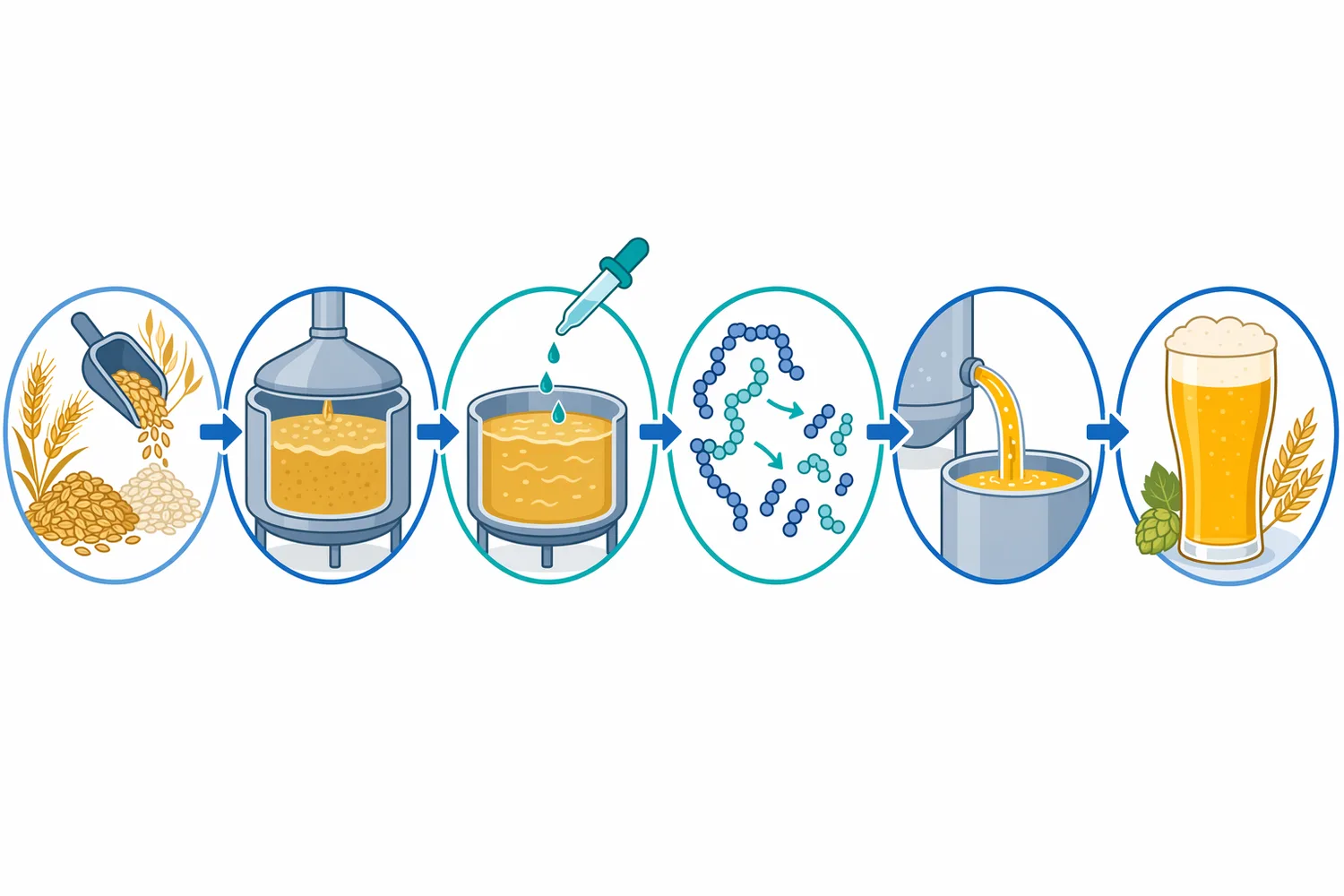
Proteases are also important in specialty beer concepts where protein composition is part of the product design. Prolyl endopeptidase from Aspergillus niger has been studied in brewing for reducing gluten levels while evaluating quality attributes and sensory profile, demonstrating that enzymatic protein treatment can be integrated into beer production without being limited to conventional clarity applications [11].
Neutral protease should not be represented as equivalent to a specialized gluten-degrading enzyme. Gluten-related labeling depends on the specific enzyme system, process validation, testing method, and local regulation. However, neutral protease can still be relevant as part of general protein hydrolysis where the goal is improved nitrogen release, modified mouthfeel contribution, or reduced haze-active protein load.
The first measurable conceptual change is the molecular-size distribution of proteins and peptides. Long storage proteins and larger polypeptides are partially cleaved into smaller soluble fragments. Some fragments remain large enough to influence body and foam, while others become small enough to serve as yeast nutrients.
The second change is the nitrogen profile. Instead of nitrogen being locked in intact grain proteins, more of it becomes present as amino acids and short peptides. This is the practical bridge between mash biochemistry and fermentation performance: yeast cannot use intact barley storage proteins efficiently, but it can transport and metabolize many smaller nitrogen compounds.
The third change is physical behavior. Protein fragments can differ from their parent proteins in solubility, heat coagulation, surface activity, and polyphenol binding. Food-protein hydrolysis research consistently shows that enzymatic modification can alter functional properties such as solubility, interfacial behavior, foaming behavior, and bioactive peptide release, because cutting peptide bonds changes molecular exposure and charge distribution [12].
The fourth change is downstream process interaction. A wort with a different protein profile may form hot break differently, settle differently, ferment differently, and age differently. These are process-dependent effects, which is why neutral protease is most reliable when treated as one part of the brewing design rather than as an isolated additive.
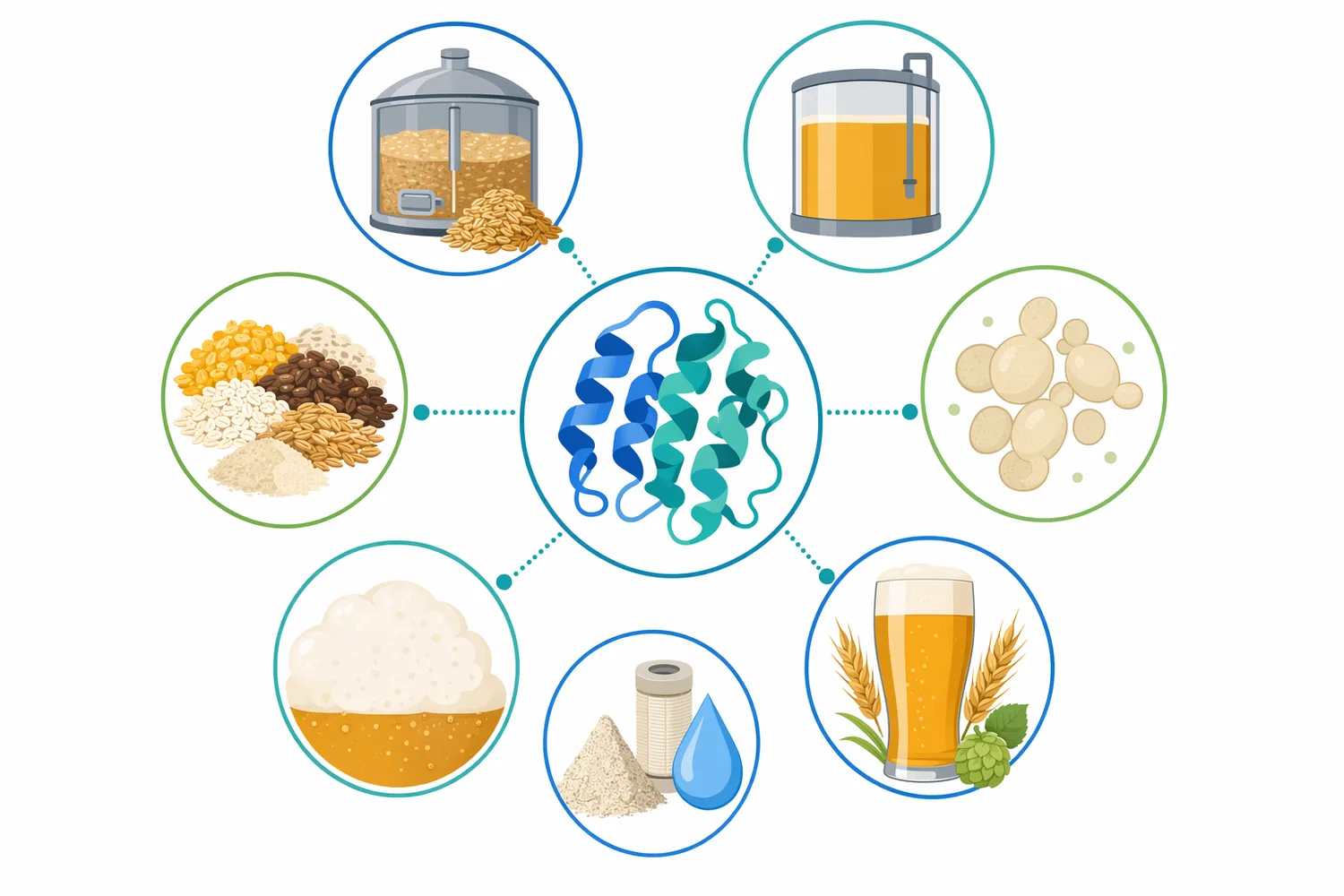
Used appropriately, Neutral Protease for Beer Brewing can support a more consistent mash-to-fermentation pathway. Its main value is increasing the release of usable nitrogen and altering protein fractions before they become fermentation or stability problems. This is particularly useful in recipes where the grist does not naturally deliver enough malt-derived proteolysis.
The benefits are strongest in applications where protein hydrolysis is the real limitation: high adjunct brewing, unmalted grain use, under-modified malt handling, and wort designs where yeast nutrition requires support. In these cases, neutral protease can improve the availability of amino acids and peptides without changing the core role of amylases in starch conversion.
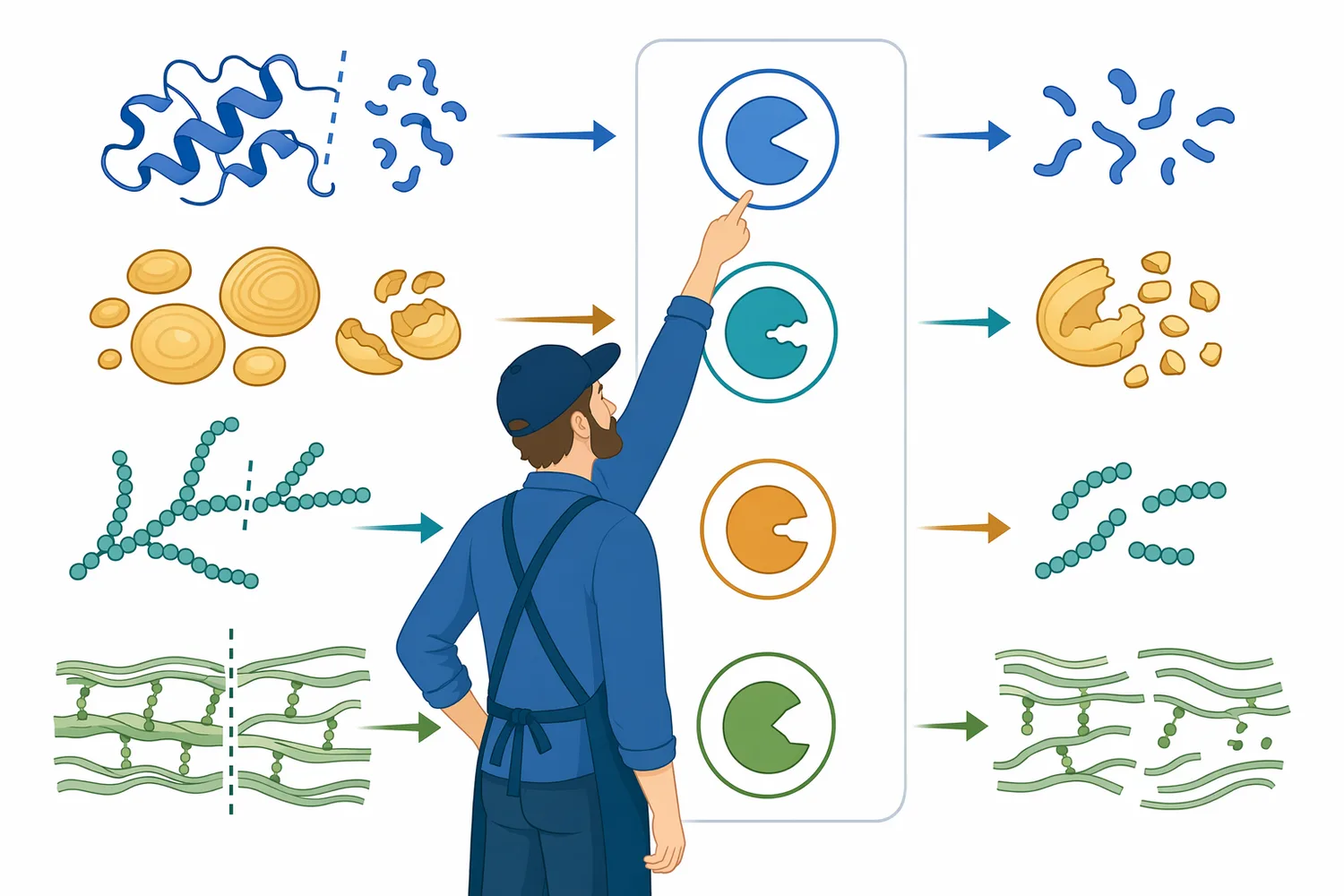
The limits are equally important. Neutral protease does not liquefy starch, does not convert dextrins to glucose, and does not replace alpha-amylase, beta-amylase, glucoamylase, or pullulanase when the main process need is fermentable sugar production. It targets proteins, so its contribution is nitrogen and protein-profile management.
Neutral protease also does not replace beta-glucanase where viscosity, lautering difficulty, or filtration slowdown is mainly caused by beta-glucans. Beta-glucans are cell-wall polysaccharides, not proteins, and require different enzymatic cleavage chemistry. A mash can have both protein and beta-glucan challenges, but each substrate requires the appropriate enzyme type.
Most importantly, neutral protease is not a “more is better” tool. Too much protein hydrolysis can reduce foam-supporting proteins or alter mouthfeel. Beer foam is a visible quality marker, and foam-active proteins are part of that structure. The goal is targeted protein adjustment: enough hydrolysis to improve FAN and reduce problematic protein fractions, while preserving the beer attributes that depend on intact or moderately sized proteins.
Enzymes.bio supplies Neutral Protease for Beer Brewing as a 1 kg online-order product. The buying route is straightforward: place the order online, pay online, and the order is processed and shipped directly. A Certificate of Analysis and Safety Data Sheet are included with the order.
This purchasing model suits brewers and beverage producers who want access to a brewing protease for mash-stage protein modification without a prolonged enquiry process. Enzymes.bio is a supplier of the enzyme product, and the product page is designed for direct purchase rather than custom manufacturing or laboratory consultation.
Neutral Protease for Beer Brewing is best used as a mash-stage tool for controlled protein hydrolysis. It cuts accessible grain proteins into smaller peptides and amino-nitrogen compounds, helping improve wort nitrogen availability, support yeast nutrition, and modify protein fractions that can influence haze, foam, mouthfeel, and fermentation reliability.
The strongest brewing-specific support comes from research showing that a neutral protease from Bacillus amyloliquefaciens SYB-001 increased amino acid release during mashing, including amino acids relevant to yeast growth and flavor development [4]. Broader brewing and food-protein research supports the same mechanism: enzymatic hydrolysis changes protein size, solubility, peptide release, and functional behavior, which are all central to beer process performance and finished beer stability [1].
For high-adjunct recipes, unmalted grain use, high-gravity wort, or beers where protein balance affects clarity and fermentation consistency, neutral protease can be a practical part of the enzyme strategy. Its value is not maximum protein destruction; it is controlled conversion of less-accessible grain protein into a more useful wort nitrogen and peptide profile.
Sold by the 1 kg unit, in stock and ready to ship. Order directly on our store — pay online and we process your order. A Certificate of Analysis and Safety Data Sheet are included with every order.
Buy Neutral Protease For Beer Brewing →Numbered in order of first citation. Open-access sources, each verified reachable at publication; citation numbers in the text link here.