
Papain liquid beer clarification additive is a plant-derived protease used to break down beer proteins that can contribute to haze, chill haze, excess viscosity, and foam instability. In the brewhouse or cellar context, its practical role is to cut haze-active protein chains into smaller fragments so they are less able to form visible colloidal haze, especially before filtration or packaging. Enzymes.bio supplies this papain liquid additive directly online by the 1 kg unit; buyers place and pay for the order online, and a Certificate of Analysis and Safety Data Sheet come with the order.
Papain is a proteolytic enzyme from papaya latex, commonly described as a cysteine protease because its catalytic site uses a reactive cysteine residue to cleave peptide bonds in proteins. In simple processing terms, papain does not “clear” beer by bleaching color or acting as a fining agent that physically drags solids down; it chemically modifies the protein fraction by hydrolyzing long protein chains into shorter peptides and amino-acid-containing fragments.
In beer clarification, this matters because some proteins and protein fragments remain in solution after mashing, boiling, fermentation, maturation, and cold storage. These materials may be invisible when warm, but during chilled storage they can associate with polyphenols and other colloidal components, forming light-scattering particles that appear as haze. Brewing references identify papain as a beer-stabilizing protease historically used before filtration and packaging to digest dissolved proteins and improve clarity [1].
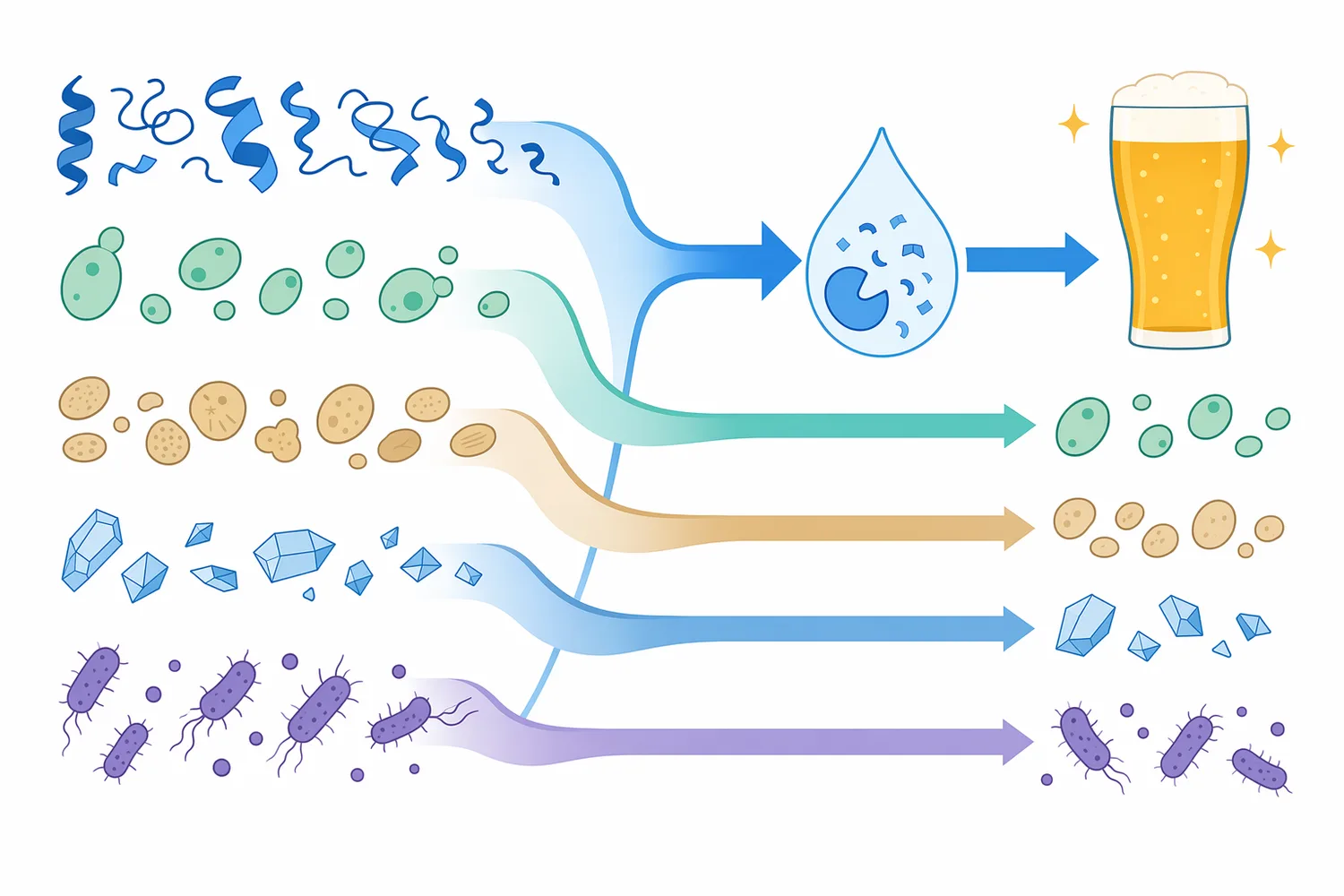
The key point for buyers is that papain is a targeted protein-hydrolysis aid. It is most relevant when haze is protein-related, including chill haze caused by protein–polyphenol interactions. It should not be treated as a universal cure for every turbidity problem, because beer haze can also come from yeast carryover, starch or dextrin instability, microbial contamination, mineral precipitation, oxidation effects, or packaging issues that are not primarily protease-sensitive.
Proteins are folded chains of amino acids joined by peptide bonds. A haze-active protein may contain regions that bind polyphenols, regions that expose hydrophobic surfaces, and regions that allow multiple molecules to associate into larger colloidal particles. Papain reduces the size and continuity of these chains by cleaving peptide bonds, which changes how those proteins behave in beer.
Once a long protein is cut into shorter fragments, several practical changes can follow. The fragments may remain more soluble at low temperature, they may be less able to bridge between polyphenols, and they may form smaller particles that are less visible or easier to remove in downstream clarification. Studies in non-beer protein systems repeatedly show that papain hydrolysis changes molecular-weight distribution and functional behavior, which is the same underlying mechanism used in beer protein stabilization [2].
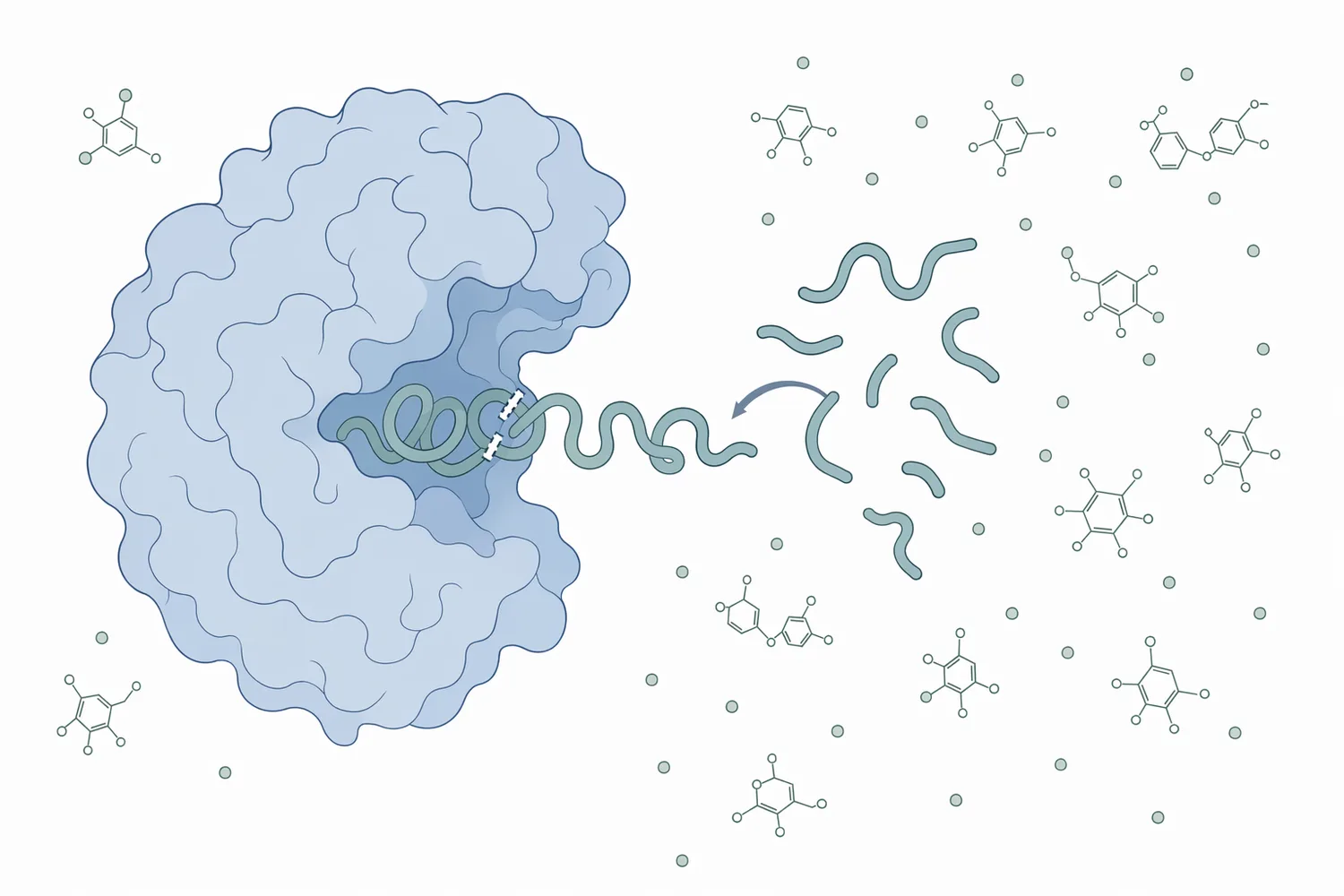
This hydrolysis mechanism is concrete: the enzyme binds a protein segment, positions a susceptible peptide bond in its catalytic site, and breaks that bond by adding water across it. The result is not the disappearance of protein mass, but a redistribution from larger protein structures toward smaller peptide fragments. In food protein studies, papain treatment is associated with changes in solubility, emulsifying behavior, antioxidant peptide release, and other functional properties because shorter peptides interact with water, oil, minerals, and other molecules differently from intact proteins [3].
For beer, the desired outcome is narrower: reduce the ability of haze-forming proteins to form visible colloidal aggregates while preserving the sensory and foam profile expected for the beer style. That balance is why papain is best understood as a controlled processing aid rather than a “more is better” addition. If protein digestion continues too far, the enzyme can also attack foam-positive proteins that help stabilize beer foam [1].
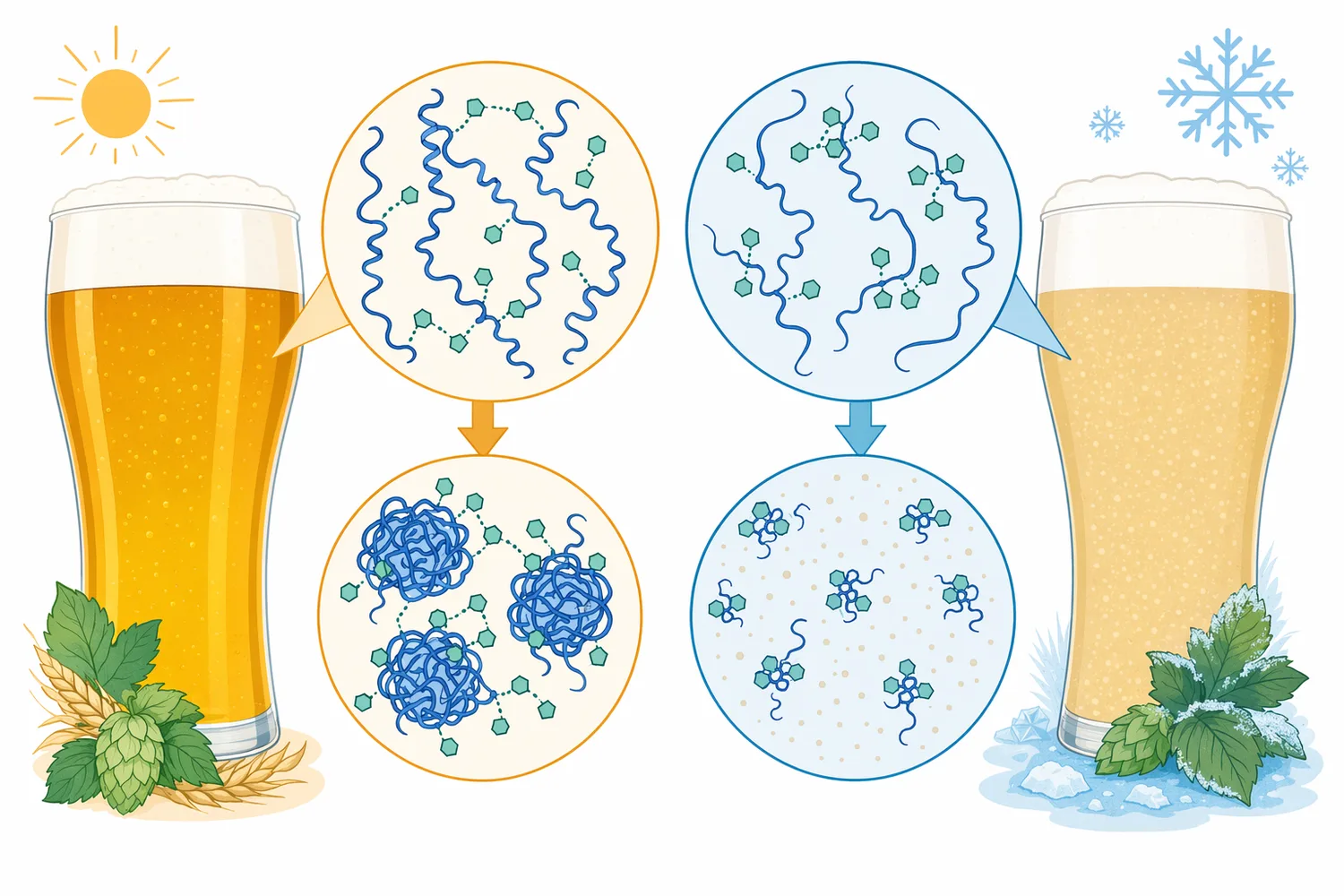
Chill haze appears when beer that looks bright at room temperature becomes hazy after refrigeration. It is often associated with weak, reversible interactions between proteins and polyphenols that strengthen as temperature drops. Over time, these interactions can become less reversible, producing more persistent haze and reducing the visual stability of packaged beer.
Papain addresses this mechanism at the protein side of the haze system. By cutting haze-active proteins into smaller fragments, it lowers the probability that a protein molecule can act as a scaffold for larger protein–polyphenol networks. The concept is similar to cutting long strands of thread: long strands can tangle into a visible mass, while shorter pieces are less able to span and bind into the same network.
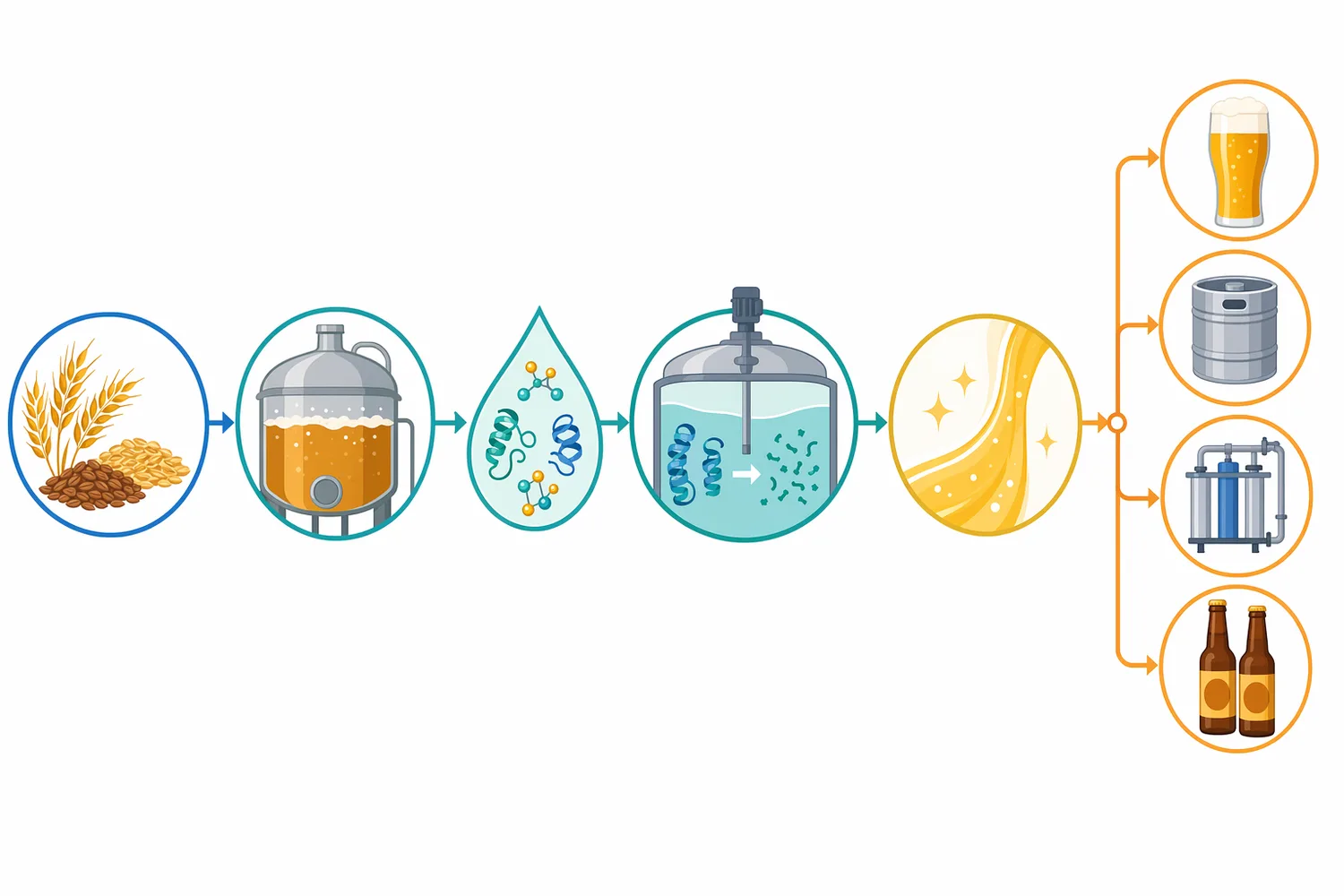
Brewing literature places papain among enzyme-based approaches for haze prevention and notes its use before filtration and packaging, where the beer is already fermented and the remaining protein fraction can be modified prior to final stabilization [1]. This timing is practical because the enzyme acts after the major wort and fermentation transformations have already occurred, while the brewer still has an opportunity to filter, centrifuge, condition, or otherwise stabilize the beer before final package.
The same logic explains why papain may help with beer that shows recurring clarity variation from protein load, malt variation, adjunct use, or process changes that leave more haze-active protein in the finished beer. It also explains its limitation: if turbidity is caused mainly by carbohydrate material, yeast, bacteria, mineral salts, or oxidized color compounds, a protease may have little effect because its substrate is protein, not every possible haze-forming material.
Papain is not the only enzyme used in beer stabilization. Modern brewing research includes proline-specific endoproteases, which are designed to target proline-rich protein sequences involved in beer colloidal instability and, in some applications, gluten reduction. Recent work on proline-specific endoprotease technology emphasizes improved colloidal beer stability and gluten reduction, showing that different proteases can be designed or chosen for different protein targets [4].
The comparison below is conceptual rather than a selection checklist. It helps show where papain fits among protease approaches used or discussed in beer and food processing.
| Protease approach | Main protein action | Typical relevance to beer clarity | Practical distinction |
|---|---|---|---|
| Papain | Broad proteolysis of susceptible peptide bonds in beer proteins | Reduces protein fractions that contribute to haze and chill haze | Plant-derived, historically used for beer chillproofing; broad action means foam-positive proteins can also be affected if use is not controlled |
| Proline-specific endoprotease | Cleaves near proline-rich sequences that many general proteases handle less efficiently | Supports colloidal stability and may reduce gluten-related protein fragments in specific brewing applications | More targeted to proline-containing sequences; recent brewing literature focuses on beer stability and gluten reduction |
| General neutral or alkaline food proteases | Broad protein hydrolysis depending on enzyme family and process conditions | May be useful in food protein modification but not automatically equivalent in beer | Protein breakdown can differ in peptide pattern, bitterness risk, foam effect, and process compatibility |
| Non-enzymatic adsorbents or filtration aids | Bind or remove haze-active materials physically rather than hydrolyzing them | Used in many clarification and stabilization programs | Removal-based rather than hydrolysis-based; does not rely on continued enzymatic cutting |
The important takeaway is that papain’s value comes from broad protein hydrolysis under relatively mild food-processing conditions. It is not the most sequence-specific option, but that broad action is exactly why it can reduce a range of beer protein fractions when protein haze is the issue.
Although beer is the application here, papain’s performance as a protein-modifying enzyme is supported by a wide food-science evidence base. In Chinese sturgeon protein hydrolysis, papain was used to produce protein hydrolysates, and the study linked hydrolysis conditions to degree of hydrolysis and functional properties of the resulting peptides [2]. That kind of work is relevant because beer clarification depends on the same core event: changing intact or partially intact proteins into smaller peptide materials with different physical behavior.
Plant protein studies show the same pattern. In chickpea protein work, enzymatic hydrolysis with papain changed physicochemical properties and antioxidant activity, demonstrating that papain can substantially alter the function of legume proteins rather than simply nicking them superficially [3]. These changes occur because hydrolysis exposes or releases amino-acid sequences that were previously buried inside folded protein structures.
A more recent comparative study on chickpea and lentil proteins evaluated bromelain, ficin, and papain for oligopeptide and free tryptophan release. Papain’s inclusion in that comparison is useful because it places the enzyme alongside other plant proteases known for broad food-protein hydrolysis, and it supports the broader conclusion that papain can release smaller peptide materials from compact plant protein matrices [5].
Dairy protein research also illustrates the mechanism. Papain-derived whey protein hydrolysates have been studied for peptide generation and biologically active peptide discovery, showing that papain can break down structured milk proteins into complex peptide mixtures [6]. Beer proteins are different from whey proteins, but the processing principle is the same: protease action changes molecular size, exposed residues, and interaction behavior.
Other food applications reinforce the functional consequences of papain hydrolysis. Potato protein hydrolysis with papain and bromelain has been studied to improve functional and emulsifying properties for gluten-free cake systems, where protein breakdown changes how the material stabilizes air and oil interfaces [7]. This is relevant to brewing because foam is also an air–liquid interface stabilized partly by proteins; it helps explain why controlled proteolysis can improve clarity while excessive proteolysis can harm foam.
Beer foam depends on a delicate balance of proteins, polypeptides, hop-derived compounds, carbonation, viscosity, glass condition, and serving conditions. Some proteins that contribute to haze may also overlap with the broader group of surface-active materials that support foam stability. Papain does not know which proteins the brewer likes and which proteins the brewer does not like; it cleaves susceptible peptide bonds when the substrate is accessible.
This is why papain can improve clarity yet create risk if used without control. By reducing larger haze-active proteins, it can make the beer brighter and more chill-stable. But if residual proteolytic action continues too long, foam-positive proteins can be shortened enough that they no longer form the elastic films needed around bubbles. Brewing references specifically note that improper papain use or survival of papain activity into packaged beer can damage foam stability [1].
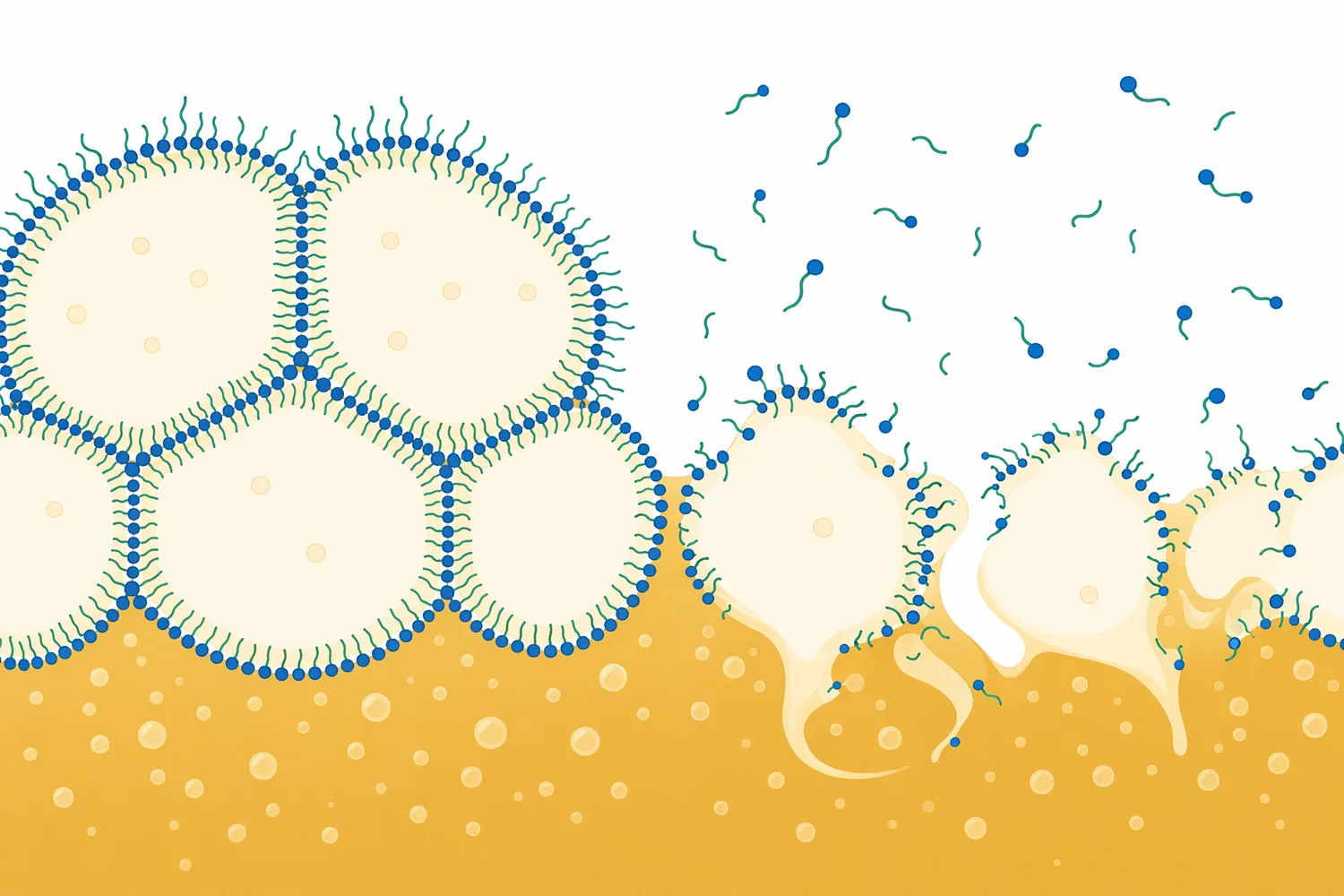
The mechanism is easy to visualize. Foam-stabilizing proteins and polypeptides collect at the gas–liquid interface of a beer bubble, where they help create a flexible skin that slows bubble collapse. If those proteins are cut into fragments that are too small, less surface-active, or less able to form intermolecular networks, the foam film drains and breaks more easily. The same cutting action that reduces haze can therefore reduce head retention if the process is not managed appropriately.
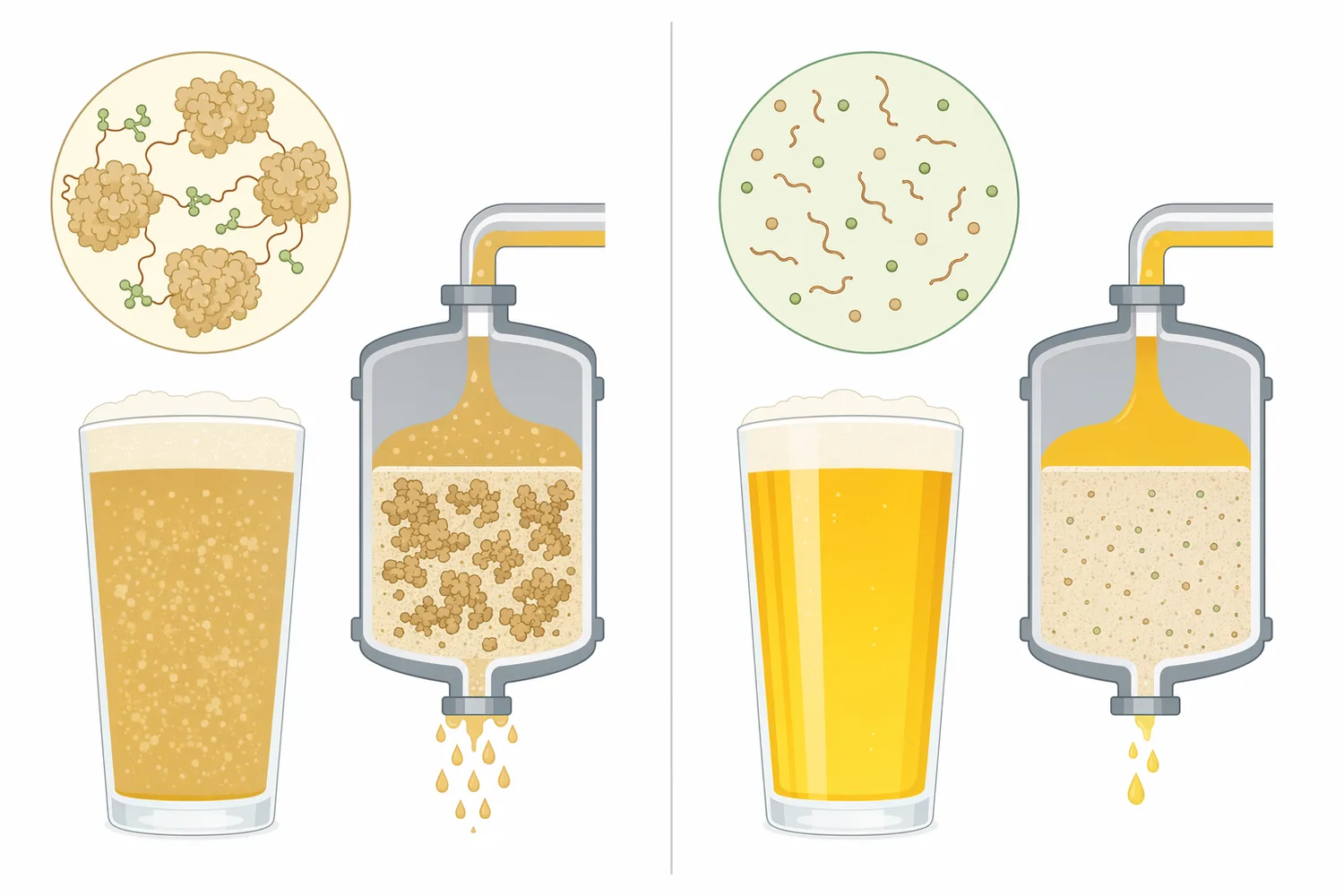
For that reason, papain is best used as part of a defined clarification workflow. The process aim is not maximum protein destruction; it is enough hydrolysis to reduce haze-forming tendency while preserving the beer’s intended mouthfeel, foam, and sensory profile. This distinction matters particularly for styles where foam retention is central to consumer expectations.
Papain is most naturally associated with clear beer styles where visual brightness and chill stability are important. In such beers, even a small amount of haze can be interpreted as age, instability, or poor handling. For these applications, reducing the protein fraction that participates in chill haze can support a more consistent appearance during cold storage and distribution.
In hazy beer styles, the decision is different. A beer may intentionally retain protein-polyphenol colloids, yeast-derived turbidity, grain-derived haze, or other texture-building components. In those cases, aggressive protein hydrolysis may work against the intended appearance and mouthfeel. Papain should therefore be understood according to the desired product outcome: it supports clarity where clarity is the goal, but not every beer is meant to be bright.
Papain is also different from filtration. Filtration physically removes particles above a certain size or capture threshold; papain changes the protein substrate so particles are less likely to form or are more manageable in later clarification. In many practical workflows, enzyme stabilization and physical clarification are complementary rather than interchangeable because they address different parts of the haze pathway.
Beer-stabilizing enzyme technology has moved beyond broad proteases alone. Proline-specific endoproteases are particularly important because barley, wheat, and related cereal proteins contain proline-rich regions that can resist many general proteases. Research on a new proline-specific endoprotease for beer stability and gluten reduction highlights that sequence-targeted protein cleavage can support both colloidal stability and reduction of specific cereal protein fragments [4].
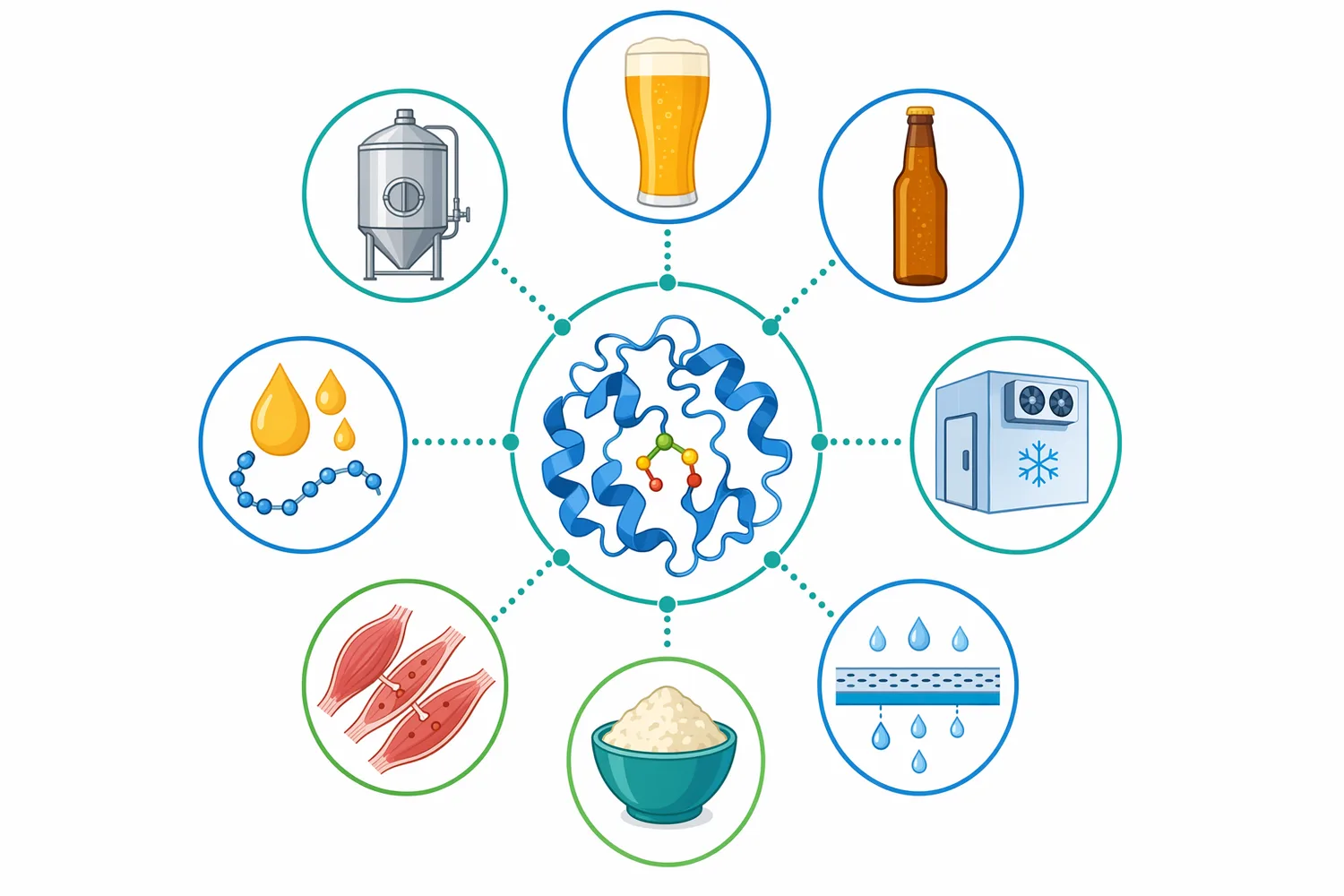
Structural work on acidic proline-specific endoprotease from Aspergillus niger further explains why enzyme architecture matters. Proline imposes a rigid kink in peptide chains, making proline-adjacent bonds difficult for many enzymes to access; proline-specific enzymes have active-site features that accommodate this unusual geometry [8]. Papain is broader and plant-derived, so it occupies a different place: useful for general protein hydrolysis, but not designed around one cereal-protein motif.
This distinction helps set realistic expectations. Papain can be a practical beer clarification additive when the goal is broad reduction of haze-active protein material. When the goal is narrowly defined protein targeting—such as extensive degradation of particular proline-rich sequences—other enzyme systems may be discussed in the brewing literature. That does not reduce papain’s relevance; it clarifies the mechanism and application boundary.
Papain’s use in beer clarification is part of a much broader pattern: the enzyme is widely studied and applied because proteins in food, biotechnology, and biomaterials often need to be modified without harsh chemical treatment. Food hydrolysis studies show papain acting on fish, legume, dairy, and other protein substrates, producing peptide mixtures with altered solubility, antioxidant behavior, or functional performance [9].
Protein hydrolysates from animal sources provide another example. Duck blood protein hydrolysis has been studied for stable bioactive peptide production, including pilot-scale production and stability during simulated digestion conditions [10]. While this is not a beer application, it shows why papain and related proteases are trusted industrial tools: they can convert complex proteins into more controlled peptide distributions.
In milk protein separation and hydrolysis work, papain has been used after microfiltration-based separation of milk proteins, again illustrating that enzymatic hydrolysis can be integrated into broader processing workflows rather than used in isolation [11]. For brewing, the analogous idea is that papain can fit into a clarification and stabilization sequence rather than replacing every other process step.
Papain has also been combined with other enzymes to target difficult proteins. In cow’s milk allergen casein research, a composite enzyme approach derived from papain and chymotrypsin reduced allergenicity by targeting T-cell and B-cell epitopes [12]. This should not be translated into medical claims for beer, but it does show papain’s ability to modify biologically important protein structures in a measurable way.
For buyers who need a papain liquid beer clarification additive, the value proposition is straightforward: it is a biological protease intended to reduce protein contributions to haze and improve clarity in suitable beer processes. It is especially relevant where the problem is recurring chill haze or protein-related turbidity rather than particulate contamination or non-protein instability.
Enzymes.bio supplies this papain liquid additive directly online by the 1 kg unit. The purchase is completed through the product page, payment is made online, and the order is processed and shipped; a Certificate of Analysis and Safety Data Sheet come with the order . This makes the product suitable for buyers who want to order a defined pack size without initiating a custom quotation process.
The product should be viewed as an ingredient-like processing aid for professional use, not as a finished-beer correction that guarantees clarity in every situation. Good beer clarification still depends on sound upstream brewing practice, appropriate maturation, yeast management, oxygen control, sanitary handling, and a stabilization workflow that matches the beer style.
Papain works on proteins. That single fact explains both its usefulness and its limits. When the unstable material is proteinaceous, papain can reduce the size and haze-forming ability of that material. When the instability is not proteinaceous, papain may not resolve the visible issue because there is little relevant substrate for the enzyme to hydrolyze.
It is also possible for a beer to contain several haze contributors at once. A papain-treated beer may show improvement if protein is one contributor but still retain turbidity from yeast, starch, dextrin, microbial biofilm fragments, minerals, or oxidized polyphenol complexes. This is why the most accurate claim is not “papain clears all beer,” but “papain helps reduce protein-related haze and chill haze.”
The other major limitation is foam. Because foam stability depends partly on proteins and polypeptides, papain must be used in a way that supports the intended clarity target without over-digesting foam-positive material. This balance is well recognized in brewing descriptions of papain’s role and cautions [1].
Papain liquid beer clarification additive is a plant-derived protease for hydrolyzing proteins that contribute to haze, especially chill haze. It works by cleaving peptide bonds, converting larger haze-active protein structures into smaller peptide fragments that are less able to build visible colloidal networks.
The strongest beer-specific rationale is papain’s documented use as a protease added before filtration and packaging to digest dissolved proteins and improve clarity. The broader food-science evidence base supports the same mechanism across fish, legume, dairy, potato, and other protein systems, where papain changes molecular size and functional behavior through hydrolysis [2].
For clear beer styles where protein haze is a known concern, papain can be a practical biological clarification aid. Its responsible use depends on recognizing the boundary: it targets proteins, not every haze source, and excessive or residual proteolysis can reduce foam stability. Enzymes.bio supplies the papain liquid beer clarification additive online by the 1 kg unit for direct purchase, with order documentation supplied after purchase.
Sold by the 1 kg unit, in stock and ready to ship. Order directly on our store — pay online and we process your order. A Certificate of Analysis and Safety Data Sheet are included with every order.
Buy Papain 80,000 U/G Liquid Beer Clarification Additive Hydrolyzed Protein Biological Enzyme →Numbered in order of first citation. Open-access sources, each verified reachable at publication; citation numbers in the text link here.