
Direct answer: Pectinase Animal Feed Additives Enzymes are used in feed systems to break down pectin, a plant cell-wall polysaccharide that helps bind plant cells together and can limit access to nutrients in fibrous or by-product ingredients. In practical terms, pectinase helps modify the “pectin glue” in plant materials, supporting better breakdown of pectin-bearing feed substrates, especially when used with other carbohydrase enzymes in complex plant-based formulations .
Enzymes.bio supplies Pectinase Animal Feed Additives Enzymes directly online by the 1 kg unit. Buyers pay online, the order is processed and shipped, and a Certificate of Analysis and Safety Data Sheet are provided with the order .
Pectinase is a group of enzymes that acts on pectin and related pectic substances in plant materials. Pectin is an important part of the primary cell wall and middle lamella of many plants—the region that helps hold neighboring plant cells together. In feed ingredients, this matters because nutrients are often embedded inside plant tissue structures rather than freely available as isolated starch, protein, oil, or soluble carbohydrate. A pectinase feed additive is therefore best understood as a plant cell-wall modification enzyme: it does not create nutrients, but it can help reduce a structural barrier around them .
The practical value of pectinase comes from its substrate specificity. Where plant ingredients contain meaningful pectin fractions—such as fruit and vegetable by-products, botanical residues, fiber-bearing meals, pulps, or mixed plant co-products—pectin can contribute to gel-like behavior, water binding, viscosity, and reduced accessibility of intracellular nutrients. Pectinase targets this pectic matrix and breaks it into smaller fragments, making the plant structure less cohesive and more open to further enzymatic or digestive action .
Pectinase is not a single catalytic activity. The term covers related enzyme functions that attack pectin in different ways. Some pectinases cut the main galacturonic acid backbone of pectin; others alter side groups that affect pectin’s charge, solubility, and gel-forming behavior; still others act on insoluble protopectin and help convert it into more soluble forms. For feed use, the important point is that these activities change the physical and chemical behavior of pectin-bearing plant material, rather than simply “adding an enzyme” as a generic supplement .
Plant feed materials are structurally complex. A grain, hull, pulp, peel, meal, leaf, stem, or fruit by-product is not just a mixture of nutrients; it is a biological tissue built from cell walls. Those cell walls contain multiple polysaccharides, including cellulose, hemicellulose, beta-glucans, arabinoxylans, and pectic substances. Pectin is especially relevant in softer plant tissues and fruit- or vegetable-derived materials because it contributes to cell adhesion and tissue firmness .
In simple mechanical terms, pectin behaves like part of the adhesive matrix between plant cells. When pectin is intact, plant cells remain more tightly associated, and the tissue can retain water, resist separation, and form viscous or gel-like systems. In a feed context, that structure can reduce the exposure of starch granules, proteins, lipids, pigments, minerals, and other intracellular components to digestive enzymes or to processing steps such as mixing, hydration, conditioning, fermentation, or wet handling .
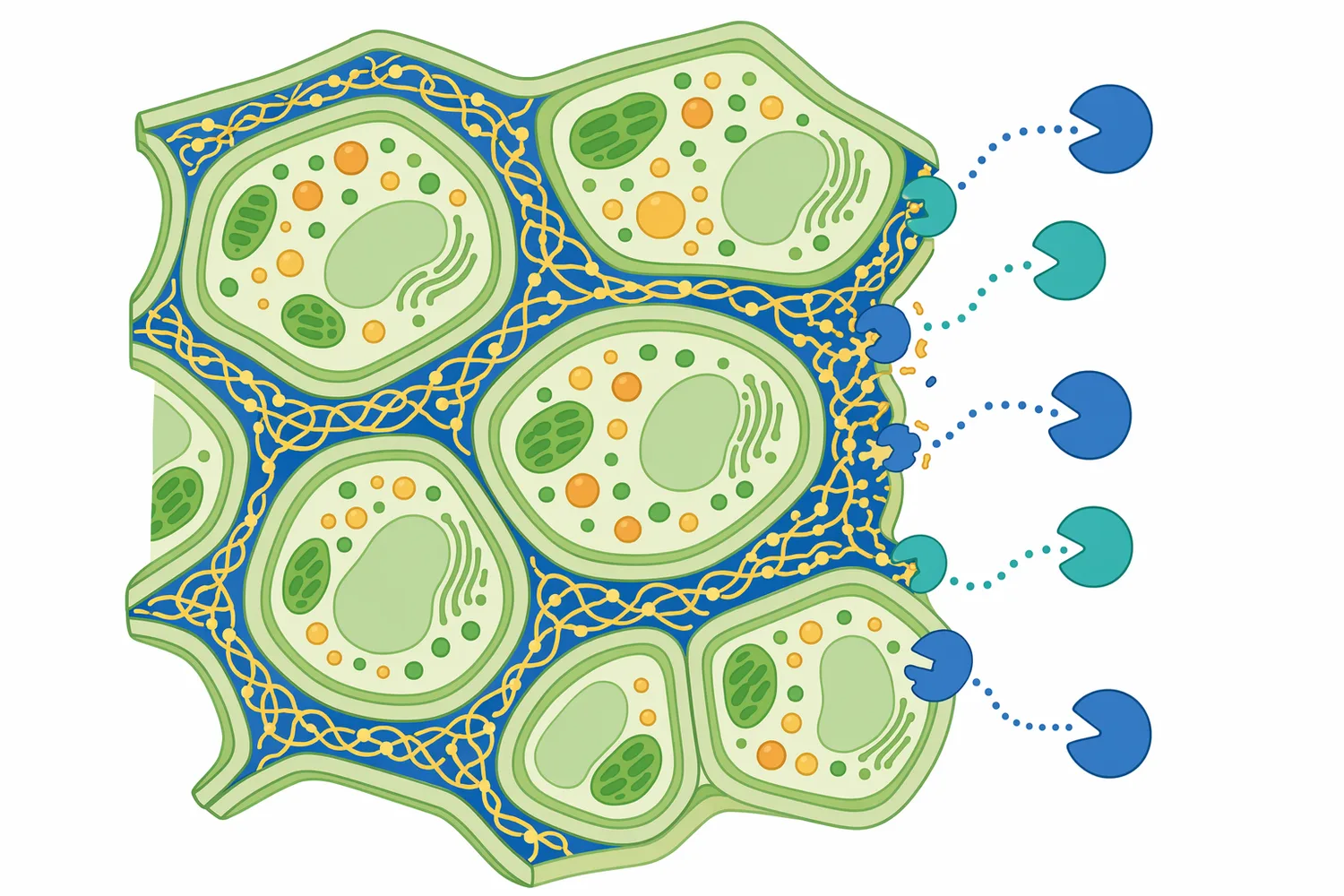
Pectinase changes this by cleaving or modifying pectic polymers. As the pectin network is broken down, the plant tissue loses some of its internal cohesion. Cell clusters separate more readily, water-binding behavior can change, and entrapped components become more accessible. This mechanism is the same basic reason pectinase is widely recognized in plant-material processing: when the pectin fraction is modified, the whole physical behavior of the plant substrate can change .
For animal feed, the most defensible expectation is substrate-specific support. Pectinase is most relevant when the feed matrix contains pectin-bearing plant materials. It should not be positioned as a universal performance additive for every diet or species. Its purpose is narrower and more concrete: to act on pectin, reduce the structural effect of pectic substances, and help make complex plant raw materials more processable and more accessible .
Pectin is built largely from chains of galacturonic acid units, often with chemical modifications and side chains that vary by plant source. These structural details matter because they influence whether pectin behaves as a soluble thickener, an insoluble cementing substance, or part of a gel-forming network. Pectinase works by attacking these structures at specific chemical points, reducing molecular size and altering solubility .
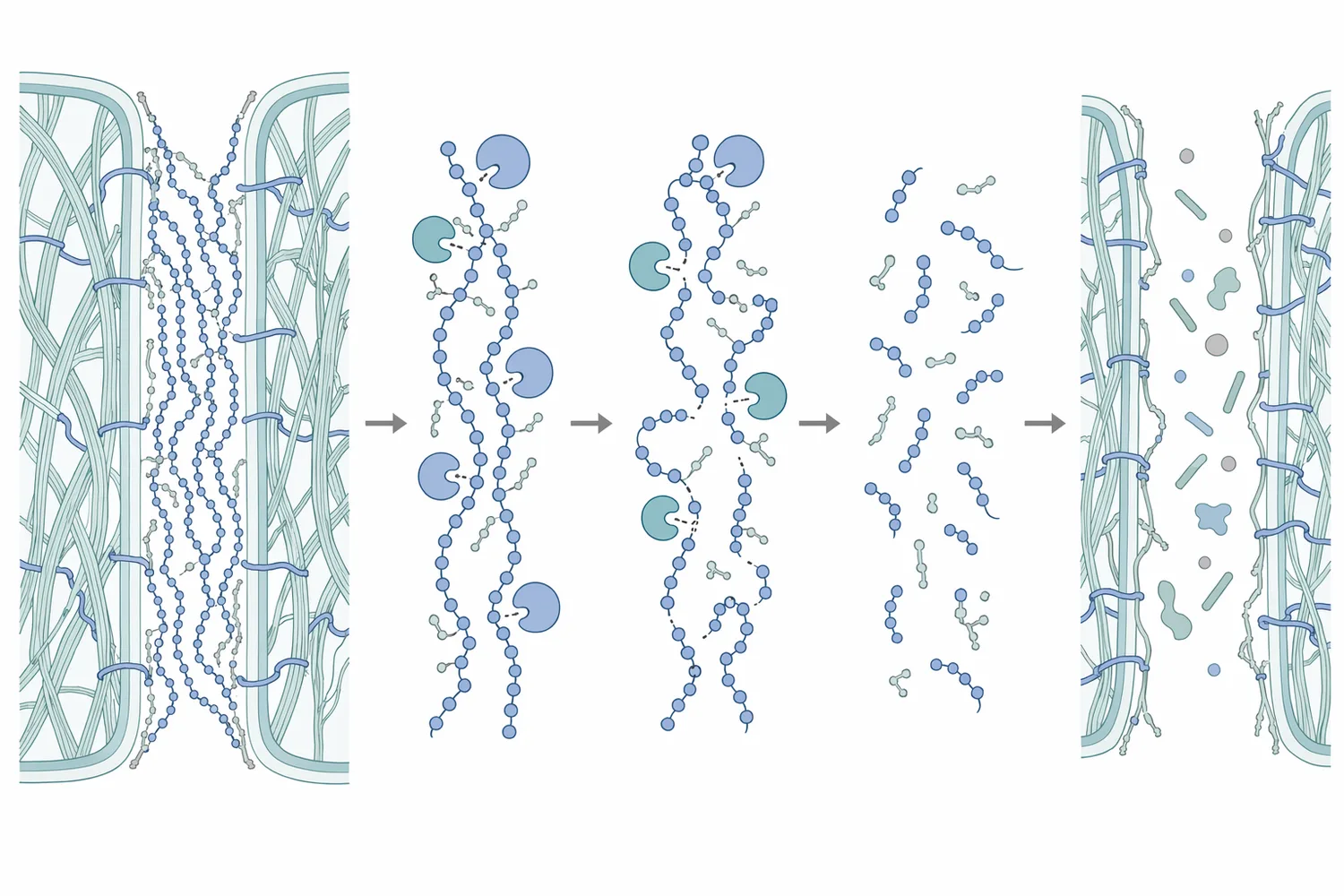
One important pectinase action is backbone cleavage. Enzymes such as polygalacturonases hydrolyze linkages in the galacturonic acid chain. When the long polymer is cut into shorter fragments, the pectin loses some of its ability to build viscosity and hold tissue together. Shorter pectic fragments are more mobile, more soluble, and less able to form the same extended matrix inside plant material .
Another important action is de-esterification. Some pectin molecules carry methyl ester groups. Pectin methylesterase-type activity removes those groups, changing the charge and reactivity of the pectin. That chemical change can make pectin more susceptible to further cleavage by other pectin-degrading enzymes and can alter how it interacts with minerals, water, and other cell-wall components. In practical feed-material terms, this can shift pectin from a more protective, structure-forming material toward a more degradable substrate .
Pectin lyase and pectate lyase-type actions can also cleave pectic chains through non-hydrolytic mechanisms. The result is still a reduction in polymer length, but the reaction route differs. For the buyer using a pectinase feed additive, the important operational outcome is not the enzyme-class name; it is the fact that pectic polymers are converted from larger, structure-building molecules into smaller fragments that no longer perform the same cementing function .
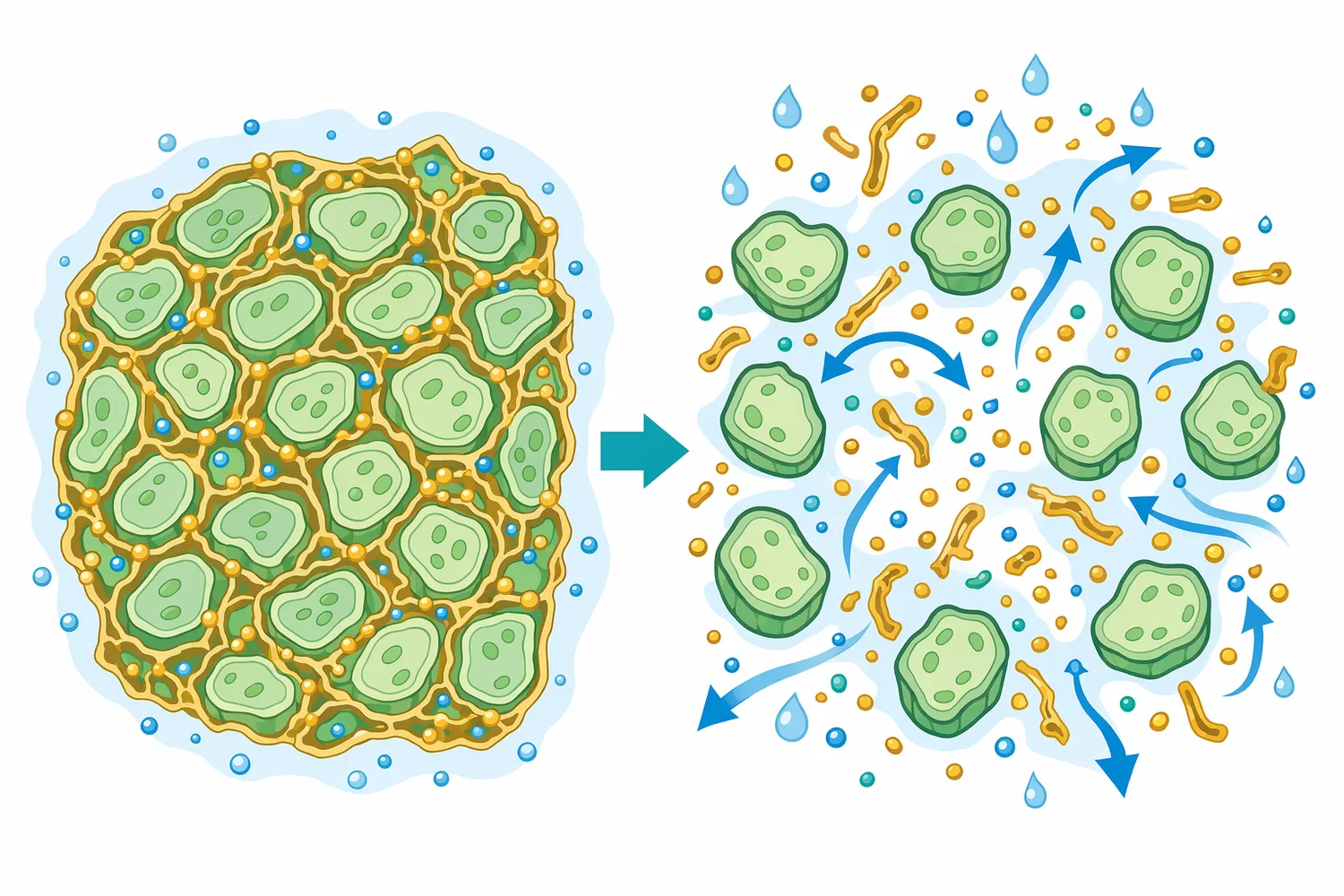
The visible or functional effect depends on the substrate. In a moist pectin-rich feed stream, pectin breakdown may reduce thickness or improve flow. In fibrous plant meals, it may help loosen the matrix around other cell-wall fractions. In fruit or vegetable co-products, it may help soften tissue and improve release of soluble components. In mixed enzyme systems, it may help other carbohydrases reach their own substrates by removing or weakening the pectin layer around them .
Feed enzyme systems often target specific anti-nutritional or structural fractions. Phytase targets phytate. Protease targets proteins. Xylanase targets arabinoxylans. Beta-glucanase targets beta-glucans. Cellulase targets cellulose. Pectinase targets pectin and pectic substances. This distinction is important because plant cell walls are not chemically uniform; no single enzyme can efficiently break down every wall component .
Pectinase is most logically grouped with carbohydrase enzymes used for non-starch polysaccharide modification. Its role is complementary rather than interchangeable. Xylanase cannot replace pectinase when pectin is the relevant barrier. Cellulase cannot efficiently open a pectin-rich middle lamella if the pectin matrix remains intact. Conversely, pectinase is not the primary enzyme for phytate, protein, starch, or cellulose breakdown. It has a defined substrate role .
| Enzyme type | Main substrate in feed materials | What changes in the substrate | Practical relevance |
|---|---|---|---|
| Pectinase | Pectin, pectic substances, protopectin | Breaks or modifies the pectin matrix that helps bind plant cells together | Useful for pectin-bearing plant ingredients, pulps, peels, vegetable by-products, and complex botanical materials |
| Cellulase | Cellulose | Cuts cellulose chains in structural cell-wall fiber | More relevant where cellulose accessibility is the limiting factor |
| Xylanase | Arabinoxylans and related hemicelluloses | Reduces hemicellulose chain length and viscosity effects | Common in cereal-based diets with arabinoxylan-rich fractions |
| Beta-glucanase | Beta-glucans | Reduces beta-glucan viscosity and gel behavior | Often relevant to barley, oats, and beta-glucan-rich materials |
| Protease | Proteins and peptides | Hydrolyzes protein chains into smaller peptides | Targets protein digestibility rather than plant cell-wall pectin |
| Phytase | Phytate | Releases phosphorus bound in phytate complexes | Targets mineral availability rather than cell-wall structure |
This comparison highlights why pectinase is not simply a “fiber enzyme” in a broad sense. It acts on a defined pectic fraction. When pectin is a meaningful part of the feed substrate, pectinase can contribute to matrix opening and substrate accessibility. When pectin is not relevant, another enzyme class may be more directly matched to the material .
Pectinase is especially relevant in feed systems that include plant-derived materials with soft tissue, fruit or vegetable origin, botanical residue, or co-products from plant processing. These materials may contain pectin-rich cell-wall fractions that behave differently from cereal fiber. They can hold water, form viscous slurries, resist separation, or trap nutrients inside partially intact tissue fragments .
Fruit and vegetable by-products are a clear example of the type of substrate where pectinase logic is strongest. Peels, pomace, pulps, and processing residues often contain cell-wall pectin because pectin is a major contributor to fruit and vegetable texture. When these materials enter a feed system, the pectin fraction may influence moisture behavior, mixing, fermentation, and accessibility of soluble and insoluble nutrients .
Pectinase can also be relevant where feed production uses wet or semi-wet processes. Enzymes require contact with their substrate, and moisture allows pectinase molecules to diffuse into the plant matrix and reach pectic polymers. In dry feed, meaningful action typically depends on subsequent hydration, processing moisture, fermentation, or the digestive environment. The enzyme-substrate relationship is physical as well as chemical: pectinase cannot act on pectin it cannot contact .
In mixed plant-based diets, pectinase may support broader non-starch polysaccharide management. Plant cell walls often contain pectin interwoven with hemicellulose and cellulose. Breaking the pectin fraction can make the overall structure less compact, allowing endogenous digestive enzymes or added carbohydrases to reach other substrates more effectively. This is why pectinase is often discussed as part of a plant cell-wall enzyme strategy rather than as an isolated standalone concept .
The first change is polymer size. Intact pectin can be a large, structure-forming molecule. Pectinase reduces the length of pectic chains or modifies them so they become more susceptible to cleavage. Shorter fragments have different physical behavior: they are less effective at holding plant tissue together and less able to maintain the same viscosity or gel structure .
The second change is cell separation. Because pectin contributes to the middle lamella between plant cells, its degradation weakens the material that binds cells together. In feed materials, this can mean that plant tissue fragments soften, disperse, or become more open. That structural opening is important because nutrients inside the tissue are no longer shielded to the same extent by intact plant architecture .
The third change is water interaction. Pectin can bind water and influence viscosity. When pectin is broken down, the material may handle differently under wet conditions. Depending on the substrate, this can support easier mixing, reduced thickening, better liquid movement, or improved interaction between enzymes and plant particles. These effects are substrate-dependent, but they follow directly from the way pectin contributes to viscosity and structure .
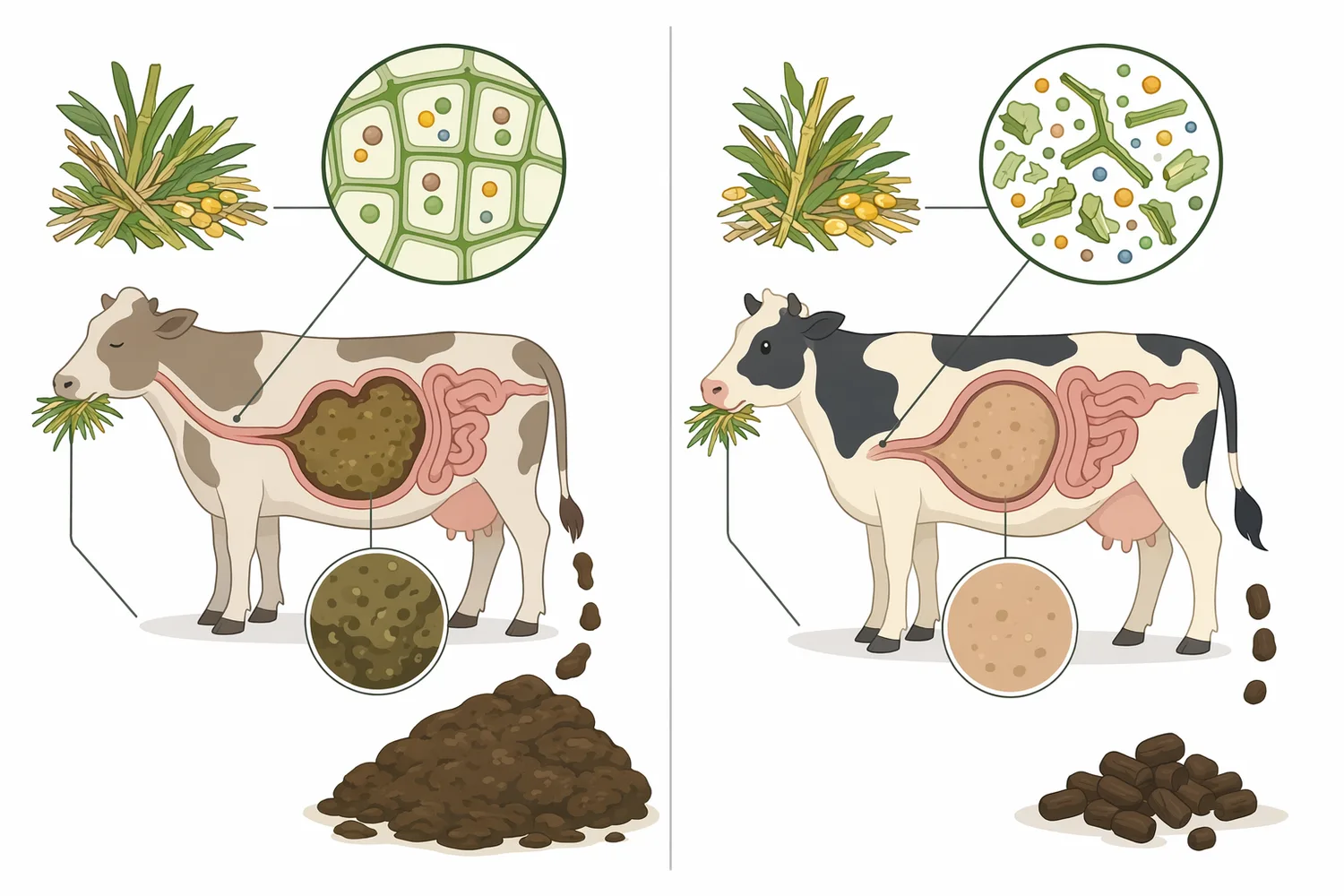
The fourth change is enzyme accessibility. A dense pectin-containing wall matrix can limit the contact between enzymes and their target substrates. Once pectin is modified, other cell-wall carbohydrates may become more exposed. In this sense, pectinase can act as an “access enzyme” within complex plant substrates: it opens part of the structure so that other reactions have a better chance to proceed .
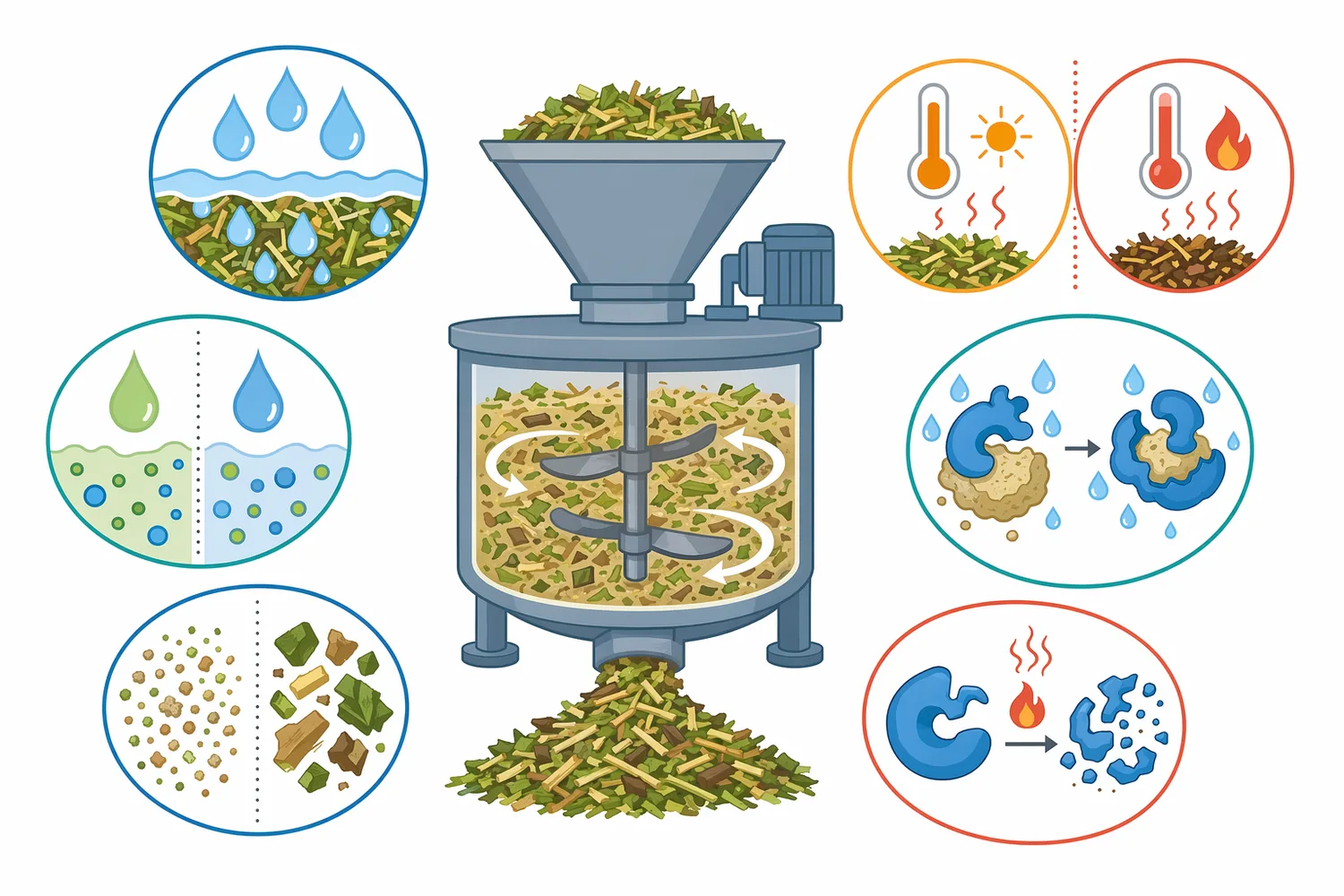
Pectinase performance depends on physical contact, moisture, temperature exposure, pH environment, and the amount and form of pectin in the feed material. These are not abstract laboratory variables; they affect whether the enzyme can reach the substrate and retain its functional shape long enough to catalyze pectin breakdown .
Moisture is fundamental. Enzymes act in aqueous microenvironments, and pectinase must move into contact with pectic substances before catalysis occurs. In a hydrated mash, wet co-product, fermented feed, liquid feed stream, or digestive environment, the probability of enzyme-substrate contact is greater than in a completely dry powder mixture. This does not mean pectinase has no relevance in dry feed; it means the meaningful reaction usually occurs when water becomes available .
Temperature also matters because pectinase is a protein. Moderate heat may increase reaction speed up to a point, but excessive heat can unfold the enzyme’s three-dimensional structure and reduce its ability to bind pectin at the active site. In practical feed production, the timing of enzyme exposure relative to high-heat steps is important because an enzyme that has been severely denatured cannot perform the same catalytic function later .
The pH environment influences the charge of pectin, the ionization state of catalytic groups in the enzyme, and the stability of the enzyme structure. Pectinases may be designed or sourced for different operating environments, but the general principle is simple: the enzyme works best when the surrounding conditions allow the active site to bind and cleave pectin efficiently. In feed systems, that environment may differ between processing, storage, and digestion .
Particle size and mixing also influence the result. A large intact plant particle exposes less surface area than a finely disrupted one. Pectinase can only act where substrate is accessible, so mechanical preparation and hydration can affect the practical extent of pectin modification. This is one reason enzyme performance in feed is best interpreted as an interaction between raw material, process, and biological substrate rather than as a fixed outcome independent of conditions .
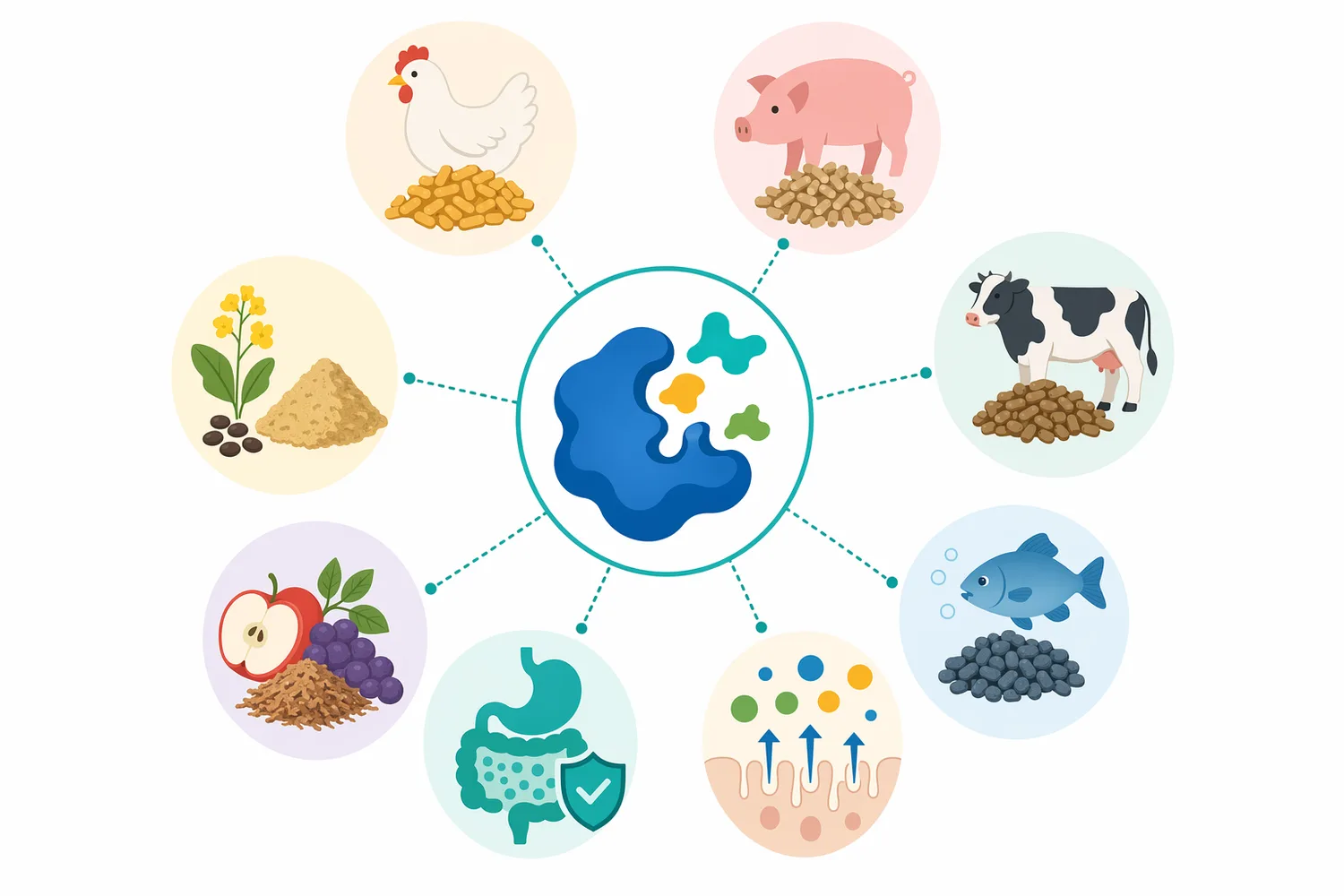
The strongest basis for using pectinase in feed is biochemical and substrate-based: pectinase degrades pectin and related pectic substances. That mechanism is directly aligned with the structure of many plant-based ingredients. If a feed material contains pectin that contributes to tissue cohesion, water binding, or nutrient shielding, an enzyme that attacks pectin has a clear functional rationale .
Industrial use of pectinase in plant-material processing also supports confidence in the mechanism. Pectinase products are associated with applications where pectin modification improves the handling or transformation of plant substrates, including pectin-bearing liquids and plant-derived materials. Although feed is its own application category, the same core chemistry applies: pectinase changes pectin, and changing pectin can change the behavior of the plant matrix .
For animal feed, the responsible interpretation is that pectinase is a targeted additive for pectin-containing materials, not a guaranteed universal driver of animal performance. Outcomes such as digestibility, growth, feed conversion, manure characteristics, or production economics depend on diet composition, species, age, gut physiology, processing conditions, inclusion of other enzymes, and the amount and accessibility of pectin in the raw material. The product’s technical logic is strongest when the substrate contains pectin that is actually limiting processing or nutrient access .
This distinction is important for buyer expectations. Pectinase can be a scientifically credible part of a feed-enzyme approach without every diet showing the same response. Its value is linked to substrate fit. In a pectin-rich plant co-product, it may be highly relevant. In a formulation where pectin is minimal or already highly disrupted, the visible benefit may be smaller. The enzyme should therefore be understood through the lens of plant-cell-wall chemistry .
Many plant ingredients contain layered barriers. Pectin may surround or interact with cellulose, hemicellulose, proteins, starch granules, and other nutrient-bearing structures. Because of this, pectinase can be useful in combination with other enzyme types, even though it has its own specific substrate. Its role is to reduce the pectin barrier that can restrict access to other fractions .
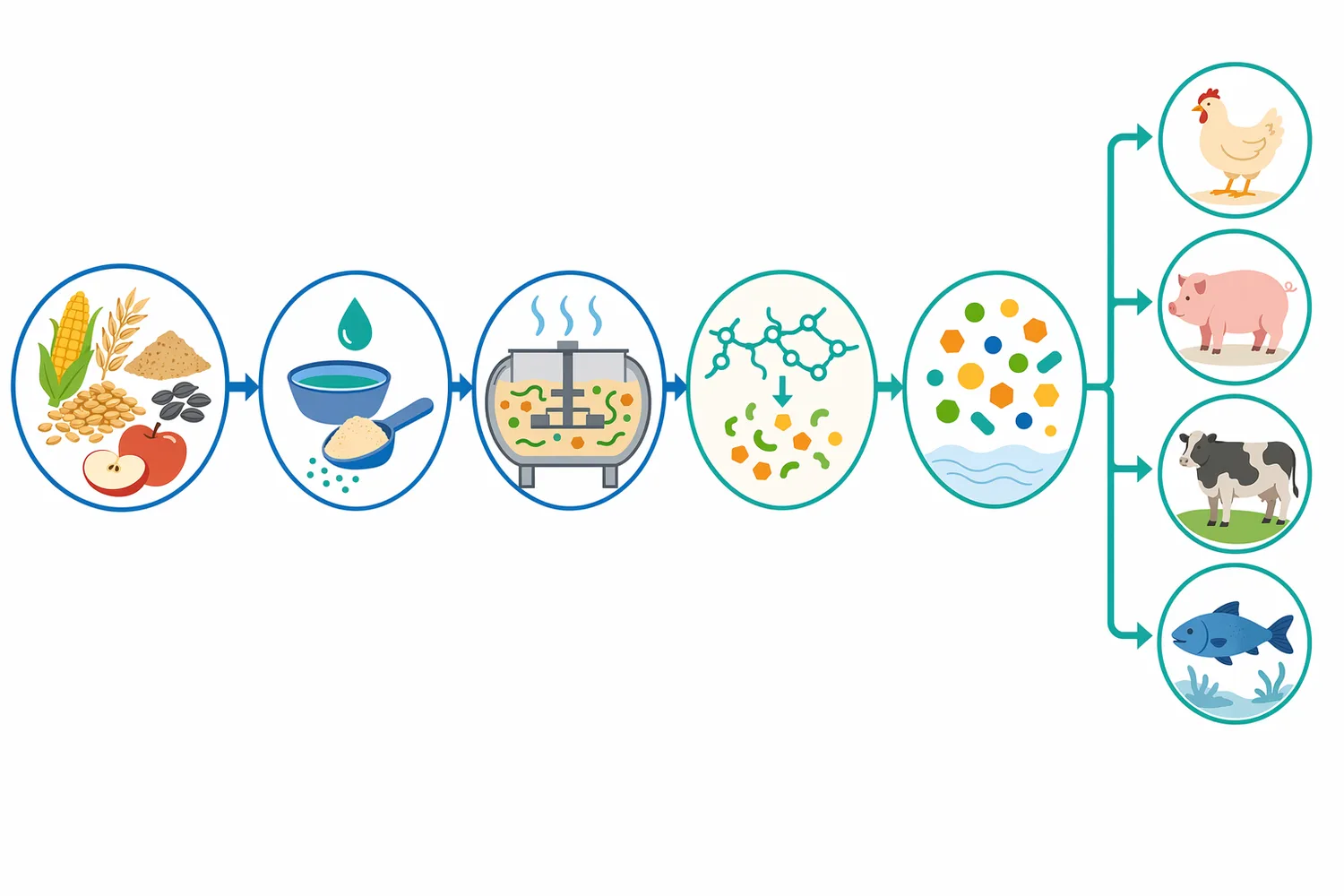
For example, in a plant co-product containing pectin and cellulose, cellulase activity may be limited if cellulose microfibrils remain embedded behind pectic material. Pectinase can help loosen that surrounding matrix, making cellulose more reachable. Similarly, in materials containing pectin and hemicellulose, pectinase may reduce tissue cohesion while xylanase or other hemicellulases act on their respective polysaccharides. The result is not one enzyme doing everything, but several enzymes acting on different parts of the same plant architecture .
This is why pectinase is often most useful where feed materials are complex rather than purified. In purified pectin, the mechanism is straightforward: the enzyme attacks pectin. In real feed materials, the mechanism is more integrated: pectinase modifies a structural component that affects how the entire particle behaves. This can influence hydration, swelling, cell separation, and exposure of other nutrients or fibers .
The practical benefit of this approach is especially relevant as feed systems incorporate more diverse plant co-products. These ingredients can be nutritionally valuable but structurally variable. Pectinase gives the buyer a targeted way to address the pectic fraction of that variability, especially when the formulation includes fruit, vegetable, botanical, or other pectin-bearing materials .
A realistic expectation for Pectinase Animal Feed Additives Enzymes starts with the substrate. If the feed material contains pectin-rich plant tissue, pectinase has a clear target. If the feed material contains little accessible pectin, the enzyme has less relevant substrate to act on. This is the central principle behind responsible use: enzyme value follows enzyme-substrate match .
The second expectation is that pectinase supports accessibility, not nutrient creation. It does not add protein, energy, minerals, or vitamins to the feed. Instead, it helps alter the physical structure that may keep existing nutrients less accessible. This distinction matters because it frames pectinase as a processing and digestibility-support tool rather than as a nutrient replacement .
The third expectation is that response is process-dependent. Hydration, mixing, particle disruption, heat exposure, and timing all influence whether the enzyme can remain active and contact pectin. A well-matched substrate still requires conditions that allow the enzyme to function. In feed production, the enzyme’s opportunity to act may occur during wet processing, pre-treatment, fermentation, or after ingestion when moisture and substrate contact are present .
The fourth expectation is compatibility with broader feed design. Pectinase may be used alongside other plant cell-wall enzymes when multiple non-starch polysaccharides are present. This is a logical use pattern because plant walls are composite structures. Pectinase contributes to one part of the system; other enzymes address other fractions .
Enzymes.bio supplies Pectinase Animal Feed Additives Enzymes as a product available for direct online purchase by the 1 kg unit. Buyers complete payment online, after which the order is processed and shipped. A Certificate of Analysis and Safety Data Sheet are provided with the order, supporting routine receiving and documentation needs without requiring a separate quotation or sample-request process .
The product is intended for buyers who already understand the general role of feed enzymes and want a pectinase option for plant-based feed applications. Enzymes.bio acts as a supplier, making the product available through an online ordering model. The educational purpose of this document is to explain how pectinase works on pectin-containing feed materials and where its technical logic is strongest .
Pectinase Animal Feed Additives Enzymes are best viewed as a targeted pectin-degrading tool for plant-based feed materials. The enzyme acts on pectin and related pectic substances that help bind plant cells together, reducing the structural effect of the pectin matrix and supporting better accessibility of plant-derived nutrients and other cell-wall fractions .
Its strongest use case is not every feed formula, but feed systems containing pectin-bearing materials such as fruit or vegetable co-products, botanical residues, fibrous plant ingredients, or mixed plant-based substrates. When pectin is part of the barrier, pectinase provides a direct biochemical mechanism for modifying that barrier. Enzymes.bio supplies the product online in 1 kg units, with order processing and shipment after online payment .
Sold by the 1 kg unit, in stock and ready to ship. Order directly on our store — pay online and we process your order. A Certificate of Analysis and Safety Data Sheet are included with every order.
Buy Pectinase Animal Feed Additives Enzymes →Numbered in order of first citation. Open-access sources, each verified reachable at publication; citation numbers in the text link here.