
Pectinase is a family of enzymes that breaks down pectin, the water-binding “plant glue” in fruit, vegetable, and other plant cell walls. In processing, the pectinase enzyme function is practical: it lowers pectin-driven viscosity, helps release juice and soluble solids, improves clarification, and makes filtration or separation easier in pectin-rich materials [1].
Enzymes.bio supplies pectinase powder directly online by the 1 kg unit. Buyers can place and pay for an order online, after which the order is processed and shipped with a Certificate of Analysis and Safety Data Sheet.
Pectinase is not one single enzyme molecule. It is a group of pectinolytic enzymes that act on pectin and related pectic substances found in the primary cell wall and middle lamella of plants. Pectin is rich in galacturonic acid units and helps cement plant cells together, which is why pectin-rich fruits can be firm, gel-forming, cloudy, or viscous when crushed into juice, mash, pulp, or puree [2].
In plain terms, if you are asking “what is pectinase?” or “what is pectinase enzyme?”, the answer is: pectinase is a protein catalyst that breaks or modifies pectin so plant material loses some of its gel-like structure. More technically, pectinase is a protein that catalyzes reactions such as hydrolysis, de-esterification, or lyase cleavage of pectic polymers; those reactions reduce the size, charge pattern, and network-forming ability of pectin molecules [3].
This matters because pectin is one of the main reasons fruit mashes hold onto liquid, juices stay hazy, and plant slurries resist filtration. Once pectin is partially depolymerized or chemically modified, the plant matrix loosens: liquid moves out more readily, suspended solids settle or filter more easily, and the overall material becomes less resistant to pumping, pressing, and clarification [1].
Industrial pectinase is commonly associated with microbial production, including fungal sources such as Aspergillus niger. The phrase “pectinase from Aspergillus niger” is common because A. niger has been widely reported as a productive organism for extracellular pectinolytic enzymes used in food and industrial applications [4].
Pectin is a complex polysaccharide rather than a simple straight chain. Its main backbone includes α-1,4-linked D-galacturonic acid residues, and it can also contain methyl ester groups, acetyl groups, neutral sugar side chains, and branched regions that vary by fruit type, maturity, and processing history [2].
Those structural details explain why pectin creates several processing problems at once. Long pectin chains increase viscosity by binding water and entangling with other polysaccharides; charged galacturonic acid regions stabilize colloids; and partially methylated pectin can contribute to gel formation under the right sugar, acid, and calcium conditions [1].
The function of pectinase is therefore not just “breaking fruit down” in a vague sense. Different pectinase activities target different parts of the pectin system: some cut the backbone into shorter chains, some remove methyl ester groups, and some cleave pectate chains through lyase reactions. The common practical result is a weaker pectin network with lower molecular weight and less ability to trap water, stabilize haze, or hold plant cells together [3].
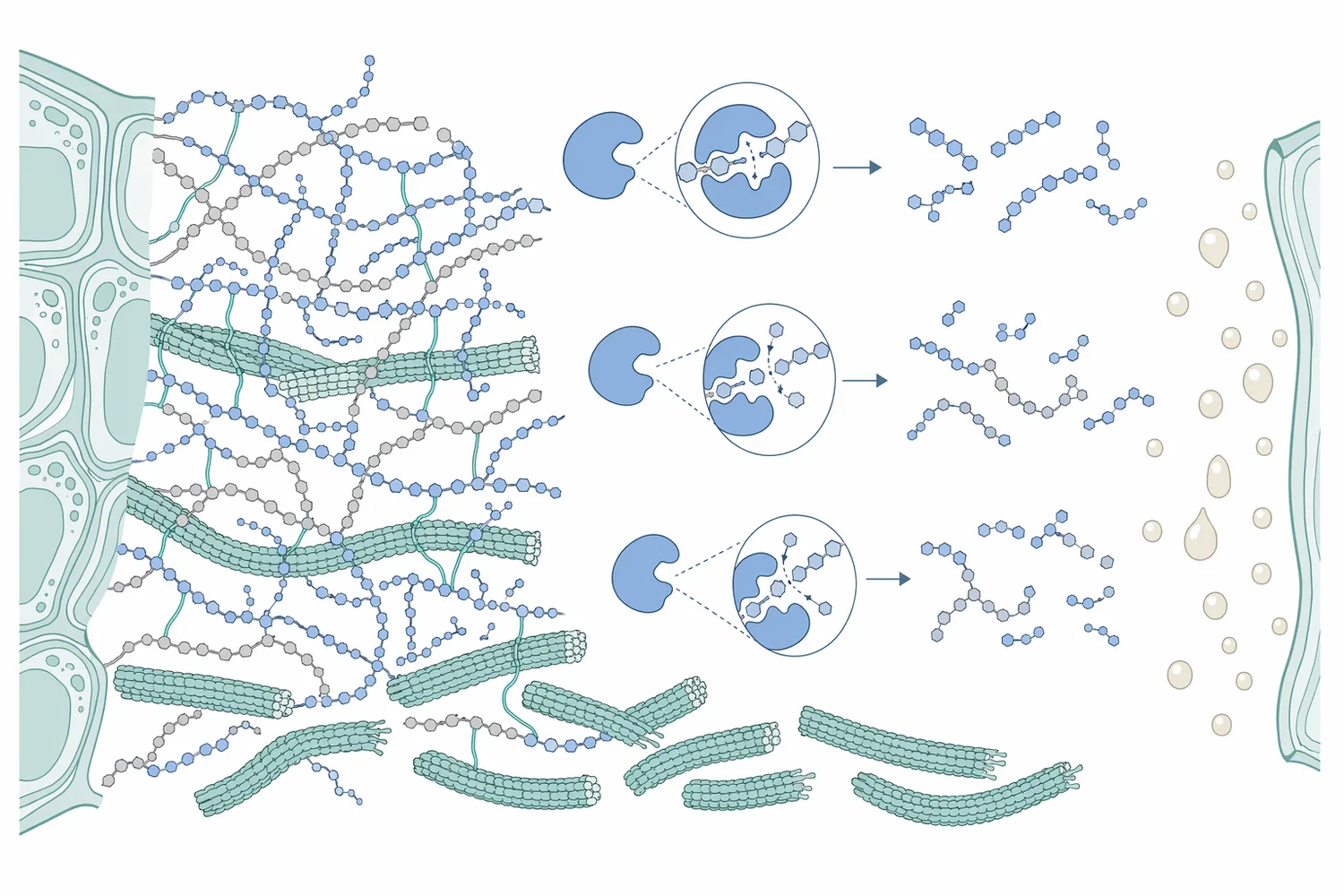
Pectinases are often grouped by the reaction they catalyze. Polygalacturonases hydrolyze glycosidic bonds in polygalacturonic acid regions; pectin methylesterases remove methyl groups from esterified pectin; pectin lyases and pectate lyases cleave pectin or pectate by elimination reactions rather than simple hydrolysis [2].
| Pectinase type | Main action on pectin | What changes in the material | Typical relevance |
|---|---|---|---|
| Polygalacturonase | Cuts α-1,4 linkages in galacturonic acid chains | Pectin chain length decreases; viscosity and gel strength can drop | Juice extraction, clarification, mash treatment |
| Pectin methylesterase | Removes methyl ester groups from pectin | Charge distribution changes; pectin becomes more susceptible to further breakdown or calcium interactions | Pectin modification, fruit tissue softening, process-dependent texture effects |
| Pectin lyase | Cleaves esterified pectin by β-elimination | High-methoxyl pectin can be depolymerized without prior de-esterification | Fruit juice and beverage clarification contexts |
| Pectate lyase | Cleaves de-esterified pectate by β-elimination | Demethylated pectin regions are broken into smaller fragments | Alkaline or neutral pectin-degradation systems, plant-fiber processing |
This is why the term pectinase enzyme covers a family rather than a single universal activity. In fruit juice clarification, a pectinase preparation may reduce viscosity and haze because depolymerizing enzymes shorten pectin chains; in fiber retting, pectin removal helps separate plant fibers because pectic substances are part of the binding material between cells [4].
Fruit tissue holds juice inside cells and intercellular spaces surrounded by pectin-rich cell-wall material. When fruit is crushed, some juice is released mechanically, but a portion remains trapped in a hydrated pectin-cellulose-hemicellulose network. Pectinase weakens that network by degrading pectin in the middle lamella and cell wall, so pressing releases more liquid and soluble material [1].
In apple, berry, citrus, grape, persimmon, and other fruit systems, pectinase treatment is used because pectin behaves like a hydrocolloid. It increases mash thickness, slows liquid drainage, and can trap suspended solids. By cutting pectin into smaller fragments, pectinase reduces the internal resistance of the mash and makes the liquid phase easier to separate from pulp [2].
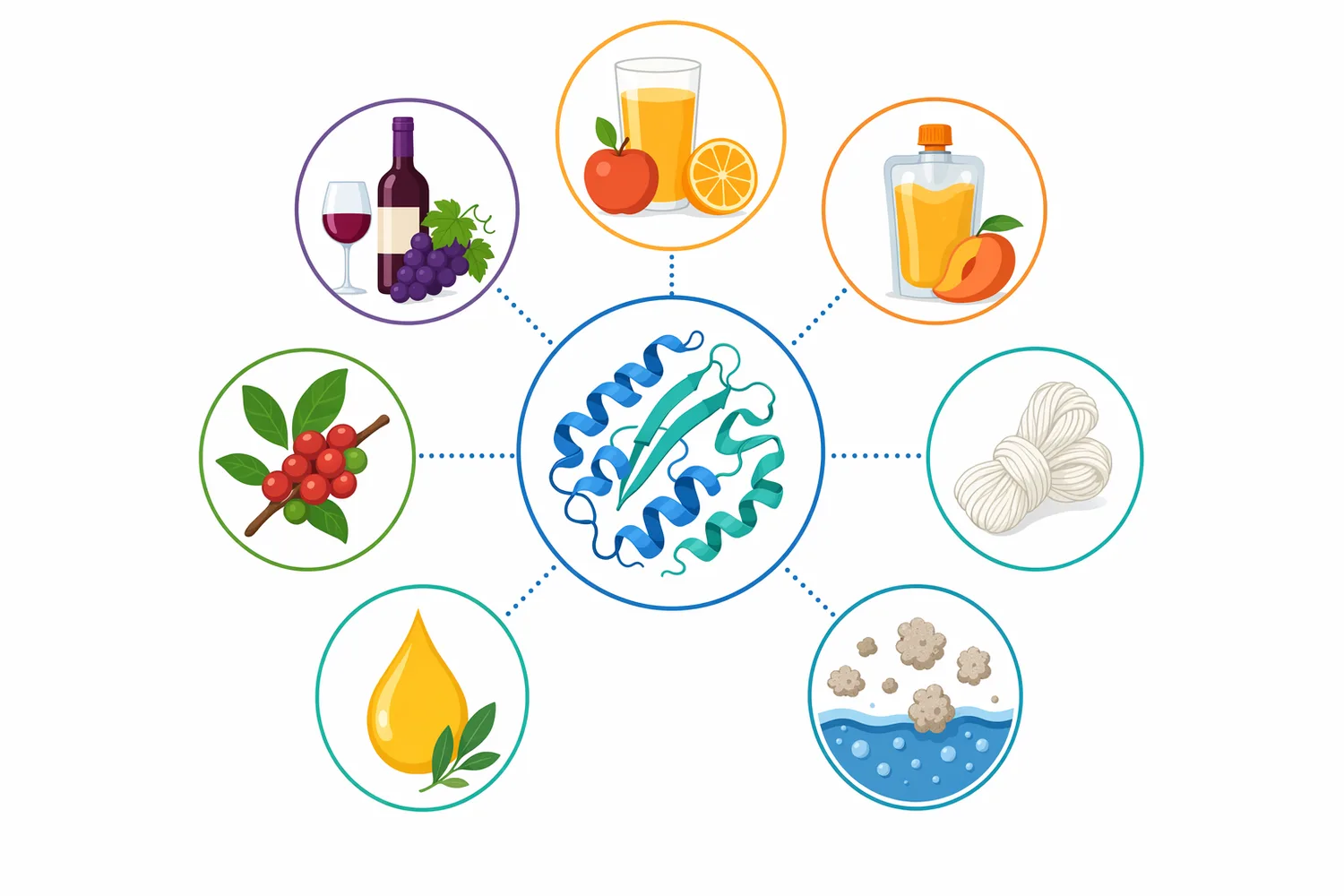
This is especially relevant for pectinase for oranges and other citrus materials. Citrus peel and pulp are pectin-rich, and orange juice processing can face pectin-related viscosity, cloud stability, and filtration issues. Pectinase does not “dissolve the fruit”; rather, it selectively attacks pectic substances that influence how the juice, pulp, and suspended particles behave during extraction and clarification [3].
For a process engineer, the visible change is usually not dramatic foaming or instant liquefaction. The practical signs are more fluid mash, easier drainage, improved press performance, faster filtration, reduced sludge-like behavior, and a clearer separation between liquid and insoluble solids where the process is designed for clarification [1].
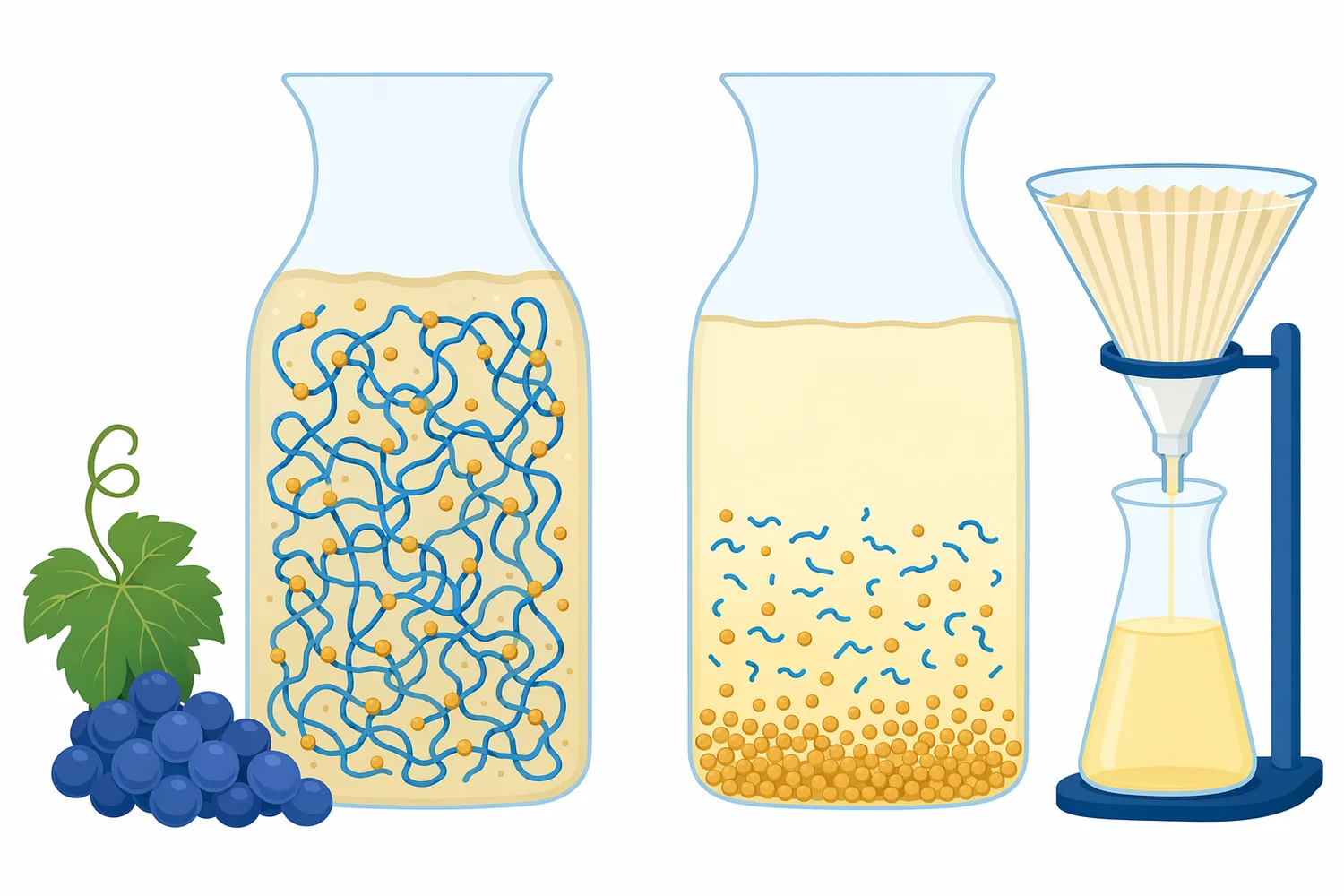
Pectin-related haze forms because pectin stabilizes suspended particles and colloids. Even when larger pulp particles are removed, dissolved or colloidal pectin can remain in the juice and hold fine material in suspension. Pectinase reduces this stabilizing effect by breaking long pectin molecules into shorter fragments that are less effective at maintaining haze [1].
As viscosity falls, particles collide, settle, or filter more efficiently. Filtration media also experience less blinding because the juice behaves less like a weak gel and more like a lower-viscosity liquid. This is one reason pectinase is widely discussed in juice clarification literature alongside improvements in turbidity reduction and filtration performance [5].
Clarification does not mean every beverage should become crystal-clear. Some products, such as naturally cloudy juices, are designed to retain cloud. In those cases, pectinase use must match the desired product style; the same mechanism that improves clarity can also alter cloud stability if the process objective is different [1].
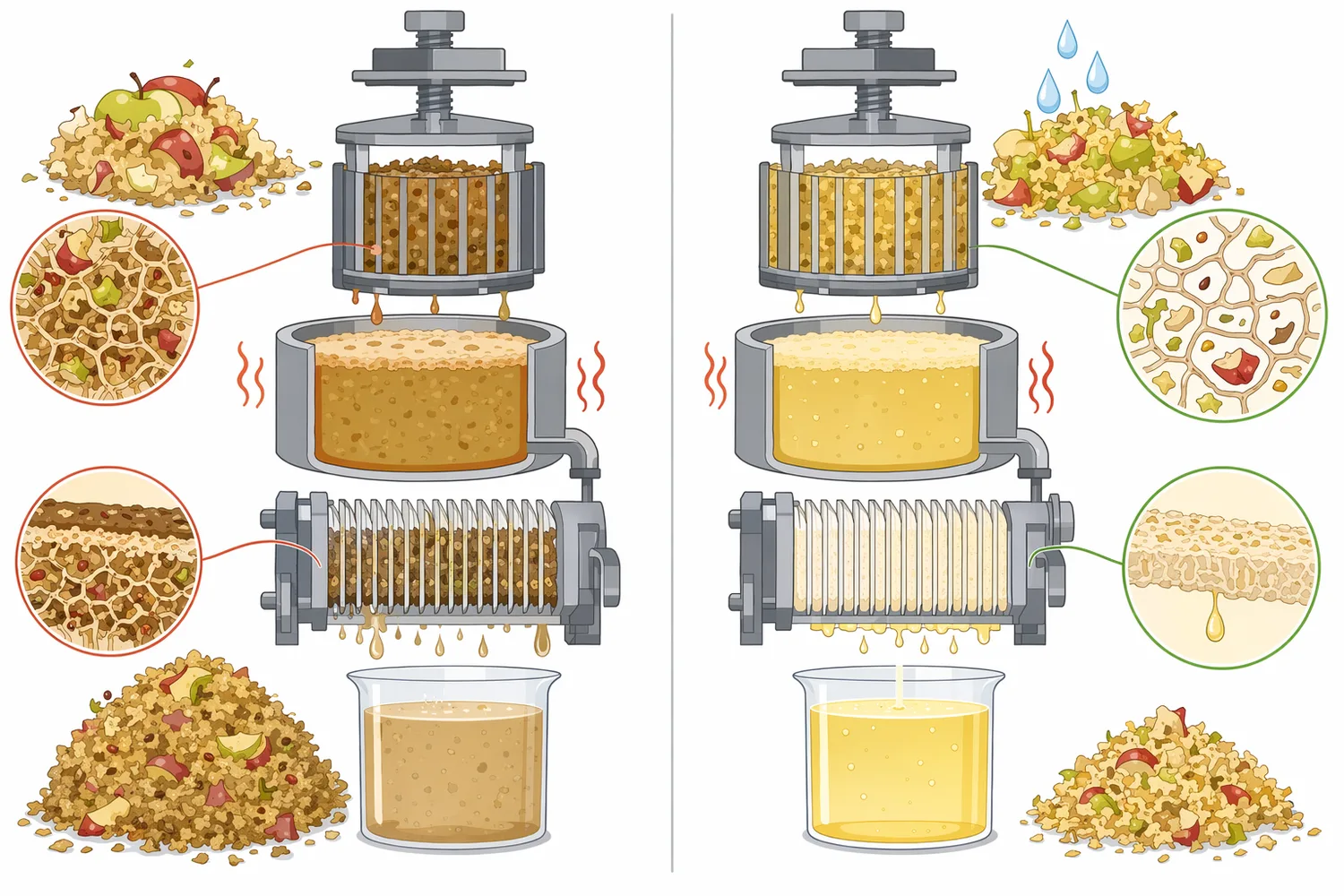
In wine and cider, pectinase can help clarify musts and finished products by degrading pectic substances from grapes, apples, pears, berries, and other fruit. The enzyme can also assist maceration by loosening cell-wall material, allowing color, aroma precursors, and soluble compounds to move more easily from skins and pulp into the liquid phase [4].
A 2023 study on Mopan persimmon wine examined pectinase-assisted fermentation and mechanism. The researchers connected pectinase use with improved breakdown of pectic substances during fermentation, which can influence juice yield, soluble solid release, clarification behavior, and the chemical profile of the wine matrix [6].
The mechanism in fermented fruit is the same foundation as in juice processing but occurs in a more complex system. As pectinase opens cell-wall structure, soluble sugars, acids, phenolic compounds, aroma-related compounds, and other extractives can become more available to the fermenting medium. At the same time, reduced pectin viscosity can improve mass transfer, helping yeast and liquid contact the fruit-derived solids more uniformly [6].
This does not mean pectinase replaces fermentation control. Temperature, yeast behavior, acidity, oxygen exposure, fruit maturity, and solids handling still determine the final beverage. Pectinase simply addresses one important physical barrier: the pectin matrix that holds water and plant components in place [6].
Pectinase activity depends strongly on processing environment because enzymes are folded proteins with active sites that only work well under compatible conditions. Literature reviews describe pectinase performance as influenced by pH, temperature, incubation time, substrate type, and the source of the enzyme preparation [3].
For juice and fruit applications, published pectinase work commonly appears in acidic systems because many fruits and fruit juices naturally sit in the acidic pH range. Reviews of pectinase in juice clarification report that many fungal pectinases are active under acidic conditions, while other pectinases from bacterial sources may be suited to neutral or alkaline settings used in non-food applications [1].
The phrase “pectinase optimum temperature” should be understood carefully. There is no single optimum temperature for all pectinase enzymes; reported optima vary with enzyme source, purification state, substrate, pH, and process time. Reviews commonly describe useful activity for many pectinases in moderate processing temperatures, while excessive heat denatures the enzyme and reduces catalytic function [2].
Denaturation is a structural change, not just “loss of strength.” When heat or incompatible pH disrupts the protein’s three-dimensional shape, the active site no longer fits the pectin substrate correctly. The enzyme may still be present in the liquid, but its catalytic geometry is damaged, so pectin chains are no longer cut or modified efficiently [3].
Pectinase applications differ because the substrate environment differs. Fruit juice, wine, and berry processing are typically acidic; textile retting or some plant-fiber processes may be closer to neutral or alkaline; and wastewater or by-product treatment can vary widely depending on the feedstock and surrounding process chemistry [4].
| Processing context | Pectinase environment | Why it matters | Common application fit |
|---|---|---|---|
| Acidic pectinase context | Low-pH fruit or beverage systems | Matches many natural fruit juices and wines; supports pectin breakdown without major pH adjustment | Juice extraction, pectinase for oranges, apple juice, berry juice, wine, cider |
| Neutral pectinase context | Mild aqueous plant-material systems | Useful where extreme acidity or alkalinity is not part of the process | Botanical extraction, some pulp or plant-tissue treatments |
| Alkaline pectinase context | Higher-pH non-beverage systems | Can support pectin removal where alkaline conditions help fiber or industrial processing | Textile retting, degumming, selected pulp or waste-treatment processes |
This table is conceptual, not a product specification. The important takeaway is that the same word “pectinase” can refer to enzyme systems adapted to different process environments, which is why published work distinguishes pectinase source, pH behavior, thermal behavior, and application area [2].
Pectinase is best known for fruit juice clarification, but its use extends across plant materials where pectin causes physical resistance. In fruit mashes, it helps release liquid; in pulps and purees, it can reduce thickness; in botanical extraction, it can open cell-wall structure so water-soluble or solvent-accessible compounds move out more easily [4].
Vegetable processing can also benefit when pectic substances limit flow or separation. Tomato pulp, for example, contains pectin-rich cell-wall material that influences viscosity and serum separation. Pectinase treatment can change the balance between intact pulp structure and liquid release, which is why enzyme effects must be aligned with the desired texture and separation result [2].
In botanical extraction, pectinase can assist when leaves, peels, roots, or fruit residues contain pectin-rich tissue that traps extractable compounds. By reducing the barrier effect of plant cell walls, the enzyme can support recovery of soluble solids, color compounds, flavor materials, or other plant-derived components, depending on the raw material and extraction process [3].
Citrus residues are among the most pectin-rich plant by-products. Orange peel, lemon peel, and related fruit-processing residues contain substantial pectic substances that bind water and complicate handling. Pectinase can help depolymerize these materials, making slurries less resistant to mixing, separation, and downstream treatment [4].
For buyers searching terms such as “pectinase near me,” “pectinase Amazon,” or “where to buy pectinase,” the underlying use case is often practical: a process has pectin-rich fruit, peel, mash, or plant waste that is too thick, slow to clarify, or difficult to press. Enzymes.bio offers pectinase powder directly online in 1 kg units for buyers who want to purchase without marketplace searching or offline ordering steps.
Pectinase is also discussed in waste-stream and by-product treatment because pectin contributes to organic load complexity and viscosity. Enzymatic depolymerization does not eliminate the need for wastewater treatment, but it can make pectin-rich residues more accessible to subsequent biological or physical processing steps [3].
Beyond beverages, pectinase has a clear role in plant-fiber processing. Bast fibers and other plant fibers are embedded in tissues where pectic substances help bind cells together. Removing or weakening pectin supports fiber separation, retting, and degumming [2].
Traditional retting can rely on uncontrolled microbial action, which may be variable in speed and fiber quality. Enzyme-assisted retting offers a more targeted route because pectinase focuses on pectic binding material rather than broadly attacking all structural polymers. The practical effect is improved release of fibers from surrounding tissue when pectin is a key adhesive component [4].
In textile and fiber contexts, alkaline pectinases are often discussed because certain industrial fiber treatments occur outside the acidic pH of fruit processing. This illustrates why pectinase function should always be understood through the substrate: in fruit juice, the target may be haze and viscosity; in fibers, it is the pectin that holds fiber bundles and non-fiber tissues together [3].
Pectinase has been reported as useful in some oil extraction processes, including olive processing, where plant cell-wall components can restrict oil release and phase separation. The enzyme does not act on oil directly; it acts on pectin-containing wall material that physically traps oil droplets and water within plant tissue [4].
When pectinase loosens the pectin network, the mash structure can become more open. That can help oil droplets coalesce or become more accessible to mechanical separation, depending on the process design. The same principle applies to other plant-based separations where the desired component is trapped behind or within pectin-rich cell-wall material [2].
The effect is substrate-dependent. A raw material with low pectin content, severe heat damage, or a separation problem caused mainly by proteins, starches, gums, or emulsifiers may not respond as strongly to pectinase. The enzyme is most relevant where pectin is one of the main causes of poor release, high viscosity, or difficult separation [1].
Pectinase is sold commercially in different formats, including pectinase powder and liquid pectinase. Powdered enzyme formats are commonly used where dry handling, shipping convenience, and measured addition to aqueous systems are preferred; liquid pectinase formats may be used where rapid dispersion into liquid processes is the main priority [3].
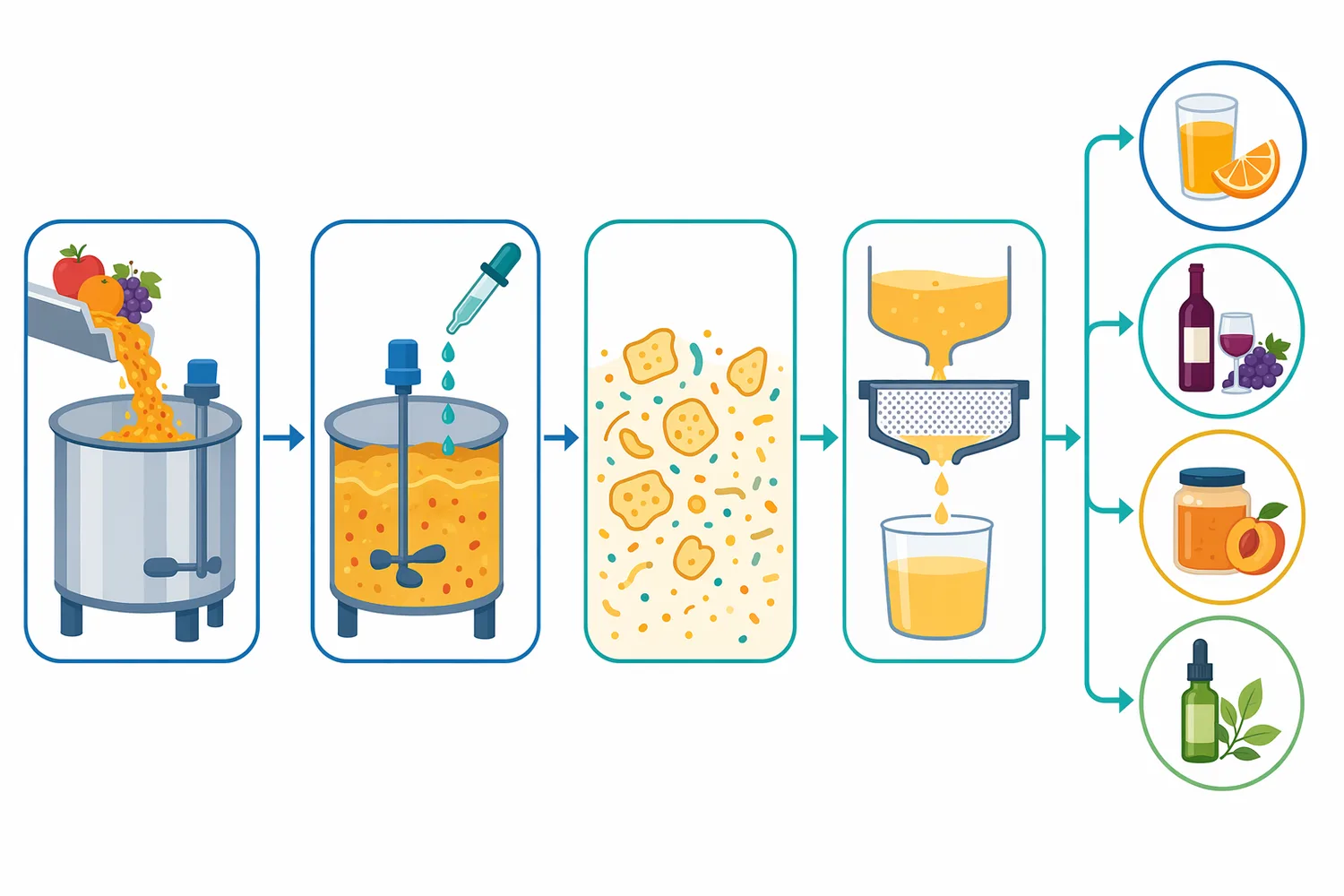
Enzymes.bio supplies pectinase powder by the 1 kg unit through direct online ordering. In use, powdered pectinase is typically dispersed into a water-containing process such as mash, juice, pulp, slurry, or hydrated plant material so the enzyme can contact pectin and catalyze breakdown reactions.
The essential requirement is contact between the enzyme and hydrated pectin. Dry pectin locked inside intact plant tissue is not readily accessible; crushing, pulping, maceration, hydration, and mixing help expose pectin so the enzyme can work at the cell-wall and middle-lamella interface [2].
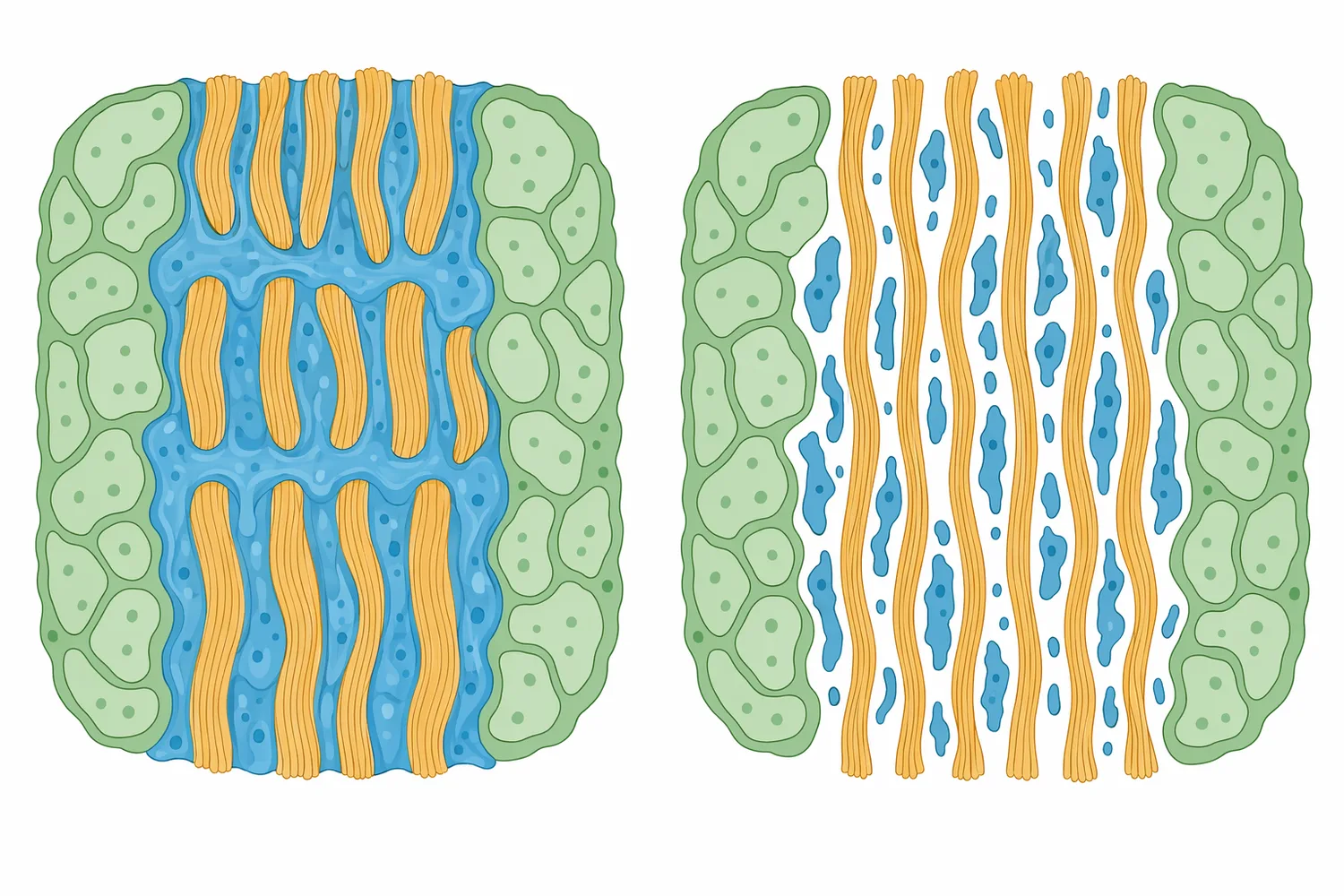
The first major change is molecular: long pectin chains become shorter or chemically modified. Shorter chains bind water less effectively and create less entanglement, so the liquid phase becomes less viscous. This is why a treated mash or juice often moves more readily through pumps, screens, presses, or filters [1].
The second change is structural: plant cells and fragments separate more easily because the pectin-rich “cement” between cells is weakened. This can increase the release of intracellular and intercellular liquid, along with soluble solids, pigments, flavors, and aroma-related compounds that were physically retained in the tissue [4].
The third change is colloidal: haze particles become less stabilized by pectin. Once the stabilizing network is reduced, fine particles can aggregate, settle, centrifuge, or filter more efficiently. This is the basis of pectinase-driven clarification in many fruit juices and wines [5].
The fourth change is process-level: operations that were limited by thick, gel-like behavior can become easier to manage. Pressing may drain faster, filtration may blind less quickly, and separation steps may require less time or mechanical stress, depending on the raw material and equipment [1].
The strongest evidence for pectinase is in fruit juice extraction, juice clarification, wine processing, and viscosity reduction. These applications are repeatedly described in reviews because the link between pectin structure and processing behavior is direct: degrade pectin, and the liquid becomes easier to extract, clarify, and filter [1].
The evidence is also strong for the biochemical mechanism. Pectinase enzymes are well characterized as pectin-degrading catalysts, and the main reaction classes—hydrolases, esterases, and lyases—are established in enzyme literature. This gives practical use a clear mechanistic basis rather than relying only on empirical observation [2].
Non-food applications such as textile retting, degumming, pulp processing, wastewater pretreatment, and plant by-product handling are credible but more process-specific. In these settings, performance depends on how much pectin is present, how accessible it is, and whether pectin is truly the limiting factor in separation or treatment [4].
Emerging research areas include pectinase-responsive systems, where pectin is deliberately used as a degradable barrier or coating that can be broken down by pectinase. These are specialized formulation concepts and should be distinguished from the routine use of bulk pectinase enzyme in juice, wine, fiber, and plant-material processing [3].
Pectinase works best when the process problem is pectin-driven. If a juice is hazy because pectin is stabilizing suspended particles, pectinase can help. If a mash is thick because pectin is binding water, pectinase can reduce viscosity. If plant tissue is holding juice because pectin-rich cell walls remain intact, pectinase can support release [1].
Pectinase is not a universal clarifier for every type of haze or a universal extraction aid for every plant material. Protein haze, starch haze, microbial contamination, insoluble mineral particles, emulsified oils, or heat-set gels may require different process controls. The enzyme’s strength is its specificity: it targets pectic substances [2].
Temperature and pH still matter because pectinase is a protein catalyst. Mild warming may improve reaction rate up to the enzyme’s useful range, but excessive heat can unfold the protein. Likewise, extreme pH can disrupt the active site or substrate charge interactions needed for catalysis [3].
Contact time also matters. Pectinase reactions are not purely instantaneous; the enzyme must diffuse into the material, bind pectin, catalyze cleavage or modification, release products, and repeat. More accessible substrates respond faster than intact or poorly mixed materials because the active site can encounter more pectin molecules [4].
Enzymes.bio supplies pectinase powder for buyers who need a practical enzyme product for pectin-rich plant-material processing. The product is sold directly online by the 1 kg unit: add the product to the cart, pay online, and the order is processed and shipped.
A Certificate of Analysis and Safety Data Sheet are provided with the order. Enzymes.bio is a supplier, not a manufacturer or testing laboratory, and this article is intended to give clear scientific and application context for understanding what pectinase does.
For fruit processors, beverage producers, botanical processors, and plant-material users, pectinase offers a targeted way to address pectin-related viscosity, haze, extraction, and separation challenges. Its value comes from a specific mechanism: it breaks or modifies the pectin network that holds water, stabilizes cloud, and binds plant cells together [1].
Pectinase is a well-established enzyme family for degrading pectin in fruits, vegetables, fibers, and other plant-derived materials. In practical terms, it helps convert pectin-rich materials from thick, cloudy, gel-like, or hard-to-press systems into materials that are easier to extract, clarify, filter, and separate [2].
The strongest applications are fruit juice clarification, juice extraction, wine and cider processing, pectin-rich pulp treatment, and plant-material processing where pectin is a major physical barrier. Enzymes.bio supplies pectinase powder online in 1 kg units, with ordering and payment completed directly through the website.
Sold by the 1 kg unit, in stock and ready to ship. Order directly on our store — pay online and we process your order. A Certificate of Analysis and Safety Data Sheet are included with every order.
Buy Pectinase →Numbered in order of first citation. Open-access sources, each verified reachable at publication; citation numbers in the text link here.