
Phospholipase is an enzyme family that modifies phospholipids—the lipid molecules that help form gums, membranes, lecithin structures, and oil-water interfaces. In practical processing, it is used to change how phospholipid-rich materials separate, emulsify, disperse, or behave in foods, oils, feeds, and biotechnology workflows. Enzymes.bio supplies phospholipase directly online in 1 kg units; orders are paid for online, processed, and shipped with a Certificate of Analysis and Safety Data Sheet.
Phospholipase works by cleaving specific bonds in phospholipids. That molecular cut can convert an interface-active phospholipid into products such as lysophospholipids, free fatty acids, diacylglycerol, or phosphatidic acid, depending on enzyme type. The reason this matters industrially is that small changes in phospholipid structure can produce large changes in gum hydration, emulsion strength, membrane behavior, viscosity, and separation.
Phospholipids are not minor background components in many raw materials. They are surface-active molecules: one part of the molecule interacts with water, while the fatty-acid tails prefer oil-like environments. This dual nature lets phospholipids accumulate at oil-water interfaces, stabilize emulsions, form membrane-like structures, and contribute to sticky gum phases in crude oils and lecithin-rich streams.
That same useful interface behavior can become a processing problem. In crude vegetable oils, phospholipids can contribute to gums and refining difficulty. In egg yolk, dairy, and lecithin systems, they strongly influence emulsion stability, viscosity, and heat behavior. In biological or fermentation-derived streams, they may be part of membrane fragments or lipid assemblies that affect downstream handling. Reviews of oils and fats emphasize that lipid streams are chemically diverse, and process value often depends on controlling the behavior of minor lipid components as well as the main triglyceride fraction [1].
Phospholipase is valuable because it does not simply “remove fat.” It targets phospholipid structures. By cutting one bond in the molecule, it can change the balance between oil-loving and water-loving behavior. In real processing terms, that can mean a gum becomes easier to hydrate, an emulsion becomes more robust, a lecithin becomes more dispersible, or a lipid-rich by-product becomes easier to upgrade into a functional ingredient.
This fits a wider industrial trend: enzymes are used where controlled biochemical conversion can replace harsher or less selective processing steps. In industrial biotechnology, enzyme-catalyzed lipid transformations are valued because they operate through defined molecular mechanisms rather than broad chemical attack [2]. Phospholipase belongs in that same practical category: it is a process tool for targeted lipid modification.
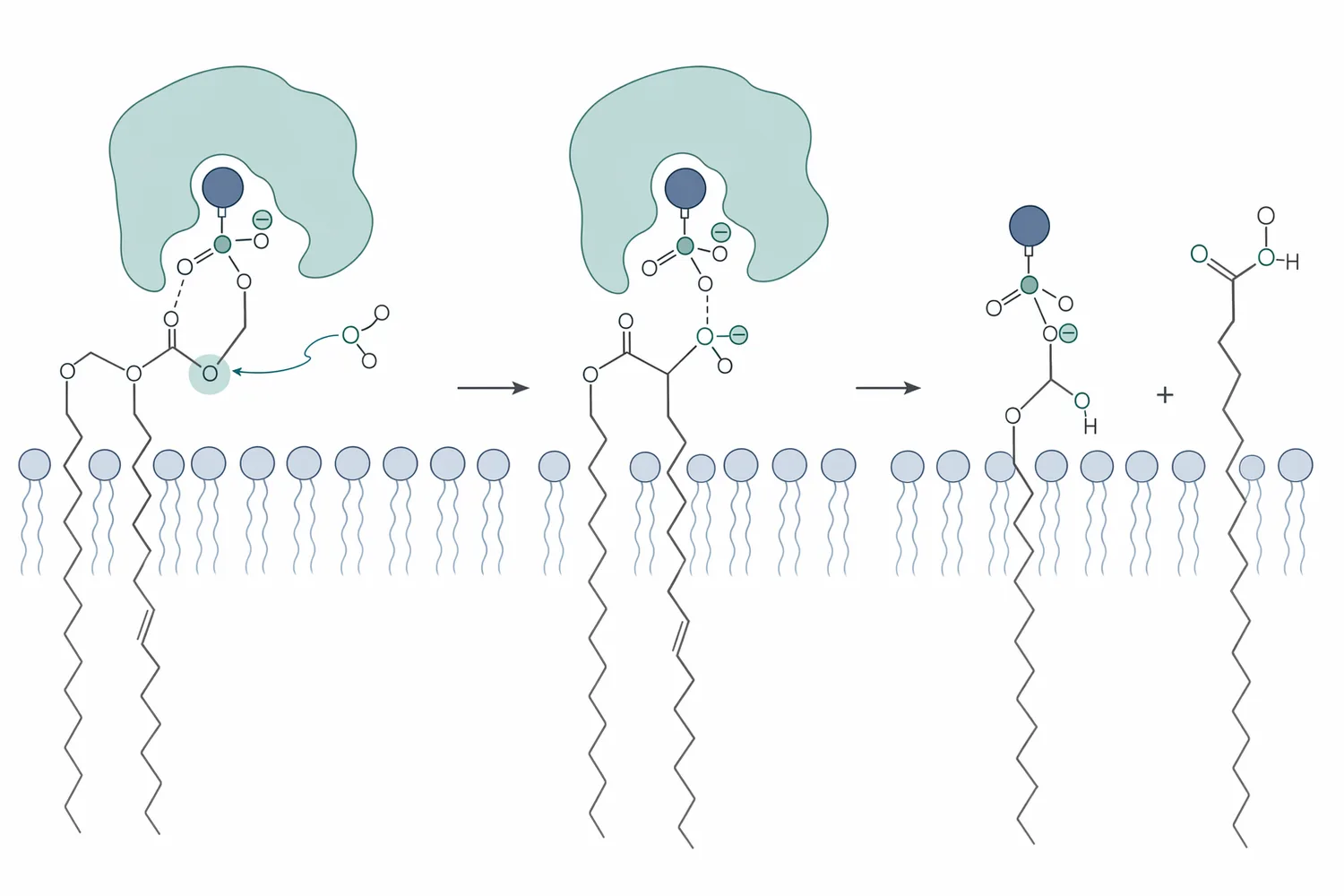
A typical glycerophospholipid has a glycerol backbone, two fatty-acid chains, a phosphate group, and a polar head group such as choline, ethanolamine, serine, or inositol. The two fatty-acid chains act like hydrophobic “tails,” while the phosphate-containing head interacts with water. This is why phospholipids sit at interfaces and why changing them changes processing behavior so strongly.
Different phospholipase types cut different positions on that molecule. The term phospholipase therefore describes a functional family rather than one identical enzyme. Search terms such as phospholipase a, phospholipase a1, phospholipase a2, phospholipase c, and phospholipase d refer to related enzymes with different bond targets and different reaction products.
| Phospholipase type | Main molecular action | Typical products | Processing relevance |
|---|---|---|---|
| Phospholipase A1 | Removes the fatty-acid chain at the first acyl position | Free fatty acid + lysophospholipid | Changes emulsifier shape and polarity; useful conceptually in lecithin and interface modification |
| Phospholipase A2 / PLA2 | Removes the fatty-acid chain at the second acyl position | Free fatty acid + lysophospholipid | Strongly associated with membrane and interface remodeling; widely studied in biological systems |
| Phospholipase C | Cuts between glycerol and phosphate-containing head region | Diacylglycerol + phosphorylated head-group product | Important in the phospholipase C pathway in biology; conceptually relevant where head-group cleavage changes lipid polarity |
| Phospholipase D | Cuts the head-group side of the phosphate linkage | Phosphatidic acid + released head group | Alters charge, polarity, and membrane/emulsion behavior |
The most important practical point is that a phospholipid after phospholipase treatment is not just “smaller.” It is physically different. A lysophospholipid has one fatty-acid tail instead of two, giving it a different molecular shape and different packing behavior at an interface. Diacylglycerol lacks the charged phosphate head and behaves more like a neutral lipid. Phosphatidic acid retains a phosphate group and can change charge and hydration behavior. These structural changes are why phospholipase can influence separation and emulsification even when the total lipid content changes only modestly.
Many phospholipase reactions occur where lipids and water meet. That matters because the enzyme does not usually work on a perfectly dissolved phospholipid molecule floating alone in water. It encounters phospholipids in gum particles, micelles, lecithin aggregates, emulsion droplets, membrane fragments, or hydrated surfaces. The efficiency of the reaction is therefore closely tied to whether the substrate is accessible at that interface.
Mechanistically, phospholipase action changes how phospholipid molecules pack together. When an A-type phospholipase removes one fatty-acid chain, the resulting lysophospholipid has a different geometry: one hydrophobic tail rather than two. This can loosen membrane packing, change curvature, alter droplet-film strength, and shift the way the molecule distributes between oil and water. A study on miltefosine and phospholipase action describes membrane remodeling as a direct consequence of phospholipase-driven changes in membrane physical properties [3].
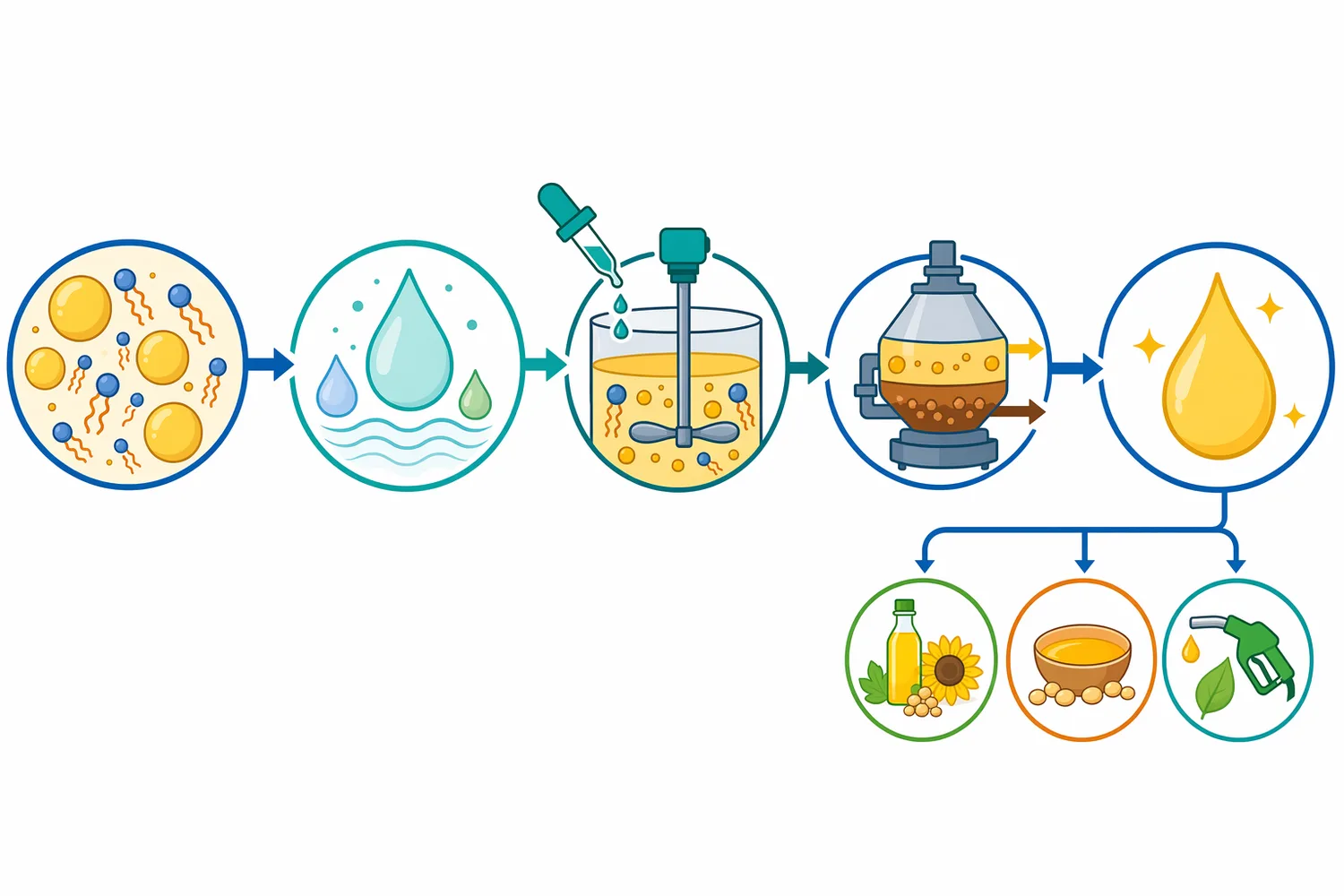
That remodeling is the bridge between biochemical mechanism and industrial outcome. In oil degumming, the relevant interface may be the boundary between oil and hydrated gum. In mayonnaise-type emulsions, it may be the film around oil droplets. In dairy systems, it may be the milk fat globule membrane. In lecithin modification, it may be the phospholipid aggregate itself. In each case, phospholipase changes the molecules that determine whether the system separates, stabilizes, thickens, disperses, or resists heat.
Phospholipase A2, often abbreviated PLA2, is one of the most studied phospholipase groups. In industrial discussions, the key idea is its acyl-chain cleavage function: phospholipase A2 converts phospholipids into lysophospholipids and free fatty acids. In biological literature, PLA2 appears in many different forms, including calcium-independent phospholipase A2 systems, secretory phospholipase A2, and venom-derived enzymes.
The breadth of PLA2 research is useful because it shows how sensitive phospholipase behavior can be to molecular context. For example, calcium-independent phospholipase A2 has been studied in insulin secretion mechanisms in rat islets, while secretory phospholipase A2 has been studied for effects that may involve targets beyond simple phospholipid hydrolysis [4]. This does not make an industrial phospholipase a medical product; rather, it demonstrates that enzymes within the PLA2 category can have distinct biological and physicochemical behavior depending on structure and environment.
Research on phospholipase A2 inhibitors also reinforces the same point. Studies of pancreatic PLA2 inhibition by uteroglobin and antiflammin peptides, alpha-type PLA2 inhibitors from snake blood, and resveratrol interactions with PLA2 all show that PLA2 activity can be modulated by molecular binding and substrate access [5]. In a processing context, this supports a practical interpretation: phospholipase performance is governed by enzyme structure, substrate presentation, and the surrounding lipid-water system.
Terms such as phospholipase a2 inhibitor, phospholipase a2 inhibitors, and inhibition of phospholipase a2 usually appear in biomedical or toxin-related literature. They are not routine purchasing terms for an industrial enzyme used in oil, lecithin, or food processing. However, they help explain why phospholipase is treated as a precise biochemical tool rather than a generic additive.
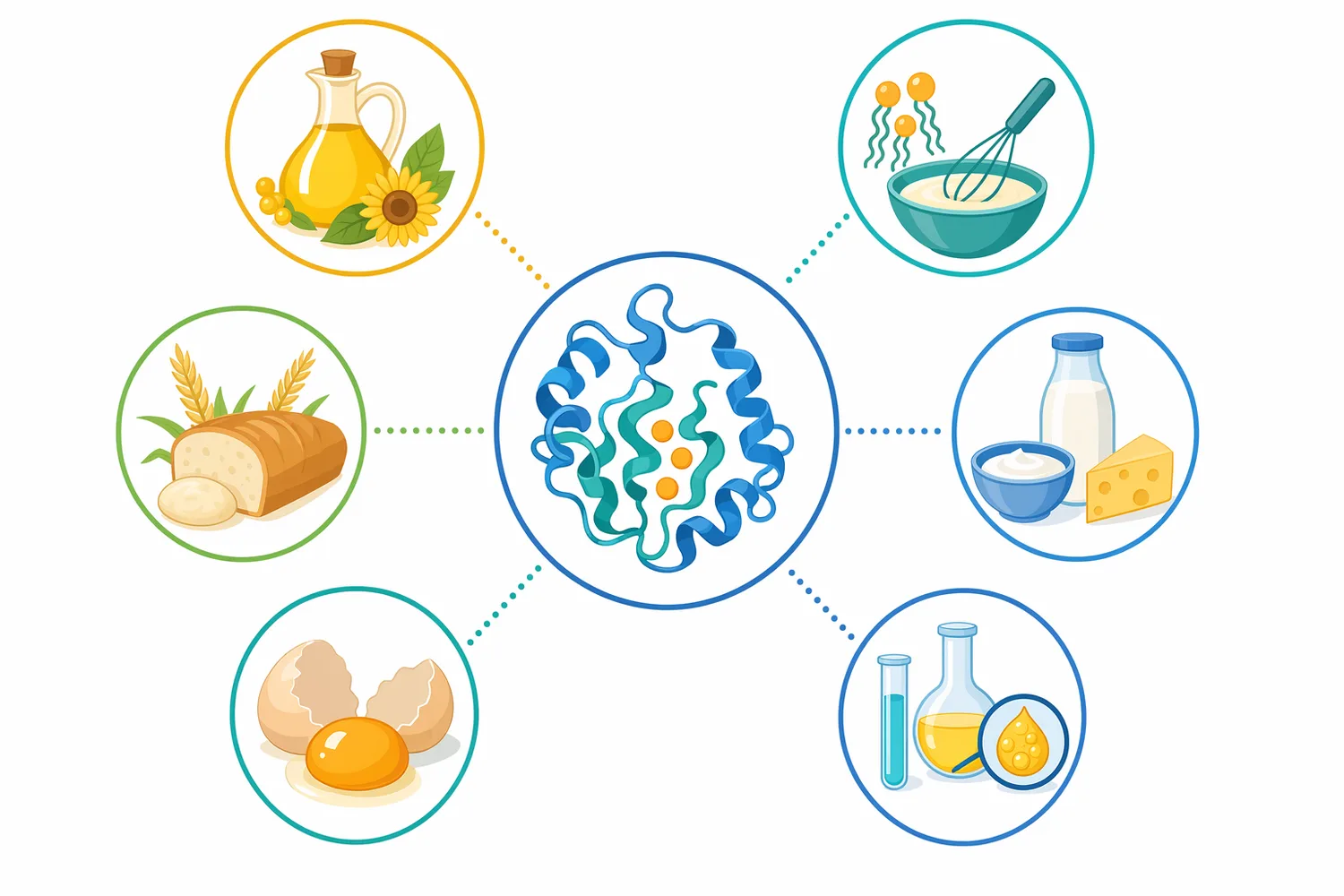
Customers searching “what is phospholipase c” or “what does phospholipase c do” often encounter cell-signaling literature. In biology, the phospholipase C pathway is associated with cleavage of phosphoinositides and formation of signaling molecules such as diacylglycerol. That is why phospholipase C appears frequently in research on cellular regulation rather than only in industrial processing.
The industrial lesson is simpler: phospholipase C changes the head-group region of certain phospholipids, creating a lipid product with very different polarity from the starting molecule. Research into phosphatidylinositol-specific phospholipase C inhibitors shows the importance of the inositol-containing head-group region in PLC recognition and inhibition [6]. Where PLC-type activity is relevant, the practical effect comes from changing the phospholipid’s head-group chemistry, not merely from reducing total fat.
This distinction matters because phospholipase C should not be confused with phospholipase A2. PLA2 removes a fatty-acid chain and forms a lysophospholipid. PLC-type activity changes the phosphate-head-group side of the molecule and can generate diacylglycerol-like lipid products. Both are phospholipases, but they do not create the same interface behavior or downstream processing effect.
Crude vegetable oils contain phospholipid-rich gums that can complicate refining, filtration, and downstream oil quality. In enzymatic degumming, phospholipase is used to modify these phospholipids so the gum phase behaves differently during hydration and separation. The molecular target is not the main triglyceride oil fraction; it is the phospholipid fraction that controls gum formation and interfacial behavior.
A-type phospholipase reactions are especially relevant conceptually because converting phospholipids into lysophospholipids and free fatty acids changes polarity and hydration behavior. The goal is typically better control of the gum phase and easier separation in the process sequence. Since fuels, foods, and oleochemical applications all depend on controlled oil and fat processing, enzyme-based modification of minor lipid fractions fits naturally into broader oil-refining and lipid-upgrading strategies [1].
Lecithin is rich in phospholipids and is already valued as a natural emulsifier. Phospholipase treatment can alter lecithin performance by changing the structure of those phospholipids. When a two-tailed phospholipid becomes a one-tailed lysophospholipid, its packing behavior, water dispersibility, and interface activity can shift.
That is why enzyme-modified lecithin can behave differently from native lecithin in emulsions, powders, dispersions, and lipid-rich formulations. The mechanism is concrete: phospholipase changes the molecular shape and polarity of the emulsifier itself. This is not the same as simply blending in another surfactant; the native phospholipid profile is converted into a modified lipid profile through enzymatic hydrolysis.
Egg yolk contains phospholipids that help stabilize oil-in-water emulsions. In mayonnaise-style systems, dressings, sauces, and egg-based ingredients, the interfacial film around oil droplets strongly influences viscosity, creaming resistance, texture, and heat behavior. Phospholipase can modify yolk phospholipids so the droplet interface behaves differently.
The practical mechanism is again based on interface remodeling. A lysophospholipid-rich interface may pack differently around oil droplets than the original phospholipid mixture. Depending on formulation, that can affect emulsion robustness, mouthfeel, and stability. The broader scientific literature supports the principle that phospholipase action can remodel lipid membranes and alter physical properties, which is the same class of structural change involved in emulsion films [3].
In bakery systems, phospholipids influence dough handling, gas retention, crumb texture, and fat distribution. Phospholipase can act on naturally present or added phospholipids to generate molecules with different emulsifying behavior. The outcome is formulation-dependent, but the biochemical idea is straightforward: modify the lipid molecules that help organize air cells, starch-gluten interactions, and fat-water interfaces.
This is best understood as controlled lipid functionality, not as a universal dough improver. In some systems, phospholipase-modified lipids can support improved dough tolerance or finished texture. In others, the effect may be limited by substrate availability or processing sequence. The enzyme’s value comes from targeted transformation of the phospholipid fraction rather than from bulk protein or starch modification.
Milk and dairy ingredients contain phospholipids in structures such as the milk fat globule membrane. These membrane phospholipids influence fat dispersion, emulsion behavior, and interactions with proteins and minerals. Phospholipase can modify these structures by changing the phospholipids that stabilize the fat-water interface.
In dairy applications, the effect is usually more complex than in a simple oil-water model because pH change, heat history, salt, proteins, starter cultures, and fat structure all interact. However, the underlying mechanism remains consistent: phospholipase changes membrane and interface lipids. Research showing that phospholipase action can alter membrane physical properties provides a useful mechanistic basis for understanding why dairy emulsions may respond to phospholipid modification [3].
Phospholipid-rich side streams may appear in oil processing, egg processing, fermentation, cell-derived materials, and other food or biotechnology operations. When a side stream contains lecithin, gums, membranes, or lipid particles, phospholipase may help convert low-value material into a more functional fraction. This aligns with the broader biorefinery idea of upgrading unavoidable food residues rather than treating them only as waste [7].
The mechanism is particularly suitable for side-stream thinking because phospholipids often determine handling difficulty at low concentration. A small amount of surface-active material can stabilize an unwanted emulsion, hold water in a gum, or make separation less efficient. Enzymatic conversion of that fraction can therefore change the behavior of the whole stream without needing to transform every component.
Phospholipase is also relevant wherever membranes, liposomes, lipid nanoparticles, or cell-derived materials are present. These systems are built from phospholipid assemblies, so controlled cleavage can be used to alter membrane integrity, release lipid-derived products, or study lipid organization. The same concepts apply: substrate accessibility, interface structure, and enzyme type determine the result.
The strong research interest in PLA2, PLC, and phospholipase inhibition reflects how important phospholipid conversion is in membrane biology. For example, studies on resveratrol interactions with PLA2 use molecular modeling to understand how binding can influence enzyme action [8]. Industrial users do not need to treat those biomedical findings as application claims, but they do show that phospholipase action is specific, structurally governed, and sensitive to the lipid environment.
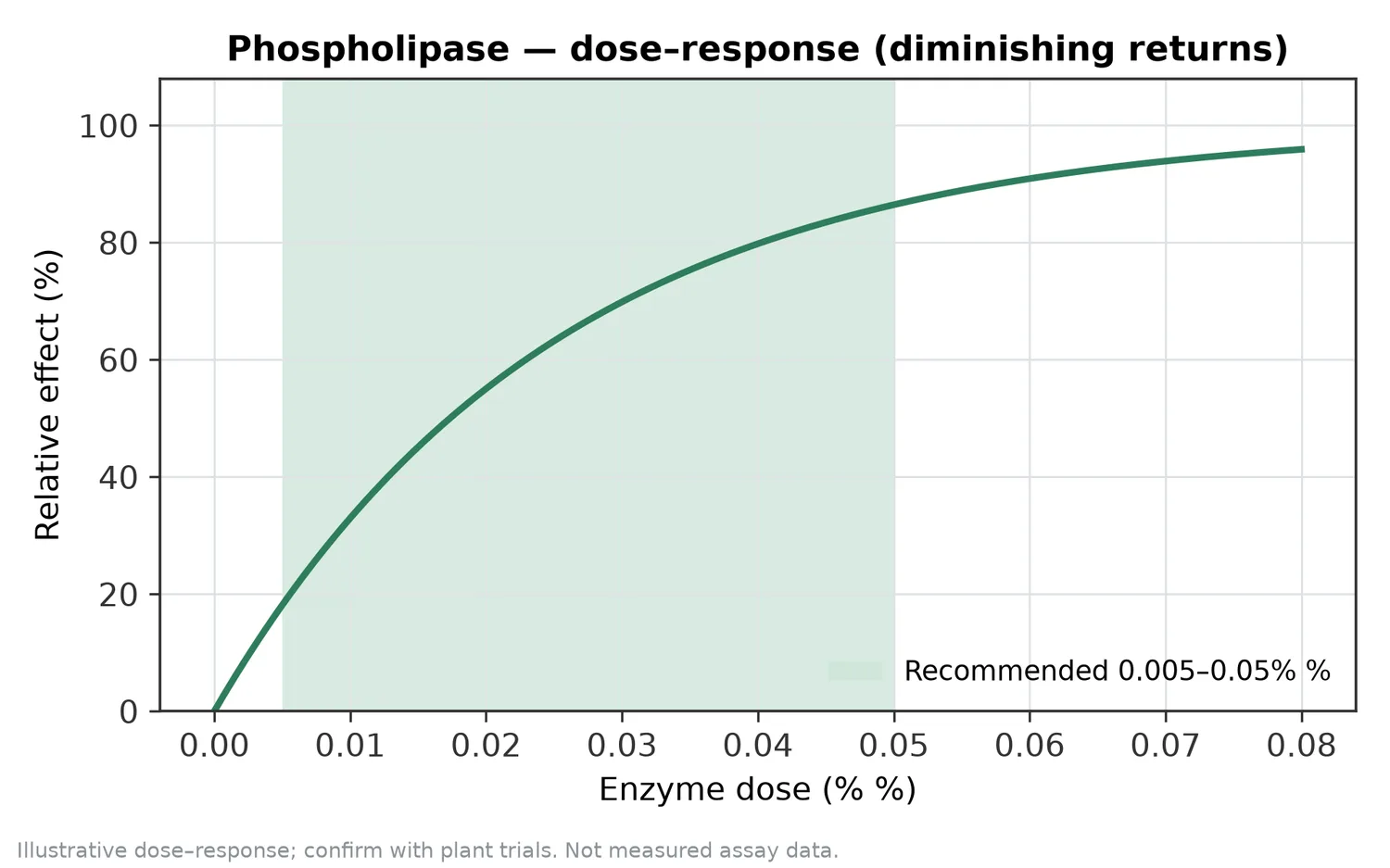
Phospholipase performance depends on contact between the enzyme and the phospholipid substrate. Because the substrate is often in an oil-water interface, a gum particle, an emulsion droplet, or a membrane fragment, the reaction is affected by dispersion and mixing. If phospholipids are not accessible, the enzyme cannot efficiently cut them even if they are present in the material.
Water availability is also important. Hydrolytic phospholipase reactions need a hydrated environment or interface where the enzyme can function and the bond can be cleaved. In oil systems, this does not necessarily mean the whole process becomes water-based; it means the phospholipid fraction must be presented in a form that permits enzyme action at the relevant interface.
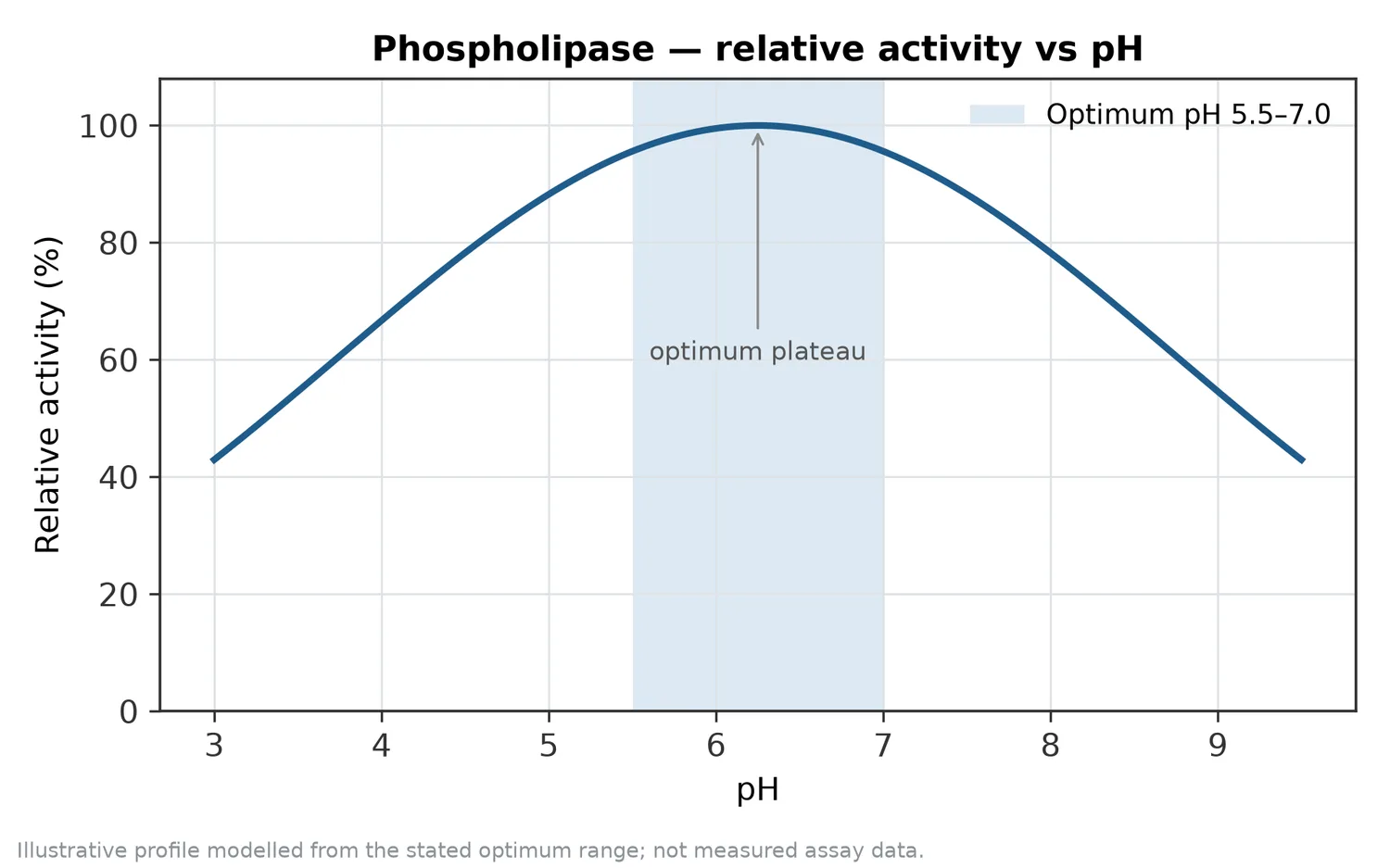
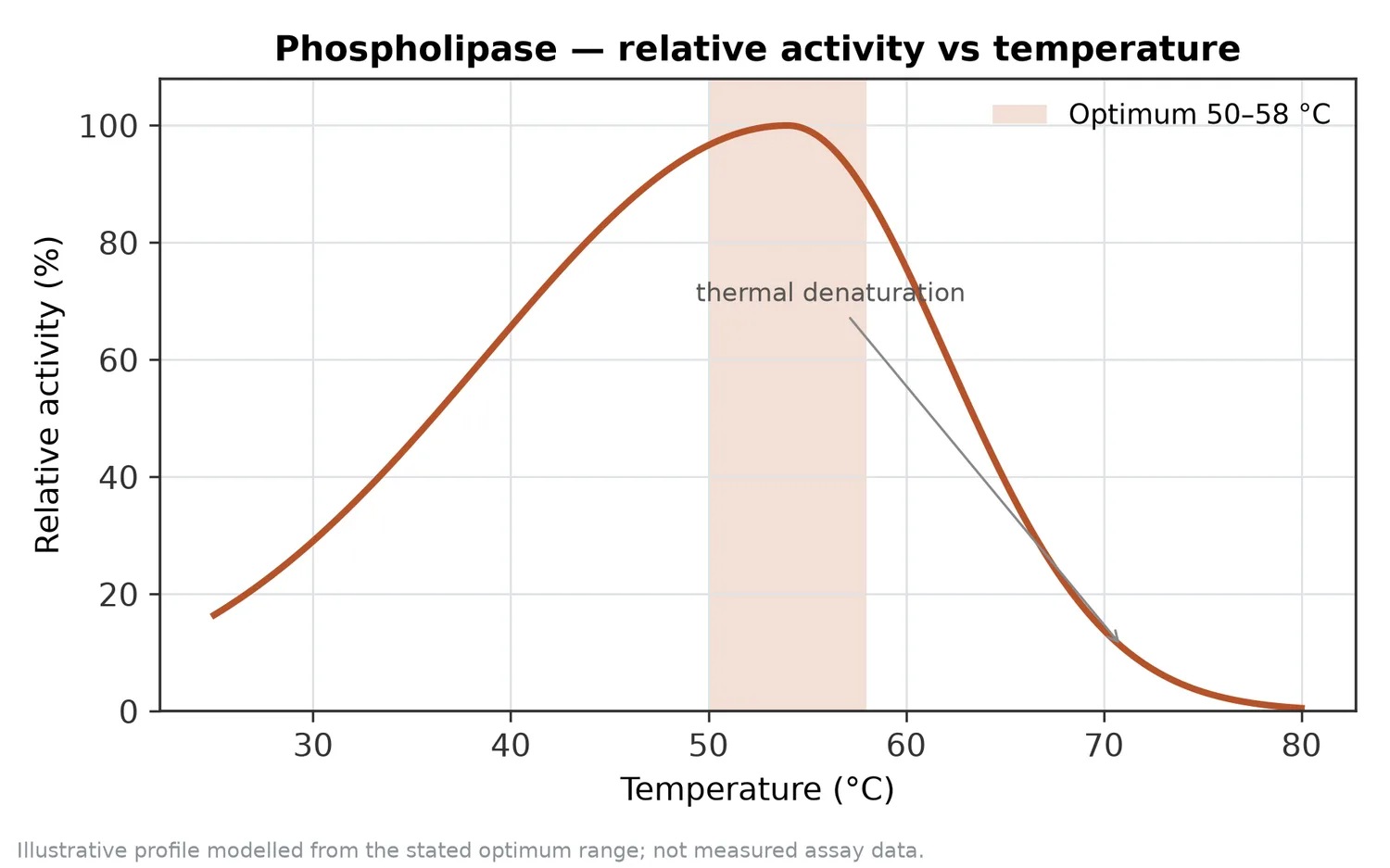
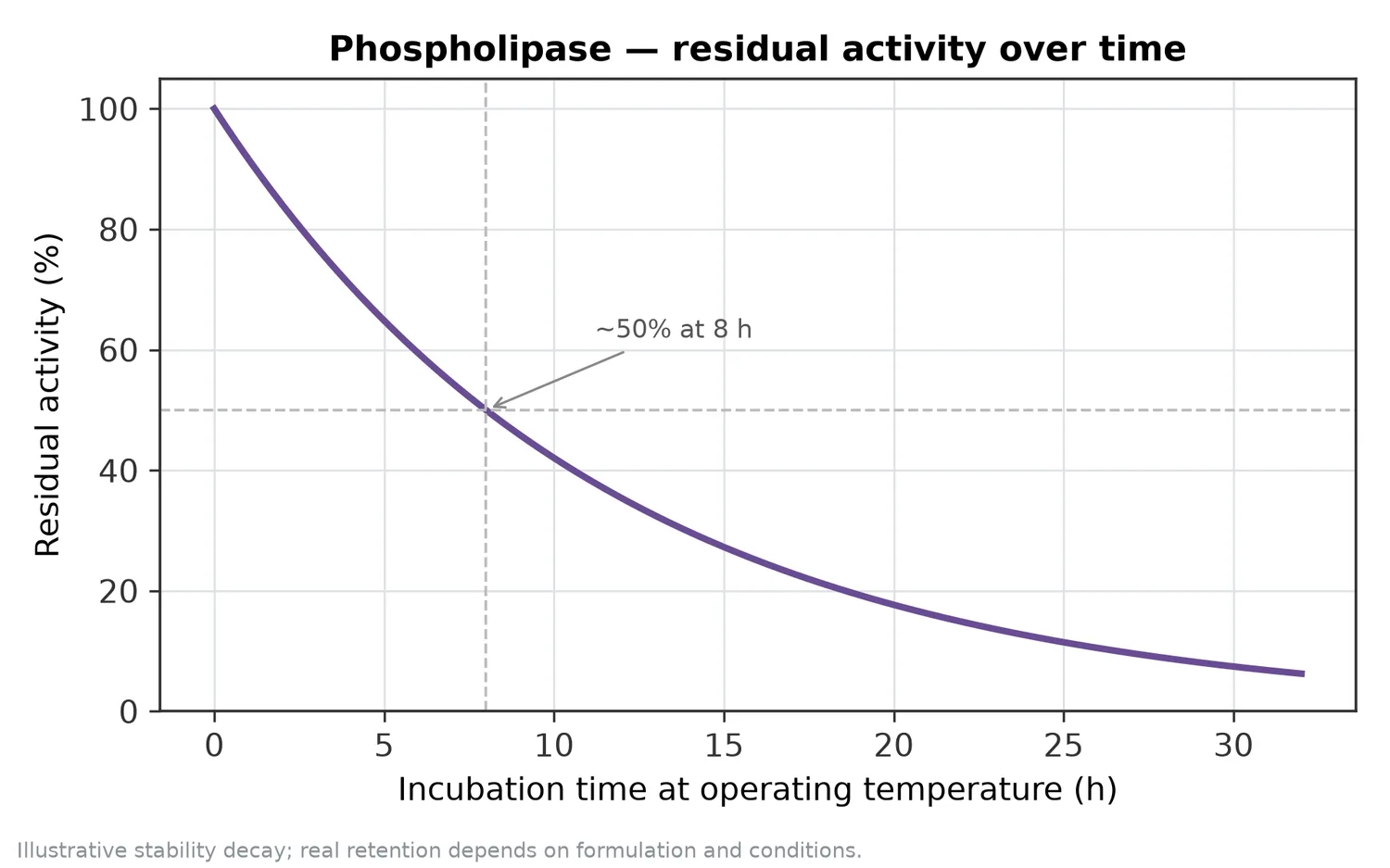
Temperature affects both lipid mobility and enzyme stability. Warmer conditions can make fats more fluid and improve substrate access, but excessive heat can reduce enzyme activity. pH affects enzyme structure, substrate charge, and the ionization state of phospholipid head groups. These are general biochemical principles rather than universal fixed settings, because phospholipase types and substrates differ.
Time controls the degree of conversion. A short exposure may partially modify the phospholipid profile, while longer exposure can drive further hydrolysis until the accessible substrate or active enzyme becomes limiting. Downstream heating, separation, refining, or formulation steps then determine how the modified lipids behave in the finished process.
Some phospholipase-related search terms point to medical diagnostics or disease research rather than industrial processing. Phospholipase A2 receptor antibody and phospholipase A2 receptor are associated with clinical immunology contexts, not with food, oil, or lecithin enzyme use. Similarly, lipoprotein-associated phospholipase A2, lipoprotein phospholipase A2, and lipoprotein associated phospholipase A2 refer to enzyme activity associated with lipoproteins in biological systems, not to an industrial phospholipase product.
This distinction helps avoid confusion. Industrial phospholipase is purchased and used as a processing enzyme for phospholipid-containing materials. Clinical PLA2-related terms usually describe biomarkers, receptors, antibodies, toxins, or drug targets. Research on PLA2 inhibitors, including natural inhibitors and modeled small-molecule interactions, is valuable for understanding enzyme specificity but should not be interpreted as a food-processing claim [9].
The same caution applies to venom literature. Snake and insect venoms may contain phospholipase activities, especially PLA2-type enzymes, but venom phospholipases are studied for toxicology, pharmacology, and inhibitor discovery. Industrial phospholipase use is about controlled processing of raw materials, not venom activity or clinical intervention.
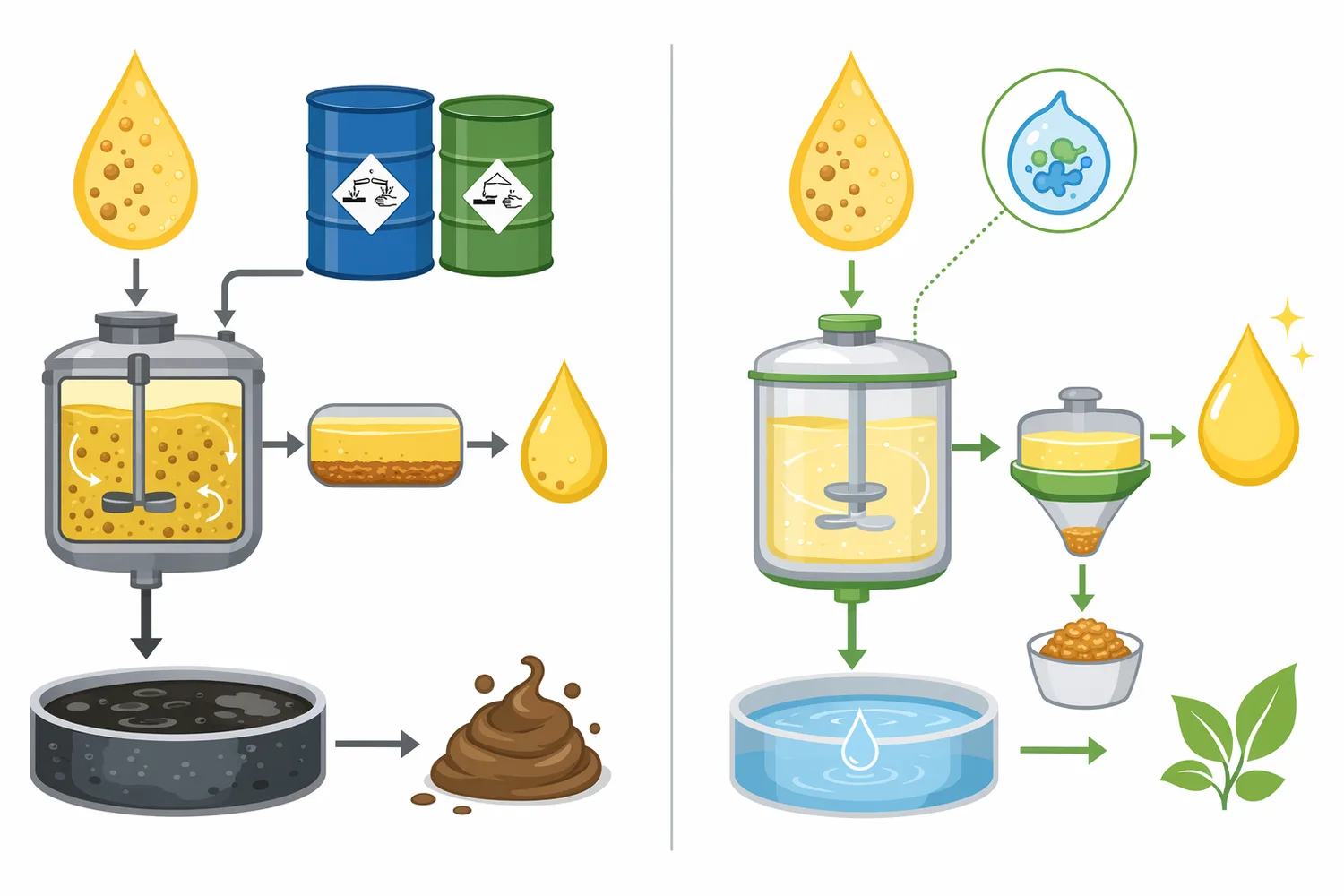
Enzymes are often adopted because they support more selective processing. In textile processing, for example, enzyme-based approaches are discussed as part of environmentally oriented process improvement because enzymes can reduce reliance on harsh treatments under appropriate conditions [10]. The same logic helps explain interest in phospholipase for lipid-containing materials: the enzyme targets a defined bond in a defined substrate class.
That does not mean every phospholipase application automatically becomes “green” or lower-impact. The full process still depends on water use, energy use, raw material quality, yield, downstream separation, and waste handling. However, selective phospholipid modification can support more controlled processing than non-specific chemical treatment, especially when the problem is caused by a small but influential phospholipid fraction.
Enzymes.bio supplies phospholipase as a directly purchased online product in 1 kg units. The buyer places the order online, completes payment online, and the order is then processed and shipped. A Certificate of Analysis and Safety Data Sheet are provided with the order documentation.
As with enzyme products generally, phospholipase should be handled to avoid unnecessary inhalation, skin contact, or eye contact. Enzymes are proteins and should be used with appropriate workplace controls. The Safety Data Sheet supplied with the order provides the handling information for the product received.
Phospholipase is useful because phospholipids have an outsized effect on oils, emulsions, gums, membranes, lecithin systems, and lipid-rich side streams. By cutting specific phospholipid bonds, phospholipase changes molecular shape, polarity, charge, and packing behavior. Those molecular changes can translate into more manageable degumming, altered lecithin functionality, modified emulsion behavior, and improved handling of phospholipid-containing materials.
The key is to view phospholipase as a targeted lipid-modification enzyme, not as a general-purpose fat remover. Phospholipase A2 / PLA2, phospholipase A1, phospholipase C, and phospholipase D act differently because they cut different parts of the phospholipid molecule. Enzymes.bio makes phospholipase available for straightforward online purchase by the 1 kg unit, with order documentation supplied for the shipped product.
Sold by the 1 kg unit, in stock and ready to ship. Order directly on our store — pay online and we process your order. A Certificate of Analysis and Safety Data Sheet are included with every order.
Buy Phospholipase →Numbered in order of first citation. Open-access sources, each verified reachable at publication; citation numbers in the text link here.