
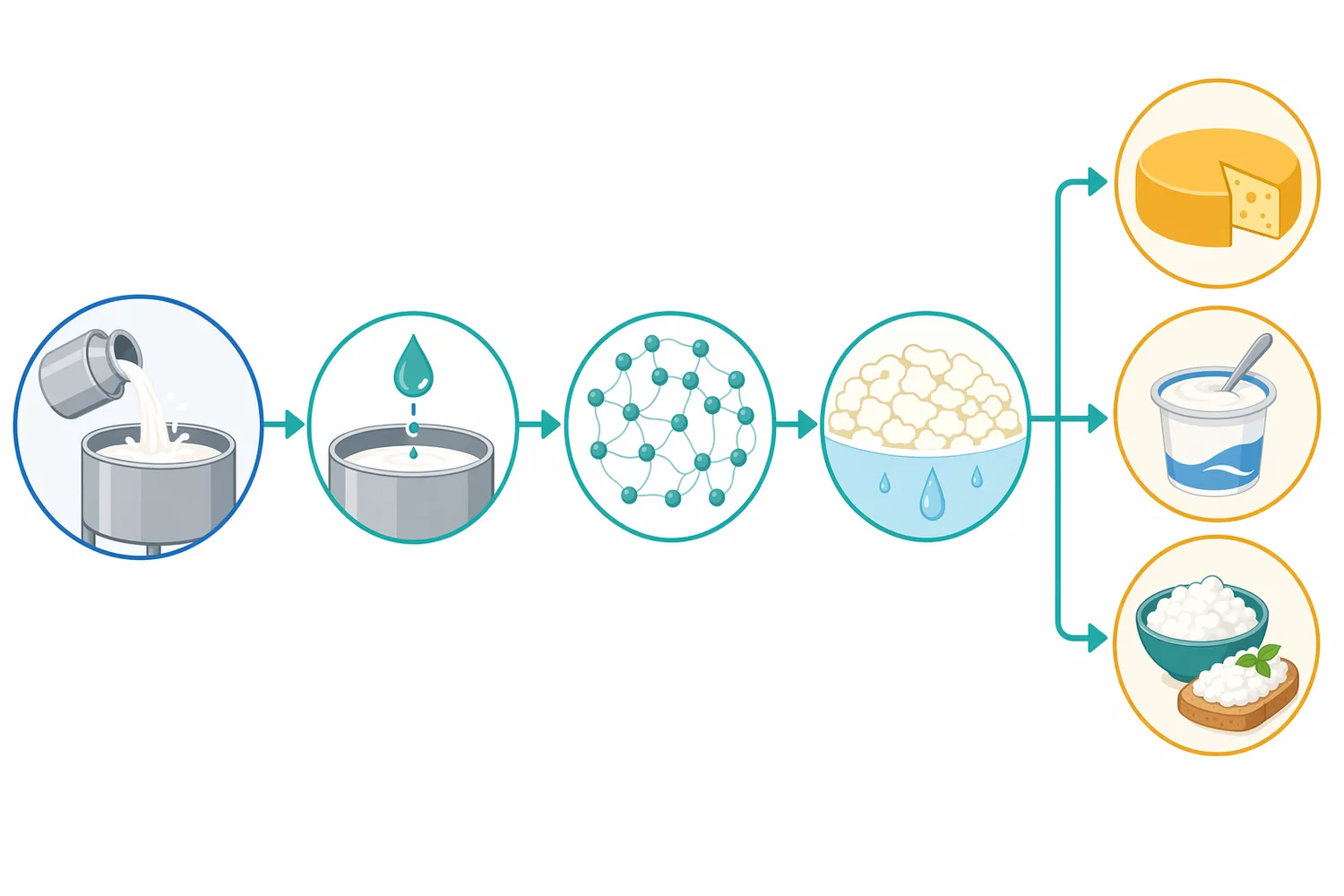
Direct answer: Chymosin is the milk-clotting enzyme in rennet that converts fluid milk into curd by specifically cleaving κ-casein, the stabilizing protein on the outside of casein micelles. Once κ-casein is cut, the micelles can aggregate into a gel network, giving cheesemakers a controlled route to curd formation, whey separation, and texture development in cheese production [1].
Enzymes.bio supplies Promote Cheese Yogurt Coagulation High Purity Rennet Chymosin Enzyme Chymosin as a direct online 1 kg purchase. After online payment, the order is processed and shipped, and a Certificate of Analysis and Safety Data Sheet are provided with the order.
Chymosin is an aspartic protease best known as the principal milk-clotting enzyme of rennet. In dairy processing, its value comes from selectivity: rather than broadly digesting milk proteins, chymosin targets κ-casein, a casein fraction that stabilizes milk’s casein micelles and keeps them dispersed in the liquid phase [1].
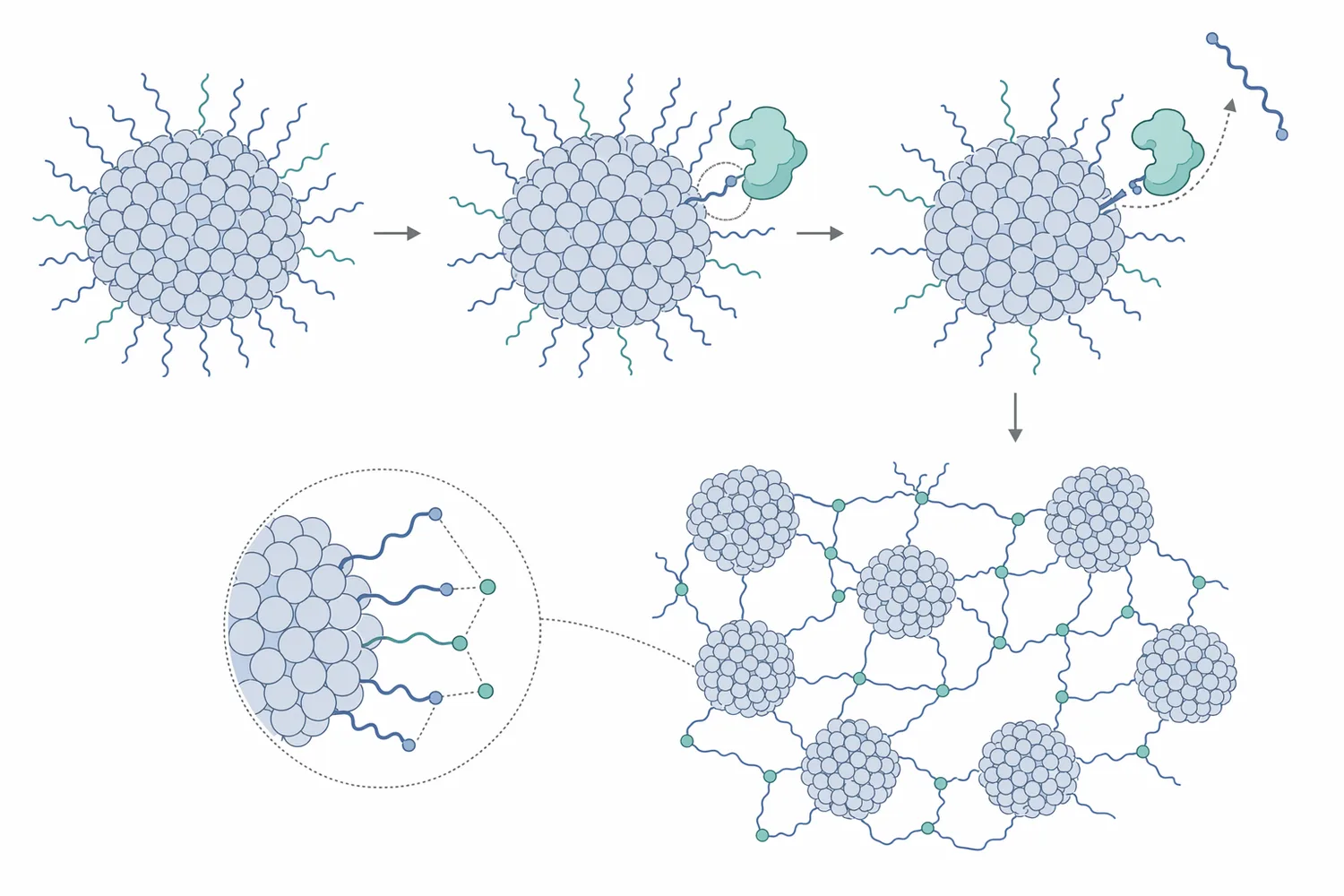
Milk is not simply a solution of proteins. Most of its casein exists as micelles: colloidal particles containing αs1-, αs2-, β-, and κ-caseins, together with calcium phosphate. κ-casein is concentrated near the micelle surface, where its hydrophilic outer region helps prevent the micelles from sticking together under normal milk conditions [2].
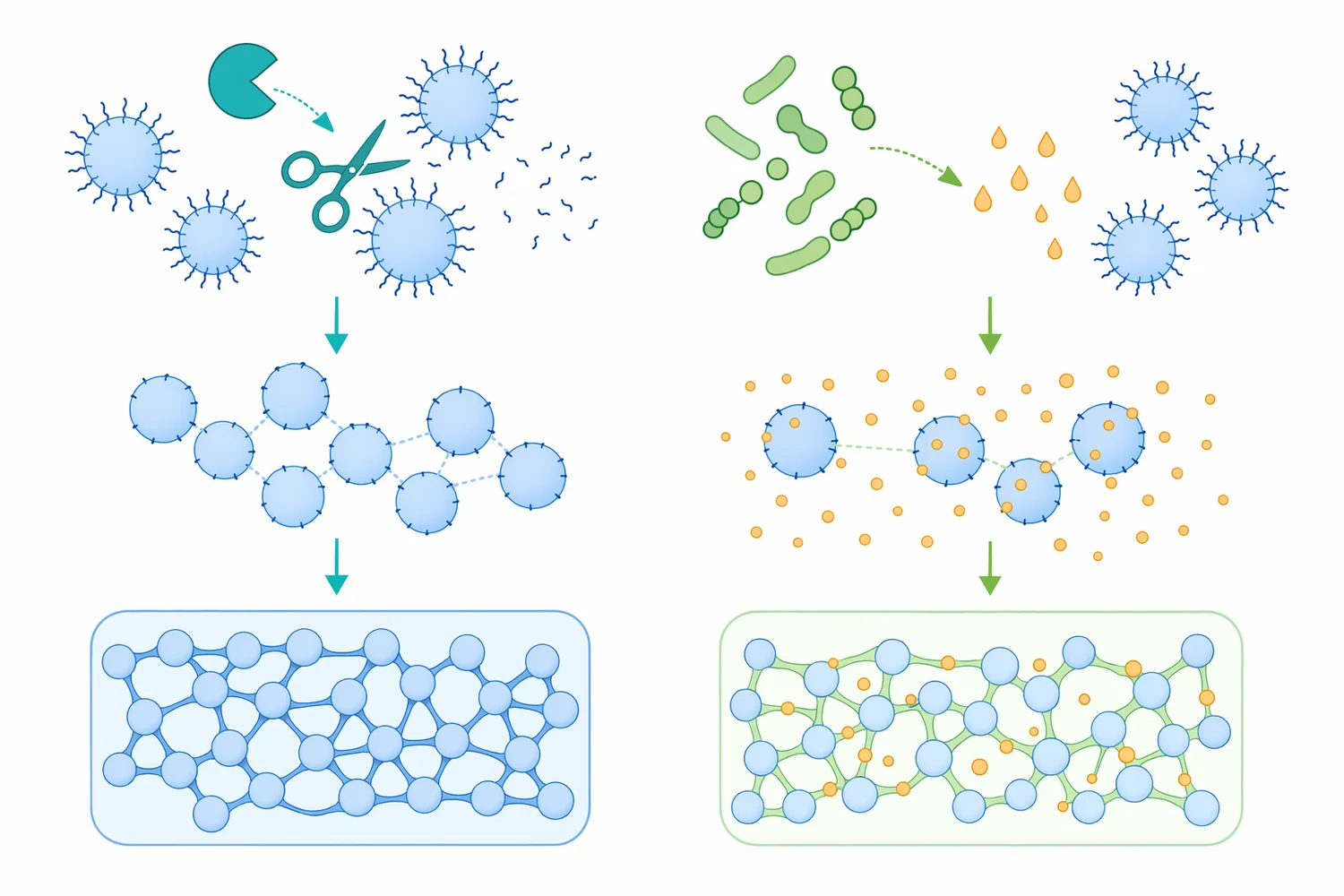
Chymosin changes that stability in a precise way. It cleaves κ-casein at the chymosin-sensitive bond between phenylalanine 105 and methionine 106, producing para-κ-casein that remains associated with the micelle and a soluble glycomacropeptide fraction that diffuses into the whey phase. This enzymatic cut removes much of the steric and electrostatic protection that kept the micelles apart [1].
After sufficient κ-casein cleavage, the process shifts from enzyme reaction to physical aggregation. Destabilized casein micelles come together, calcium-mediated interactions become more important, and the milk forms a three-dimensional gel. That gel is the curd structure that can then be cut, stirred, cooked, drained, pressed, salted, ripened, or packaged depending on the cheese style [3].
The most important distinction between chymosin and many other proteases is the balance between milk-clotting action and general proteolysis. A suitable cheese coagulant must destabilize κ-casein efficiently, but it should not excessively hydrolyze the rest of the casein network before or during cheesemaking. Too much nonspecific proteolysis can weaken curd, increase protein loss into whey, and contribute to bitter or otherwise unbalanced flavor during ripening [1].
Comparative dairy studies continue to use chymosin as a reference point when evaluating other coagulants. Recent work comparing animal rennet, fermentation-produced chymosin, and microbial coagulants in bovine milk focuses on coagulation properties because different enzyme systems can change gelation behavior, curd firmness, and processing performance even when all are broadly described as milk coagulants [4].
Fermentation-produced chymosin is also widely studied because it provides the same key enzymatic function without relying on animal rennet extraction. Research on recombinant chymosins, including bovine, camel, moose, tree shrew, and other variants, consistently centers on the same practical question: how effectively and selectively the enzyme clots milk from different species and under different dairy conditions [5].
For cheese production, that selectivity is not an academic detail. Curd formation sets the foundation for moisture retention, whey drainage, fat entrapment, curd handling, and later ripening. If the coagulation step is inconsistent, downstream process controls have less room to correct the structure that has already formed [3].
“Rennet” and “chymosin” are closely related terms, but they are not identical. Rennet is a milk-clotting enzyme preparation traditionally associated with the stomach of young ruminants; chymosin is the main enzyme responsible for the desired κ-casein cleavage in calf rennet. Traditional rennet can also contain pepsin, and some regional rennet pastes may contain other enzymes that affect ripening flavor [1].
Other coagulants can clot milk, but they often behave differently. Pepsin is also an aspartic protease and can contribute to coagulation, yet its broader proteolytic action may influence curd breakdown and ripening differently from chymosin. Studies comparing chymosin and pepsin in micellar casein systems highlight that enzyme type affects coagulation behavior, not just the fact that milk eventually forms a gel [6].
Microbial and plant-derived coagulants are important in many dairy traditions and can be useful in specific cheese styles. However, comparative work on cardoon flower extract, Calotropis procera extract, thistle flower enzymes, and Mucor-derived milk-clotting enzymes shows why they are normally evaluated against chymosin: the practical performance depends on the ratio of desired clotting to broader proteolytic activity [7].
| Coagulant type | Main dairy function | Typical process implication | Practical distinction from high-purity chymosin |
|---|---|---|---|
| Chymosin | Selective κ-casein cleavage and curd formation | Controlled enzymatic coagulation with limited broad casein breakdown | Benchmark coagulant for many cheese applications because of its specificity [1] |
| Pepsin-containing rennet | Milk clotting plus stronger general proteolysis | Can affect curd properties and ripening profile | Useful in some systems, but less κ-casein-specific than chymosin [6] |
| Microbial coagulants | Milk clotting from fungal or microbial proteases | Performance varies by enzyme source and proteolytic profile | May clot milk effectively, but must be considered as a different enzyme system [4] |
| Plant coagulants | Traditional or specialty coagulation | Can create distinctive textures and flavors; may show higher nonspecific proteolysis | Often compared with chymosin to understand gel strength, protein breakdown, and cheese style fit [8] |
This comparison matters because “milk-clotting” is not a single uniform behavior. Two enzymes may both produce visible coagulation, yet differ in gel firmness, cutting point, whey composition, ripening proteolysis, bitterness risk, and finished texture. Chymosin is preferred when the target is clean, controlled casein micelle destabilization rather than a broad protease effect [9].
The chymosin reaction can be understood in two stages. The first stage is enzymatic: chymosin diffuses through milk and cleaves κ-casein at the micelle surface. The second stage is physicochemical: once enough κ-casein has been converted to para-κ-casein, the micelles lose their protective surface layer and aggregate into a gel network [2].
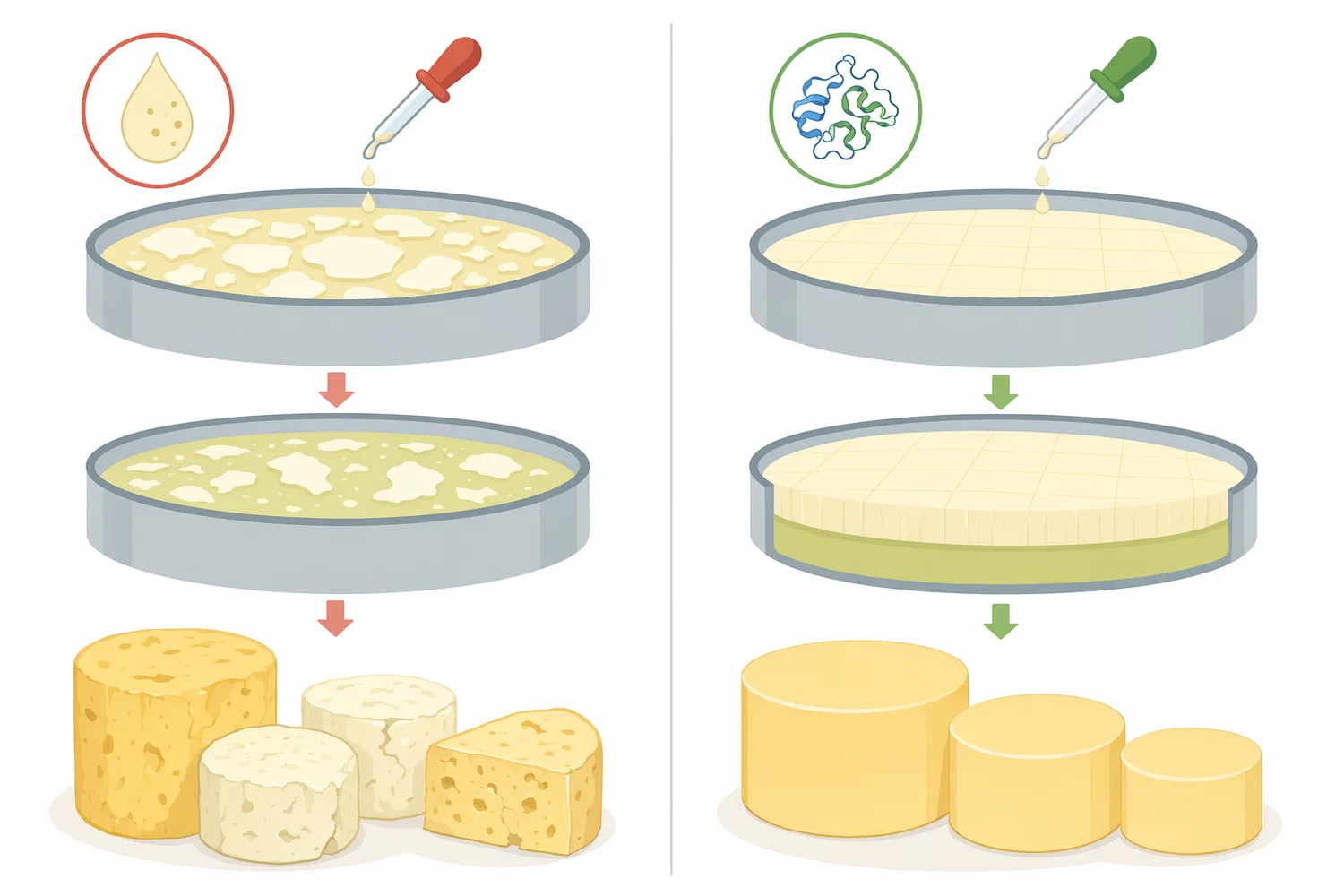
At the start of cheesemaking, milk remains fluid because intact κ-casein keeps casein micelles separated. The hydrophilic portion of κ-casein extends outward into the serum phase, creating a stabilizing layer that resists aggregation. This is why milk does not naturally become a firm curd immediately at normal handling conditions [1].
After chymosin addition, the enzyme removes the glycomacropeptide portion of κ-casein. This does not instantly turn all milk into curd; rather, coagulation begins when enough surface κ-casein has been hydrolyzed for micelles to interact with one another. The visible transition from liquid to gel therefore reflects both the biochemical reaction and the rate at which destabilized micelles build a continuous network [3].
Calcium is central to the aggregation stage. Casein micelles contain colloidal calcium phosphate, and calcium-mediated interactions help link destabilized micelles after κ-casein protection is reduced. Research on chymosin variants has specifically examined how coagulation activity depends on calcium chloride concentration, underscoring the importance of calcium balance in rennet coagulation [10].
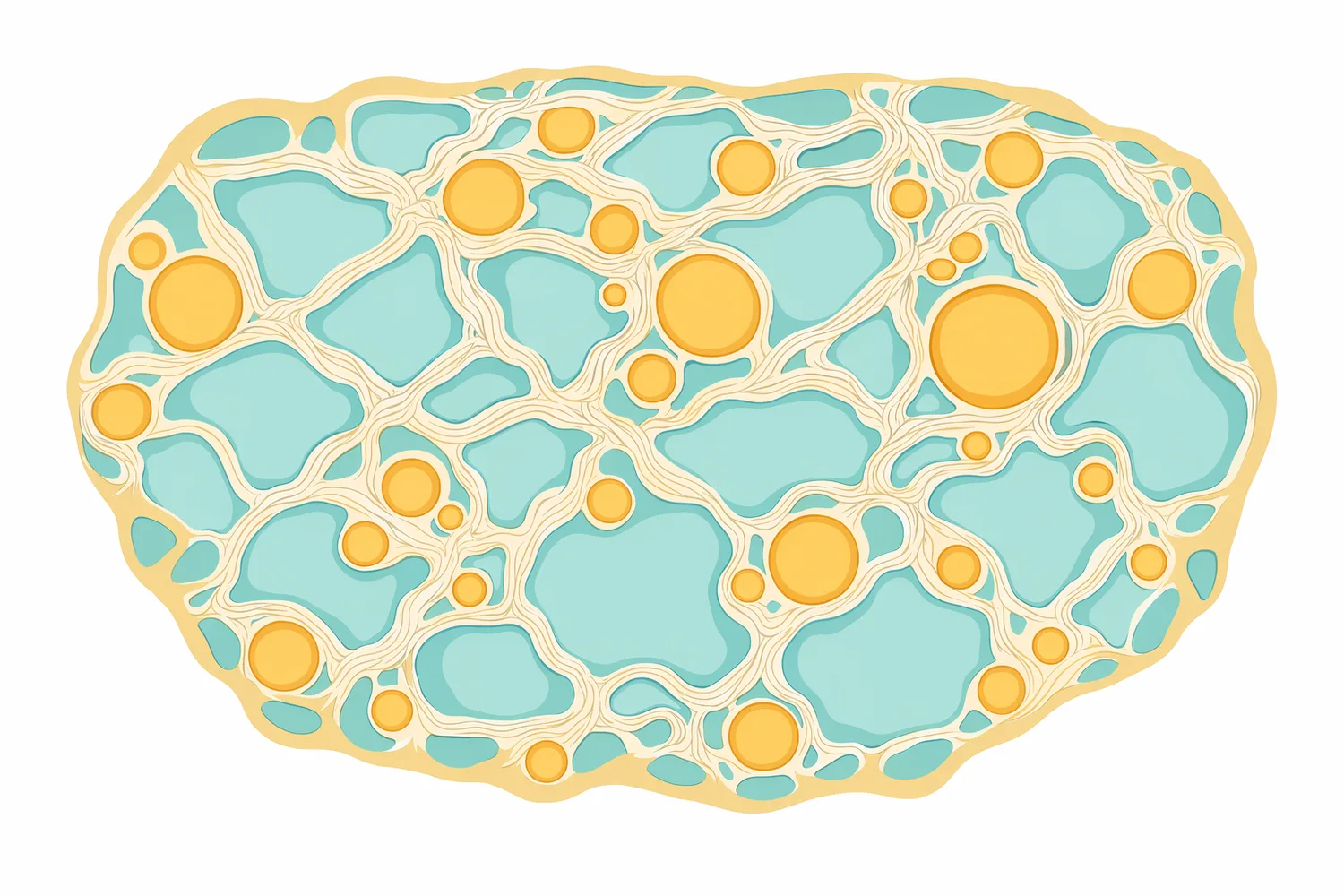
The resulting curd is not just “solid milk.” It is a protein-fat-water network: casein forms the gel matrix, fat globules are trapped within that matrix, and whey occupies the pores. Cutting the curd changes that structure mechanically, allowing whey to drain; the timing and firmness at cutting strongly influence moisture, curd fines, and final cheese body [3].
Chymosin supports predictable curd formation because the primary reaction is specific and well characterized. When milk composition and process conditions are stable, this targeted κ-casein hydrolysis gives the cheesemaker a repeatable starting point for gelation, curd cutting, and syneresis—the release of whey from the curd [1].
Curd firmness is one of the most visible practical outcomes. A weak or slow-forming gel can be difficult to cut cleanly, which may increase fines and solids loss into whey. A firm, cohesive curd allows cleaner cutting and more controlled moisture removal, although the final result still depends on milk quality, temperature, pH development, calcium balance, cutting size, stirring, and cooking profile [3].
Chymosin also helps support protein retention because its function is to organize casein into a curd matrix rather than broadly solubilize it. Comparisons among coagulants in cheese systems often focus on technological effectiveness because excessive proteolysis can shift nitrogenous material into whey or alter ripening behavior in ways that affect yield and quality [9].
During ripening, residual coagulant activity can continue to influence cheese texture and flavor. This is one reason enzyme selectivity matters: controlled primary coagulation is beneficial, while extensive nonspecific casein breakdown can contribute to bitterness or texture defects, especially in cheeses with longer maturation times [11].
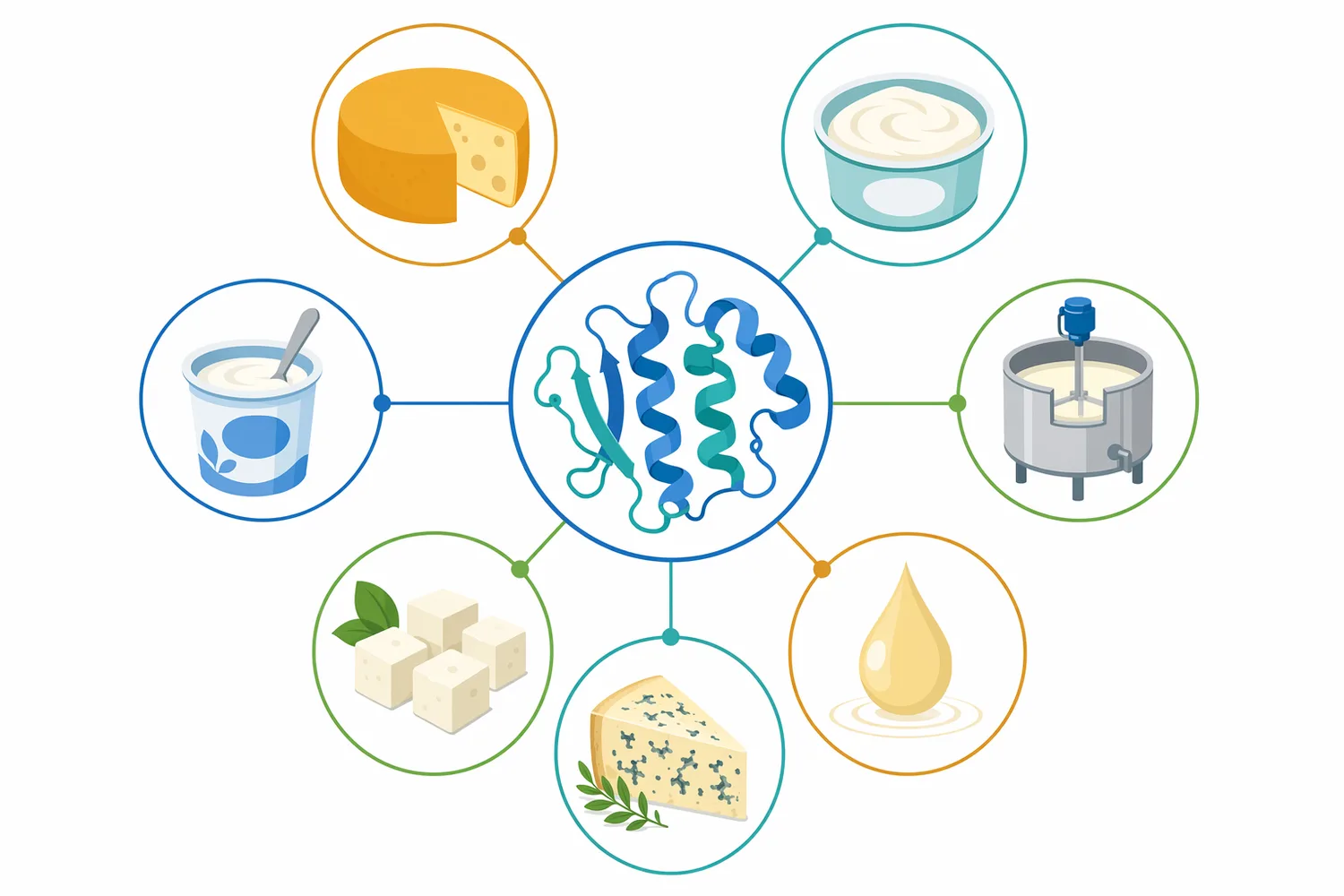
Hard and semi-hard cheeses depend heavily on controlled rennet coagulation. Cheeses in this broad category require curd strong enough for cutting, stirring, cooking, whey drainage, and sometimes pressing, while still retaining the right moisture and fat balance for ripening. Chymosin’s specificity makes it well suited to these systems because the curd structure begins with targeted κ-casein destabilization rather than generalized protein digestion [1].
Soft cheeses also benefit from controlled coagulation, although their process aims are different. Instead of low-moisture curd and extended pressing, many soft cheeses rely on gentle curd handling, higher moisture retention, surface ripening, or fresh consumption. Chymosin can provide the coagulation step while the rest of the process—acidification, drainage, salting, and ripening—defines the final style [3].
White brined cheeses are another relevant category because they require a coagulated curd that can be cut, drained, salted, and held in brine without losing structural integrity. Recent evaluation of chymosin and microbial coagulants in white brined cheese production emphasizes that coagulant choice affects technological performance, not only clotting speed [9].
Fresh cheeses and quark-style products may use acid, rennet, or combined acid-rennet coagulation depending on the desired texture. In such systems, chymosin’s role is still κ-casein hydrolysis, but the final gel may be shaped strongly by acid development and moisture removal rather than by rennet action alone [3].
Specialty and regional cheeses sometimes intentionally use animal rennet mixtures, plant coagulants, or traditional extracts because those enzyme systems contribute characteristic sensory profiles. Chymosin should therefore be understood as a precise coagulation tool, not as a universal replacement for every flavor contribution of every traditional coagulant [7].
The product name references cheese and yogurt coagulation, but the evidence should be interpreted carefully. Standard yogurt is primarily an acid gel: lactic starter cultures ferment lactose, lower pH, and cause casein micelles to aggregate as they approach their isoelectric region. That mechanism is different from classic chymosin-driven rennet coagulation [3].
Chymosin may still be relevant in selected fermented dairy gels where the formulation deliberately combines enzymatic κ-casein modification with acidification. Studies comparing acid-induced and enzyme-induced coagulation show that both pathways create milk gels, but they do so through different molecular triggers and can produce different rheological behavior [3].
In a yogurt-like system, partial κ-casein hydrolysis can change how micelles behave during later acidification. Removing some of the κ-casein stabilizing layer may alter gelation timing, network formation, and firmness, but the outcome depends on milk heat history, starter acidification, protein composition, and how much enzymatic modification occurs before the acid gel is set [3].
For that reason, chymosin should not be presented as a replacement for yogurt cultures. Starter cultures provide acidification and characteristic fermented flavor, while chymosin provides a targeted proteolytic step. Where both are used, they contribute different mechanisms to the final gel structure [1].
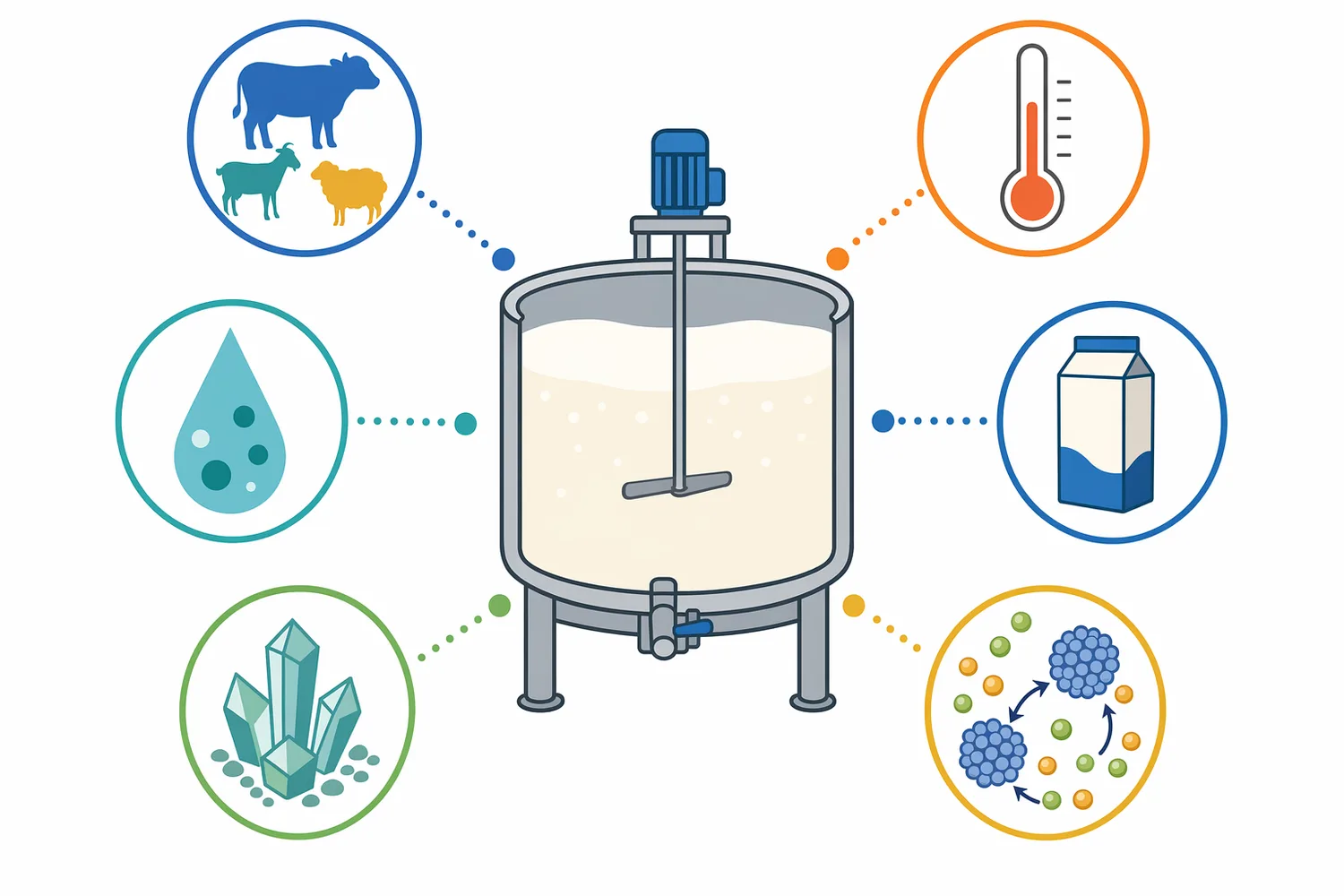
Chymosin performance is shaped by milk composition. Cow, goat, ewe, and camel milks differ in casein composition, micelle structure, mineral balance, and whey protein profile, so the same coagulant can show different clotting behavior across species. Comparative research on bovine and camel chymosin with cow’s, goat’s, and ewe’s milk illustrates that enzyme-substrate pairing matters in milk coagulation [5].
pH influences both enzymatic action and micelle aggregation. Chymosin is an aspartic protease, and rennet coagulation in cheesemaking typically occurs in milk that is still near its natural pH but may be changing due to starter culture activity. As pH decreases, mineral equilibrium and casein interactions change, which can affect coagulation speed and gel firmness [3].
Temperature also matters because enzyme reaction rates and protein aggregation behavior are temperature-dependent. Milk must be warm enough for practical enzymatic activity and gel formation, but heat history can also change milk proteins. Heat treatment may denature whey proteins and alter their interactions with casein micelles, which can change rennet coagulation behavior [3].
Calcium balance is another key factor. After κ-casein has been cleaved, calcium-mediated interactions help destabilized micelles form a network. Research on amino acid substitutions in recombinant cow chymosin and calcium chloride concentration shows that calcium availability can materially affect coagulation response [10].
Milk processing history affects the substrate that chymosin sees. Micellar casein isolates, reconstituted systems, pasteurized milk, and differently treated milks can all present κ-casein and minerals in slightly different environments. Work comparing micellar casein isolates and their coagulation behavior with chymosin and pepsin supports the practical point that the substrate system influences enzyme performance [6].
Added ingredients can also matter. Phenolic compounds, for example, have been studied for their effects on proteolytic enzymes during rennet-induced coagulation and cheese ripening. This reflects a broader principle in formulated dairy products: non-milk ingredients can interact with enzymes, proteins, or minerals and thereby change gelation and ripening behavior [11].
Fermentation-produced chymosin was developed to provide a chymosin-dominant coagulant without dependence on animal rennet supply. In this approach, a microbial production system expresses chymosin, and the resulting enzyme preparation is used for the same milk-clotting function: selective κ-casein cleavage and curd formation [12].
Research into recombinant chymosins has expanded beyond bovine chymosin, including camel, moose, tree shrew, and Altai maral chymosin. These studies examine structure, substrate interaction, and milk-clotting behavior because small differences in enzyme structure can influence how chymosin interacts with κ-casein from different milks [13].
For dairy buyers, the practical takeaway is that chymosin is one of the most extensively characterized enzyme tools in cheesemaking. Its mechanism is defined at the peptide-bond level, and its process effect—destabilizing casein micelles to form curd—has been examined through biochemical, rheological, microscopic, and comparative dairy studies [2].
Microbial milk-clotting enzymes can be useful, and some are developed specifically as alternatives to animal rennet. For example, Mucor-derived milk-clotting enzymes have been investigated for dairy coagulation potential, reflecting ongoing interest in non-animal coagulant sources [14].
Botanical coagulants are also important in certain traditional cheeses. Cardoon flower extract, thistle flower extracts, and Calotropis procera preparations can coagulate milk, and their proteolytic behavior may contribute to distinctive regional textures and flavors. However, these systems are typically evaluated against chymosin because their broader protein hydrolysis can differ substantially [15].
The key distinction is not whether an enzyme can clot milk at all; it is how it clots milk and what it continues to do afterward. Chymosin is valued when the desired outcome is a clean enzymatic trigger for casein micelle aggregation, while other coagulants may be selected for specific traditional, sensory, or formulation reasons [8].
Chymosin can support consistent coagulation, but it does not independently determine finished cheese quality. Milk solids, casein-to-fat ratio, starter culture performance, salt, moisture, curd handling, ripening temperature, and time all contribute to the finished product. Chymosin initiates curd formation; the cheese process builds on that foundation [3].
It also does not correct unsuitable milk conditions. Poor-quality milk, excessive heat damage, unfavorable pH development, disrupted mineral balance, or incompatible added ingredients can still produce slow coagulation, weak curd, high fines, or poor whey separation. The enzyme acts on the substrate it is given, so the physical and chemical state of the milk remains critical [6].
For long-ripened cheeses, enzyme choice can have effects beyond the vat. Residual proteolytic activity contributes to breakdown of the casein matrix during aging, which can be desirable when controlled but undesirable when excessive. Studies on rennet-induced coagulation and ripening enzyme activity show why both the coagulation stage and later proteolysis matter for cheese quality [11].
For yogurt and fermented gels, expectations should be especially precise. Chymosin may be useful in selected hybrid or coagulated fermented dairy systems, but standard yogurt structure comes from acidification rather than rennet action. In those products, chymosin is best understood as an optional texture-modifying coagulation tool, not the primary fermentation driver [3].
Enzymes.bio supplies Promote Cheese Yogurt Coagulation High Purity Rennet Chymosin Enzyme Chymosin directly online in 1 kg units. The buyer can place the order online, pay online, and the order is then processed and shipped.
A Certificate of Analysis and Safety Data Sheet are provided with the order. These documents support routine receiving, handling, and internal documentation needs without changing the essential application point: this is a dairy coagulation enzyme intended for controlled milk protein gel formation.
The strongest and most established application is cheese coagulation. Chymosin’s specific cleavage of κ-casein makes it suitable for processes where the goal is predictable curd formation, controlled whey separation, and a clean proteolytic profile compared with broader protease coagulants [1].
For selected yogurt-style or fermented dairy gel systems, chymosin may be relevant when the formulation intentionally uses enzymatic coagulation alongside acid development. That use is more application-dependent than cheese coagulation and should be viewed as a specialized dairy gel approach rather than conventional yogurt production [3].
Chymosin is one of the clearest examples of a food enzyme with a defined substrate, a defined molecular action, and a visible processing result. It cleaves κ-casein at the micelle surface, removes the stabilizing glycomacropeptide portion, and allows casein micelles to aggregate into the curd network needed for cheese manufacture [1].
For cheese, the evidence base is strong: chymosin is the benchmark rennet enzyme for controlled milk coagulation, and modern studies continue to compare animal rennet, fermentation-produced chymosin, microbial coagulants, pepsin, and plant extracts against its performance. For yogurt-type systems, the role is narrower and formulation-specific because conventional yogurt gelation is driven mainly by acidification [4].
Promote Cheese Yogurt Coagulation High Purity Rennet Chymosin Enzyme Chymosin from Enzymes.bio is therefore best understood as a precise dairy coagulation enzyme for buyers who want a direct online 1 kg purchase for cheese production and selected dairy gel applications. Its value lies in targeted κ-casein hydrolysis, repeatable curd formation, and a cleaner coagulation mechanism than many broader protease alternatives.
Sold by the 1 kg unit, in stock and ready to ship. Order directly on our store — pay online and we process your order. A Certificate of Analysis and Safety Data Sheet are included with every order.
Buy Promote Cheese Yogurt Coagulation High Purity Rennet Chymosin Enzyme Chymosin →Numbered in order of first citation. Open-access sources, each verified reachable at publication; citation numbers in the text link here.