
Protein Hydrolysis Enzyme – Neutral Protease Enzyme CAS 232-642-4 is used to hydrolyze proteins into smaller peptides and amino acids under mild, near-neutral processing conditions. For food, feed, fermentation, plant protein, fish by-product, cosmetic, leather, and other industrial applications, neutral protease helps change how protein materials dissolve, flow, react, and perform without relying on strongly acidic or alkaline hydrolysis.
Enzymes.bio supplies this neutral protease enzyme directly online by the 1 kg unit. Buyers can purchase and pay online; the order is then processed and shipped, with a Certificate of Analysis and Safety Data Sheet included with the order.
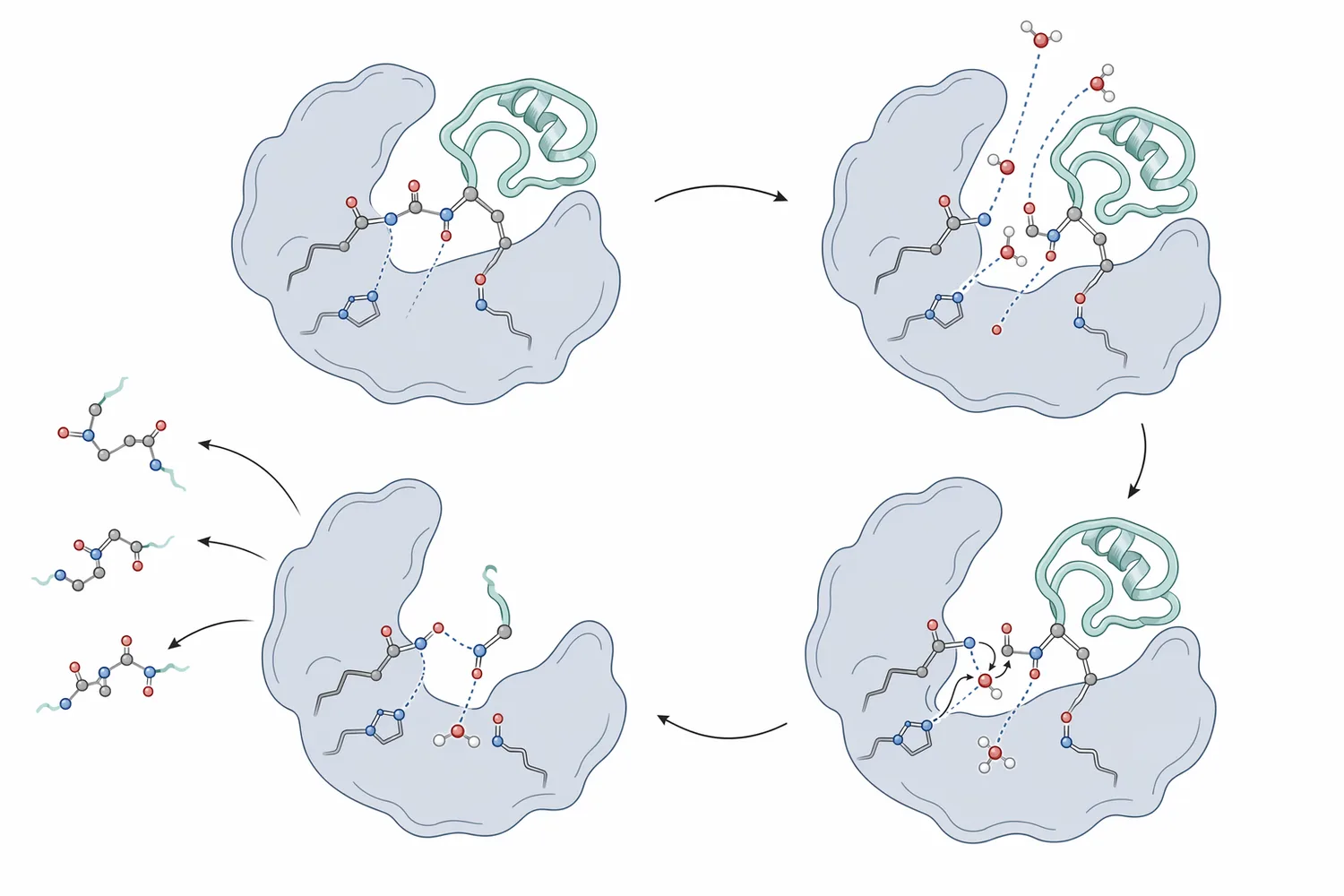
A protein hydrolysis enzyme is a protease: an enzyme that cleaves peptide bonds in proteins and polypeptides. Proteins are long chains of amino acids connected by peptide bonds, and hydrolysis is the reaction in which water is used to split those bonds, producing shorter peptides and, with further breakdown, free amino acids [1].
Neutral protease is defined by where it works best in process chemistry: it is active around neutral conditions rather than requiring the strongly acidic environment preferred by acid proteases or the strongly alkaline environment preferred by alkaline proteases. This matters because many protein-containing raw materials—soy, dairy, fish, meat, blood protein, yeast, gluten, collagen-containing materials, and fermentation substrates—are sensitive to harsh pH treatment, and mild enzymatic hydrolysis can preserve more of the useful nutritional, sensory, or functional value of the material [2].
The product name Protein Hydrolysis Enzyme – Neutral Protease Enzyme CAS 232-642-4 describes the practical application clearly: it is intended for controlled protein breakdown. Enzymes.bio lists this product as a neutral protease enzyme supplied in 1 kg units for online purchase, with documentation provided with the order .
Neutral protease does not simply “remove” protein. It changes protein architecture. A native protein may be folded into a compact shape, aggregated with other proteins, trapped in a heat-denatured network, or bound into a plant, animal, or microbial matrix. Protease action cuts selected peptide bonds inside those structures, reducing molecular size and changing how the material behaves in water, during heating, during filtration, or in a formulation [1].
At the molecular level, the enzyme holds the protein substrate in an active site where a peptide bond is positioned for hydrolysis. Water participates in the cleavage reaction, and the protein chain is split into shorter fragments. Many neutral proteases used industrially act as endoproteases, meaning they attack internal peptide bonds rather than only nibbling amino acids from the end of the chain; this is why a relatively small number of cuts can rapidly reduce average protein size and disrupt large protein networks [3].
Those cuts have practical consequences. Large proteins often create viscosity because they entangle, gel, hydrate slowly, or form insoluble aggregates. When neutral protease shortens those chains, the protein system can become easier to disperse, pump, filter, or dry. The new peptide mixture may also expose charged or polar groups that were buried inside the original protein structure, which can improve water interaction and solubility depending on the substrate and extent of hydrolysis [4].
Neutral protease can also alter sensory and nutritional properties. Peptides are not just smaller proteins; their size distribution and amino-acid sequence influence taste, bitterness, solubility, emulsification, foaming, digestibility, and biological activity. This is why the same raw protein can produce different outcomes when hydrolyzed lightly, moderately, or extensively [2].
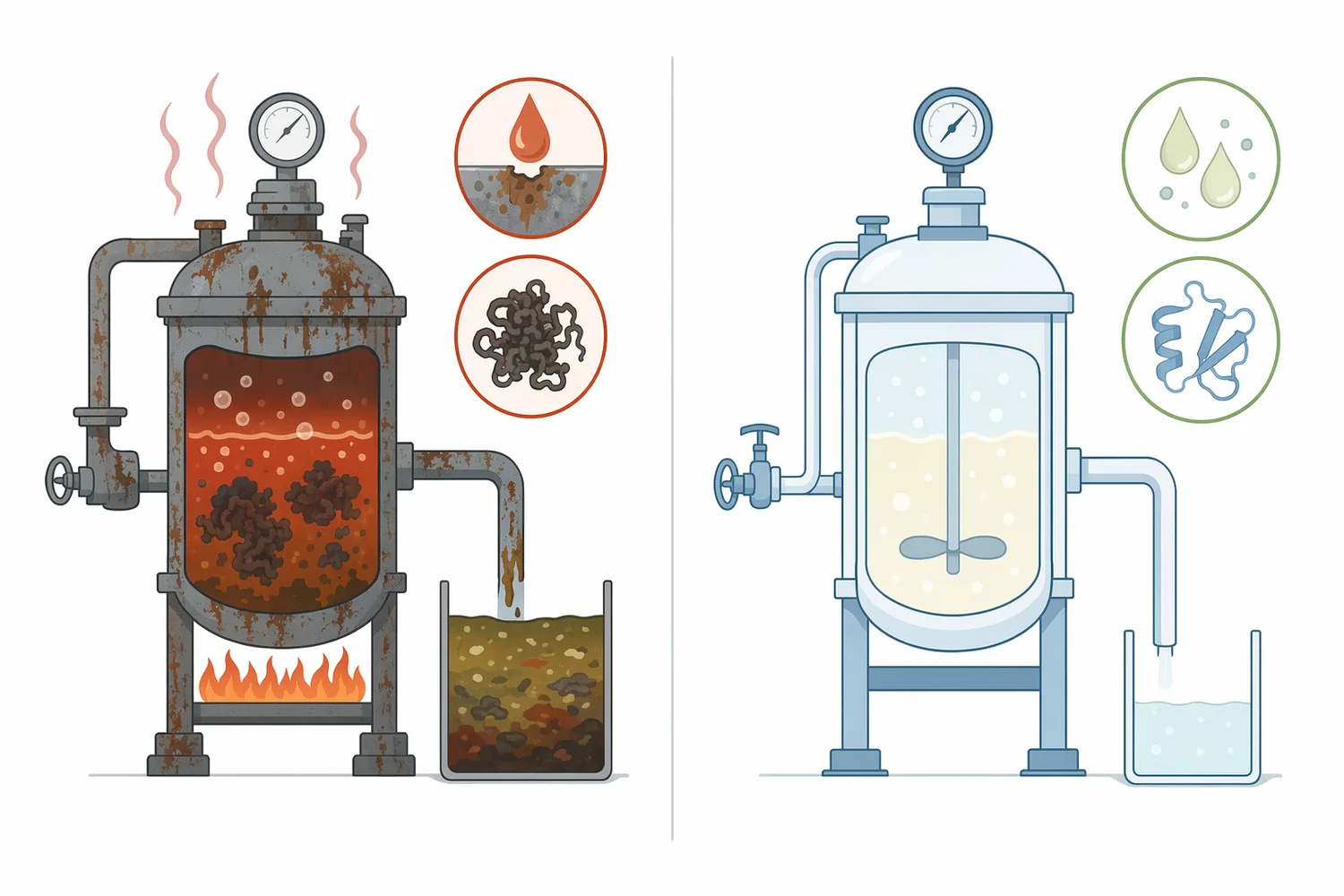
Neutral processing conditions are valuable when the raw material or finished application should avoid harsh acid or alkali exposure. Strong acid hydrolysis can be aggressive, can create high salt loads after neutralization, and can damage sensitive amino acids. Strong alkaline treatment can also change protein structure profoundly and may affect color, flavor, and downstream handling. Neutral protease offers a route to peptide formation under milder conditions, which is one reason microbial proteases are widely used in food and industrial biotechnology [2].
In practice, “neutral” should be understood as a processing character rather than a promise that every process runs at exactly pH 7. Neutral proteases are generally associated with neutral to mildly acidic or mildly alkaline environments, and the useful operating window depends on the specific enzyme preparation and process matrix. The important point is that the enzyme is intended for protein hydrolysis without forcing the substrate into strongly acidic or strongly alkaline conditions [5].
| Protease type | Typical processing character | What changes in the substrate | Common practical fit |
|---|---|---|---|
| Acid protease | Works best in acidic systems | Hydrolyzes proteins where low pH is already part of the process; can be useful for acidic foods or digestive-style hydrolysis | Acidic food systems, some fermentation and specialty protein hydrolysis |
| Neutral protease | Works around mild, near-neutral conditions | Cuts peptide bonds while limiting harsh pH exposure; often used when solubility, viscosity, peptide generation, or functionality needs controlled adjustment | Food protein hydrolysates, plant protein modification, fish and animal by-products, fermentation substrates, mild industrial processing |
| Alkaline protease | Works best in alkaline systems | Breaks down protein stains, hides, keratinous or resistant materials, and other substrates in high-pH processes | Detergents, leather operations, some waste-treatment and industrial cleaning applications |
This comparison is conceptual, not a replacement for application testing. It shows why neutral protease occupies an important middle ground: it provides protein cleavage in systems where a milder pH environment is preferred, while acid and alkaline proteases serve processes that already operate at more extreme pH values [6].
Proteases are among the most commercially important enzyme groups because they act on one of the most common biological macromolecules: protein. A food-grade protease perspective by Sumantha and co-authors describes microbial proteases as significant industrial enzymes used across food biotechnology, with applications tied to their ability to hydrolyze proteins in controlled ways [2].
Research on neutral proteases continues because different enzymes offer different behavior in real protein systems. A 2024 study on metallo-neutral-protease production focused on activity kinetics and food-industry applications, illustrating that neutral proteases remain relevant for modern enzyme optimization and food processing research [7].
Neutral protease activity is also found in diverse biological sources. A 2017 screening study identified yeast strains producing acidic and neutral proteases by genetic methods, supporting the broader point that neutral protease function is not restricted to one organism or one industrial niche [5].
The evidence base is strongest for the core function: proteases hydrolyze proteins by cleaving peptide bonds. It is also strong for the practical observation that enzymatic hydrolysis changes protein properties. Where evidence becomes application-specific is in the exact peptide profile, flavor, bioactivity, or processing performance produced from a given raw material, because those outcomes depend on the protein source and process conditions [1].
One of the most common reasons to use neutral protease is to improve how a protein material behaves in water. Many raw proteins are poorly soluble after heat treatment, drying, extraction, concentration, or storage. Large protein aggregates can sediment, form lumps, create haze, or resist hydration. Hydrolysis cuts those proteins into smaller peptides, increasing the number of chain ends and often exposing hydrophilic groups that interact more readily with water [4].
Soy protein is a clear example of why controlled hydrolysis matters. In research on neutral protease from Volvariella volvacea fruiting bodies, enzymatic digestion of soybean isolates was a central application, showing how neutral protease can be evaluated directly against a widely used plant protein substrate [4].
Soybean meal fermentation research also supports this connection between neutral protease and plant protein modification. A 2025 study improved neutral protease activity in Bacillus amyloliquefaciens LX-6 and applied the enzyme system in soybean meal fermentation, an application where proteolysis can help convert complex plant protein into smaller nitrogen sources for microorganisms and final fermented material [8].
The mechanism is straightforward: intact soy proteins such as storage globulins can aggregate and resist solubilization, especially after heat or drying. Neutral protease cuts the polypeptide chains, loosens aggregate structures, and produces smaller peptides that can disperse more easily. In a process slurry, that can translate into faster hydration, less sediment, lower apparent thickness, or improved extractability, depending on the matrix [8].
Protein-rich slurries can become difficult to handle because proteins form hydrated networks. This is common in plant protein concentrates, fish and meat by-products, gelatin- or collagen-containing streams, yeast extracts, and fermentation residues. Even when total solids remain unchanged, long protein chains can increase resistance to mixing and pumping.
Neutral protease reduces average chain length, which weakens those networks. When a protein network is cut, fewer long chains are available to bridge particles or hold water in a gel-like structure. The result can be a material that flows more readily and exposes more surface area for downstream reactions, separation, or drying. Protease research in food biotechnology repeatedly connects protein hydrolysis with altered functional properties such as solubility, emulsification, and processing behavior [2].
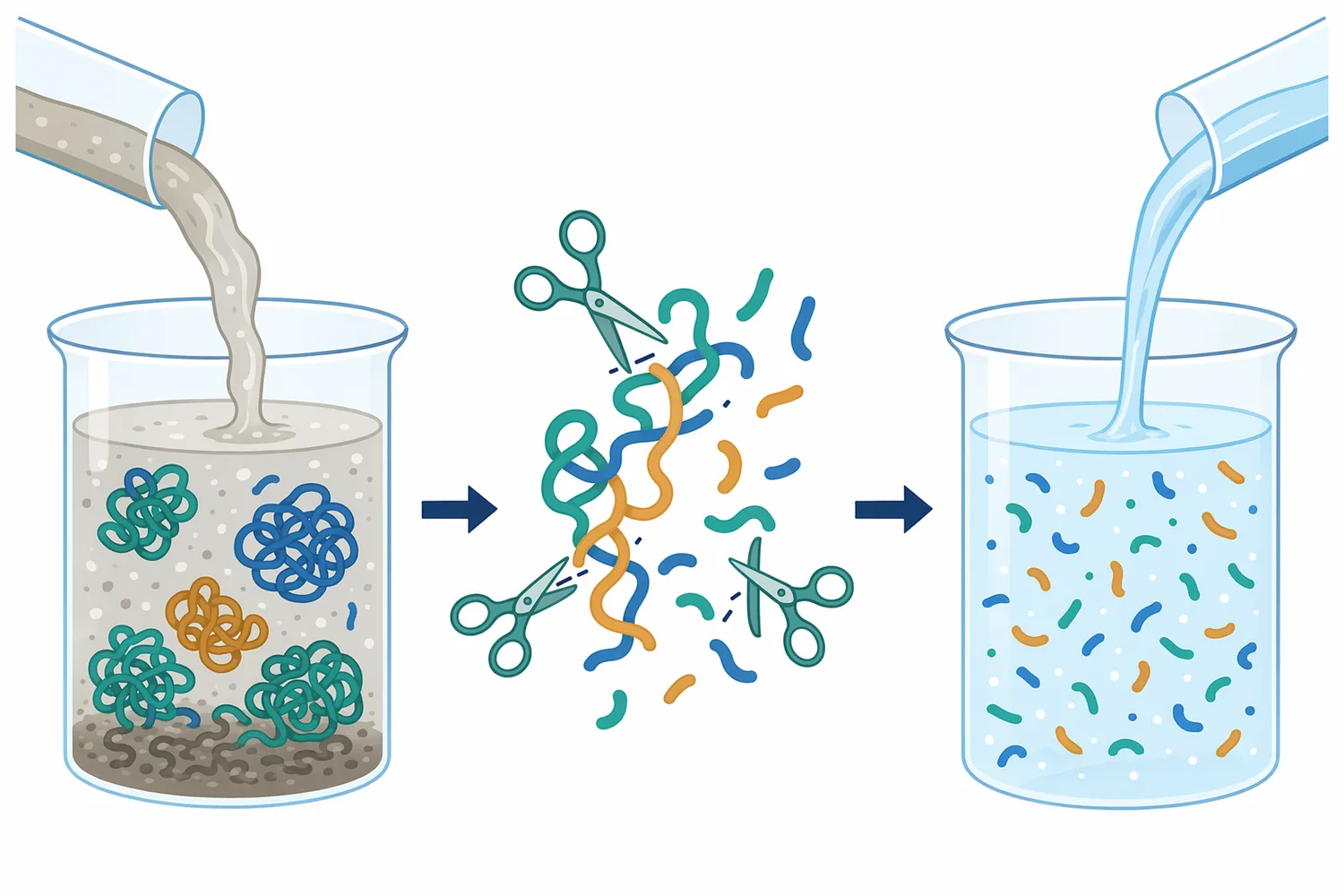
This effect is especially useful when the objective is not complete protein destruction but controlled modification. A short hydrolysis may be enough to open a protein matrix or reduce viscosity while preserving desirable body, nutrition, or texture. More extensive hydrolysis can generate a peptide-rich liquid or powder, but may also change taste and functionality more dramatically [4].
Protein hydrolysates are mixtures of peptides and amino acids produced by hydrolysis. Their value comes from the fact that peptide size and sequence can create properties the original intact protein did not show strongly. Hydrolysates may be more soluble, easier to digest, more reactive in flavor systems, better suited for fermentation media, or useful as nutritional and functional ingredients [2].
Neutral protease is particularly relevant where a process needs a peptide mixture without severe pH treatment. During hydrolysis, the enzyme does not cut every bond equally; accessibility, amino-acid sequence, protein folding, and prior heat treatment all influence which bonds are cleaved first. As hydrolysis proceeds, large proteins become medium peptides, then smaller peptides, and eventually a mixture containing some free amino acids [1].
Research on soybean isolates with a novel neutral protease illustrates the application logic: the study purified and characterized a neutral protease, then used it for enzymatic digestion of soybean isolates, directly linking enzyme characterization to a practical plant-protein hydrolysis substrate [4].
Bioactive peptide research should be interpreted carefully. Some protein hydrolysates show antioxidant, antihypertensive-related, or other in vitro activities, but those findings do not automatically become finished-product health claims. They do show why controlled proteolysis is scientifically interesting: enzyme choice and hydrolysis conditions can release peptide sequences that were hidden within the parent protein [9].
Plant proteins often need functional adjustment before they work well in beverages, meat analogues, bakery systems, sauces, nutrition powders, or fermentation substrates. Soy, pea, lupin, sesame, and other plant proteins can have low solubility near their isoelectric region, can form aggregates after heat treatment, and can produce gritty or heavy textures if they are not sufficiently dispersed.
Neutral protease helps by cutting storage proteins into smaller fragments. Those fragments may hydrate more quickly and distribute more evenly in the continuous phase of a formulation. In emulsions, smaller peptides can migrate to oil-water interfaces differently from intact proteins; in foams, peptide size affects film formation and stability. The direction of improvement depends on the degree of hydrolysis, because a protein that is lightly opened may stabilize an interface well, while a peptide that is too small may not form a strong film [2].
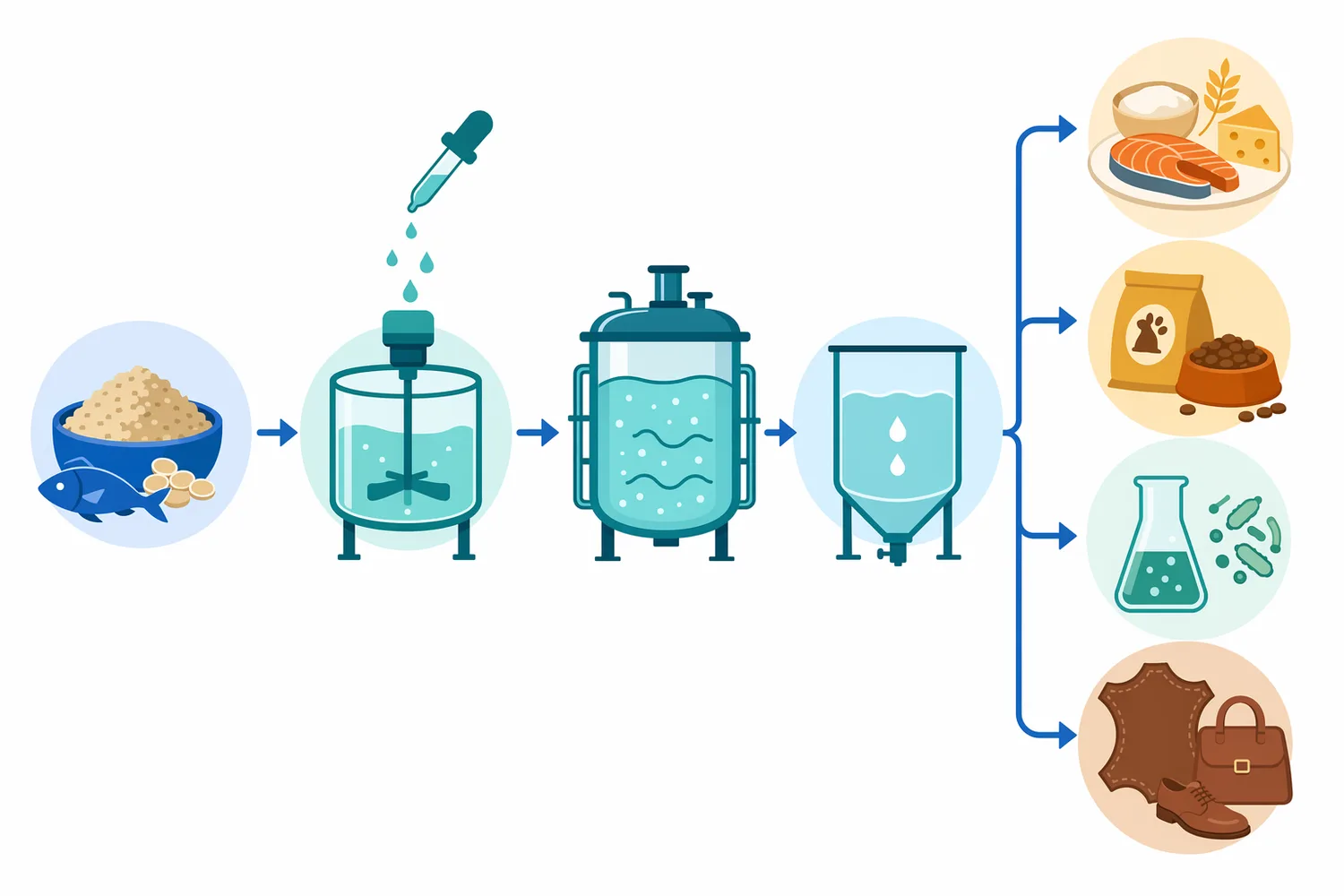
Soybean meal fermentation is a practical example. In fermentation, microorganisms need accessible nitrogen, and intact plant proteins may be too large or too aggregated for efficient use. Neutral protease can help release peptides and amino acids that support microbial metabolism and change the composition of the fermented substrate [8].
For hydrolyzed vegetable protein systems, savory bases, plant-based nutrition, and fermented soy products, the same mechanism is important: proteolysis increases the pool of soluble nitrogen compounds. Those compounds can contribute to umami, fermentation performance, browning reactions, or nutritional accessibility, depending on how the hydrolysate is used [2].
Fish and animal processing streams often contain valuable protein but are difficult to use in their original form. Trimmings, frames, skin, viscera, blood fractions, and other by-products may be heterogeneous, viscous, odorous, or poorly soluble. Protease hydrolysis can convert these materials into peptide-rich hydrolysates for feed, pet food, flavor systems, fertilizer inputs, or further ingredient development.
The mechanism is both chemical and physical. Protease cuts muscle proteins, connective-tissue-associated proteins, and soluble proteins into smaller fragments. This can release protein from tissue structures, reduce slurry thickness, and increase the fraction of nitrogen that remains in the liquid phase after separation. In fish protein systems, hydrolysis is widely studied because peptide-rich fractions can have different solubility and functional behavior from the raw biomass [2].
Proteases from unusual or robust organisms are also studied for special processing environments. A 2024 study reported a hyperstable, low-salt adapted protease from a halophilic archaeon with potential use in salt-fermented foods, showing that protease performance in high-salt or fermented protein matrices is an active research area [10].
Neutral protease is relevant in by-product upgrading where mild hydrolysis is preferred and where the goal is a controlled peptide mixture rather than severe chemical degradation. The finished hydrolysate’s value still depends on raw-material freshness, fat management, odor control, separation, drying, and final application, but the enzyme’s role is to make the protein fraction more accessible and convertible [2].
Fermentation processes often benefit from accessible nitrogen. Microorganisms can use amino acids and small peptides more readily than large, insoluble proteins. Neutral protease can therefore be used to pre-hydrolyze protein substrates or support proteolysis during fermentation, helping release nitrogen compounds from soy, grain, yeast, fish, or other protein-rich materials.
In soybean meal fermentation, improved neutral protease production was directly connected with application in the fermented substrate, demonstrating how proteolysis can support the transformation of plant protein materials into more digestible and microbially accessible forms [8].
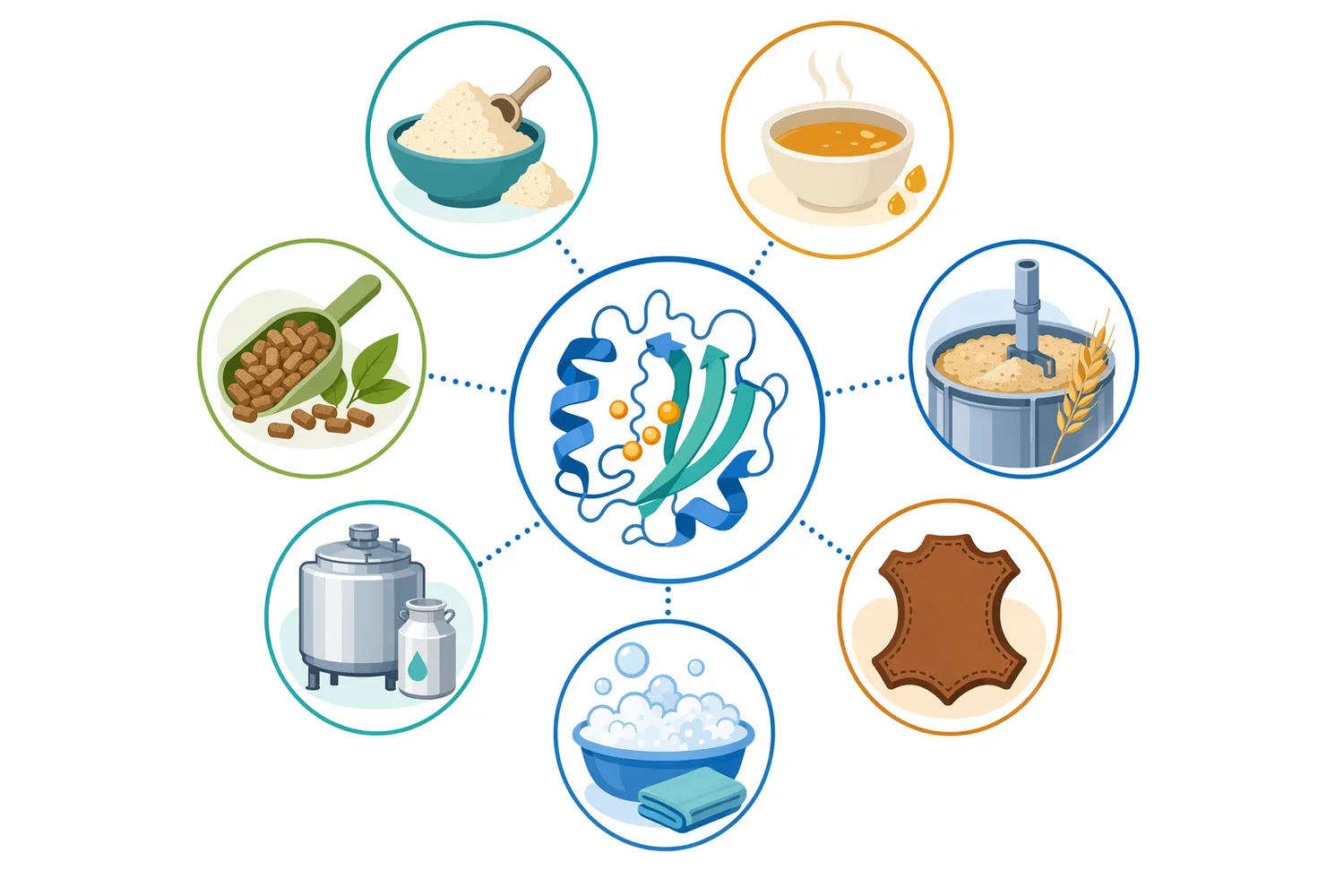
In savory systems, hydrolysis also changes flavor chemistry. Free amino acids and small peptides can contribute to umami, kokumi-like mouthfeel, bitterness, sweetness, or broth-like complexity. The effect is not automatically positive; excessive hydrolysis or certain peptide sequences may increase bitterness. This is why neutral protease is best understood as a tool for controlled conversion rather than indiscriminate breakdown [2].
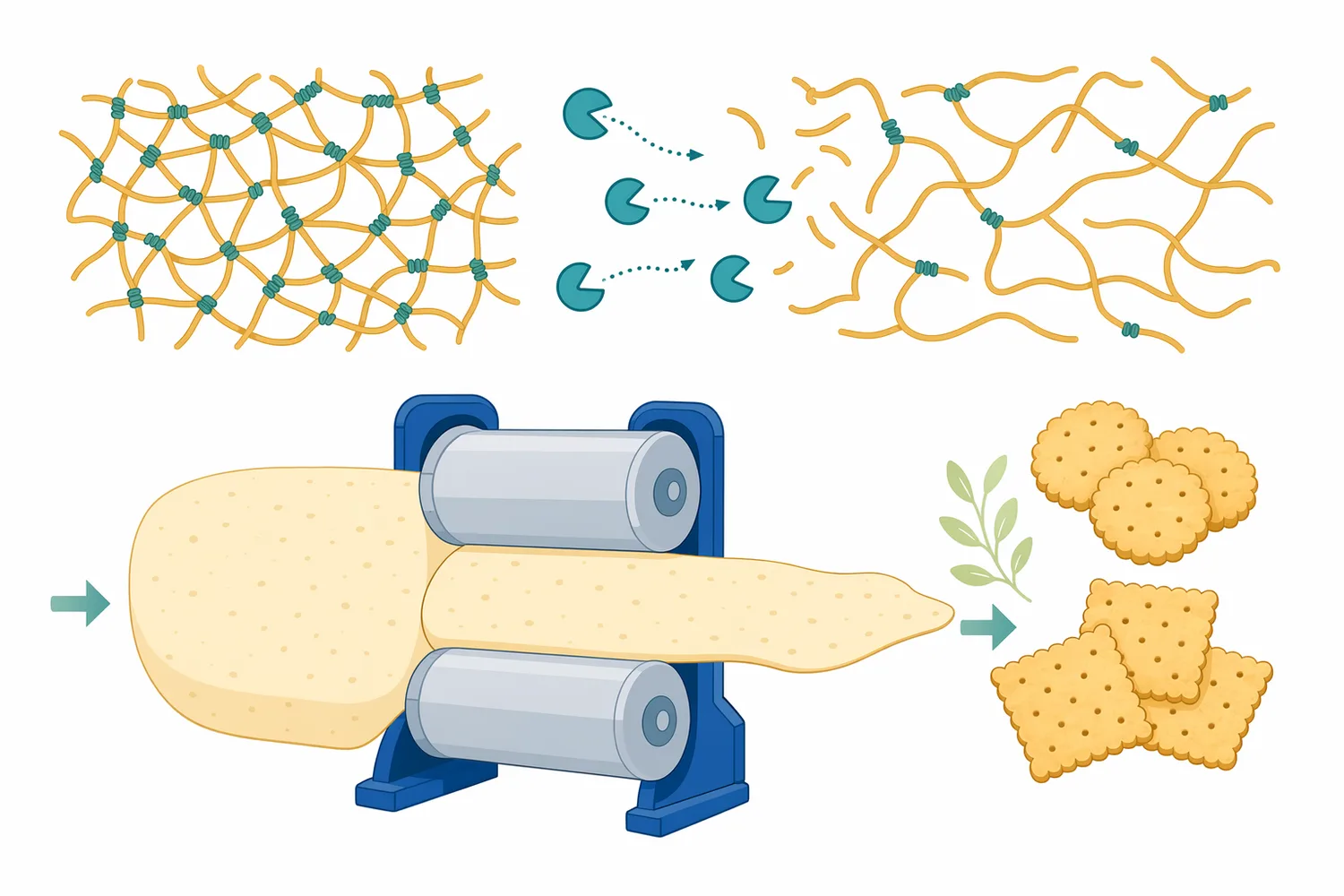
Cereal processing provides another example of targeted protein modification. Wheat dough properties are strongly influenced by gluten, a protein network that gives dough elasticity and structure. Proteolysis can weaken or relax that network by cutting gluten proteins, which changes extensibility, handling, and texture.
Neutral protease can be useful where partial protein modification is desired under relatively mild conditions. In cracker, biscuit, wafer, or related dough systems, reducing excessive elasticity can support sheeting, machining, or bite texture. The enzyme’s action is structural: it cuts protein chains that contribute to network strength, so the dough becomes less resistant to deformation.
This illustrates a broader point about protease value. The enzyme is not only for producing liquid protein hydrolysates; it can also be used to tune the physical performance of a protein-containing matrix. Food-grade protease literature recognizes microbial proteases as versatile tools for food processing because protein structure controls many texture and handling properties [2].
Proteases also have long-standing technical uses outside food. In leather processing, proteolytic enzymes can help remove unwanted non-collagenous proteins and support cleaner processing steps. In detergent systems, proteases break down proteinaceous soils such as blood, egg, milk, grass, and body soils, converting insoluble or adherent protein stains into smaller, more washable fragments.
Alkaline proteases are particularly prominent in detergents and high-pH technical cleaning, but neutral and other proteases illustrate the same biochemical principle: peptide-bond cleavage changes a protein deposit from a tough, adherent film into smaller fragments that can detach or disperse. Research on detergent-compatible proteases from Bacillus species continues because enzyme-based stain removal can reduce reliance on harsher chemical approaches [11].
Leather and tannery-related studies also show the practical relevance of proteolytic bacteria and protease enzymes in processing protein-rich materials. A study on proteolytic bacteria isolated from tannery waste evaluated their effectiveness in leather and detergent industry contexts, supporting the broader industrial role of microbial proteases [12].
For these technical applications, neutral protease is most relevant when the process environment is closer to neutral and when controlled protein removal or softening is required. More alkaline proteases are typically associated with strongly alkaline detergent or hide-processing steps, while neutral protease fits milder protein modification needs [6].
Proteases may also be used in personal-care and cosmetic contexts where controlled action on proteinaceous material is desired. Keratinized skin, protein films, and some deposits contain peptide-bond-based structures, so proteolytic enzymes can contribute to exfoliation-related or cleaning functions when formulated appropriately.
The mechanism is the same but the safety expectations are stricter: the enzyme must be compatible with the formulation and intended use, and proteases are biologically active proteins that require careful handling. Neutral protease can be attractive in these systems because near-neutral conditions may be more compatible with certain cosmetic formulations than strongly acidic or alkaline enzyme systems [2].
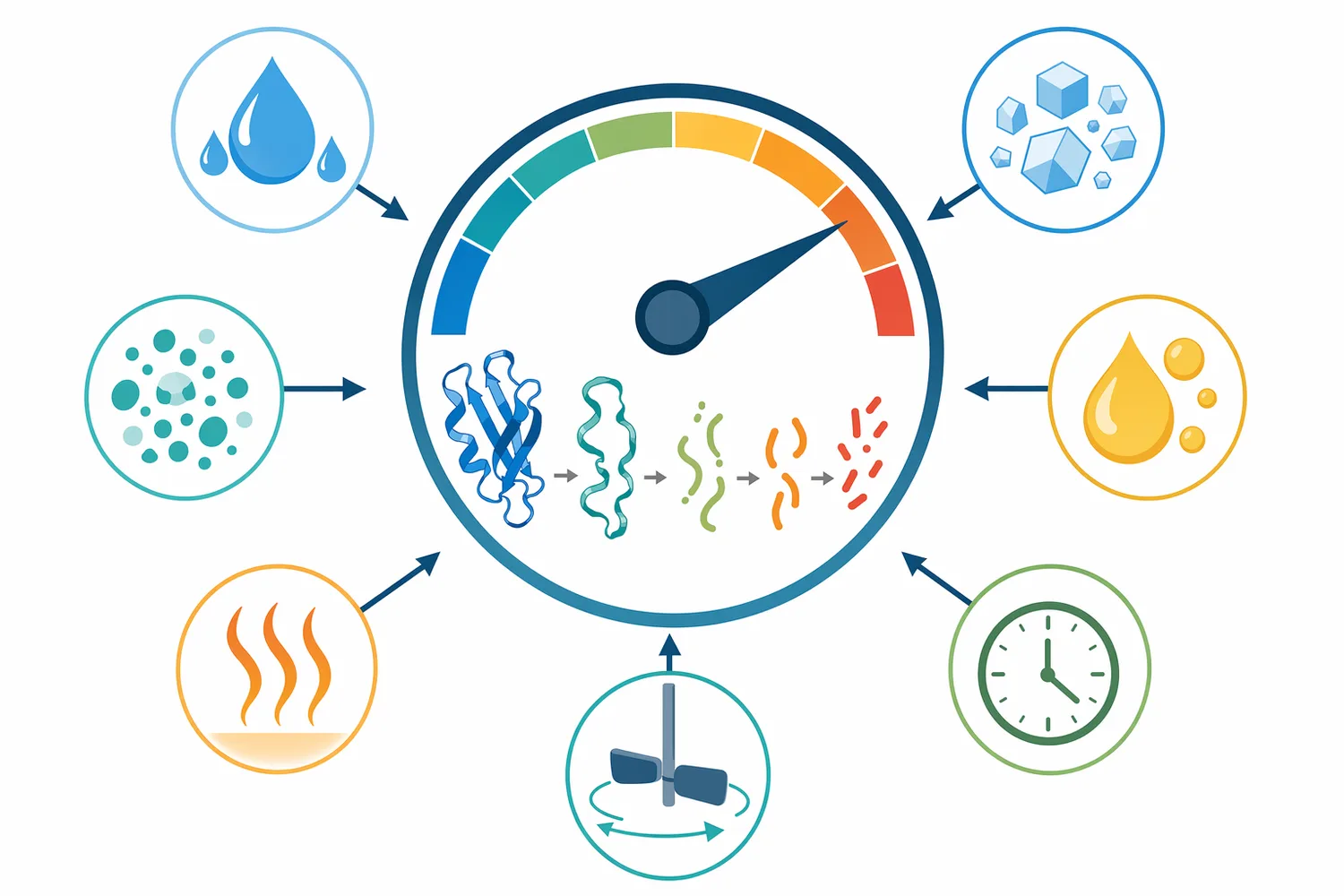
The speed and result of neutral protease hydrolysis depend strongly on substrate access. A tightly folded protein can hide many peptide bonds from the enzyme, while a heat-denatured or mechanically dispersed protein exposes more cleavage sites. This is why hydration, particle size, prior heating, salt level, fat content, and mixing can all change the apparent effectiveness of hydrolysis in a real process.
Denaturation is not always bad. A moderately unfolded protein may be easier for neutral protease to attack because hydrophobic regions and internal peptide bonds become exposed. However, excessive heat can also create aggregates that are less accessible if proteins cross-link, precipitate, or become trapped in dense particles. The practical result is that the same enzyme may behave differently on native soy isolate, toasted soybean meal, fish mince, gelatin, or dried yeast.
Degree of hydrolysis is the central concept. Early in the reaction, a few strategic cuts can sharply reduce viscosity or open a protein network. As the reaction continues, peptide size decreases, solubility may rise, and more free amino nitrogen may appear. If hydrolysis goes too far for a particular application, emulsifying strength, foam stability, texture, or taste may shift in an undesired direction [4].
This is why neutral protease should be viewed as a processing lever. It changes molecular size distribution, solubility, viscosity, and peptide composition together. The best outcome is usually not “maximum hydrolysis,” but the level of hydrolysis that matches the intended product function [2].
The most reliable expectation is that neutral protease catalyzes protein hydrolysis under suitable mild conditions. That core biochemical function is well established across protease research and industrial biotechnology [1].
A second well-supported expectation is that enzymatic hydrolysis can improve or modify functional properties such as solubility, dispersibility, viscosity, foaming, emulsification, and fermentation accessibility. However, the direction and magnitude of the change depend on the protein source and the extent of hydrolysis. Soy protein, fish protein, gluten, collagen-rich material, and microbial protein do not respond identically [2].
A more cautious expectation is needed for bioactive peptide outcomes. Research on protease-generated peptides can identify antioxidant, enzyme-inhibitory, or other biological activities in controlled studies, but those results are substrate- and sequence-specific. They should be treated as evidence that enzymatic hydrolysis can generate interesting peptide mixtures, not as automatic health or therapeutic claims for every hydrolysate [9].
Enzymes.bio supplies Protein Hydrolysis Enzyme – Neutral Protease Enzyme CAS 232-642-4 as an online product sold by the 1 kg unit. The buyer places the order and pays online; the order is then processed and shipped .
A Certificate of Analysis and Safety Data Sheet are included with the order for routine documentation and safe handling support. Enzymes.bio supplies the product as an enzyme ingredient for buyers who need a practical neutral protease option for protein hydrolysis and related processing applications .
Neutral protease is best understood as a mild, versatile biocatalyst for controlled protein modification. It cuts peptide bonds, reduces protein size, changes solubility and viscosity, and can generate peptide-rich hydrolysates from plant, animal, fish, microbial, and technical protein substrates. For buyers who need a 1 kg online supply format, Enzymes.bio provides a direct route to purchase this neutral protease enzyme for application development and production use.
Sold by the 1 kg unit, in stock and ready to ship. Order directly on our store — pay online and we process your order. A Certificate of Analysis and Safety Data Sheet are included with every order.
Buy Protein Hydrolysis Enzyme - Neutral Protease Enzyme Cas 232-642-4 →Numbered in order of first citation. Open-access sources, each verified reachable at publication; citation numbers in the text link here.