
Aminopeptidase is a protein hydrolysis enzyme that removes amino acids from the free N-terminal end of peptides and proteins. In practical hydrolysis workflows, it is most useful as an exopeptidase that trims peptide fragments after larger proteins have been opened up by other proteases, helping shift a hydrolysate toward shorter peptides and free amino acids. Aminopeptidases are widely described as industrially relevant biocatalysts for protein hydrolysis, including food, pharmaceutical, peptide-processing, and research applications [1].
Enzymes.bio supplies Protein Hydrolysis Enzymes Aminopeptidase directly online by the 1 kg unit. Buyers can purchase the product online, pay at checkout, and the order is processed and shipped; a Certificate of Analysis and Safety Data Sheet are included with the order.
Protein hydrolysis is the cleavage of peptide bonds in proteins to produce smaller peptides and, with further hydrolysis, individual amino acids. Proteins are long chains of amino acids connected by peptide bonds; hydrolysis breaks those bonds by adding water across the bond, converting one longer chain into two shorter products. In industrial and applied biochemical processing, this is not simply “destroying protein”—it is a controlled way to change molecular size, solubility, digestibility, flavor profile, nutritional composition, and downstream processing behavior [2].
Aminopeptidase matters because it does not attack a protein chain in the same way as a broad internal protease. Many proteases are endoproteases: they cut inside the chain, generating a population of peptide fragments. Aminopeptidase is an exopeptidase: it works from an end of the peptide chain, specifically the amino or N-terminal end, releasing amino acid residues step by step when the peptide structure and enzyme specificity allow it [1].
That distinction is important in real hydrolysis systems. A primary protease may rapidly reduce a protein from a large, folded or aggregated molecule into shorter peptides, but those peptides may still contain sequences that are too long, too bitter, too insoluble, or not yet converted into the desired level of free amino acids. Aminopeptidase can act on the newly exposed N-termini of those peptide fragments, trimming them further and changing the composition of the hydrolysate in a more terminal, residue-by-residue manner [1].
The practical result is a more refined hydrolysis profile. Instead of relying only on internal cleavage, a process can combine internal peptide-bond cutting with terminal trimming. Where the substrate is accessible and the N-terminal residues are compatible with the enzyme, aminopeptidase action increases the release of smaller peptide units and amino acids from peptide fragments, supporting applications where free amino acid formation or additional peptide shortening is desirable [1].
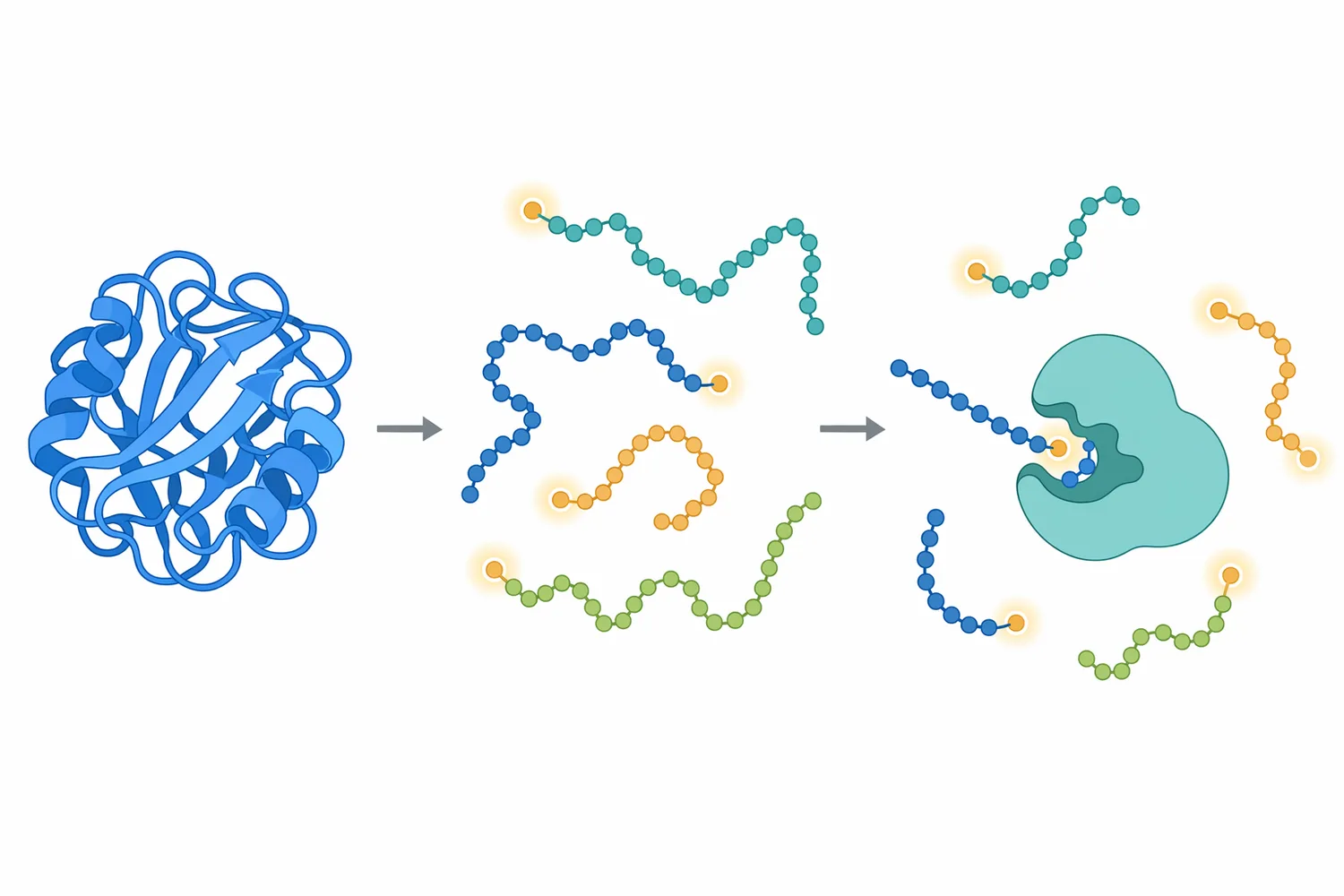
A native protein often has a compact structure: parts of the chain may be folded inside the molecule, stabilized by hydrophobic interactions, hydrogen bonding, disulfide bonds, ionic interactions, or aggregation with other protein molecules. Before aminopeptidase can do much useful work, the substrate normally needs accessible peptide ends. Endoproteases, heat treatment, pH adjustment, physical processing, or prior hydrolysis can expose more peptide fragments and create more free N-terminal ends for aminopeptidase to act on [2].
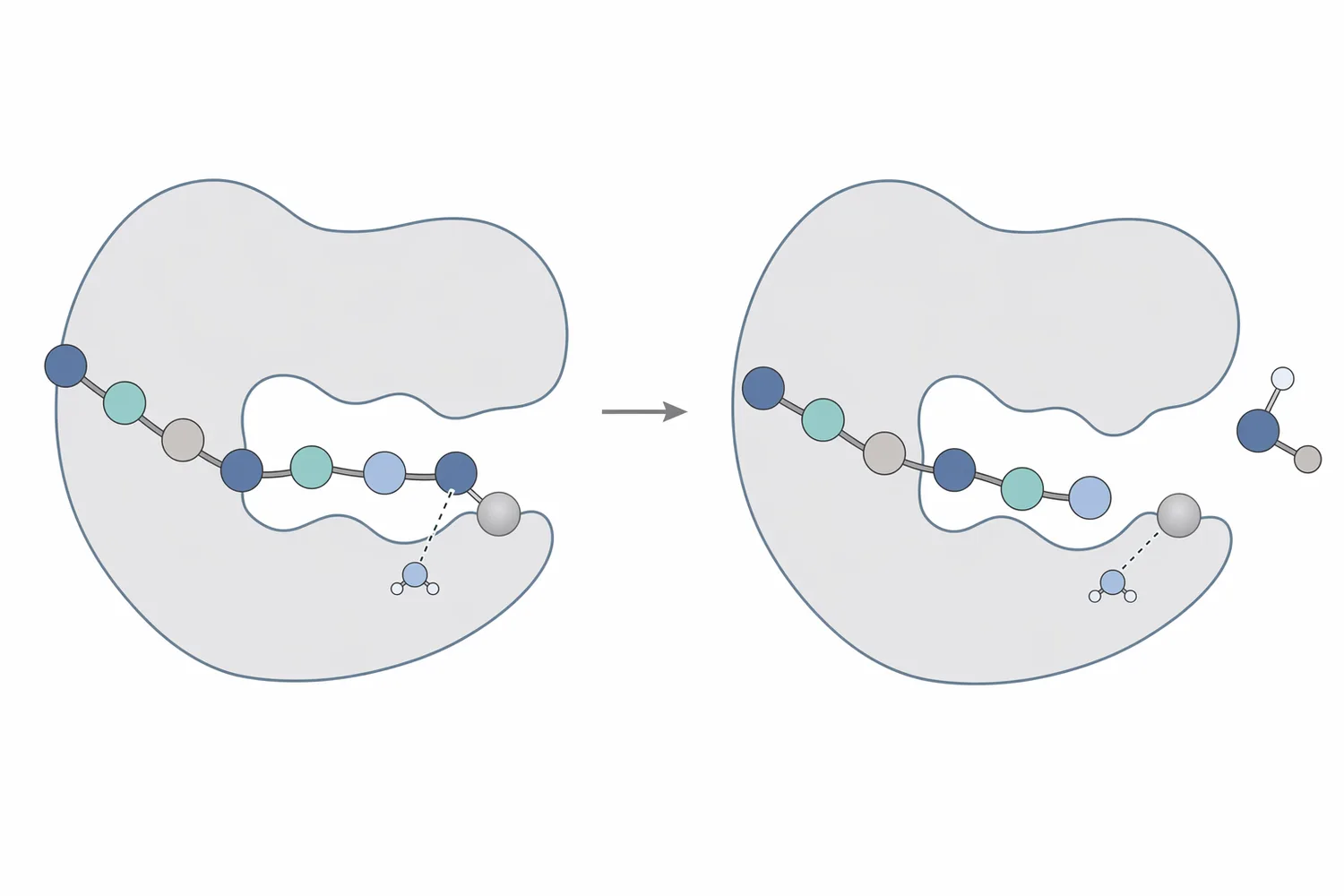
Once accessible peptide fragments are present, aminopeptidase recognizes the N-terminal region of a peptide. It binds the peptide end in a way that positions the first peptide bond next to the catalytic machinery. The enzyme then catalyzes hydrolysis of that bond, releasing the N-terminal amino acid residue and leaving behind a peptide that is one residue shorter. The shortened peptide may then become the next substrate for another round of trimming, depending on the enzyme and the next residue in sequence [1].
This stepwise trimming changes several measurable properties of a hydrolysate. The average peptide length can decrease; the concentration of free amino acids can rise; the balance between hydrophobic and hydrophilic residues in soluble fractions can shift; and the peptide profile becomes different from a hydrolysate made by an endoprotease alone. In food and nutrition applications, these molecular changes can affect solubility, taste, digestibility, and the availability of amino acids for further formulation or processing [2].
Aminopeptidase action is also sequence-dependent. Some peptide ends are favorable; others slow or stop the reaction. If the N-terminus is chemically blocked, buried in a folded structure, sterically hindered, or followed by a residue that the enzyme handles poorly, trimming may be limited. This is why aminopeptidase is best understood as a targeted finishing enzyme in protein hydrolysis rather than a universal one-enzyme route to complete protein-to-amino-acid conversion [1].
Protein hydrolysis can be performed by chemical or enzymatic methods. Chemical hydrolysis, especially acid hydrolysis, can break proteins extensively, but harsh conditions can also degrade sensitive amino acids, cause side reactions, or require neutralization and downstream cleanup. Enzymatic hydrolysis is valued because it can operate under milder conditions and with greater biochemical selectivity, although the result depends strongly on the enzyme type and the substrate [2].
| Hydrolysis approach | Main mode of action | What it tends to change | Practical implication |
|---|---|---|---|
| Acid hydrolysis | Chemical cleavage of peptide bonds under strongly acidic conditions | Can drive extensive protein breakdown, but may damage or alter some amino acids | Useful where harsh treatment is acceptable, but less selective |
| Alkaline hydrolysis | Chemical cleavage under alkaline conditions | Breaks peptide bonds but can promote racemization or other chemical changes | Can be effective, but product quality must account for side reactions |
| Endoprotease hydrolysis | Enzyme cuts internal peptide bonds within the protein or peptide chain | Converts large proteins into peptide mixtures with new internal cleavage points | Often used to open up proteins and generate accessible fragments |
| Aminopeptidase hydrolysis | Enzyme removes residues from the free N-terminal end | Shortens peptides from one end and releases amino acids when residues are compatible | Useful for peptide trimming, hydrolysate refinement, and free amino acid formation |
| Carboxypeptidase hydrolysis | Enzyme removes residues from the C-terminal end | Shortens peptides from the opposite end | Complements aminopeptidase where C-terminal trimming is needed |
The comparison shows why aminopeptidase occupies a distinct place in protein hydrolysis. It is not a broad chemical hydrolysis method, and it is not primarily an internal cutter. Its value lies in converting peptide fragments from the end, residue by residue, adding a level of controlled terminal processing that a single endoprotease does not provide [1].
A peptide bond is chemically stable enough that spontaneous hydrolysis in water is slow under ordinary conditions. Proteolytic enzymes accelerate the reaction by binding the substrate in an active site, positioning the target bond, activating a water molecule or catalytic group, and stabilizing the transition state as the bond is broken. This reduces the energy barrier for hydrolysis and allows peptide-bond cleavage under much milder processing conditions than strong chemical hydrolysis [2].
Many aminopeptidases are metalloproteases. In these enzymes, a metal ion at or near the active site helps polarize the peptide bond and activate water for nucleophilic attack. The metal also helps organize the geometry of the active site so that the N-terminal amino group and the adjacent peptide bond are correctly positioned. In practical terms, the enzyme is not simply “cutting” mechanically; it is creating a microenvironment where a normally slow hydrolysis reaction becomes fast and selective [1].
The enzyme’s binding pocket explains its directional behavior. Aminopeptidase must recognize the free amino terminus of the peptide, so the first residue and the local structure around the N-terminus strongly influence whether the peptide is a good substrate. After the first residue is released, the new N-terminus has a different amino acid exposed; the enzyme may continue trimming, slow down, or stop depending on how well that new residue fits its specificity [1].
Some aminopeptidases are described as broad in specificity, while others prefer particular N-terminal residues or peptide features. This is why two protein hydrolysates treated with aminopeptidase can behave differently: a whey, soy, collagen, fish, yeast, or microbial protein hydrolysate may present different peptide-end sequences after primary hydrolysis. The same enzyme class performs the same general chemistry, but the substrate’s peptide map determines how far and how evenly trimming proceeds [1].
Large intact proteins offer relatively few peptide ends compared with the number of internal peptide bonds. Because aminopeptidase works from a free N-terminus, it usually has more productive substrate access after endoproteases have already cleaved the protein internally. Every internal cut made by an endoprotease creates new peptide fragments, and each fragment may provide a new N-terminal end for aminopeptidase to process [1].
This division of labor is useful. The endoprotease rapidly reduces the molecular size of the protein and opens the structure. Aminopeptidase then trims the resulting peptides, releasing N-terminal residues and altering the final peptide and amino acid distribution. The two activities can therefore produce a hydrolysate that is different from either enzyme acting alone [2].
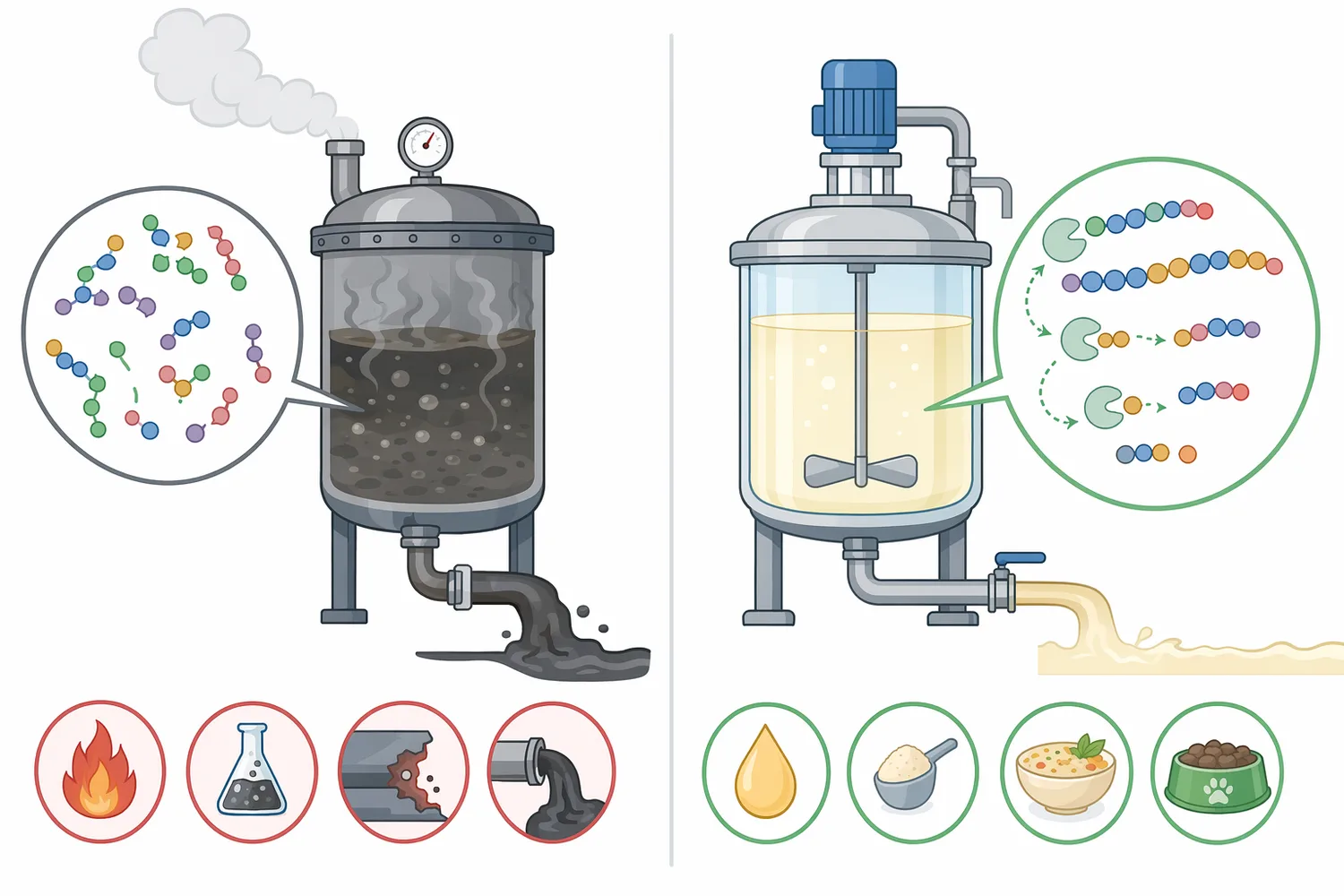
For example, a protein substrate treated only with an endoprotease may contain many medium-length peptides. Adding aminopeptidase activity can reduce some of those peptides further from the N-terminal side, increasing the proportion of smaller peptides and free amino acids where the peptide sequence permits. This is especially relevant where the desired product is not merely “partially hydrolyzed protein” but a hydrolysate with a higher degree of terminal peptide breakdown [1].
The limitation is equally important: aminopeptidase cannot create its own internal access points in the same way an endoprotease can. If the peptide ends are unavailable, chemically blocked, structurally inaccessible, or unfavorable for the enzyme’s specificity, the reaction will slow or stop. A realistic expectation is that aminopeptidase contributes targeted N-terminal trimming within a broader hydrolysis system, rather than guaranteeing total hydrolysis of every peptide bond [1].
Like other enzymes used in protein hydrolysis, aminopeptidase performance is affected by temperature, pH, reaction time, substrate concentration, accessibility of peptide ends, and the presence of substances that stabilize or inhibit the enzyme. These factors influence both reaction rate and final hydrolysate composition because they affect how often enzyme and substrate meet in the right orientation and how long the enzyme remains active [2].
Temperature affects molecular motion and enzyme stability. A warmer reaction generally increases collision frequency and catalytic rate up to the point where the enzyme begins to lose structure. If the enzyme unfolds or the active site geometry is disrupted, activity falls. Conversely, very low temperatures may preserve structure but slow hydrolysis because substrate and enzyme molecules move and react more slowly [2].
pH affects the ionization state of amino acid side chains in the enzyme and substrate. The active site must hold the right charges for substrate binding and catalysis, while the peptide’s N-terminal amino group must be presented in a compatible form. If pH moves too far from the enzyme’s functional range, binding can weaken, catalytic residues may lose the correct protonation state, and the enzyme may become unstable [1].
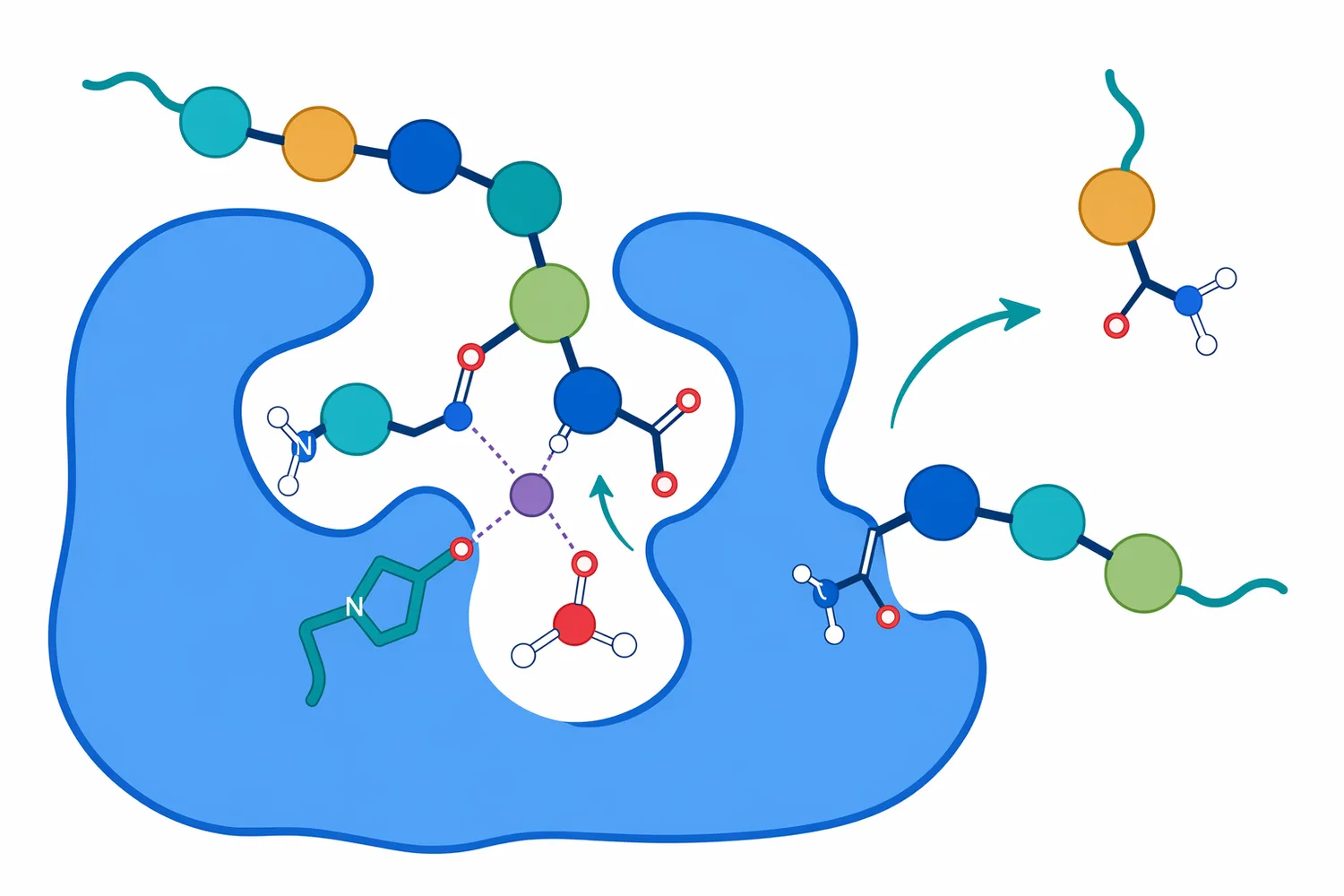
Metal availability and inhibitors can also matter for aminopeptidases because many members of the class are metalloenzymes. Chelating compounds can interfere with metal-dependent enzymes by binding metal ions needed for catalysis. In a process environment, this means the surrounding matrix—not only the protein substrate—can influence aminopeptidase performance if it contains salts, chelators, reducing agents, complexing ingredients, or other components that affect the active site [1].
The substrate itself is often the largest variable. A highly denatured or pre-hydrolyzed protein may present many accessible peptide ends, while an aggregated or crosslinked protein may present fewer. Peptide sequences generated by the first hydrolysis step determine which N-terminal residues aminopeptidase encounters next. As hydrolysis proceeds, the reaction may become slower because easy substrates are consumed first, leaving peptides that are less compatible or less accessible [1].
Food protein hydrolysates are used because hydrolysis can improve solubility, modify functional behavior, and generate peptides and amino acids with different nutritional or sensory characteristics from the original protein. Enzymatic hydrolysis is especially attractive where mild conditions and controlled product profiles are preferred over harsh chemical breakdown [2].
Aminopeptidases have a recognized role in food-related protein processing because they can release N-terminal amino acids from peptides produced during fermentation, maturation, or enzymatic hydrolysis. In cheese, fermented foods, yeast-derived ingredients, savory bases, and protein hydrolysates, terminal peptide trimming can influence the balance of peptides and amino acids that contribute to taste and functional performance [1].
One important food-processing concept is bitterness management. Bitter notes in protein hydrolysates are often associated with certain hydrophobic peptide sequences generated during protein breakdown. Aminopeptidase can reduce bitterness in some systems by trimming peptide ends and converting bitter peptide fragments into smaller peptides or free amino acids, although the effect depends on the peptide sequence and the enzyme’s specificity [1].
The mechanism is concrete: bitterness is not removed by masking alone; the peptide molecules themselves are changed. When aminopeptidase removes a residue from the N-terminus, it changes peptide length, terminal charge, hydrophobic exposure, and receptor interaction potential. If repeated trimming breaks down bitter peptides into less bitter fragments or free amino acids, the sensory profile can shift [1].
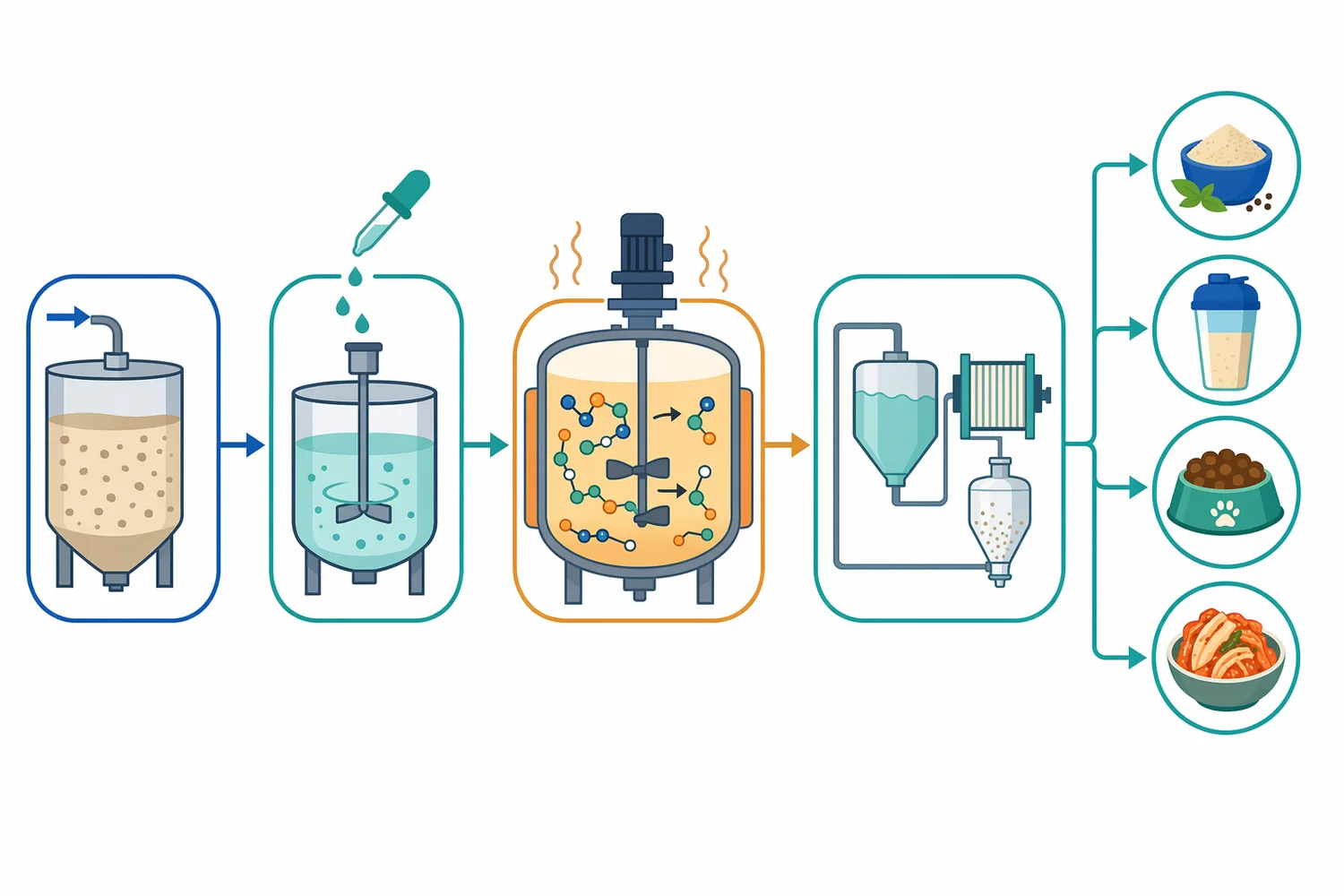
Protein hydrolysis is also used to generate amino acids and smaller peptides for nutritional, biochemical, and formulation purposes. Chemical hydrolysis can produce broad amino acid release, but enzymatic processing is often chosen where milder conditions, lower side reactions, or more controlled peptide profiles are desired [2].
Aminopeptidase contributes to amino acid release by removing residues from peptide N-termini. This is different from simply increasing the number of internal cuts: each aminopeptidase event converts the terminal residue into a free amino acid and leaves a shorter peptide behind. Over repeated cycles, compatible peptides can be progressively shortened, increasing the free amino acid fraction [1].
In nutritional hydrolysates, this can matter because the balance of intact peptides, small peptides, and free amino acids affects solubility, absorption behavior, osmolality, taste, and formulation properties. Aminopeptidase is therefore useful where the intended hydrolysate benefits from additional terminal breakdown rather than only internal fragmentation [2].
However, the enzyme should not be viewed as a universal converter of all proteins into free amino acids. Complete conversion depends on the full hydrolysis system, including prior protein opening, the mix of peptide sequences produced, reaction conditions, and the compatibility of the exposed N-termini with the aminopeptidase. The best-supported role is targeted enhancement of peptide trimming and amino acid release within suitable hydrolysis workflows [1].
Protein hydrolysis can produce peptides with biological or functional activity, and the final sequence of those peptides is often critical. A single amino acid added or removed from the N-terminus can change charge, hydrophobicity, receptor binding, enzyme inhibition, solubility, or stability. Aminopeptidase therefore has value where controlled N-terminal modification of peptide mixtures is part of the desired processing outcome [1].
In bioactive peptide work, aminopeptidase can be helpful or harmful depending on the target. If activity depends on a precise N-terminal sequence, excessive trimming could reduce activity. If activity emerges only after removal of a leader residue or shortening of a precursor peptide, aminopeptidase can help generate a more active form. The same chemistry—N-terminal hydrolysis—can therefore refine or erode bioactivity depending on the peptide system [1].
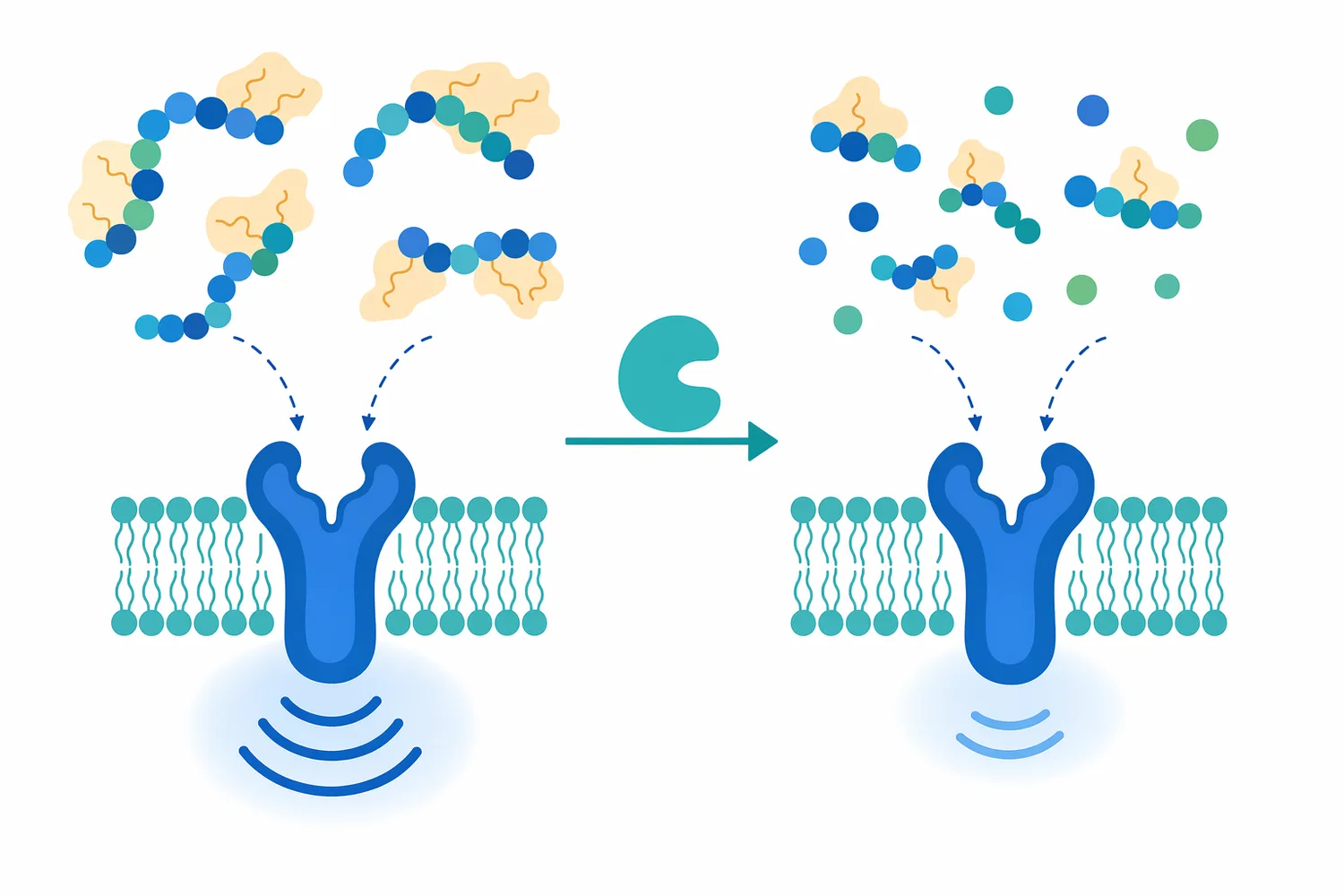
Research applications also use aminopeptidases to study peptide metabolism, protein degradation, antigen processing, and enzyme specificity. In biological systems, aminopeptidases participate in protein maturation, peptide turnover, and regulation of peptide signals. Their industrial relevance is closely linked to this biological function: they are naturally suited to processing peptide termini with high specificity [1].
For applied hydrolysis, this means aminopeptidase can support peptide-profile adjustment without resorting to harsh chemical conditions. The enzyme changes the peptide mixture by defined terminal cleavage rather than random degradation, which is useful when the goal is controlled modification rather than complete nonspecific breakdown [2].
Microbial aminopeptidases are particularly important in applied enzyme use because microorganisms provide diverse enzyme families with different substrate preferences and stability characteristics. Literature on microbial aminopeptidases describes them as valuable biocatalysts in food, pharmaceutical, and other high-value applications, with continuing interest in enzymes that offer useful specificity and processing behavior [1].
This diversity is one reason aminopeptidase should be discussed as an enzyme class rather than a single uniform activity. Different aminopeptidases may vary in molecular structure, metal dependence, optimal reaction environment, residue preference, and whether they act broadly or narrowly on peptide substrates. Those differences influence how a hydrolysate changes during processing [1].
From a practical standpoint, the shared defining feature remains N-terminal peptide trimming. Whether the enzyme is used in food hydrolysates, peptide processing, amino acid release, or research workflows, the core value is the same: it acts on peptide ends created by protein breakdown and pushes compatible fragments further along the path toward shorter peptides and free amino acids [1].

Aminopeptidase is a strong fit when a hydrolysis workflow needs terminal peptide trimming rather than only internal protein cleavage. It is especially relevant after a primary protease has generated peptide fragments with free N-termini, because those fragments provide the substrate access required for aminopeptidase action [1].
The enzyme’s effects are best described in terms of hydrolysate profile changes: increased N-terminal residue release, shorter compatible peptides, higher free amino acid contribution, and altered peptide composition. These are mechanistic outcomes of the enzyme’s exopeptidase activity, not generic “protein breakdown” claims [1].
At the same time, aminopeptidase has natural boundaries. It requires accessible peptide ends, depends on enzyme-specific substrate recognition, and may be affected by pH, temperature, inhibitors, metal interactions, and the composition of the protein matrix. It is therefore most accurately positioned as a targeted protein hydrolysis enzyme used to refine peptide mixtures, not as a standalone guarantee of complete hydrolysis across all protein substrates [1].
Protein Hydrolysis Enzymes Aminopeptidase from Enzymes.bio is supplied for professional use and sold directly online by the 1 kg unit. The purchasing process is straightforward: add the 1 kg product to the online cart, pay online, and the order is processed and shipped.
Each order includes a Certificate of Analysis and Safety Data Sheet for documentation and responsible handling. The product is intended for buyers who need an aminopeptidase enzyme for protein hydrolysis workflows involving peptide trimming, amino acid release, and hydrolysate refinement.
Sold by the 1 kg unit, in stock and ready to ship. Order directly on our store — pay online and we process your order. A Certificate of Analysis and Safety Data Sheet are included with every order.
Buy Protein Hydrolysis Enzymes Aminopeptidase →Numbered in order of first citation. Open-access sources, each verified reachable at publication; citation numbers in the text link here.