
Pullulanase enzyme for beer brewing is a starch-debranching enzyme used to convert branched dextrins into structures that other brewing enzymes can more readily saccharify. In practical brewing terms, it supports higher wort fermentability, lower residual carbohydrate, and a drier finished beer when used as part of a controlled starch-conversion process. It is especially relevant for highly attenuated beers, low-carbohydrate formulations, and adjunct-based recipes where branched starch fragments can limit complete conversion.
Enzymes.bio supplies Pullulanase Enzyme for Beer Brewing for direct online purchase by the 1 kg unit. Buyers place and pay for the order online; the order is then processed and shipped, with a Certificate of Analysis and Safety Data Sheet included with the order.
Pullulanase belongs to the group of amylolytic enzymes used to modify starch-derived carbohydrates. Its brewing value comes from a very specific action: it hydrolyzes branch points in starch fragments, particularly the α-1,6 linkages found in amylopectin-derived dextrins. Malt starch is not simply a straight glucose chain; it contains amylose, which is mostly linear, and amylopectin, which is highly branched. During mashing, those branched regions can become “limit dextrins” that resist complete conversion unless debranching activity is available [1].
In a typical mash, malt enzymes begin the work. α-Amylase cuts internal α-1,4 bonds in gelatinized starch, reducing large starch molecules into shorter dextrins. β-Amylase releases maltose from non-reducing chain ends but slows or stops near branch points. Glucoamylase, when used, can release glucose from chain ends and can contribute further saccharification. Pullulanase complements these enzymes by removing branch barriers, creating more accessible linear segments and more chain ends for saccharifying enzymes to attack [2].
This is why pullulanase is best understood as a carbohydrate-conversion support enzyme, not a flavoring enzyme, foam stabilizer, bitterness modifier, or clarification aid. Its main influence is on the carbohydrate profile of wort and beer: how much of the starch-derived material becomes fermentable sugar, and how much remains as residual dextrin contributing body and sweetness. Commercial brewing-enzyme literature describes pullulanase-containing systems alongside α-amylase and amyloglucosidase for maximizing starch conversion into fermentable sugars.
The key substrate for pullulanase in brewing is the branched dextrin fraction produced during starch breakdown. When starch granules are heated in the mash or adjunct cooker, their structure swells and becomes more enzyme-accessible. α-Amylase then cuts the long chains into smaller pieces, but many of those pieces still contain α-1,6 branch points. These branch points create compact carbohydrate structures that are less accessible to enzymes that work along linear α-1,4 chains [1].
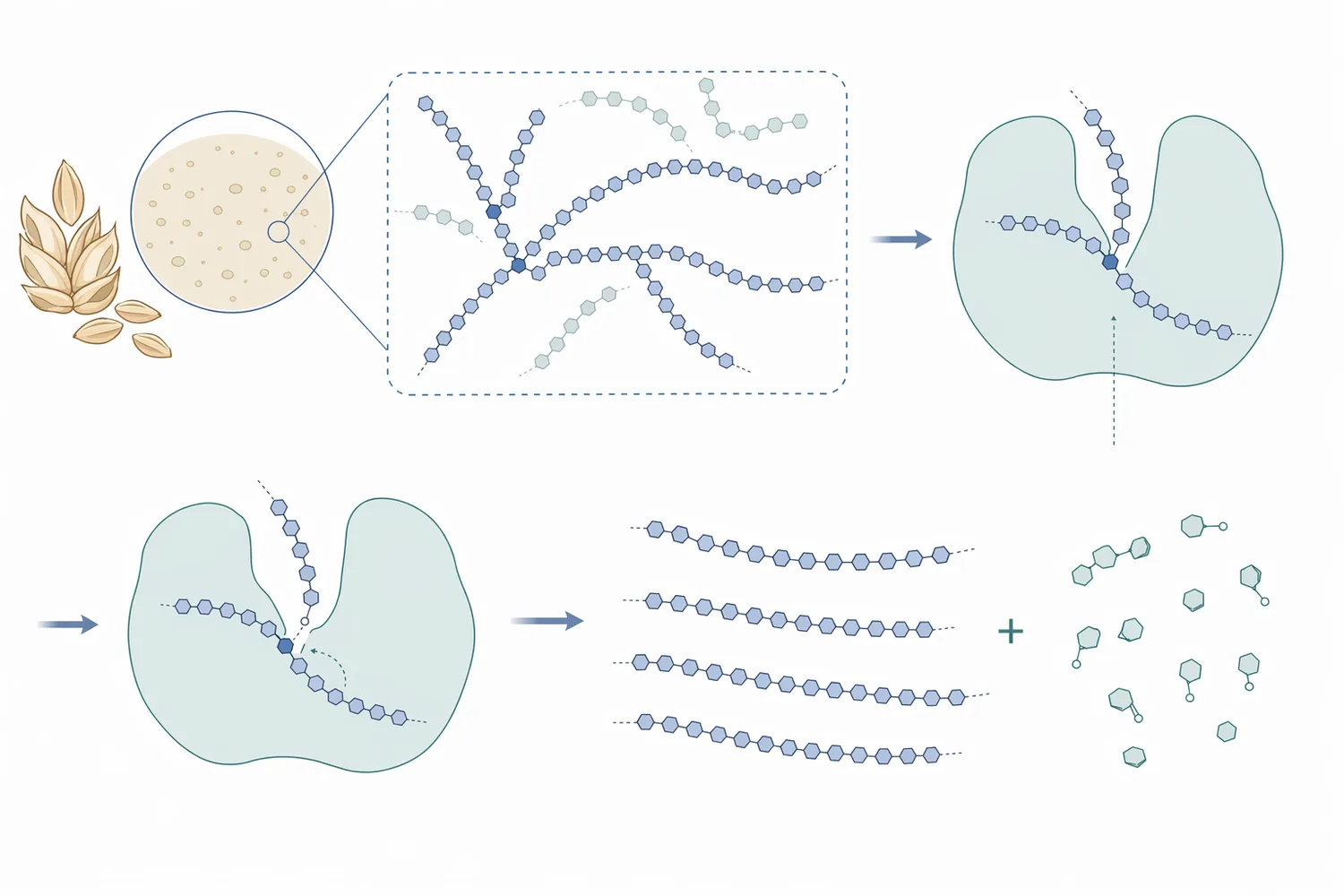
Pullulanase attacks those branch points. Mechanistically, it cleaves the α-1,6 glycosidic linkages that connect side chains to the main chain in branched glucans. Once the branch is removed, the former clustered dextrin becomes a set of more linear fragments. Those fragments are easier for other amylolytic enzymes to process because the debranched chains present additional accessible ends and fewer structural interruptions [3].
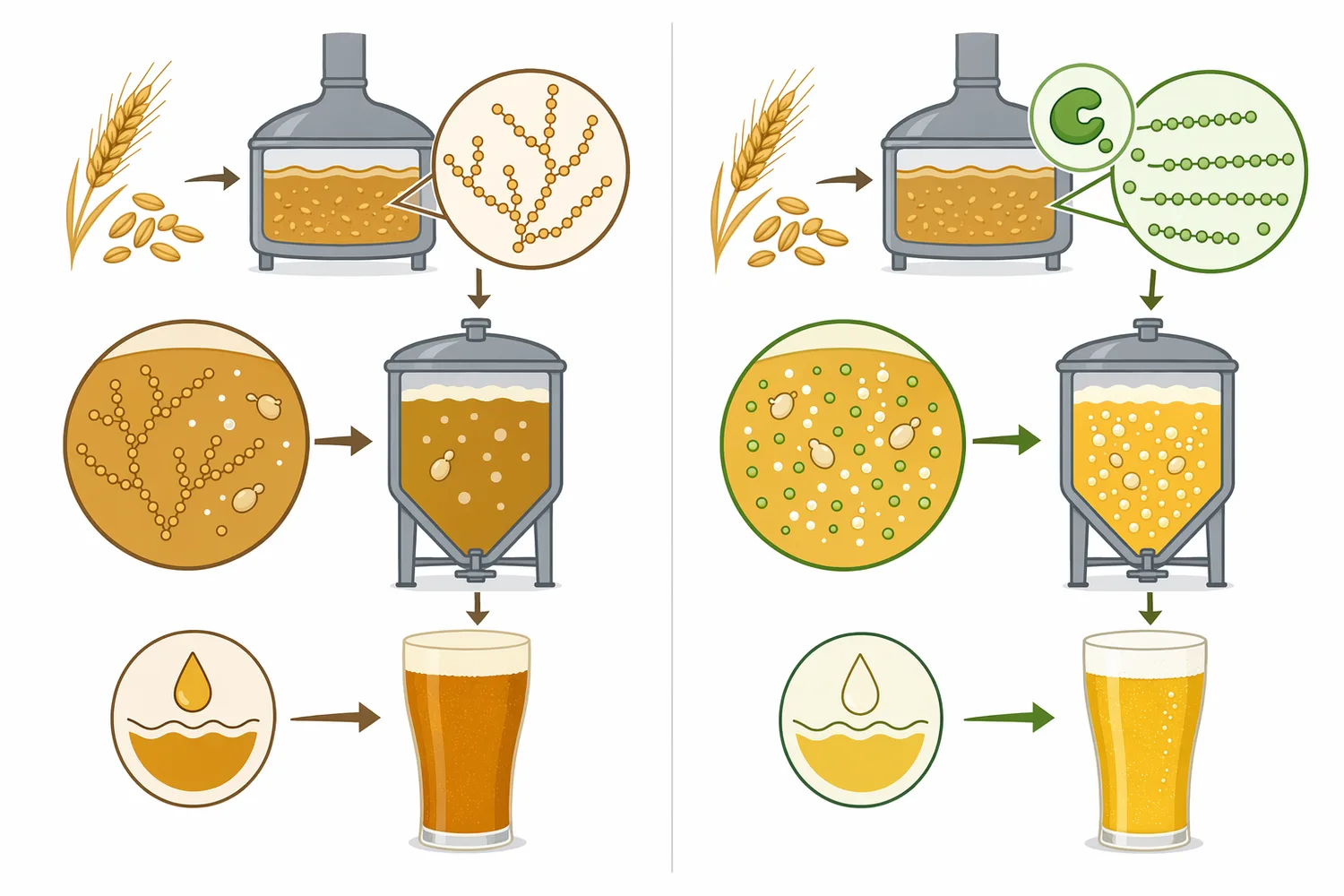
The practical result is a shift in wort carbohydrate composition. Instead of leaving a higher proportion of branched, non-fermentable dextrins, the enzyme system can convert more starch-derived material into fermentable sugars such as glucose, maltose, and other yeast-utilizable carbohydrates, depending on the enzyme mix and mash process. For the brewer, that can mean lower final gravity, reduced residual sweetness, and a cleaner dry finish when the beer style calls for it.
Pullulanase does not directly ferment anything. Yeast still performs fermentation, and yeast health, wort composition, oxygen management, and fermentation temperature remain central to beer quality. Pullulanase acts upstream by changing the carbohydrate feedstock that yeast receives. That upstream change can be important because the balance of fermentable and non-fermentable carbohydrates affects attenuation, alcohol formation, mouthfeel, and perceived dryness [4].
Pullulanase is most useful when its role is understood alongside the enzymes it complements. The table below compares the major starch-conversion functions conceptually, without treating any enzyme as a universal substitute for the others.
| Enzyme function | Primary action on starch-derived material | Brewing effect | Where pullulanase fits |
|---|---|---|---|
| α-Amylase | Cuts internal α-1,4 bonds in gelatinized starch | Rapidly reduces starch viscosity and creates dextrins | Produces branched dextrins that pullulanase can further open |
| β-Amylase | Releases maltose from non-reducing chain ends | Builds maltose fermentability during traditional mashing | Can be limited by branch points in amylopectin-derived dextrins |
| Glucoamylase / amyloglucosidase | Releases glucose from chain ends | Supports high attenuation and dry beer profiles | Works more effectively when pullulanase exposes additional linear chains |
| Pullulanase | Cleaves α-1,6 branch points in branched dextrins | Reduces branch barriers and supports more complete saccharification | Debranching enzyme that improves access for saccharifying enzymes |
The important distinction is that α-amylase mainly fragments starch, while pullulanase changes the architecture of branched fragments. If α-amylase is like cutting a large tree into smaller sections, pullulanase is like removing the forks and side branches so the remaining pieces can be processed more completely. That structural change is why pullulanase is commonly associated with enzyme systems designed for high fermentability rather than with ordinary wort liquefaction alone [2].
Pullulanase is most relevant when the desired beer profile is dry, crisp, and highly attenuated. In these beers, residual dextrins are intentionally minimized so yeast can ferment a larger share of the carbohydrate extract. Commercial brewing-enzyme descriptions associate pullulanase-containing blends with maximizing starch conversion into fermentable sugars for highly attenuated and low-carbohydrate beer production.
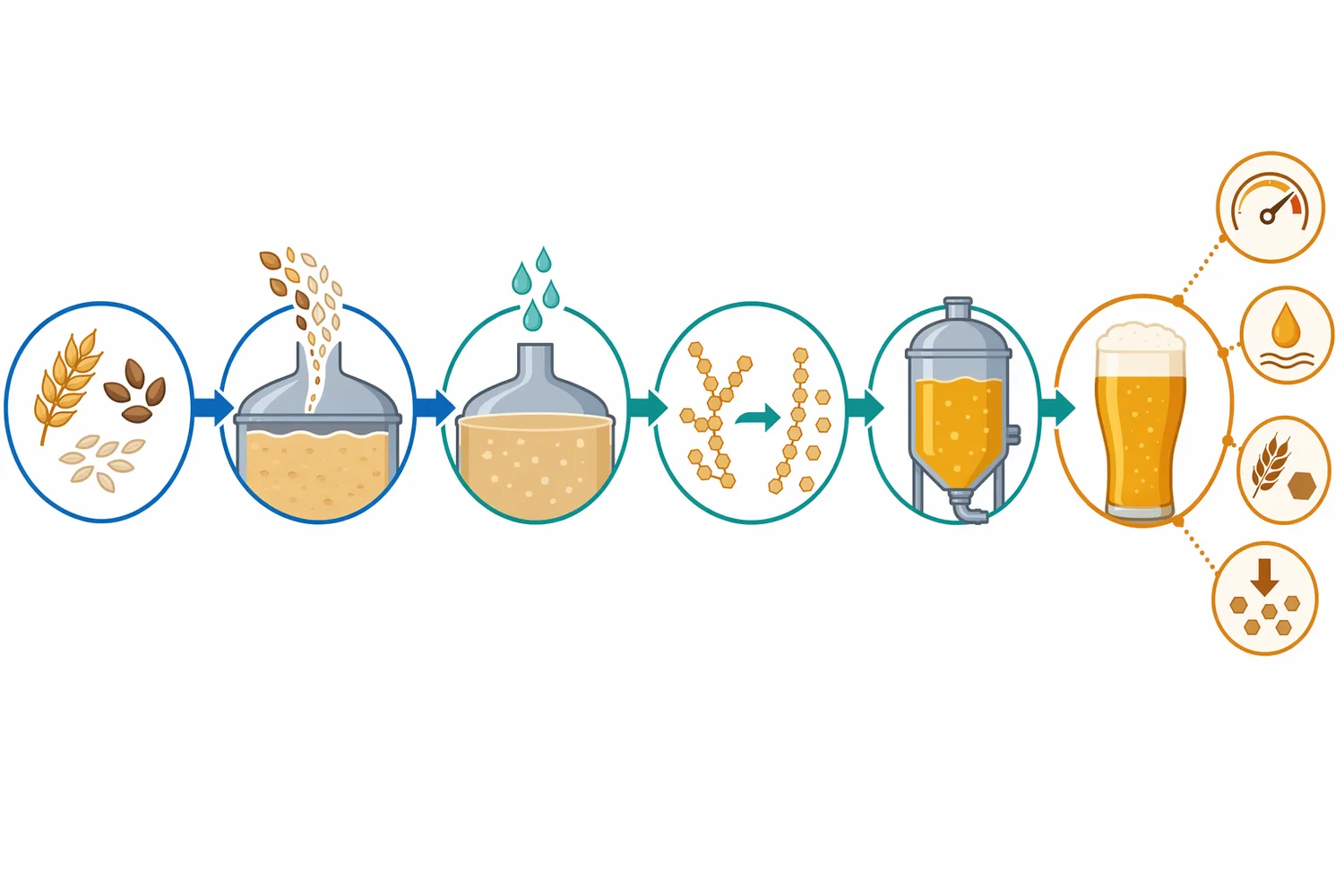
In sensory terms, reducing residual dextrin changes more than a gravity number. Dextrins contribute fullness, viscosity, and a rounded palate. When pullulanase supports additional dextrin conversion, the finished beer can present as lighter-bodied, less sweet, and more sharply attenuated. That can be desirable in dry lagers, “brut” styles, light beers, and beers positioned around lower residual carbohydrate, but it may be less appropriate for styles where body and malt fullness are central.
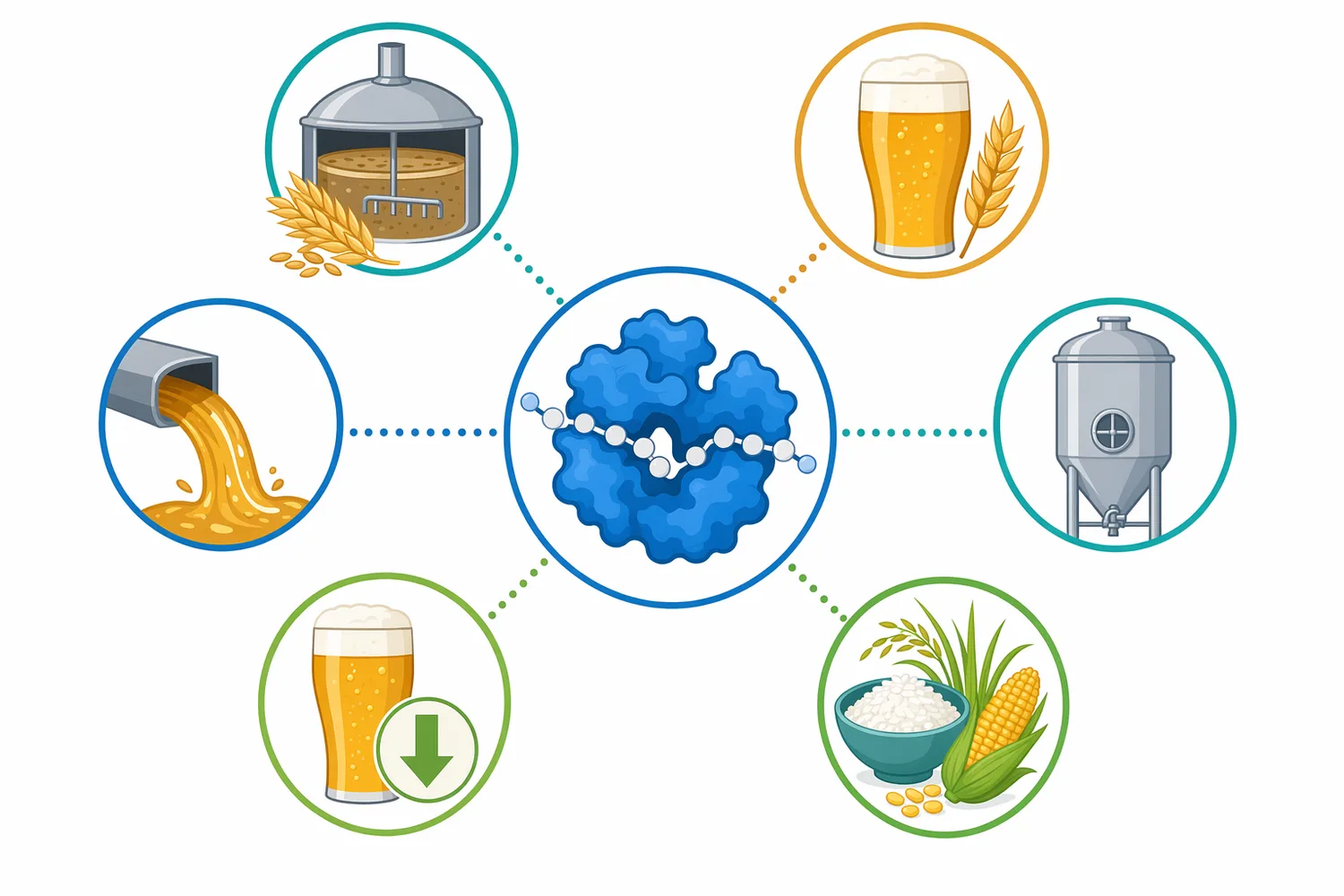
Low-carbohydrate beer depends on converting as much starch-derived carbohydrate as practical into fermentable sugars and then allowing yeast to ferment those sugars. Pullulanase supports that objective by reducing the pool of branched dextrins that would otherwise remain less fermentable. The enzyme does not remove carbohydrate by itself; rather, it makes more carbohydrate accessible for further enzymatic conversion and fermentation.
This distinction matters because low-carbohydrate brewing is a system outcome. Wort production, saccharification, yeast performance, fermentation completion, and stabilization all contribute to the final beer composition. Pullulanase is valuable because it acts at one of the main structural bottlenecks in starch conversion: the α-1,6 branch linkages that limit complete hydrolysis of amylopectin-derived material [1].
Adjunct brewing can introduce starch sources with different gelatinization behavior, granule structure, amylose-to-amylopectin ratio, and natural enzyme contribution compared with well-modified malt. When a recipe uses a high proportion of adjunct starch, the mash may rely more heavily on added enzymes to achieve predictable conversion. Pullulanase can help when the adjunct starch produces branched dextrin fractions that are not fully converted by the base malt enzyme system [5].
A cassava beer study illustrates the broader principle that starch structure strongly influences fermentable sugar formation in wort. In that work, extrusion-induced modification of cassava starch structure increased fermentable sugar content in wort, showing that making starch more accessible can materially improve brewing-relevant carbohydrate conversion [5]. Pullulanase works through a different mechanism than extrusion, but the brewing lesson is similar: changing starch structure can change how much fermentable extract is ultimately available.
Alternative grains and non-barley materials are increasingly important in craft and specialty brewing, including gluten-free beer development and regionally distinctive formulations. Research on gluten-free craft beer emphasizes that process design affects quality attributes and consumer expectations, which is directly relevant when brewers work with non-standard starch sources [6]. Pullulanase can be part of the carbohydrate-management toolkit for these beers when a dry or highly fermentable profile is desired.
High-gravity brewing places more stress on starch conversion because the mash and wort contain a greater concentration of extract. When extract is not efficiently converted into fermentable sugars, the resulting wort may carry more residual dextrin than intended. Pullulanase can support fermentability in this setting by debranching dextrins formed during liquefaction and saccharification.
This does not make pullulanase a complete solution for high-gravity brewing. Fermentation performance still depends on yeast strain, pitch rate, oxygenation, nutrient balance, osmotic stress, and ethanol tolerance. However, improving the fermentability of the carbohydrate fraction can help align wort composition with a high-attenuation target before fermentation begins [4].
The strongest application evidence for pullulanase in beer comes from its inclusion in commercial brewing enzyme systems designed to increase fermentable sugar production. These systems typically combine starch-liquefying, saccharifying, and debranching functions because each enzyme addresses a different structural feature of starch. Pullulanase is included because branch points are a real limitation in converting amylopectin-derived dextrins into fermentable sugars.
Broader starch-enzyme research supports the same biochemical logic. Reviews of enzymatic starch modification describe how enzymes alter starch structure, hydrolysis behavior, physicochemical properties, and digestibility by targeting specific glycosidic linkages and structural regions within starch granules or hydrolyzed starch fragments [1]. In brewing, those same structural changes translate into practical outcomes such as wort fermentability, final gravity, and residual carbohydrate.
Pullulanase-specific research also supports its role as a debranching enzyme. Studies of pullulanase interactions with cyclic and branched glucan-like substrates help explain substrate binding and hydrolysis behavior at a molecular level, reinforcing that pullulanase activity is not generic “starch breakdown” but targeted action on structural features associated with branching [3]. That specificity is exactly why pullulanase is paired with other amylolytic enzymes instead of replacing them.
Food-starch studies outside beer further show that pullulanase can materially change starch functionality. For example, pullulanase-assisted processing has been reported to influence instant properties, digestibility, and structural behavior in yam flour systems, demonstrating that debranching can change how starch-based materials hydrate, break down, and become enzymatically accessible [7]. While yam flour is not wort, the underlying mechanism—debranching of starch-derived molecules—is relevant to brewing carbohydrate conversion.
Fermentability is not only an efficiency metric; it is a quality parameter. A beer with more fermentable wort may finish drier and stronger, while a beer with more residual dextrin may finish fuller, sweeter, and heavier. Pullulanase helps move that balance toward attenuation when that is the formulation goal. The benefit is not simply “more enzyme activity,” but more precise control over which carbohydrates remain in the beer.
This control matters because carbohydrate composition can also change later in the process if enzymes are unintentionally introduced or remain active. Research into dry-hopped beer has shown that hop-associated enzymatic effects can alter fermentable and non-fermentable carbohydrate composition, a phenomenon brewers often discuss in relation to unexpected attenuation changes after dry hopping. That example reinforces the importance of managing dextrin hydrolysis deliberately rather than allowing it to occur unpredictably.
The same principle applies to beer stability and sensory consistency. If a beer is intended to finish crisp and dry, incomplete conversion may leave excess body and sweetness. If a beer is intended to be malt-rounded, excessive conversion may strip fullness. Pullulanase is therefore most valuable when the desired carbohydrate profile is clearly dry, highly attenuated, or low in residual dextrin.
Pullulanase is generally used during the starch-conversion stages of brewing, where starch or starch-derived dextrins are still accessible to enzyme action. That may include mashing, adjunct cooking workflows, liquefaction, or saccharification steps, depending on the brewery’s process and raw material base. The important point is that pullulanase needs contact with branched dextrin substrate before the process reaches conditions that stop enzyme activity [1].
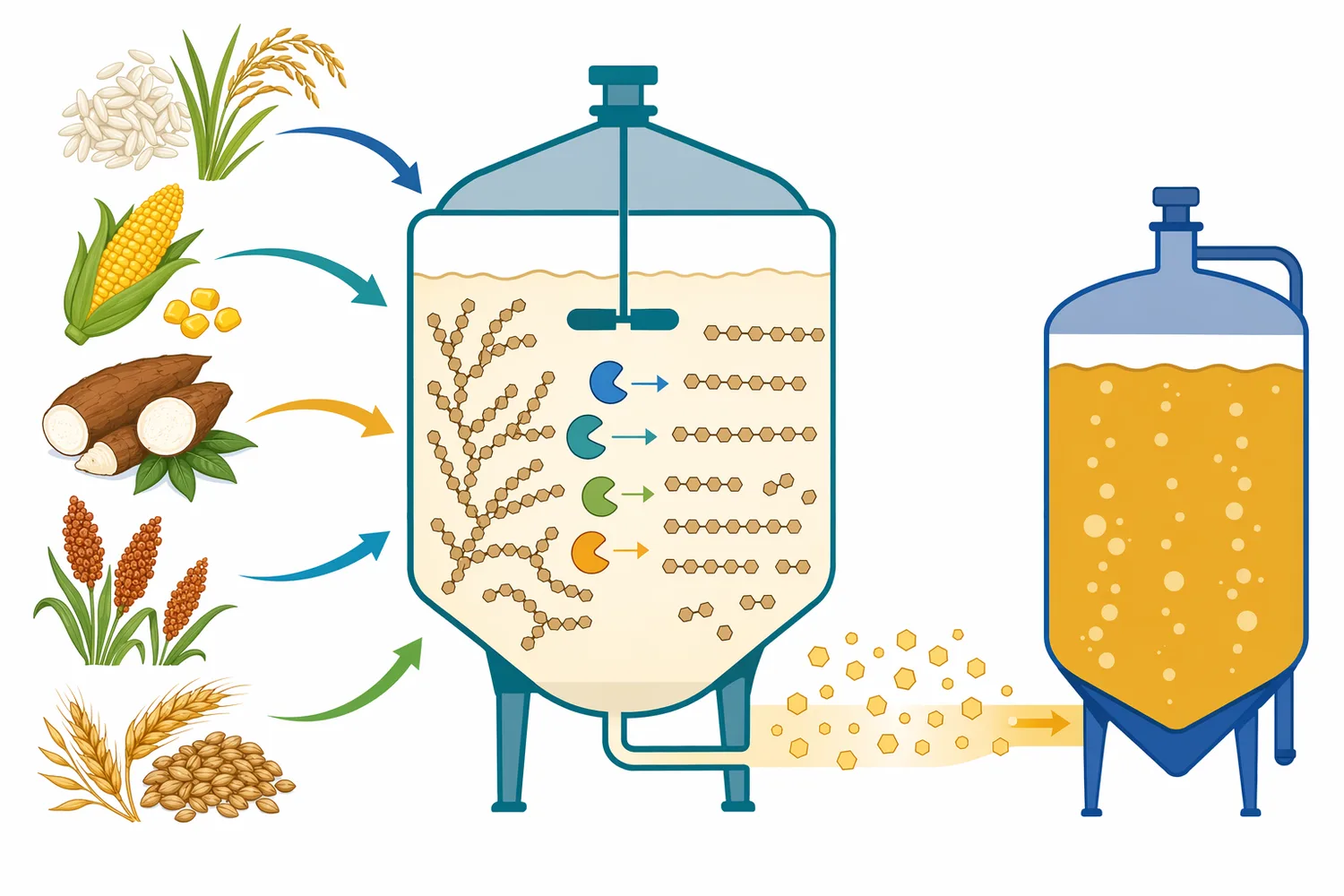
In normal brewing, later high-temperature operations such as wort boiling reduce or stop enzyme activity. This is useful because it confines enzymatic carbohydrate conversion to the intended production stage. Once the enzyme has done its work and the wort is boiled, the brewer can proceed into fermentation with a more defined carbohydrate profile.
Temperature, pH, time, substrate accessibility, and the presence of complementary enzymes all influence the observed outcome. These variables do not change the fundamental mechanism of pullulanase, but they affect how much debranching occurs during the available process window. In practice, pullulanase performs best as part of an integrated mashing or saccharification approach rather than as a late corrective addition after the main starch-conversion opportunity has passed [2].
Mashing profile and raw material selection both shape wort composition. Recent brewing research on barley selection and mashing profile has shown that process choices influence the content and structure of arabinoxylans in beer, illustrating how cereal chemistry and mash conditions affect finished beer composition beyond simple sugar production [8]. Although arabinoxylans are not the same substrate as pullulanase-targeted dextrins, the study underscores a broader brewing reality: cereal polymers respond to process design.
For pullulanase, the relevant cereal polymer is starch. Malt quality, adjunct type, particle size, gelatinization, mash rest design, and the presence of other amylolytic enzymes all influence how much branched dextrin is produced and how accessible it remains. Pullulanase is most useful where branch-point removal creates a measurable advantage for downstream saccharification [1].
In adjunct-heavy brewing, this can be especially important because adjuncts may dilute the natural enzyme contribution from malt. Rice, maize, cassava, sorghum, and other starch sources can produce excellent beers, but they often benefit from deliberate carbohydrate-conversion support. Pullulanase contributes by reducing structural resistance in branched starch fragments, helping the rest of the enzyme system convert more extract into fermentable material [5].
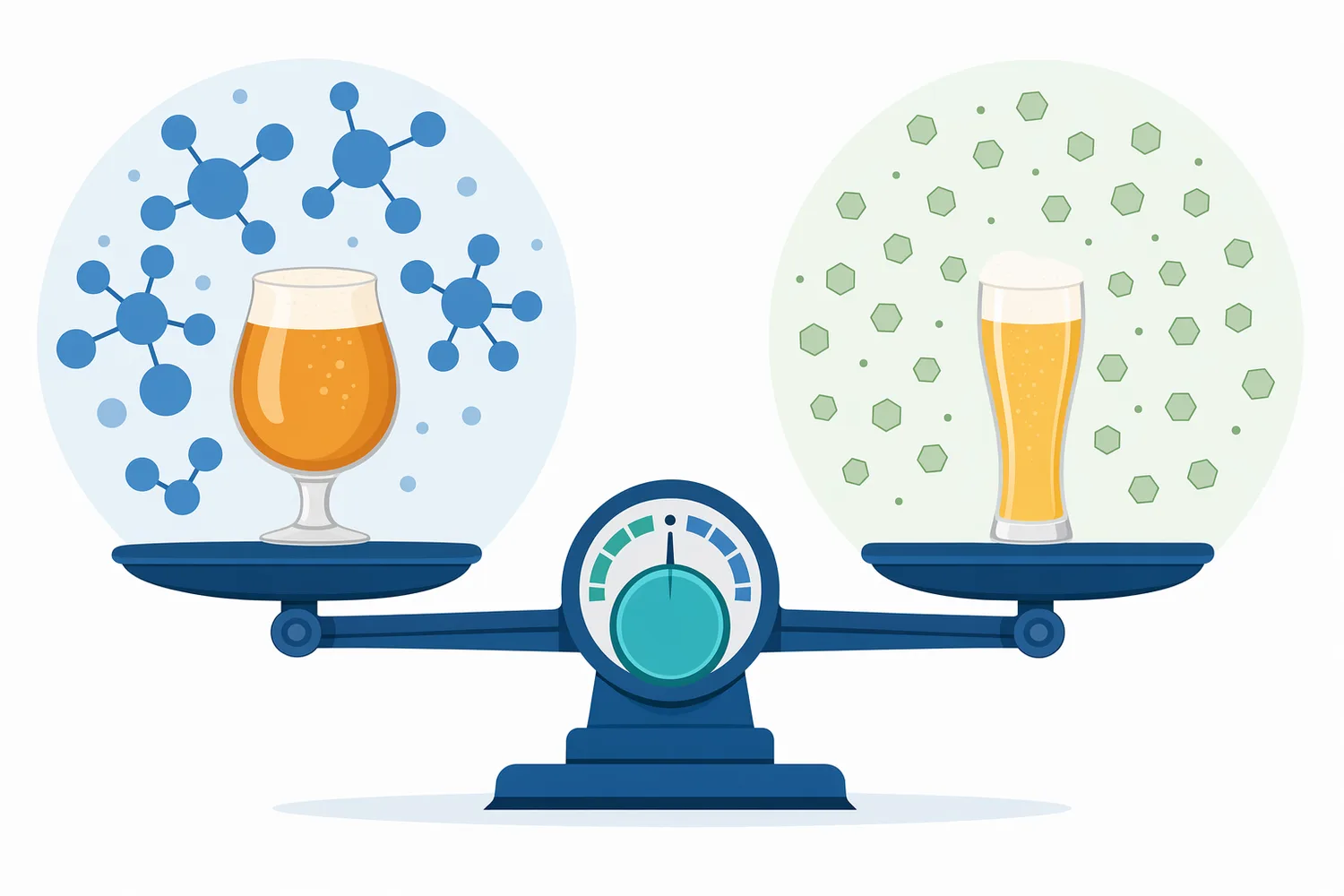
The most noticeable finished-beer effect of pullulanase-supported conversion is typically dryness. When more dextrin is converted into fermentable sugar and yeast completes fermentation, final gravity can decrease and the palate can become lighter. The beer may taste crisper because fewer residual dextrins remain to create sweetness, viscosity, and fullness.
This is beneficial for certain styles but not universal. A dry lager, light beer, low-carbohydrate beer, or highly attenuated specialty beer may benefit from reduced dextrin. A strong ale, stout, malt-forward lager, or wheat beer may rely on residual body as part of its sensory identity. Pullulanase should therefore be viewed as a tool for intentional attenuation, not as a default improvement for every recipe.
Aroma and flavor are affected indirectly. Pullulanase does not create hop aroma, malt aroma, esters, phenols, or bitterness. However, by changing body and sweetness, it can change how those sensory elements are perceived. A drier beer can make bitterness seem sharper and hop aroma more defined, while a fuller beer can soften bitterness and emphasize malt roundness. Those perception changes arise from carbohydrate balance rather than direct flavor formation [4].
Pullulanase is not a substitute for sound brewing practice. It cannot compensate for poor milling, inadequate starch gelatinization, unsuitable mash handling, unhealthy yeast, or contamination. It also does not eliminate the need for the other enzymes involved in starch conversion. Its function is narrower and more precise: debranching α-1,6 linkages in branched dextrins so that saccharification can proceed more completely [3].
The best-supported use case is as part of a coordinated amylolytic system. α-Amylase creates smaller dextrins, pullulanase opens branched structures, and glucoamylase or malt enzymes convert accessible chains into fermentable sugars. This division of labor explains why pullulanase is commonly discussed in enzyme blends rather than as a stand-alone replacement for the mashing enzyme system.
Brewers should also expect the effect to depend on the grist and process. If a wort already has high fermentability and low residual dextrin, the visible benefit may be limited. If the wort contains a meaningful branched dextrin fraction and the process provides suitable time and conditions for enzyme action, pullulanase can have a clearer impact on attenuation and dryness [2].

Enzymes.bio supplies Pullulanase Enzyme for Beer Brewing for direct online purchase by the 1 kg unit. The buyer places the order online, pays online, and the order is processed and shipped. A Certificate of Analysis and Safety Data Sheet are included with the order.
Enzymes.bio is a product supplier. This document is intended to help brewers understand the enzyme’s role in beer production and the science behind its use. It is not a manufacturing specification, laboratory protocol, or technical selection checklist.
Pullulanase Enzyme for Beer Brewing is a targeted debranching enzyme for brewers who want more complete conversion of starch-derived dextrins into fermentable sugars. By cleaving α-1,6 branch points, it opens branched dextrin structures so other amylolytic enzymes can continue saccharification more effectively. The practical result can be higher fermentability, lower residual carbohydrate, and a drier beer profile when the process is designed for that outcome.
Its strongest fit is in highly attenuated beers, low-carbohydrate beers, dry beer styles, adjunct brewing, and processes where branched dextrin conversion limits the desired finish. Used with realistic expectations, pullulanase is not a universal additive but a precise carbohydrate-management tool that helps brewers shape wort fermentability and finished beer dryness with greater control.
Sold by the 1 kg unit, in stock and ready to ship. Order directly on our store — pay online and we process your order. A Certificate of Analysis and Safety Data Sheet are included with every order.
Buy Pullulanase Enzyme For Beer Brewing →Numbered in order of first citation. Open-access sources, each verified reachable at publication; citation numbers in the text link here.