
Papaya-source rennet is a plant-derived proteolytic coagulant used to destabilize milk proteins so they aggregate into a curd or gel. In cheese applications, it works by enzymatically cutting casein structures that normally keep milk proteins dispersed; in yogurt-style systems, it is best understood as a texture-supporting coagulation enzyme rather than a replacement for lactic fermentation cultures.
Enzymes.bio supplies this papaya-source rennet product for direct online purchase by the 1 kg unit. The buyer completes payment online, the order is processed and shipped, and a Certificate of Analysis and Safety Data Sheet are provided with the order.
Papaya-source rennet belongs to the broader category of plant-based milk coagulants used to form curd in dairy systems. The product page identifies it as a papaya-source coagulation enzyme for cheese and yogurt applications, positioning it as a non-animal coagulant option for users developing fresh cheese, soft curd, and specialty dairy textures .
In practical terms, this product is not the same as calf chymosin. Traditional rennet is valued because chymosin is highly specific in its action on milk caseins, while papaya-derived proteolytic activity is associated with broader protein hydrolysis. That broader protease character can be useful for coagulation and texture formation, but it also explains why plant coagulants are treated in the cheese literature as distinct functional tools rather than direct one-for-one copies of animal rennet [1].
For buyers using the product in dairy work, the most important expectation is controlled protein destabilization. The enzyme helps convert liquid milk into a coagulated network by acting on casein proteins, allowing protein particles to aggregate and hold water, fat, and suspended solids in a gel-like matrix. Modern work on enzymatic coagulation continues to model this process as a sequence of proteolysis, aggregation, and gelation rather than a single instantaneous reaction [2].
Milk looks uniform, but its major cheese-forming proteins are organized as casein micelles: small colloidal particles stabilized in the water phase. These micelles remain dispersed because their surfaces carry stabilizing structures that create repulsion and hydration, preventing the particles from randomly clumping together. Enzymatic coagulation changes that balance by cutting specific protein regions, reducing micelle stability and allowing the particles to move closer together [2].
Once enough surface stabilization has been weakened, the casein micelles begin to aggregate. Calcium bridges and protein–protein interactions help the destabilized micelles join into a three-dimensional network. This network is the curd: a structured protein gel that traps fat globules, moisture, minerals, and other milk solids. Studies comparing rheology, near-infrared backscattering, and confocal microscopy show that enzymatic coagulation is visible both as a mechanical strengthening of the gel and as a microscopic change in protein network structure [3].
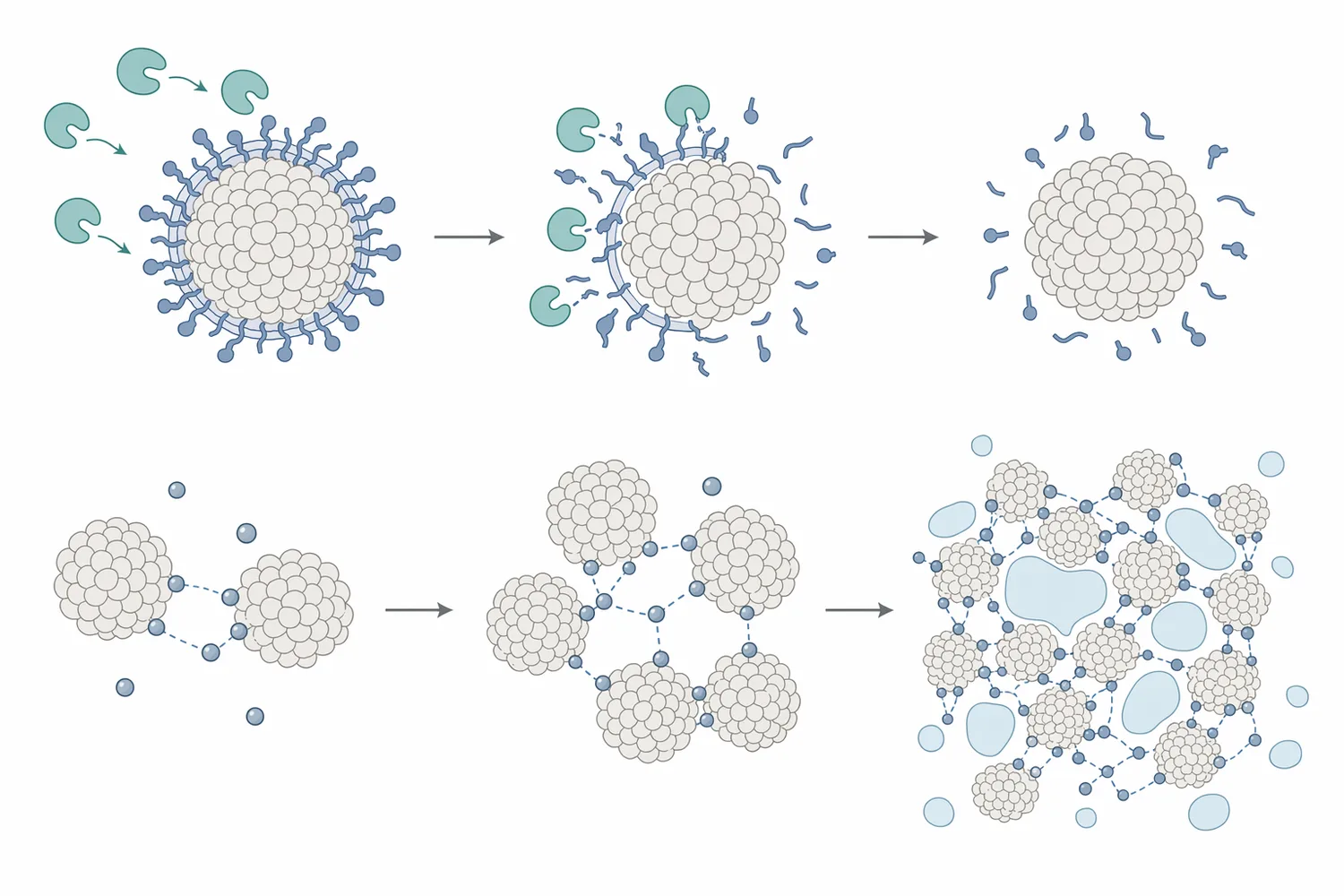
Papaya-source rennet works through proteolysis, meaning it cuts peptide bonds in proteins. In milk, this action can reduce the colloidal stability of casein and promote aggregation. Because papaya-derived enzymes are broader proteases than chymosin, they may continue acting on milk proteins after initial gel formation if process conditions allow; that continued hydrolysis can influence curd firmness, moisture retention, whey separation, and flavor development [1].
This is why the same enzymatic property can be both useful and process-sensitive. A controlled level of proteolysis helps create curd; excessive or poorly timed proteolysis can weaken the gel by cutting too many protein links in the forming network. The cheese-coagulant literature describes plant proteases as promising alternatives, while also emphasizing that their proteolytic profile can affect texture and sensory quality differently from conventional rennet [1].
Different coagulation systems create structure by different mechanisms. Acid coagulation, animal rennet coagulation, and plant protease coagulation can all produce gels, but the protein changes are not identical. The distinction matters because curd firmness, whey release, slicing behavior, and final eating texture depend on how the protein network forms [3].
| Coagulation approach | Primary mechanism in milk | Typical texture tendency | Practical implication |
|---|---|---|---|
| Acid coagulation | pH reduction decreases casein charge and moves proteins toward aggregation | Often softer, more fragile, moisture-retentive gels | Common in yogurt, acid-set curd, and cultured fresh products |
| Calf-type rennet coagulation | Highly targeted enzymatic destabilization of casein micelles | Elastic curd with strong cutting and draining behavior | Widely used in many traditional cheeses |
| Papaya-source plant rennet | Broader proteolytic destabilization of milk proteins | Can support curd formation, with texture influenced by process control | Useful for plant-source coagulation concepts and fresh cheese systems |
| Mixed acid–enzyme systems | Fermentation or acidification plus enzymatic protein modification | Adjustable firmness, body, and whey separation | Relevant where yogurt-style acidity and curd texture are both desired |
Papaya-source rennet is best viewed as a plant protease coagulant with its own behavior. It can help create a protein network, but the resulting curd may differ from a chymosin-set curd because the enzyme’s cutting pattern is less narrowly focused. Reviews of plant-based coagulants in cheese production describe this diversity as both an opportunity for product differentiation and a reason for careful application design [1].
Fresh cheese is one of the clearest application areas for plant-source coagulants. In fresh cheese, the product is usually consumed without long ripening, so the process focuses on curd formation, moisture control, mild flavor, and immediate texture rather than months of enzymatic aging. Reviews of plant-based coagulants in cheese production identify fresh and specialty cheeses as important areas where alternative coagulants are being explored [1].
In a fresh cheese process, papaya-source rennet can help form a curd that is cut, drained, pressed lightly, blended, or packed depending on the product style. The enzyme’s role is to initiate or support the protein network so that the milk transitions from a fluid dispersion to a structured curd. The final result depends not only on the enzyme, but also on milk composition, heat history, culture use, acidity, calcium balance, and mechanical handling [4].
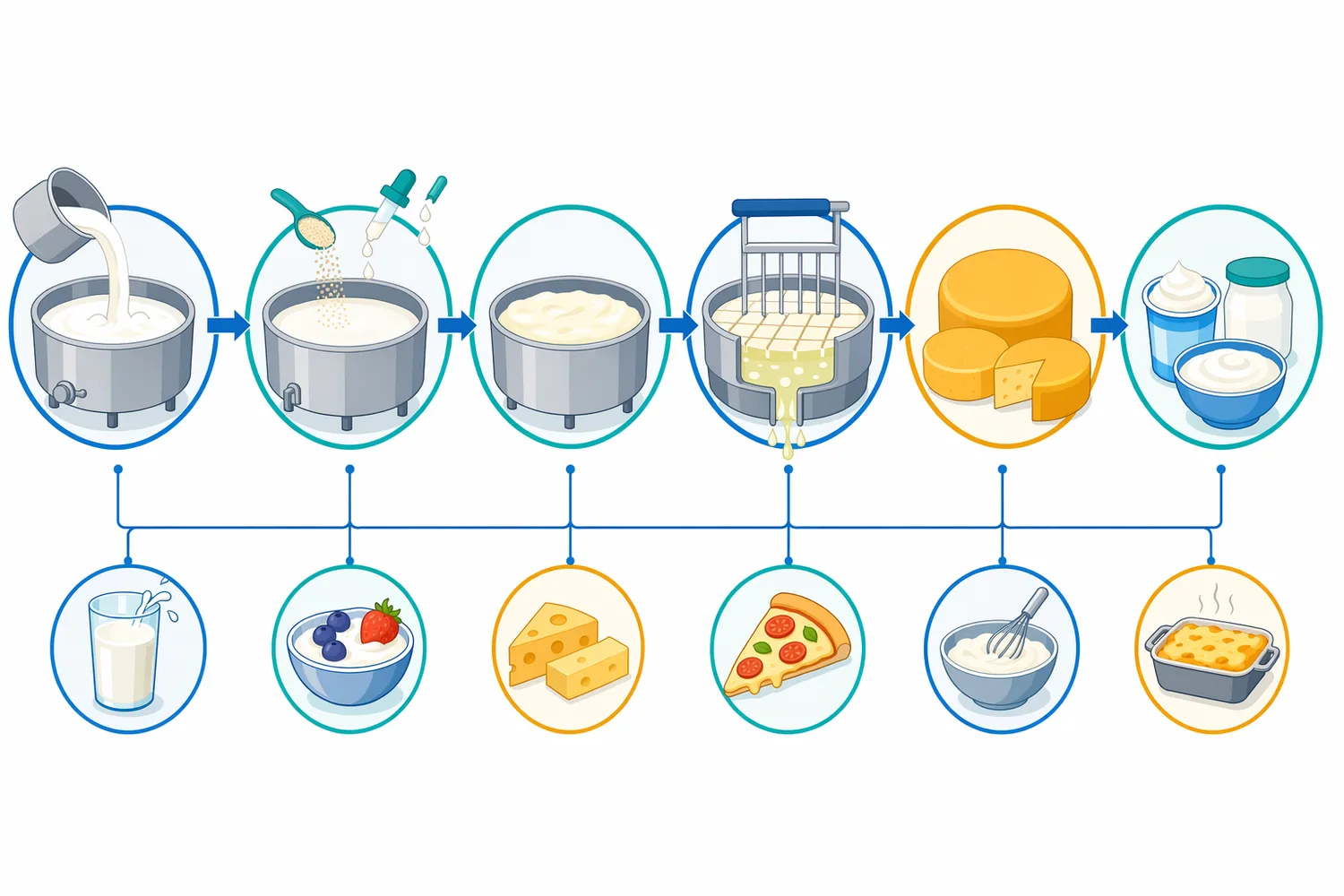
Milk source is especially important. Research evaluating enzymatic coagulation of Holstein cow milk across three periods of the year highlights that milk coagulation properties can vary over time, reflecting changes in milk composition and production conditions [4]. For a plant protease coagulant, those natural differences can show up as changes in set time, gel firmness, whey separation, and curd handling.
Soft dairy products also benefit from understanding coagulation as a network-building process. If the intended texture is spoonable or spreadable rather than sliceable, complete hard-curd development may not be the goal. Instead, the enzyme can be used as one part of a broader texture system where proteins, acidity, fat, stabilizers, and processing all contribute to the final body.
Yogurt is usually structured primarily by lactic acid fermentation. Starter cultures metabolize lactose, produce acid, reduce pH, and cause casein proteins to aggregate into a gel. Papaya-source rennet should therefore not be treated as a yogurt culture or as a substitute for fermentation; its role is enzymatic protein modification, not acid production [5].
That said, protease activity can be relevant in fermented dairy texture. Work on protease-producing Lactiplantibacillus plantarum in yogurt fermentation reflects scientific interest in how proteolytic activity interacts with yogurt structure and fermentation outcomes [5]. In a formulation context, a coagulating enzyme may be used to support curd strength, modify mouthfeel, or create a specialty fermented dairy texture when combined with appropriate acidification.
The distinction is important for product expectations. In yogurt-style systems, acidification changes the charge and solubility behavior of caseins, while rennet-type proteolysis changes the protein structure enzymatically. When both mechanisms are present, the gel can develop through overlapping pathways: acid-driven aggregation plus enzyme-driven destabilization. The result may be useful, but it is not the same mechanism as standard yogurt fermentation alone [5].
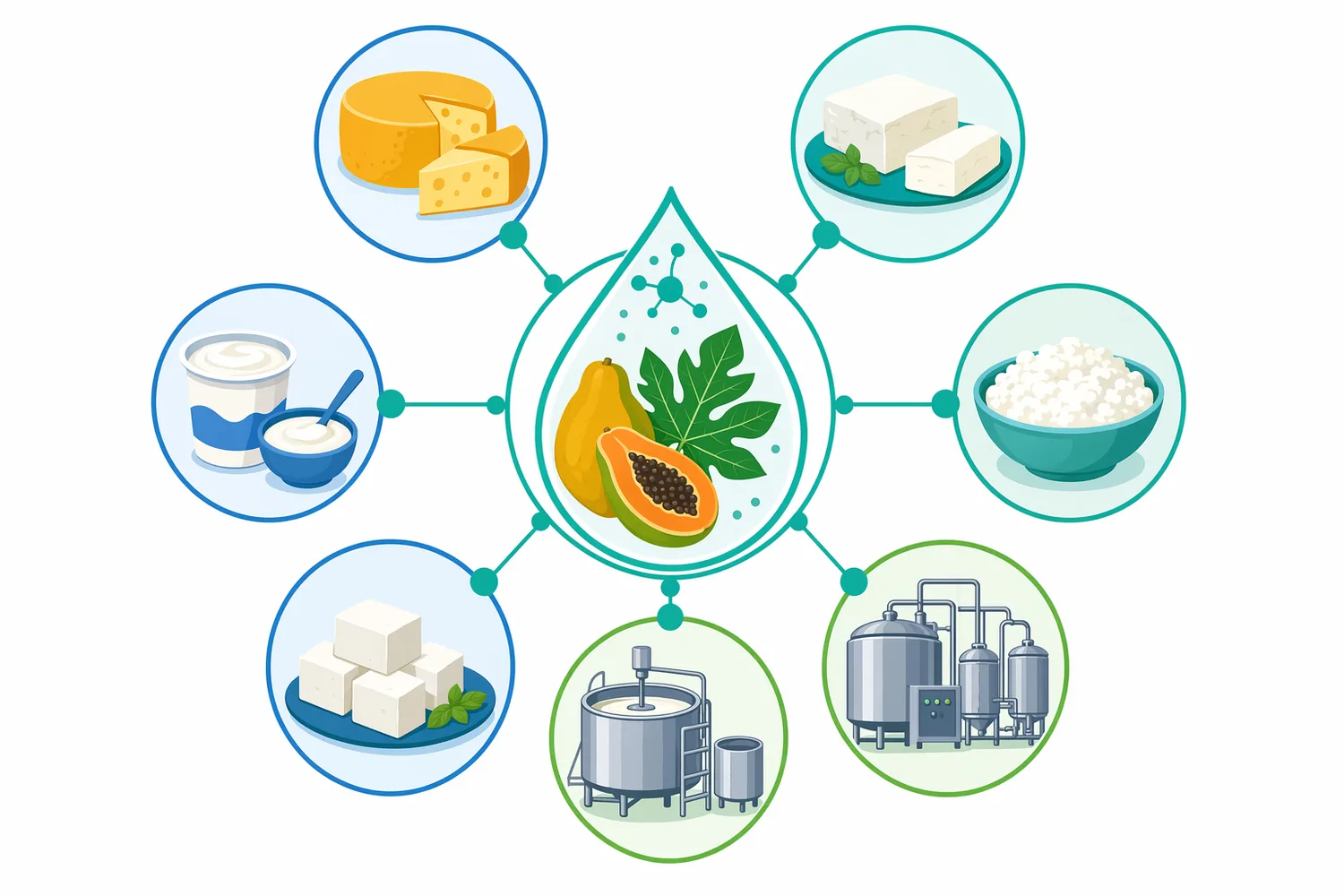
For spoonable products, the target is often a fine, continuous gel rather than a firm cheese curd. Excessive proteolysis can thin the structure or encourage whey separation if the protein network is weakened after formation. Controlled enzymatic use is therefore most relevant where the desired product intentionally combines fermented acidity with curd-like body.
Enzymatic coagulation is strongly affected by the condition of the milk proteins before the enzyme is added. Heat treatment can denature whey proteins, change their interactions with casein micelles, and alter how the protein system responds to coagulants. Research on milk protein concentrates shows that heat treatment affects enzymatic coagulation properties, confirming that the same enzyme can behave differently depending on prior thermal processing [6].
This is especially relevant for recombined milk, high-protein dairy bases, and concentrated milk systems. If proteins have been heated, concentrated, or dried and rehydrated, the micelle environment may not behave like fresh raw or pasteurized milk. Work on ultra-high-temperature treated milk and recombined milk from whole milk powder demonstrates that modified dairy bases may require changes to achieve enzymatic coagulation [7].
Protein concentration also matters. Studies comparing rheological, optical, and microscopy methods in enzymatic milk coagulation found that both enzyme and protein concentrations influence coagulation behavior [3]. Mechanistically, more protein can provide more building material for a gel, but it can also change viscosity, diffusion, mineral balance, and how quickly a continuous network forms.
Seasonal and herd-related variation adds another layer. Milk from the same animal species can vary in fat, casein, minerals, and overall solids, all of which influence curd strength. The study of Holstein milk coagulation across three yearly periods illustrates why real milk systems do not always respond identically over time [4].
Plant coagulants are part of a long-standing and increasingly researched category of dairy enzymes. Reviews of plant-based coagulants in cheese production describe a wide range of botanical sources and note that interest is driven by vegetarian positioning, religious and cultural preferences, sustainability narratives, and the search for differentiated cheese characteristics [1].
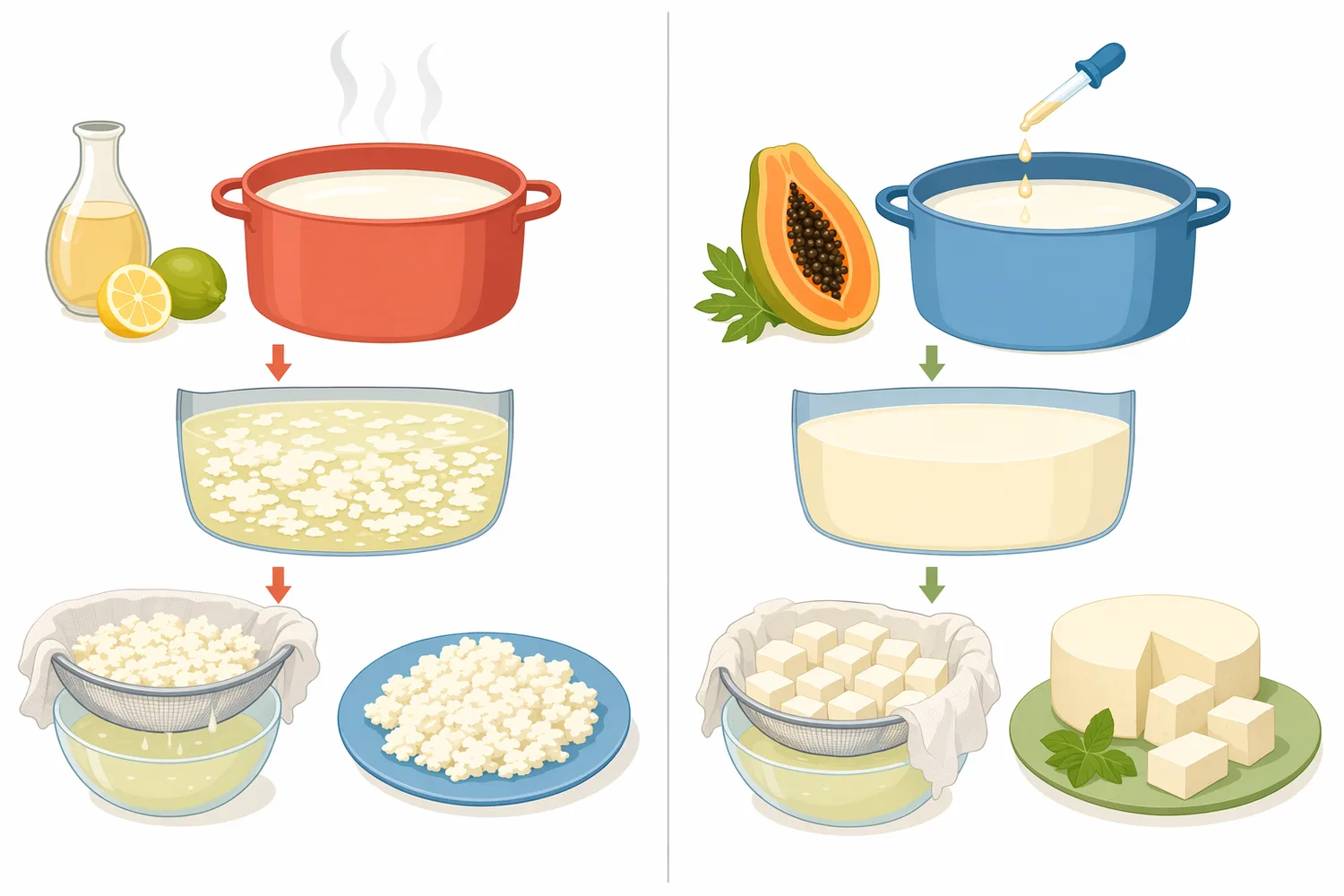
Papaya-source rennet fits within this category as a plant protease coagulant. Its value is not that it exactly duplicates animal rennet, but that it provides a plant-origin route to protein destabilization and curd formation. This can be attractive for fresh cheese, soft curd, and specialty dairy concepts where the process is designed around the enzyme’s behavior rather than forcing it to mimic chymosin in every respect [1].
At the same time, “plant-based coagulant” can mean different things in different industries. In water treatment, for example, plant-based coagulants are often discussed as materials that remove turbidity or organic load through charge neutralization, adsorption, or flocculation. In cheese, the key function is enzymatic action on milk proteins, so the technical meaning is different even though the word “coagulant” is shared [8].
For dairy applications, the central question is how the enzyme changes casein behavior. Plant proteases used in cheese must create enough destabilization to form curd while avoiding excessive protein breakdown that would impair texture or flavor. That balance is a recurring theme in reviews of plant coagulants for cheese production [1].
Curd texture develops as the casein network grows stronger. Early in coagulation, destabilized micelles begin to cluster; as more clusters connect, the system reaches a gel point. After gelation, the network continues to firm, and whey may begin to separate depending on acidity, cutting, heating, stirring, and drainage. Enzymatic coagulation models describe this as a dynamic process, with proteolysis and aggregation occurring over time [2].
Papaya-source rennet can influence both the onset of gelation and the strength of the final curd. If protein destabilization is sufficient and the milk system is suitable, a coherent gel can form. If the protein network is over-hydrolyzed, however, the curd can become fragile because too many structural protein regions have been cut. This is the practical meaning behind the common distinction between milk-clotting activity and general proteolytic activity in plant coagulants [1].
Whey separation is also tied to network structure. A firm, continuous curd can contract and expel whey during cutting and handling; a weak or overly hydrolyzed gel may retain moisture unevenly or break into fine particles. Optical and rheological monitoring studies show that enzymatic coagulation can be tracked through changes in gel firmness and microstructure, reinforcing that texture is a measurable consequence of protein-network formation [3].
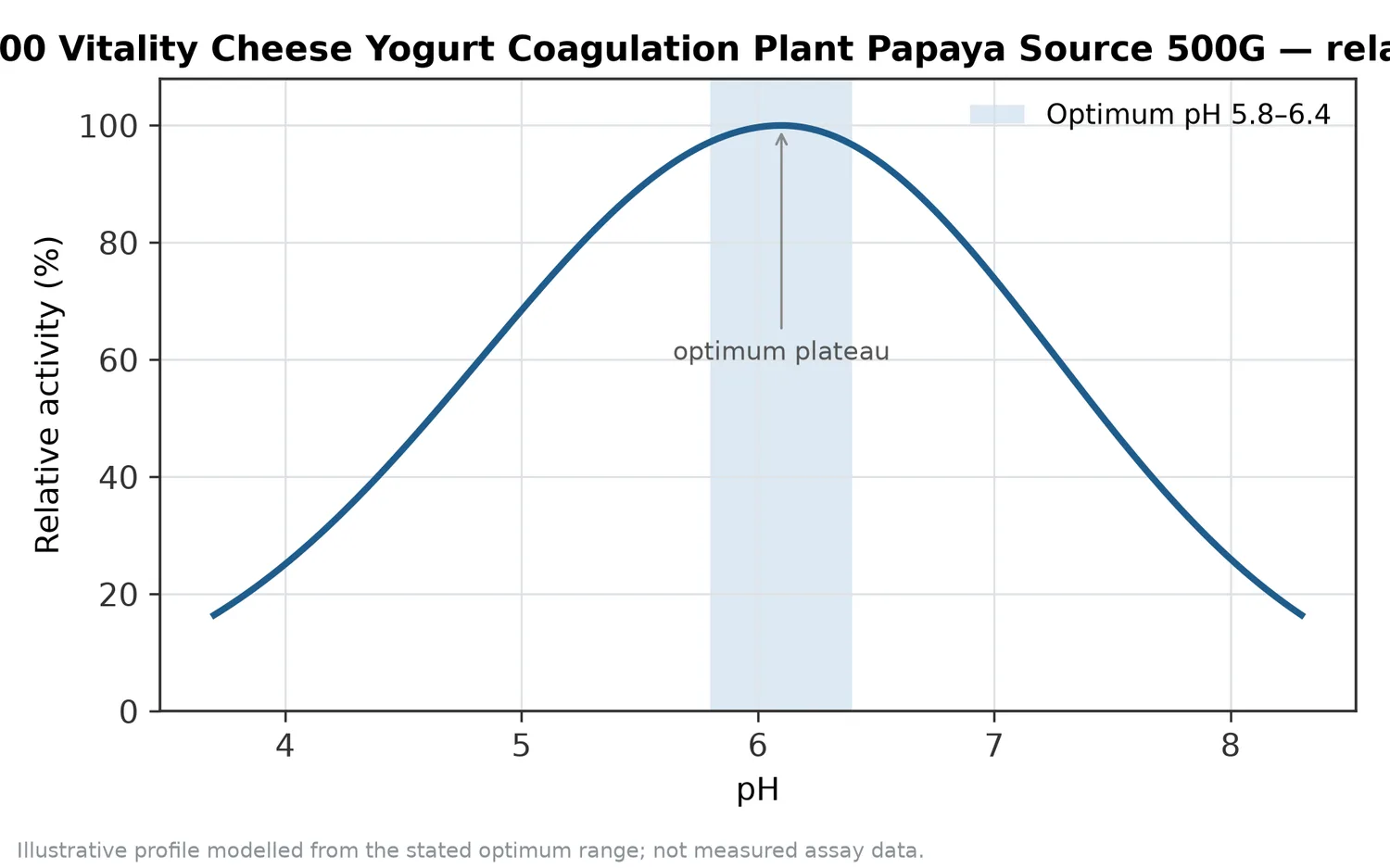
For fresh cheese, moderate moisture retention can be desirable because it supports soft body and high yield. For firmer curds, the process generally needs a network that can be cut and drained cleanly. Papaya-source rennet can contribute to either direction depending on how the overall process is designed, but its broader protease profile means the final texture should be understood as enzyme-plus-process rather than enzyme alone.
Proteolysis affects flavor because protein fragments and peptides contribute to taste, aroma precursors, and mouthfeel. In cheese ripening, controlled proteolysis is essential; in fresh cheese, excessive proteolysis can create bitterness or a pasty texture if too many peptides are released too quickly. Plant coagulant reviews note that alternative proteases can create distinctive sensory characteristics, but they must be managed because their specificity differs from animal rennet [1].
Papaya-derived proteolytic activity is therefore most straightforward in short-process products where the time between coagulation and consumption is limited. Fresh cheese, soft curd, and specialty dairy preparations allow the formulator to capture coagulation and texture benefits without relying on the enzyme for extended ripening behavior. In long-aged cheeses, broader proteolysis may have more time to influence bitterness, softness, or flavor balance [1].
This does not mean papaya-source rennet is unsuitable for all ripened products. It means the enzyme should be treated as a distinct coagulant with its own sensory pathway. Cheese made with different coagulants can diverge in peptide profile, breakdown rate, and final flavor because the enzyme determines which protein bonds are cut and how the curd continues to change after formation [9].
Research on enzyme-modified cheese also illustrates the broader importance of proteases in dairy flavor and quality development. Adding protease or lipase can change cheese properties, demonstrating that enzymes are powerful tools for modifying dairy matrices—but also that enzyme choice and process context shape the final product [9].
Enzymatic coagulation can be observed physically as milk thickens, gels, and separates into curd and whey. In research settings, this transition is studied with rheology, light backscattering, confocal microscopy, and ultrasonic techniques. These methods help explain what processors see in the vat: a shift from dispersed milk proteins to an interconnected protein gel [3].
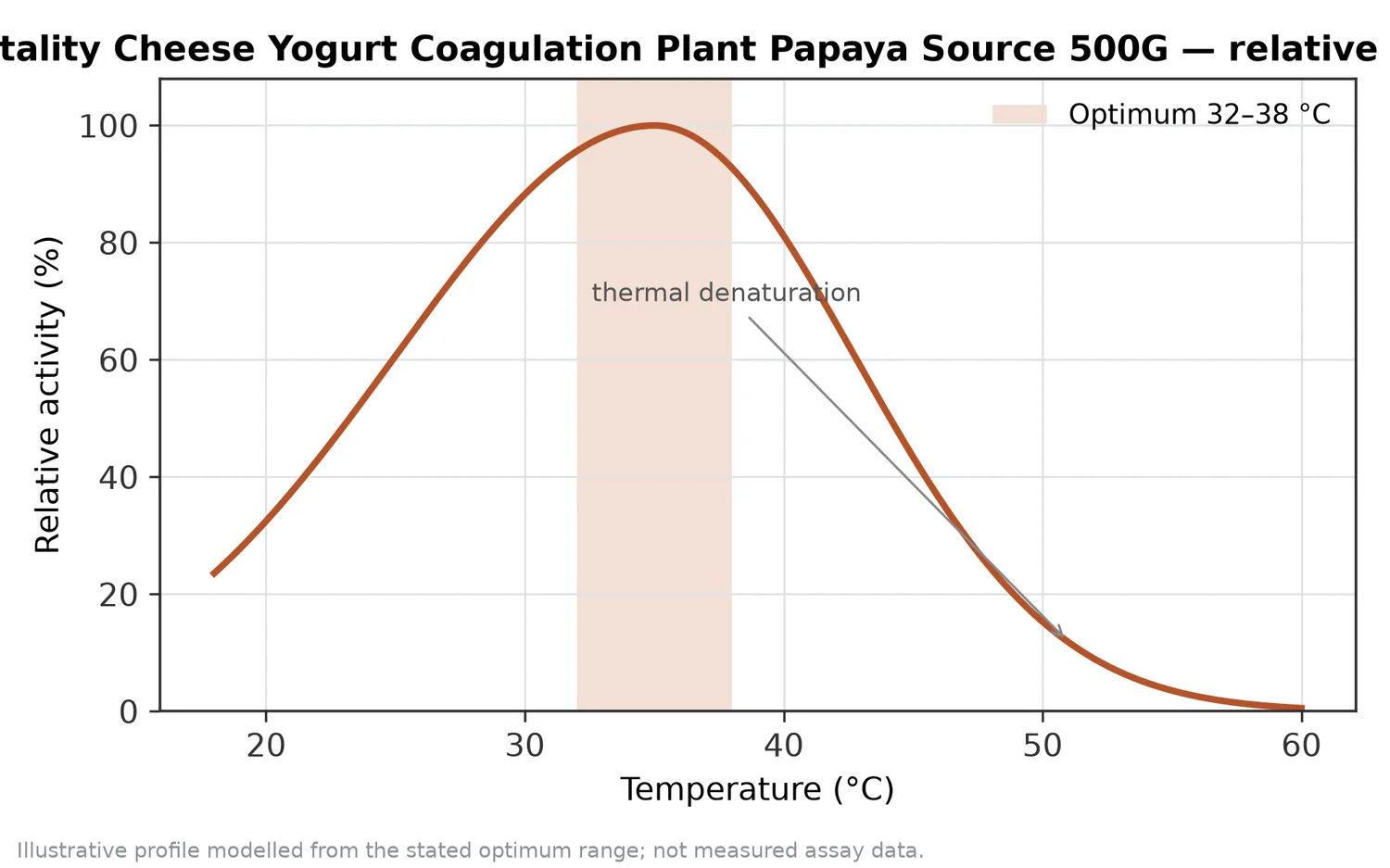
Ultrasonic studies are especially useful because they show that coagulation changes the way acoustic waves pass through milk. As the protein network forms, the physical properties of the medium change, affecting backscattered waves and attenuation. Research on ultrasonic velocity and attenuation has explored these changes as ways to monitor enzymatic milk coagulation in real time [10].
For practical production, the key lesson is that coagulation is progressive. The milk does not simply “turn solid”; it passes through stages of enzyme action, initial aggregation, gel formation, strengthening, and eventual curd handling. If the curd is cut too early, the network may be too weak and fines can be lost into whey; if held too long under active proteolysis, the structure may become overly modified [11].
This staged view is particularly helpful for plant protease coagulants. Because papaya-source rennet has broader protein-cutting activity, the best curd is achieved when the process captures the desired gel formation while avoiding unnecessary post-gel protein breakdown. The science of coagulation monitoring supports the idea that timing and handling are part of the functional outcome, not separate from it [10].
Papaya-source rennet is most naturally aligned with dairy applications where plant-origin coagulation is desired and where the product style can benefit from a fresh, soft, or specialty curd profile. That includes fresh cheese, soft cheese bases, curd-style dairy foods, culinary cheese preparations, and fermented dairy concepts where enzymatic coagulation is used alongside acidification [1].
It is also relevant where product developers want to avoid calf-derived rennet. Plant coagulants are frequently discussed in relation to vegetarian and culturally specific food needs, although final product claims depend on the complete formulation, facility practices, and documentation. The enzyme source is one important part of the product story, but it is not the only factor in finished-product positioning [1].
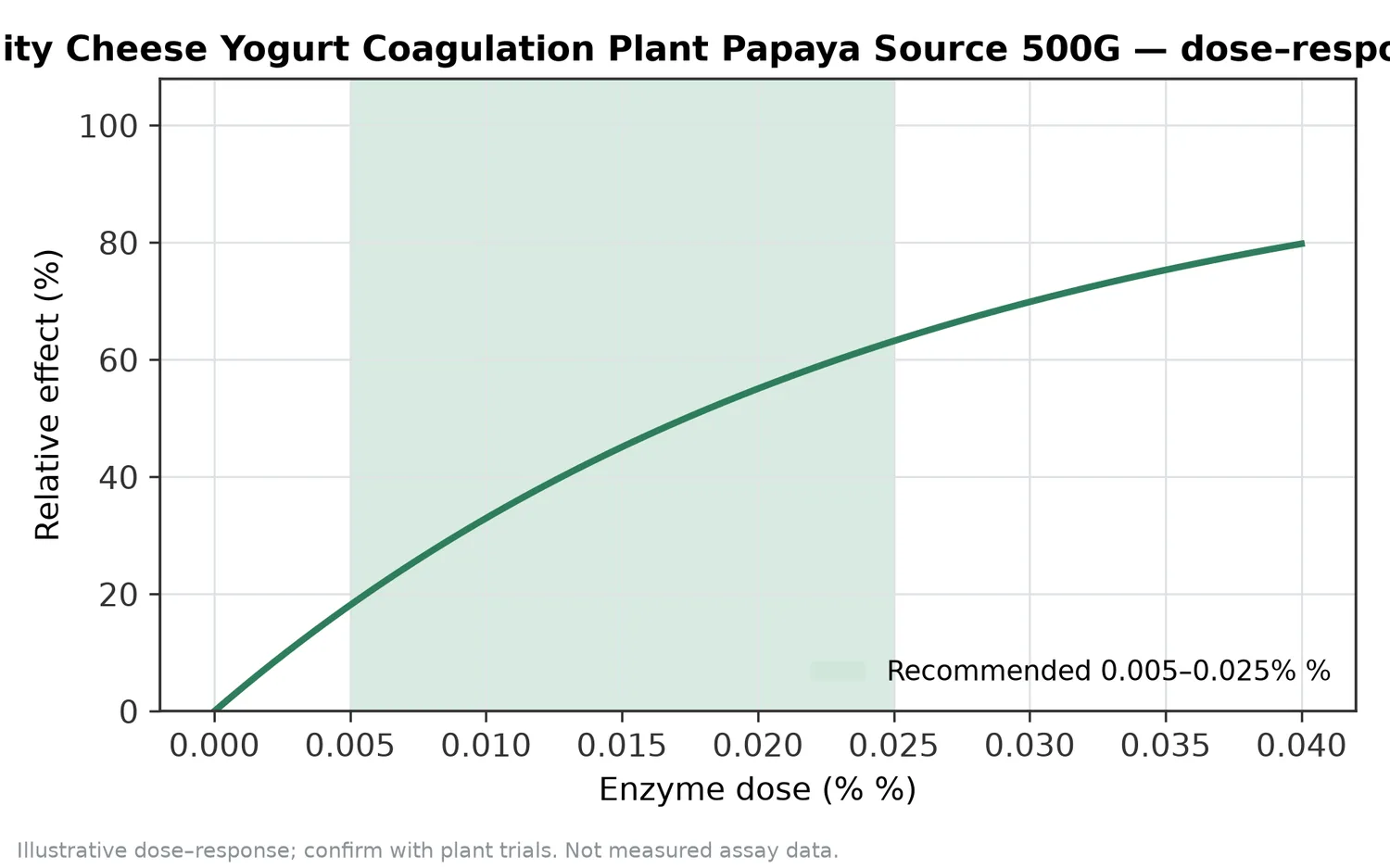
The product may also be useful in dairy innovation where a distinct texture or protein-modification profile is desired. Because papaya-derived proteases are not chymosin, they can generate different curd behavior and potentially different sensory outcomes. This difference can be a limitation in highly standardized traditional cheeses, but an advantage in specialty products designed around plant-source functionality [9].
In yogurt-style products, the application fit is more specific. The enzyme can contribute to coagulation or texture development, but the main fermentation function remains with lactic cultures. Where the product concept requires both fermented acidity and enzyme-supported structure, papaya-source rennet can be considered a texture tool within a broader dairy system [5].
The first practical expectation is that papaya-source rennet acts on proteins, not sugars or fats. It changes the milk system by cutting protein bonds, which then changes micelle stability, aggregation behavior, gel strength, and water retention. The fat phase is captured physically inside the developing protein network rather than being the primary target of the enzyme [2].
The second expectation is that different milks respond differently. Cow milk, goat milk, camel milk, recombined milk, and concentrated milk bases have different casein structures, mineral balances, and protein compositions. Research on camel milk coagulation, for example, continues to explore enzymatic extracts and modified approaches because camel milk is known to present different coagulation challenges from standard bovine cheese milk [12].
The third expectation is that prior processing matters. UHT treatment, powder recombination, concentration, and heat exposure can all change how milk proteins respond to coagulants. Studies on UHT-treated milk and recombined whole milk powder show that enzymatic coagulation can require modification when the milk base has been heavily processed [7].
The fourth expectation is that papaya-source rennet should be treated as a functional ingredient for controlled coagulation, not as a universal solution for every dairy texture. Its strength is plant-origin proteolytic action; its process sensitivity comes from the same protein-cutting capability. This is consistent with the broader literature on plant coagulants in cheese production [1].
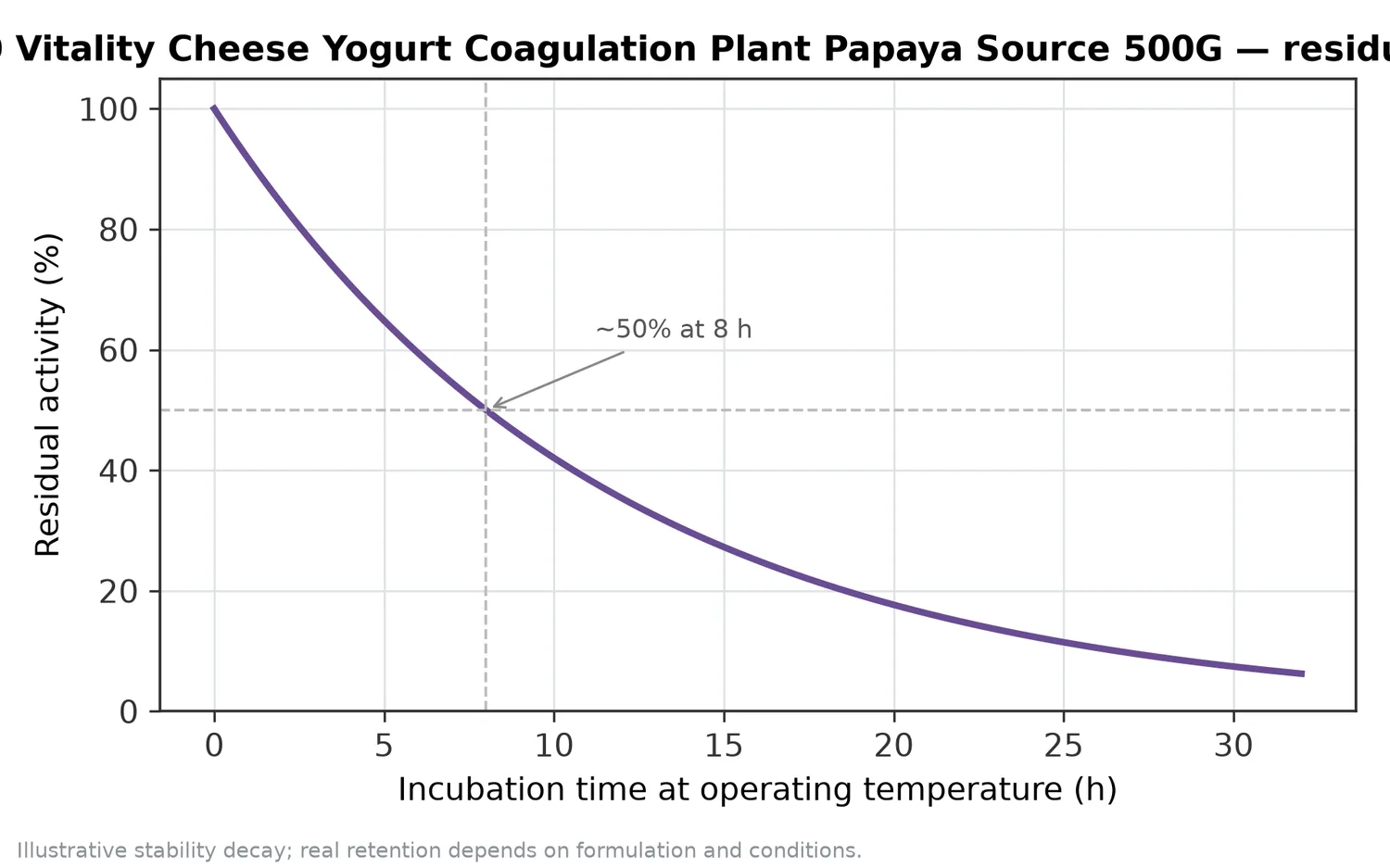
Enzymes.bio supplies papaya-source rennet directly online for customers who want to purchase the product without a quotation or sampling process. The product is sold by the 1 kg unit; the buyer completes checkout and payment online, after which the order is processed and shipped.
A Certificate of Analysis and Safety Data Sheet are provided with the order. These documents support routine receiving, internal records, and safe handling practices without requiring a separate technical consultation step.
Papaya-source rennet is a plant protease coagulant for milk systems where enzymatic protein destabilization is desired. Its core function is to help casein proteins move from a stable dispersion into an aggregated curd or gel, supporting applications such as fresh cheese, soft dairy textures, and selected fermented dairy systems [2].
The main technical distinction is specificity. Calf-type rennet is highly specialized for milk clotting, while papaya-source rennet has broader proteolytic character. That broader action makes it useful for plant-origin coagulation and specialty textures, but it also means the final curd depends strongly on milk composition, heat history, acidity, timing, and handling [1].
For customers purchasing from Enzymes.bio, the product offers a direct online route to a papaya-source coagulation enzyme supplied in 1 kg units. Used with realistic expectations, it is a credible tool for fresh cheese development, animal-rennet-free dairy concepts, and texture-focused coagulated milk applications.
Sold by the 1 kg unit, in stock and ready to ship. Order directly on our store — pay online and we process your order. A Certificate of Analysis and Safety Data Sheet are included with every order.
Buy Rennet 20,000 Vitality Cheese Yogurt Coagulation Plant Papaya Source 500G →Numbered in order of first citation. Open-access sources, each verified reachable at publication; citation numbers in the text link here.