
Direct answer: Soybean Meal Hydrolysis Enzyme is used as a processing aid to partially break down proteins and complex plant carbohydrates in soybean meal, corn meal, mixed meal systems and wheat bran. In practical processing, hydrolysis changes large, less-accessible meal components into smaller peptides, soluble nitrogen fractions and more accessible carbohydrate structures, which can support feed digestibility, fermentation performance and ingredient upcycling when the process is controlled.
Enzymes.bio supplies Soybean Meal Hydrolysis Enzyme directly online by the 1 kg unit. Buyers place and pay for the product online; the order is then processed and shipped, with a Certificate of Analysis and Safety Data Sheet included with the order.
Soybean meal, corn meal, mixed meal and wheat bran are valuable raw materials, but their nutrients are not present as simple, fully accessible molecules. Proteins are folded or aggregated, starch and fiber sit inside plant cell-wall structures, and minerals can be associated with phytate or other matrix components. Enzymatic hydrolysis is used to make targeted cuts in these macromolecules so that the material behaves less like an intact meal and more like a partially converted ingredient with smaller, more available fractions. Reviews of microbial proteases describe their broad industrial use because they catalyze peptide-bond cleavage under processing conditions, including food, feed and biotechnology applications [1].
For soybean meal specifically, the most important hydrolysis target is the protein fraction. Soybean storage proteins are large macromolecules; proteolytic hydrolysis cuts them into shorter peptides and amino-nitrogen-containing fragments. This does not simply “soften” the meal in a vague sense: peptide bonds are cleaved, molecular size distribution shifts downward, and the resulting peptide pool can become more soluble and more rapidly available to microbes or digestive enzymes. Feed-focused reviews describe hydrolyzed proteins as ingredients whose availability, bioactivity and use in feed production depend on the extent and nature of protein cleavage [2].
Corn meal and wheat bran bring a different challenge. Corn meal contributes starch-rich material and associated proteins, while wheat bran contributes arabinoxylans, cellulose, hemicellulose, phenolic compounds and mineral-associated components. When these materials are processed together with soybean meal, the enzyme’s role is not limited to soybean protein hydrolysis; the broader purpose is to open the mixed plant matrix so that nitrogen and carbohydrate fractions become more usable in downstream feed, fermentation or ingredient applications. Research on wheat bran valorization has shown the importance of integrated hydrolysis approaches for releasing sugars and generating animal-feed-relevant outputs from bran-rich substrates [3].
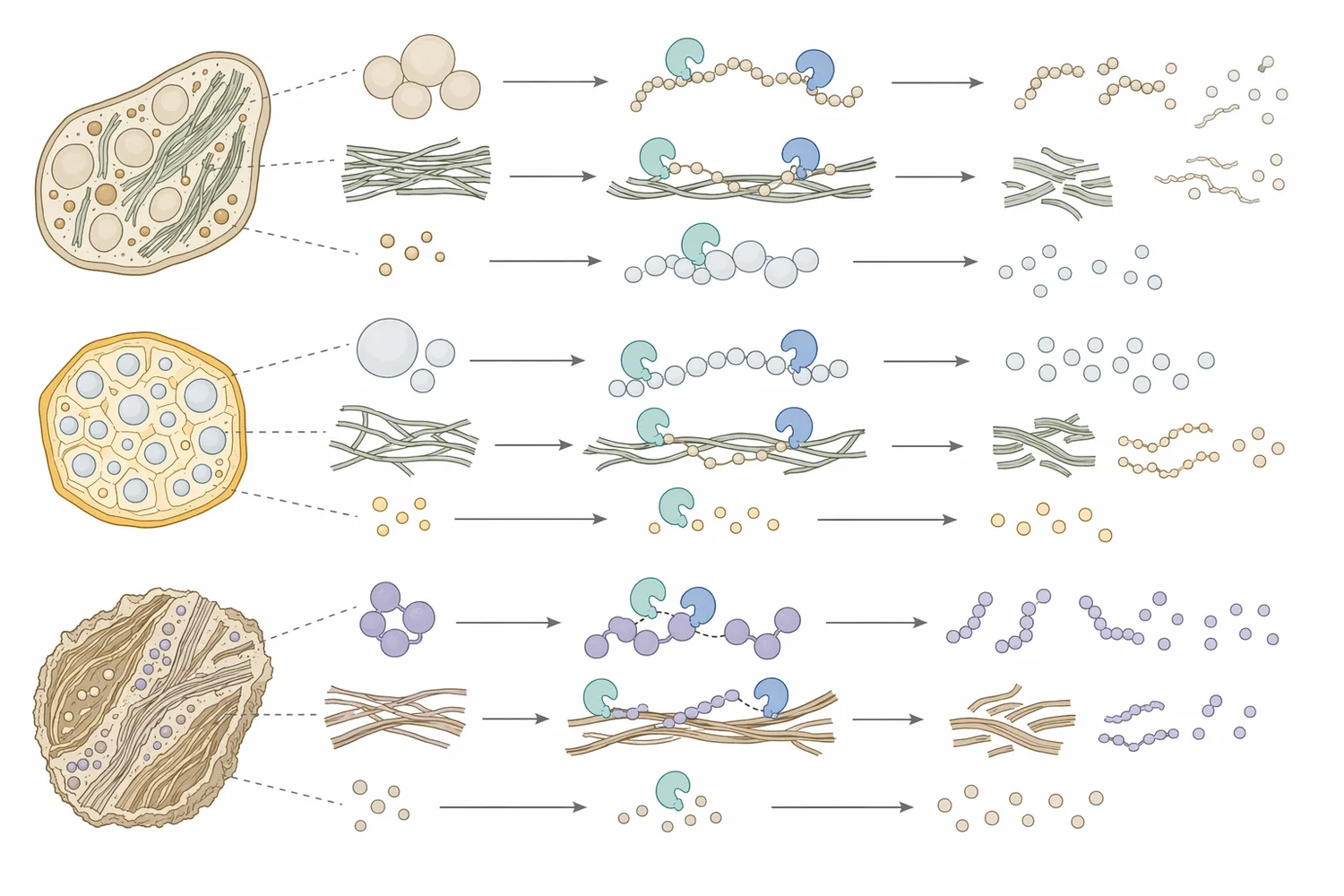
The clearest chemical change is protein depolymerization. Proteases attack peptide bonds inside or near the ends of protein chains, producing shorter peptides and, depending on the enzyme system and process duration, smaller amino-nitrogen fractions. In feed and fermentation applications, this matters because intact proteins may require additional digestion or microbial breakdown, whereas soluble peptides can be taken up more readily or digested faster. Animal-feed protease literature emphasizes that exogenous proteases are used to improve access to dietary protein and reduce the nutritional penalty of incompletely digested protein fractions [4].
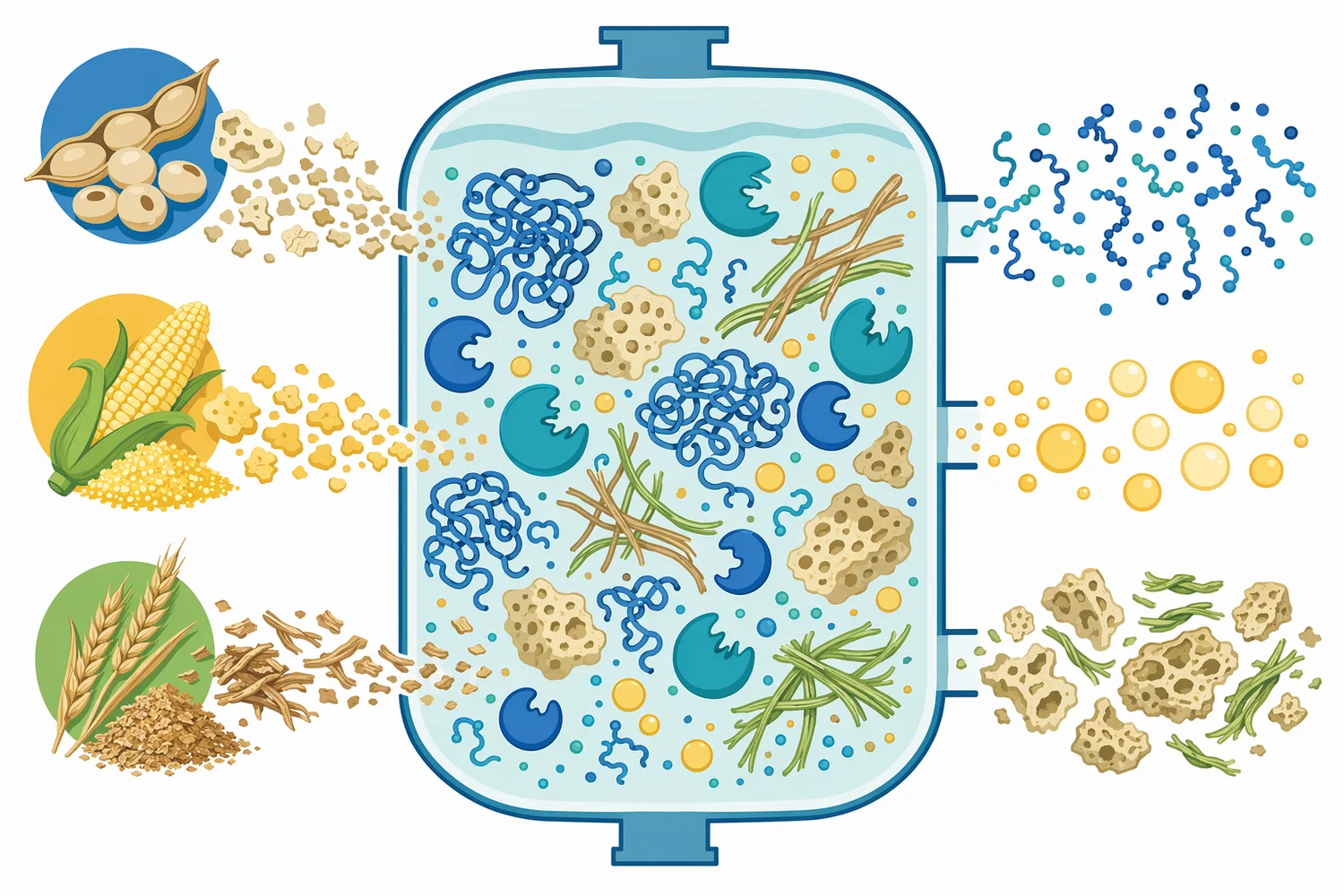
A second change is physical matrix opening. Plant meals are not homogeneous powders at the microscopic level; proteins, starch granules, fiber, minerals and phenolic compounds are arranged in a structure inherited from seeds and brans. Hydrolysis can loosen this structure by cutting protein networks and modifying cell-wall polysaccharides. Once the matrix is opened, water penetrates more effectively, particles hydrate differently, and other enzymes or fermenting organisms can reach material that was previously trapped inside intact cell-wall fragments. Studies on enzymatic hydrolysis of lignocellulosic residues for animal feed show that hydrolysis is used not only to change composition, but also to alter the feed value of fibrous residues through breakdown of recalcitrant plant structures [5].
A third change is solubilization. As proteins become peptides and insoluble polysaccharide structures are partially hydrolyzed, a larger fraction of the meal can move into the liquid phase during processing. This is important for liquid fermentation media, moist solid-state fermentation, hydrolyzed feed ingredients and slurry-based ingredient preparation. Plant-based protein hydrolysate reviews describe enzymatic hydrolysis as a way to modify waste or lower-value protein materials into more functional ingredients, with changes in solubility, interfacial behavior and biological activity depending on the resulting peptide profile [6].
A fourth change is the potential reduction or transformation of anti-nutritional constraints. Soybean meal and bran-rich materials can contain phytate, fiber-associated barriers and protein structures that limit nutrient access. Enzymatic hydrolysis does not make every anti-nutritional factor disappear, and it should not be treated as a universal detoxification step. However, when protein, fiber and mineral-associated structures are modified, the substrate can become easier to digest or ferment. In vitro work on phytate dephosphorylation during digestion of different feeds and feed ingredients illustrates how enzymatic action can change mineral-binding components during feed processing and digestion contexts [7].
Protease-led hydrolysis works because proteins are long chains of amino acids held together by peptide bonds. In soybean meal, those proteins are packed into storage structures and may be associated with carbohydrates, minerals and heat-modified complexes from prior oilseed processing. A hydrolysis enzyme provides catalytic sites that position peptide bonds and water molecules so that the bond can be split. The result is not random “degradation” in the everyday sense; it is a controlled molecular-size reduction that changes how the nitrogen fraction behaves in water, digestion and fermentation. Broad reviews of microbial proteases identify this bond-cleaving capability as the central reason proteases are used across food, feed, detergent, leather and waste-processing sectors [8].
As hydrolysis proceeds, the substrate changes in stages. Early hydrolysis may expose buried protein regions and generate medium-size peptides. Continued hydrolysis increases smaller peptides and soluble amino-nitrogen fractions. If pushed too far for a flavor-sensitive application, hydrolysis can produce bitter peptides because hydrophobic amino acid sequences become exposed. For feed or fermentation, moderate bitterness may be less important than nitrogen availability, but the same chemistry explains why hydrolysis degree affects both nutrition and sensory profile. Reviews of hydrolyzed proteins in feed production emphasize that peptide size and composition influence bioactivity and functional use, not just crude protein percentage [2].
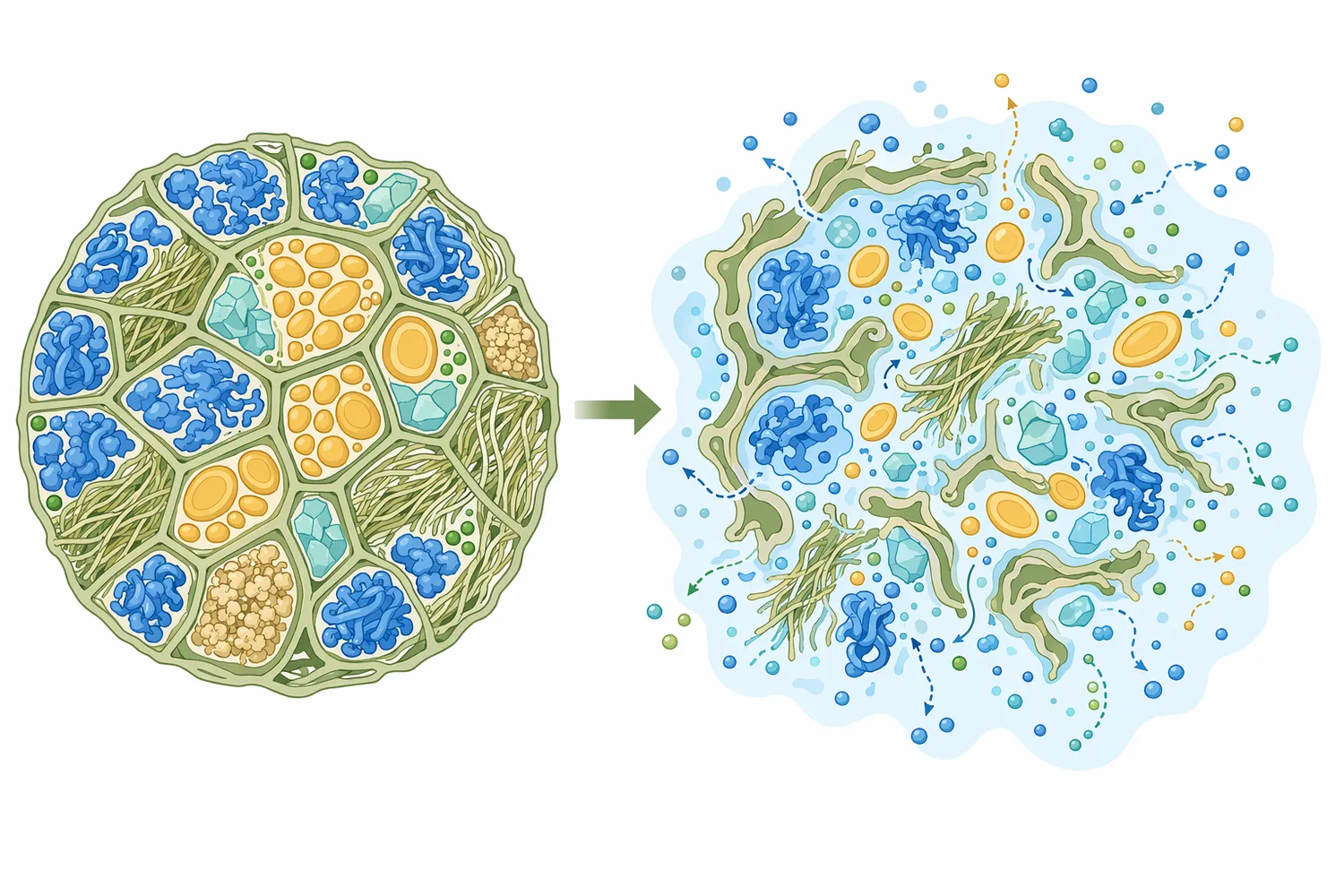
In mixed soybean meal and corn meal systems, protease action can also release protein-starch or protein-fiber associations. Corn proteins and soybean proteins differ in amino acid profile and physical structure, but both can restrict access to nutrients when embedded in a dry, compact meal matrix. Partial hydrolysis makes the nitrogen fraction less dependent on complete digestion after feeding or less dependent on microbial extracellular protease production during fermentation. Protein digestion kinetics research in feed ingredients highlights that the rate and extent of protein digestion are important, not merely total protein content [9].
Carbohydrate-active hydrolysis is especially relevant where soybean meal is processed with corn meal, mixed meal or wheat bran. Wheat bran contains non-starch polysaccharides that can hold water, increase viscosity and limit enzyme diffusion. Corn meal brings starch-rich particles, while soybean meal contributes oligosaccharides and cell-wall carbohydrates. When these components are partially hydrolyzed, physical structure changes: bran fragments can become more porous, soluble sugars may increase, and the overall matrix can become easier for microbes or digestive systems to access. Wheat bran co-cultivation research with integrated hydrolysis demonstrates that bran valorization often depends on converting complex carbohydrate structures into sugars while retaining feed-relevant material [3].
Fiber hydrolysis is different from protein hydrolysis because plant cell walls are chemically diverse. Cellulose is built from glucose chains, hemicelluloses include mixed sugar backbones and side chains, and bran arabinoxylans can be highly substituted. A single cut in one polymer may not fully open the structure if other polymers still hold the matrix together. That is why practical meal hydrolysis often benefits from broad substrate access rather than treating the plant meal as one uniform carbohydrate. Reviews of low-grade poultry feed ingredient fermentation describe how biological processing can improve nutritional quality by modifying complex substrates rather than simply adding nutrients [10].
Hydrolysis can also complement fermentation. Enzymes release smaller molecules; microbes then consume or transform those molecules into organic acids, microbial biomass, metabolites and modified feed components. This is important for corn-soybean meal and wheat-bran systems because fermentation organisms may grow poorly on intact, dry meal but better on a substrate where peptides and soluble carbohydrates are available. Solid-state fermentation work on corn–soybean meal feed has used integrated microbiota and metabolome analysis to assess how fermentation changes both microbial communities and feed metabolites [11].
Proteases are often described as acid, neutral or alkaline depending on the pH environment in which they are most active. This classification is useful for understanding meal hydrolysis because pH affects protein charge, swelling, solubility and enzyme-substrate binding. It should be viewed as a process concept rather than a product specification: the practical outcome depends on the complete enzyme system, meal composition, moisture and downstream process.
| Protease environment | What happens to the meal substrate | Practical processing meaning | Main caution |
|---|---|---|---|
| Acid protease conditions | Protein structures may unfold differently as charges shift; peptide bonds become accessible in acid-compatible regions. | Useful conceptually where acidification or fermentation is part of the process. | Excess acidity can change flavor, mineral solubility and microbial ecology. |
| Neutral protease conditions | Protein cleavage occurs closer to mild processing conditions, often with less extreme change to substrate chemistry. | Fits many moist feed and ingredient-processing workflows. | Hydrolysis may be limited if proteins remain tightly embedded in fiber or heat-modified structures. |
| Alkaline protease conditions | Proteins can swell and become more open, allowing proteases to attack exposed peptide bonds. | Often associated with strong protein-modification capability in industrial protease use. | Over-processing can alter flavor, color or peptide profile if not controlled. |
Microbial protease reviews describe proteases as a large and diverse enzyme group, with industrial value coming from their ability to operate under different environmental conditions and catalyze protein breakdown in targeted applications [1].
The strongest evidence base for this type of enzyme application comes from the broader feed and hydrolyzed-protein literature. Feed proteases are used because a portion of dietary protein can pass through the animal without being fully digested, especially when it is embedded in plant cell walls, heat-damaged, bound to other matrix components or present in ingredients with variable quality. Protease supplementation and pre-hydrolysis are therefore both aimed at the same practical endpoint: increasing the fraction of dietary protein that can be accessed and used. Reviews focused on proteases in animal feed describe their role in improving protein utilization and reducing nutrient losses associated with undigested protein [4].
Research also shows that enzyme effects should be evaluated in the context of the whole diet, not only the treated ingredient. For example, a broiler study examined chickens fed up to 11% rice bran in a corn–soybean meal diet, with or without a multi-enzyme supplement, and measured growth performance, gastrointestinal weight, microbial metabolites and apparent retention of components. The important lesson for soybean meal and mixed meal processing is that enzyme responses are diet- and matrix-dependent; cereal brans, corn and soybean meal interact in digestion rather than acting as isolated ingredients [12].
In ruminant systems, mixed cereal-protein by-products can also be biologically processed before feeding. A study on Holstein cows evaluated a fermented corn gluten–wheat bran mixture as a substitute for soybean meal, measuring digestibility, lactation performance, plasma metabolites, ruminal fermentation and bacterial communities. While fermentation is not identical to direct enzyme hydrolysis, the study supports the broader industrial direction: upgrading corn- and bran-based by-products into more functional feed ingredients through biological processing [13].
Aquatic feed research is also relevant because fish and shrimp feeds often require high protein availability and controlled anti-nutritional factors. Reviews of enzymatic hydrolysis and microbial fermentation technologies in protein raw materials for aquatic feed describe these approaches as ways to improve raw-material quality, digestibility and functional properties. This is especially relevant when soybean meal is used as a partial replacement for fishmeal or other high-value protein sources, where protein accessibility and anti-nutritional management are central formulation concerns [14].
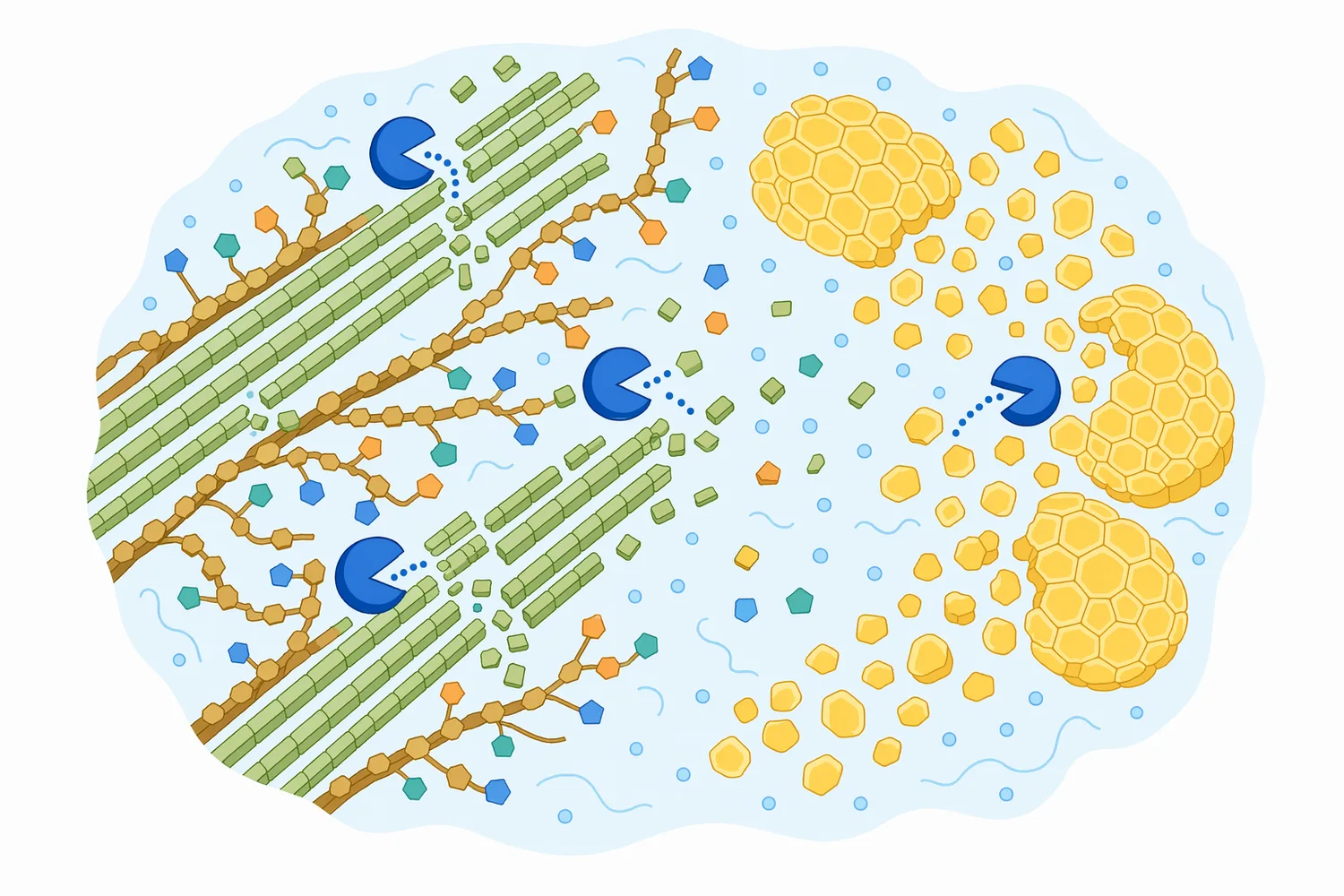
Wheat bran is one of the most common co-substrates in mixed meal processing because it is abundant, fibrous and nutrient-containing, but its value is constrained by cell-wall complexity. A recent mini review on fermented wheat bran describes alternative uses of fermented bran and highlights the role of biological treatment in changing nutritional and functional properties. Enzyme hydrolysis fits into this same processing logic: bran becomes more useful when its rigid carbohydrate matrix is modified rather than left intact [15].
Sweet corn processing by-products have also been studied in combination with wheat bran or other fibrous materials. In silage research, sweet corn processing by-products mixed with millet hull or wheat bran and inoculated with lactic acid bacteria were evaluated for fermentation quality and in vitro digestibility. This is relevant to mixed meal hydrolysis because it shows how cereal by-products and bran materials respond to biological processing that changes fermentability and digestibility endpoints [16].
Food-waste and by-product upgrading studies add another useful comparison. Enzyme-fermentation processing has been used to convert restaurant food waste into animal feed enriched with isomaltooligosaccharides and L-lactic acid, showing how hydrolysis and microbial conversion can work together to transform mixed substrates into more stable feed ingredients. The substrate differs from soybean meal or wheat bran, but the mechanism is similar: enzymes create accessible molecules, and fermentation converts them into nutritional or preservation-related products [17].
Hydrolyzed soybean meal is not used only as a feed ingredient; it can also function as a nutrient source for fermentation. Microbes need carbon, nitrogen, minerals and growth factors, but intact plant proteins are often too large or too slow to use efficiently. Hydrolysis converts part of the protein into peptides and soluble nitrogen, which can support microbial growth more effectively than untreated meal in many systems. Feed and food biotechnology reviews describe protein hydrolysates as useful because they provide available nitrogen and bioactive peptide fractions, depending on the raw material and hydrolysis process [2].
For corn meal and wheat bran, hydrolysis can also release soluble carbohydrates that support microbial metabolism. In a mixed substrate, this creates a more balanced fermentation feedstock: soybean meal contributes nitrogen-rich peptides, corn meal contributes starch-derived carbohydrate potential, and wheat bran contributes fiber-derived sugars and minerals once the matrix is opened. Wheat bran valorization by fungal co-cultivation with integrated hydrolysis illustrates how hydrolysis can be used to provide sugars while also generating material suitable for animal feed [3].
This is also why process engineers often pair hydrolysis with solid-state or semi-solid fermentation. Enzymes improve access; microbes then produce organic acids, aroma compounds, biomass, enzymes of their own and other metabolites. The corn–soybean meal solid-state fermentation study using integrated microbiota and metabolome analysis shows that fermentation changes are not limited to crude nutrient values; the microbial community and metabolite profile of the feed also shift during processing [11].
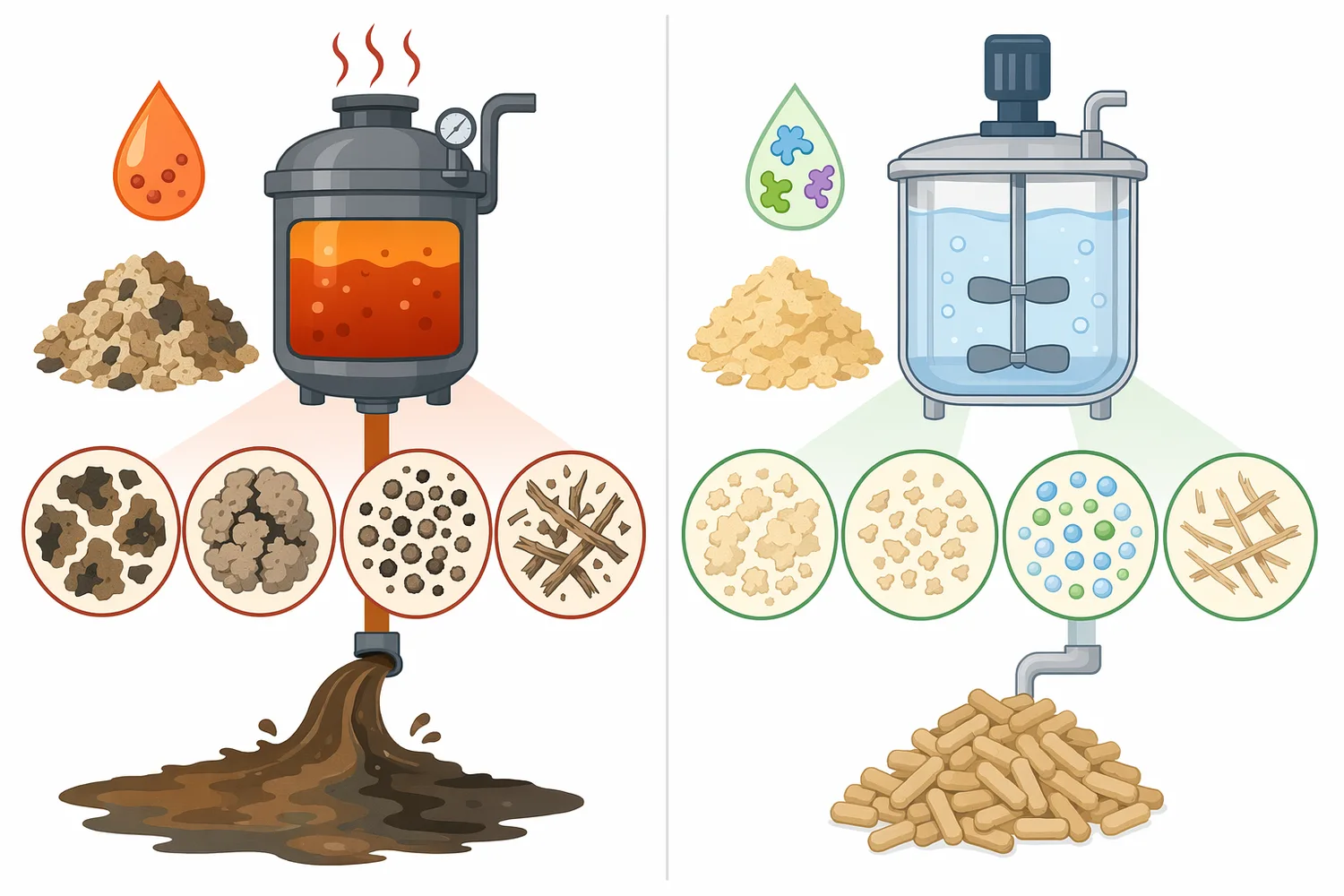
A common mistake is to judge soybean meal hydrolysis only by crude protein. Crude protein may remain similar before and after hydrolysis because nitrogen is still present, but the form of that nitrogen changes substantially. Intact proteins, large peptides, small peptides and free amino nitrogen behave differently in water, digestion, fermentation and thermal processing. Protein digestion kinetics research emphasizes that feed ingredients differ not only in total protein content but also in how quickly and extensively their protein fractions are digested [9].
Hydrolysis can also change water-binding, emulsification and encapsulation behavior in plant proteins. For example, rice bran protein hydrolysis has been studied for improving encapsulation properties by increasing anthocyanin retention in grape-juice microparticles. Although rice bran protein is not soybean meal, the finding illustrates a broader principle relevant to plant meals: controlled hydrolysis changes protein structure, and altered protein structure can change functional behavior in ingredient systems [18].
Plant protein hydrolysate research similarly shows that enzymatic modification can create ingredients with new techno-functional properties from lower-value or waste protein streams. The key mechanism is structural: cutting proteins changes molecular weight, exposes or hides charged and hydrophobic regions, and alters how peptides interact with water, oil, minerals and other food or feed components. Reviews of sustainable plant-based protein hydrolysates describe this as a route to higher-value applications for modified protein materials [6].
Soybean Meal Hydrolysis Enzyme should be understood as a controllable processing aid, not as a guarantee that every substrate will show the same result. Soybean meal from different origins, corn meal with different particle size, bran with different fiber structure and mixed meals with different moisture histories can respond differently. Enzyme access is affected by particle structure, hydration and prior heat exposure, so two meals with the same proximate analysis may hydrolyze at different rates. Feed digestion research supports this practical view by showing that ingredient digestion kinetics vary and need to be understood as process- and ingredient-dependent [9].
The most realistic benefits are improved access to protein, partial conversion of large proteins into peptides, better substrate availability for fermentation and more effective use of fibrous co-products. In animal feed, these changes may support digestibility and nutrient utilization; in fermentation, they may support microbial growth and metabolite formation; in ingredient upcycling, they may help transform lower-value meals into more functional materials. Reviews of hydrolyzed proteins in feed production emphasize that availability, bioactivity, safety and application value are all linked to the nature of the hydrolysate rather than the raw protein source alone [2].
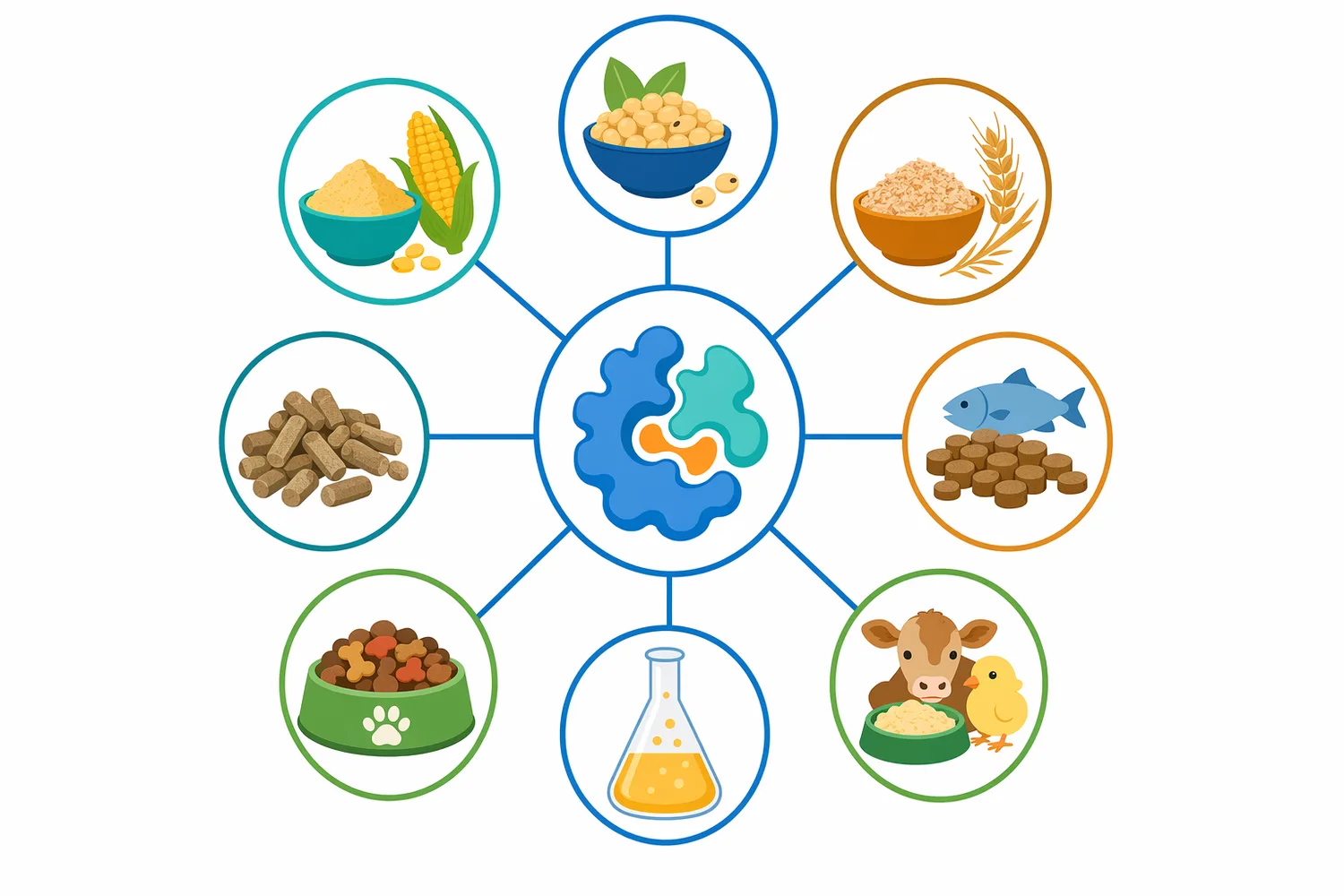
There are also limits. Hydrolysis that is too mild may not release enough soluble material to matter, while hydrolysis that is too aggressive can create unfavorable flavor, excessive small peptides or handling changes. Fiber-rich substrates may require time and hydration because enzymes must diffuse into particles and reach the bonds they are able to cleave. Biological treatment reviews of low-grade feed ingredients show that fermentation and hydrolysis can improve nutritional quality, but the response depends on substrate composition and processing conditions [10].
In real processing, soybean meal hydrolysis usually involves controlled contact between the enzyme, the hydrated meal and the intended co-substrates. Water is essential because hydrolysis consumes water at the bond being cleaved and because enzymes need mobility to reach the substrate. A dry powder blend will not hydrolyze meaningfully until sufficient moisture is present; once hydrated, the meal begins to swell, proteins become more accessible, and soluble fractions can diffuse away from particle surfaces. Enzymatic hydrolysis of lignocellulosic residues for animal feed illustrates the importance of treating fibrous agricultural materials as structured substrates rather than simple chemical mixtures [5].
Temperature and pH influence the reaction because they affect both enzyme conformation and substrate structure. Warmer conditions generally increase molecular motion up to the point where the enzyme or substrate quality is harmed, while pH changes protein charge and can expose or hide cleavage sites. However, the practical goal is not maximum breakdown at any cost; it is controlled conversion that fits the intended use of the hydrolyzed meal. Microbial protease literature emphasizes that protease diversity allows application across different industrial environments, but performance always remains tied to the process context [8].
Particle size also matters. Smaller particles present more surface area, hydrate faster and shorten the distance enzymes must diffuse into the substrate. This is particularly important for wheat bran and mixed meals where fiber-rich particles can shield proteins and starch granules. In practice, hydrolysis is often more effective when the raw material is physically prepared well enough for water and enzymes to contact the internal matrix. Wheat bran valorization research supports this integrated view, showing that hydrolysis and substrate preparation are linked in producing sugars and feed-relevant outputs [3].
For feed ingredient preparation, soybean meal hydrolysis can be positioned before drying, pelleting, fermentation or blending, depending on the plant’s process. The enzyme treatment is used to change the meal before the final product form is stabilized. In a feed context, the value comes from making proteins and fiber-associated nutrients more accessible before the animal consumes the ingredient. Reviews on animal-feed proteases frame this as a strategy for improving protein utilization and reducing undigested nitrogen losses [4].
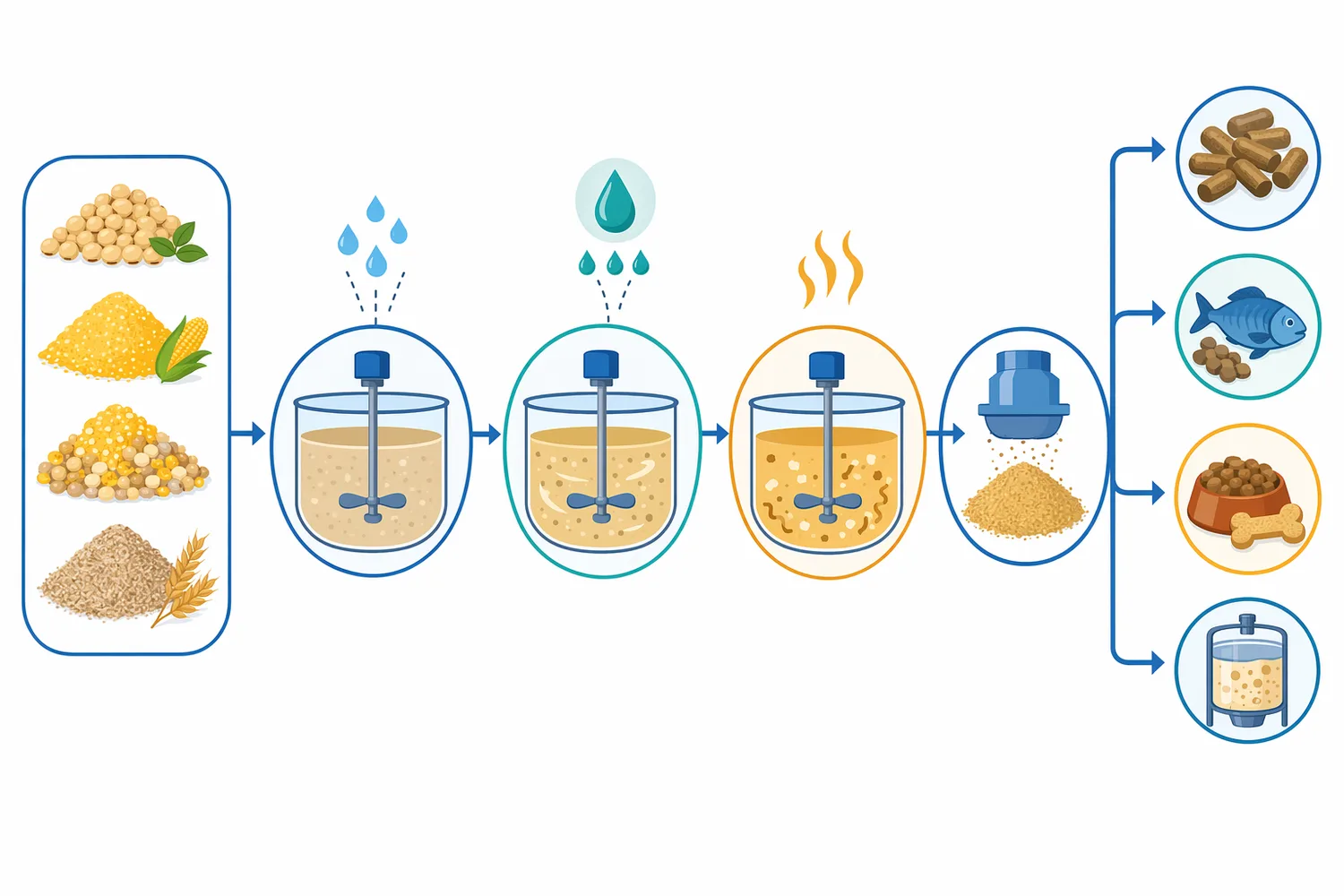
For fermentation media preparation, hydrolysis can be used to create a peptide- and carbohydrate-containing liquor or moist substrate. This can support yeast, bacterial or fungal processes where untreated plant meal would be too slow or inconsistent as a nutrient source. Precision processing literature for yeast-based products describes tailored enzyme processing as a way to obtain specific substrate transformations for microbial product systems [19].
For upcycling soybean meal, corn meal, mixed meal and wheat bran, hydrolysis can be paired with fermentation to produce more stable or higher-value feed materials. Fermentation can add organic acids, shift microbial ecology and transform released sugars and peptides into new metabolites. Studies on corn–soybean meal solid-state fermentation and fermented corn gluten–wheat bran substitution both show that biological processing can change feed characteristics beyond simple nutrient dilution or blending [13].
Enzymes.bio supplies Soybean Meal Hydrolysis Enzyme for soybean meal, corn meal, mixed meal and wheat bran hydrolysis processing. The product is available for direct online purchase by the 1 kg unit; buyers pay online, after which the order is processed and shipped. A Certificate of Analysis and Safety Data Sheet are included with the order.
For processors working with plant meals, the core value of this enzyme category is straightforward: it helps convert part of the meal from intact protein- and fiber-bound material into smaller, more accessible fractions. That conversion can support feed processing, fermentation substrate preparation and by-product upgrading when the hydrolysis step is matched to the intended finished material.
Sold by the 1 kg unit, in stock and ready to ship. Order directly on our store — pay online and we process your order. A Certificate of Analysis and Safety Data Sheet are included with every order.
Buy Soybean Meal Hydrolysis Enzyme Soybean Meal Corn Meal Mixed Meal Wheat Bran Hydrolysis Processing →Numbered in order of first citation. Open-access sources, each verified reachable at publication; citation numbers in the text link here.