
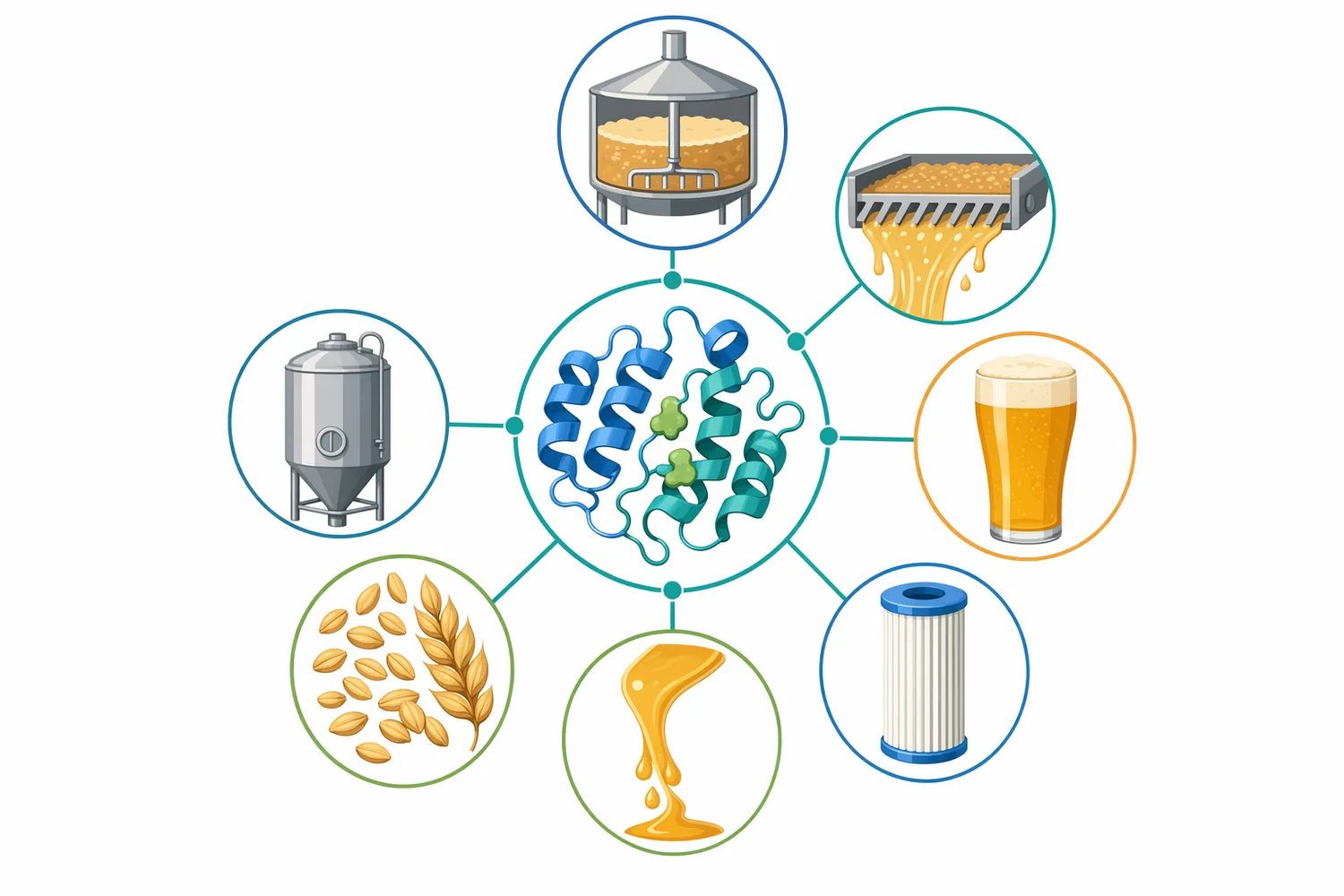
Xylanase enzyme for brewers helps hydrolyze xylan and arabinoxylan, the hemicellulose polysaccharides in cereal cell walls that can increase mash and wort viscosity. In brewing, this supports smoother lautering, more predictable wort separation, and better access to extract when malt or adjunct cell-wall material is part of the processing bottleneck.
Enzymes.bio supplies Xylanase Enzyme for Brewers as a B2B food-processing enzyme sold directly online by the 1 kg unit. After online purchase, the order is processed and shipped, with a Certificate of Analysis and Safety Data Sheet included with the order.
Xylanase is a carbohydrase: an enzyme that acts on carbohydrate polymers rather than starch-converting, protein-degrading, or flavor-forming pathways. Its primary substrate is xylan, a hemicellulose built around a β-1,4-linked xylose backbone; in cereal grains, that backbone is often substituted with arabinose and other side groups, forming arabinoxylans that behave very differently from simple sugars in a mash system [1].
In practical brewing terms, xylanase acts on the cell-wall fraction of barley malt, wheat, rye, triticale, corn adjunct streams, and other cereal raw materials. These materials contain non-starch polysaccharides that do not ferment like maltose or glucose but can strongly influence the physical behavior of mash and wort, particularly viscosity, filtration resistance, and liquid movement through the grain bed [2].
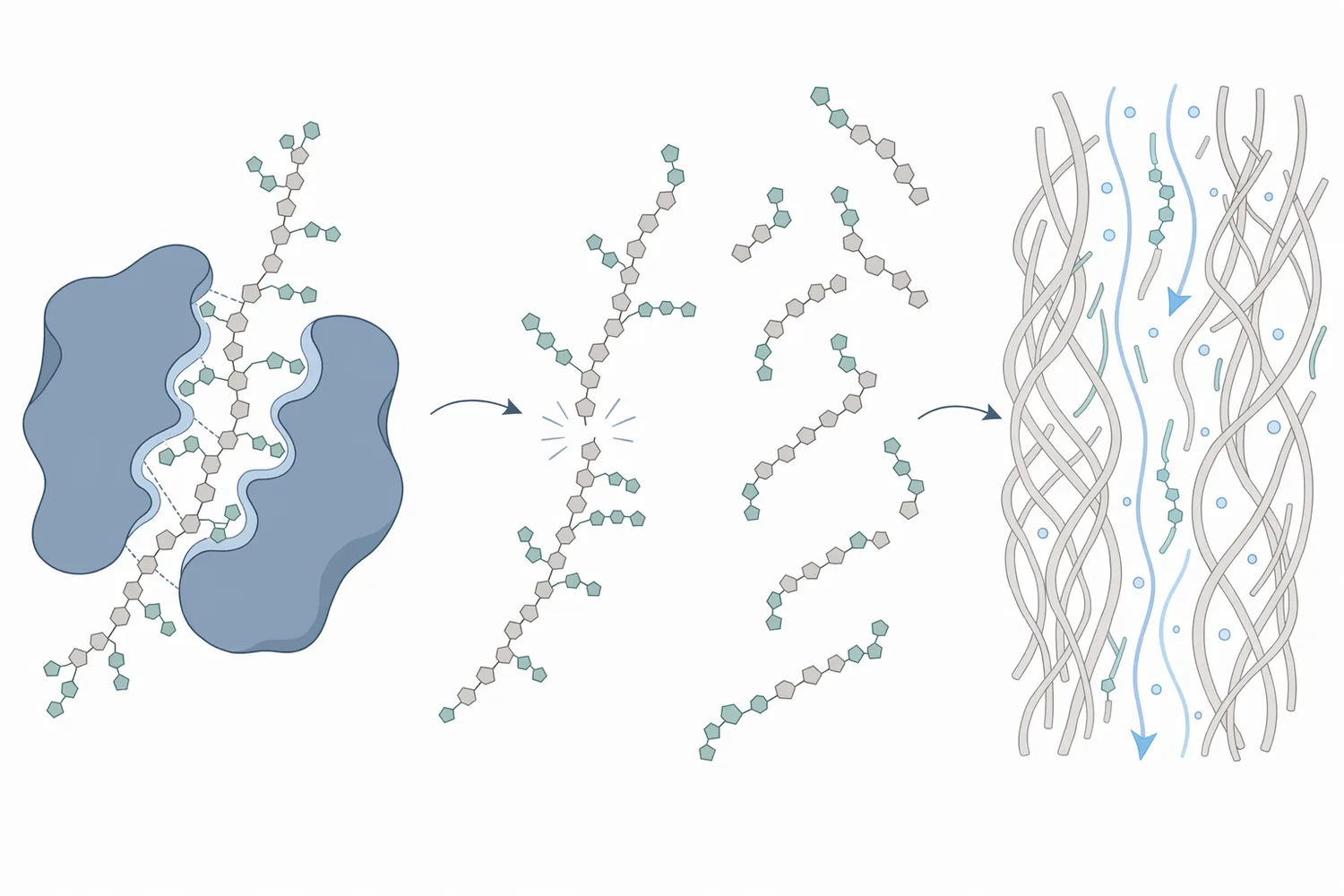
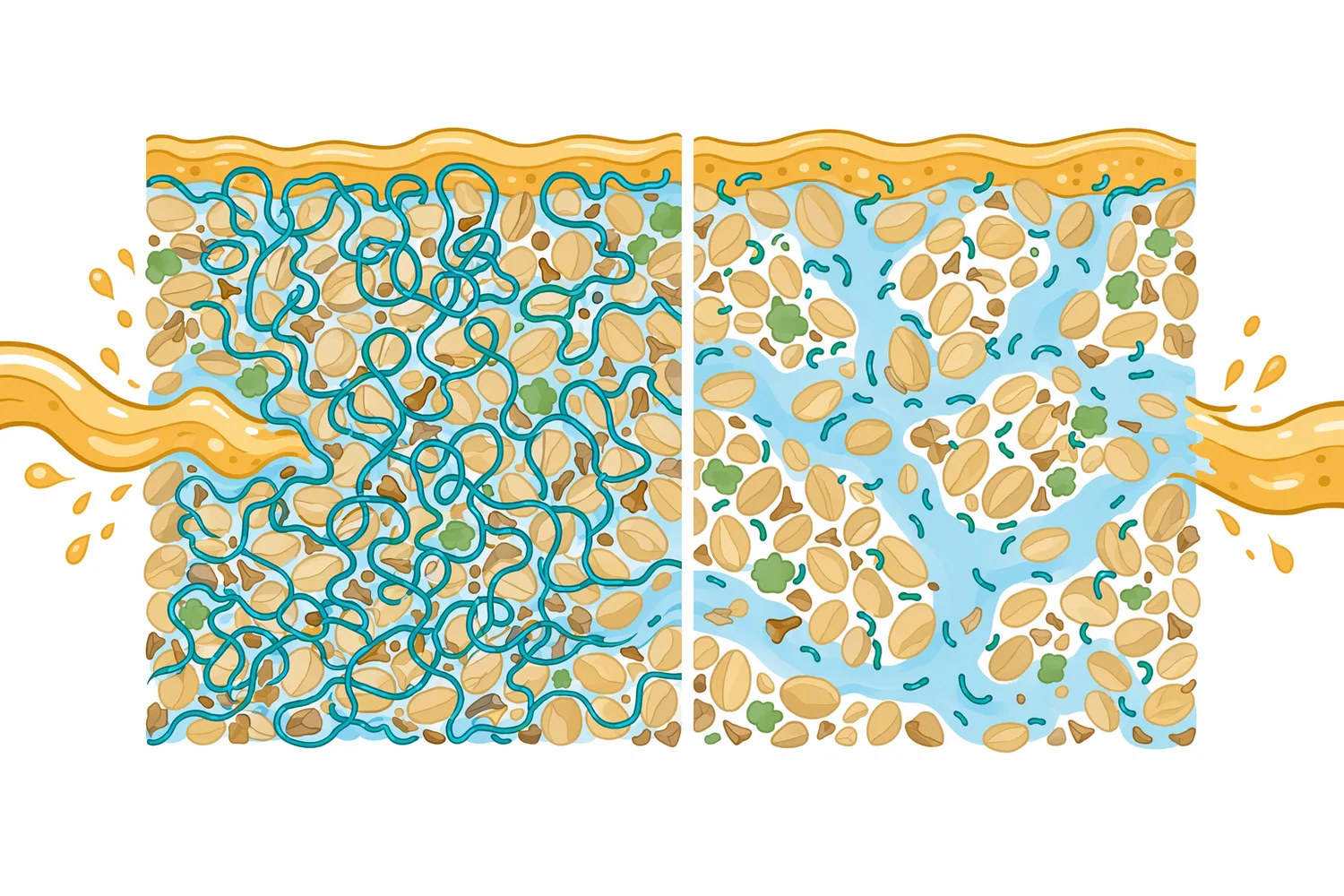
The enzyme’s useful action is not “making alcohol” directly. Instead, xylanase cuts long-chain xylan and arabinoxylan molecules into shorter fragments. That reduction in polymer chain length is important because long hemicellulose chains can entangle, bind water, and increase resistance to flow, while shorter fragments generally have less ability to thicken wort or obstruct separation [1].
For brewers, the result is best understood as cell-wall modification during processing. When the xylan-rich fraction of the cereal wall is partially hydrolyzed, the mash can release liquid more readily, wort can move with less resistance, and starch/protein-rich material trapped within the plant matrix can become more accessible to the rest of the mash enzyme system [3].
A cereal grain is not just starch. The starch granules that supply fermentable extract are embedded in a biological structure made of cell walls, proteins, hemicellulose, and other matrix materials. During malting and mashing, that structure must hydrate, soften, and open enough for enzymes and water to reach the extractable components [2].
Barley malting is designed to begin that process before the grain reaches the brewhouse. Germination activates the grain’s own enzyme systems and modifies the endosperm, while kilning stabilizes the malt for storage and brewing use. However, malt modification is never perfectly uniform, and grains or adjuncts with different cell-wall compositions can behave differently in the mash [4].
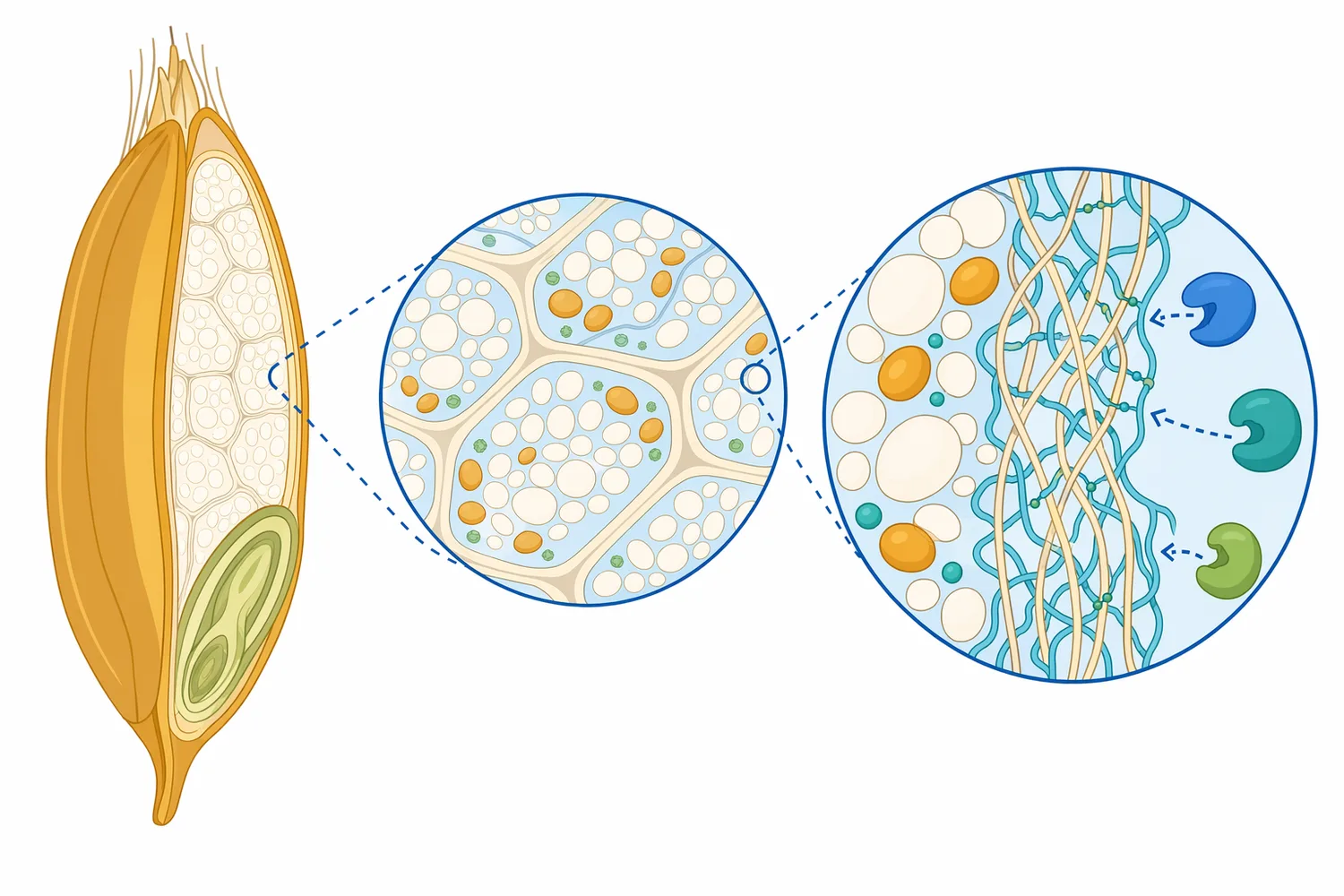
Arabinoxylans are especially relevant because they can persist through parts of processing and contribute to wort viscosity. Unlike starch, which amylases convert into fermentable sugars, arabinoxylans are non-starch polysaccharides; if they remain as large polymers, they can increase liquid thickness, slow wort runoff, and add variability to filtration performance [1].
This is why xylanase is useful in brewing even though it does not replace malt amylases. It targets a different problem: the physical resistance created by hemicellulose-rich cell-wall material. In recipes where lautering is slow, wort is unusually viscous, or adjuncts increase the non-starch polysaccharide load, xylanase can help reduce the contribution of xylan-type polymers to those problems [3].
The core reaction is hydrolysis of internal β-1,4 bonds in the xylan backbone. Endo-xylanases attack inside the polymer chain rather than only trimming the ends, so one enzyme event can rapidly reduce the average chain length of a large molecule into shorter xylooligosaccharides and soluble fragments [1].
That matters physically because viscosity is strongly influenced by molecular size and shape. Long arabinoxylan chains can occupy a large hydrated volume, interact with other wort components, and create a network that resists flow. When xylanase cuts those chains, the molecules become shorter, less entangled, and less able to hold water in a viscous structure [3].
The effect is also structural. Cereal cell walls are part of a matrix surrounding starch granules and protein bodies. Hydrolyzing part of the hemicellulose network can loosen that matrix, improving the movement of water into the grist and the movement of dissolved extract out of it. The change is not just “thinner wort”; it is a reduction in cell-wall-derived barriers to mass transfer [2].
Xylanase therefore works upstream of lautering performance. By acting during the mash, it can reduce the load of high-molecular-weight xylan-derived material before wort is separated. The benefit is most visible when xylan/arabinoxylan is a meaningful contributor to viscosity or filtration resistance, rather than when the main issue is mechanical, milling-related, or caused primarily by another polymer such as β-glucan [3].
Brewing uses several enzyme classes, and each has a different substrate. Xylanase is often discussed alongside β-glucanase, amylase, and protease, but it should not be confused with them.
| Enzyme class | Main substrate in brewing materials | Primary process effect | What it does not do |
|---|---|---|---|
| Xylanase | Xylan and arabinoxylan hemicellulose | Reduces xylan-related viscosity, supports lautering and filtration, helps open cereal cell-wall structure | Does not directly convert starch into fermentable sugars |
| β-Glucanase | β-glucans in cereal cell walls | Reduces β-glucan-related viscosity and gumminess | Does not specifically target arabinoxylan backbone structure |
| Amylase | Starch | Produces dextrins and fermentable sugars for yeast metabolism | Does not solve hemicellulose-driven filtration resistance |
| Protease | Proteins and peptides | Can affect protein solubilization, FAN formation, and haze-related fractions | Does not hydrolyze cereal cell-wall polysaccharides |
The distinction is important because a slow lauter can have more than one cause. A mash rich in β-glucan may respond differently from one where arabinoxylan is the dominant viscosity contributor, and neither enzyme class is a substitute for amylase in starch conversion [1].
In modern cereal brewing, the role of xylanase becomes more visible as brewers use varied raw materials. Work on triticale-based brewing systems, for example, reflects broader interest in non-traditional grains and cereal biocatalysts for wort sugar enhancement, but those materials also bring their own cell-wall and processing behavior [5].
The most direct use of xylanase in brewing is during mashing, where the enzyme can contact hydrated grist before wort separation. This is the stage where xylan-rich hemicellulose is accessible enough for enzymatic hydrolysis and early enough to influence the liquid that later enters the lauter tun or mash filter [3].
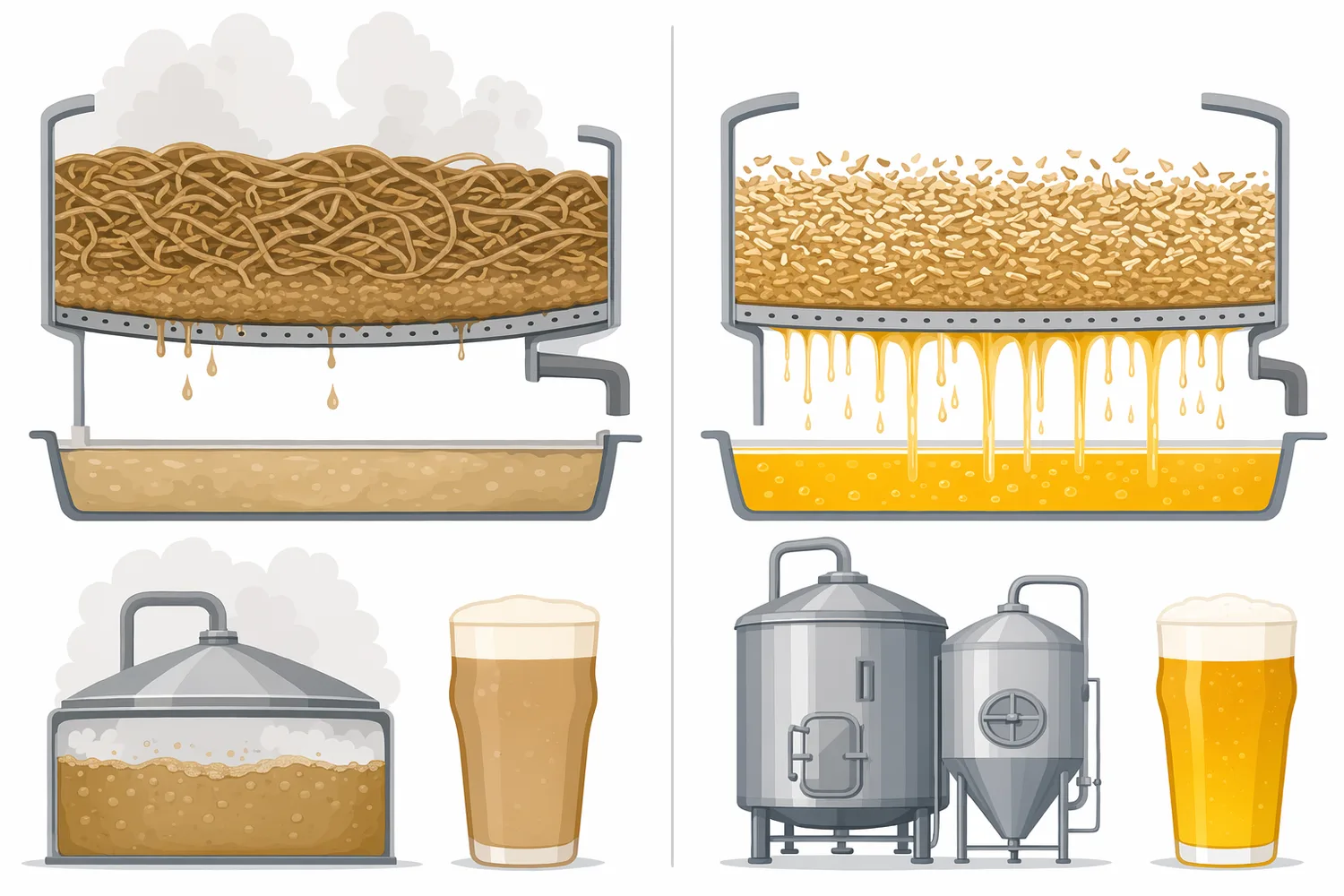
When xylanase reduces the size of arabinoxylan polymers, the wort can become less resistant to flow. In a lauter tun, lower viscosity can support easier passage through the grain bed. In a mash filter, reduced polymeric load can help reduce blinding or resistance at the filter medium, depending on the process and raw material [3].
This is particularly relevant for high-gravity brewing, adjunct-heavy recipes, and malt lots that produce slower runoff. High-gravity mashes contain more dissolved and suspended material per unit of water, so any polymer that binds water or thickens the liquid can have an amplified effect on separation [1].
Xylanase should be viewed as a processing aid rather than a universal corrective. If lautering problems are caused by over-milling, poor bed formation, damaged screens, excessive flour, or an unsuitable mash program, the enzyme cannot remove those mechanical causes. Its value is strongest where xylan and arabinoxylan hydrolysis addresses a real part of the bottleneck [3].
Barley malt remains the central brewing raw material, but even barley malt varies in modification, growing conditions, and endosperm structure. Water uptake during steeping and hydration during processing influence how readily the grain modifies and how efficiently extract becomes available [2].
Adjunct cereals can add further variation. Wheat, rye, triticale, and other grains may contribute different non-starch polysaccharide profiles, including arabinoxylan-rich fractions that can be more challenging in the brewhouse. Research into native triticale as a partial stand-in for barley malt illustrates how alternative grains can be considered for brewing, but also why cereal-specific processing behavior matters [6].
Malting and kilning choices also shape cell-wall behavior. Work on germination and kilning parameters for industrial brewing applications shows that malting conditions influence the suitability of cereal raw materials for brewing, including the balance between modification, processability, and usable extract [4].
Xylanase is therefore most relevant when the recipe or raw material set increases the importance of hemicellulose management. It does not make every grain behave like well-modified barley malt, but it can help reduce the processing burden created by xylan-rich cell-wall material [1].
Xylanases are not all identical. Their usefulness in brewing depends on whether they remain active long enough under mash conditions to hydrolyze the target substrate. Industrial xylanase research pays close attention to temperature tolerance, pH behavior, and structural stability because real processes are warmer, more acidic, and more variable than idealized laboratory conditions [7].
Brewing mashes are typically warm and mildly acidic. That environment favors enzymes that can act before they are denatured by heat or shifted away from their effective pH range. A xylanase that performs well in one industrial application may not necessarily perform the same way in a mash, which is why brewing-relevant evidence is important [8].
Thermophilic xylanases are of particular interest because mashing includes temperature rests that can reduce the lifetime of less stable proteins. A study on a thermophilic xylanase from Achaetomium sp. Xz-8 specifically highlighted high catalytic efficiency and potential application in brewing and other industries, reflecting the value of xylanases that can function in heated process environments [8].
Protein structure helps explain these differences. Research on a glycoside hydrolase 11 xylanase found that disulfide bonds enhanced thermal stability, while the enzyme’s “thumb” region influenced activity. In other words, stability and catalytic performance are built into the folded shape of the enzyme, not merely into the fact that it is called a xylanase [9].
The most immediate chemical change is the conversion of larger xylan and arabinoxylan polymers into smaller soluble fragments. These fragments are not equivalent to fermentable wort sugars such as maltose, but their reduced size changes how the liquid behaves during separation [1].
The most useful physical change is lower viscosity. Wort viscosity affects the force needed to move liquid through a grain bed, through filter media, or through pipework. Even modest reductions in polymer-driven viscosity can make wort runoff more predictable when the original bottleneck is caused by non-starch polysaccharides [3].
A second change is improved permeability of the mash solids. By weakening part of the hemicellulose network, xylanase can reduce the ability of fine cell-wall fragments to form dense, water-retentive layers. This helps explain why xylanase is associated with lautering and filtration support rather than only with compositional changes in wort [3].
A third change is improved exposure of entrapped components. As cell walls open, water and endogenous malt enzymes can access more of the endosperm structure. This can support extract accessibility, although the final extract result still depends on starch gelatinization, amylase activity, malt quality, mash program, and equipment design [2].
The underlying enzymology is well established: xylanases cleave xylan-type hemicellulose, which is one of the major non-starch polysaccharide fractions in plant biomass. Reviews of xylanase function describe broad industrial relevance in food, feed, pulp, paper, biofuel, and brewing-related applications because many processes need controlled breakdown of plant cell-wall material [1].
Brewing-specific interest is supported by studies of thermophilic and process-apt xylanases. The Achaetomium sp. Xz-8 xylanase work is notable because it explicitly connects enzyme properties with potential in brewing and other industrial processes, where heat tolerance and catalytic efficiency are valuable [8].
Process-apt xylanase development also appears in broader industrial enzyme research. Sharma and colleagues described bioprocess development for a xylanase with application potential across a range of industrial processes, underlining that xylanase performance is not only about the substrate but also about whether the enzyme fits real processing conditions [7].
Recent work on microbial xylanase production continues to show active research interest in xylanase as an industrial enzyme class. Studies such as extracellular xylanase production by Pediococcus pentosaceus G4 reflect the ongoing search for xylanases with practical production and application properties, even though the brewer’s concern is the applied performance in mash rather than the upstream production method [10].
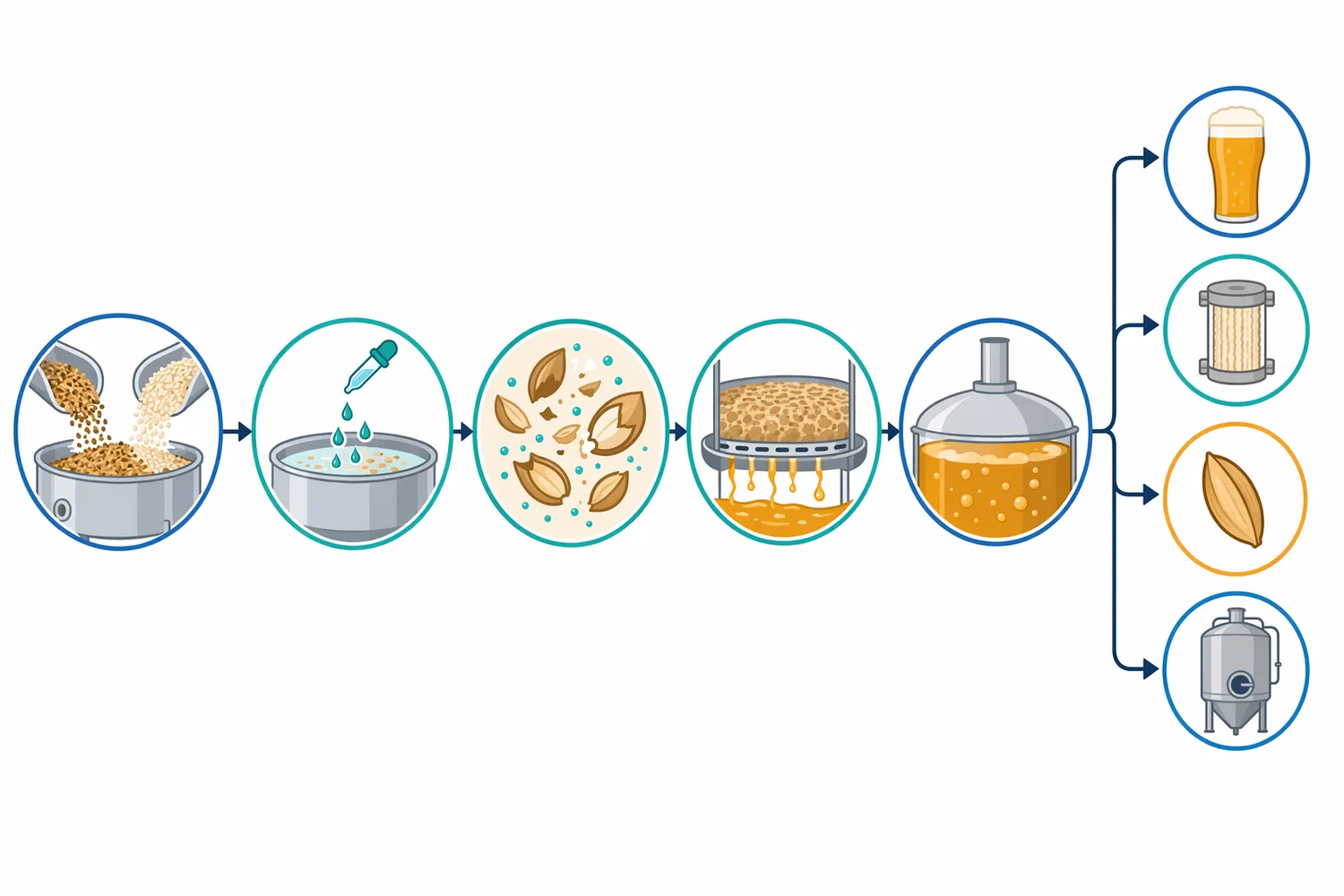
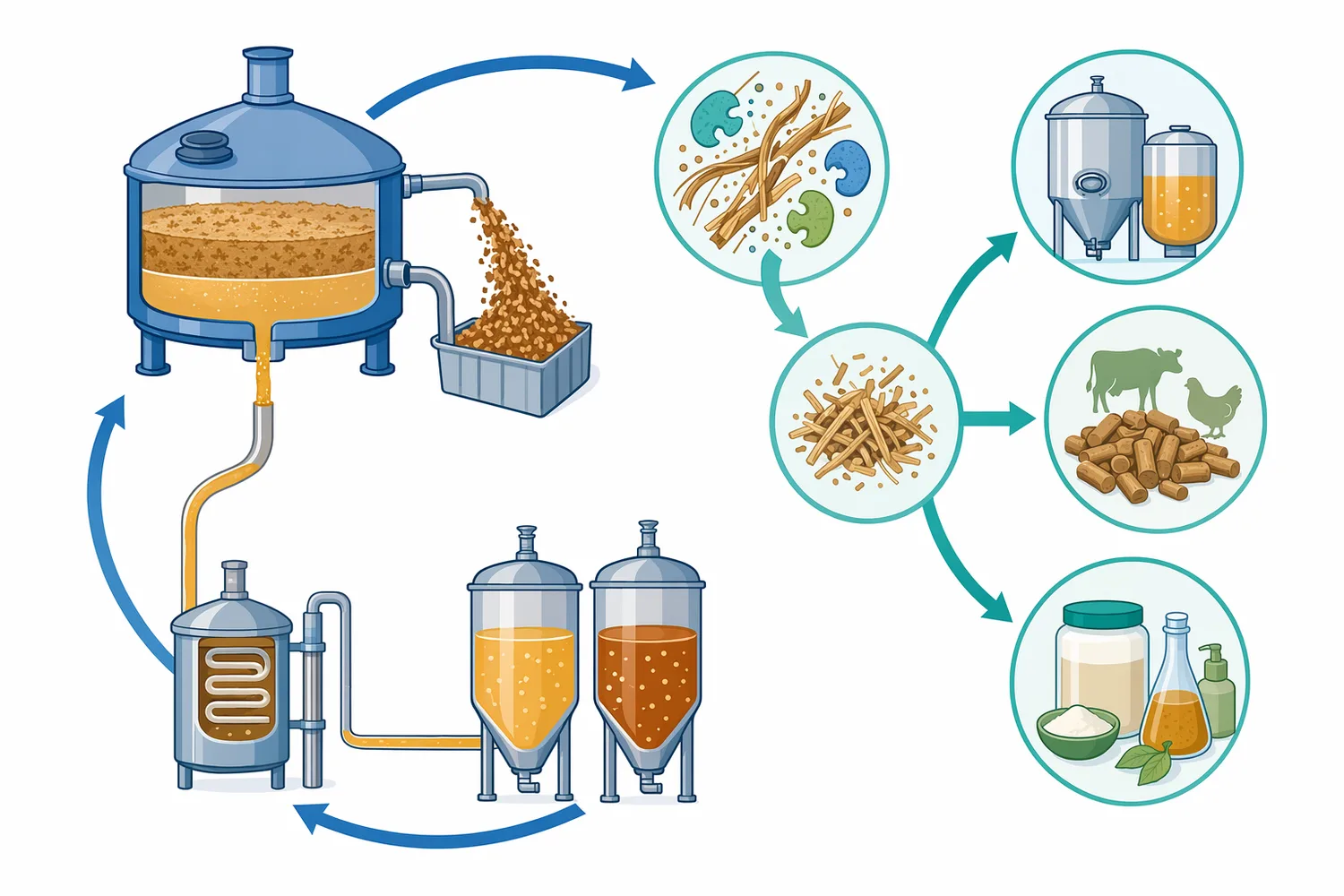
Xylanase is also relevant beyond wort production because brewers’ spent grain is rich in lignocellulosic material. After mashing, much of the starch has been extracted, but the remaining solids still contain cellulose, hemicellulose, lignin-associated material, protein, and other components that can be upgraded through controlled biological processing [11].
Research on brewing and malting by-products has investigated their use as raw materials in fermentation, including L-(+)-lactic acid production. This matters because the same cell-wall complexity that creates processing challenges in the brewhouse also shapes how spent grain behaves as a substrate for downstream valorization [12].
Further work has considered brewing and malting by-products as both carriers and raw materials in lactic acid production and feed applications. Enzyme treatment, including xylanase-containing approaches, can help release fermentable or functional fractions from high-fiber residues by loosening the hemicellulose network [13].
More recent by-product research has expanded into other bioproducts, including the use of brewing industry by-products as an alternative substrate for hyaluronic acid biosynthesis. These studies do not mean a brewing xylanase is automatically optimized for every valorization route, but they do show why hemicellulose modification is central to circular use of brewing residues [14].
The same substrate logic applies outside beer. In grain alcohol and cereal fermentation, xylanase can support the handling of grain slurries by reducing the contribution of hemicellulose to viscosity and mass-transfer limitations. The target remains the xylan-rich cell-wall fraction rather than starch itself [1].
In processes where cereals are cooked, liquefied, saccharified, and fermented, viscosity affects pumping, heat transfer, mixing, and enzyme contact with substrate. A xylanase that hydrolyzes arabinoxylan can help reduce the non-starch polysaccharide burden that otherwise makes dense grain streams harder to process [7].
This is why xylanase appears across brewing, food, feed, and biomass applications. The industries differ, but the recurring technical challenge is similar: plant cell walls hold valuable material in a complex matrix, and xylanase helps break one of the main hemicellulose components of that matrix [1].
Xylanase is typically used where it can contact hydrated grist during mashing. At that point, cereal cell walls have taken up water, the substrate is more accessible, and the enzyme has time to reduce xylan-derived polymer size before wort separation [3].
The enzyme’s value is most visible when it complements, rather than replaces, standard brewing controls. Milling still determines grist particle distribution and husk integrity. Mash temperature still governs starch gelatinization and enzyme survival. Mash pH still influences the activity of multiple enzymes. Lauter design still determines flow capacity and bed behavior [2].
Xylanase should therefore be understood as one part of a brewhouse process strategy. It targets a defined substrate class—xylan and arabinoxylan—not every cause of slow runoff. When the cause is hemicellulose-driven viscosity, xylanase has a clear biochemical role; when the cause is unrelated, its effect will naturally be limited [1].
The enzyme is also normally inactivated later by harsher heat exposure, especially as wort proceeds toward boiling. That is useful from a process-control standpoint: the main intended action occurs upstream in the mash and separation stages, not throughout the finished beer lifecycle [3].
Xylanase preparations are enzyme proteins intended for industrial and food-processing use. Like other powdered or liquid enzyme preparations, they should be handled to avoid unnecessary inhalation, dust or aerosol exposure, and direct contact with eyes or skin. The Safety Data Sheet supplied with the order should be followed in the workplace .
Because enzymes are biologically active proteins, good handling practice matters even when the enzyme is used at low inclusion in a process. Closed handling where practical, suitable protective equipment, and avoidance of airborne enzyme particles are standard precautions for brewery and food-processing environments .
Enzymes.bio supplies Xylanase Enzyme for Brewers directly online by the 1 kg unit. Buyers can purchase the product online, pay at checkout, and the order is then processed and shipped; a Certificate of Analysis and Safety Data Sheet are included with the order .
Xylanase is a credible enzyme for brewers because its mechanism directly matches a real brewing problem: xylan and arabinoxylan in cereal cell walls can increase viscosity and slow separation, and endo-xylanase hydrolyzes those polymers into shorter fragments [1].
The strongest expected benefits are physical and process-related: lower xylan-related viscosity, smoother wort movement, more predictable lautering or filtration, and improved accessibility of cereal material during mashing. These benefits are most likely when raw material composition, malt modification, adjunct use, or high-gravity brewing makes hemicellulose a meaningful contributor to process resistance [3].
The limits are equally important. Xylanase is not a starch-conversion enzyme, not a substitute for good malt modification, and not a mechanical fix for poor grist preparation or lauter tun design. It works on a specific substrate, and the practical result depends on whether that substrate is part of the bottleneck [2].
For brewers working with variable malt lots, adjunct grains, or high-viscosity mashes, Xylanase Enzyme for Brewers provides a targeted way to modify the xylan-rich cell-wall fraction before wort separation. Used with sound brewhouse practice, it can support more consistent wort handling and better process reliability without changing the fundamental role of malt, mash control, and fermentation management.
Sold by the 1 kg unit, in stock and ready to ship. Order directly on our store — pay online and we process your order. A Certificate of Analysis and Safety Data Sheet are included with every order.
Buy Xylanase Enzyme For Brewers →Numbered in order of first citation. Open-access sources, each verified reachable at publication; citation numbers in the text link here.