
Xylanase Enzyme for Unlocking Wort Performance is used in cereal-based mashing to reduce the process impact of arabinoxylans—the hemicellulose polymers that can make wort more viscous, slow lautering, and increase filtration load. By cutting the xylan backbone of arabinoxylan into shorter fragments, xylanase changes how these polymers hold water and move through the mash, helping wort flow more predictably in wheat, rye, oat, adjunct, and other high-cell-wall grain bills [1].
For buyers using Enzymes.bio, the product is available for direct online purchase in a 1 kg unit, with the order processed and shipped after checkout. A Certificate of Analysis and Safety Data Sheet are supplied with the order for routine receiving and handling records .
Xylanase is a carbohydrase enzyme that hydrolyzes xylan, a major hemicellulose in plant cell walls. In brewing cereals, the most relevant xylan-containing material is usually arabinoxylan: a β-1,4-linked xylose backbone decorated with arabinose side groups. These polymers are not starch, and they are not the primary extract target in mashing, but they strongly influence how the mash behaves physically because they bind water, increase viscosity, and can create a more resistant liquid-solid separation environment [2].
In practical brewing language, xylanase addresses the “thick wort” side of cereal processing. Starch-converting enzymes generate fermentable and dextrinous sugars, while xylanase acts on the grain cell-wall fraction that can remain as soluble or suspended polysaccharide material. When the enzyme cleaves long arabinoxylan chains into shorter fragments, those fragments have a lower ability to form a continuous, water-holding network. The result is not a new beer style or a flavor additive; it is a process aid for making wort easier to separate, transfer, and filter when arabinoxylans are part of the bottleneck [1].
This distinction matters because brewhouse viscosity is not caused by one molecule alone. β-glucans, proteins, starch fines, grain crush, malt modification, adjunct level, mash schedule, and lauter-bed structure all contribute. Xylanase is specifically useful where xylan or arabinoxylan is a significant contributor, which is why it is often discussed for unmalted cereals, wheat-containing grists, rye, oats, and adjunct brewing rather than only for standard well-modified all-malt barley mashes [3].
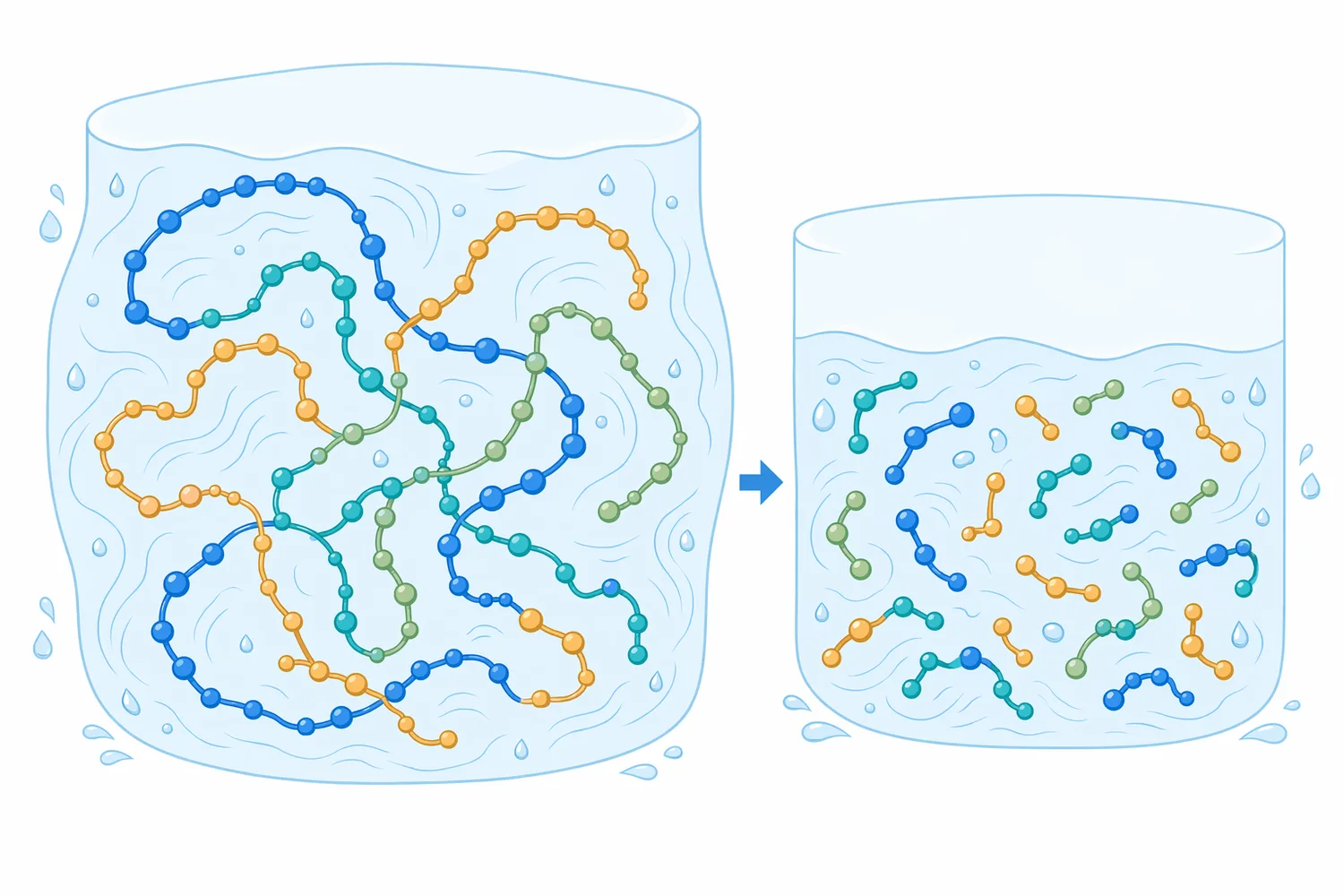
During mashing, water penetrates crushed grain particles and extracts starch-derived sugars, proteins, minerals, and cell-wall materials. Arabinoxylans can dissolve or disperse into the wort phase, where their long chain length gives them a large hydrodynamic volume. In simple terms, a long arabinoxylan molecule occupies more effective space in solution and drags more water with it than a short fragment, so it raises viscosity disproportionately compared with its weight concentration [1].
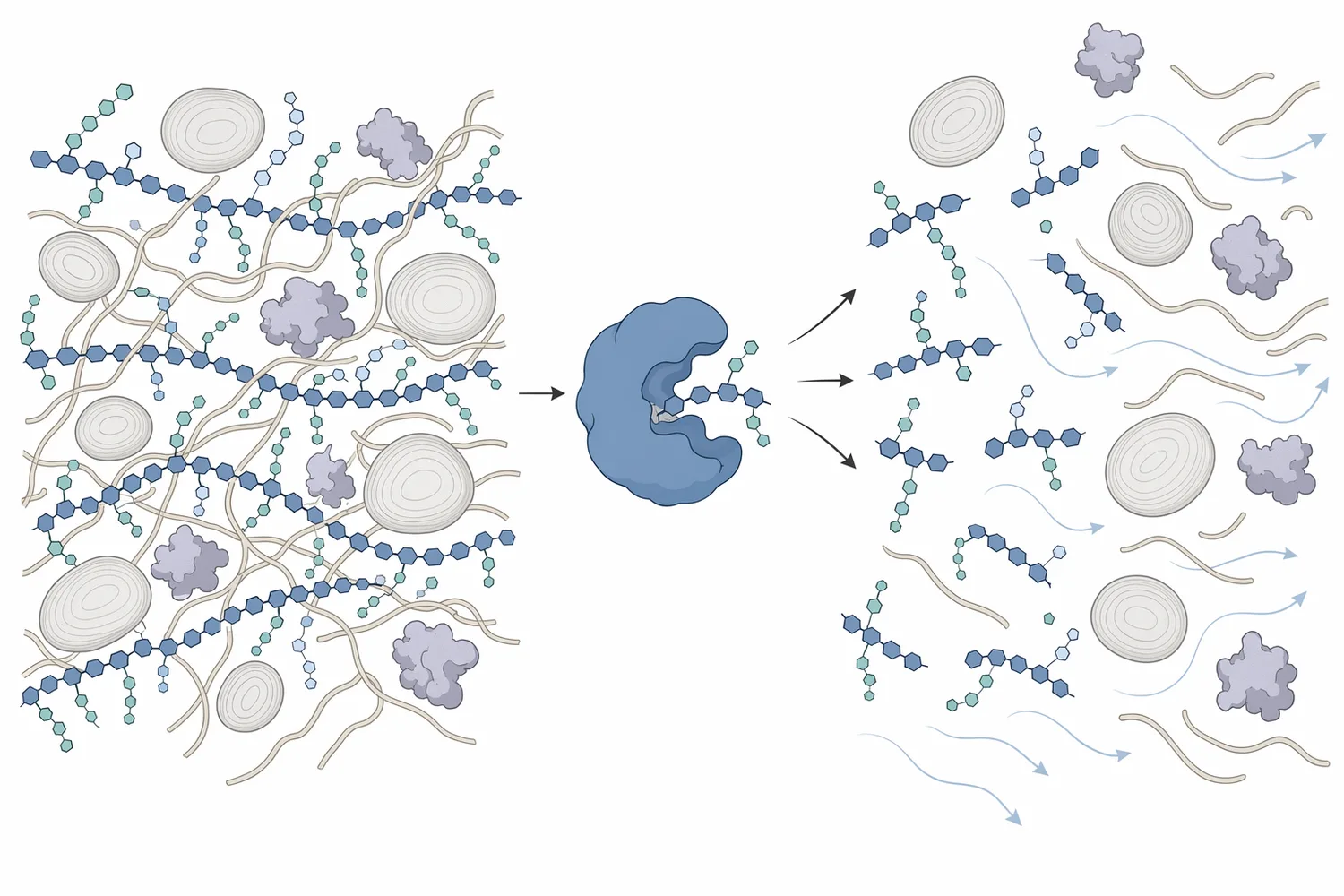
Endo-xylanases are especially relevant because they cut internal β-1,4 linkages within the xylan backbone. Instead of removing one sugar unit at a time from the chain end, they make internal cuts that rapidly reduce polymer size. That drop in average chain length is the central mechanism behind wort viscosity reduction: the material may still be present, but it no longer behaves like the same long-chain thickener in the liquid phase [4].
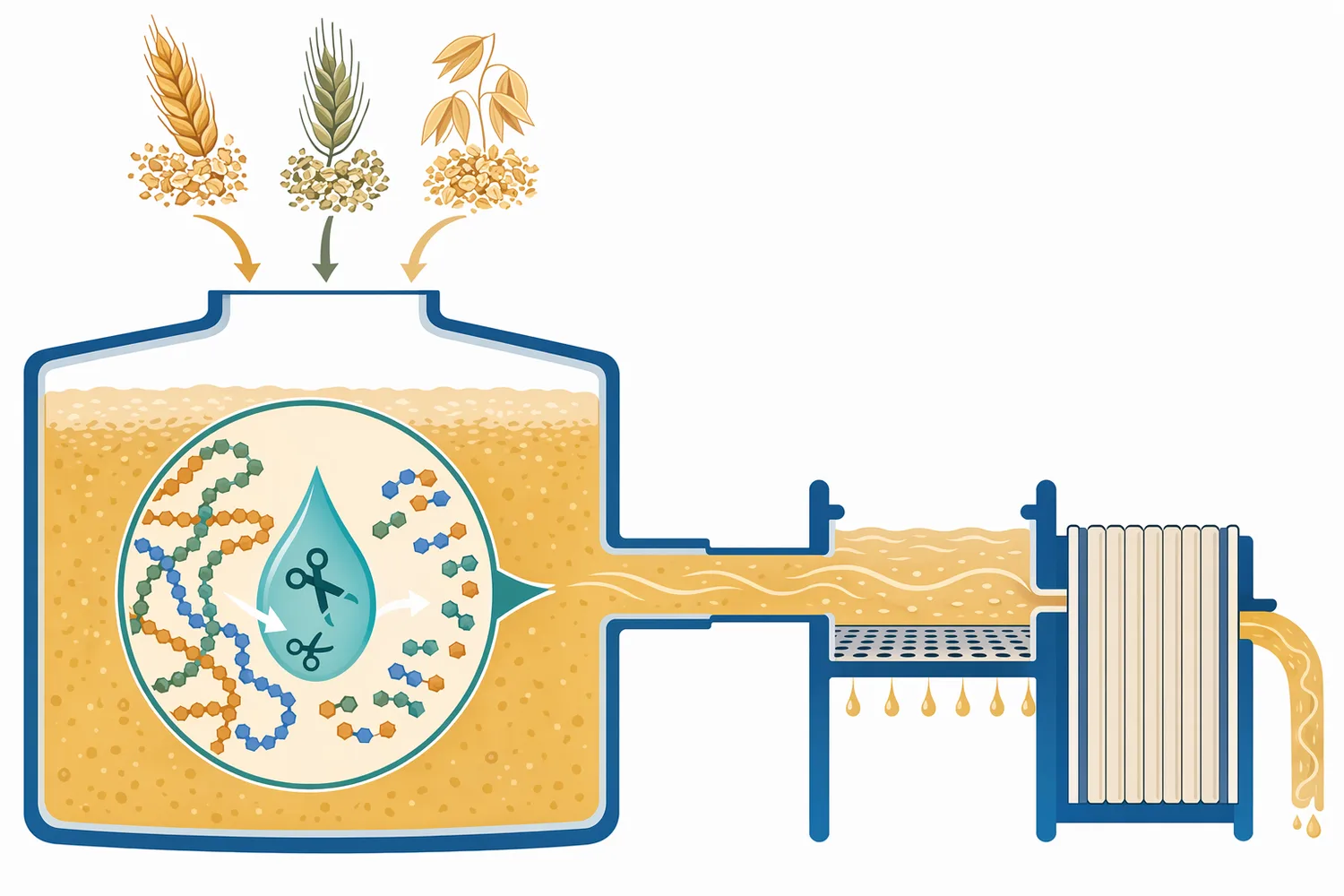
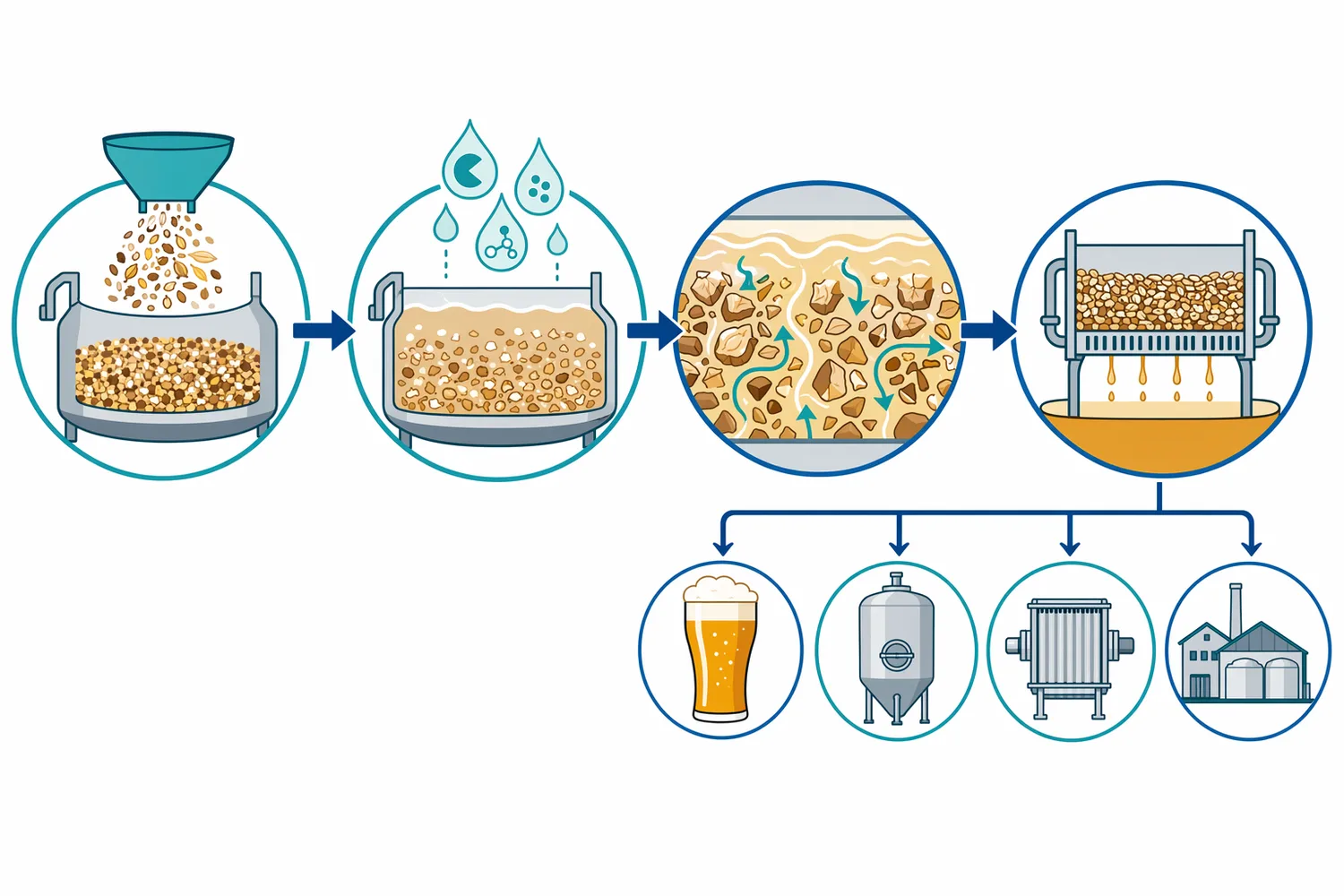
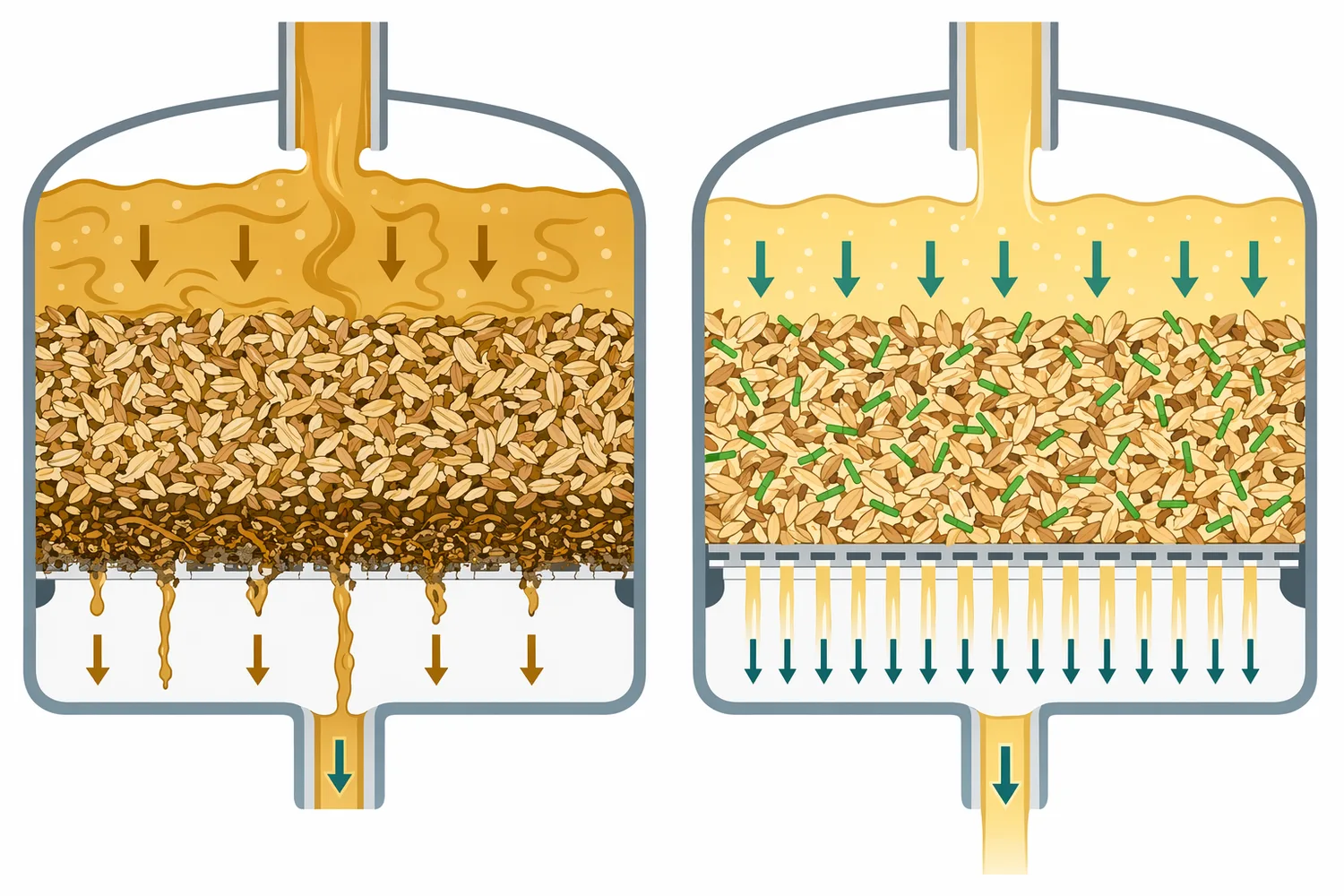
The same mechanism can also affect lautering. A lauter tun or mash filter depends on liquid moving through a grain-bed or filter-cake structure. High-viscosity wort flows more slowly through the same physical bed, and soluble cell-wall polymers can also add resistance at the particle surface. By shortening arabinoxylans before wort separation, xylanase can reduce part of that resistance, helping the liquid phase pass through the solids with less drag [2].
It is important to be precise about what xylanase does not do. It does not convert starch to fermentable sugar in the way amylases do, and it does not directly digest protein in the way proteases do. Its main action is on hemicellulose, especially xylan-rich structures, so the most visible operational effects are associated with viscosity, wort handling, runoff, filtration pressure, and the behavior of grain bills that contain a high proportion of cell-wall polysaccharides [1].
The renewed interest in unmalted cereals and alternative grains has made xylanase more relevant in modern brewing. Unmalted raw materials can contribute starch and flavor potential, but they may bring lower endogenous enzyme activity and a different cell-wall burden compared with well-modified malt. A 2024 brewing-focused review on the use of unmalted cereals with enzyme preparations highlights that enzyme support is a practical tool when cereal adjuncts are used to obtain technological or economic advantages in brewing [3].
In these systems, the challenge is not only whether starch can be liquefied and saccharified. The mash must also be pumpable, separable, and filterable. If a cereal adds arabinoxylans that swell and thicken the liquid phase, starch conversion can look acceptable while the brewhouse still struggles with slow runoff or high filtration resistance. Xylanase is therefore best understood as part of the cell-wall-management side of adjunct brewing [3].
Wheat and rye are common examples because they can contribute desirable sensory and style attributes while also increasing wort viscosity. Oats and other specialty grains can create similar process pressure through their non-starch polysaccharide content. In these cases, xylanase can help unlock wort performance by reducing the physical impact of arabinoxylan rather than by changing the basic recipe intention [2].
Research on non-barley materials also reinforces the need to evaluate wort as a complete process stream. Studies on lentil malt wort quality and alternative malting materials show that non-traditional brewing substrates can be assessed through wort-quality parameters, not only through extract potential [5]. Xylanase fits into that broader approach: the point is not simply to extract more from the grain, but to make the extracted wort behave in a manageable way.
Xylanase is often mentioned alongside other brewing enzymes, but each enzyme class acts on a different substrate. The table below shows the conceptual difference.
| Enzyme type | Main brewing substrate | What it changes in the mash | Typical process relevance |
|---|---|---|---|
| Xylanase | Xylan and arabinoxylan in cereal cell walls | Cuts long hemicellulose chains into shorter fragments, reducing their water-binding and viscosity contribution | Wort viscosity reduction, improved runoff support, lower filtration load in high-arabinoxylan grists |
| β-Glucanase | β-glucans from barley, oats, and other cereals | Breaks β-glucan polymers that can form viscous, gel-like solutions | Lautering and filtration support where β-glucans are the main viscosity driver |
| Amylase | Starch | Hydrolyzes starch into fermentable sugars and dextrins | Extract development, fermentability, wort sugar profile |
| Protease | Grain proteins | Produces peptides and amino nitrogen; can also modify protein structure | Yeast nutrition, haze/foam balance, protein load management |
| Phytase | Phytate | Releases bound phosphate and minerals under suitable conditions | Mineral availability and cereal processing support in some enzyme systems |
This comparison shows why xylanase should not be treated as a general “brewing enzyme” with undefined benefits. Its value is strongest when the process problem is linked to hemicellulose, especially arabinoxylan. Reviews of xylanase applications describe the enzyme as a biocatalyst for plant-biomass and cereal-processing systems because xylan is a structural polysaccharide that requires targeted hydrolysis [1].
It also explains why xylanase and β-glucanase are sometimes paired in practice. Both act on cell-wall polysaccharides, but they do not act on the same polymer. A mash can be difficult because of β-glucans, arabinoxylans, or both. When both fractions matter, a broader cell-wall enzyme approach can be more relevant than expecting one enzyme to address every viscosity source [3].
The most directly relevant brewing evidence comes from research on enzyme preparations used with unmalted cereals. Loiko’s 2024 work on brewing with unmalted cereals and enzyme preparations frames enzymes as practical tools for adapting cereal raw materials to brewing operations, especially when the raw materials do not provide the same built-in modification and enzyme balance as malt [3]. That is exactly the context in which xylanase becomes useful: when cereal cell-wall composition begins to limit wort handling.
Work on wort produced with lentil malt also shows how enzyme preparations are being investigated beyond conventional barley malt. Fulara’s 2025 study focuses on quality parameters of wort produced with lentil malt using enzymatic preparations, illustrating that alternative raw materials are evaluated not only for extract but also for wort behavior and processing suitability [5]. While lentil malt is not the same as wheat or rye, the study belongs to the same technical theme: non-traditional substrates often need enzyme-supported processing to reach usable wort characteristics.
Research on finger millet malting for industrial brewing applications adds another angle. Germination and kilning parameters influence the enzymatic and processing properties of malted grains, and the study of Eleusine coracana malting shows that cereal preparation conditions matter for brewing performance [6]. Xylanase supplementation sits downstream of this idea: if the malt or adjunct does not supply enough cell-wall degradation for the intended process, an added enzyme can help target the remaining hemicellulose burden.
A 2025 study on a triticale-based amylolytic biocatalyst for wort sugar enhancement shows how brewing research continues to explore cereal-specific enzyme systems for wort improvement [7]. Although that study centers on starch hydrolysis rather than xylanase, it supports the broader industrial principle that different grain substrates call for different enzyme functions. Amylolytic tools address sugar formation; xylanase addresses arabinoxylan-related physical handling.
Outside brewing, xylanase reviews provide the mechanistic foundation for why the enzyme works. Abena’s 2024 review describes xylanase sources, classification, mode of action, production, and applications, emphasizing that xylanase hydrolyzes xylan-containing materials through glycoside hydrolase activity [1]. For brewers, the important translation is straightforward: if a cereal grist introduces xylan-rich hemicellulose into wort, xylanase provides a targeted way to reduce the polymer size that causes handling problems.
One useful way to understand xylanase is that it does not need to remove all arabinoxylan to improve wort behavior. It can be enough to cut long chains into shorter chains. Long polymers create viscosity because they occupy a large effective volume, entangle with one another, and hold water in the liquid matrix. Shorter fragments are less able to do that, even if the total dissolved material has not disappeared [4].
This is why xylanase can have a process effect without producing a visibly dramatic change in the grain bed. The enzyme works at the molecular level before separation. A mash that previously behaved as thick and resistant can become easier to run off because the soluble hemicellulose fraction no longer imposes the same drag on flow. That is the practical meaning of “unlocking wort performance” in this application [2].
The mechanism also explains why timing matters in general brewing use. Xylanase is most useful when it has contact with hydrated cereal material before the wort is separated from the solids. If arabinoxylans are already extracted and contributing to viscosity, the enzyme needs enough access and contact to shorten them before the process step where viscosity becomes limiting. This is why xylanase is commonly associated with mashing rather than with a late-stage correction after filtration problems have already developed [3].
Because cereal arabinoxylans vary in side-chain substitution and solubility, the response can differ by grain type and process. Xylanases from different microbial or plant sources may also differ in their substrate preference and operating behavior. Industrial reviews emphasize that xylanase performance is tied to enzyme source, xylan structure, and process conditions, which is why the practical outcome is best understood as substrate-dependent rather than universal [1].
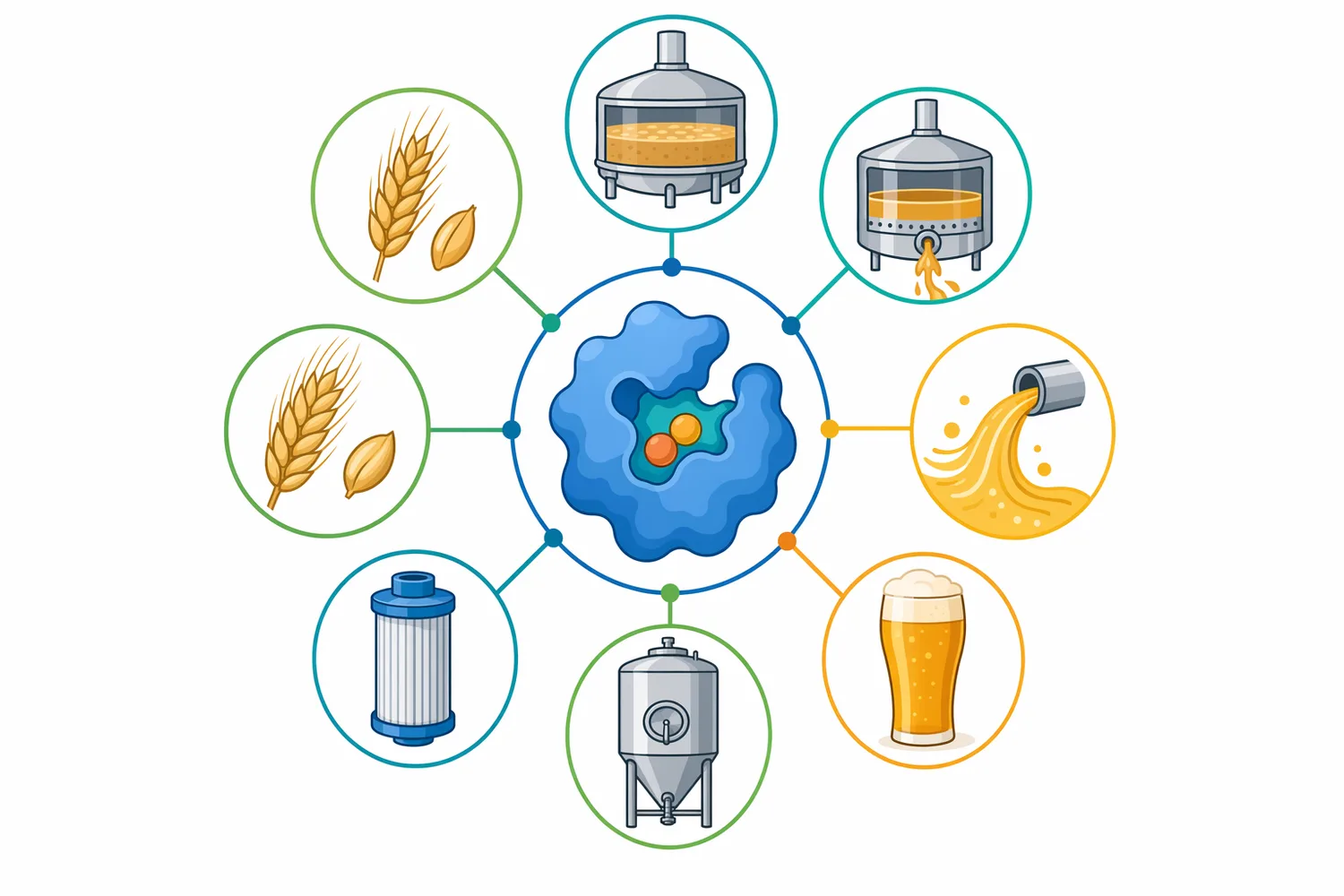
Wheat-containing beers are a natural fit for xylanase because wheat can contribute arabinoxylans that affect viscosity and separation. In a wheat-rich mash, the brewer may want the sensory attributes of wheat—softness, haze potential, foam contribution, and style identity—without accepting unnecessary lautering difficulty. Xylanase helps by working on the hemicellulose fraction that contributes to thick wort and slow flow [2].
Rye is another common use case. Rye can produce a distinctive spicy flavor and full mouthfeel, but it is also associated with very viscous mashes. Where arabinoxylan is part of that viscosity load, xylanase can reduce the long-chain hemicellulose contribution while leaving the brewer’s grain choice intact. This makes it useful for maintaining creative recipes while reducing avoidable processing friction [1].
Oat-containing beers can also benefit from careful cell-wall management. Oats are often used for body, haze, and texture, especially in modern ale styles, but they can increase filtration and separation challenges. Xylanase is not a substitute for recipe design or brewhouse technique, yet it can contribute to a more manageable wort when hemicellulose is part of the issue [3].
Adjunct brewing is the broader category. Corn, rice, sorghum, triticale, millet, legumes, and other materials each bring their own starch, protein, lipid, fiber, and enzyme profiles. Brewing research on unmalted cereals and alternative malts shows that enzyme preparations are increasingly used to adapt these raw materials to wort production [3]. In that setting, xylanase is one of the tools for handling the non-starch polysaccharide fraction rather than the starch fraction.
Wort viscosity affects nearly every downstream physical step. Higher viscosity means slower flow through pipes, slower runoff through the lauter bed, higher resistance across filters, and more energy or time required to achieve the same separation. When arabinoxylans are contributing to that viscosity, xylanase can reduce the polymer chain length responsible for the thickening effect [2].
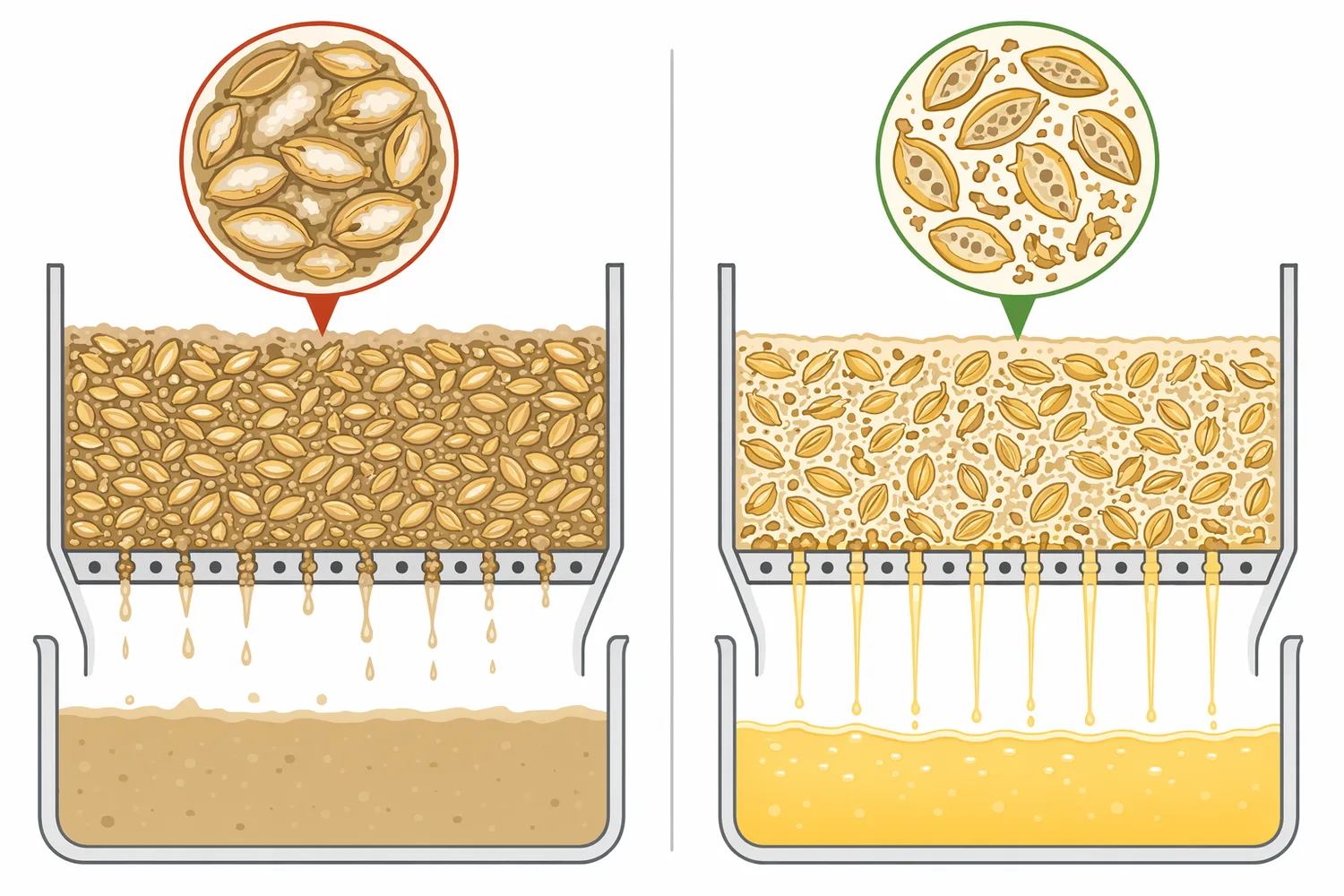
Lautering is particularly sensitive because it depends on both liquid viscosity and bed permeability. A good grain bed can still run slowly if the liquid phase is too viscous. Conversely, a thin wort may still run poorly if the bed is compacted or the crush is unsuitable. Xylanase acts only on the liquid-polymer side of the problem, so it should be seen as a targeted process aid rather than a cure for all runoff limitations [1].
Filtration is affected for similar reasons. Long-chain polysaccharides can increase filter resistance and contribute to fouling behavior, especially when combined with proteins, polyphenols, yeast, and fine particles. By shortening arabinoxylans before they reach later separation steps, xylanase can reduce one source of filtration load. The benefit is most plausible when arabinoxylan is a meaningful part of the filtration challenge [4].
This is also why xylanase can be useful in high-gravity or concentrated wort production. As extract concentration rises, viscosity becomes more important because all soluble materials are present at higher levels. Stronger worts magnify the impact of high-molecular-weight polymers, so reducing the size of those polymers can improve processability even when the recipe and extract targets remain unchanged [2].
Xylanase supports wort performance, but it should not be presented as a guarantee of improved beer quality in every style. Beer quality depends on malt condition, recipe, water, yeast, fermentation management, clarification, packaging, and sensory targets. Xylanase affects one specific substrate class: xylan-containing hemicellulose. Its most defensible benefits are therefore process-related—viscosity reduction, runoff support, and filtration support—rather than broad claims about flavor or finished beer excellence [1].
It is also possible for a brewer to want some of the body or haze contribution associated with grain cell-wall materials. In hazy, wheat-forward, rye-forward, or oat-forward styles, the goal is often not to strip the beer of all colloidal structure. The practical use of xylanase is to reduce excessive process resistance while preserving the intended style profile. That balance is recipe-dependent and cannot be reduced to a universal statement [3].
Xylanase should also not be confused with correction of poor starch conversion. If the core issue is incomplete gelatinization, insufficient amylase action, or an inappropriate mash schedule for a raw cereal, xylanase will not solve that starch problem. It can make the mash easier to handle, but starch conversion still depends on the correct amylolytic conditions and enzyme functions [7].
Similarly, if the main issue is β-glucan rather than arabinoxylan, β-glucanase activity is the more direct enzymatic tool. Many real mashes contain both polymer types, which is why cell-wall enzyme strategies are sometimes combined. The key is to understand the mechanism: xylanase targets xylan; β-glucanase targets β-glucan; amylases target starch [2].
Xylanase is widely studied because xylan is one of the most abundant hemicelluloses in plant biomass. Reviews describe xylanases as important biocatalysts in food processing, feed, pulp and paper, biofuel, and agricultural biomass conversion [1]. Brewing is one application within that broader industrial pattern: plant cell walls create processing resistance, and xylanase reduces that resistance by hydrolyzing the hemicellulose backbone.
Food and beverage relevance is also reflected in studies on fruit juice clarification and related processing areas. Thermotolerant and alkaliphilic xylanases have been evaluated for applications including fruit juice clarification, where plant polysaccharides affect liquid clarity and flow properties [8]. Although juice and wort are different matrices, the underlying concept is similar: degrading cell-wall polysaccharides can improve liquid processing.
Bioethanol research provides another supporting context. Studies on wheat biomass conversion to bioethanol describe benefits of β-xylanase in improving biomass conversion, again because xylan-rich hemicellulose can limit access, hydrolysis, and process efficiency [9]. Brewing wort production does not aim for the same biomass deconstruction intensity as fuel ethanol, but both applications depend on controlling cereal and plant polymer behavior.
Xylanase research also continues to examine enzyme stability and source diversity. Studies of thermostable xylanases and microbial xylanase production show that the enzyme class includes many variants with different operating properties and industrial potential [10]. For wort applications, that diversity supports the existence of brewing-oriented xylanase products without requiring the brewer to treat every xylanase as identical.
Enzymes.bio supplies Xylanase Enzyme for Unlocking Wort Performance as an online product for brewing use. The product is sold directly through the website by the 1 kg unit: the buyer places the order online, pays at checkout, and the order is processed and shipped .
The product sits within Enzymes.bio’s xylanase range, including a brewer-focused xylanase listing for food-grade powder use in brewing applications . For receiving and internal records, the order includes a Certificate of Analysis and Safety Data Sheet; these documents accompany the purchase rather than requiring a separate technical qualification process .
Enzymes.bio is a supplier, so the value for the buyer is straightforward access to a brewing-positioned xylanase product without a custom sourcing workflow. The science behind the product is the established role of xylanase in hydrolyzing xylan and arabinoxylan, while the practical buying route is a direct 1 kg online purchase for use in suitable brewing and beverage-processing operations .
Xylanase is a targeted enzyme for wort-performance problems linked to arabinoxylan. It works by cutting the xylan backbone of cereal hemicellulose, shortening long polymers that otherwise bind water, increase wort viscosity, slow lautering, and raise filtration resistance. The most relevant use cases are wheat, rye, oat, unmalted cereal, adjunct, and other high-cell-wall grain bills where arabinoxylan is part of the process bottleneck [1].
It is not a universal fix for brewhouse design, crush problems, incomplete starch conversion, or every haze and filtration issue. Used with the right expectation, however, xylanase is a credible processing aid for making challenging cereal worts more manageable while preserving the brewer’s underlying recipe direction [3].
For buyers who want a ready route to purchase, Enzymes.bio offers Xylanase Enzyme for Unlocking Wort Performance directly online in a 1 kg unit, with order processing, shipment, and accompanying order documentation handled through the product page .
Sold by the 1 kg unit, in stock and ready to ship. Order directly on our store — pay online and we process your order. A Certificate of Analysis and Safety Data Sheet are included with every order.
Buy Xylanase Enzyme For Unlocking Wort Performance →Numbered in order of first citation. Open-access sources, each verified reachable at publication; citation numbers in the text link here.