
TL;DR
- Lysozyme as a food preservative is used mainly to control selected Gram-positive spoilage bacteria in processes such as cheese and wine production.
- Its preservative action is enzymatic: lysozyme attacks peptidoglycan in bacterial cell walls, so the target organism and matrix conditions matter.
- Cheese and wine are the main commercial fits: cheese makers use lysozyme to help manage late blowing risk, while winemakers use it to manage lactic acid bacteria activity.
- Egg lysozyme requires specification control: confirm food grade, activity unit, allergen and label implications, COA, SDS, and market-specific regulatory status.
- For sourcing, compare activity and documentation, not only price per kg: start from the lysozyme hub for food-grade enzyme options.
How does lysozyme as a food preservative work?
Lysozyme as a food preservative works by hydrolysing structural bonds in bacterial cell wall peptidoglycan. In practice, that makes it most relevant against Gram-positive bacteria, where peptidoglycan is more accessible than in Gram-negative bacteria.
Reaction target: lysozyme cleaves beta-1,4 glycosidic linkages between N-acetylmuramic acid and N-acetylglucosamine. This weakens the cell wall of susceptible organisms. The preservative effect depends on contact, dose, pH, ionic strength, temperature history, and how the organism is protected inside the food or beverage matrix.
What it is not: lysozyme is not a broad-spectrum sterilant. It should be treated as a targeted antimicrobial enzyme or preservation hurdle, not as a replacement for sanitation, heat treatment, filtration, acidification, salt control, or validated process controls.
Regulatory framing: lysozyme may be treated as a food additive or processing aid depending on product type and jurisdiction. In the EU, lysozyme is listed as E 1105 under the food additive framework, and its use conditions should be checked against the applicable category in EU additives.
Where does lysozyme as a food preservative fit best?
Lysozyme as a food preservative fits best where the process problem is driven by susceptible Gram-positive bacteria. The two common decision contexts are cheese and wine, with different reasons for use.
| Application | Typical preservation target | Why lysozyme is considered | Buyer caution |
|---|---|---|---|
| Cheese | Clostridia and related late-blowing organisms | Helps control gas-forming spoilage risk in selected cheese styles | Confirm permitted use, allergen labelling, and process compatibility |
| Wine | Lactic acid bacteria management | Helps manage bacterial activity during or after fermentation decisions | Confirm oenological rules in the destination market |
| Other foods | Selected Gram-positive spoilage organisms | Possible fit where matrix conditions allow enzyme contact | Requires application validation, not desk approval only |
Lysozyme food preservative language: in specifications and procurement, buyers often ask for “lysozyme food preservative” or “lysozyme as a preservative.” For sourcing, that should translate into a food-grade lysozyme request with activity, physical form, documentation, and intended food matrix stated clearly.
Lysozyme in food preservation: the enzyme is most useful when it is part of a broader preservation system. Salt, pH, water activity, temperature, starter culture design, filtration, and packaging can all change the practical effect.
Lysozyme in cheese: what problem is it solving?
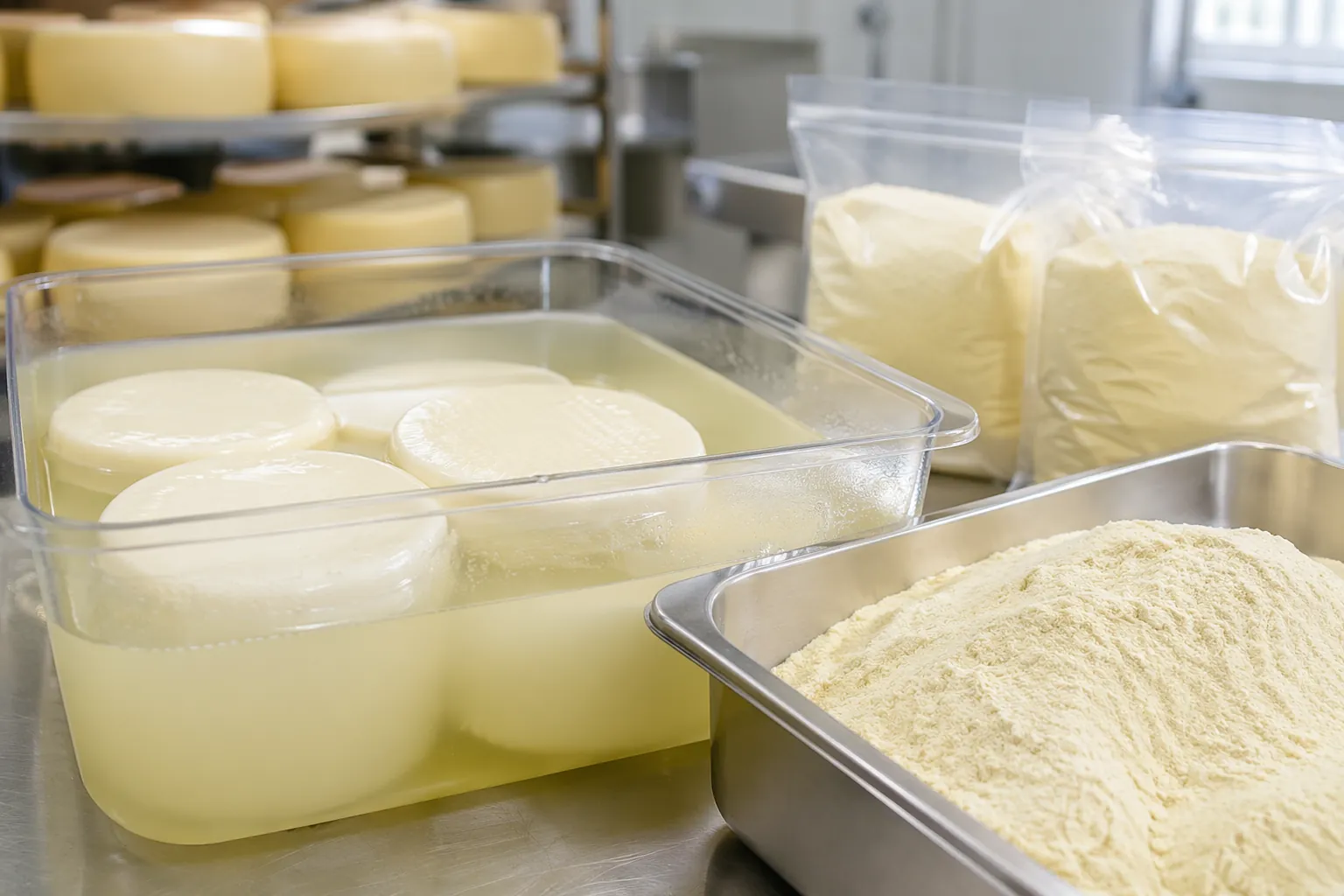
Lysozyme in cheese is used mainly to help manage spoilage associated with susceptible Gram-positive bacteria during ripening. The classic application is reducing the risk of late blowing, where gas formation can damage texture and appearance.
Process fit: cheese is a favorable application because the spoilage target is relevant, and the enzyme can be incorporated into the production workflow. However, the correct use point and dose should be validated against milk quality, starter culture behavior, salt, pH development, moisture, ripening time, and the target cheese style.
Starter culture interaction: lysozyme can affect susceptible bacteria, so it should not be treated as invisible to the fermentation system. If your process relies on specific adjunct or non-starter bacterial activity, run bench or pilot trials before scale-up.
Procurement brief: for cheese, state the cheese type, milk treatment, target organism or defect, processing stage, and whether the enzyme must be declared on finished product labels. If you need a food-grade material, specify that requirement upfront and request COA and SDS with the lot.
Allergen control: commercial egg lysozyme is commonly derived from egg white, so allergen and label review is part of the formulation decision. In the EU, egg is one of the listed allergen categories under food information rules, so finished product teams should check EU labelling and local requirements.
Lysozyme in wine: when is it useful?
Lysozyme in wine is useful when a winery needs targeted control of lactic acid bacteria activity. It is typically considered around malolactic fermentation management, stuck or delayed process decisions, or microbiological stabilization steps where lactic acid bacteria are the concern.
Use logic: lysozyme can suppress susceptible lactic acid bacteria without acting like a sugar-degrading or protein-degrading processing enzyme. That makes it a specific process tool, not a general clarification enzyme, fining agent, or replacement for sulfur dioxide management.
Matrix variables: wine pH, phenolics, turbidity, temperature, timing, and contact conditions affect performance. The enzyme’s activity must be evaluated in the actual wine matrix, because a bench result in buffer does not always transfer cleanly to a commercial wine.
Regulatory caution: oenological use rules vary by market and product category. Before specifying lysozyme for export wine, confirm the permitted use, maximum use level if applicable, labelling, and documentation requirements in each destination market. EFSA has reviewed lysozyme E 1105 as a food additive in the EU context, including exposure and specification considerations in its EFSA review.
What is egg lysozyme in food applications?
Egg lysozyme is lysozyme produced from egg white and supplied for food or industrial processing applications. For food preservation projects, it is the common commercial source buyers encounter.
Specification focus: do not compare egg lysozyme only by kg price. Compare declared activity, assay method, grade, form, solubility expectations, carrier system if any, microbiological specification, and available documents.
Documentation to request: Enzymes.bio supplies enzymes with COA and SDS. A Food-Grade Declaration is available on explicit request. Do not assume that third-party certifications, allergen statements, or market-specific approvals are included unless the supplier has confirmed them for the specific lot or product.
Allergen and declaration review: because egg lysozyme is egg-derived, finished product teams should evaluate allergen declaration, cleaning validation, cross-contact procedures, and local label rules. This is a commercial formulation and compliance step, not a consumer-positioning claim.
Physical form: lysozyme is commonly sourced as a powder for dry blending, pre-dissolution, or controlled addition. Confirm handling requirements from the SDS and product documentation before plant trials.
Lysozyme uses in food preservation
Lysozyme uses in food preservation should be defined by target organism, matrix, and process step. The enzyme is most relevant where peptidoglycan hydrolysis creates a measurable process benefit against the spoilage organism of concern.
Common B2B use cases:
- Cheese preservation support: manage late blowing risk and selected bacterial defects in compatible cheese styles.
- Wine microbiological control: manage lactic acid bacteria activity where allowed and technically justified.
- Formulation trials: evaluate preservation hurdles in specialty food matrices where Gram-positive spoilage is the practical target.
- Process troubleshooting: test whether a bacterial defect is susceptible to lysozyme before changing salt, acid, heat, or culture design.
Poor-fit use cases: lysozyme is usually a weak choice when the issue is mold, yeast, enzymes from raw materials, Gram-negative contamination protected by matrix conditions, or general poor sanitation. It also will not replace a validated kill step where one is required.
Decision rule: if the spoilage target is not identified, do not start with lysozyme dose. Start with microbiology, then run a controlled trial against the organism and product matrix.
How should you specify lysozyme as a preservative?
You should specify lysozyme as a preservative by activity, grade, source, form, documents, and intended application. A complete RFQ reduces the risk of comparing non-equivalent products.
| RFQ field | What to state | Why it matters |
|---|---|---|
| Application | Cheese, wine, or other food matrix | Determines regulatory and process fit |
| Target | Organism, defect, or process objective | Confirms whether lysozyme is technically relevant |
| Grade | Food grade or other required grade | Aligns documentation and intended use |
| Source | Egg lysozyme if required or acceptable | Supports allergen and label review |
| Activity | Supplier-declared activity and assay basis | Enables real comparison between offers |
| Form | Powder or liquid if available | Affects dosing, mixing, and storage |
| Documents | COA, SDS, Food-Grade Declaration if needed | Supports QC release and compliance review |
| Order profile | Bulk quantity, destination, timing | Supports lead-time and logistics planning |
Activity units matter: enzyme products are specified by activity units, not simply by weight. Unit systems vary by enzyme and assay, so compare lysozyme offers on declared activity and method, then calculate the commercial cost per activity unit.
Trial design: run a dose-response trial under your actual pH, temperature, salt, alcohol, solids, and contact-time conditions. Include untreated control, process-standard control, and sensory or quality checks relevant to the product.
Scale-up check: enzyme addition order, dissolution, mixing, hold time, and downstream heat or filtration can change the result. Lock the process conditions before procurement converts a sample evaluation into a bulk order.
Buying checklist for food-grade lysozyme
A practical lysozyme purchase should connect the process target to the lot documents. Use this checklist before requesting a quote from the food-grade lysozyme category.
Technical checks:
- Confirm the target organism or spoilage defect is relevant to lysozyme.
- Confirm the food matrix allows enzyme contact with the target.
- Confirm pH, temperature, salt, alcohol, and processing time are compatible with the intended use.
- Confirm whether the enzyme is added before, during, or after fermentation or ripening.
- Confirm whether any downstream heat step will inactivate the enzyme.
Commercial and QC checks:
- Request COA and SDS for the product or lot.
- Ask for Food-Grade Declaration if your internal approval process requires it.
- Check allergen implications for egg-derived enzyme.
- Compare activity and assay basis, not only price per kg.
- Confirm wholesale or bulk MOQ, packaging format, shipping destination, and payment route.
- Allow for standard dispatch timing, Enzymes.bio orders ship within 1 to 3 business days via third-party logistics.
Supplier fit: choose a supplier that can discuss application conditions, not only list a product name. For preservation enzymes, the failure mode is usually poor target fit, weak specification control, or assuming one food matrix behaves like another.
For sourcing support, review our lysozyme category and send your application, target matrix, required grade, and documentation needs. Enzymes.bio can quote food-grade egg white lysozyme for bulk buyers and provide COA and SDS for technical review.
Need this enzyme for your process?
Talk to our team about grade, activity, and volume, or browse the options.