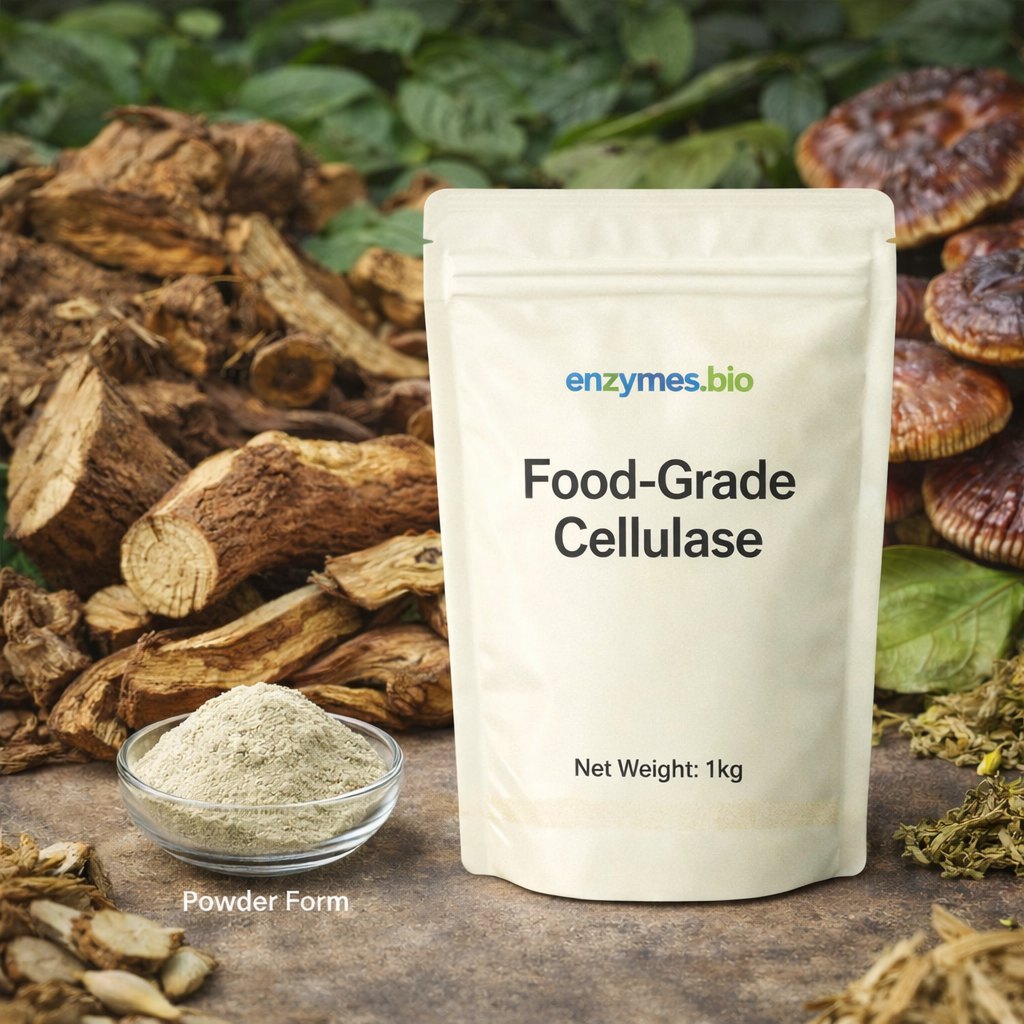
Pārtikas Klases Celuloze 100.000 U/g
Pārtikas celulāze ir augstas aktivitātes cietais fermentu preparāts, kas izstrādāts īpaši botāniska un augu izcelsmes ekstrakcija. Tas darbojas, hidrolizējot celulozi un strukturālos polisaharīdus augu šūnu sienās, palīdzot atbrīvot ieslodzītos un saistītos bioaktīvos savienojumus, lai uzlabotu ražību, paātrinātu filtrēšanu un iegūtu tīrākus ekstrakcijas šķidrumus.
Šo produktu plaši izmanto ekstrakcijas procesā. kāti, lapas, ziedi un citus celulozes bagātus augu izcelsmes materiālus, kur nepieciešama efektīva funkcionālo savienojumu atbrīvošana. Tas atbalsta plašu spektru
lietojumi no augu ekstraktiem un uzturvielām bagātinātiem sastāvdaļiem līdz funkcionālo pārtikas produktu pārstrādei.
Mehānisms
Daudzas botāniskās izejvielas satur blīvas augu šūnu sienu struktūras, kas sastāv no celulozes un saistītām šķiedrām. Ekstrahēšanas laikā šīs struktūras ierobežo šķīdinātāja iekļūšanu un aiztur vērtīgas aktīvās sastāvdaļas.
Celulāze enzimātiski sadala celulozes tīklu, kas:
- Atver šūnu sienu struktūru uzlabot šķīdinātāja pieejamību un masas pārnesi
- Atbrīvo bioaktīvās vielas samazinot ietvērumu un saistīšanās efektus
- Samazina viskozitāti ko izraisa šķiedru komponenti, uzlabojot lejupvērsto atdalīšanu
- Uzlabo skaidrību un palīdz samazināt suspendēto vielu daudzumu ekstrakcijas šķidrumos
Galvenie ieguvumi
- Augstāka ekstrakcijas iznākums: Uzlabo mērķa komponentu atbrīvošanu no augu matricām
- Ātrāka filtrēšana un vieglāka atdalīšana: Samazina viskozitāti un samazina filtra aizsērēšanu
- Uzlabota skaidrība: Palīdz samazināt duļķainību un uzlabo ekstrakta izskatu
- Procesa efektivitāte: Var samazināt ekstrakcijas laiku, enerģijas patēriņu un šķīdinātāju pieprasījumu
- Viegli lietojams: Cieta pulvera forma, stabila un ērta rūpnieciskai dozēšanai
Informācija par produktu (būtiskā informācija)
| Vienums | Specifikācija |
|---|---|
| Produkta veids | Pārtikas kvalitātes celulāzes enzīms augu ekstraktu iegūšanai |
| Enzīmu aktivitāte | 4000 U/g |
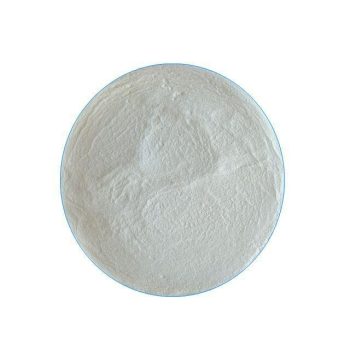
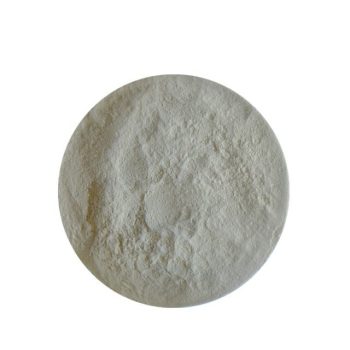
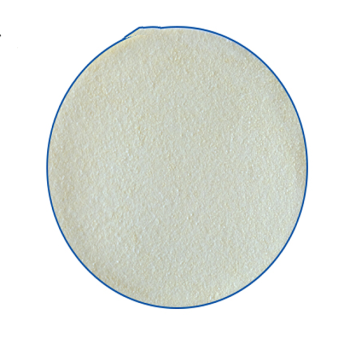
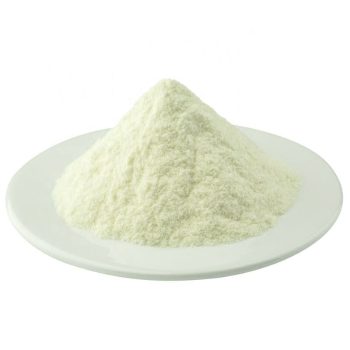
| Veidlapa | Gaiši dzeltens līdz brūns pulveris |
| Ieteicamais temperatūras diapazons | 40–55 °C |
| Ieteicamais pH diapazons | 4,5–6,0 |
| Ieteicamā deva | 0,3–0,5% (pamatojoties uz sausas izejvielas svaru) |
| Derīguma termiņš | 12 mēneši (uzglabāt noslēgtā iepakojumā vēsā, sausā vietā) |
| Iepakojums | 1 kg / maiss |
Kvalitātes mērķi
Šis fermentu preparāts tiek ražots saskaņā ar stingriem pārtikas kvalitātes pārvaldības standartiem, ievērojot šādus kontroles mērķus:
- Mitrums: ≤ 8,0%
- 40-mesh caurlaidības koeficients: ≥ 80%
- Svins (Pb): ≤ 5,0 mg/kg
- Kopējais arsēns (As): ≤ 3,0 mg/kg
- Kopējais plākšņu skaits: ≤ 50 000 KVV/g
- Koliformas: ≤ 30 KVV/g
- E. coli: Nav konstatēts
- Salmonella (25 g): Nav konstatēts
Tipisks pieteikšanās process
Enzīms ir izstrādāts, lai viegli integrētos parastajos botāniskās ekstrakcijas darba procesos.
Tipisks process ietver:
- Izejvielu sagatavošana: izvēlēties botāniskās izejvielas (saknes, stublājus, lapas, ziedus)
- Slīpēšana/frēzēšana: palielināt virsmas laukumu, lai uzlabotu reakcijas efektivitāti
- Ūdens izsūknēšana: sajauc izejmateriālu ar ūdeni (vai saderīgu ekstrakcijas šķīdumu)
- Enzīmu pievienošana un enzīmu ekstrakcija: pievienojiet celulāzi ieteicamajā pH un temperatūrā
- Filtrēšana: efektīvāk noņem nešķīstošās cietās vielas, pateicoties samazinātai viskozitātei
- Koncentrācija: koncentrāta ekstrakts (pēc izvēles)
- Žāvēšana: izsmidzināšanas žāvēšana / vakuuma žāvēšana / saldēšanas žāvēšana atkarībā no mērķa produkta
Dažiem botāniskajiem materiāliem celulāzi var lietot kopā ar citiem fermentiem, piemēram pektināze, amilāze, vai proteāze lai vēl vairāk uzlabotu ekstrakcijas efektivitāti, samazinātu koloīdus un uzlabotu separācijas veiktspēju.
Ieteicamā deva un atsauces lietojumi
Devas lielums ir atkarīgs no izejvielas veida, pārstrādes iekārtām un mērķa savienojumiem. Zemāk ir norādīti tipiski atsauces diapazoni:
| Pieteikums | Devu diapazons (enzīms uz izejvielu) | Praktiska atsauce |
|---|---|---|
| Salvia miltiorrhiza (Danshen) ekstrakts | 0,2–1,0% | Aptuveni 2–10 kg fermenta uz tonnu izejmateriāla |
| Pueraria (Kudzu) ekstrakts | 0,2–1,0% | Aptuveni 2–10 kg fermenta uz tonnu izejmateriāla |
| Ganodermas (Reishi) polisaharīdu ekstrakcija | 0,2–1,0% | Aptuveni 2–10 kg fermenta uz tonnu izejmateriāla |
Piezīme: Šie ir orientējoši rādītāji. Mēs iesakām veikt neliela mēroga izmēģinājumu, lai optimizētu devu, pH, temperatūru un fermentatīvās ekstrakcijas laiku jūsu konkrētajiem augu izcelsmes materiāliem.
Labākā prakse lietošanai
- Pārliecinieties, ka pH un temperatūra ir optimālā diapazonā. (pH 4,5–6,0; 40–55 °C) labākai darbībai
- Pievienojiet fermentu pēc tam, kad materiāls ir pilnībā hidratizēts. lai nodrošinātu vienmērīgu sadali
- Saglabājiet vieglu kustību fermentatīvās ekstrakcijas laikā, lai uzlabotu kontaktu
- Pārbaudes optimizācija ieteicams jaunām botāniskām izejvielām
Uzglabāšana un apstrāde
- Uzglabāt noslēgtā veidā vēsā, sausā vietā, tālu no siltuma un mitruma
- Izvairieties no tiešas saules gaismas un ilgstošas pakļaušanas augstam mitrumam.
- Pēc atvēršanas iepakojumu turiet cieši aizvērtu, lai saglabātu aktivitāti.
Iepakojums
Iepakojums: Pulvera veidā, piegādāts 1 kg/maiss, aizzīmogotā pārtikas alumīnija folijas maisiņā. Lūdzu, ņemiet vērā, ka produkta attēls ir ilustratīvs. Faktiskais iepakojums var atšķirties.
Ideāli piemērots
- Botānisko ekstraktu ražotāji
- Augu izcelsmes sastāvdaļu ražotāji
- Nutraceutisko un funkcionālo pārtikas produktu pārstrādātāji
- Pētniecības un attīstības komandas, kas optimizē ekstrakcijas ražību un filtrēšanas efektivitāti
Ja Jums ir nepieciešama palīdzība formulēšanā, devas optimizācijā vai saderībā ar Jūsu ekstrakcijas darba plūsmu, enzymes.bio var sniegt tehniskas norādes izmēģinājumiem un mēroga palielināšanai.