Enzima para descascar pele de lula para processamento eficiente de lula
A Enzima para Descascamento da Pele de Lula é uma preparação enzimática especializada desenvolvida para melhorar a eficiência da remoção da pele da lula durante o processamento de frutos do mar. Utilizando biotecnologia avançada e fermentação microbiana cuidadosamente selecionada, esta enzima atua especificamente sobre as proteínas de ligação que unem a pele da lula ao tecido muscular subjacente. Ao enfraquecer essas estruturas proteicas, a enzima permite que a pele se separe facilmente da carne, possibilitando um descascamento mais rápido e consistente.
During squid processing, removing the outer skin membrane can be labor-intensive and time-consuming if done manually. This enzymatic solution significantly simplifies the process by breaking down the collagen and elastin components within the skin layer. The treatment loosens the structural bonds between the dermal layer and the squid muscle fibers, making the skin easier to remove either manually or with squid peeling machines. As a result, processors can achieve faster production speeds while maintaining product quality.
The enzyme preparation is produced through controlled fermentation and purification processes to ensure stable activity and reliable performance in seafood processing applications. It functions as a safe biological catalyst that accelerates the natural breakdown of connective tissue proteins without damaging the edible portion of the squid. The enzyme targets specific molecular linkages within the skin layer, allowing for effective peeling while preserving the natural structure, texture, and appearance of the squid meat.
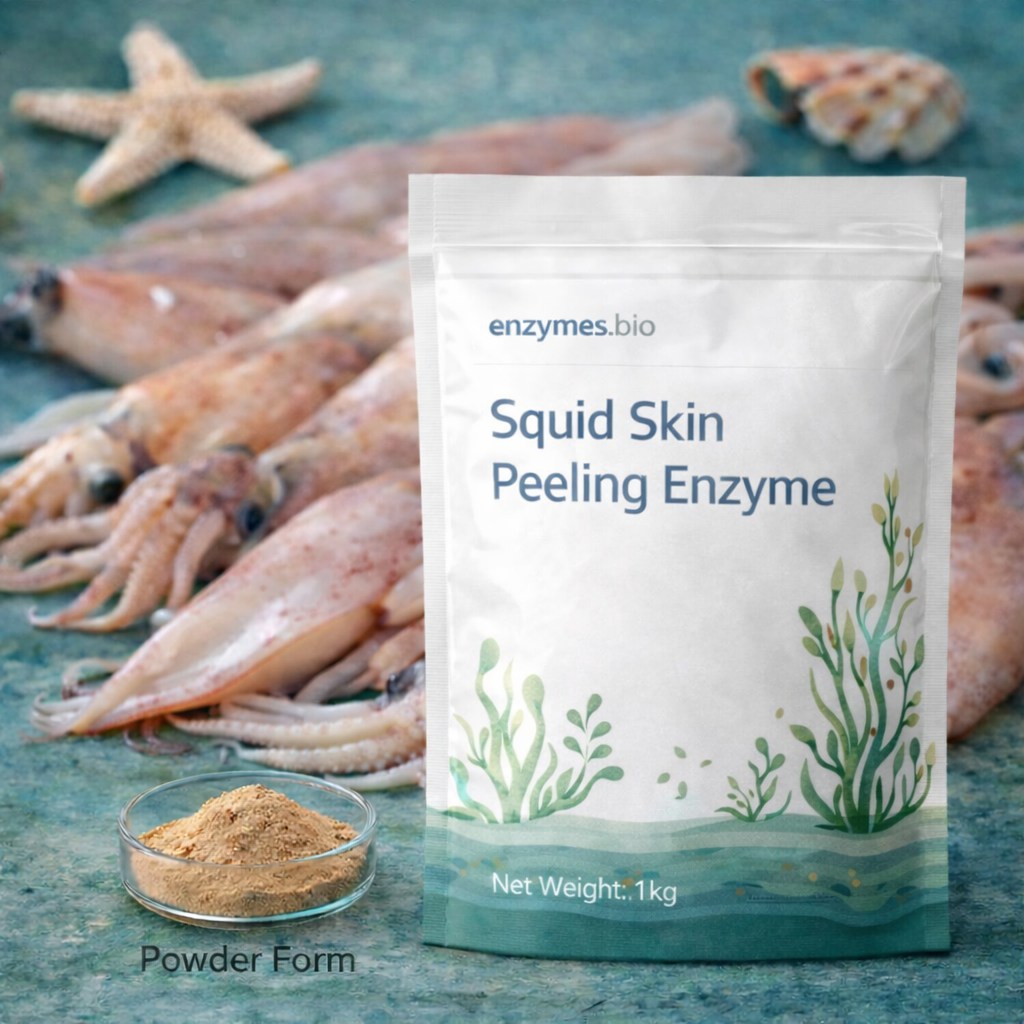
A Enzima para Descascamento da Pele de Lula apresenta-se como um pó marrom-claro com um aroma característico de fermentação típico de preparações enzimáticas biológicas. O produto se dissolve facilmente em água para formar uma solução enzimática ativa adequada para tratamentos de imersão ou processamento. Uma vez dissolvida, a enzima começa a agir sobre a rede proteica dentro das fibras da pele da lula, enfraquecendo as ligações que mantêm a pele ao tecido muscular. Essa reação enzimática controlada permite que a pele seja removida de forma suave e eficiente.
When used in squid processing lines, the enzyme can be applied as part of a soaking or treatment step prior to peeling. The enzymatic action helps shorten the overall production time by reducing the effort required to remove the skin. This contributes to improved operational efficiency and allows processing facilities to maintain consistent throughput during large-scale production. The enzyme works effectively alongside mechanical peeling equipment, and it can also support manual peeling operations by making the skin easier to detach.
Typical application conditions include a working pH range of approximately 6.5 to 7.5, where the enzyme maintains stable activity and effective protein hydrolysis. The optimal temperature range for enzymatic activity is about 50–55°C, which promotes efficient breakdown of the connective proteins responsible for skin adhesion. Under these conditions, the enzyme rapidly weakens the structural integrity of the skin layer, enabling efficient removal while preserving the quality of the squid meat.
The recommended dosage usually ranges from 0.3% to 0.5% depending on processing methods, squid size, and raw material characteristics. Processors may adjust the dosage based on specific production requirements and equipment configuration. The enzyme is available in different particle sizes such as 40 mesh, 60 mesh, and 80 mesh to support flexible application methods and ensure rapid dissolution during preparation of the treatment solution.
One of the key advantages of Squid Skin Peeling Enzyme is its ability to improve peeling efficiency while maintaining product quality. The enzyme enables thorough skin removal with minimal yield loss, helping processors achieve high finished-product recovery rates. In many processing scenarios, peeling rates can exceed 99%, reducing waste and improving the overall value of the processed squid.
Because the enzyme works through a targeted biological reaction, it does not introduce unwanted residues, odors, or off-flavors. The natural taste, color, and nutritional components of the squid remain unchanged after treatment. This makes the enzyme suitable for high-quality seafood processing where product appearance and flavor are important.
Embalagem
Fornecido em 1 kg/saco, embalagem selada em folha de alumínio de qualidade alimentar. Por favor, note que a imagem do produto é meramente ilustrativa. A embalagem real pode diferir.