Enzym do kontroli kleju i zanieczyszczeń (enzym do produkcji papieru, klasa przemysłowa)
Ten enzym kontrolujący zanieczyszczenia adhezyjne jest przeznaczony do systemów rozwłókniania i produkcji papieru z włókien pochodzących z recyklingu w celu zmniejszenia osadzania się zanieczyszczeń kleistych podczas rozwłókniania makulatury i poprawy wydajności operacyjnej maszyny papierniczej. Pomaga zminimalizować gromadzenie się i interferencję zanieczyszczeń adhezyjnych (lepkich) powstających w makulaturze, wspierając czystsze systemy, bardziej stabilną pracę i lepszą jakość papieru.
Kluczowa wartość w produkcji:
to zmniejsza osadzanie się lepkich substancji podczas rozwłókniania włókien pochodzących z recyklingu I poprawia wydajność operacyjną maszyny papierniczej. Jest szeroko stosowany w przygotowywaniu masy z włókien pochodzących z recyklingu i na liniach produkcyjnych tektury/papieru, gdzie kontrola lepkości ma kluczowe znaczenie.
Podstawowe korzyści
- Zmniejszenie osadzania się lepkich substancji podczas rozwłókniania makulatury (mniejsze nagromadzenie lepkich substancji w systemie).
- Poprawa wydajności operacyjnej maszyny papierniczej (bardziej stabilne działanie i mniej przerw związanych ze stickies).
- Mniejsze przeszkody operacyjne związane z lepkością, redukując przerwy i problemy z ponownym zwijaniem spowodowane zanieczyszczeniami kleju.
- Redukcja defektów papieru takie jak plamy i otwory związane z zanieczyszczeniem lepkimi substancjami.
- Niższa intensywność czyszczenia dla przewodów i filców, pomagając wydłużyć żywotność.
- Poprawa ogólnej wydajności I zmniejszyć całkowity koszt produkcji dzięki mniejszej ilości osadów i płynniejszej pracy.
Obszary zastosowań
Stosowany głównie w rozwłóknianiu włókien pochodzących z recyklingu i produkcji papieru, w tym: nośnik tektury falistej I linerboard przygotowanie zapasów i powiązane procesy związane z kartonem/papierem z recyklingu.
Typowe meble z recyklingu obejmują: OCC, MOW, OMG, ONP i innych źródeł papieru z recyklingu.
Obowiązujący zakres:
nadaje się do procesów produkcji włókien z recyklingu wykorzystujących włókna wtórne jako główny surowiec, takich jak tektura falista, tektura podkładowa i podobne gatunki.
Informacje o produkcie
- Zalecane dawkowanie: 100-200 g na tonę (miazga suszona w piecu).
- Temperatura pracy: 35-65 °C.
- Działające pH: 6.0-10.0.
- Czas reakcji: 45-90 minut.
- Punkt dodatkowy: po etapie wieży rozwłókniającej lub w skrzyni magazynowej przed przepływem maszyny papierniczej / skrzyni magazynowej związanej z sortowaniem według wielkości (w zależności od przypadku).
- Metoda dodawania: Dozowanie wsadowe lub ciągłe w zależności od procesu przygotowania masy papierniczej.
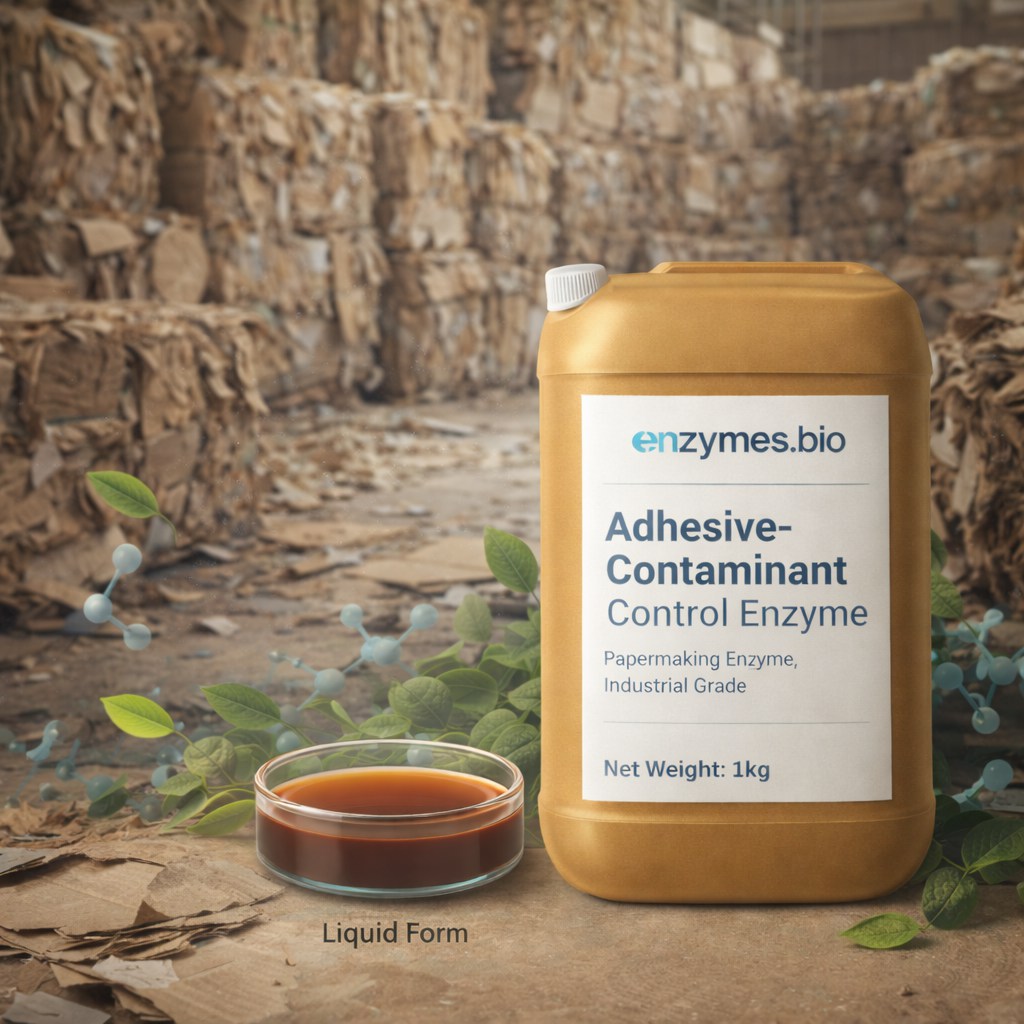
- Wygląd: brązowy do ciemnobrązowego płyn (lekki zapach fermentacji).
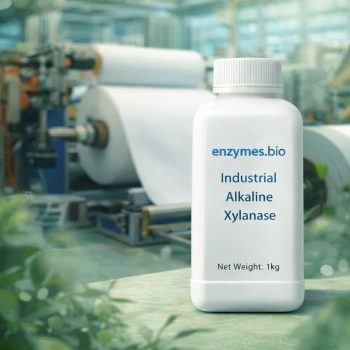
- Opakowanie: Standardowe opakowanie to butelka 1 kg (dostarczana w zwykłej butelce klasy przemysłowej). Prosimy pamiętać, że zdjęcie produktu służy do celów ilustracyjnych. Rzeczywiste opakowanie może się różnić.
- Okres trwałości / stabilność przechowywania:
- Do 6 miesięcy w normalnych warunkach otoczenia.
- Do 1 roku w warunkach chłodniczych.
- Przechowywać z dala od bezpośredniego światła słonecznego, szczelnie zamknięte i suche. Najlepiej przechowywać w temperaturze około 4 °C.
Mechanizm
Enzym pomaga kontrolować zanieczyszczenia kleju poprzez rozkład kluczowych składników powszechnie występujących w klejach z włókien pochodzących z recyklingu (takich jak estry kwasów żywicznych, kauczuk syntetyczny i powiązane substancje klejące). Materiały te są przekształcane w bardziej rozpuszczalne w wodzie związki o niskiej masie cząsteczkowej. Jednocześnie działanie enzymów wspomaga dyspersję i stabilizację mikrodrobnych cząstek substancji klejących i produktów hydrolizy, pomagając zapobiegać ponownemu zlepianiu się w większe cząstki. W rezultacie zanieczyszczenia są mniej podatne na osadzanie się na sprzęcie lub włóknach i są bardziej podatne na przenoszenie przez system w celu usunięcia z przepływem procesu.
Wyniki produkcji, których mogą Państwo oczekiwać
- Zmniejszona akumulacja i osadzanie się substancji lepkich podczas rozwłókniania włókien pochodzących z recyklingu.
- Niższy czas przestojów, przerw i zakłóceń związanych z lepkością.
- Czystsze warunki na mokrym końcu i lepsza jakość wyglądu papieru/tektury.
- Rzadsze i mniej intensywne czyszczenie tkanin formujących i filców, zapewniające dłuższą żywotność.
- Zwiększona wydajność maszyn i niższe ogólne koszty produkcji.
Pozycjonowanie
Najnowocześniejsze w branży rozwiązanie do kontroli lepkości w systemach produkcji papieru z włókien pochodzących z recyklingu, wspierające stabilną produkcję i zwiększoną wydajność.