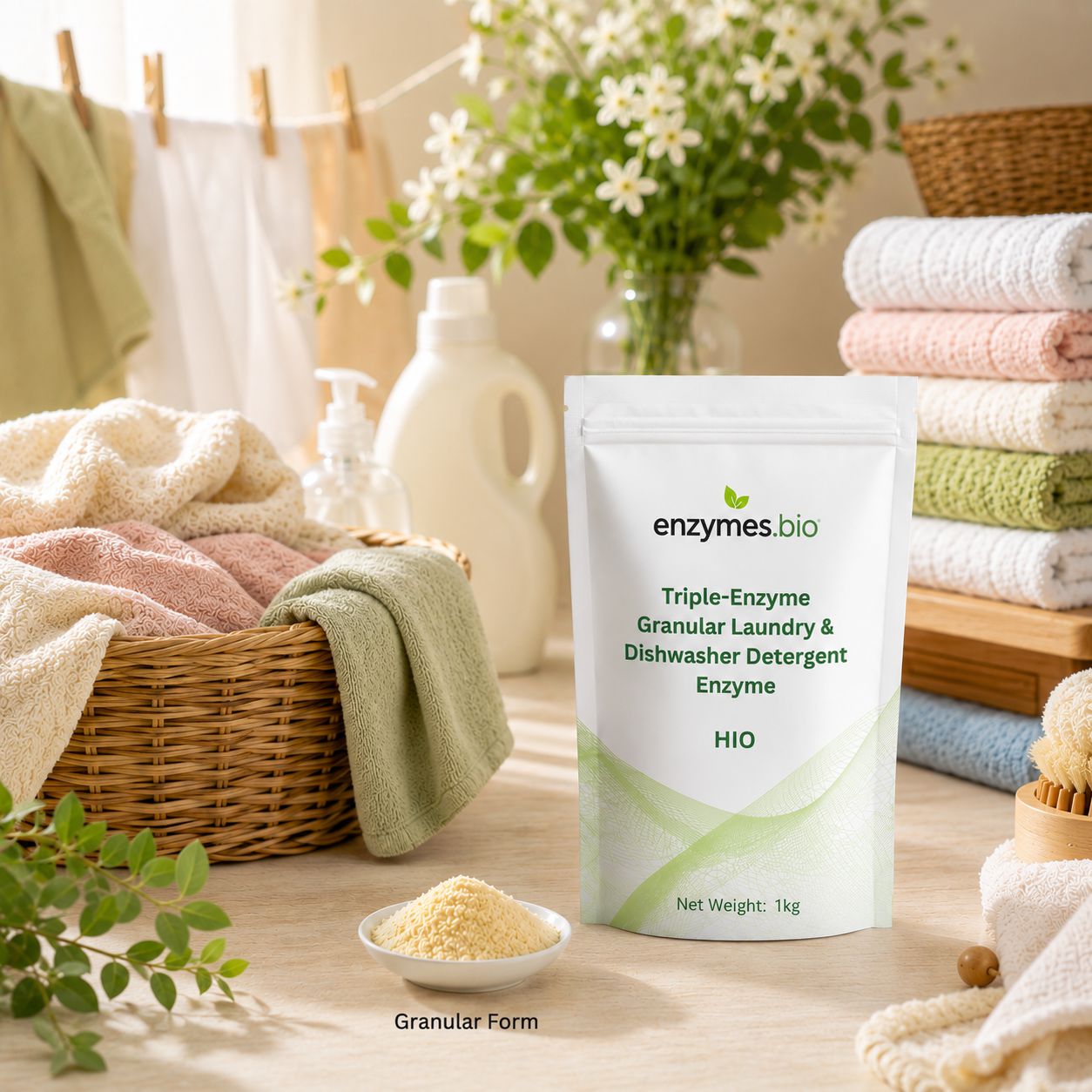


Triple-Enzyme Granular Laundry & Dishwasher Detergent Enzyme with Protease, Lipase & Amylase HIO
Triple-Enzyme Granular Detergent Enzyme for Laundry & Dishwasher Applications HIO is a high-performance granular enzyme blend designed for detergent formulations that require broad stain-removal performance. This product combines three key detergent enzymes: alkaline protease, lipase, and alkaline amylase. Together, they help break down protein stains, grease and oil residues, and starch-based soils commonly found on clothing, tableware, kitchenware, and household fabrics.
This triple-enzyme detergent enzyme is suitable for use in laundry detergent powders, dishwasher detergents, detergent tablets, laundry pods, institutional cleaning products, and industrial cleaning formulations. Its granular form makes it convenient to blend into dry detergent systems and helps improve handling, dosing, and formulation stability.
Product Overview
Modern detergent formulations often need to remove mixed stains rather than just one type of soil. Food residues, body stains, cooking grease, starch deposits, sauces, dairy stains, and protein-based dirt can all appear together on fabrics or dishes. A single enzyme type may only target one category of stain, while a triple-enzyme blend provides a broader cleaning effect.
Triple-Enzyme Granular Detergent Enzyme HIO is formulated to support multi-stain removal in both laundry and dishwashing applications. The protease component helps hydrolyze protein soils, the lipase component targets fatty and oily residues, and the amylase component breaks down starch-based deposits. This makes the product especially useful in detergent systems designed for daily household cleaning, commercial laundry, food-service washing, and heavy-duty cleaning applications.
Key Enzyme Components
Alkaline Protease
Alkaline protease helps break down protein-based stains into smaller, more soluble peptides and amino acids, allowing detergents and surfactants to remove them more easily during washing.
Typical protein-based stains include:
- Blood stains
- Egg stains
- Milk and dairy residues
- Meat juice stains
- Sweat and body soils
- Protein-containing food residues
Lipase
Lipase targets triglycerides and fatty soils by breaking them down into smaller fatty acid and glycerol components. This helps improve removal of oily stains that are difficult to clean with surfactants alone, especially in low-temperature washing conditions.
Typical oily and greasy stains include:
- Cooking oil
- Butter
- Animal fat
- Dairy fat
- Food grease
- Sebum and body oil
Alkaline Amylase
Alkaline amylase hydrolyzes starch molecules into smaller dextrins and sugars, helping remove starch-based residues from fabrics, dishes, and kitchenware. It is especially useful in dishwasher and food-service cleaning formulations.
Typical starch-based stains include:
- Rice residue
- Pasta residue
- Potato starch
- Flour-based stains
- Sauce residues
- Chocolate and dessert stains
Main Benefits
- Combines protease, lipase, and amylase in one convenient granular enzyme blend
- Helps remove protein, grease, oil, starch, and mixed food stains
- Suitable for laundry detergent and automatic dishwasher detergent formulations
- Supports effective cleaning at low and medium washing temperatures
- Works across a broad alkaline pH range commonly used in detergent systems
- Helps improve detergent cleaning power without relying only on harsh chemical additives
- Granular form allows easier handling and blending into powder detergent systems
- Suitable for household, institutional, and industrial cleaning products
- Supports eco-conscious cleaning formulations through biodegradable enzyme technology
Applications
This triple-enzyme detergent enzyme can be used in a wide range of cleaning and detergent products, including:
- Laundry detergent powders
- Heavy-duty laundry detergents
- Automatic dishwasher detergents
- Dishwasher tablets
- Laundry pods and concentrated detergent systems
- Household cleaning powders
- Institutional laundry products
- Commercial dishwashing detergents
- Industrial cleaning formulations
Typical Stains Removed
- Protein stains
- Blood stains
- Milk stains
- Egg stains
- Meat juice stains
- Soup residues
- Grease and oil stains
- Butter stains
- Chocolate stains
- Rice and pasta residues
- Starch deposits
- Sauce stains
- Mixed kitchen stains
- Body oil and sweat residues
Recommended Operating Conditions
| Operating Temperature | 25–60°C |
| Working pH Range | 7.0–11.0 |
| Recommended pH Range | 7.0–11.0 |
The enzyme blend is suitable for detergent systems operating under neutral to alkaline conditions. It is especially useful in cleaning formulations where efficient stain removal is required at lower washing temperatures.
Product Appearance
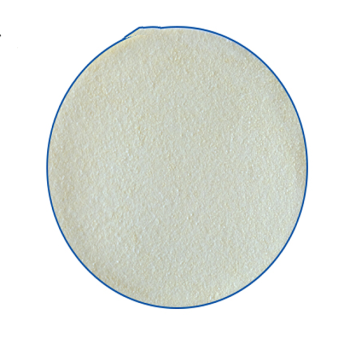
| Form | Granular |
| Physical Shape | Free-flowing granules |
| Color | Off-white to light beige |
| Odor | Slight characteristic fermentation odor |
| Package Size | Supplied in 1 kg/bag, sealed food-grade aluminum foil bag. Please note that the product image is for illustration purposes. Actual packaging may differ. |
Natural color variation may occur between batches due to differences in fermentation raw materials and production conditions. These variations do not affect product performance when the product is stored and used correctly.
Formulation Advantages
Adding a triple-enzyme system to detergent formulations can help improve cleaning performance against a wider stain spectrum. Protease, lipase, and amylase complement each other because each enzyme targets a different soil type. This allows formulators to create detergent products with stronger overall stain-removal ability.
In laundry detergent applications, this enzyme blend helps remove daily stains from clothing, bedding, towels, uniforms, and household fabrics. In dishwasher detergent applications, it helps break down food residues on plates, bowls, cutlery, cookware, and kitchen utensils.
The granular format is particularly suitable for dry detergent systems because it is easier to dose, transport, and mix compared with liquid enzyme preparations. It also reduces dusting and improves handling during detergent manufacturing.
Usage Guidance
The optimal dosage depends on the detergent formula, washing temperature, pH, surfactant system, builder system, target stains, and required cleaning performance. Small-scale formulation trials are recommended to determine the most suitable dosage for each application.
For best performance, avoid exposing the enzyme to excessive heat, strong oxidizing conditions, or prolonged high-moisture environments before final use. Enzyme compatibility testing is recommended when used with bleaching agents, disinfectants, strong alkalis, or other aggressive detergent components.
Storage
Store the product in a cool, dry, and well-ventilated place. Keep away from direct sunlight, heat, moisture, and strong oxidizing agents. After opening, reseal the bag tightly to prevent moisture absorption and preserve enzyme activity.
Shelf Life
The recommended shelf life is 12 months when stored under proper conditions in the original sealed package.