
Enzyme Laundry Powder & Detergent Enzymes
How Laundry Enzymes Work
Target & Break Down Stains
Each enzyme type targets a specific stain category — proteins, fats, starches, or cellulose fibers — catalyzing their breakdown at the molecular level.
Effective at Low Temperatures
Enzymatic formulations deliver outstanding cleaning at 20-40 degrees C, reducing energy costs by up to 50% compared to traditional hot-wash detergents.
Biodegradable & Eco-Friendly
Enzymes are fully biodegradable proteins. They replace harsh chemicals like phosphates and chlorine, reducing environmental impact of every wash cycle.
Enzyme Types for Detergent Formulations
Protease
Breaks down protein stains: blood, grass, egg, sweat, and food residue.
Lipase
Emulsifies greasy and oily stains: cooking oil, butter, cosmetics, and sebum.
Amylase
Hydrolyzes starch-based stains: pasta, potato, rice, gravy, and chocolate.
Cellulase
Softens fabric, restores color brightness, and removes cotton fuzz and pilling.
Mannanase
Dissolves gum-based stains: sauces, ice cream, salad dressing, and cosmetics.
Detergent Enzyme Guide: Functions, Dosage & Applications
Protease
Protein Stain Removal — The Most Important Laundry Enzyme
Function: Protease is the highest-volume enzyme in laundry detergents. It hydrolyzes peptide bonds in protein-based stains — blood, grass, egg white, sweat, collar soil, and food residues. Each protease cleave at specific amino acid residues, progressively fragmenting the stain matrix until water-soluble peptides rinse away. Alkaline proteases (subtilisins) are thermostable, alkali-stable, and resistant to anionic surfactants, making them ideal for detergent formulations.
Typical dosage: 0.01–0.5% w/v in liquid detergent; 0.1–1.5% w/w in powder detergent. Activity: 1,000,000–10,000,000 PU/g (Protease Units). Granulated forms (prills) are used in powder detergents to prevent dust and improve stability. Compatible with TAED bleach activator and most surfactant systems at pH 8–11.
Applications: Biological washing powder and liquid, dishwasher detergent, hard surface cleaners, textile scouring, contact lens cleaning solutions. The single highest-value enzyme in the global detergent industry.
Shop bulk: Bulk Protease — alkaline serine protease for laundry & dishwashing →
Lipase
Grease & Oil Stain Removal at Low Wash Temperatures
Function: Lipase hydrolyzes triglycerides in fatty stains (cooking oil, butter, lard, sebum, cosmetics, lip balm) into water-soluble monoglycerides, diglycerides, and free fatty acids that can be emulsified by surfactants and rinsed away. Lipase is especially effective at low wash temperatures (20–40°C) where chemical-only detergents struggle to remove fatty soils — reducing energy consumption while maintaining performance.
Typical dosage: 0.001–0.05% w/v in formulation. Activity: 10,000–100,000 LU/g. Lipase is active at lower concentration than protease — even trace amounts provide measurable improvement in fatty stain removal. Formulate with nonionic or anionic surfactants. Avoid mixing with strongly oxidizing bleach.
Applications: Cold-wash laundry detergent, eco-friendly formulations, dishwasher detergent (grease removal), textile finishing (degumming), kitchen degreaser with enzymatic action.
Shop bulk: Bulk Lipase — cold-active alkaline lipase for grease stain removal →
Amylase
Starch-Based Stain Removal from Fabric & Dishware
Function: Amylase hydrolyzes starch and dextrin-based stains — pasta, rice, potato, bread, gravy, chocolate, baby food, and sauce — by cleaving glycosidic bonds in the starch polymer. Starch stains are invisible when dry but bind fabric fibers tightly; amylase releases these bonds and the stain fragments rinse free. Alpha-amylase is the standard form; thermostable variants work at 60–70°C dishwasher temperatures.
Typical dosage: 0.001–0.05% w/v in formulation. Activity: 10,000–100,000 SKB/g. Compatible with protease and other detergent enzymes. For dishwasher applications, use thermostable alpha-amylase that retains activity at 60–65°C wash cycles.
Applications: Laundry powder and liquid detergent, automatic dishwasher detergent, institutional laundry (hotel linen, hospital textiles), textile desizing (industrial scale starch removal).
Shop bulk: Bulk Amylase — detergent-stable amylase for starch stain removal →
Cellulase
Fabric Care & Color Restoration — Not a Stain Remover
Function: Cellulase is unique among laundry enzymes: it does NOT remove stains. Instead, it improves fabric appearance by hydrolyzing the microfibrils (fuzz, pilling, loosened cotton fibers) on the surface of cotton textiles that develop after repeated washing. Removing this surface fuzz restores the fabric’s original smoothness, brightens colors, and softens hand-feel — making old cotton fabric look and feel new.
Typical dosage: 0.001–0.02% w/v in formulation. Activity: 1,000–50,000 CMC/g. Acid cellulase (optimum pH 4.5–5.5) is preferred for laundry (typical wash pH); alkaline cellulase works at pH 8–10. Use at lower dosage — overdosing degrades fabric strength over multiple washes.
Applications: Premium fabric-care detergent (color protection, anti-pilling), color-care laundry liquid, denim biostoning (industrial stonewash effect without pumice), textile finishing, and biopolishing of cotton yarn.
Shop bulk: Bulk Cellulase — neutral cellulase for fabric care & cotton biopolishing →
Mannanase
Gum-Based Stain Removal — The Underrated 5th Enzyme
Function: Mannanase degrades galactomannans — the polysaccharide gums used as thickeners in many food products and cosmetics. Gum-based stains (ice cream, salad dressing, tomato sauce, mascara, body lotion, shampoo) contain galactomannans (guar gum, locust bean gum) that bind tightly to fabric fibers and resist protease and lipase. Mannanase is the only enzyme class that specifically degrades these gum matrices, releasing the trapped stain for rinsing.
Typical dosage: 0.001–0.02% w/v in formulation. Activity: 1,000–50,000 MU/g. Used at lower levels than protease but provides measurable improvement on gum-containing food and cosmetic stains. Combine with protease + lipase in multi-enzyme formulations for broadest stain coverage.
Applications: Premium multi-enzyme laundry detergent, cosmetic-stain formulations, food-stain specialist detergent blends, industrial textile laundering (hotel, restaurant linen heavily soiled with sauces and dressings).
Our Detergent Enzyme Products
-
Sale!
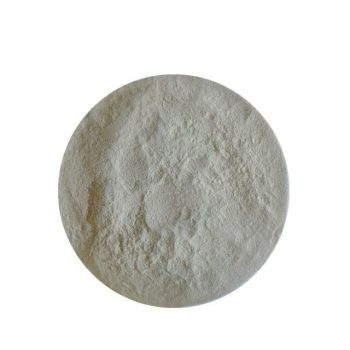 Cellulase
Cellulase Enzyme Powder For Stone Washing Process
US$87.00Original price was: US$87.00.US$78.99Current price is: US$78.99. Purchase -
Sale!
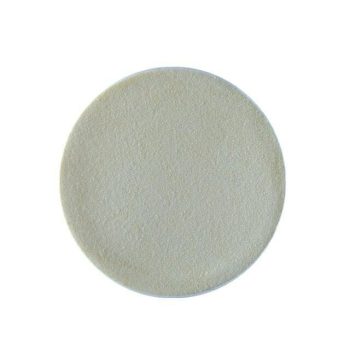 Cellulase
Neutral Cellulase Powder For Denim Fabric Garment Washing
US$98.00Original price was: US$98.00.US$88.99Current price is: US$88.99. Purchase -
Sale!
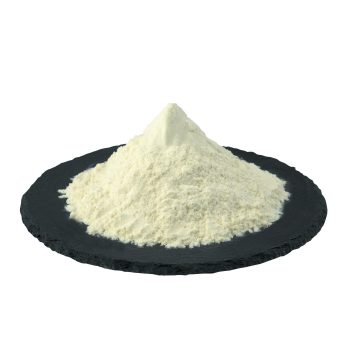 Alkaline Protease
Alkaline Protease Powder Protease Enzyme Detergent Alkaline Protease 100,000u/g
US$147.00Original price was: US$147.00.US$132.99Current price is: US$132.99. Purchase -
Sale!
 Detergent Enzymes
Blended Enzymes For Detergent Industry
US$120.00Original price was: US$120.00.US$99.99Current price is: US$99.99. Purchase -
Sale!
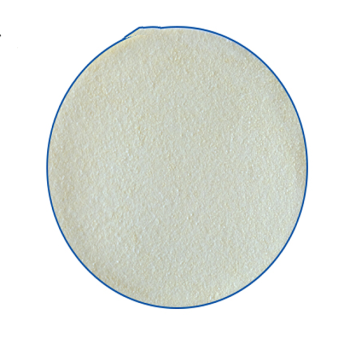 Cellulase
Neutral Cellulase For Textile Industry In Denim Washing Process
US$87.00Original price was: US$87.00.US$78.99Current price is: US$78.99. Purchase -
Sale!
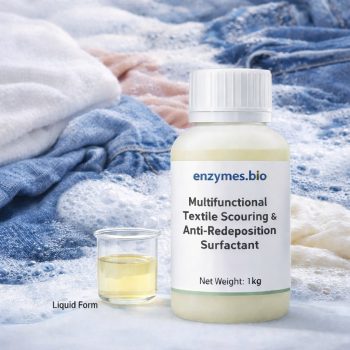 Detergent Enzymes
Multifunctional Textile Scouring & Anti-Redeposition Surfactant
US$105.55Original price was: US$105.55.US$94.99Current price is: US$94.99. Purchase -
Sale!
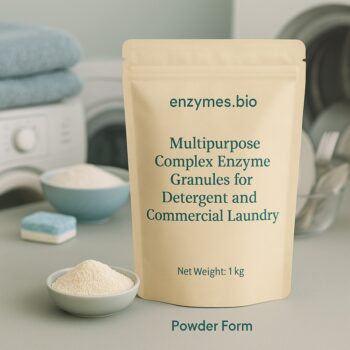 Detergent Enzymes
Multipurpose Complex Enzyme Granules for Detergent and Commercial Laundry
US$111.10Original price was: US$111.10.US$99.99Current price is: US$99.99. Purchase -
Sale!
 Detergent Enzymes
Detergent Enzymes Liquid – Natural Stains Remover
US$66.00Original price was: US$66.00.US$59.99Current price is: US$59.99. Purchase
Why Source Detergent Enzymes from enzymes.bio?
Low MOQ from 1 kg
Flexible order quantities for R&D samples or full production runs. Scale up when ready.
Custom Blends Available
Need a specific protease-lipase-amylase ratio? Our team formulates custom enzyme blends for your detergent line.
Global Shipping
DHL, FedEx, and USPS fulfillment to 180+ countries. Cold-chain shipping available for temperature-sensitive enzymes.
Technical Support
Application guidance from our enzyme specialists. Get dosage recommendations and formulation advice.