
Leather Processing Enzymes
Industrial leather processing demands controlled enzymatic action across soaking, liming, bating, degreasing, and wet-blue reconditioning. This range includes liquid and powder preparations in technical and food-grade options, formulated for acid and alkaline process conditions. Designed for drum and paddle operations at scale, these enzymes support cleaner hair removal, improved softness, efficient fat reduction, and consistent grain quality.
▸ Read technical details
Applications
Proteolytic enzymes are applied during soaking and bating to remove non-structural proteins, open up fiber structure, and promote uniform water uptake, improving hide expansion and reducing processing time. Acid protease (CAS 9040-76-0) is used in pickling, acid bating, and wet-blue reconditioning at pH 3.0–6.0 to refine grain and enhance softness without damaging collagen. Alkaline endo-protease supports enzymatic unhairing and controlled liming at pH 8.0–12.0, enabling smoother hair removal and reduced sulphide load. Acid and industrial lipases are introduced during degreasing of wet blue and high-fat hides to hydrolyze triglycerides, improving fat removal efficiency and reducing surface greasiness before retanning and finishing.
Product Range
The portfolio includes acid protease (CAS 9040-76-0) in powder form and high-activity liquid food-grade acid protease (100,000 U/ml), alkaline endo-protease powders for liming, trypsin-based softening enzymes, and acid and industrial lipases for fat hydrolysis. Products are supplied in technical and food-grade variants with defined pH operating ranges to match beamhouse and post-tanning conditions. Activity specifications and bulk packaging options support pilot trials through full-scale drum production, enabling straightforward scale-up and procurement planning.
Related ResourcesApplication guide: Leather Processing Enzymes Guide — soaking, bating, degreasing & fibre-opening enzymes →
Enzyme type: Bulk Protease — alkaline & neutral protease for leather bating & softening →
-
Sale!
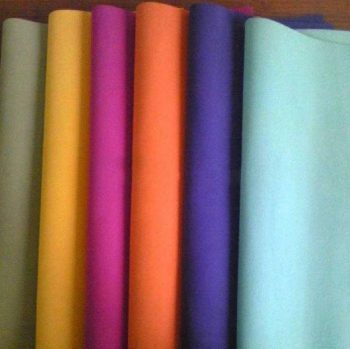 Leather Processing Enzymes
Leather Processing Enzyme: Trypsin Leather Softener
Original price was: US$86.00.US$77.99Current price is: US$77.99. Purchase -
Sale!
 Acid Protease
Leather Tanning Enzymes: Acid Protease Enzyme CAS 9040-76-0
Original price was: US$115.00.US$103.99Current price is: US$103.99. Purchase -
Sale!
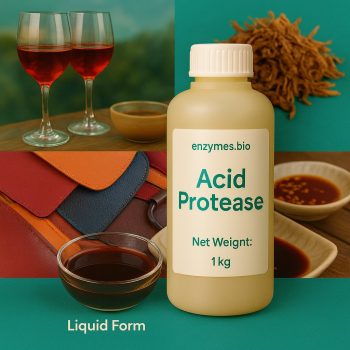 Acid Protease
Acid Protease – Food Grade
Original price was: US$105.55.US$94.99Current price is: US$94.99. Purchase -
Sale!
 Leather Processing Enzymes
Acid Lipase For Leather Degreasing Process
Original price was: US$87.00.US$78.99Current price is: US$78.99. Purchase -
Sale!
 Alkaline Protease
Alkaline Endo-proteases For Leather Industry
Original price was: US$91.00.US$81.99Current price is: US$81.99. Purchase -
Sale!
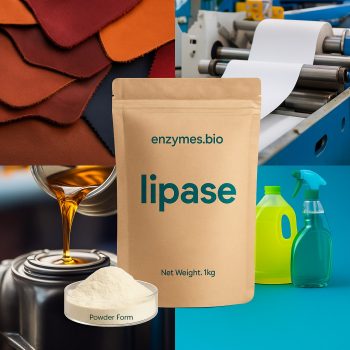 Lipase
Industrial Lipase Enzyme – Multi-Purpose Biocatalyst for Fat and Oil Hydrolysis
Original price was: US$148.88.US$133.99Current price is: US$133.99. Purchase -
Sale!
 Leather Processing Enzymes
Leather Cleaning Enzyme Stain Remover
Original price was: US$91.00.US$81.99Current price is: US$81.99. Purchase