Food-Grade Cellulase Enzyme for Botanical Extraction
Food-Grade Cellulase is a high-activity solid enzyme preparation designed specifically for botanical and plant-based extraction. It works by hydrolyzing cellulose and structural polysaccharides in plant cell walls, helping unlock trapped and bound bioactive compounds for improved yield, faster filtration, and cleaner extraction liquids.
This product is widely used in the extraction of stems, leaves, flowers and other cellulose-rich botanical materials where efficient release of functional compounds is required. It supports a broad range of
applications from herbal extracts and nutraceutical ingredients to functional food processing.
Mechanism
Many botanical raw materials contain dense plant cell wall structures composed of cellulose and associated fibers. During extraction, these structures limit solvent penetration and trap valuable active components.
Cellulase enzymatically breaks down the cellulose network, which:
- Opens cell wall structure to improve solvent access and mass transfer
- Releases bioactive compounds by reducing encapsulation and binding effects
- Reduces viscosity caused by fibrous components, improving downstream separation
- Improves clarity and helps reduce suspended solids in extraction liquids
Key Benefits
- Higher Extraction Yield: Enhances release of target components from plant matrices
- Faster Filtration & Easier Separation: Lowers viscosity and reduces filter clogging
- Improved Clarity: Helps reduce turbidity and improves extract appearance
- Process Efficiency: Can reduce extraction time, energy use, and solvent demand
- Easy to Use: Solid powder form, stable and convenient for industrial dosing
Product Information (Essential Details)
| Item | Specification |
|---|---|
| Product Type | Food-grade cellulase enzyme for botanical extraction |
| Enzyme Activity | 4000 U/g |
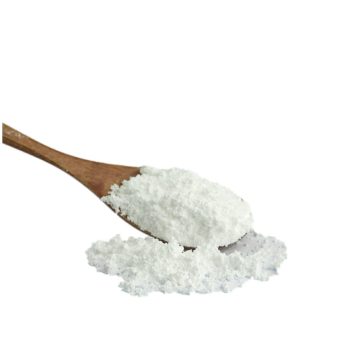
| Form | Light yellow to brown powder |
| Recommended Temperature Range | 40–55°C |
| Recommended pH Range | 4.5–6.0 |
| Suggested Dosage | 0.3–0.5% (based on dry raw material weight) |
| Shelf Life | 12 months (store sealed in a cool, dry place) |
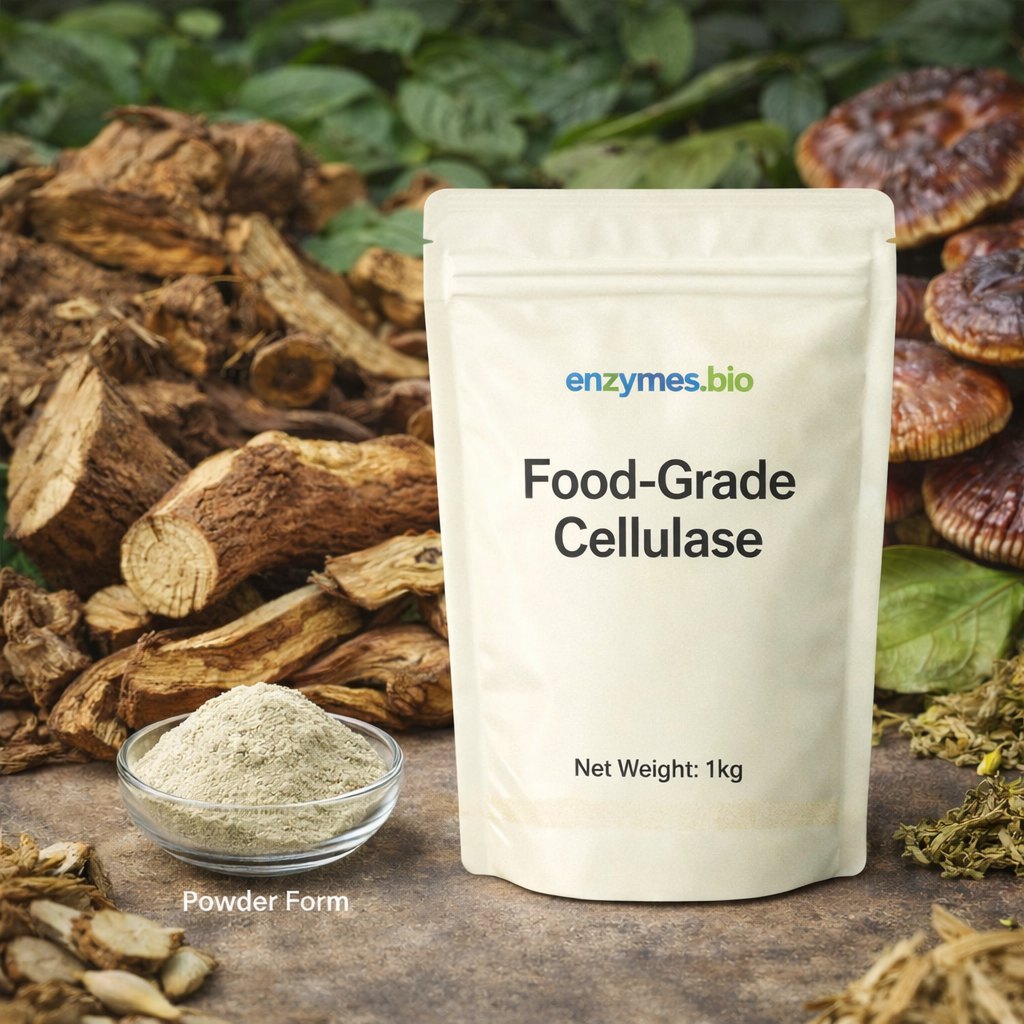
| Packaging | 1 kg / bag |
Quality Targets
This enzyme preparation is produced under strict food-grade quality management with the following control targets:
- Moisture: ≤ 8.0%
- 40-mesh Pass Rate: ≥ 80%
- Lead (Pb): ≤ 5.0 mg/kg
- Total Arsenic (As): ≤ 3.0 mg/kg
- Total Plate Count: ≤ 50,000 CFU/g
- Coliforms: ≤ 30 CFU/g
- E. coli: Not detected
- Salmonella (25 g): Not detected
Typical Application Process
The enzyme is designed to integrate smoothly into common botanical extraction workflows.
A typical process includes:
- Raw Material Preparation: select botanical raw materials (roots, stems, leaves, flowers)
- Grinding / Milling: increase surface area to improve reaction efficiency
- Water Extraction: mix raw material with water (or compatible extraction solution)
- Enzyme Addition & Enzymatic Extraction: add cellulase under recommended pH and temperature
- Filtration: remove insoluble solids more efficiently due to reduced viscosity
- Concentration: concentrate extract (optional)
- Drying: spray drying / vacuum drying / freeze drying depending on target product
For certain botanical materials, cellulase may be used alongside other enzymes such as pectinase, amylase, or protease to further improve extraction efficiency, reduce colloids, and enhance separation performance.
Recommended Dosage & Reference Applications
Dosage depends on raw material type, processing equipment, and target compounds. Below are typical reference ranges:
| Application | Dosage Range (Enzyme on Raw Material) | Practical Reference |
|---|---|---|
| Salvia miltiorrhiza (Danshen) extraction | 0.2–1.0% | Approx. 2–10 kg enzyme per ton of raw material |
| Pueraria (Kudzu) extraction | 0.2–1.0% | Approx. 2–10 kg enzyme per ton of raw material |
| Ganoderma (Reishi) polysaccharide extraction | 0.2–1.0% | Approx. 2–10 kg enzyme per ton of raw material |
Note: These are reference values. We recommend performing a small-scale trial to optimize dosage, pH, temperature, and enzymatic extraction time for your specific botanical materials.
Best Practices for Use
- Ensure pH & temperature are in the optimal range (pH 4.5–6.0; 40–55°C) for best performance
- Add enzyme after the material is fully hydrated to ensure even distribution
- Maintain gentle agitation during enzymatic extraction to improve contact
- Trial optimization is recommended for new botanical raw materials
Storage & Handling
- Store sealed in a cool, dry place, away from heat and moisture
- Avoid direct sunlight and prolonged exposure to high humidity
- Keep packaging tightly closed after opening to preserve activity
Packaging
Packaging: Powder form, supplied in 1 kg/bag, sealed food-grade aluminum foil bag. Please note that the product image is for illustration purposes. Actual packaging may differ.
Ideal For
- Botanical extraction manufacturers
- Herbal ingredient producers
- Nutraceutical and functional food processors
- R&D teams optimizing extraction yields and filtration performance
If you would like support on formulation, dosage optimization, or compatibility with your extraction workflow, enzymes.bio can provide technical guidance for trials and scale-up.