特賣!

Food-Grade Compound Protease for Tobacco Processing

原價為:$133.33。目前價格為:$119.99。

安全支付

使用全球最受歡迎、最安全的支付方式進行支付

產品支援

由內部博士和實驗室團隊支持

快速運輸

我們使用 FedEx / DHL / UPS 運送您的包裹

- +
類別:
1731
保證安全結帳

Food-Grade Compound Protease for Tobacco Processing

Compound Protease (Food Grade) is a high-activity solid enzymatic preparation specifically developed for tobacco processing applications. It is formulated from multiple proteolytic enzymes with synergistic activity, enabling efficient hydrolysis of tobacco leaf proteins under mild processing conditions.

By selectively breaking down macromolecular proteins into small peptides and free amino acids, this enzyme preparation helps regulate the internal chemical composition of tobacco leaves, improves processing performance, and enhances overall sensory quality.

產品特點

  • Food-grade compound protease system
  • High enzymatic activity with mild reaction conditions
  • Effective in neutral to weakly acidic environments
  • Solid powder form, easy to dissolve and apply
  • Designed specifically for tobacco processing applications

作用機制

In general, the protein content of high-quality flue-cured tobacco after curing is approximately 7%–10%. Excessively high protein content is unfavorable to tobacco quality, as it leads to reduced combustibility and contributes to increased pungency, irritation, and bitterness. During smoking, protein degradation can also generate undesirable nitrogen-containing compounds. In addition, tobacco proteins serve as carriers for various substances harmful to human health. When compounds such as caffeine, nicotine, and amino acids undergo thermal degradation at high temperatures, they can produce numerous small-molecule toxic substances. These degradation products further interact with tobacco alkaloids during smoking.

From the perspective of tobacco quality grading, higher protein content is generally associated with lower tobacco grade. Therefore, enzymatic hydrolysis is considered an effective approach to improving tobacco quality. During tobacco processing, appropriate enzymatic degradation of proteins into small-molecule substances can enhance tobacco quality. Free amino acids produced during protein hydrolysis play a significant role in regulating the balance of chemical components in tobacco.

Numerous studies have shown that enzymatic degradation of tobacco proteins generates a series of small-molecule compounds. These compounds can further participate in Maillard reactions and related chemical processes, forming various flavor and aroma substances. The resulting products include nutty, roasted, caramel-like, cocoa, fruity, tobacco-specific, and herbal notes, which significantly enrich tobacco aroma, enhance smoking quality, and help reduce undesirable burnt and off-odors. As a result, smoke permeability is improved, overall smoke quality is enhanced, and tobacco sensory characteristics are optimized.

Moreover, protein hydrolysis helps improve the proportional balance of chemical constituents within tobacco leaves, leading to better smoking smoothness and quality. Short-chain peptides and amino acids produced through protein degradation can also participate in further chemical reactions with sugars, phenolic compounds, and other small molecules, contributing to additional improvements in smoking performance.

Benefits in Tobacco Processing

  • Reduces harshness, pungency, and bitterness
  • Improves tobacco combustibility
  • Enhances aroma richness and depth
  • Improves smoke smoothness and mouthfeel
  • Helps lower off-notes and undesirable odors
  • Supports consistent and stable tobacco quality

應用領域

The addition of neutral protease promotes the degradation of proteins in tobacco leaves, resulting in reduced combustibility while simultaneously lowering pungency, irritation, and bitterness. This process helps improve tobacco grade and effectively enriches tobacco aroma, enhancing the overall smoking experience.

By reducing undesirable burnt odors and off-notes, the smoke becomes more permeable and smoother, contributing to improved smoke quality. Enzymatic treatment also helps optimize the internal chemical composition of tobacco leaves, leading to a more balanced proportion of components and a noticeable improvement in sensory quality.

建議劑量

Typical addition rate: 50–300 g per metric ton of raw tobacco material. The optimal dosage should be determined through pilot trials based on tobacco variety, processing conditions, and desired sensory outcomes.

使用方法

The recommended dosage is generally 50–300 g per metric ton of raw tobacco material. Remove stems from the tobacco leaves, shred or cut as required, and prepare an enzyme solution by dissolving an appropriate amount of protease in water at a specified concentration.

Based on the predetermined application rate, apply the enzyme solution evenly onto the tobacco leaves using automatic spraying or mixing equipment to ensure uniform distribution. The treated tobacco is then placed in a temperature- and humidity-controlled chamber and subjected to enzymatic hydrolysis under defined experimental conditions.

After treatment, the tobacco leaves are inactivated at 120°C, followed by cutting and preparation for subsequent processing. Due to differences in raw material characteristics and processing parameters across applications, the optimal addition method and dosage should be determined through preliminary trials.

Optimal Working Conditions

  • 溫度範圍: 30–60°C
  • 最佳溫度: 40–50°C
  • pH工作範圍: 2.5–10.0
  • 最佳 pH 值範圍: 2.5–8.5

產品形式

  • Solubility: Dispersible in water
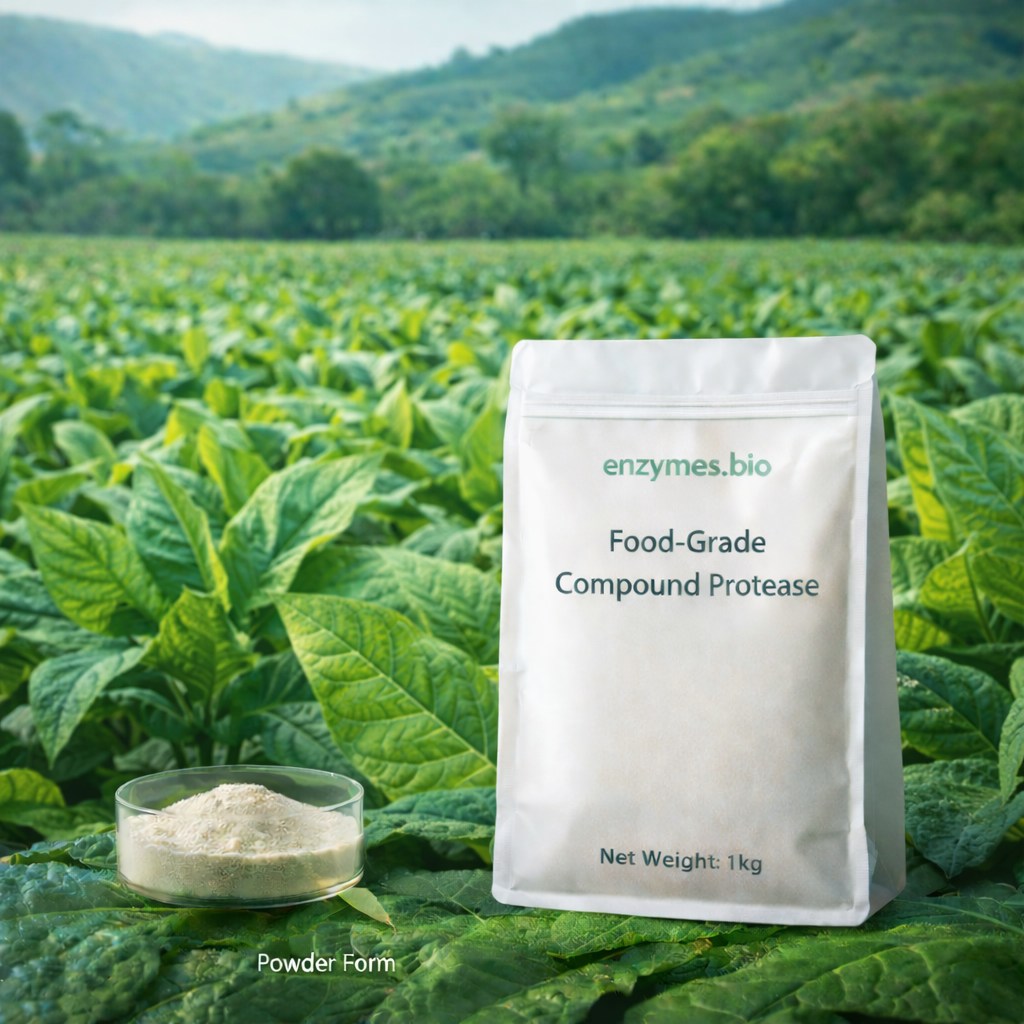
  • Packaging: Supplied in 1公斤/袋, 密封食品級鋁箔袋。請注意產品圖片僅供示意,實際包裝可能有所不同。.

Quality & Safety Indicators

  • Lead (Pb): ≤ 5.0 mg/kg
  • Total arsenic (As): ≤ 3.0 mg/kg
  • Total plate count: ≤ 50,000 CFU/g
  • Coliforms: ≤ 30 CFU/g

保存期限

12個月 when stored in a cool, dry place under sealed conditions.