
How Meat Processing Enzymes Work
Improved Tenderness Control
Optimize texture and reduce toughness with controlled protease meat processing solutions for red meat, poultry, and seafood.
Higher Yield Recovery
Increase protein extraction and by-product utilization through targeted enzymatic hydrolysis of meat and collagen streams.
Consistent Enzyme Activity
Standardized activity units and batch testing ensure predictable performance in large-scale meat industry operations.
Enzyme Types for Meat Processing Applications
브로멜라인
Natural plant-derived enzyme that tenderises meat by breaking down muscle proteins and collagen fibres.
중성 프로테아제
Improves tenderness, texture, and water-holding capacity in whole muscle and restructured meat products.
알칼리성 프로테아제
Hydrolyzes meat byproducts and offal for protein meal, pet food, and hydrolysate production.
리파제
Develops flavour compounds in cured meats and fermented sausages through controlled fat hydrolysis.
트립신
Digests collagen and connective tissue proteins for meat restructuring and efficient protein recovery.
Meat Processing Enzyme Guide: Functions, Dosage & Applications
브로멜라인
Meat Tenderizing via Myofibrillar Protein Hydrolysis
기능: Bromelain is a cysteine protease extracted from pineapple stem that preferentially cleaves myosin, collagen, and connective tissue proteins. Unlike heat tenderizing, bromelain acts at chilled temperatures (4–25°C), allowing it to work during marination or brining without cooking the meat. It targets both myofibrillar proteins (actin, myosin) and connective tissue, improving shear force values measurably.
일반적인 복용량: 10–100 ppm (mg/kg) of meat weight. Activity: 100,000–600,000 GDU/g or 50,000–300,000 MCU/g. Lower dosage (10–30 ppm) for controlled tenderizing of premium cuts; higher dosage (50–100 ppm) for tenderizing tougher cuts or restructured meat products. Contact time: 30 minutes–4 hours at 2–8°C.
응용 프로그램: Steak and chop tenderizing (marinades, injection, tumbling), restructured meat products, pet food protein hydrolysis, portion-control portion improvement. Widely used in hotel and food service supply chains.
대량 구매하기: Bulk Bromelain — 1,000–3,000 GDU/g for meat & nutraceuticals →
중성 프로테아제
Controlled Proteolysis for Aging Simulation & Flavor Development
기능: Neutral protease hydrolyzes muscle proteins at neutral pH (6.0–7.5) with moderate activity, mimicking the natural dry-aging proteolysis by endogenous enzymes (calpains). It releases umami-contributing peptides and amino acids (glutamate, IMP precursors) while minimizing the bitter peptides associated with alkaline proteases.
일반적인 복용량: 0.005–0.02% w/w of meat weight. Activity: 50,000–400,000 U/g. Inject or tumble into meat at 2–8°C; contact time 2–12 hours. Enzyme is inactivated by cooking (>70°C). Lower dosage for subtle flavor enhancement; higher dosage for accelerated aging or protein hydrolyzate production.
응용 프로그램: Accelerated dry-age simulation in wet-aged beef, cured and fermented meats, meat protein hydrolyzates for stock/flavoring, meat-based pet food flavor enhancement.
대량 구매하기: Bulk Protease — neutral, alkaline & acid protease for meat processing →
알칼리성 프로테아제
Aggressive Protein Hydrolysis for Recovery & Hydrolyzate Production
기능: Alkaline protease operates at pH 7.5–11.0 and produces more aggressive, complete protein hydrolysis than neutral protease. It is preferred for collagen hydrolysis, mechanical deboning residue recovery, and production of functional meat protein concentrates. Less suitable for whole-muscle tenderizing due to bitterness potential at high dosage.
일반적인 복용량: 0.01–0.05% w/w of substrate. Activity: 100,000–800,000 U/g. Temperature optimum: 40–55°C. Adjust pH to 7.5–9.0 for optimal activity. Inactivate by dropping pH below 4.5 or heating to >80°C.
응용 프로그램: Mechanical deboning residue (MDR) processing, collagen hydrolyzate production (for gelatin alternatives), fish sauce/shrimp paste acceleration, animal by-product valorization, pet food ingredient production.
리파제
Fat Hydrolysis for Flavor Development & Rendered Fat Processing
기능: Lipase hydrolyzes triglycerides in meat and animal fat into free fatty acids, monoglycerides, and glycerol. In cured and fermented meats (salami, prosciutto), controlled lipolysis generates flavor compounds. In rendered fat processing, lipase can modify fatty acid profiles or produce partial glycerides for food-grade emulsification applications.
일반적인 복용량: 0.01–0.1% w/w of fat substrate. Activity: 10,000–100,000 LU/g. Temperature optimum: 30–45°C. Inactivated by heat >65°C.
응용 프로그램: Fermented meat flavor development (dry-cured sausage, salami), rendered animal fat modification, lard partial hydrolysis, flavor compound production for meat seasonings.
대량 구매하기: Bulk Lipase — lipase for fat modification in cured & fermented meats →
트립신
Specific Serine Protease for Protein Digestion & Research Applications
기능: Trypsin is a serine endopeptidase that cleaves peptide bonds specifically at the C-terminal side of lysine and arginine residues. In meat processing, it is used for controlled functional protein modification and for production of bioactive peptides with specific cleavage patterns. Also used in research-grade protein digestion and pharmaceutical applications.
일반적인 복용량: 0.001–0.05% w/w of protein substrate. Activity: 1,000–10,000 BAEE Units/mg. Temperature optimum: 37°C, pH 7.5–8.5. Inactivated by serine protease inhibitors or heat.
응용 프로그램: Bioactive peptide production from muscle proteins, research-grade protein digestion, pharmaceutical collagen hydrolyzate production, cell culture trypsinization (tissue culture grade available).
Our Meat Processing Enzyme Products
-
판매!
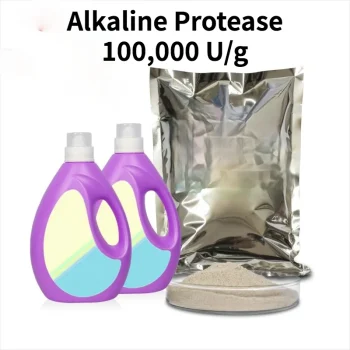 알칼리성 프로테아제
알칼리성 프로테아제 100,000 U/g 생선 및 새우 찌꺼기 가수분해 프로테아제 바실러스 리케니포르미스 프로테아제
$99.99원래 가격은 $99.99였습니다.$89.99현재 가격은 $89.99입니다. 구입 -
판매!
 육류 가공 효소
콜라겐 프로테아제 생선 가죽 소가죽 가공 생물학적 효소 콜라겐 가수분해
$144.44원래 가격은 $144.44였습니다.$129.99현재 가격은 $129.99입니다. 구입 -
판매!
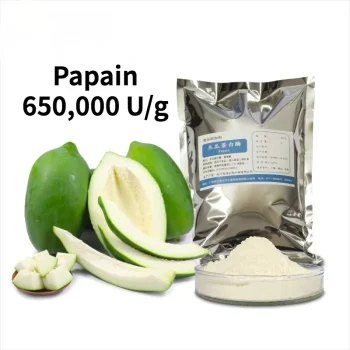 육류 가공 효소
파파인 650,000 U/g 피그스킨 피쉬 콜라겐 하이드롤라제 효소
$124.00원래 가격은 $124.00였습니다.$111.99현재 가격은 $111.99입니다. 구입 -
판매!
-
판매!
Why Source Meat Processing Enzymes from enzymes.bio?
1kg부터 낮은 MOQ
R&D 샘플 또는 전체 생산 실행을 위한 유연한 주문 수량. 준비되면 확장하세요.
맞춤형 블렌드 사용 가능
특정 효소 비율 또는 다중 효소 복합체가 필요하신가요? 저희 팀이 고객의 공정에 맞는 맞춤형 혼합물을 만들어 드립니다.
글로벌 배송
180개 이상의 국가로 DHL, FedEx, USPS 주문 처리. 온도에 민감한 효소를 위한 콜드체인 배송이 가능합니다.
기술 지원
효소 전문가가 제공하는 사용 지침 및 복용량 권장 사항을 확인하세요.