Σύνθετη Πρωτεάση Τροφίμων για Επεξεργασία Καπνού
Η σύνθετη πρωτεάση (Food Grade) είναι ένα στερεό ενζυμικό παρασκεύασμα υψηλής δραστικότητας που αναπτύχθηκε ειδικά για εφαρμογές επεξεργασίας καπνού. Αποτελείται από πολλαπλά πρωτεολυτικά ένζυμα με συνεργιστική δράση, επιτρέποντας την αποτελεσματική υδρόλυση των πρωτεϊνών των φύλλων καπνού υπό ήπιες συνθήκες επεξεργασίας.
Με την επιλεκτική διάσπαση των μακρομοριακών πρωτεϊνών σε μικρά πεπτίδια και ελεύθερα αμινοξέα, αυτό το ενζυμικό παρασκεύασμα συμβάλλει στη ρύθμιση της εσωτερικής χημικής σύνθεσης των φύλλων καπνού, βελτιώνει την απόδοση της επεξεργασίας και βελτιώνει τη συνολική αισθητηριακή ποιότητα.
Χαρακτηριστικά Προϊόντος
- Σύστημα σύνθετης πρωτεάσης τροφίμων
- Υψηλή ενζυμική δραστικότητα με ήπιες συνθήκες αντίδρασης
- Αποτελεσματικό σε ουδέτερα έως ασθενώς όξινα περιβάλλοντα
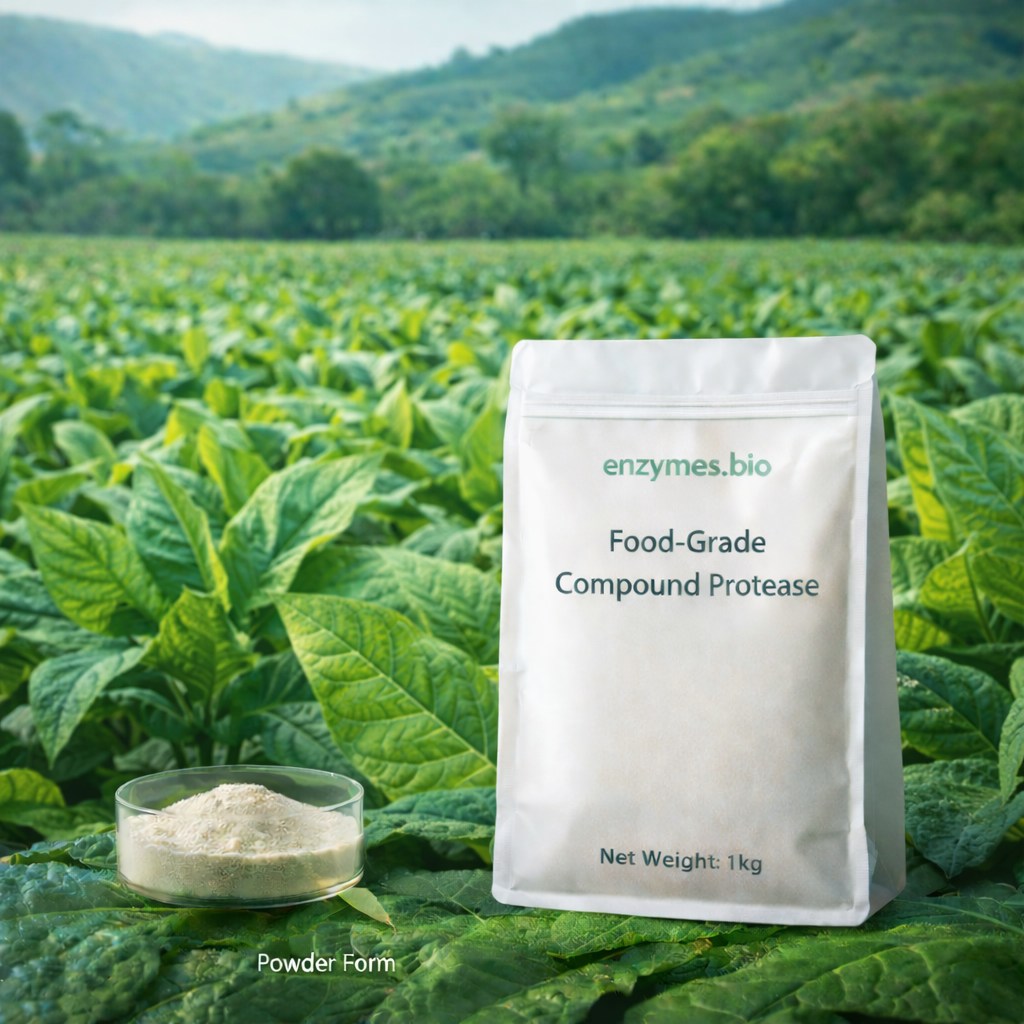
- Στερεά μορφή σκόνης, εύκολη στη διάλυση και την εφαρμογή
- Σχεδιασμένο ειδικά για εφαρμογές επεξεργασίας καπνού
Μηχανισμός δράσης
Σε γενικές γραμμές, η περιεκτικότητα σε πρωτεΐνες του καπνού υψηλής ποιότητας που ωριμάζει μετά την ωρίμανση είναι περίπου 7%-10%. Η υπερβολικά υψηλή περιεκτικότητα σε πρωτεΐνες είναι δυσμενής για την ποιότητα του καπνού, καθώς οδηγεί σε μειωμένη καυστικότητα και συμβάλλει στην αύξηση της καυστικότητας, του ερεθισμού και της πικράδας. Κατά τη διάρκεια του καπνίσματος, η αποικοδόμηση των πρωτεϊνών μπορεί επίσης να δημιουργήσει ανεπιθύμητες ενώσεις που περιέχουν άζωτο. Επιπλέον, οι πρωτεΐνες του καπνού χρησιμεύουν ως φορείς για διάφορες ουσίες επιβλαβείς για την ανθρώπινη υγεία. Όταν ενώσεις όπως η καφεΐνη, η νικοτίνη και τα αμινοξέα υφίστανται θερμική αποικοδόμηση σε υψηλές θερμοκρασίες, μπορούν να παράγουν πολυάριθμες μικρομοριακές τοξικές ουσίες. Αυτά τα προϊόντα αποικοδόμησης αλληλεπιδρούν περαιτέρω με τα αλκαλοειδή του καπνού κατά τη διάρκεια του καπνίσματος.
Από την άποψη της ποιοτικής ταξινόμησης του καπνού, η υψηλότερη περιεκτικότητα σε πρωτεΐνες συνδέεται γενικά με χαμηλότερη ποιότητα καπνού. Ως εκ τούτου, η ενζυμική υδρόλυση θεωρείται αποτελεσματική προσέγγιση για τη βελτίωση της ποιότητας του καπνού. Κατά τη διάρκεια της επεξεργασίας του καπνού, η κατάλληλη ενζυματική αποικοδόμηση των πρωτεϊνών σε μικρομοριακές ουσίες μπορεί να βελτιώσει την ποιότητα του καπνού. Τα ελεύθερα αμινοξέα που παράγονται κατά την υδρόλυση των πρωτεϊνών διαδραματίζουν σημαντικό ρόλο στη ρύθμιση της ισορροπίας των χημικών συστατικών του καπνού.
Πολυάριθμες μελέτες έχουν δείξει ότι η ενζυμική αποικοδόμηση των πρωτεϊνών του καπνού παράγει μια σειρά από μικρομοριακές ενώσεις. Οι ενώσεις αυτές μπορούν να συμμετέχουν περαιτέρω στις αντιδράσεις Maillard και σε συναφείς χημικές διεργασίες, σχηματίζοντας διάφορες ουσίες γεύσης και αρώματος. Τα προϊόντα που προκύπτουν περιλαμβάνουν καρυδιούχες, καβουρδισμένες, καραμελένιες, κακάο, φρουτώδεις, ειδικές για τον καπνό και φυτικές νότες, οι οποίες εμπλουτίζουν σημαντικά το άρωμα του καπνού, βελτιώνουν την ποιότητα του καπνίσματος και συμβάλλουν στη μείωση των ανεπιθύμητων καμένων και εκτός οσμών. Ως αποτέλεσμα, βελτιώνεται η διαπερατότητα του καπνού, βελτιώνεται η συνολική ποιότητα του καπνού και βελτιστοποιούνται τα αισθητηριακά χαρακτηριστικά του καπνού.
Επιπλέον, η υδρόλυση των πρωτεϊνών συμβάλλει στη βελτίωση της αναλογικής ισορροπίας των χημικών συστατικών μέσα στα φύλλα καπνού, οδηγώντας σε καλύτερη ομαλότητα και ποιότητα καπνίσματος. Τα πεπτίδια μικρής αλυσίδας και τα αμινοξέα που παράγονται μέσω της αποικοδόμησης των πρωτεϊνών μπορούν επίσης να συμμετάσχουν σε περαιτέρω χημικές αντιδράσεις με σάκχαρα, φαινολικές ενώσεις και άλλα μικρά μόρια, συμβάλλοντας σε πρόσθετες βελτιώσεις στην απόδοση του καπνίσματος.
Οφέλη στην επεξεργασία καπνού
- Μειώνει τη σκληρότητα, την οξύτητα και την πικράδα
- Βελτιώνει την καύση του καπνού
- Ενισχύει τον πλούτο και το βάθος του αρώματος
- Βελτιώνει την ομαλότητα του καπνού και την αίσθηση του στόματος
- Βοηθά στη μείωση των off-notes και των ανεπιθύμητων οσμών
- Υποστηρίζει συνεπή και σταθερή ποιότητα καπνού
Περιοχές Εφαρμογής
Η προσθήκη ουδέτερης πρωτεάσης προάγει την αποικοδόμηση των πρωτεϊνών στα φύλλα καπνού, με αποτέλεσμα τη μείωση της καυστικότητας, ενώ ταυτόχρονα μειώνει την οξύτητα, τον ερεθισμό και την πικράδα. Η διαδικασία αυτή συμβάλλει στη βελτίωση της ποιότητας του καπνού και εμπλουτίζει αποτελεσματικά το άρωμα του καπνού, ενισχύοντας τη συνολική εμπειρία καπνίσματος.
Μειώνοντας τις ανεπιθύμητες οσμές καύσης και τις παραφωνίες, ο καπνός γίνεται πιο διαπερατός και πιο ομαλός, συμβάλλοντας στη βελτίωση της ποιότητας του καπνού. Η ενζυμική επεξεργασία συμβάλλει επίσης στη βελτιστοποίηση της εσωτερικής χημικής σύνθεσης των φύλλων καπνού, οδηγώντας σε μια πιο ισορροπημένη αναλογία συστατικών και σε αισθητή βελτίωση της οργανοληπτικής ποιότητας.
Συνιστώμενη Δοσολογία
Τυπικός ρυθμός προσθήκης: 50-300 g ανά μετρικό τόνο ακατέργαστου καπνού. Η βέλτιστη δοσολογία θα πρέπει να καθορίζεται μέσω πιλοτικών δοκιμών με βάση την ποικιλία καπνού, τις συνθήκες επεξεργασίας και τα επιθυμητά αισθητηριακά αποτελέσματα.
Μέθοδος χρήσης
Η συνιστώμενη δοσολογία είναι γενικά 50-300 g ανά μετρικό τόνο ακατέργαστου καπνού. Αφαιρέστε τα στελέχη από τα φύλλα καπνού, τεμαχίστε ή κόψτε τα όπως απαιτείται και προετοιμάστε ένα ενζυμικό διάλυμα διαλύοντας κατάλληλη ποσότητα πρωτεάσης σε νερό σε καθορισμένη συγκέντρωση.
Με βάση τον προκαθορισμένο ρυθμό εφαρμογής, εφαρμόστε το διάλυμα ενζύμου ομοιόμορφα στα φύλλα καπνού χρησιμοποιώντας αυτόματο ψεκασμό ή εξοπλισμό ανάμιξης για να εξασφαλίσετε ομοιόμορφη κατανομή. Στη συνέχεια, ο επεξεργασμένος καπνός τοποθετείται σε θάλαμο ελεγχόμενης θερμοκρασίας και υγρασίας και υποβάλλεται σε ενζυματική υδρόλυση υπό καθορισμένες πειραματικές συνθήκες.
Μετά την επεξεργασία, τα φύλλα καπνού αδρανοποιούνται σε 120°C, και στη συνέχεια κοπή και προετοιμασία για περαιτέρω επεξεργασία. Λόγω των διαφορών στα χαρακτηριστικά της πρώτης ύλης και στις παραμέτρους επεξεργασίας σε διάφορες εφαρμογές, η βέλτιστη μέθοδος και δοσολογία προσθήκης θα πρέπει να καθορίζεται μέσω προκαταρκτικών δοκιμών.
Βέλτιστες συνθήκες εργασίας
- Εύρος θερμοκρασίας: 30–60 °C
- Βέλτιστη θερμοκρασία: 40–50 °C
- Εύρος λειτουργίας pH: 2.5-10.0
- Βέλτιστο εύρος pH: 2.5-8.5
Μορφή προϊόντος
- Διαλυτότητα: στο νερό
- Συσκευασία: Συσκευασία: Παρέχεται σε 1 κιλό/σακούλα, σφραγισμένη σακούλα αλουμινίου κατάλληλη για τρόφιμα. Παρακαλώ σημειώστε ότι η εικόνα του προϊόντος είναι για επεξηγηματικούς σκοπούς. Η πραγματική συσκευασία μπορεί να διαφέρει.
Δείκτες ποιότητας & ασφάλειας
- Μόλυβδος (Pb): ≤ 5,0 mg/kg
- Ολικό αρσενικό (As): ≤ 3,0 mg/kg
- Συνολικός αριθμός αιμοπεταλίων: ≤ 50.000 CFU/g
- Κολοβακτηρίδια: ≤ 30 CFU/g
Διάρκεια ζωής
12 μηνών όταν αποθηκεύεται σε δροσερό, ξηρό μέρος υπό σφραγισμένες συνθήκες.