

Multi Enzyme Liquid Detergent for Surgical Instrument and Reusable Dressing Cleaning with Protease Amylase Lipase and Cellulase MME
Product Overview
Multi Enzyme Liquid Detergent MME is a professional liquid enzymatic cleaning formulation developed for surgical instrument cleaning and compatible reusable dressing cleaning. This advanced multi-enzyme blend combines alkaline protease, amylase, lipase, and cellulase to help break down complex organic residues, including proteins, starches, fats, oils, and cellulose-associated impurities.
Reusable instruments and dressing materials may accumulate blood, protein deposits, fatty substances, and other organic contamination during use. These residues can adhere to surfaces and become difficult to remove through conventional washing alone. MME provides complementary enzymatic activities that help hydrolyze different types of organic soils, supporting effective cleaning and residue removal.
The formulation is suitable for evaluation as an ingredient in professional enzymatic cleaning detergents. Its working temperature range of 25–60°C and pH range of 7.0–11.0 provide flexibility for different cleaning conditions and detergent formulations.
By combining four specialized enzymes in one liquid formulation, MME offers a practical cleaning solution for professional instrument cleaning, reusable dressing washing, and specialized detergent development.
Key Product Features and Benefits
- Specialized Cleaning Applications: Developed primarily for surgical instrument and compatible reusable dressing cleaning.
- Four-Enzyme Formulation: Combines alkaline protease, amylase, lipase, and cellulase for complementary cleaning activity.
- Protein Residue Removal: Helps hydrolyze blood proteins and other proteinaceous contamination.
- Starch Degradation: Breaks down starch deposits into smaller carbohydrate fragments.
- Fat and Oil Removal: Supports the hydrolysis and removal of greasy organic residues.
- Multi-Enzyme Synergy: Targets different organic soil categories within a single formulation.
- Broad Operating Conditions: Designed for use at 25–60°C and pH 7.0–11.0.
- Enzyme-Based Cleaning Technology: Supports organic residue removal through targeted biochemical reactions.
- Professional Detergent Formulation: Suitable for incorporation into compatible liquid enzymatic cleaning systems.
Product Specifications
| Product Name | Multi Enzyme Liquid Detergent |
| Product Code | MME |
| Product Form | Liquid |
| Appearance | Light Brown |
| Odor | Mild Fermentation Odor |
| Enzyme Composition | Alkaline Protease, Amylase, Lipase, Cellulase |
| Working Temperature | 25–60°C |
| Working pH Range | 7.0–11.0 |
| Recommended Dosage | 0.2–1.2% w/w of Detergent Formulation |
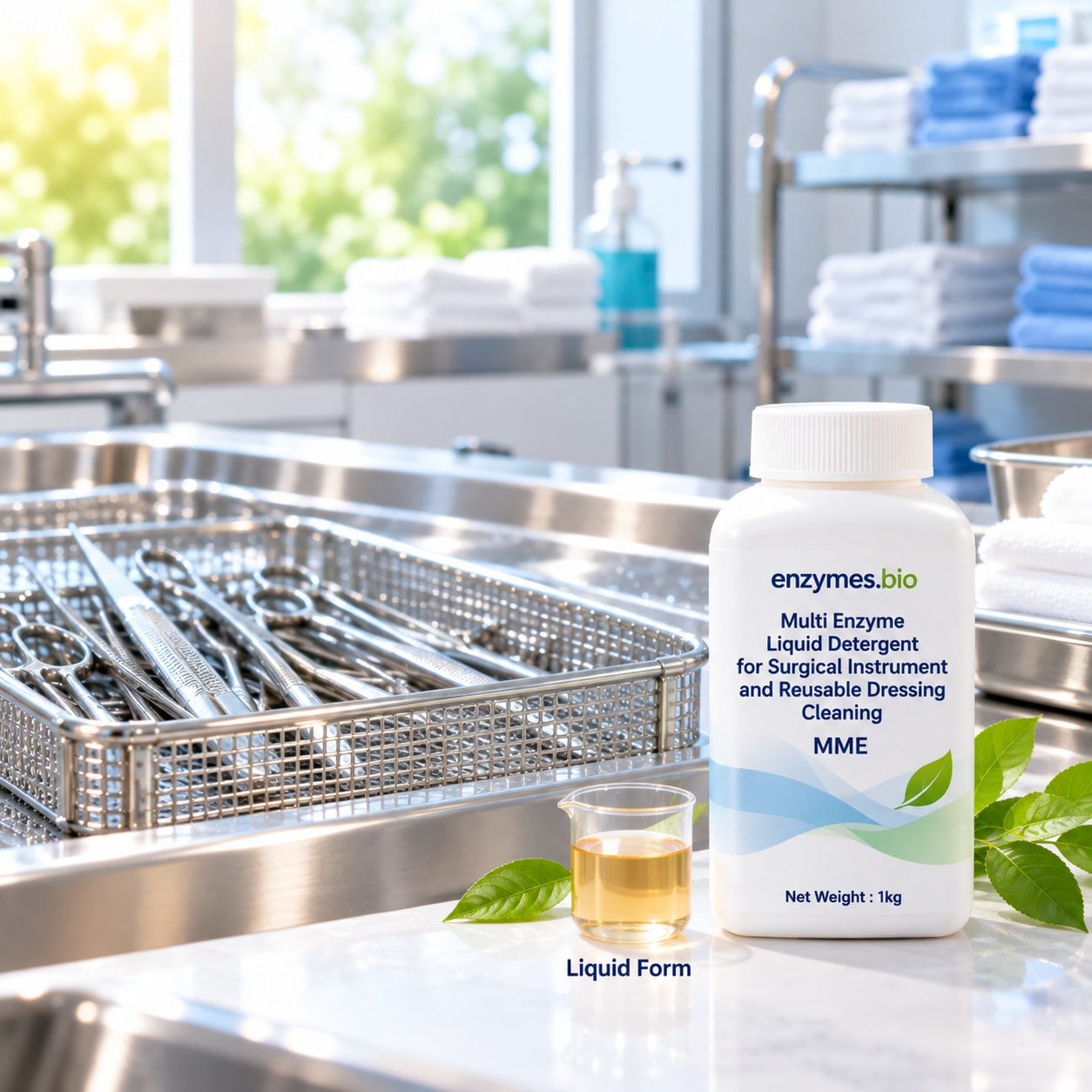
| Packaging | 1 kg bottle (supplied in an industrial-grade plain bottle). Please note that the product image is for illustration purposes. Actual packaging may differ. |
| Storage Temperature | 2–25°C |
| Primary Applications | Surgical Instrument Cleaning and Reusable Dressing Cleaning |
Note: Slight variations in product color may occur due to differences in fermentation raw materials and production batches. These variations do not affect the intended cleaning performance.
Primary Applications
Surgical Instrument Cleaning
MME is designed for evaluation in enzymatic cleaning formulations intended for compatible reusable surgical instruments. Instrument surfaces may accumulate blood, proteins, fats, and other organic residues that require thorough removal during cleaning.
These contaminants can adhere to smooth surfaces, joints, hinges, and other difficult-to-clean areas. The multi-enzyme formulation helps break down different categories of organic contamination, making residues easier to disperse and remove during washing and rinsing.
Alkaline protease hydrolyzes protein-based residues, while lipase assists in breaking down fatty contamination. Amylase and cellulase provide complementary activity against additional suitable organic substrates.
The combined enzyme system supports the removal of organic soils from compatible reusable instruments when incorporated into appropriately formulated detergents.
MME may be evaluated in detergent systems intended for manual cleaning or automated instrument washing. The suitability of the finished formulation depends on material compatibility, detergent concentration, contact time, processing temperature, and the applicable equipment manufacturer’s instructions.
Cleaning performance and material compatibility must be verified before routine use. Enzymatic cleaning is not a substitute for required disinfection or sterilization procedures.
Reusable Dressing Cleaning
MME is also developed for cleaning compatible reusable dressing materials that require removal of organic residues during washing and reprocessing.
Reusable dressing materials may become contaminated with blood proteins, fatty substances, starch-based residues, and other organic materials. These contaminants can attach to the material surface and may be difficult to remove using conventional washing methods alone.
The alkaline protease component helps break down protein deposits into smaller soluble fragments, while lipase assists in the hydrolysis of fatty contamination. Amylase provides additional activity against starch residues, and cellulase may support surface cleaning of compatible cellulose-containing materials.
Through these complementary enzymatic actions, MME helps loosen and degrade organic contamination, supporting more effective removal during washing and rinsing.
Application should be limited to reusable materials that are specifically designed for washing and reprocessing. Material compatibility and cleaning performance should be evaluated before use.
MME is not intended for direct application to wounds or for the reprocessing of single-use dressing materials.
Enzyme Composition and Cleaning Mechanism
MME contains four complementary enzymes that act on different organic substrates. Their combined activities provide a broader cleaning mechanism for complex residues encountered during surgical instrument and reusable dressing cleaning.
Alkaline Protease for Protein Residue Removal
Alkaline protease catalyzes the hydrolysis of peptide bonds in protein molecules, converting large proteins into smaller peptides and soluble degradation products.
This activity is particularly useful for breaking down blood proteins and other proteinaceous residues that may adhere to instrument surfaces or reusable dressing materials.
Protein deposits can become difficult to remove when they dry or attach firmly to a surface. By breaking down the molecular structure of these deposits, alkaline protease helps reduce their adhesion and facilitates removal through detergent action and rinsing.
Alkaline protease can also hydrolyze protein residues originating from milk, eggs, meat, and other protein-containing substances.
Amylase for Starch Degradation
Amylase catalyzes the hydrolysis of starch molecules into smaller carbohydrate fragments.
Starch-based contamination may form sticky deposits that adhere to washable surfaces. Amylase helps degrade these deposits, improving their dispersibility and removal during cleaning.
Common starch-containing residues may originate from food products, seasonings, infant foods, desserts, and other carbohydrate-rich materials.
Within the MME formulation, amylase complements protease and lipase by targeting carbohydrate contamination that cannot be effectively degraded by protein- or fat-hydrolyzing enzymes.
Lipase for Fat and Oil Removal
Lipase catalyzes the hydrolysis of fats and oils, including triglycerides, into smaller lipid components such as fatty acids and glycerol.
Fatty contamination can adhere strongly to reusable instruments and dressing materials. Lipase helps break down these deposits, supporting their removal when combined with suitable detergent ingredients.
The enzymatic hydrolysis of lipid residues can improve their dispersibility and facilitate subsequent removal during washing and rinsing.
Lipase is particularly useful when fatty contamination is present together with proteinaceous residues, allowing complementary cleaning action within the multi-enzyme formulation.
Cellulase for Surface Cleaning
Cellulase catalyzes the hydrolysis of accessible cellulose structures and can modify the surface of compatible cellulose-containing materials under suitable conditions.
For reusable dressing materials containing suitable cellulosic fibers, controlled cellulase activity may help remove loose surface fibers and certain cellulose-associated impurities.
This action can support improved surface cleanliness, reduced fuzz formation, and better fabric appearance in compatible materials.
Cellulase activity should be evaluated carefully for material compatibility, particularly where repeated washing or preservation of fiber strength is important.
Synergistic Multi-Enzyme Cleaning Performance
Complex organic contamination often contains several different chemical components. Protein residues may be present together with fats, oils, starches, and other materials, making comprehensive cleaning more challenging.
MME addresses these different substrates through four complementary enzymatic mechanisms:
- Protease: Hydrolyzes protein-based residues.
- Amylase: Breaks down starch deposits.
- Lipase: Hydrolyzes fatty and oily contamination.
- Cellulase: Acts on accessible cellulose structures and associated impurities.
The combined enzyme system supports the breakdown and removal of different organic residues within one detergent formulation.
This multi-enzyme approach can improve cleaning efficiency and support the removal of persistent contamination from compatible reusable instruments and dressing materials.
Operating Conditions
MME is designed for use within the following processing ranges:
- Working Temperature: 25–60°C
- Working pH: 7.0–11.0
- Recommended Formulation Dosage: 0.2–1.2% w/w
Enzymatic cleaning performance depends on temperature, pH, contact time, detergent composition, and the nature of the organic contamination.
The activity and stability of individual enzyme components may vary across the recommended operating ranges. Application testing is recommended to identify suitable processing conditions for each formulation.
For reusable instruments and dressing materials, cleaning conditions must also comply with the applicable material and equipment manufacturer’s instructions.
Recommended Dosage and Formulation Guidance
The recommended addition rate of MME is 0.2–1.2% w/w based on the total weight of the finished detergent formulation.
For example, a 100 kg batch of finished liquid detergent would require approximately 0.2–1.2 kg of MME within the recommended formulation range.
The optimal addition rate depends on the detergent composition, contamination level, cleaning temperature, pH, and desired cleaning performance.
The stated dosage refers to incorporation into a detergent formulation and should not be interpreted as a validated direct-use concentration for instrument-cleaning baths or washing equipment.
Actual detergent dilution, cleaning contact time, and rinsing procedures should be established through appropriate formulation testing and cleaning process validation.
Compatibility should be evaluated when combining MME with surfactants, builders, preservatives, and other detergent ingredients. Strong oxidizing agents and highly reactive chemicals may reduce enzyme activity.
Storage Conditions
Store MME in tightly sealed packaging in a cool, dry environment at a recommended temperature of 2–25°C.
Protect the product from direct sunlight, excessive heat, and unnecessary exposure to air.
Storage at the lower end of the recommended temperature range may help preserve enzyme activity and extend the useful storage period.
Keep the packaging securely closed when not in use and avoid contamination during handling or dispensing.
Because enzymes are biologically active proteins, prolonged exposure to unsuitable temperatures, extreme pH conditions, or incompatible chemicals may reduce their activity.
Safety and Handling Precautions
MME is a liquid enzyme formulation and should be handled according to standard industrial enzyme safety procedures.
Enzyme-containing products may cause allergic reactions or sensitization in susceptible individuals.
Avoid unnecessary skin contact, eye exposure, and inhalation of aerosols or mists. Wear appropriate protective gloves, eye protection, and other personal protective equipment according to workplace requirements.
If the product comes into contact with the skin, rinse the affected area immediately with clean water. In case of eye exposure, rinse carefully with water and seek medical advice when necessary.
MME is intended for cleaning applications only. It is not a disinfectant, sterilizing agent, or wound treatment product.
When used for reusable instruments or dressing materials, follow all applicable validated cleaning, rinsing, disinfection, sterilization, and reprocessing procedures.
Packaging Information
Standard Packaging: 1 kg bottle (supplied in an industrial-grade plain bottle). Please note that the product image is for illustration purposes. Actual packaging may differ.
The liquid enzyme formulation is supplied in sealed packaging suitable for storage and handling. Keep the original packaging securely closed until use and follow the recommended storage conditions to help maintain enzyme activity.
Professional Multi Enzyme Cleaning Solution MME
Multi Enzyme Liquid Detergent MME provides a specialized enzyme-based cleaning formulation focused on two primary applications: surgical instrument cleaning and reusable dressing cleaning.
Its combination of alkaline protease, amylase, lipase, and cellulase supports the breakdown of proteins, starches, fats, oils, and cellulose-associated residues through complementary enzymatic reactions.
With a working temperature range of 25–60°C, pH compatibility from 7.0 to 11.0, and a recommended detergent formulation dosage of 0.2–1.2%, MME offers flexibility for professional cleaning detergent development.
For professional users seeking a multi-functional liquid enzyme blend for removing complex organic contamination from compatible reusable instruments and dressing materials, MME provides a versatile enzymatic cleaning solution.