Wool Protease – Anti-Felting & Anti-Pilling Enzyme for Wool Finishing
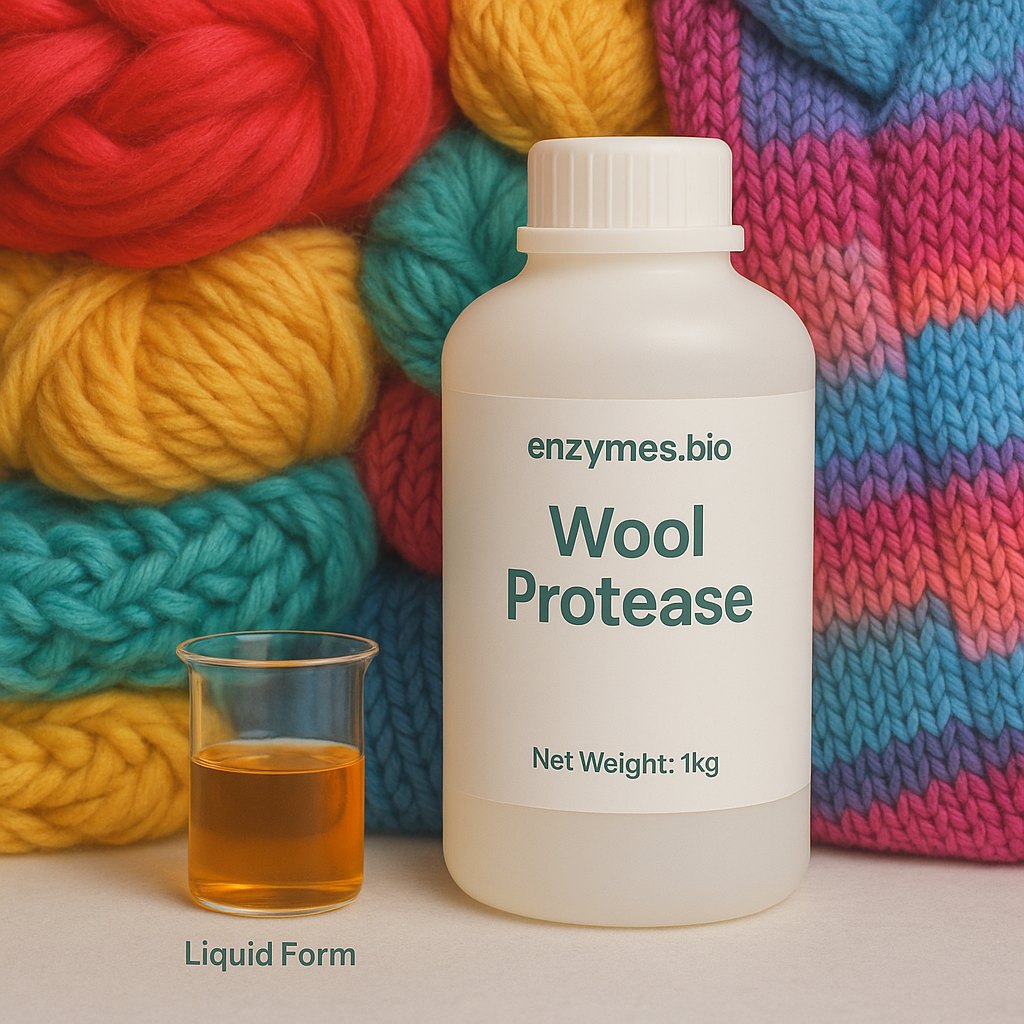
Wool Protease is a high-performance enzymatic solution specifically developed for the bio-finishing of wool and wool-blended fabrics. It offers a sustainable and gentle alternative to traditional chemical anti-felting agents, effectively improving the surface smoothness, softness, and whiteness of wool fibers while maintaining their natural resilience and elasticity. The product is designed for textile manufacturers seeking high-quality, eco-friendly wool finishing performance with minimal fiber damage.
Product Overview
Wool Protease contains a unique blend of silk fibroin-based proteolytic enzymes that act selectively on the wool fiber’s outer cuticle layer. During processing, the enzyme gently hydrolyzes and smooths the scale structure of the wool, reducing inter-fiber friction that causes felting shrinkage and pilling. Unlike harsh oxidative or chlorination methods, this biological treatment works under mild conditions and preserves the intrinsic beauty and strength of wool fibers.
The enzyme’s high purity and strong activity (100,000 U/mL) ensure consistent performance across a wide range of processing environments. It can be used in both batch and continuous systems, providing flexible application options for textile mills, knitwear processors, and wool finishing plants.
Key Benefits
- Anti-Felting Effect: Prevents entanglement and felting shrinkage during washing and mechanical agitation.
- Anti-Pilling Performance: Reduces fuzz formation and surface pilling, keeping fabrics smooth and new-looking.
- Enhanced Softness: Gives wool fabrics a softer, silkier hand feel and improved drape.
- Improved Whiteness and Luster: Enzymatic treatment enhances brightness and surface reflection for more vivid colors and clean whites.
- Mild and Eco-Friendly: Operates under gentle temperature and pH conditions, reducing energy use and wastewater pollution.
- Versatile Application: Suitable for pure wool, wool blends, and delicate knitwear.
Technical Specifications
| Appearance: | Light amber liquid |
| Activity: | 100,000 U/mL |
| Optimal pH Range: | 6.0 – 10.0 |
| Optimal Temperature: | 40 – 45°C |
| Processing Time: | 30 – 60 minutes |
Recommended Dosage
Use 0.04–0.05% (on fabric weight) depending on fabric structure, wool type, and finishing process. Preliminary trials are recommended to determine optimal dosage and processing conditions.
Mechanism of Action
The Wool Protease acts selectively on the outer cuticle layer of wool fibers. It gently breaks peptide bonds within the scale structure, partially smoothing the surface and reducing fiber-to-fiber friction. This controlled enzymatic hydrolysis prevents felting and pilling while maintaining tensile strength and elasticity. The process produces a uniform, soft, and lustrous finish with improved dye uptake and color brightness.
Applications
- Bio-finishing of wool knitwear, sweaters, and woven fabrics
- Pre-treatment for anti-felting and anti-pilling processes
- Improving handle softness, whiteness, and dyeability
- Suitable for pure wool and wool-blended textiles
Storage & Handling
Store in a cool, dry, and ventilated place below 30°C. Keep away from direct sunlight and freezing. Under recommended storage conditions, the enzyme retains stable activity for up to 12 months.
Avoid direct contact with skin or eyes. In case of accidental contact, rinse immediately with plenty of water. Always handle enzymes with proper protective equipment.
Packaging
Available in 1 kg aluminum foil bag for laboratory and industrial applications.
Environmental & Safety Benefits
Wool Protease provides an environmentally responsible alternative to conventional chlorine or peroxide-based anti-felting treatments. The product is fully biodegradable and non-toxic, reducing chemical load in effluent and improving workplace safety. By replacing harsh oxidants with natural enzymatic activity, mills can achieve premium wool quality while meeting modern sustainability standards.