Söödaklassi lüsosüümi ensüümipulber loomasöödaks | Antibakteriaalne söödalisand kariloomadele, kodulindudele ja vesiviljelusele
Söödaklassi lüsosüüm on funktsionaalne antibakteriaalne ensüümipreparaat, mis on mõeldud kasutamiseks tänapäevases loomatoitumises. Seda kasutatakse laialdaselt söödalisandina loomakasvatuses, linnukasvatuses ja vesiviljelussüsteemides, et aidata kontrollida kahjulikke baktereid, toetada soolestiku tervist ja parandada loomade üldist jõudlust. Loodusliku ensüümipõhise antimikroobse lahendusena pakub lüsosüüm tõhusat lähenemist tasakaalustatud soolekeskkonna säilitamiseks ja jätkusuutliku loomakasvatuse toetamiseks ilma antibiootikumidele suurel määral tuginemata.
Lysozyme is a naturally occurring enzyme found in many biological systems and is well known for its ability to break down bacterial cell walls. When added to animal feed, lysozyme acts directly on pathogenic microorganisms in the digestive tract, helping to inhibit their growth and reduce microbial pressure. By lowering the population of harmful bacteria, this enzyme contributes to a healthier gut microbiome, which is essential for proper digestion, nutrient absorption, and immune system function.
The antibacterial mechanism of lysozyme is based on its ability to hydrolyze the β-1,4 glycosidic bonds between N-acetylmuramic acid and N-acetylglucosamine in the peptidoglycan layer of bacterial cell walls. When these bonds are broken, the structural integrity of the bacterial cell wall is compromised. As a result, the cell wall weakens, intracellular contents leak out, and the bacterial cells eventually lyse. This process effectively suppresses harmful bacteria while helping beneficial microorganisms maintain a balanced intestinal ecosystem.
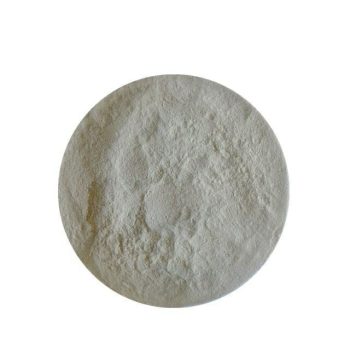
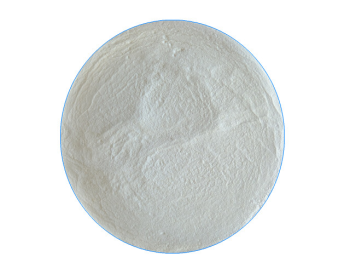
Söödaklassi lüsosüüm on formuleeritud stabiilse ensüümpreparaadina, mis koosneb aktiivsest lüsosüümist, funktsionaalsetest kandjatest ja maltodekstriinist, et tagada ühtlane segunemine söödas ja stabiilne ensümaatiline toime. Toode on kollase pulbrina, mis hajub kergesti sööda tootmise või eelsegu valmistamise ajal. Selle koostis võimaldab ensüümil jääda aktiivseks tüüpilistes sööda töötlemise ja seedimise tingimustes.
The enzyme operates effectively within a temperature range of approximately 30°C to 85°C and maintains activity within a pH range of 3.5 to 7.0. These characteristics allow it to function well during feed production processes as well as within the gastrointestinal tract of animals. This stability makes lysozyme suitable for use in various feed formulations including compound feeds, premixes, and functional feed additives.
Maintaining intestinal health is one of the most important factors in animal productivity and disease resistance. Harmful bacteria in the digestive tract can disrupt the intestinal barrier, reduce nutrient absorption, and increase the risk of disease outbreaks. By targeting these pathogens, lysozyme helps create a healthier intestinal environment that supports digestion, improves nutrient utilization, and enhances growth performance in animals.
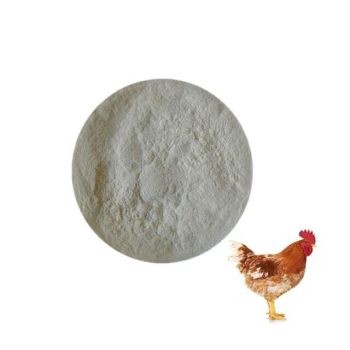
In poultry production, lysozyme ingredientation helps maintain a stable intestinal microbiota, which supports healthy digestion and growth. By reducing the presence of pathogenic bacteria in the gut, poultry can achieve better feed efficiency and improved resilience against digestive disorders. This contributes to stronger flock health and more stable production outcomes.
In livestock production systems such as cattle and other farm animals, lysozyme can help support digestive stability and immune defense. A balanced intestinal microbial community improves nutrient absorption and helps animals convert feed more efficiently into growth and productivity. The enzyme also contributes to maintaining overall gut health, which is closely linked to immune performance.
In aquaculture applications, lysozyme helps maintain microbial balance in the digestive systems of fish and other aquatic animals. Aquatic species are particularly sensitive to microbial fluctuations, and enzyme ingredientation can help reduce the impact of pathogenic bacteria while supporting healthier digestion and growth. This contributes to improved survival rates and stronger resistance to environmental stress.
Using lysozyme in animal feed provides several important benefits. It helps inhibit harmful intestinal bacteria, supports the natural immune defenses of animals, maintains microbial balance in the digestive tract, improves feed utilization efficiency, and contributes to healthier and more sustainable animal production. In addition, enzyme-based antibacterial solutions can help reduce dependence on antibiotic growth promoters while maintaining animal health and productivity.
Toote omadused
- Natural antibacterial enzyme for animal nutrition
- Helps control harmful intestinal microorganisms
- Supports immune function and digestive health
- Maintains intestinal microbial balance
- Parandab sööda kasutamist ja toitainete imendumist
- Sobib linnu-, loomakasvatus- ja vesiviljelussöötadele
- Stable activity across a broad temperature and pH range
- Fine yellow powder for easy mixing in feed formulations
Tooteteave
- Toote nimi: Feed Grade Lysozyme
- Koostis: Lysozyme enzyme, carrier, maltodextrin
- Välimus: Kollane pulber
- Tõhus temperatuurivahemik: 30°C – 85°C
- Tõhus pH vahemik: 3.5 – 7.0
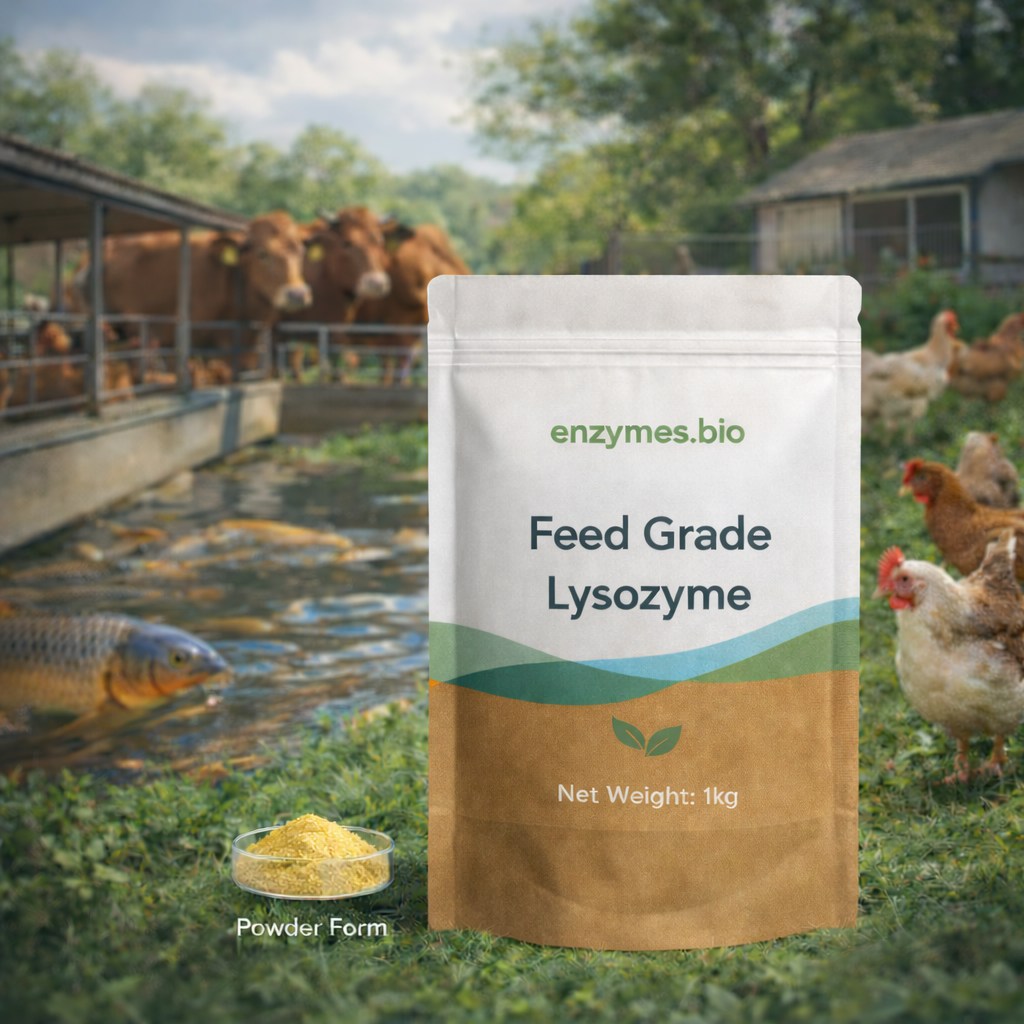
- Pakend: Tarnitakse 1 kg/kott, suletud toiduainete jaoks mõeldud alumiiniumfooliumist kott. Pange tähele, et toote pilt on illustratiivne. Tegelik pakend võib erineda.
- Säilivusaeg: 12 months when stored under appropriate conditions
Soovitatav annus
- Poultry: 40 – 600 g per ton of complete feed
- Kariloomad: 200 – 1000 g per ton of complete feed
- Aquatic animals: 400 – 1500 g per ton of complete feed
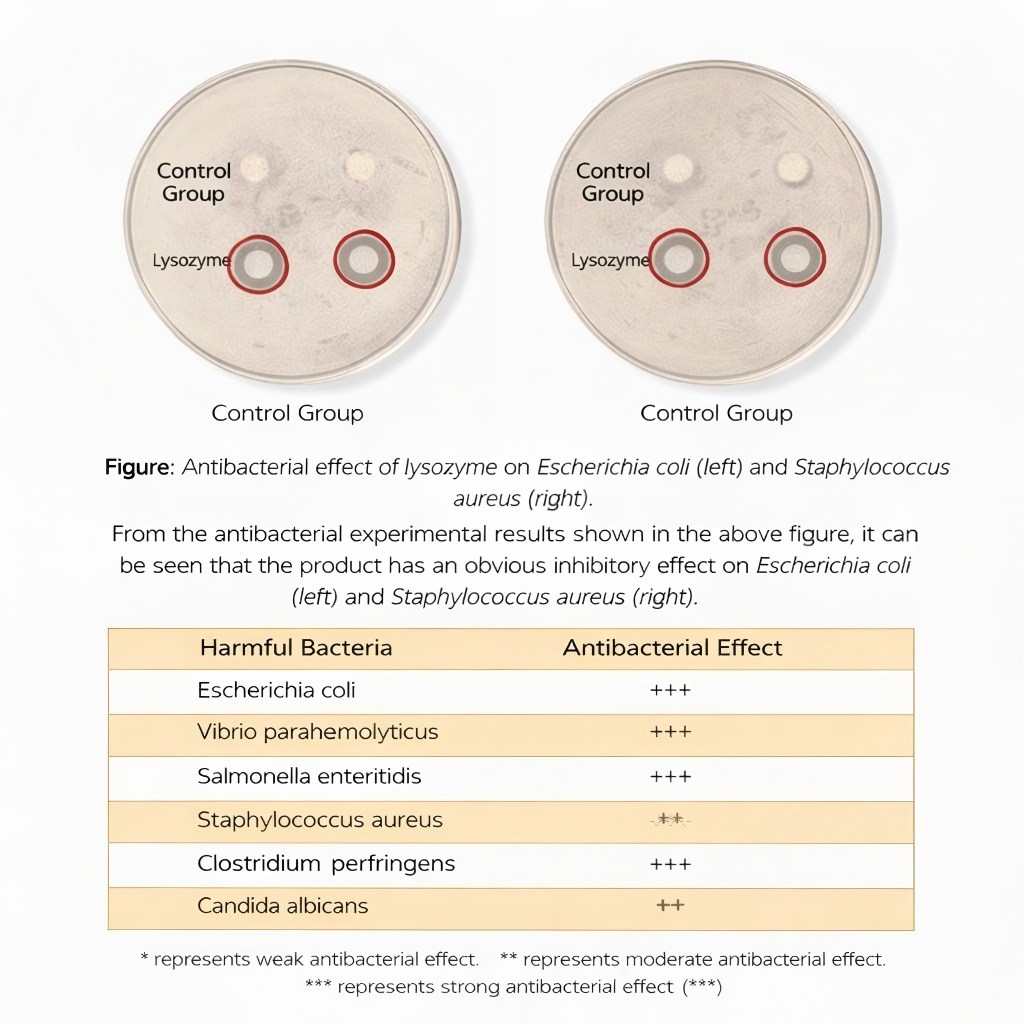
Antibacterial Effect
Kasutusalad
- Poultry farming including broilers and laying hens
- Livestock production such as cattle and other farm animals
- Aquaculture species including fish and other aquatic animals
- Compound feed and premix manufacturing
- Functional feed additives for improving gut health
Söödaklassi lüsosüüm on tõhus ensüümilahendus soolestiku tervise parandamiseks, loodusliku antimikroobse kaitse toetamiseks ja sööda tõhusa kasutamise edendamiseks mitmesugustes loomakasvatussüsteemides. Aidates säilitada soolestiku mikroobide tasakaalu ja vähendades kahjulike bakterite mõju, toetab see ensüümilisand tervemaid loomi ning tõhusamat sööda konversiooni tänapäevastes loomakasvatus- ja vesiviljelusettevõtetes.