
Winemaking Enzymes Bulk Supplier for Industry
How Winemaking Enzymes Work
Higher Juice Yield
Pectinase wine treatments improve mash breakdown to increase juice recovery & reduce pressing losses.
Improved Clarification
Targeted enzymes wine fermentation programs reduce haze, improve filtration speed & enhance clarity.
Process Efficiency
Optimized enzyme blends shorten maceration time, stabilize viscosity & support consistent large-scale production.
Enzyme Types for Winemaking Applications
Pektinas
Breaks down pectin in grape skins to improve juice yield, clarity, and colour extraction.
Beta-glukanas
Degrades glucans from Botrytis-infected grapes to reduce viscosity and improve filterability.
Laccase
Removes phenolic compounds from grape juice to prevent oxidative browning in white wine.
Hemicellulas
Breaks down hemicellulose in grape cell walls to enhance juice yield and aroma extraction.
Cellulas
Aids maceration of grape skins for improved colour, tannin, and flavour extraction in red wine.
Winemaking Enzyme Guide: Functions, Dosage & Applications
Pektinas
Juice Yield & Clarification via Pectin Degradation
Fungera: Pectinase (polygalacturonase + pectin lyase + pectin methylesterase) degrades pectin in grape skins and pulp cell walls. Pectin forms a viscous gel that traps juice and hinders pressing and clarification. Pectinase breaks this gel, releasing juice and reducing turbidity. Typical juice yield improvement: 10–20% with the same pressing energy.
Typisk dosering: 1–5 g/100 kg grapes (solid enzyme) or 1–3 mL/100 kg (liquid). Add to crushed grapes at maceration step (15–25°C for white; 20–30°C for red). Contact time: 2–6 hours cold soak or 30–60 minutes at room temperature. Avoid temperatures above 35°C and SO₂ > 50 mg/L, which inhibit activity.
Applikationer: White wine pressing (improved free-run juice), red wine maceration (improved color and polyphenol extraction), rosé juice extraction, must clarification (settling), sparkling wine base wine.
Beta-glukanas
Solving Botrytis Filtration Problems & Stuck Fermentations
Fungera: Botrytis cinerea-infected grapes produce high concentrations of beta-1,3/1,6-glucans — polysaccharides that cause extreme filtration blockage, colloidal haze, and slow clarification. No fining agent removes them. Beta-glucanase specifically hydrolyzes these glucans into small oligosaccharides, restoring filterability and wine flow rate.
Typisk dosering: 1–3 g/100 L wine. Add to wine after fermentation (must be below 35°C). Contact time: 3–7 days at cellar temperature. For heavily Botrytis-affected wines, double the dosage and extend contact to 14 days. Use alongside filtration trial to confirm efficiency before bottling.
Applikationer: Botrytis-affected vintages (especially Riesling, Sauvignon Blanc, Gewurztraminer), Noble Rot (Sauternes, Trockenbeerenauslese), stuck filtration in any vintage, sur-lie aged wines with yeast-derived glucan haze.
Laccase
Phenolic Oxidation & Anti-Browning Treatment
Fungera: Laccase is a copper-containing oxidase that oxidizes polyphenols (catechins, hydroxycinnamic acids) by reducing molecular oxygen. It is used to deliberately oxidize and precipitate unstable polyphenols before bottling, reducing the risk of post-bottling browning in white and rosé wines. Also used in biofining as an alternative to bentonite for heat-unstable protein removal.
Typisk dosering: 0.5–2 g/hL wine. Requires dissolved oxygen (aerate before/during treatment). Reaction time: 24–48 hours at cellar temperature. Inactivate with bentonite or micro-filtration before bottling. Check residual enzyme activity with laccase activity test.
Applikationer: White wine anti-browning (oxidized must treatment), Botrytis must treatment, biofining (combined with bentonite), low-SO₂ winemaking where enzymatic rather than SO₂ oxidation is preferred.
Hemicellulas
Cell Wall Degradation for Color & Aroma Extraction
Fungera: Hemicellulase degrades hemicellulose in grape skin cell walls, acting synergistically with pectinase to improve cell wall disruption. The combined enzymatic degradation of pectin + hemicellulose releases a higher proportion of skin-bound aroma compounds (terpenes, glycosidically bound aroma precursors) and improves color extraction in red wines.
Typisk dosering: 1–3 g/100 kg grapes. Used in combination with pectinase at the maceration stage. The synergy between pectinase and hemicellulase means that combined dosage at 60–70% of either enzyme alone achieves the same result as either at full dosage.
Applikationer: Red wine maceration (color + tannin extraction), aromatic white wine skin contact, orange wine production, whole-berry fermentation (improved berry rupture), Pinot Noir extraction where thin skins limit color.
Cellulas
Maceration Enhancement & Skin Contact Wine Production
Fungera: Cellulase degrades cellulose in grape berry cell walls, the structural backbone that resists mechanical rupture during crushing. When combined with pectinase and hemicellulase, cellulase completes the enzymatic maceration complex, allowing more complete extraction from grape skins with shorter maceration times and lower pressing pressures.
Typisk dosering: 1–4 g/100 kg grapes. Add to crushed grapes at maceration stage. Works best at 20–30°C. In full enzyme cocktail (pectinase + hemicellulase + cellulase), each component at 50–70% of standalone dosage achieves equivalent or better extraction.
Applikationer: Red wine maceration, skin-contact white wine, juice extraction optimization, high-skin-contact Gewurztraminer/Viognier for terpene release, berry skins processing for by-product valorization.
Handla i lösvikt: Bulk Cellulase — cellulase for maceration, yield & skin-contact wine →
Our Winemaking Enzyme Products
-
Försäljning!
 Enzymer för vinjäsning
Enzymer för vinframställning: pektinas, cellulas, hemicellulas, betaglukanas, amylas och proteaskomplex
$88.00Det ursprungliga priset var: $88.00.$79.99Det nuvarande priset är: $79.99. Köpa -
Försäljning!
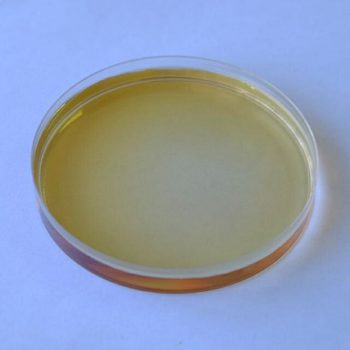 Enzymer för vinjäsning
Högtemperaturstabil alfa-amylasenzymvätska för vinframställning
$91.00Det ursprungliga priset var: $91.00.$81.99Det nuvarande priset är: $81.99. Köpa -
Försäljning!
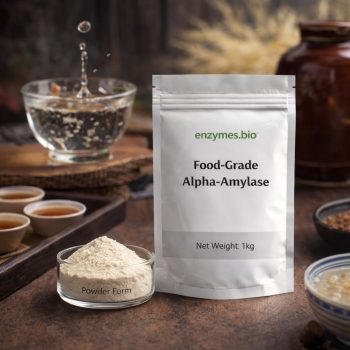 Alfa-amylas
Livsmedelsklass Alpha-Amylas för Risvin
$147.77Det ursprungliga priset var: $147.77.$132.99Det nuvarande priset är: $132.99. Köpa -
Försäljning!
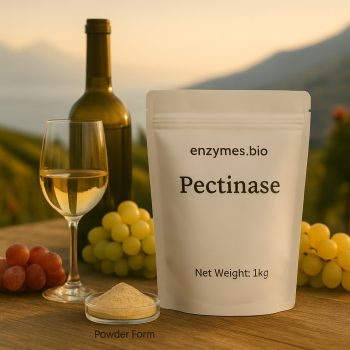 Pektinas
Pektinas av livsmedelskvalitet för produktion av vitt vin
$111.11Det ursprungliga priset var: $111.11.$99.99Det nuvarande priset är: $99.99. Köpa -
Försäljning!
 Enzymer för vinjäsning
Fruktpektinasenzym för rödvinsbryggning
$88.00Det ursprungliga priset var: $88.00.$79.99Det nuvarande priset är: $79.99. Köpa
Why Source Winemaking Enzymes from enzymes.bio?
Låg MOQ från 1 kg
Flexibla orderkvantiteter för FoU-prover eller fullständiga produktionskörningar. Skala upp när du är redo.
Anpassade blandningar tillgängliga
Behöver du ett specifikt enzymförhållande eller multi-enzymkomplex? Vårt team formulerar anpassade blandningar för din process.
Global frakt
DHL-, FedEx- och USPS-leveranser till över 180 länder. Frakt med kallkedja tillgänglig för temperaturkänsliga enzymer.
Teknisk support
Tillämpningsråd och doseringsrekommendationer från våra enzymspecialister.