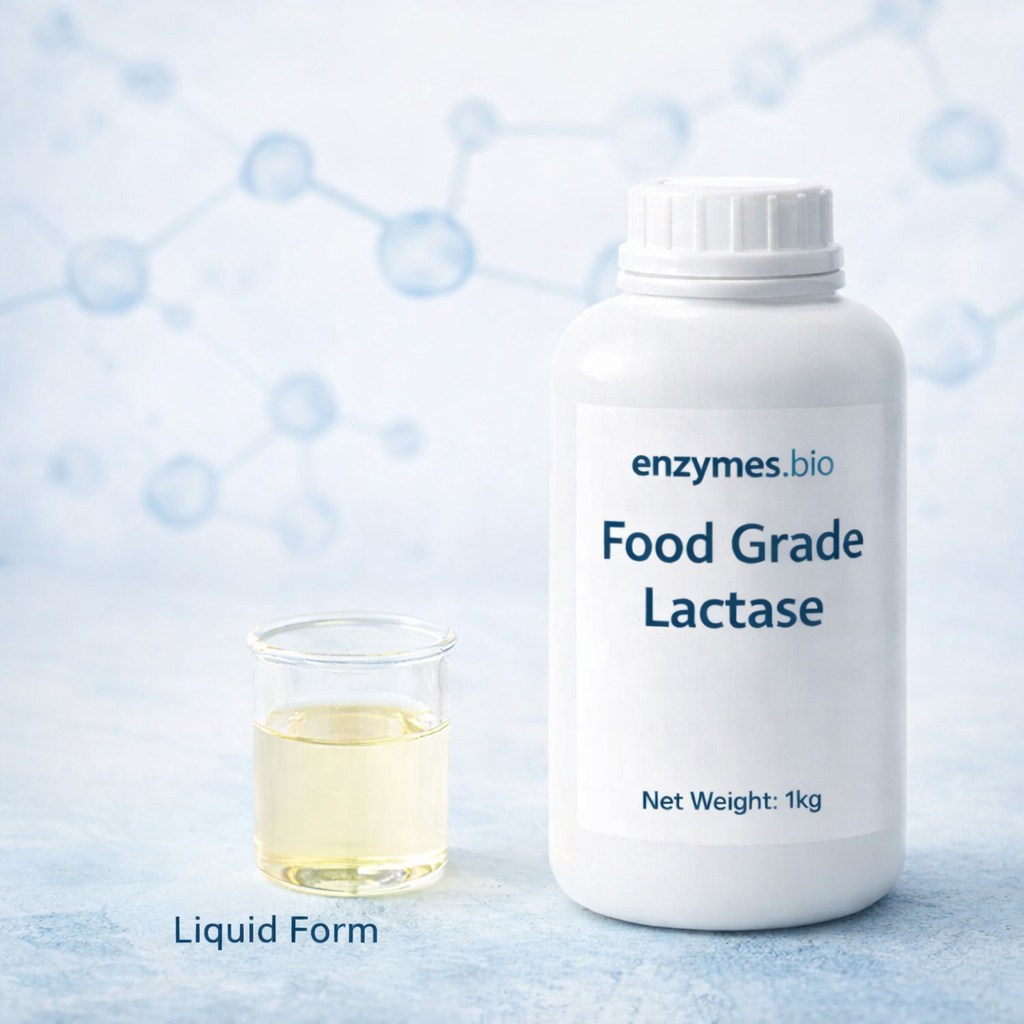
Food Grade Lactase (β-Galactosidase) for Dairy Lactose Hydrolysis
Food Grade Lactase, also known as β-Galactosidase (β-D-galactosidase), is an enzyme that catalyzes the hydrolysis of lactose into glucose and galactose.
In addition to lactose hydrolysis, lactase may exhibit transgalactosylation activity under suitable processing conditions.
With optimal activity in a near-neutral pH range, this enzyme is highly suitable for milk and dairy processing, enabling efficient production of low-lactose and lactose-free products.
Hydrolysis of lactose improves digestibility for lactose-intolerant consumers and increases the natural sweetness of dairy products. As glucose and galactose are sweeter than lactose, lactase-treated dairy may help reduce
the need for added sugars while preserving the original flavor profile.
Key Features
- High lactose hydrolysis efficiency: lactose conversion can exceed 99% under recommended conditions.
- Optimal performance at dairy-relevant pH: best activity observed between pH 6.0 and 7.0.
- Effective at moderate temperatures: well suited for standard dairy processing conditions.
- Improved product quality: reduces lactose-related crystallization and enhances sweetness perception.
- Wide applicability: compatible with liquid milk, fermented dairy products, milk powder solutions, and dairy-based foods.
Product Properties
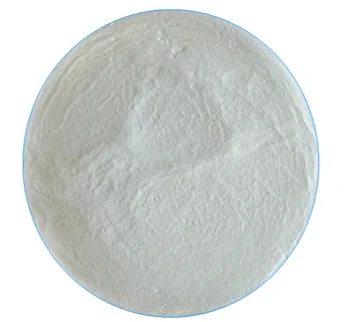
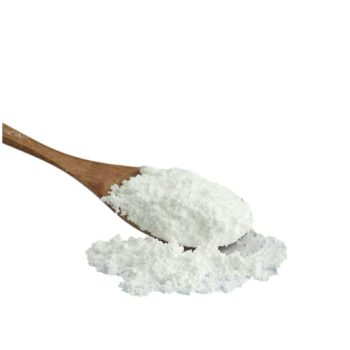
- Appearance: White powder
- Enzyme Type: Lactase / β-Galactosidase
- Primary Function: Hydrolysis of lactose into glucose and galactose
Recommended Operating Conditions
| Parameter | Recommended Range |
|---|---|
| Optimal pH | 6.0 – 7.0 |
| Optimal Temperature | 30 – 40 °C |
| Dosage – Liquid Milk | 0.02 – 0.1% (w/w, based on liquid weight) |
| Dosage – Milk Powder Solution | 0.2 – 0.4% (w/w, based on dry matter) |
Note: The optimal dosage depends on lactose concentration, processing time, temperature profile,
and the desired final lactose level.
Application Areas
- Low-Lactose and Lactose-Free Dairy Products
Reduces lactose content in dairy products, supporting improved tolerance and broader consumer acceptance. - Fermented Dairy Products
Lactose hydrolysis prior to fermentation can help reduce quality issues associated with excessive lactose, including crystallization and texture defects. - Dairy Ingredients and Milk Powder Applications
Hydrolyzed lactose increases sweetness and digestibility, enabling reduced added sugar and improved nutritional perception. - Baked Goods and Dairy-Based Foods
The use of lactase-treated milk can help prevent undesirable aroma and color changes, support yeast fermentation, and improve final product volume and texture.
Typical Processing Guidelines
Liquid Milk
- Add lactase at 0.02 – 0.1% based on liquid weight.
- Hydrolyze at 35 °C for approximately 5 hours, or at low temperature (~9 °C) for 20–24 hours.
- Apply gentle agitation during hydrolysis to ensure uniform mixing.
- Heat to approximately 85 °C after hydrolysis if enzyme inactivation is required, then cool and continue with downstream processing.
Milk Powder Solution
- Prepare a milk powder solution at approximately 12% total solids.
- Add lactase at 0.2 – 0.4% based on dry matter.
- Proceed with hydrolysis using the same time and temperature conditions as liquid milk.
Relative Enzyme Activity
pH vs. Relative Activity
- Highest activity observed around pH 6.5 – 7.0.
- Activity decreases gradually at lower or higher pH values.
Temperature vs. Relative Activity
- Activity increases with temperature and reaches a maximum around 40 °C.
- Activity declines noticeably above 45 °C and at higher temperatures.
Storage
- Store in a cool, dry environment, protected from direct light.
- Recommended storage temperature: below 0 °C.
- Prolonged exposure to high temperature or humidity may reduce enzyme activity; dosage adjustments may be necessary if storage conditions are not optimal.
Safety and Handling
Lactase is a protein-based enzyme used in food processing. Although generally safe, exposure to concentrated enzyme dust may cause sensitization in susceptible individuals.
- Avoid inhalation of enzyme dust; use appropriate respiratory protection.
- Wear protective gloves and eye protection during handling.
- Avoid prolonged skin or eye contact.
- This enzyme may be inhibited or degraded by certain metal ions (such as Fe3+, Cu2+, Hg+, and Pb2+) and by strong oxidizing agents; direct contact with these substances should be avoided.
Packaging
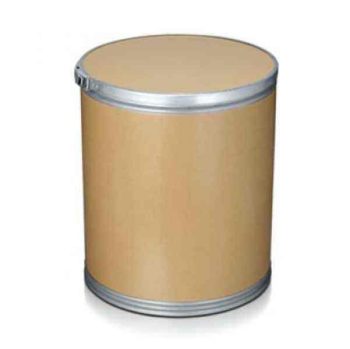
- Standard Pack Size: 1 kg bottle (supplied in an industrial-grade plain bottle). Please note that the product image is for illustration purposes. Actual packaging may differ.